Idaho Employment Employee Personnel File Package
What is this form package?
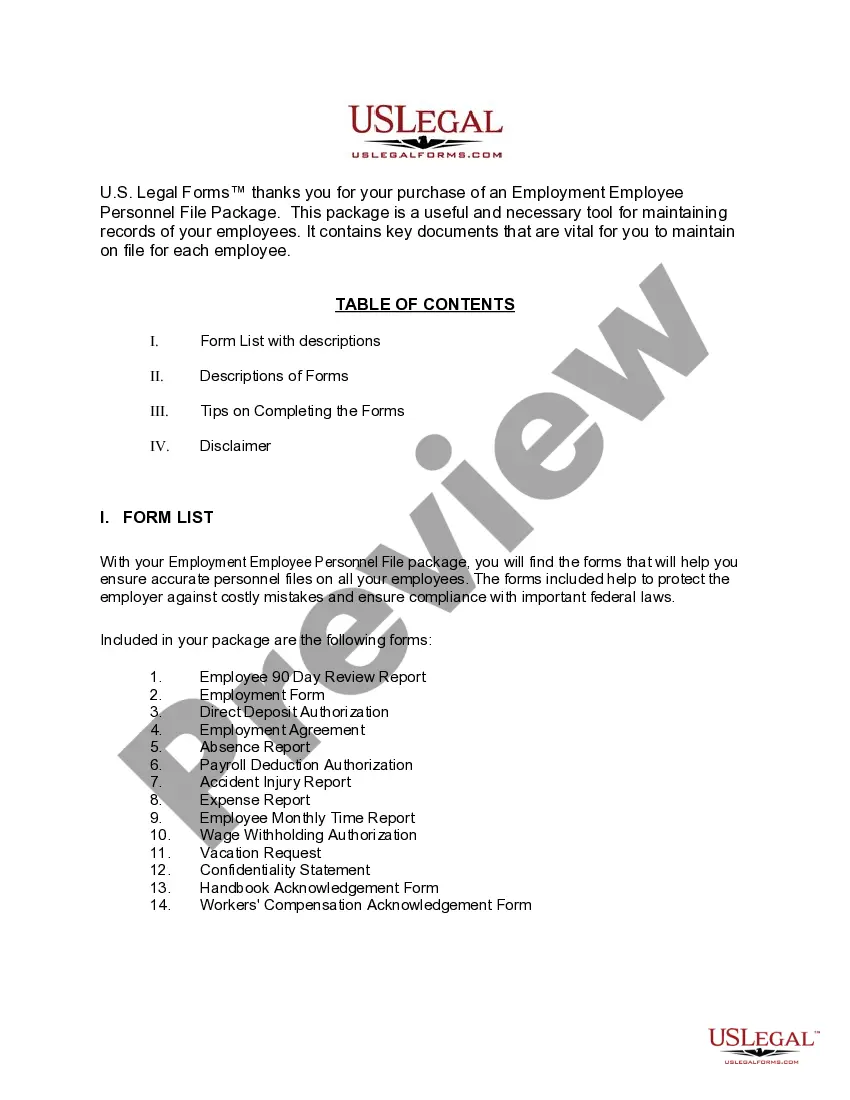
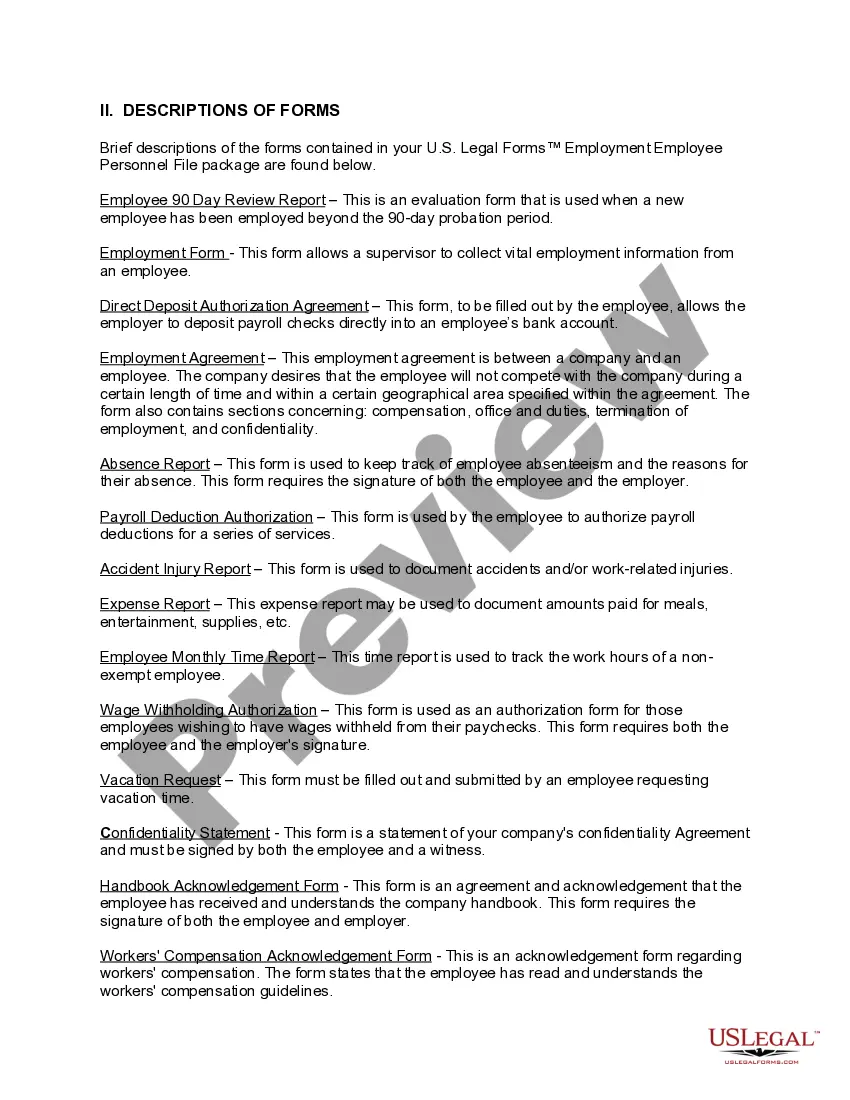
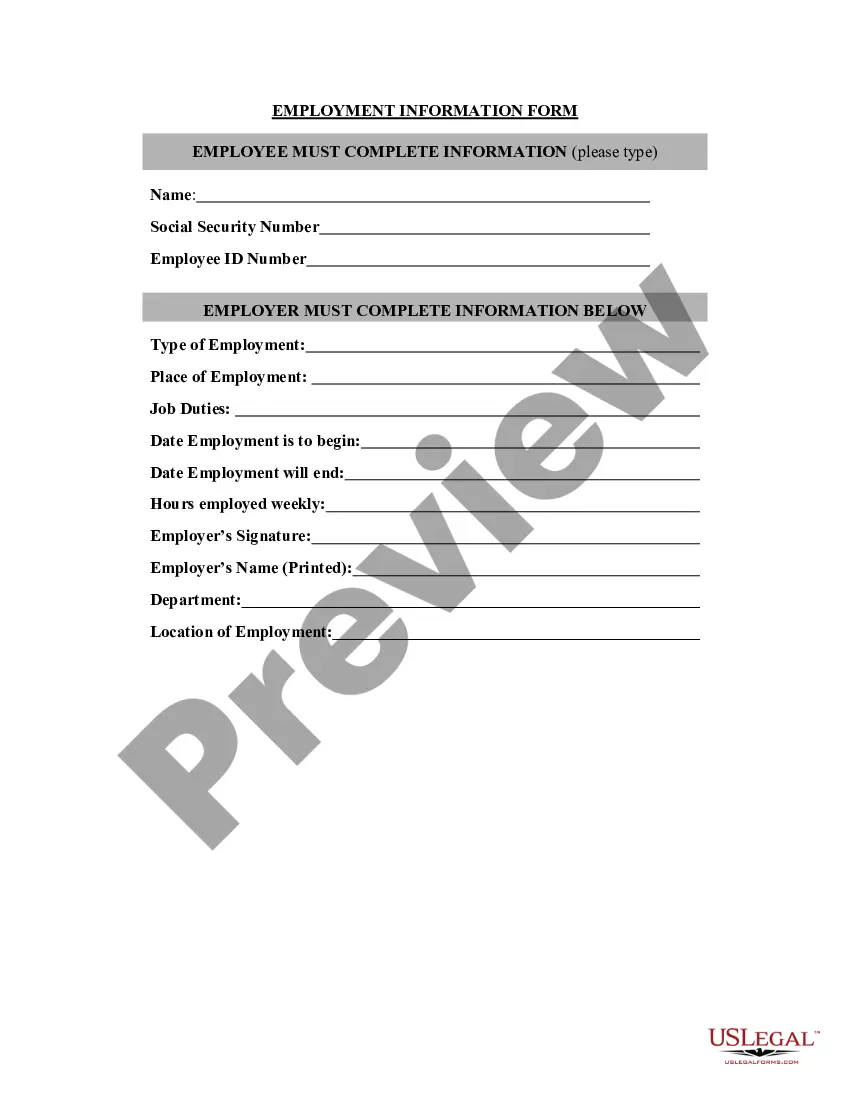
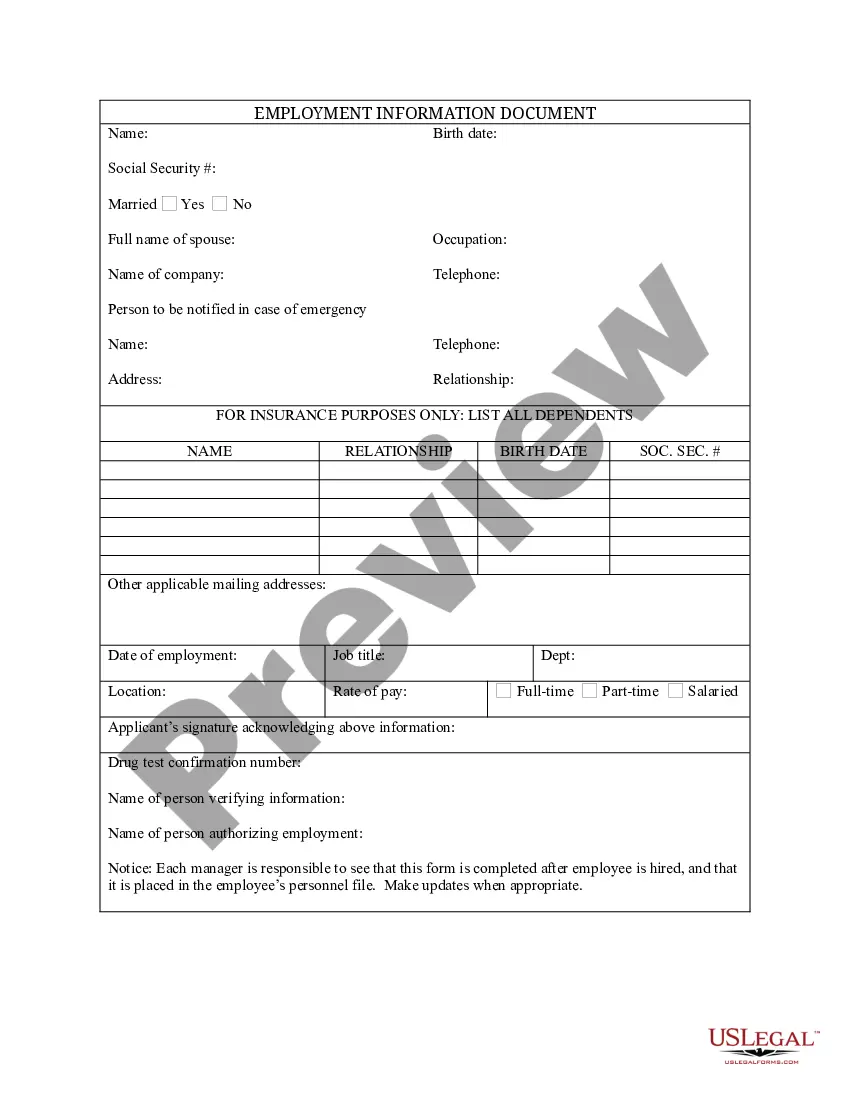
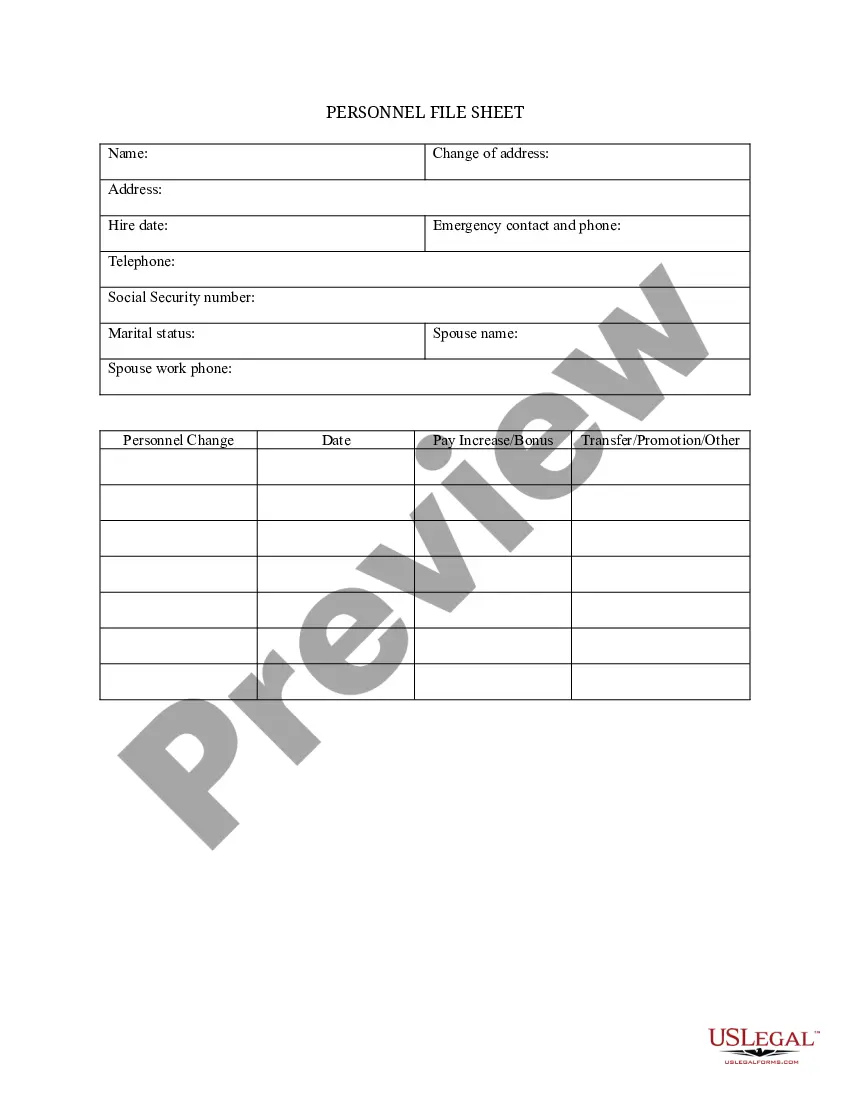
The Idaho Employment Employee Personnel File Package is a comprehensive collection of vital forms designed to assist employers in maintaining accurate personnel records and ensuring compliance with federal laws. This package stands out by offering a variety of forms tailored to document employee information, agreements, and performance evaluations, thus minimizing potential legal issues for your business.
Forms included in this package
- Employment Agreement between a company and an employee
- Absence Report
- Payroll Deduction Authorization Form
- Accident - Injury Report
- Direct Deposit Authorization
- Nonexempt Employee Time Report
- Employee 90 day Review Report
- Wage Withholding Authorization
- Confidentiality Statement and Agreement for an Employee
- Employee Agreement and Handbook Acknowledgment Form
- Workers' Compensation Acknowledgment Form
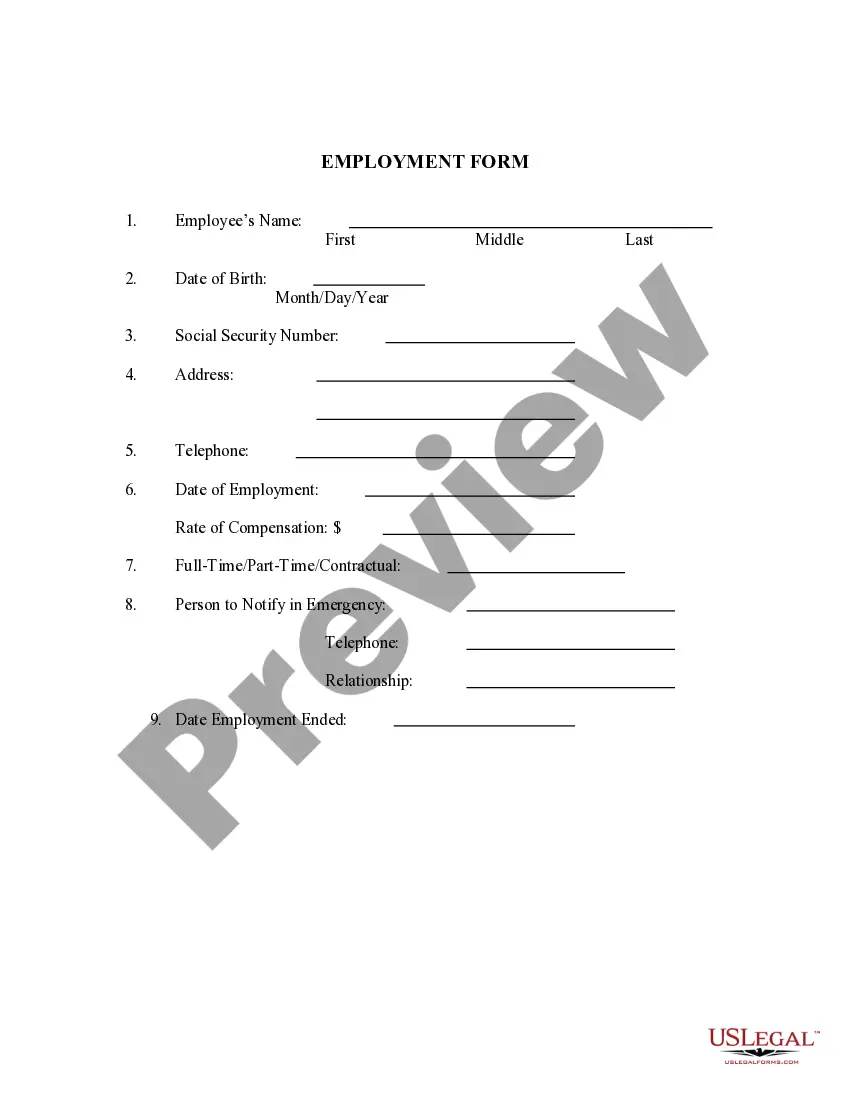
- Employment Form
- Vacation Request Form
When to use this document
This form package is particularly useful when:
- Hiring new employees and needing to collect essential employment information.
- Tracking employee performance through regular evaluations.
- Documenting work absences and reasons for those absences.
- Setting up payroll systems, including direct deposits and deductions.
- Managing employee requests for time off or vacation.
- Ensuring compliance with workplace safety and accident reporting requirements.
Intended users of this form package
- Employers and Human Resources professionals in Idaho.
- Business owners looking to establish clear workplace policies.
- Supervisors and managers responsible for maintaining employee records.
- Companies seeking to comply with federal employment regulations.
- Any organization that wishes to streamline its personnel management processes.
Instructions for completing these forms
- Review the included forms to understand the data needed for each.
- Collect necessary employee information such as personal details and bank account information.
- Ensure signatures are obtained from both the employee and employer where required.
- Complete each form accurately, entering all required information in the designated fields.
- File and maintain these forms in a secure location as part of employee records.
Do documents in this package require notarization?
Forms in this package typically do not require notarization unless required by local law. It is essential to review each form's requirements to ensure compliance with any specific legal demands.
Get your form ready online
Our built-in tools help you complete, sign, share, and store your documents in one place.
Make edits, fill in missing information, and update formatting in US Legal Forms—just like you would in MS Word.
Download a copy, print it, send it by email, or mail it via USPS—whatever works best for your next step.
Sign and collect signatures with our SignNow integration. Send to multiple recipients, set reminders, and more. Go Premium to unlock E-Sign.
If this form requires notarization, complete it online through a secure video call—no need to meet a notary in person or wait for an appointment.
We protect your documents and personal data by following strict security and privacy standards.

Make edits, fill in missing information, and update formatting in US Legal Forms—just like you would in MS Word.

Download a copy, print it, send it by email, or mail it via USPS—whatever works best for your next step.

Sign and collect signatures with our SignNow integration. Send to multiple recipients, set reminders, and more. Go Premium to unlock E-Sign.

If this form requires notarization, complete it online through a secure video call—no need to meet a notary in person or wait for an appointment.

We protect your documents and personal data by following strict security and privacy standards.
Typical mistakes to avoid
- Failing to obtain proper signatures on key documents.
- Inadequately filling out forms, resulting in missing or incorrect information.
- Neglecting to keep updated records for each employee, leading to compliance issues.
- Overlooking the importance of clear documentation for absences and performance reviews.
Advantages of online completion
- Convenience of downloading forms directly and completing them at your own pace.
- Forms are editable, allowing customization to fit your company's specific needs.
- Access to professionally drafted legal documents that help ensure compliance.
- Cost-effective solution for small to medium-sized businesses managing personnel records.
Looking for another form?


Form popularity
FAQ
Certain sensitive information should not be included in personnel files, such as medical records, personal identification numbers, or documents related to discrimination or harassment claims. Keeping personal and irrelevant information out of your Idaho Employment Employee Personnel File Package ensures privacy and compliance. It is important to maintain only relevant documents to facilitate an effective record-keeping process.
The personnel file is the employees and the employers complete record of their relationship together. It contains a history from job application right the way through to the exit interview, termination of employment or even retirement. Needless to say, the personnel file is highly confidential.
Lawyers can also subpoena the contents of the personnel records for lawsuits and the Equal Employment Opportunity Commission (EEOC) complaints. A former employee can also request a copy of his or her personnel records. Best practice makes the personnel file only accessible by Human Resources staff members.
While there is no federal law governing personnel files, many states have passed laws granting employees the right to view or copy at least some of the contents of their personnel records.
Current and former employees have a right to their personnel records under Labor Code section 1198.5. Under California Labor Code section 1198.5(a) provides that every current and former employee, or their representative, has the right to inspect and receive a copy of their personnel records.
In the state of California, every current employee, or his or her representative has the right to inspect and receive a copy of their personnel records, maintained by their employer.
EEOC Regulations require that employers keep all personnel or employment records for one year. Under Fair Labor Standards Act (FLSA) recordkeeping requirements applicable to the EPA, employers must keep payroll records for at least three years.
In the state of California, every current employee, or his or her representative has the right to inspect and receive a copy of their personnel records, maintained by their employer.
The short answer is 'yes'. You have a right to make a SAR to your employer, asking to see your personnel files, at any time. Your employer has the right to ask why you want to see your files, but must then provide all your records to you.
Current and former employees have a right to their personnel records under Labor Code section 1198.5. Under California Labor Code section 1198.5(a) provides that every current and former employee, or their representative, has the right to inspect and receive a copy of their personnel records.