Distribution Agreement regarding the continuous offering of the Trust's transferable shares of beneficial interest
Overview of this form
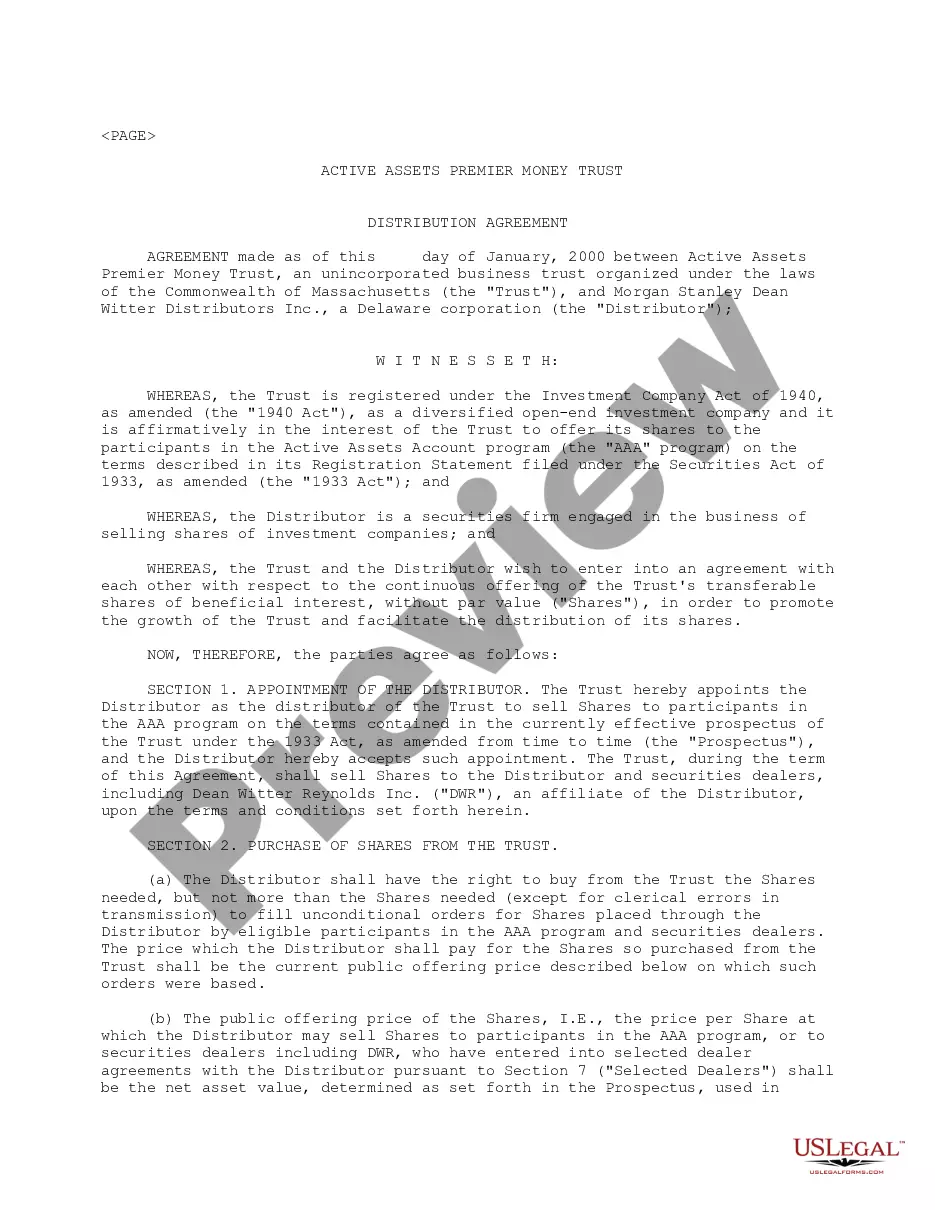
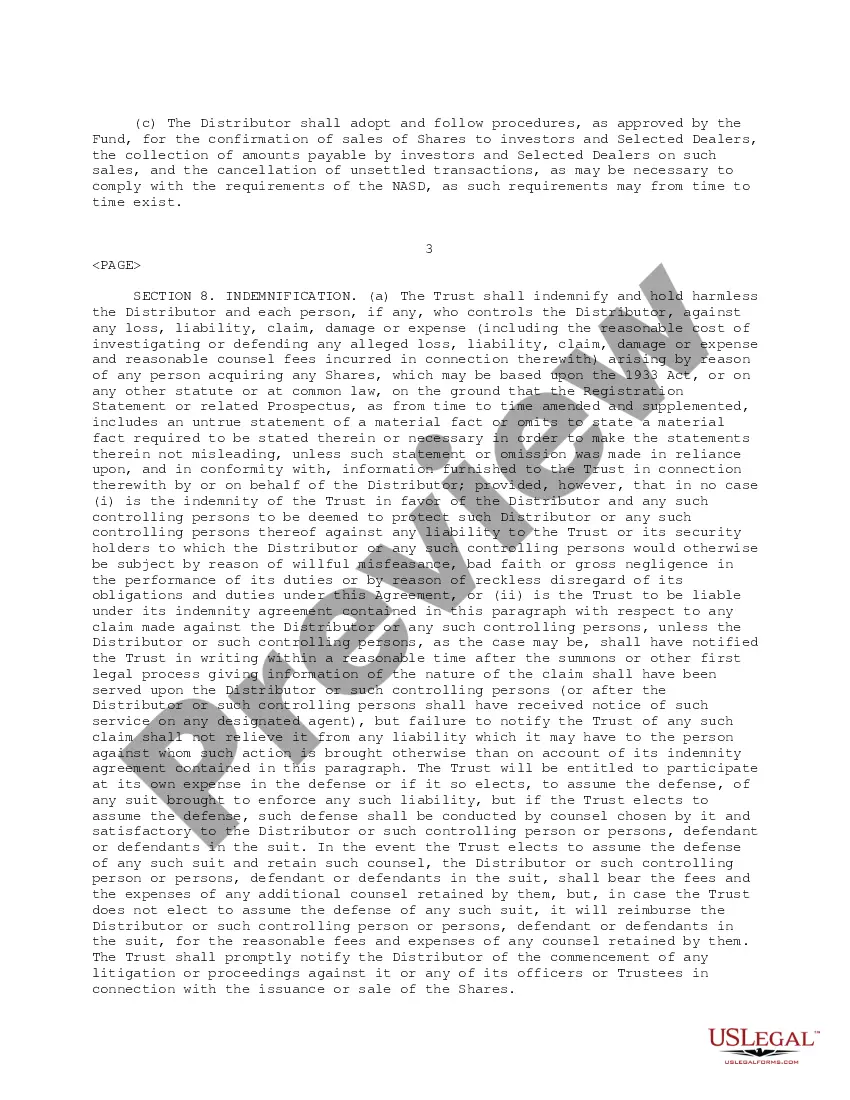
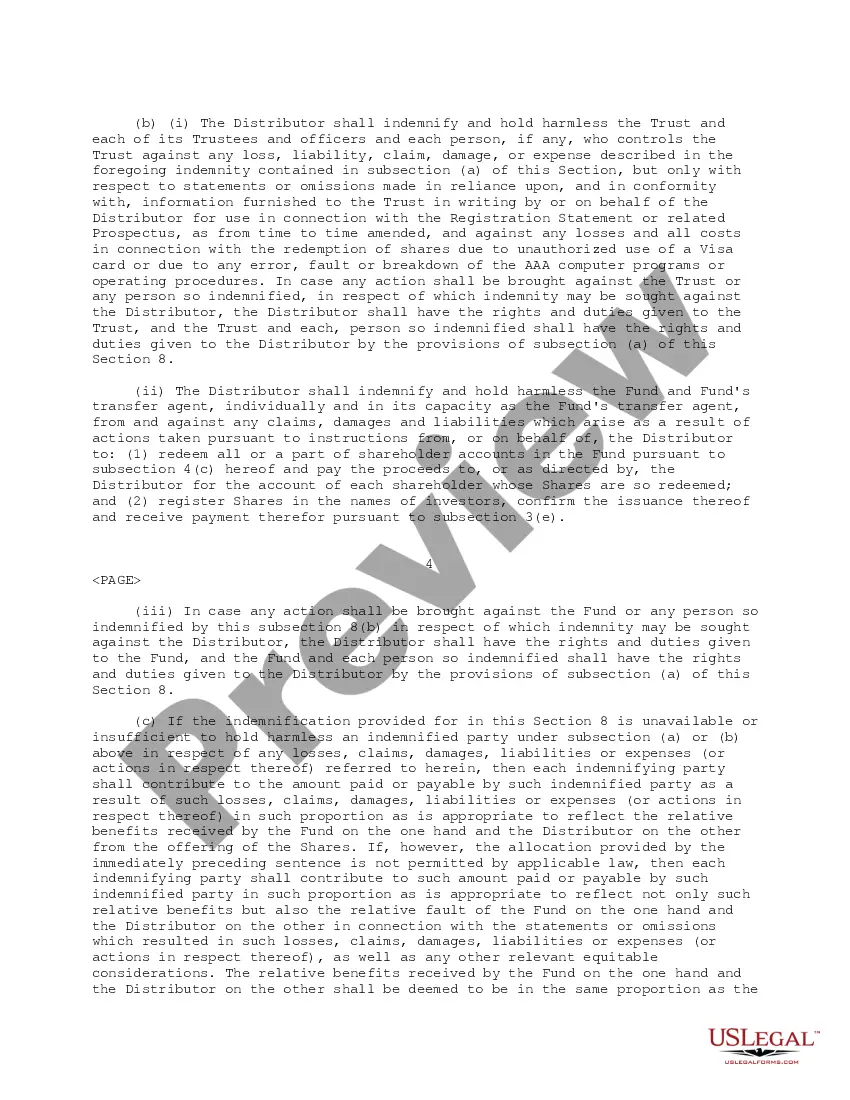
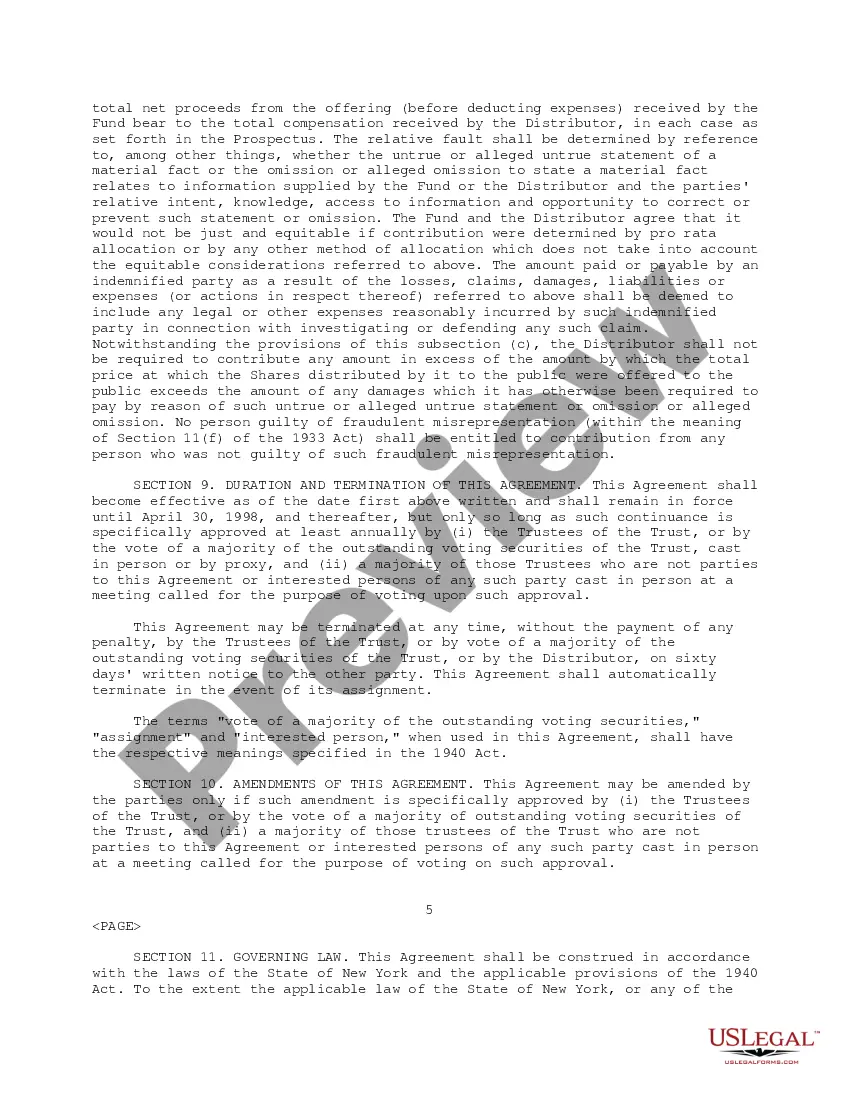
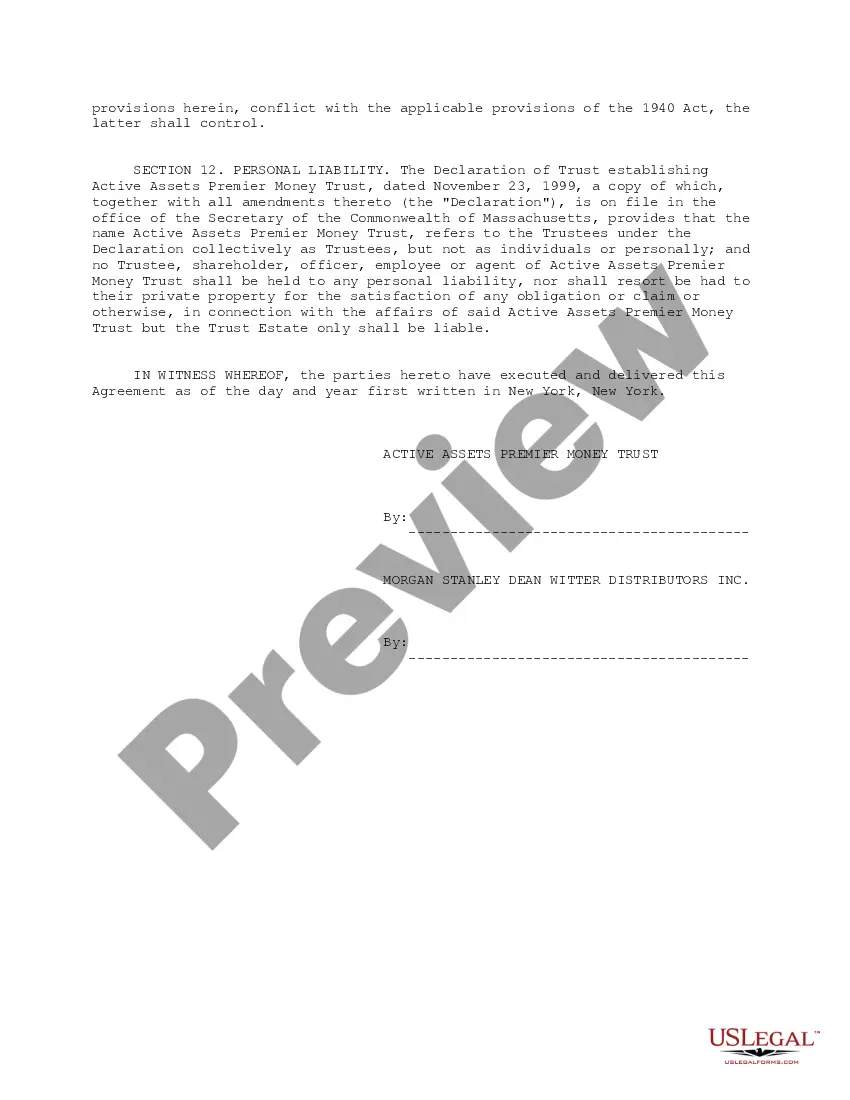
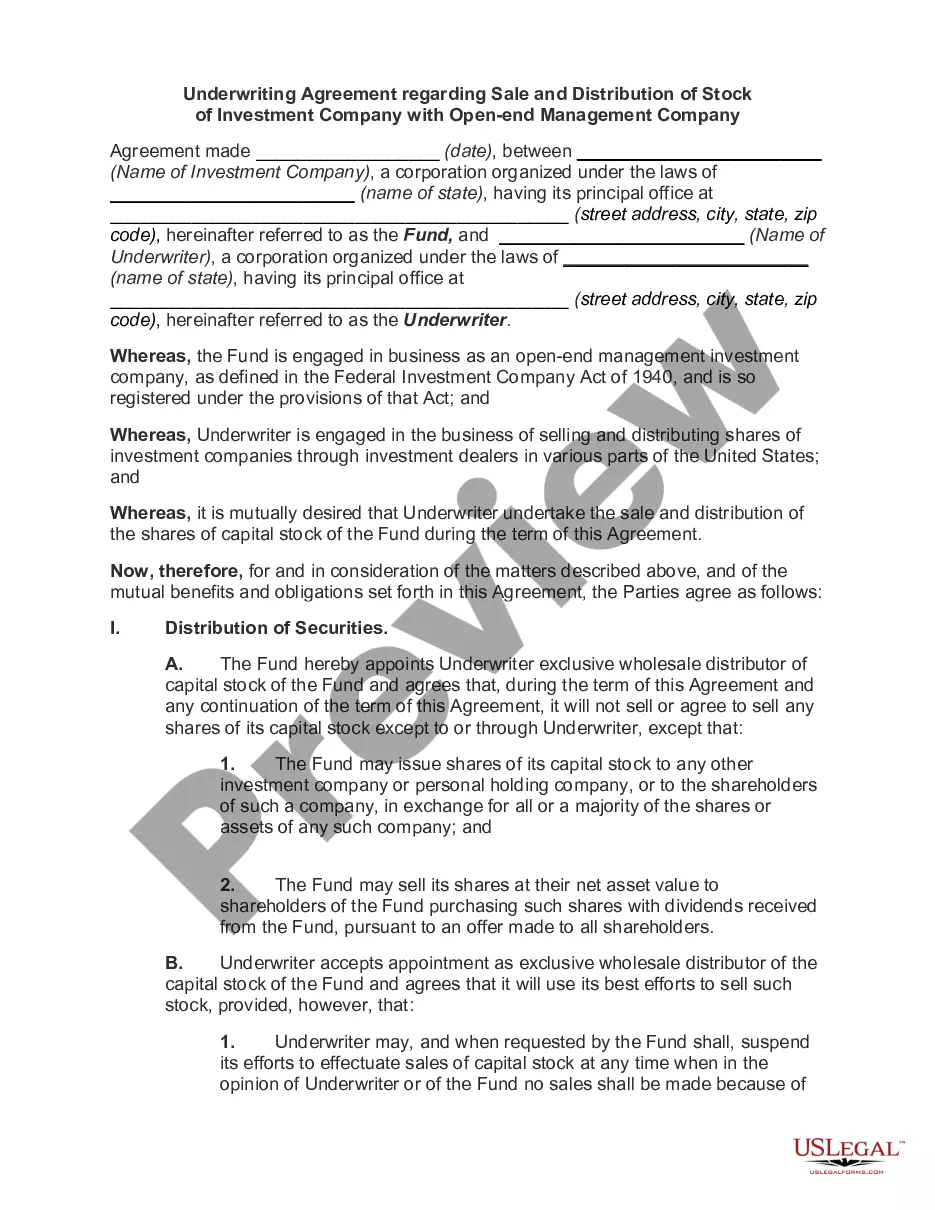
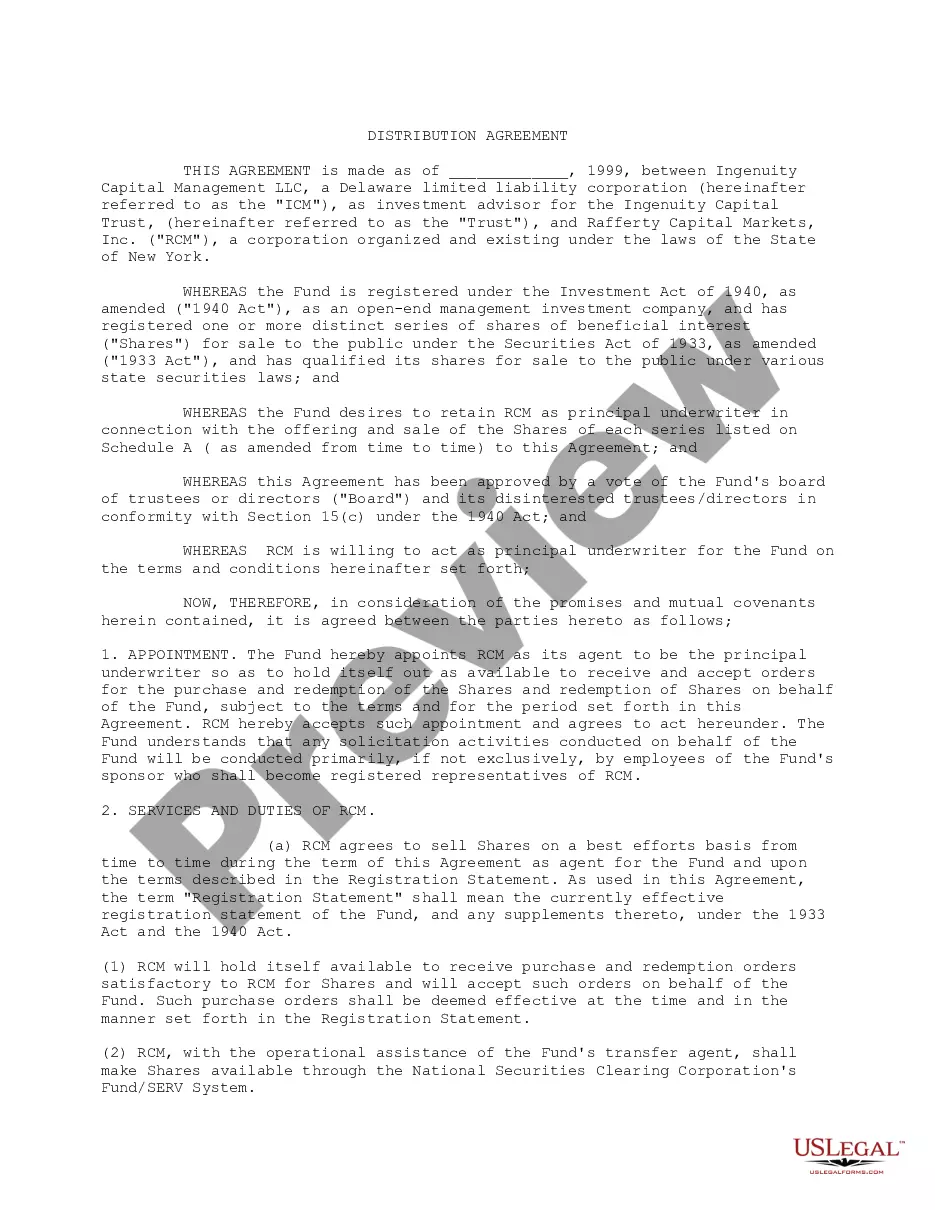
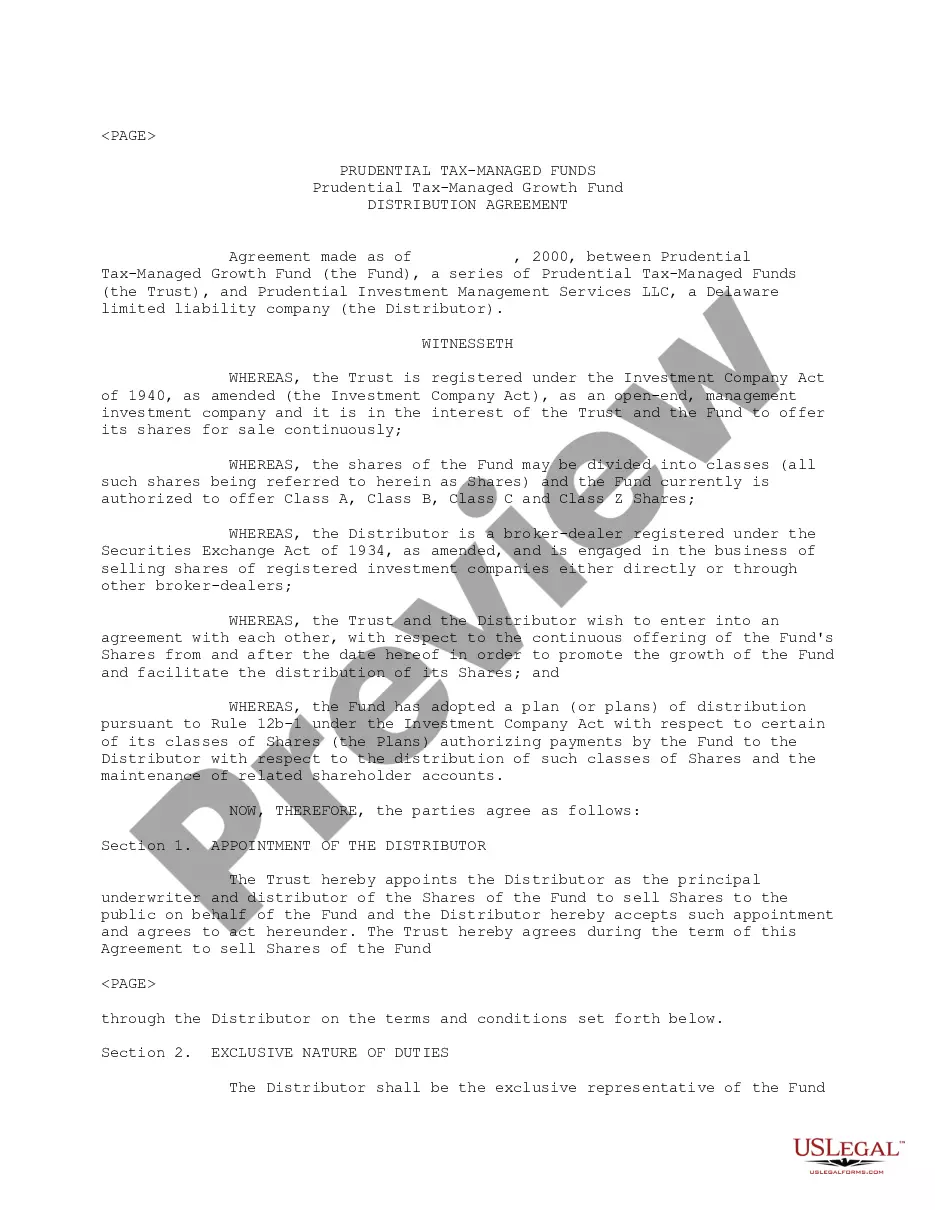
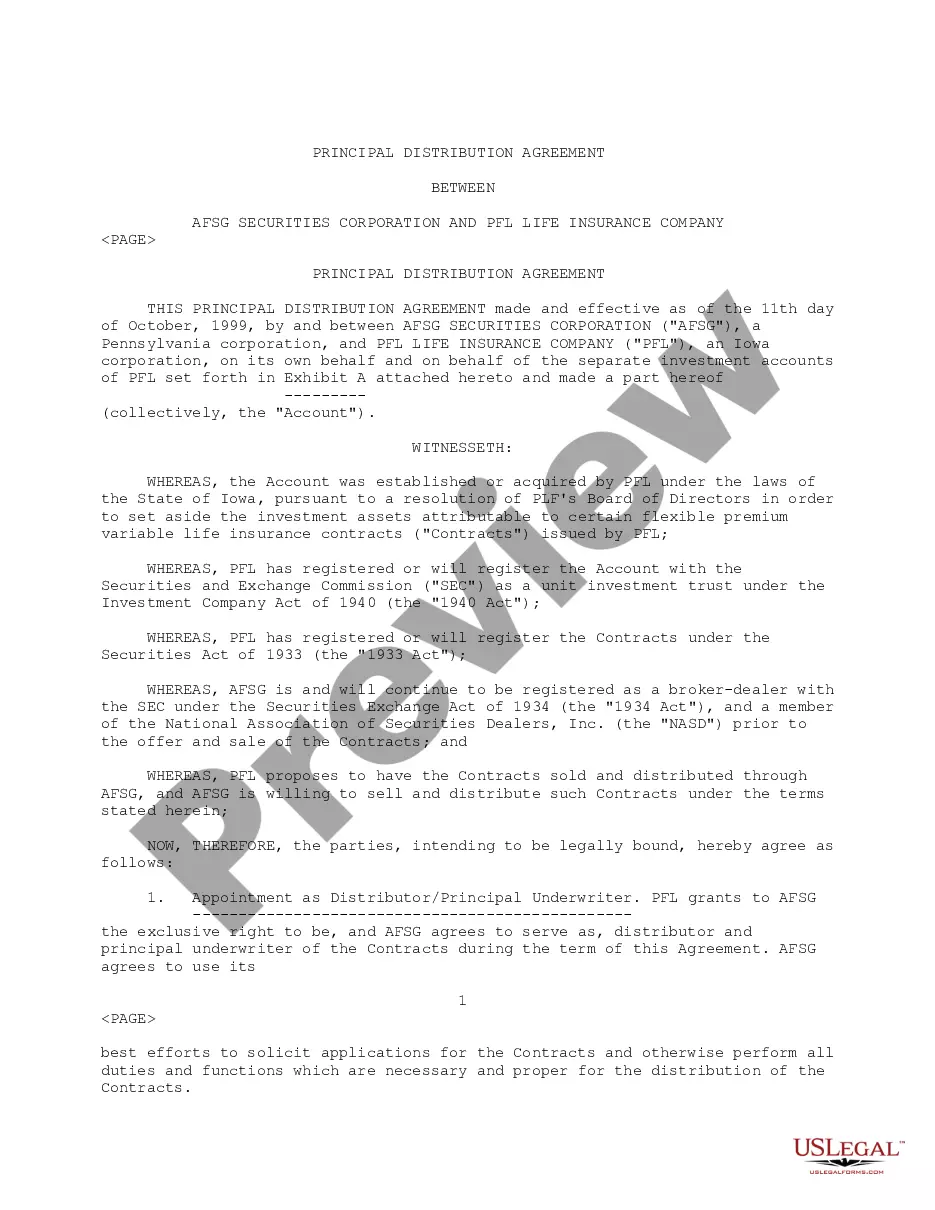
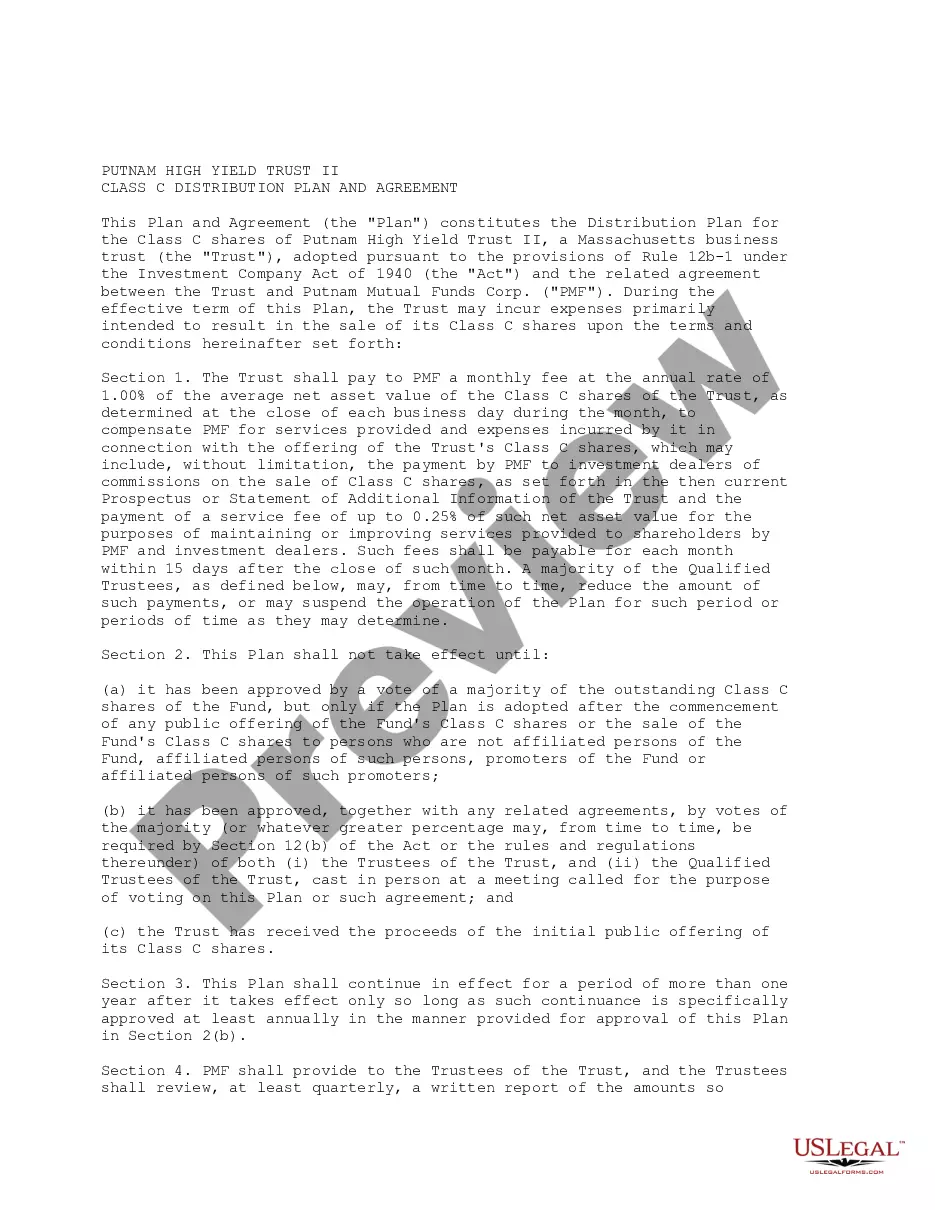
This Distribution Agreement pertains to the continuous offering of transferable shares of beneficial interest in the Active Assets Premier Money Trust. It is a formal agreement between the Trust and a distributor, outlining the terms for selling shares to participants in the Active Assets Account program. This document ensures compliance with federal regulations, differentiating itself from other investment agreements by specifically addressing the continuous nature of the share offering and the roles of both parties involved in distribution activities.
What’s included in this form
- Appointment of the distributor, defining roles and responsibilities.
- Terms for purchasing shares from the Trust, including pricing structure.
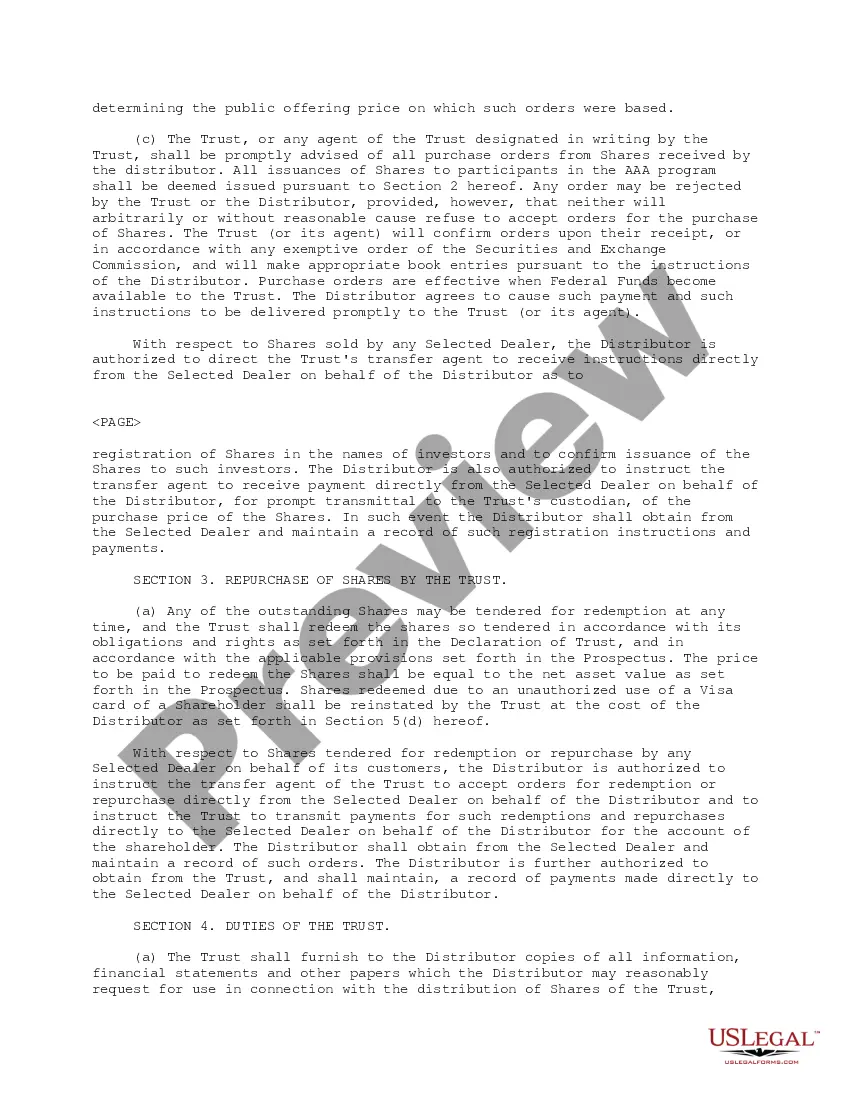
- Procedures for the repurchase of shares by the Trust.
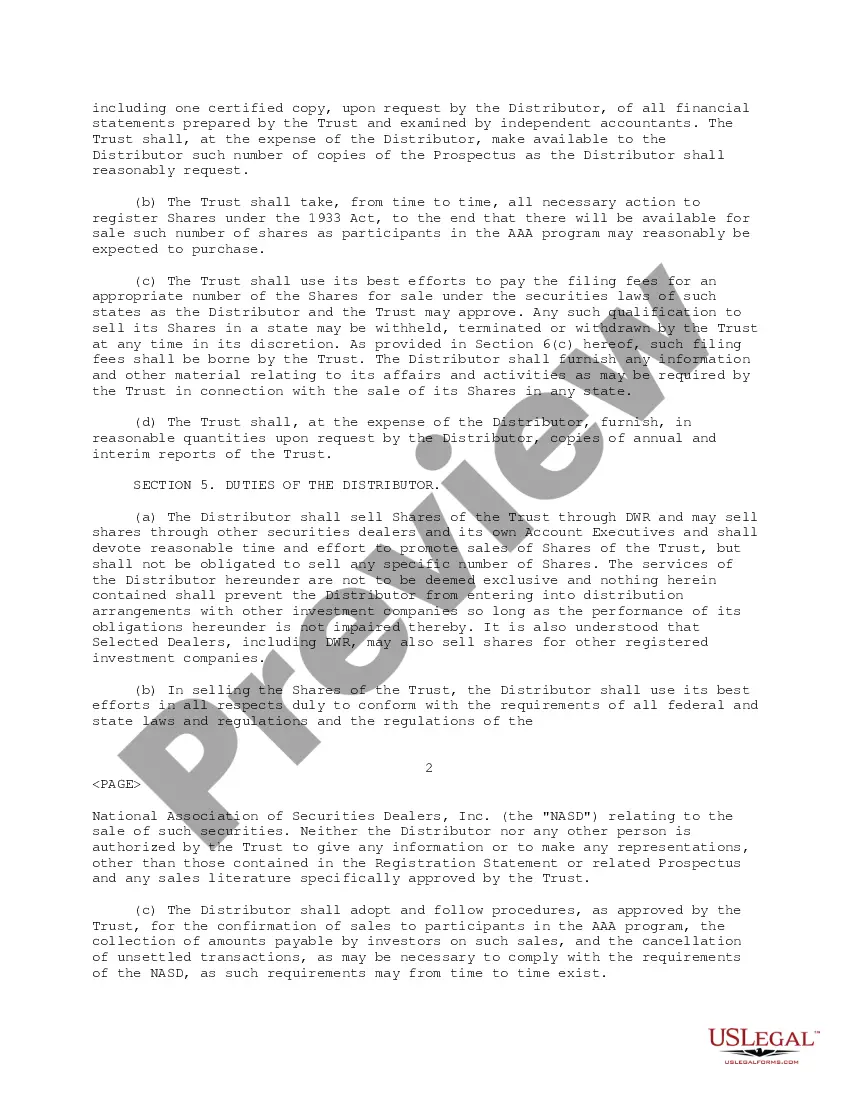
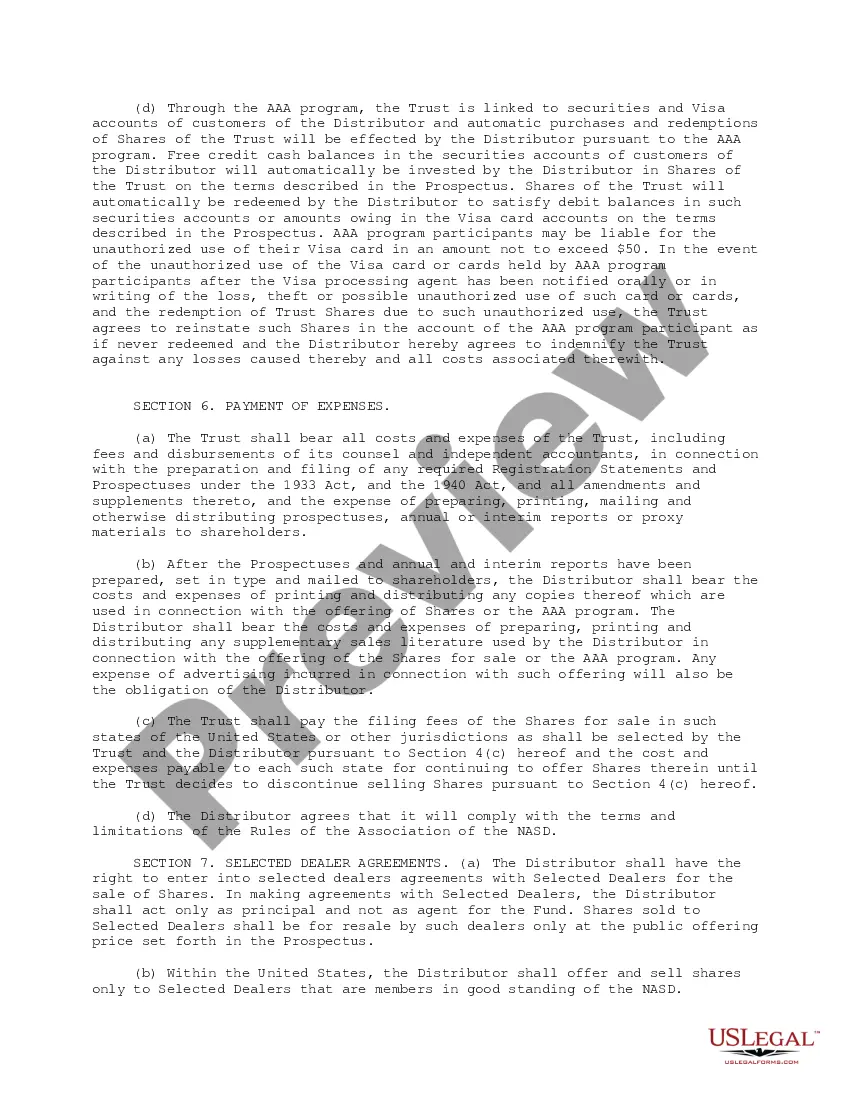
- Duties and obligations of both the Trust and the distributor.
- Indemnification clauses protecting both parties from liabilities.
- Termination and amendment provisions for the agreement.
Common use cases
This form should be used when a trust intends to enter into an agreement with a securities distributor to facilitate the continuous offering of its shares. It is particularly relevant for investment entities looking to promote growth through expanded share sales, ensuring compliance with investment regulations and proper structuring of the distribution process.
Intended users of this form
- Investment companies intending to sell shares continuously.
- Securities distributors involved in the sale of investment shares.
- Trustees and financial officers of the Active Assets Premier Money Trust.
- Legal representatives managing investment agreements for these entities.
How to complete this form
- Identify all parties involved, including the Trust and the distributor.
- Clearly state the terms for the appointment and responsibilities of the distributor.
- Specify the pricing mechanism for shares sold to participants.
- Detail the process for repurchase of shares by the Trust.
- Include signatures from authorized representatives of both parties.
Notarization requirements for this form
This form does not typically require notarization unless specified by local law. However, legal advice may be beneficial to ensure compliance with any pertinent regulations.
Get your form ready online
Our built-in tools help you complete, sign, share, and store your documents in one place.
Make edits, fill in missing information, and update formatting in US Legal Forms—just like you would in MS Word.
Download a copy, print it, send it by email, or mail it via USPS—whatever works best for your next step.
Sign and collect signatures with our SignNow integration. Send to multiple recipients, set reminders, and more. Go Premium to unlock E-Sign.
If this form requires notarization, complete it online through a secure video call—no need to meet a notary in person or wait for an appointment.
We protect your documents and personal data by following strict security and privacy standards.

Make edits, fill in missing information, and update formatting in US Legal Forms—just like you would in MS Word.

Download a copy, print it, send it by email, or mail it via USPS—whatever works best for your next step.

Sign and collect signatures with our SignNow integration. Send to multiple recipients, set reminders, and more. Go Premium to unlock E-Sign.

If this form requires notarization, complete it online through a secure video call—no need to meet a notary in person or wait for an appointment.

We protect your documents and personal data by following strict security and privacy standards.
Common mistakes to avoid
- Failing to clearly define pricing terms for share sales.
- Omitting essential signatures that validate the agreement.
- Not specifying the duration of the agreement accurately.
- Ignoring state-specific compliance requirements.
Benefits of using this form online
- Convenient access for immediate downloads and usage.
- Editability to customize based on specific needs.
- Reliable format ensuring adherence to legal standards.
Legal use & context
- The form serves as a binding contract between the Trust and the distributor.
- It complies with the Investment Company Act of 1940 and Securities Act of 1933.
- Ensures transparency and protects the interests of both parties involved in share distribution.
What to keep in mind
- This agreement facilitates the ongoing sale of investment shares in compliance with legal standards.
- Key sections define the roles and responsibilities of both the Trust and the distributor.
- Ensure to address any state-specific requirements during usage.
Looking for another form?
Form popularity
FAQ
Depending on how the trust is set up, beneficiaries often end up inheriting the trust's assets, according to some trigger like agefor instance, inheriting money when the person turns 21. The person or entity you want to oversee the money and fulfill the various responsibilities is the trustee.
Trustees are responsible for managing assets involved with the estate of another individual according to a trust agreement. One of the most important functions of the trustee is distributing the trust assets according to the wishes of the creator of the trust (trustor) as set forth in the trust agreement.
Distribute trust assets outright The grantor can opt to have the beneficiaries receive trust property directly without any restrictions. The trustee can write the beneficiary a check, give them cash, and transfer real estate by drawing up a new deed or selling the house and giving them the proceeds.
When a trust makes a distribution, it deducts the income distributed on its own tax return and issues the beneficiary a tax form called a K-1.
Most Trusts take 12 months to 18 months to settle and distribute assets to the beneficiaries and heirs.
Most Trusts take 12 months to 18 months to settle and distribute assets to the beneficiaries and heirs. What determines how long a Trustee takes will depend on the complexity of the estate where properties and other assets may have to be bought or sold before distribution to the Beneficiaries.
Distribute trust assets outright The grantor can opt to have the beneficiaries receive trust property directly without any restrictions. The trustee can write the beneficiary a check, give them cash, and transfer real estate by drawing up a new deed or selling the house and giving them the proceeds.
Administering a living trust after your death is not cost-free. Even if probate is avoided, the successor trustee should usually seek help from a lawyer in making sure that your debts are paid, all of the necessary tax forms filed and the assets in your trust legally distributed to your beneficiaries.