Complaint For Declaratory Judgment for Return of Improperly Waived Insurance Premiums
Overview of this form
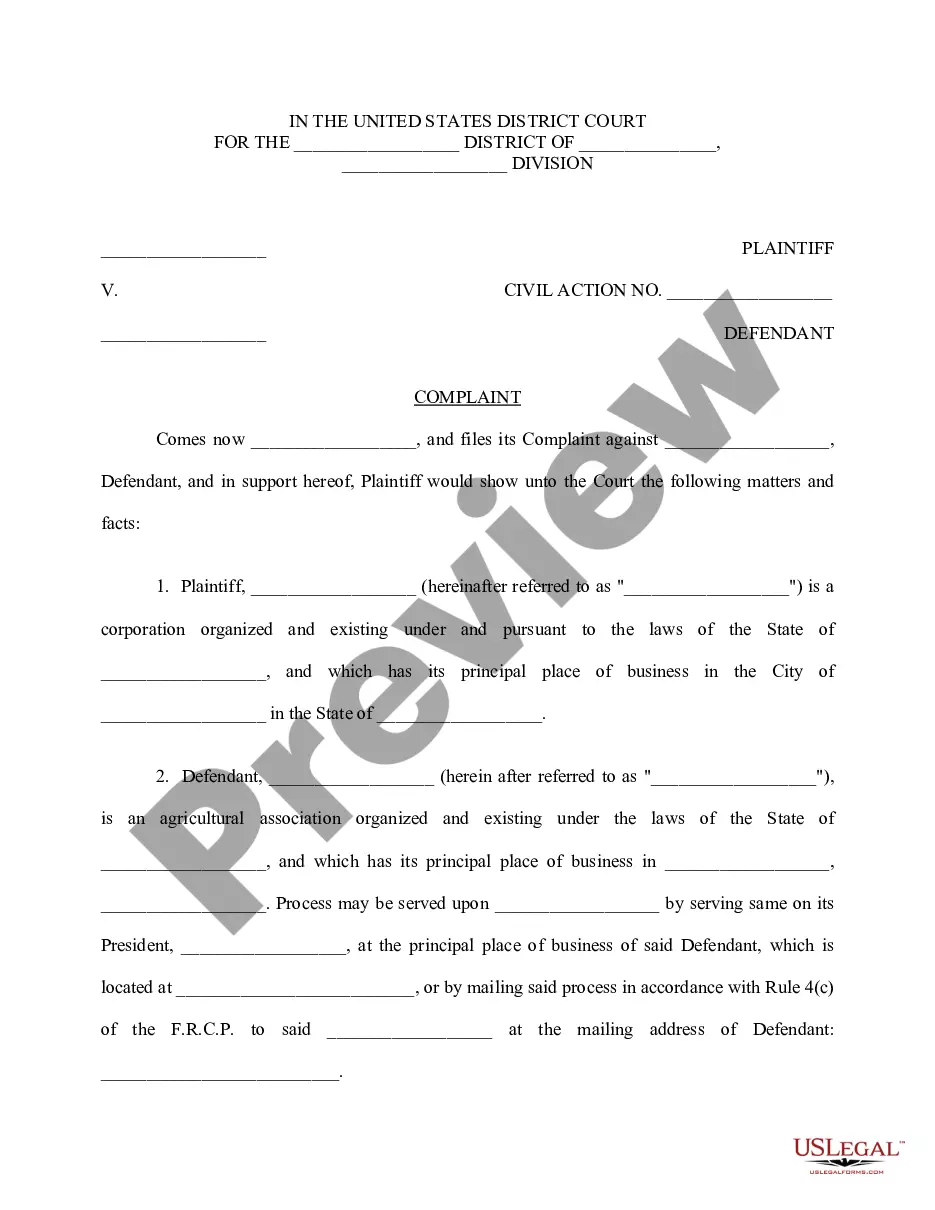
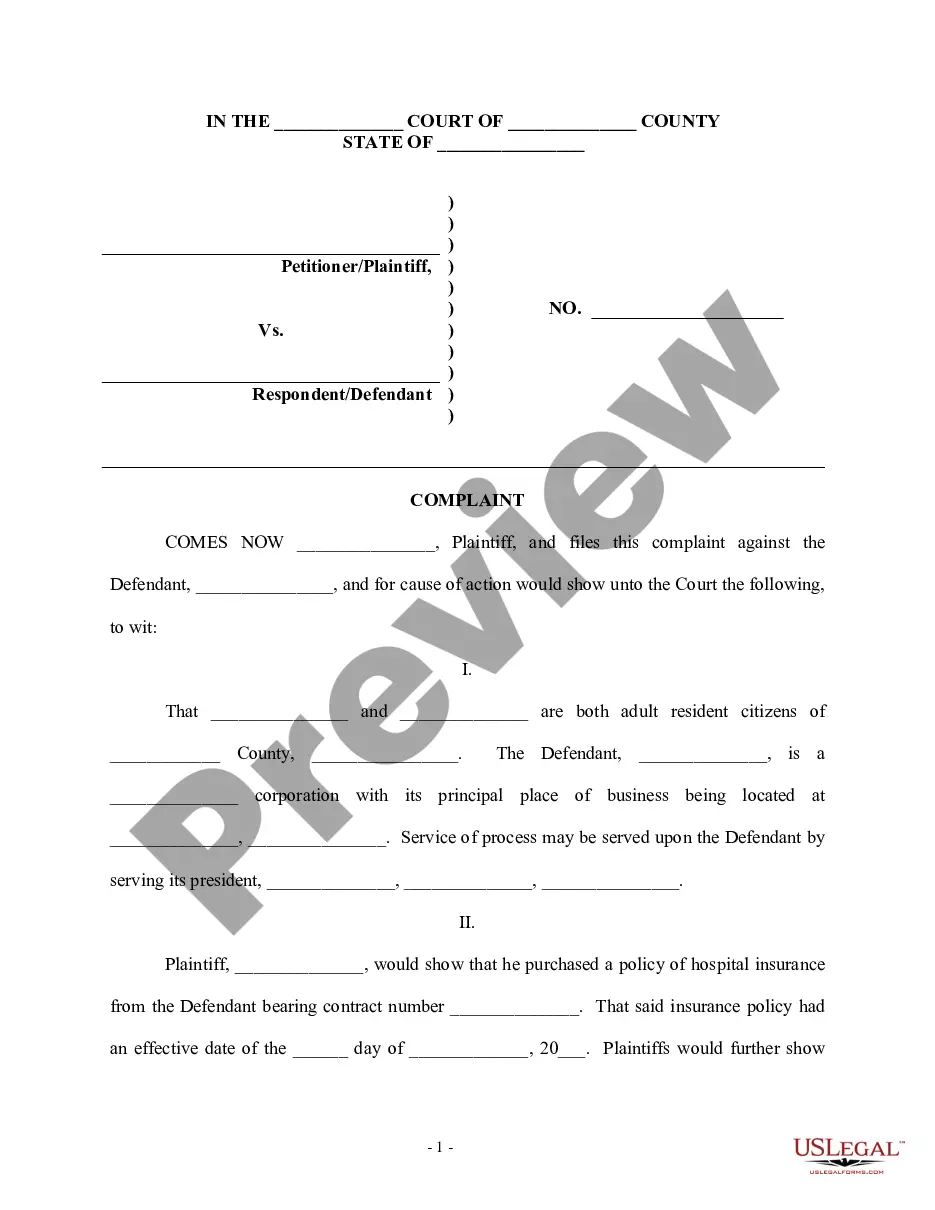
The Complaint for Declaratory Judgment for Return of Improperly Waived Insurance Premiums is a legal document used to seek a court's determination regarding disputes over improperly waived insurance premiums. This form differs from other insurance-related forms by specifically addressing a declaratory judgment, which clarifies the rights and obligations of the parties involved in relation to the termination of premium waivers based on misrepresented facts about disabilities.
Form components explained
- Jurisdiction Section: Establishes the court's authority to hear the case.
- Parties Involved: Identifies the plaintiff and defendant, including their legal statuses.
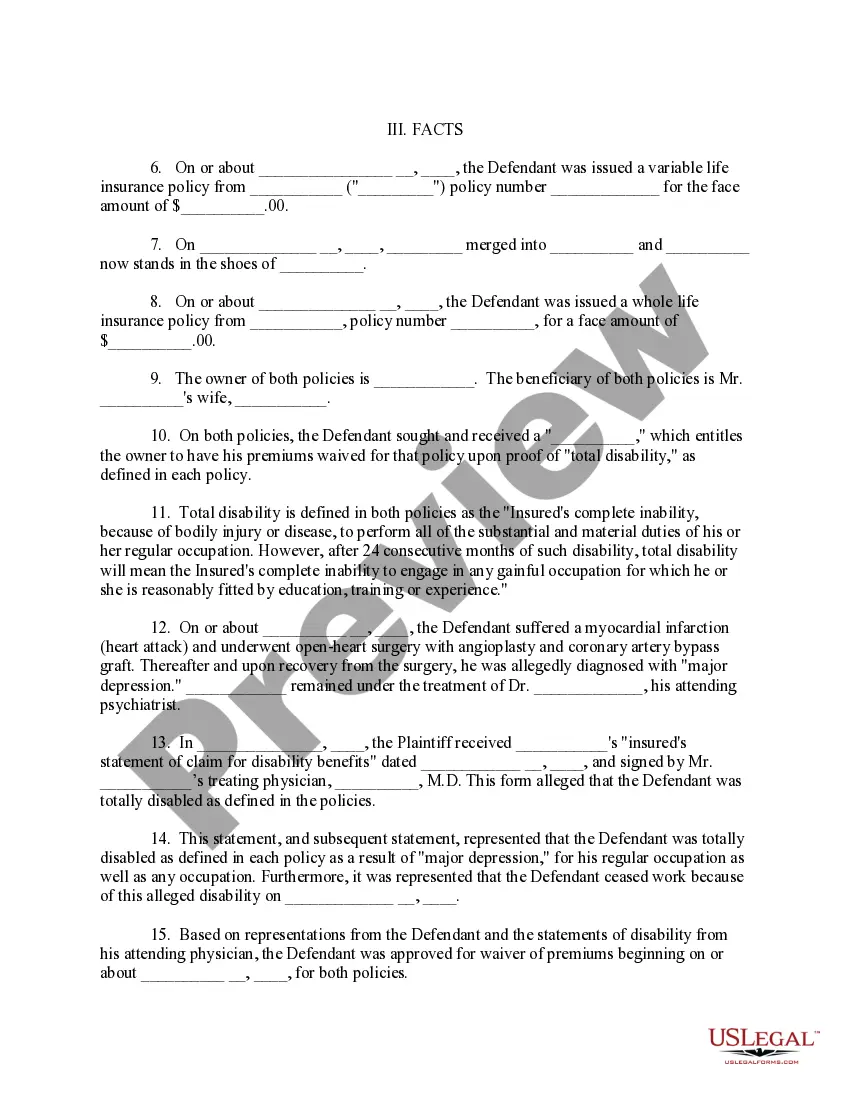
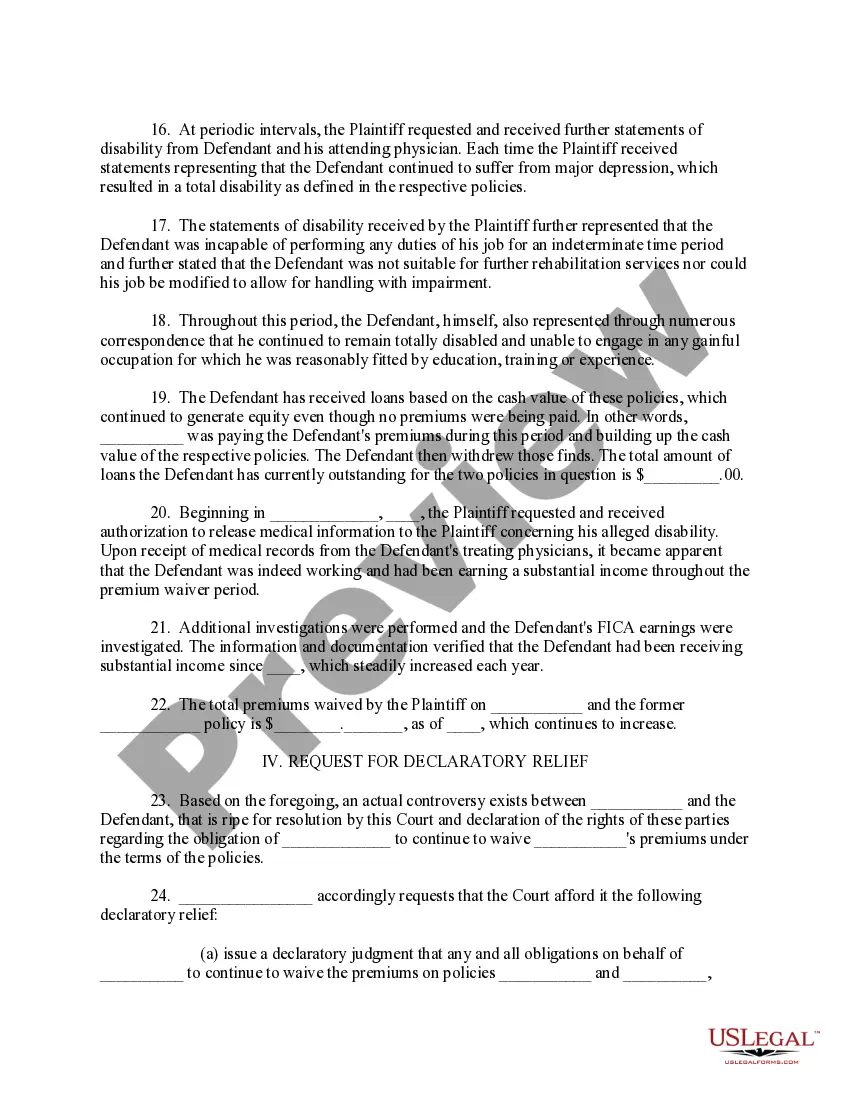
- Facts Section: Details the history of the insurance policies and the events leading up to the complaint.
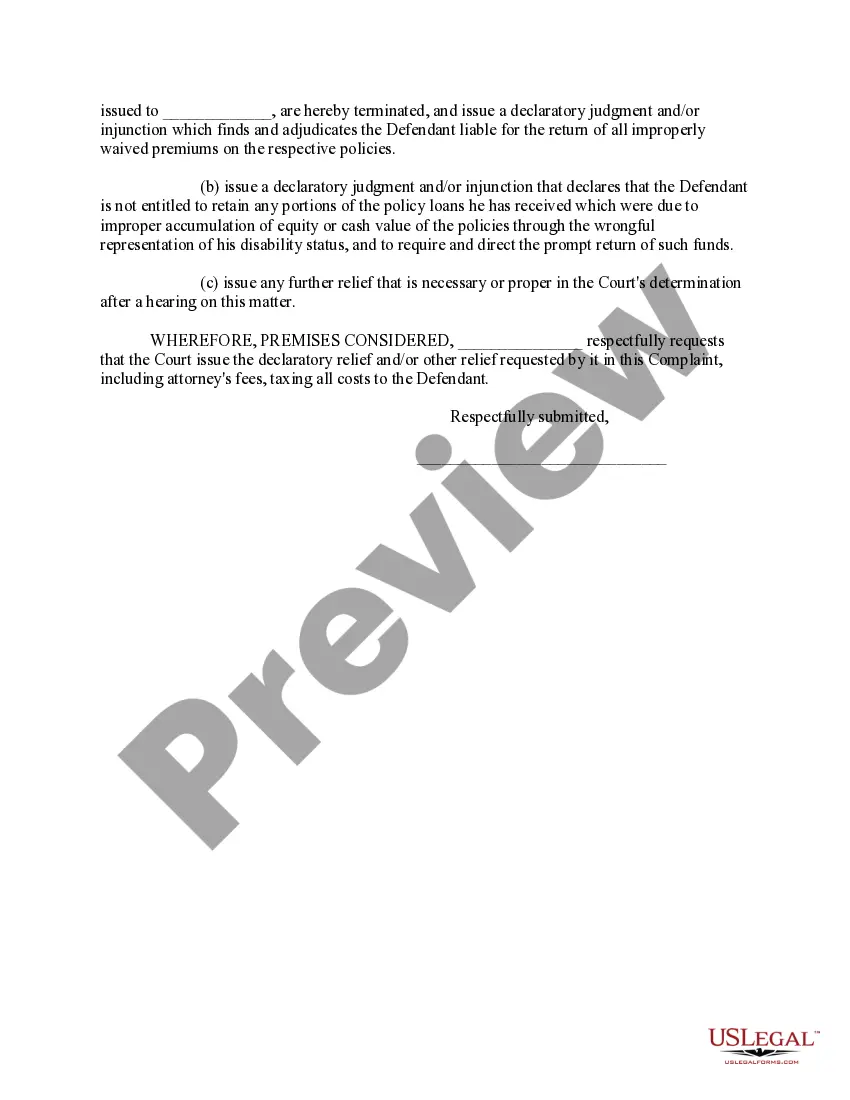
- Request for Declaratory Relief: Specifies the actions the plaintiff is asking the court to take regarding the insurance premiums.
- Signatures: Includes spaces for the plaintiff's signature and legal representation.




When to use this form
This form is typically used when an insurance policyholder believes that premiums have been waived based on false claims of total disability. It is appropriate in situations where the insurer needs to resolve disputes over the legitimacy of such claims, ensuring that all parties are treated fairly under the terms of the policy.
Who should use this form
- Individuals who have been denied or improperly granted a waiver of insurance premiums.
- Insurance companies or their representatives seeking to clarify obligations under insurance contracts.
- Legal professionals handling insurance disputes related to claims of disability.
How to prepare this document
- Identify all parties involved: Fill in the names and addresses of the plaintiff and defendant.
- Outline jurisdiction: Provide details about the court's authority and the basis for jurisdiction.
- Detail the facts: Accurately describe the history of the insurance policies, including dates and specifics about the claims made.
- Specify the relief sought: Clearly state what you are asking the court to declare regarding the premium waivers.
- Sign the complaint: Make sure the document is signed by the plaintiff and/or their legal representative.
Notarization requirements for this form
This form does not typically require notarization to be legally valid. However, some jurisdictions or document types may still require it. US Legal Forms provides secure online notarization powered by Notarize, available 24/7 for added convenience.
Get your form ready online
Our built-in tools help you complete, sign, share, and store your documents in one place.
Make edits, fill in missing information, and update formatting in US Legal Forms—just like you would in MS Word.
Download a copy, print it, send it by email, or mail it via USPS—whatever works best for your next step.
Sign and collect signatures with our SignNow integration. Send to multiple recipients, set reminders, and more. Go Premium to unlock E-Sign.
If this form requires notarization, complete it online through a secure video call—no need to meet a notary in person or wait for an appointment.
We protect your documents and personal data by following strict security and privacy standards.

Make edits, fill in missing information, and update formatting in US Legal Forms—just like you would in MS Word.

Download a copy, print it, send it by email, or mail it via USPS—whatever works best for your next step.

Sign and collect signatures with our SignNow integration. Send to multiple recipients, set reminders, and more. Go Premium to unlock E-Sign.

If this form requires notarization, complete it online through a secure video call—no need to meet a notary in person or wait for an appointment.

We protect your documents and personal data by following strict security and privacy standards.
Mistakes to watch out for
- Failing to provide complete and accurate information about all parties involved.
- Omitting key facts that support the claim for declaratory judgment.
- Not clearly specifying the relief sought from the court.
- Submitting the form without proper signatures.
Why complete this form online
- Convenience: Easily download and edit the form to meet your specific needs.
- Time-saving: Avoid lengthy legal procedures and prepare your complaint quickly.
- Affordable: Access professional legal form templates without the high costs of hiring an attorney.
Looking for another form?

Form popularity
FAQ
A declaratory judgment action is essentially a request typically by the insurer but often by the insured that a court examine the relevant insurance policy provisions and declare the rights and obligations of the parties under the insurance contract.
Declaratory relief refers to a court's judgment stating the rights of parties without ordering any specific action or listing awards for damages. When a party is requesting a declaratory judgment, the party is seeking an official declaration regarding the status of the controversy in issue.
A second consideration is whether it makes business sense to undertake the costs that go along with a declaratory judgment action. Even in a relatively simple case, it may take $10,000 to $20,000 to obtain a summary judgment on the duty to defend.
Dec Action is the short form of declaratory judgment action. A declaratory judgment is a judgment of a court which determines the rights of parties without ordering anything be done or awarding damages.
A court-issued declaratory judgment outlines the rights and responsibilities of each involved party. This judgment does not require action or award damages. It helps to resolve disputes and prevent lawsuits.
A declaratory judgment is a binding judgment from a court defining the legal relationship between parties and their rights in a matter before the court. Typically, a party will first send a cease and desist letter prior to seeking declaratory judgment from a court.A declaratory judgment is also called a declaration.
The Court clarified that declaratory judgment jurisdiction required disputes to be 'definite and concrete, touching the legal relations of the parties having adverse legal interests'; and that it be 'real and substantial' and 'admit of specific relief through a decree of a conclusive character, as distinguished from