Louisiana Judgment on Motion to Traverse
Understanding this form
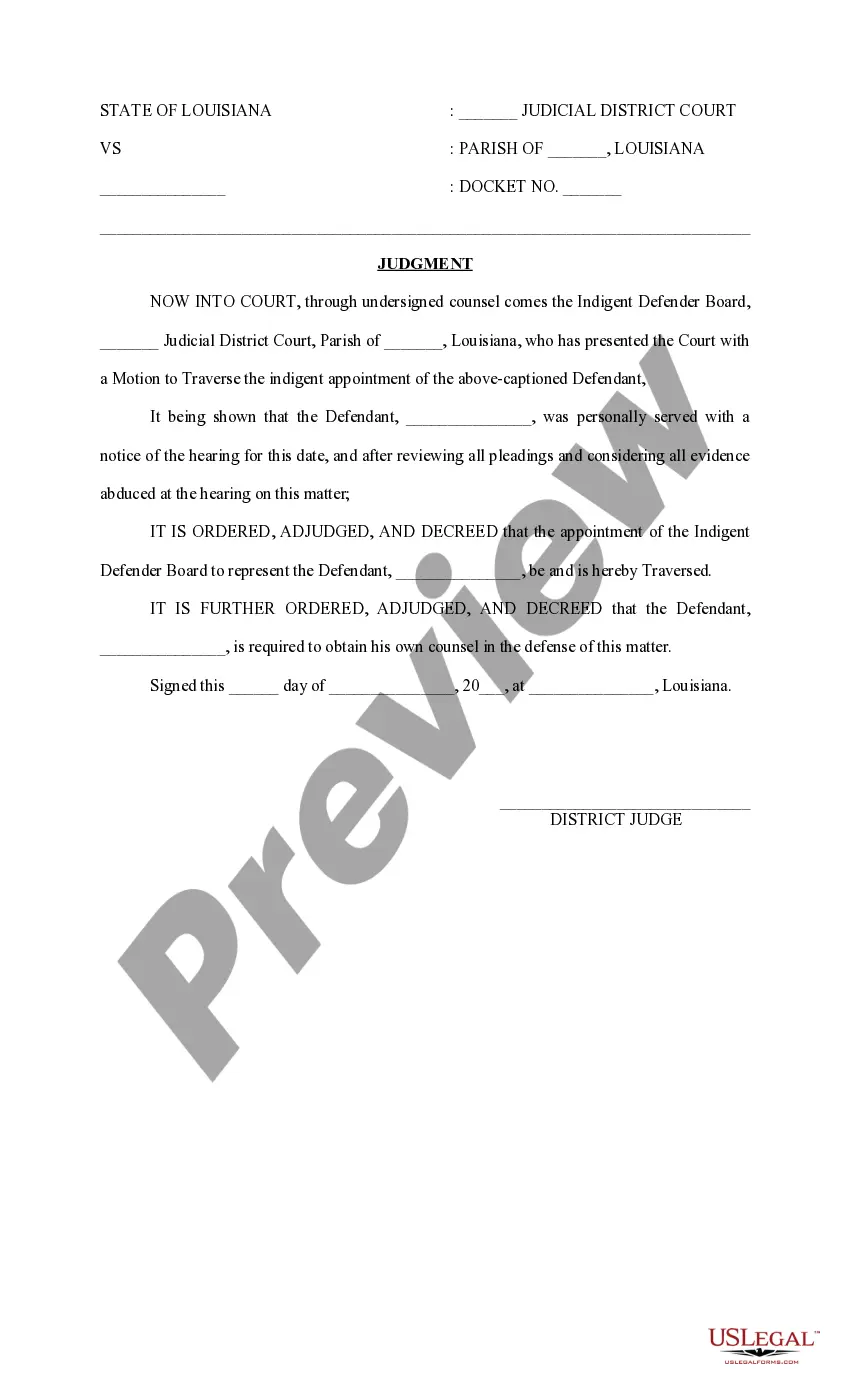
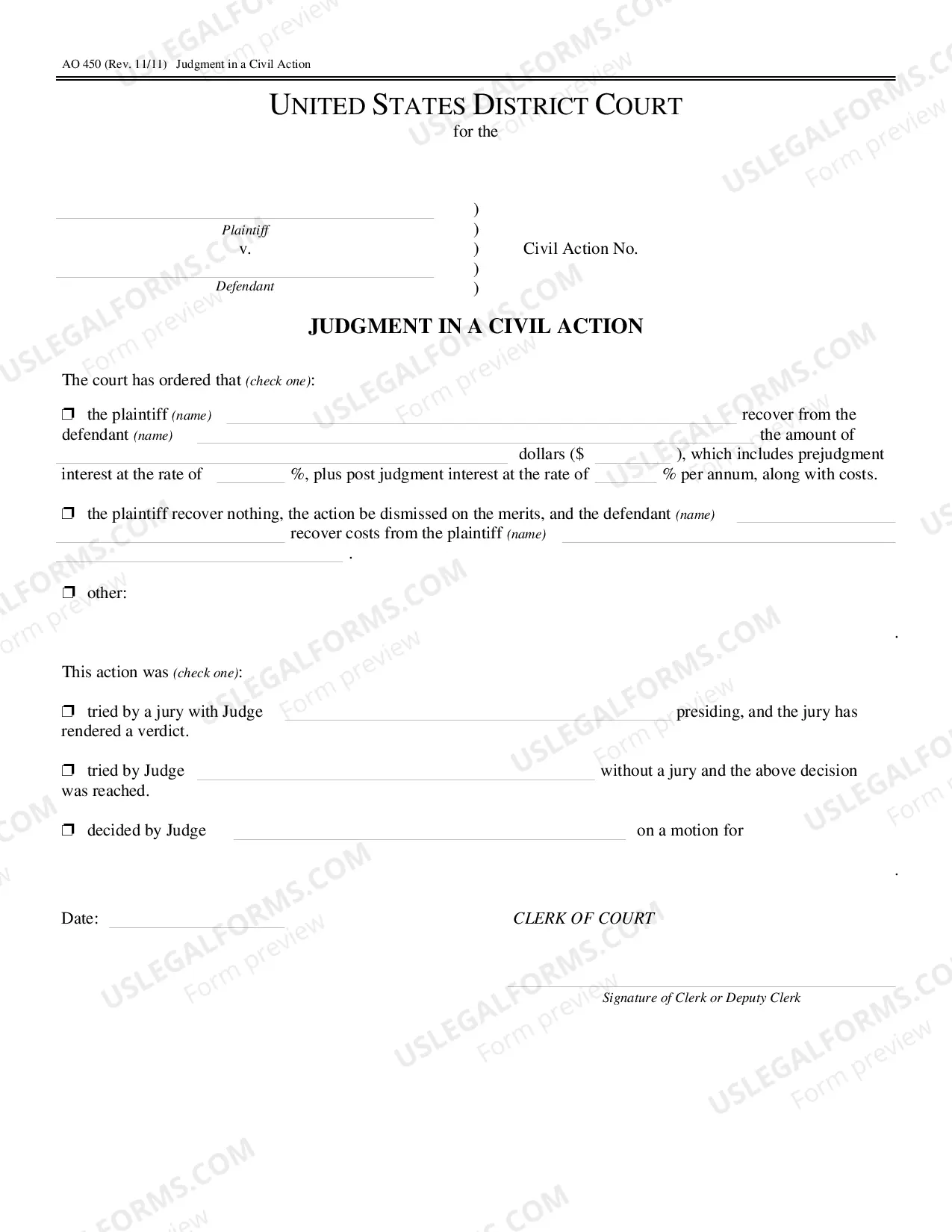
The Judgment on Motion to Traverse is a legal document used in Louisiana courts to formally cancel the appointment of the Indigent Defender Board to represent a defendant. This form is issued after a hearing where the court reviews evidence and determines that the defendant should obtain their own legal counsel. It serves as an important procedural step in ensuring that defendants have the right to choose their own representation, distinguishing it from forms that may simply appoint counsel for those unable to afford one.
Form components explained
- Identification of the parties involved, including the defendant and the court.
- Description of the motion filed by the Indigent Defender Board.
- Details of the hearing, including the notice served to the defendant.
- Court's findings and decision to traverse the indigent appointment.
- Order requiring the defendant to obtain their own counsel.
- Signature line for the district judge.
When this form is needed
This form should be used when a defendant has been appointed counsel through the Indigent Defender Board, but either party, typically the board or the court, questions the appropriateness of this representation. It is commonly used in cases where the defendant has the financial means to hire private legal counsel or wishes to change their representation due to various circumstances.
Who should use this form
This form is intended for:
- Defendants who wish to contest their appointment of counsel by the Indigent Defender Board.
- Indigent Defender Boards or legal representatives seeking to modify the representation status of a defendant.
- Judges in Louisiana courts who need to formalize decisions regarding a defendant's legal representation.
How to prepare this document
- Fill in the court's name and the docket number at the top of the document.
- Identify the involved parties, including the name of the defendant and the Indigent Defender Board.
- Indicate the date of the hearing and confirm that the defendant was served with notice.
- Outline the court's findings based on the evidence presented.
- Include the judge's signature and the date on which the judgment is issued.
Is notarization required?
This form does not typically require notarization unless specified by local law. However, it is advisable to check with local court requirements to ensure compliance.
Get your form ready online
Our built-in tools help you complete, sign, share, and store your documents in one place.
Make edits, fill in missing information, and update formatting in US Legal Forms—just like you would in MS Word.
Download a copy, print it, send it by email, or mail it via USPS—whatever works best for your next step.
Sign and collect signatures with our SignNow integration. Send to multiple recipients, set reminders, and more. Go Premium to unlock E-Sign.
If this form requires notarization, complete it online through a secure video call—no need to meet a notary in person or wait for an appointment.
We protect your documents and personal data by following strict security and privacy standards.

Make edits, fill in missing information, and update formatting in US Legal Forms—just like you would in MS Word.

Download a copy, print it, send it by email, or mail it via USPS—whatever works best for your next step.

Sign and collect signatures with our SignNow integration. Send to multiple recipients, set reminders, and more. Go Premium to unlock E-Sign.

If this form requires notarization, complete it online through a secure video call—no need to meet a notary in person or wait for an appointment.

We protect your documents and personal data by following strict security and privacy standards.
Mistakes to watch out for
- Failing to properly identify all parties involved in the case.
- Not including the date of the hearing or the date when the judgment is signed.
- Overlooking any specific local requirements for filing or submitting the form.
Benefits of using this form online
- Immediate access to the legal form, allowing for convenient and time-efficient completion.
- Editable templates ensure that you can customize the form to meet your specific needs.
- Reliability of forms provided by licensed attorneys, ensuring compliance with state laws.
Looking for another form?

Form popularity
FAQ
To secure a judgment of possession in Louisiana, you will need to file a request with the court outlining your claims. This typically involves presenting evidence that supports your right to the property in question. The court will consider your Louisiana Judgment on Motion to Traverse as part of the evidence needed to grant your request. For more efficient handling of this process, USLegalForms offers resources and templates that can help guide you.
To make a judgment executory in Louisiana, specific procedures must be followed. This involves obtaining a certified copy of the judgment and ensuring that all required steps, such as recording the judgment with the local clerk, are completed. Once a judgment is designated as executory, it allows for actions such as seizing property or wages. Therefore, understanding the process can be beneficial when faced with a Louisiana Judgment on Motion to Traverse.
In Louisiana, you typically have a limited time frame to appeal a judgment, which is usually 30 days after the judgment is entered. If you wish to contest a Louisiana Judgment on Motion to Traverse, adhering to this timeline is crucial. Missing this window can permanently affect your ability to challenge the decision. Therefore, staying informed about the deadlines is essential for protecting your legal rights.
A final and executory judgment in Louisiana signifies that a court's decision is definitive and enforceable. It means that the judgment has reached its conclusion and can lead to actions such as a Louisiana Judgment on Motion to Traverse. This type of judgment is crucial because it eliminates the possibility of appeal, allowing the prevailing party to execute the judgment without delay. Understanding this concept is key for both creditors and debtors.
When a judgment is filed against you in Louisiana, it can significantly impact your financial standing and credit. Essentially, a Louisiana Judgment on Motion to Traverse could lead to wage garnishments or property liens. It is vital to respond promptly and explore your options, including the possibility of filing a motion to traverse if you believe the judgment is unjust. Engaging a knowledgeable legal professional can help you navigate these complexities.