Angel Investment Term Sheet
What this document covers
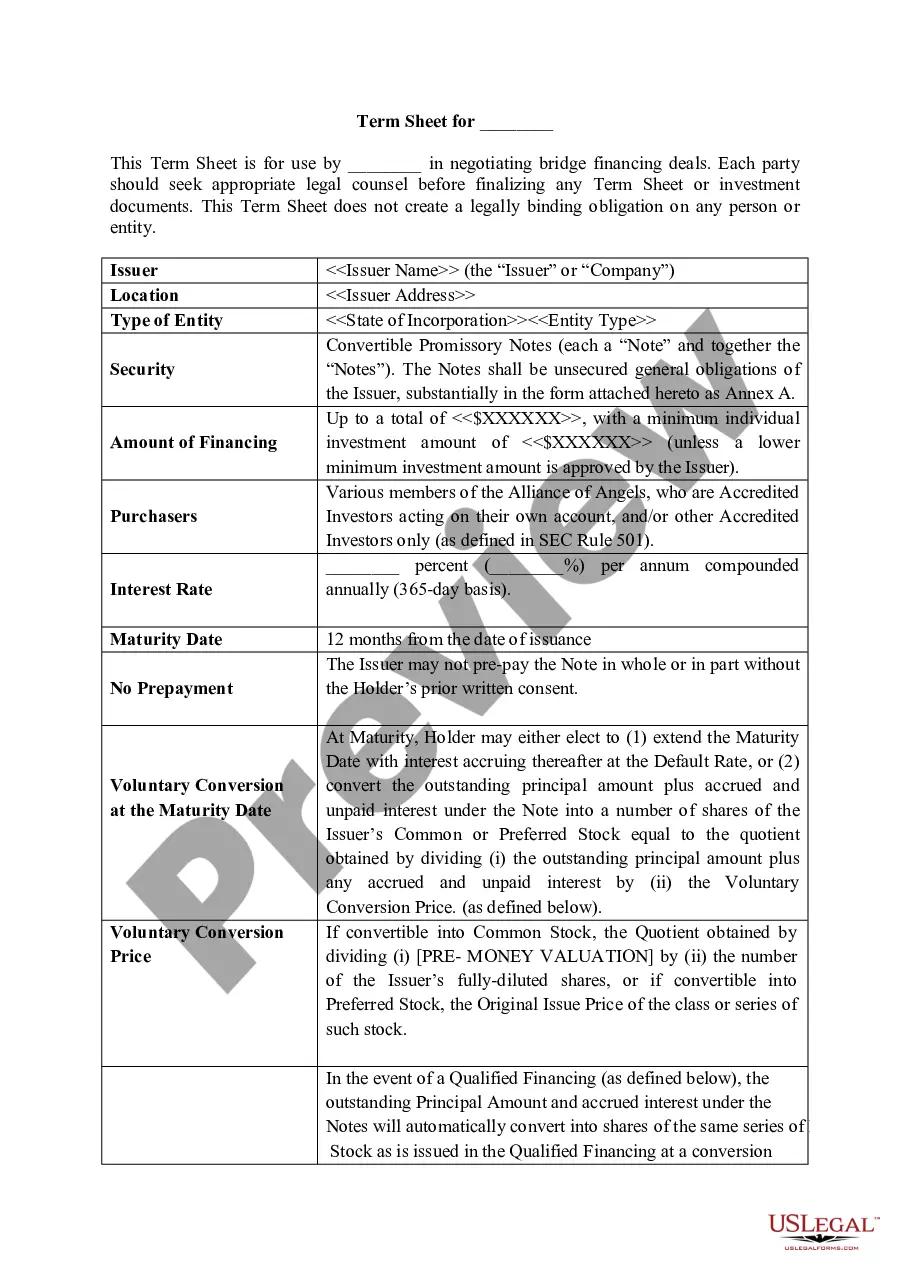
The Angel Investment Term Sheet is a non-binding agreement that outlines the fundamental terms and conditions under which an angel investor intends to invest in a start-up business. This term sheet serves as a critical tool for establishing a mutual understanding between the start-up and the investor before moving forward with a binding agreement. Unlike formal investment contracts, the term sheet allows both parties to negotiate and clarify their expectations in a straightforward manner.
Key components of this form
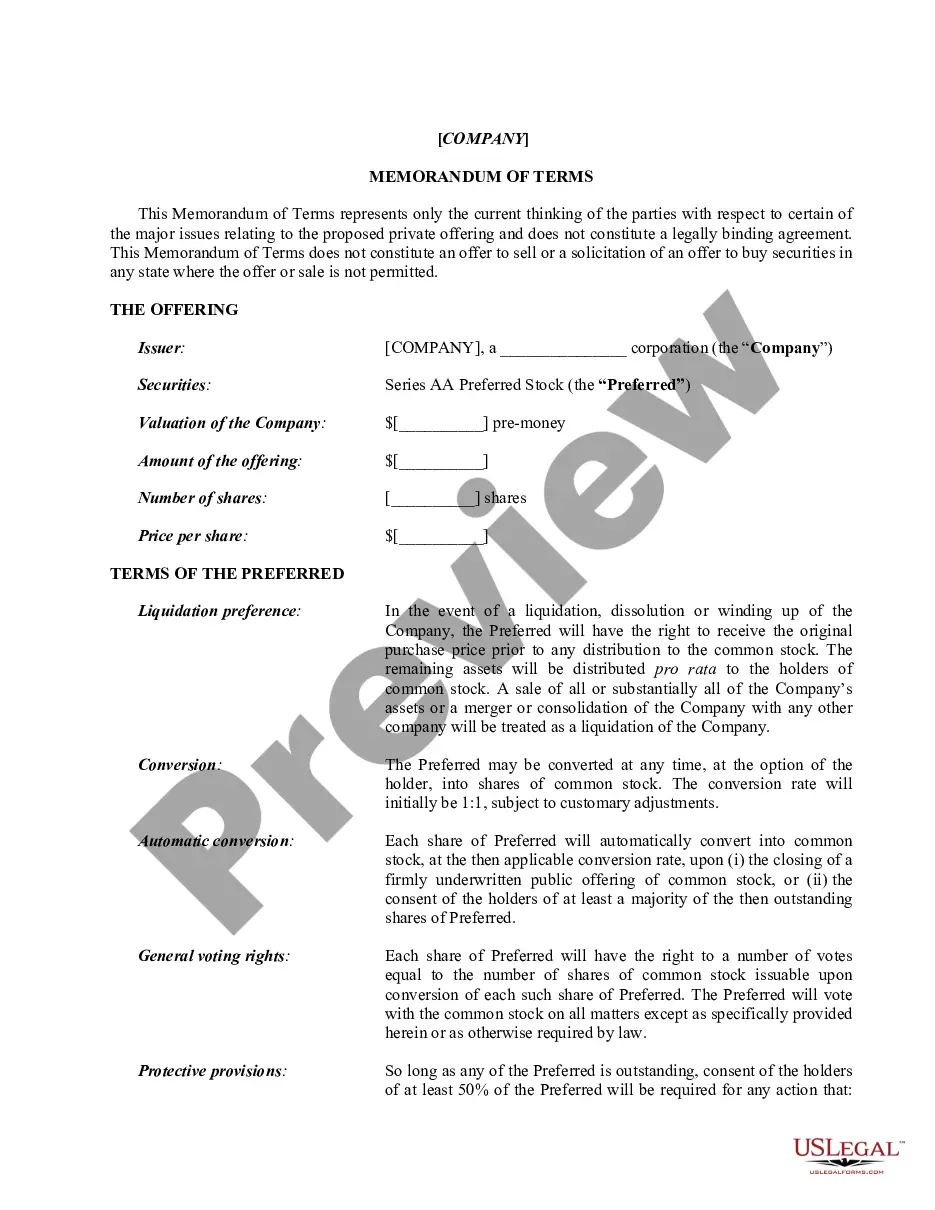
- General terms of financing, including the security type and minimum investment amounts.
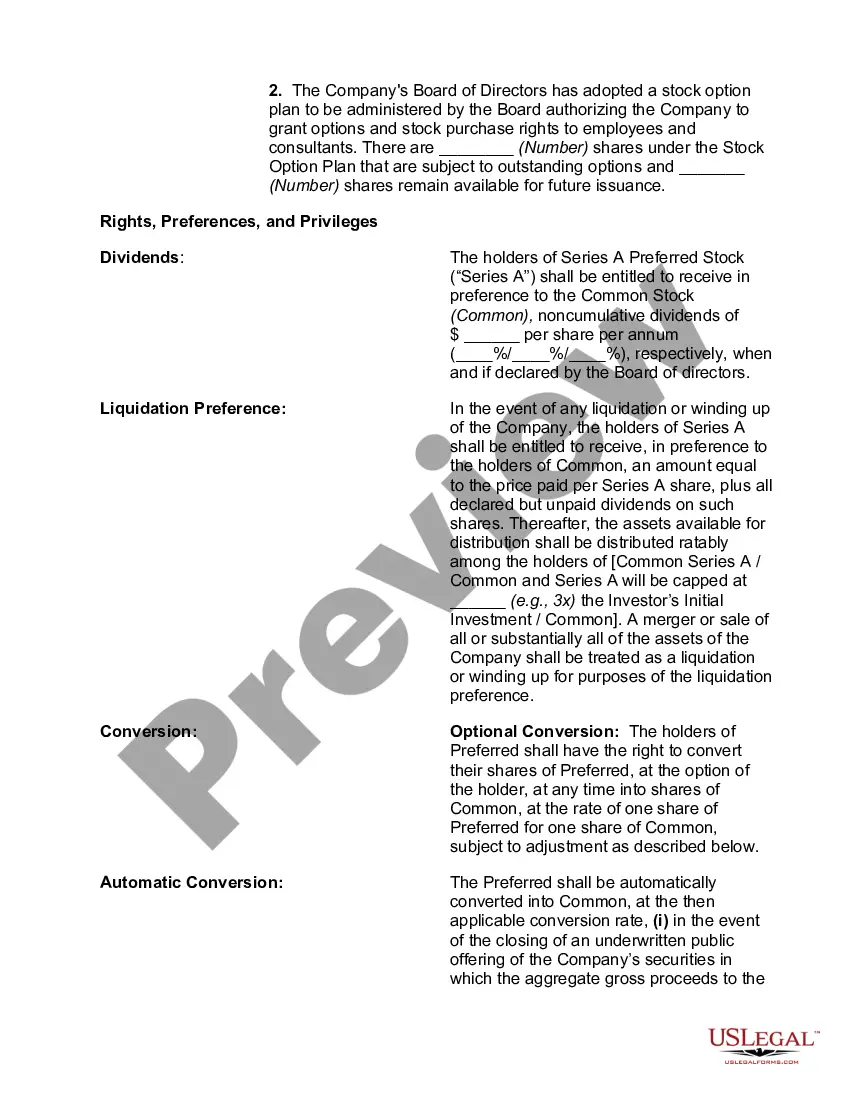
- Capitalization table that outlines the ownership distribution among common and preferred stockholders.
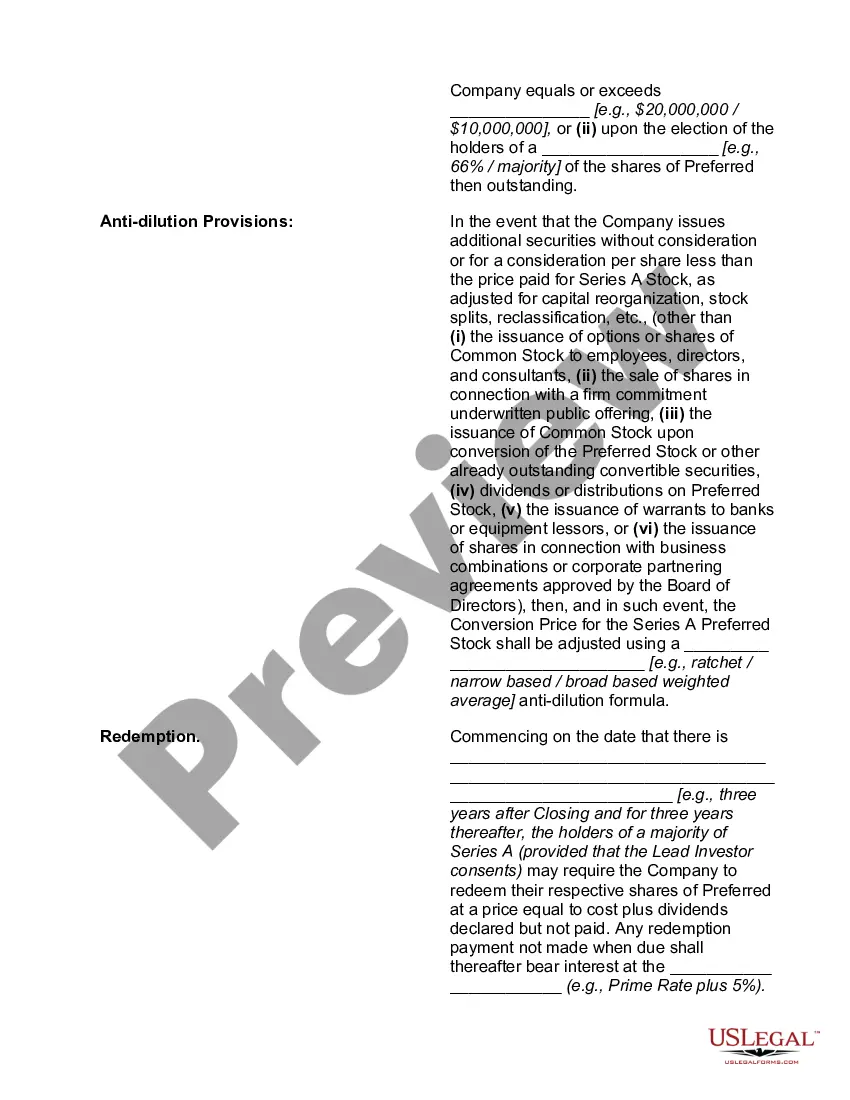
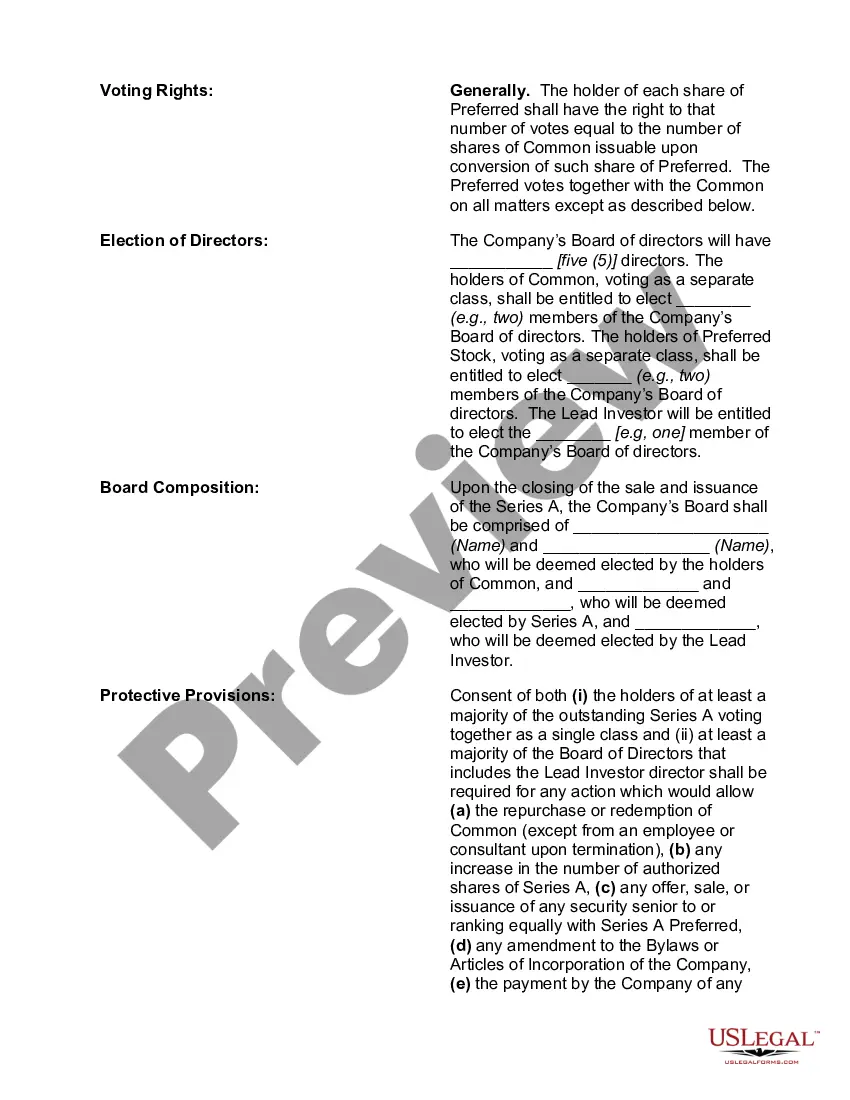
- Rights, preferences, and privileges related to dividends, liquidation, conversion, and voting rights.
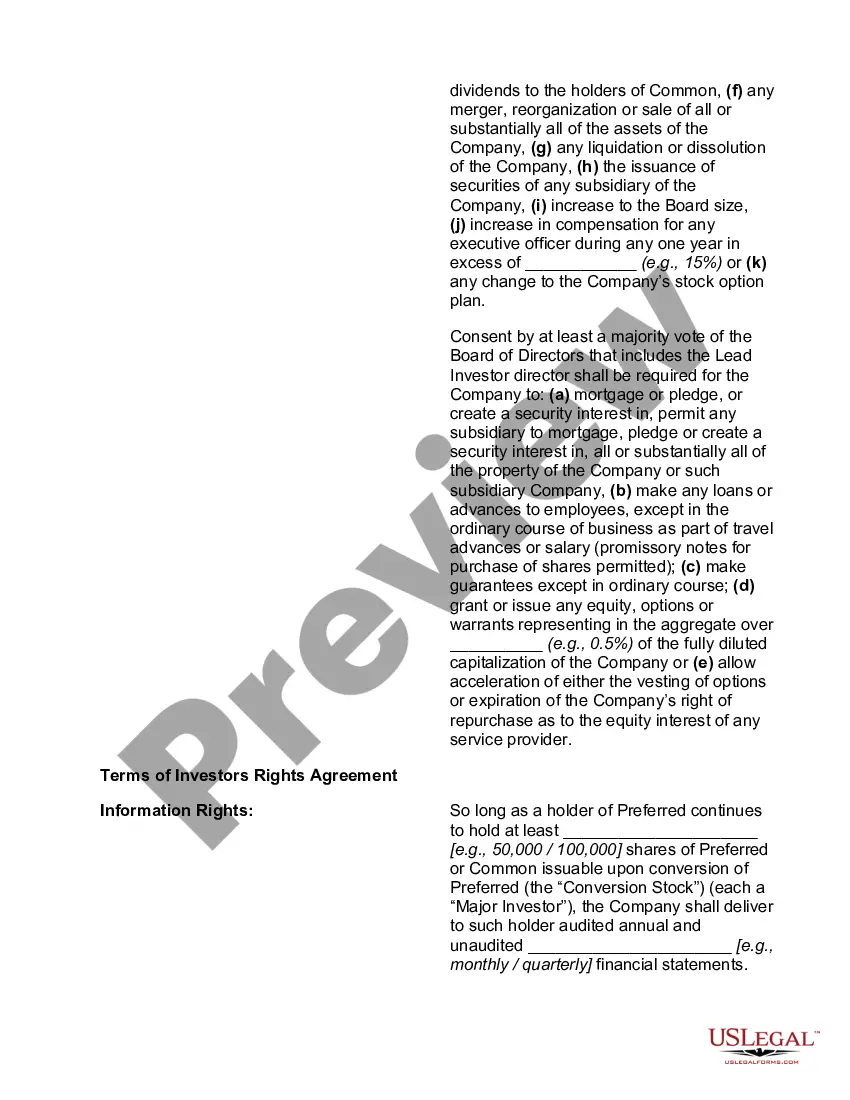
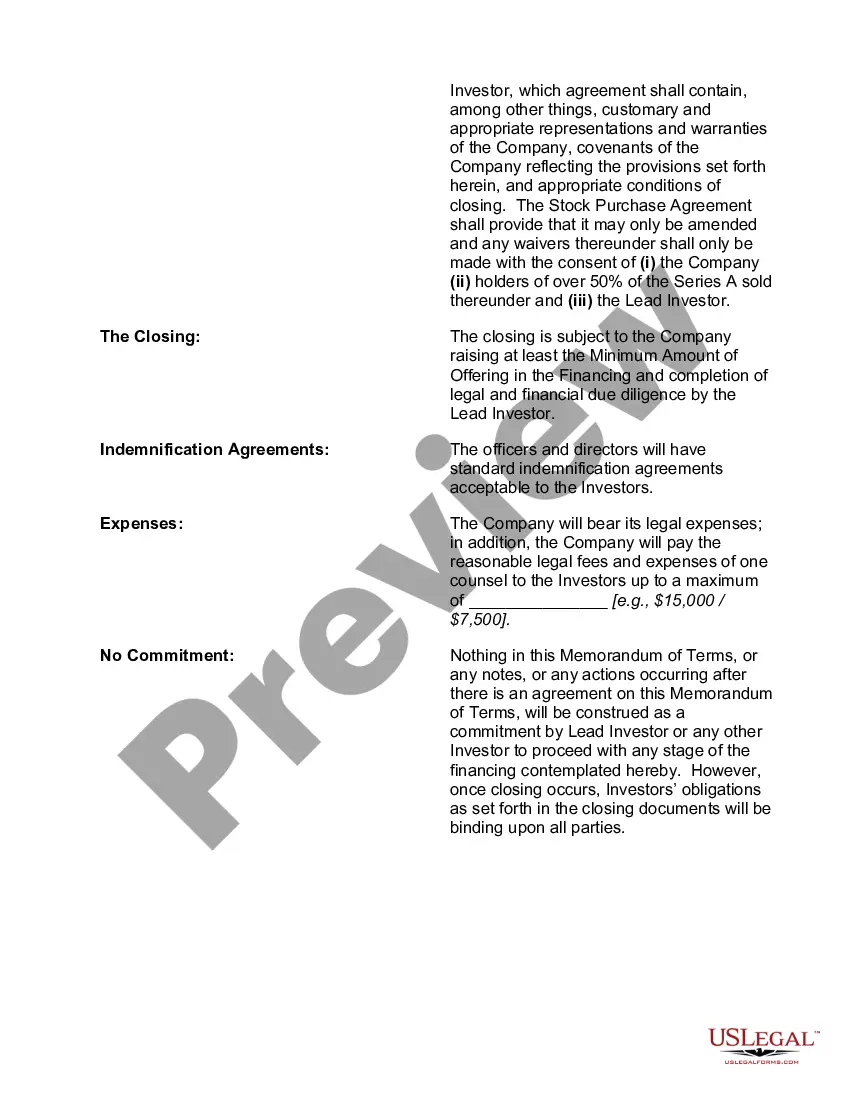
- Protective provisions requiring investor consent for significant company actions.
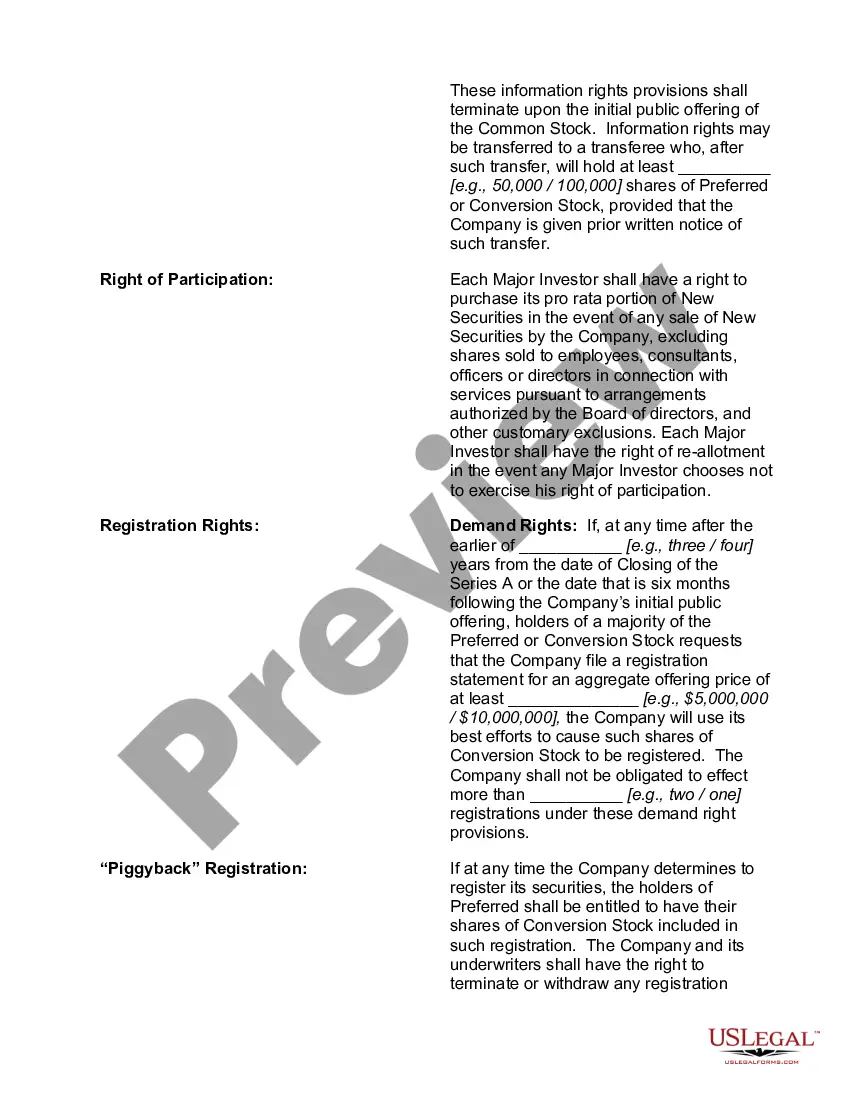
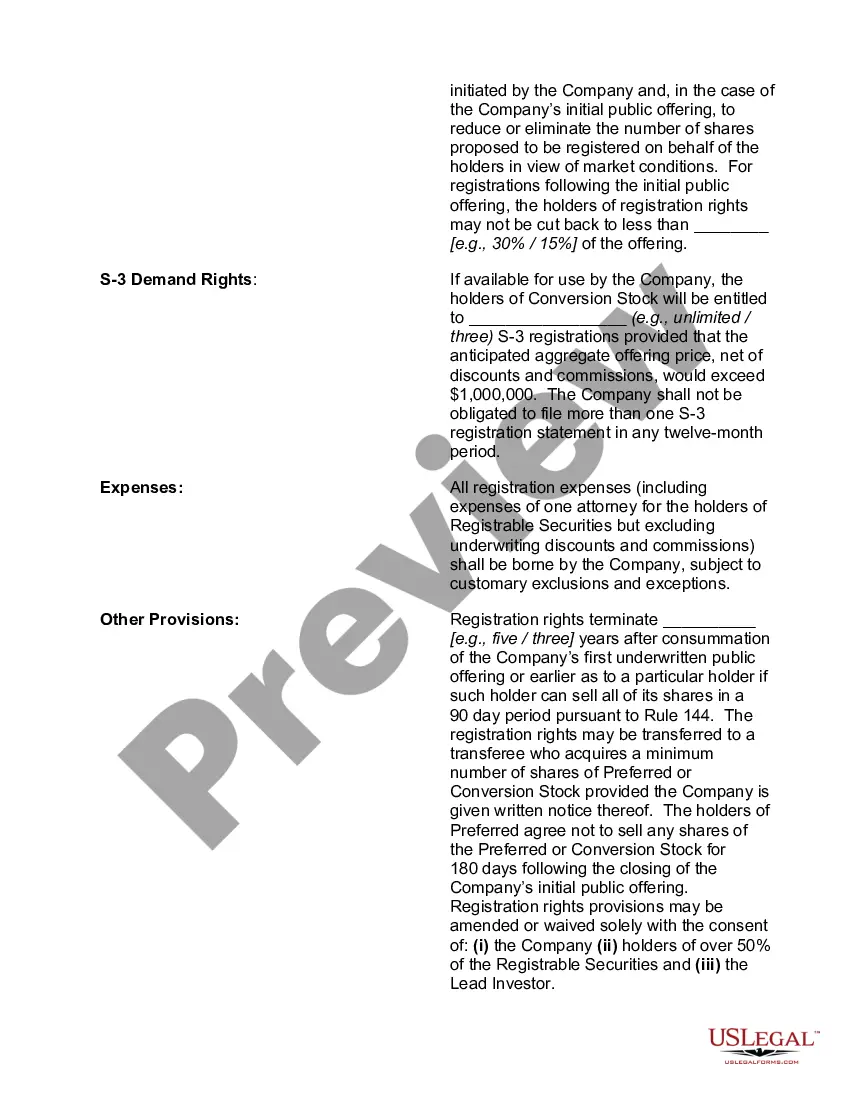
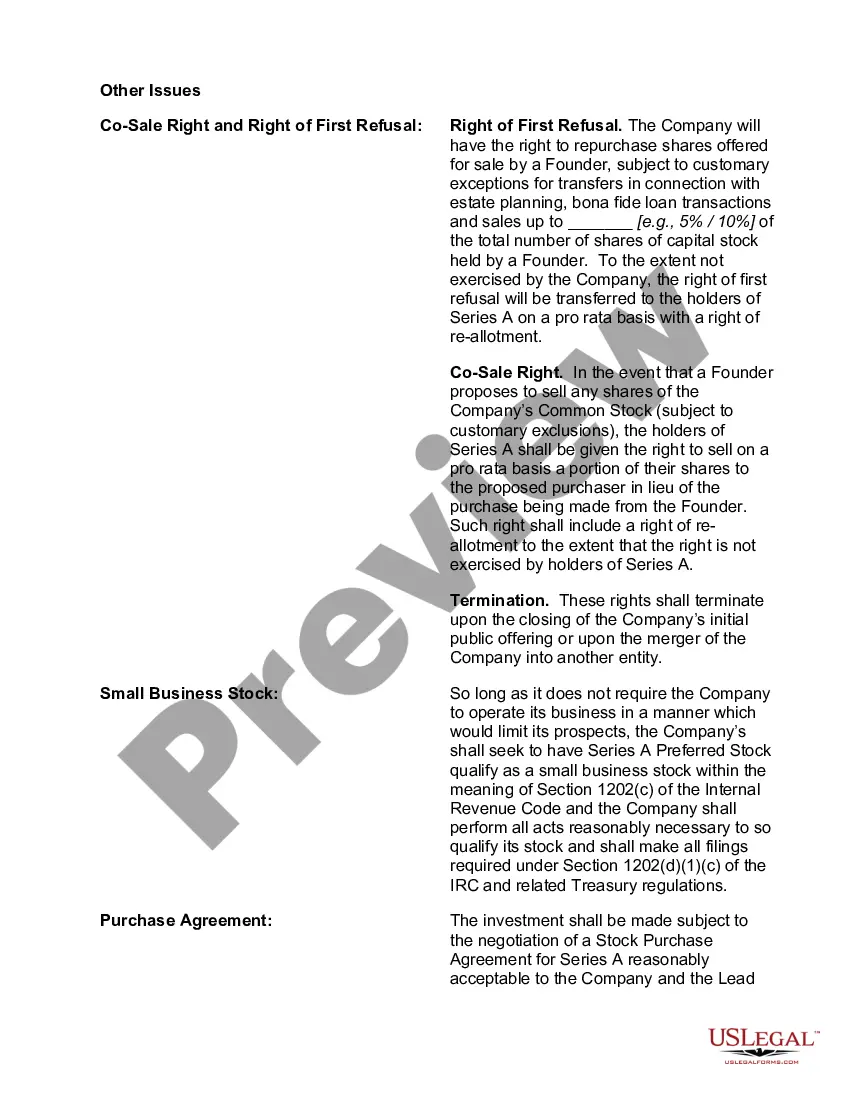
- Investor rights agreements detailing information rights, registration rights, and co-sale rights.



When this form is needed
This form is useful when a start-up is seeking initial funding from angel investors and needs to clearly document the terms of the investment. It is typically used during the early stages of financing discussions, prior to drafting formal investment agreements. The term sheet can help prevent misunderstandings and define expectations in terms of valuation and investor rights.
Who should use this form
- Start-up founders seeking funding from angel investors.
- Angel investors evaluating potential investment opportunities in new businesses.
- Legal professionals assisting clients in preparing for investments or funding agreements.
- Business advisors providing guidance to start-ups on securing funding.
Completing this form step by step
- Identify the parties involved, including the company and the investors.
- Specify the terms of the financing, including the type of security and the minimum investment amount.
- Detail the capitalization structure of the company, including the number of shares and percentages.
- Outline the rights, preferences, and privileges associated with the preferred stock.
- Provide signatures from all parties to indicate mutual agreement on the terms set forth in the sheet.
Notarization guidance
This form usually doesn’t need to be notarized. However, local laws or specific transactions may require it. Our online notarization service, powered by Notarize, lets you complete it remotely through a secure video session, available 24/7.
Get your form ready online
Our built-in tools help you complete, sign, share, and store your documents in one place.
Make edits, fill in missing information, and update formatting in US Legal Forms—just like you would in MS Word.
Download a copy, print it, send it by email, or mail it via USPS—whatever works best for your next step.
Sign and collect signatures with our SignNow integration. Send to multiple recipients, set reminders, and more. Go Premium to unlock E-Sign.
If this form requires notarization, complete it online through a secure video call—no need to meet a notary in person or wait for an appointment.
We protect your documents and personal data by following strict security and privacy standards.

Make edits, fill in missing information, and update formatting in US Legal Forms—just like you would in MS Word.

Download a copy, print it, send it by email, or mail it via USPS—whatever works best for your next step.

Sign and collect signatures with our SignNow integration. Send to multiple recipients, set reminders, and more. Go Premium to unlock E-Sign.

If this form requires notarization, complete it online through a secure video call—no need to meet a notary in person or wait for an appointment.

We protect your documents and personal data by following strict security and privacy standards.
Avoid these common issues
- Failing to specify key financial terms such as the purchase price or dividend rate.
- Not including agreements on voting rights which can lead to future disputes.
- Inadequately defining the investor rights related to liquidation and conversion.
- Omitting a complete capitalization table, leading to ambiguity in ownership distribution.
Advantages of online completion
- Convenient access to a legally drafted term sheet that saves time and reduces legal costs.
- Editability allows for customization to fit specific investment scenarios and negotiations.
- Guidance from experienced attorneys ensures the terms are comprehensive and compliant.
Legal use & context
- The term sheet is a preliminary document that sets the stage for formal agreements.
- It is typically not legally binding, except for certain clauses that may require compliance.
- Utilizing a term sheet reduces the potential for misunderstandings during negotiations.
Looking for another form?
Form popularity
FAQ
You can offer the business angel the possibility of a high return. This usually means an expected average annual return of at least 20-30% over the life of the investment. Most of this return will be realised in the form of capital gains, typically over a period of three to five years.
A term sheet is a nonbinding agreement that shows the basic terms and conditions of an investment.Once the parties involved reach an agreement on the details laid out in the term sheet, a binding agreement or contract that conforms to the term sheet details is drawn up.
The typical angel investment is $25,000 to $100,000 a company, but can go higher.
How much money is expected from the VC, or venture capitalist, to the founder of the startup, A detailed overview of the financial side of the investment, and. The power and controls given to the VCs.
The typical angel investment is about $10,000. The average angel investment is $77,000. The average amount of money received by each company receiving angel investment is close to $372,000.The amount of money received by companies from accredited angel groups tends to be a bit higher, but not that much larger.
A term sheet is a nonbinding agreement that shows the basic terms and conditions of an investment. The term sheet serves as a template and basis for more detailed, legally binding documents.
The bigger the better. In general, angel investors expect to get their money back within 5 to 7 years with an annualized internal rate of return (IRR) of 20% to 40%. Venture capital funds strive for the higher end of this range or more.
Angel investors typically want from 20 to 25 percent return on the money they invest in your company. Venture capitalists may take even more; if the product is still in development, for example, an investor may want 40 percent of the business to compensate for the high risk it is taking.