Trustee's Deed and Assignment for Distribution by Testamentary Trustee to Trust Beneficiaries
Understanding this form
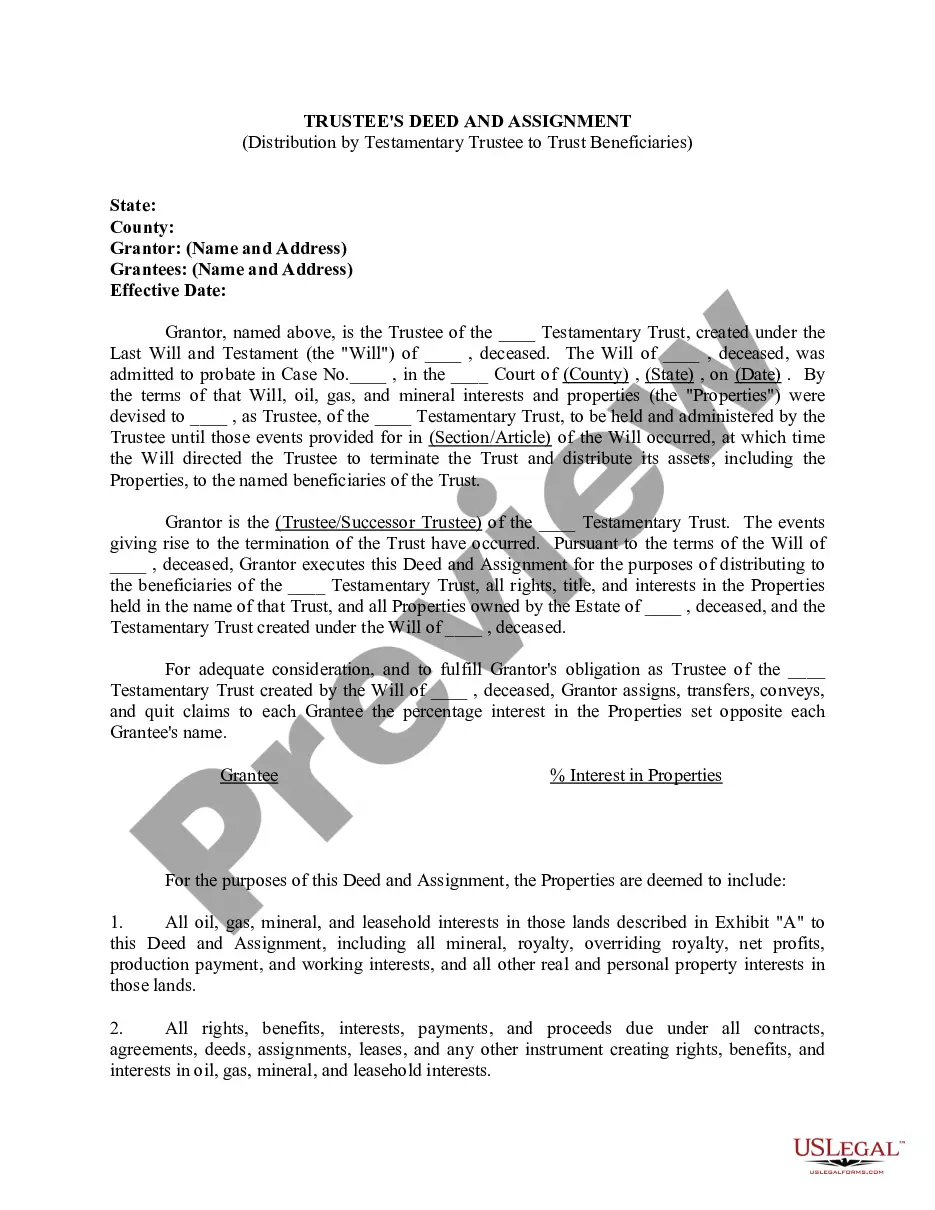
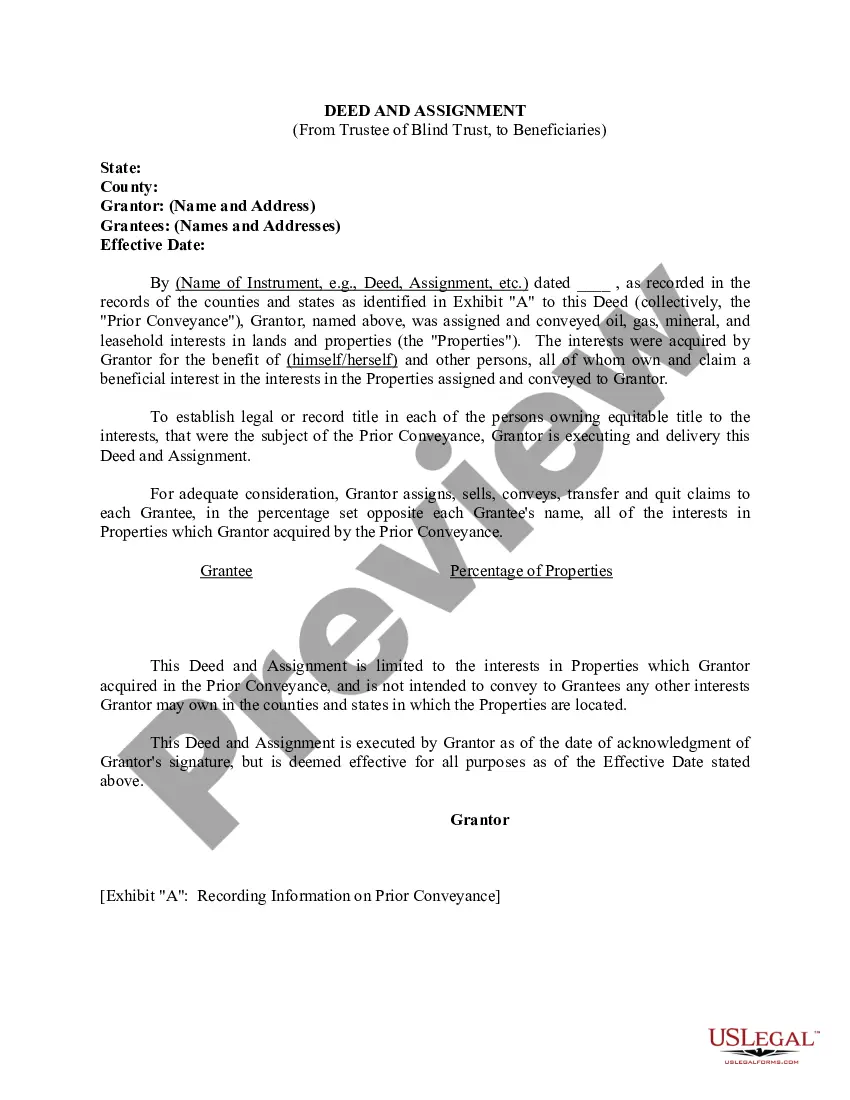
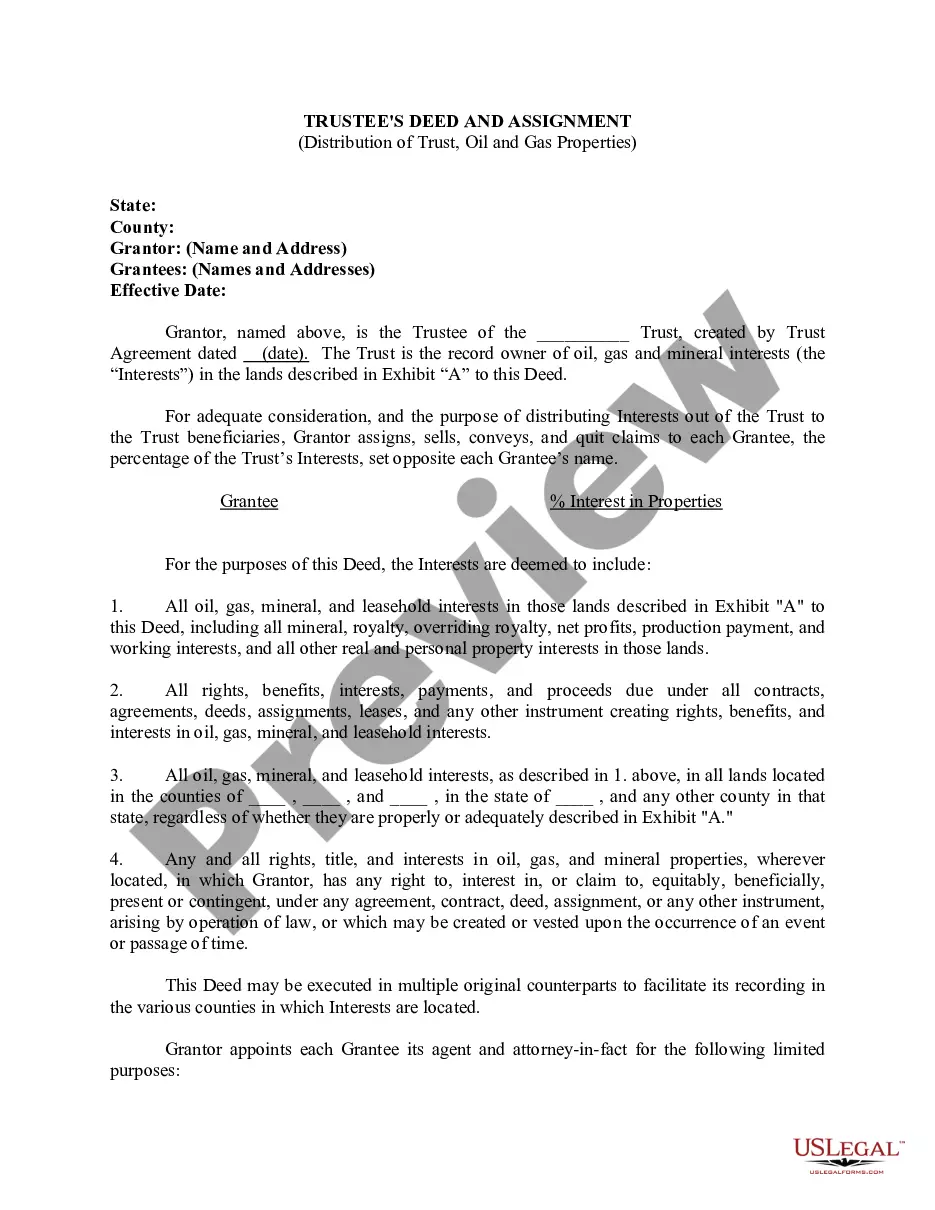
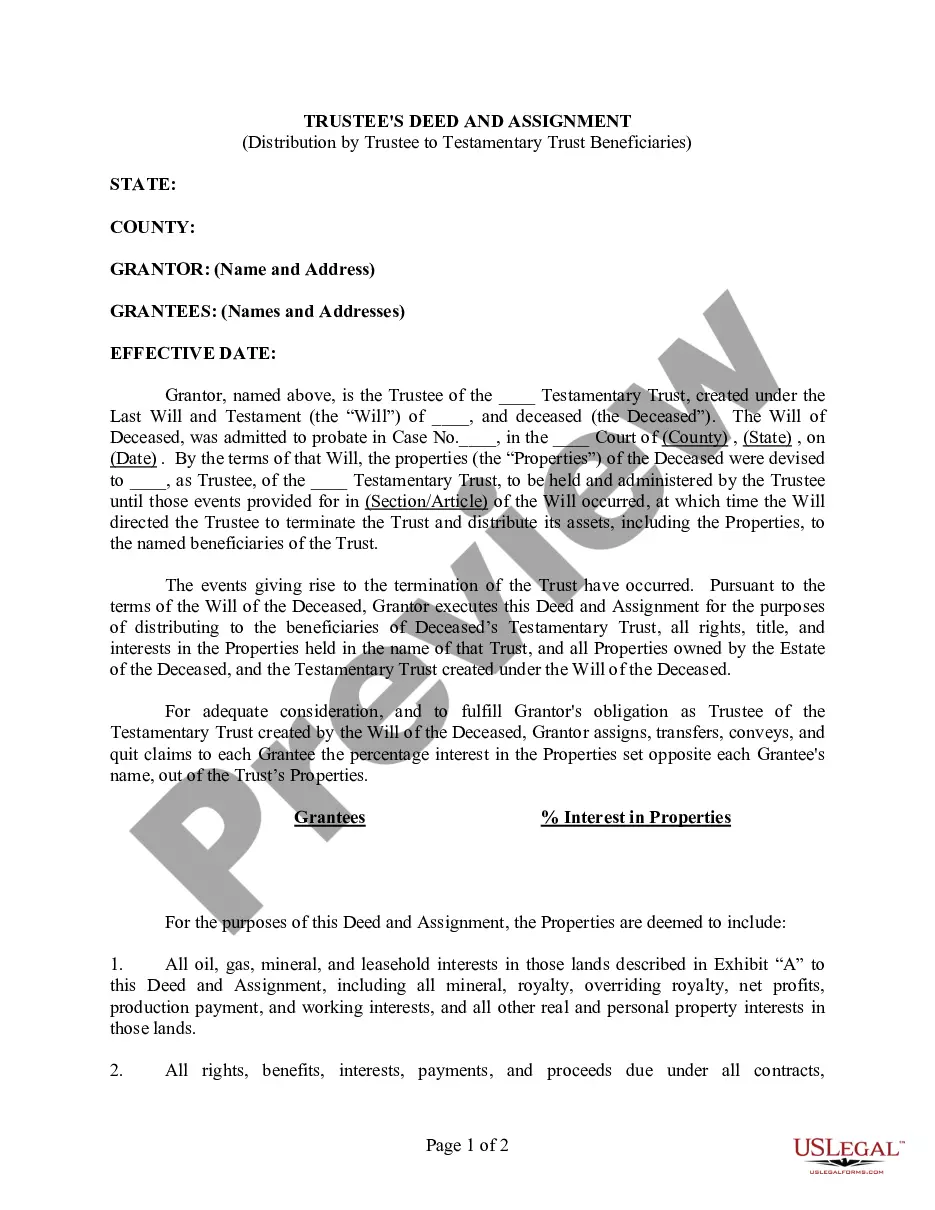
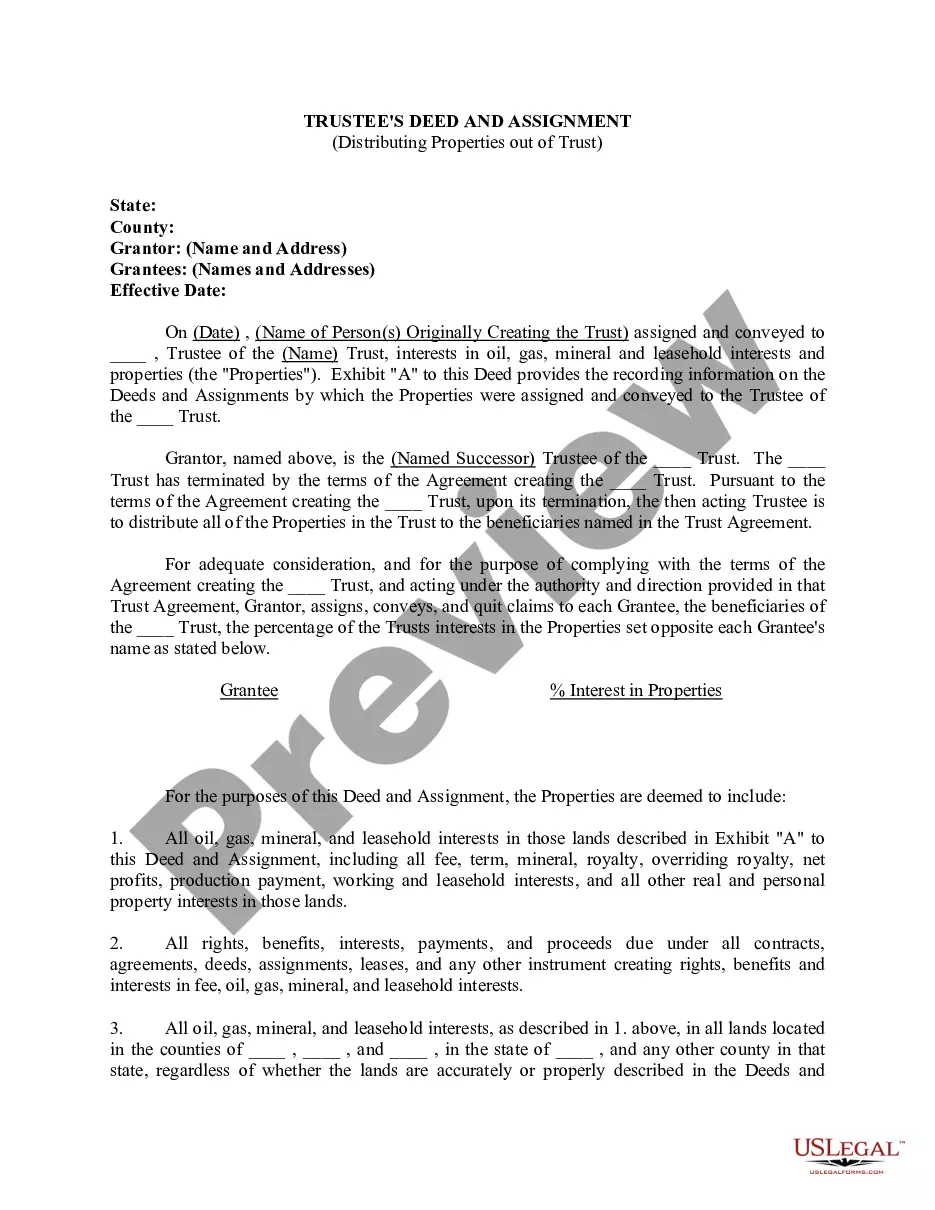
The Trustee's Deed and Assignment for Distribution by Testamentary Trustee to Trust Beneficiaries is a legal document used by a trustee to distribute the assets of a testamentary trust to its beneficiaries after the trust has been terminated. This form ensures that all rights, title, and interests in the properties held by the trust and the estate of the deceased are formally transferred to the beneficiaries. Unlike other forms, this one specifically involves the distribution of assets as mandated by a will, making it essential for the proper execution of estate plans that include testamentary trusts.
Key parts of this document
- Identification of the Grantor and Grantees, including names and addresses.
- Details about the Testamentary Trust, including the Effective Date and the relevant Will.
- Specification of the properties being assigned, including mineral and leasehold interests.
- Expression of the Trustee's authority to distribute the properties to Grantees.
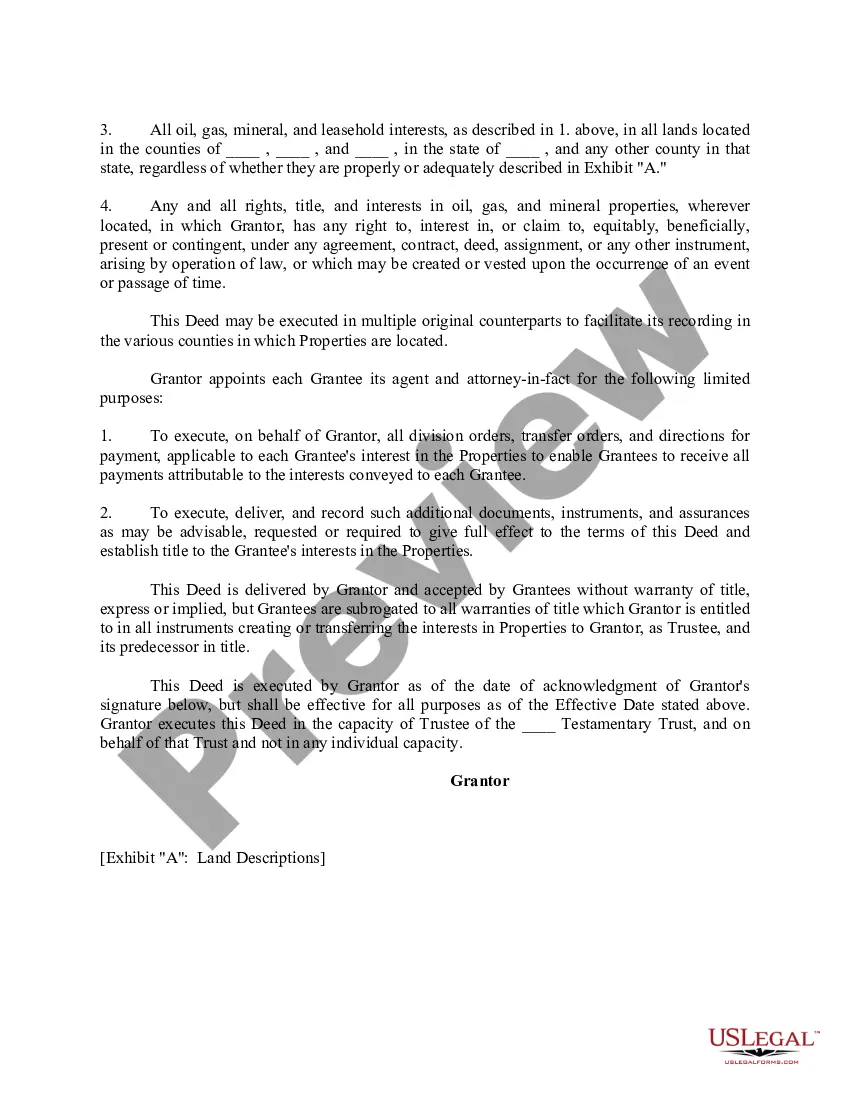
- Provisions for executing the deed in multiple counterparts as needed.
- Appointment of Grantees as agents for purposes related to the properties.
When this form is needed
This form should be used when a testamentary trust is being terminated, and the trustee is ready to distribute the trust's assets to the beneficiaries. Typical scenarios include the passing of the grantor, completion of specific events outlined in the Will that dictate trust termination, or when a court order has mandated the distribution of trust assets. It is a crucial part of the estate settlement process to ensure that the beneficiaries receive their rightful share of the assets.
Intended users of this form
- Trustees of a testamentary trust who are responsible for distributing assets.
- Beneficiaries of a testamentary trust who need to formalize their receipt of trust assets.
- Estate administrators involved in closing the estate of a deceased individual.
- Legal professionals assisting clients with estate planning and settlement matters.
How to complete this form
- Identify the parties involved, including the Trustee (Grantor) and the beneficiaries (Grantees), along with their addresses.
- Specify the Effective Date for the deed and provide details of the Testamentary Trust, including the grantor's information and the relevant Will.
- Detail the properties being transferred, including any oil, gas, mineral, and leasehold interests by referring to applicable documents.
- Include a statement assigning rights to the Grantees, noting their percentage interests in the properties.
- Ensure the document is signed and acknowledged by the Grantor to execute the deed formally.
Is notarization required?
This form does not typically require notarization unless specified by local law. Be sure to verify the requirements in your jurisdiction to ensure compliance during the enactment of the deed.
Get your form ready online
Our built-in tools help you complete, sign, share, and store your documents in one place.
Make edits, fill in missing information, and update formatting in US Legal Forms—just like you would in MS Word.
Download a copy, print it, send it by email, or mail it via USPS—whatever works best for your next step.
Sign and collect signatures with our SignNow integration. Send to multiple recipients, set reminders, and more. Go Premium to unlock E-Sign.
If this form requires notarization, complete it online through a secure video call—no need to meet a notary in person or wait for an appointment.
We protect your documents and personal data by following strict security and privacy standards.

Make edits, fill in missing information, and update formatting in US Legal Forms—just like you would in MS Word.

Download a copy, print it, send it by email, or mail it via USPS—whatever works best for your next step.

Sign and collect signatures with our SignNow integration. Send to multiple recipients, set reminders, and more. Go Premium to unlock E-Sign.

If this form requires notarization, complete it online through a secure video call—no need to meet a notary in person or wait for an appointment.

We protect your documents and personal data by following strict security and privacy standards.
Avoid these common issues
- Failing to accurately identify all properties being distributed.
- Not including an Effective Date for the deed.
- Forgetting to sign and date the form, leading to invalidation of the deed.
- Neglecting to check local requirements that may affect the execution of the deed.
Why complete this form online
- Convenience of accessing and completing the form from anywhere at any time.
- Editable templates that allow for customization specific to your needs.
- Reliability of attorney-drafted documents that adhere to current legal standards.
Looking for another form?
Form popularity
FAQ
Distribute trust assets outright The grantor can opt to have the beneficiaries receive trust property directly without any restrictions. The trustee can write the beneficiary a check, give them cash, and transfer real estate by drawing up a new deed or selling the house and giving them the proceeds.
Some use deeds of trust instead, which are similar documents, but they have some fundamental differences.With a deed of trust, however, the lender must act through a go-between called the trustee. The beneficiary and the trustee can't be the same person or entity.
Most assets can be distributed by preparing a new deed, changing the account title, or by giving the person a deed of distribution. For example: To transfer a bank account to a beneficiary, you will need to provide the bank with a death certificate and letters of administration.
Distribution of trust funds after death The Trustee simply transfers all assets to the beneficiary. Distribution is also fairly easy if the trust document identifies all assets and specific amounts to be paid to each beneficiary.
Two documents are needed to transfer California real property from a trust to beneficiaries of the trust; a deed and an 'affidavit of death of trustee. ' An 'affidavit death of trustee' is a declaration, under oath, by the successor trustee.
Locate the deed that's in trust. Use the proper deed. Check with your title insurance company and lender. Prepare a new deed. Sign in the presence of a notary. Record the deed in the county clerk's office.
Most Trusts take 12 months to 18 months to settle and distribute assets to the beneficiaries and heirs.
When you're ready to transfer trust real estate to the beneficiary who is named in the trust document to receive it, you'll need to prepare, sign, and record a deed. That's the document that transfers title to the property from you, the trustee, to the new owner.