Trustee's Deed and Assignment for Distributing Properties Out of Trust
What this document covers
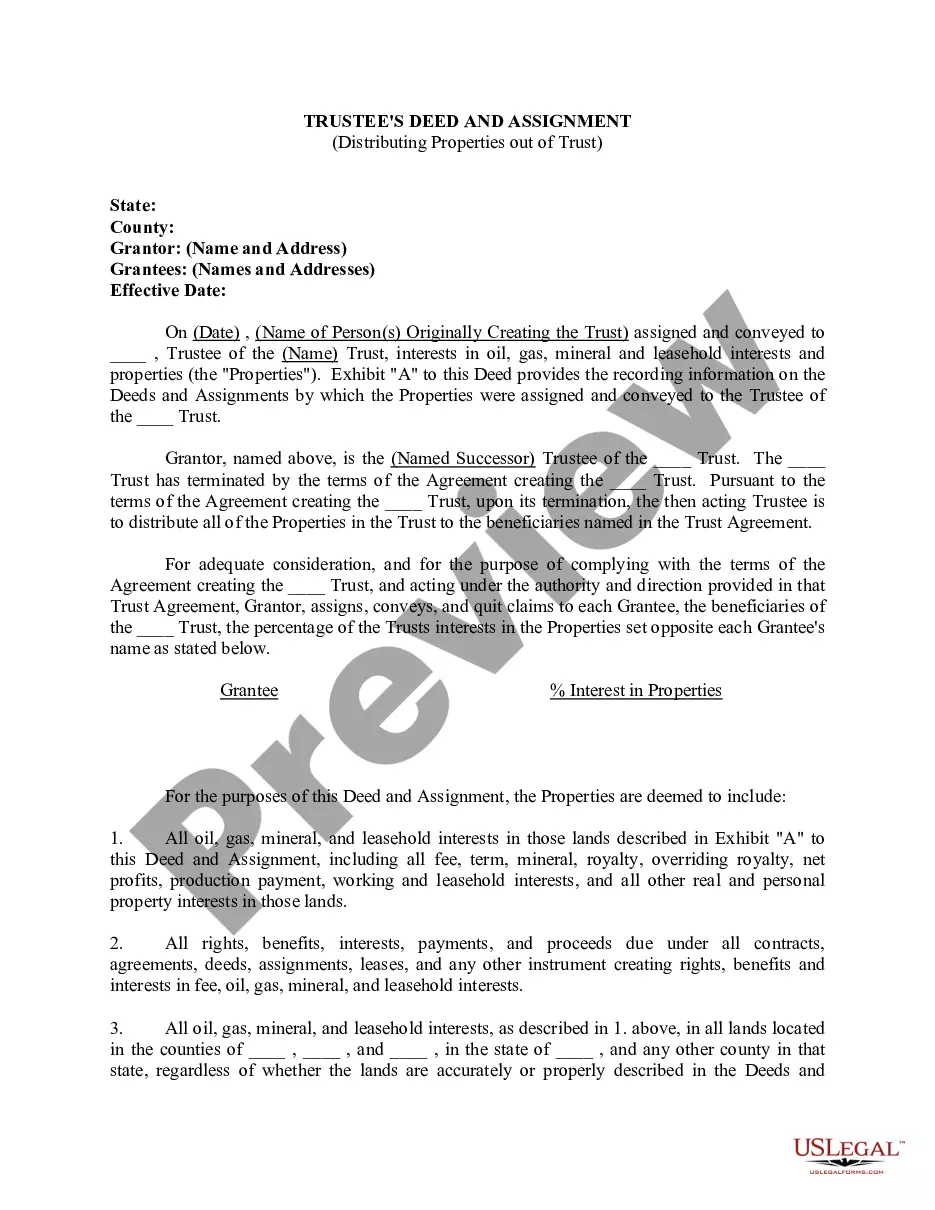
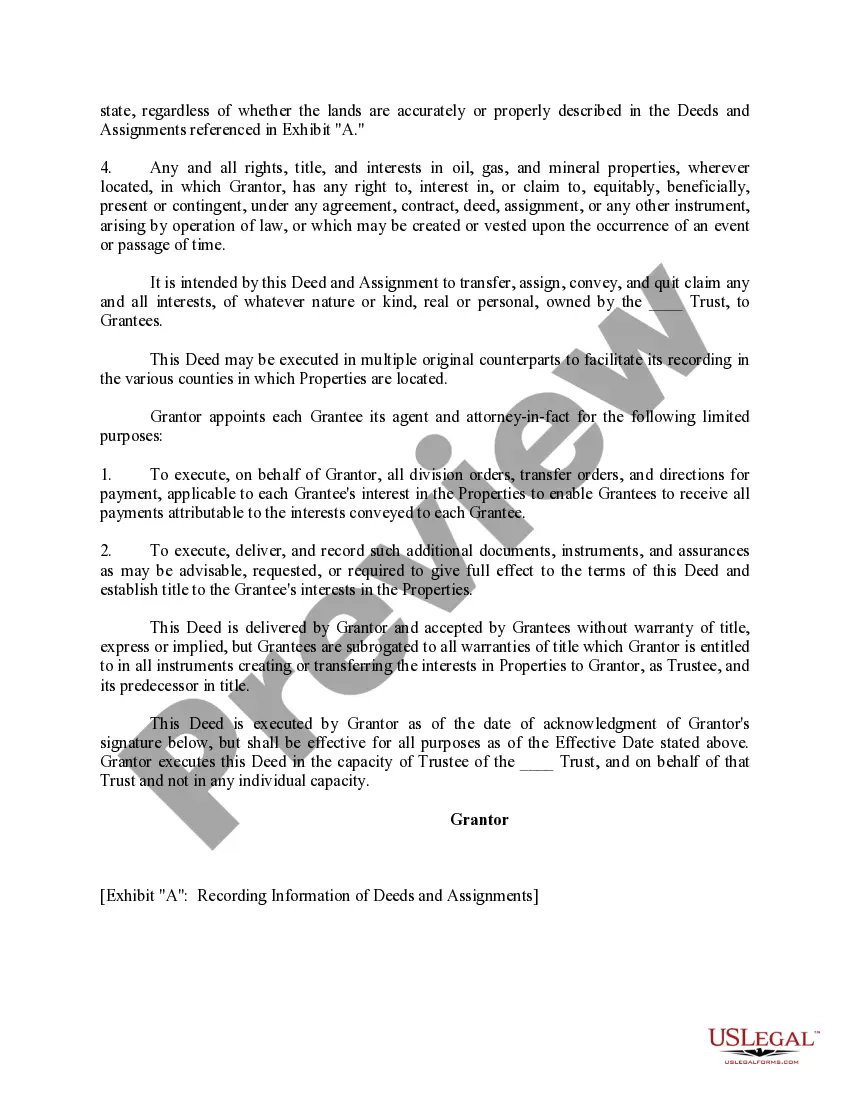
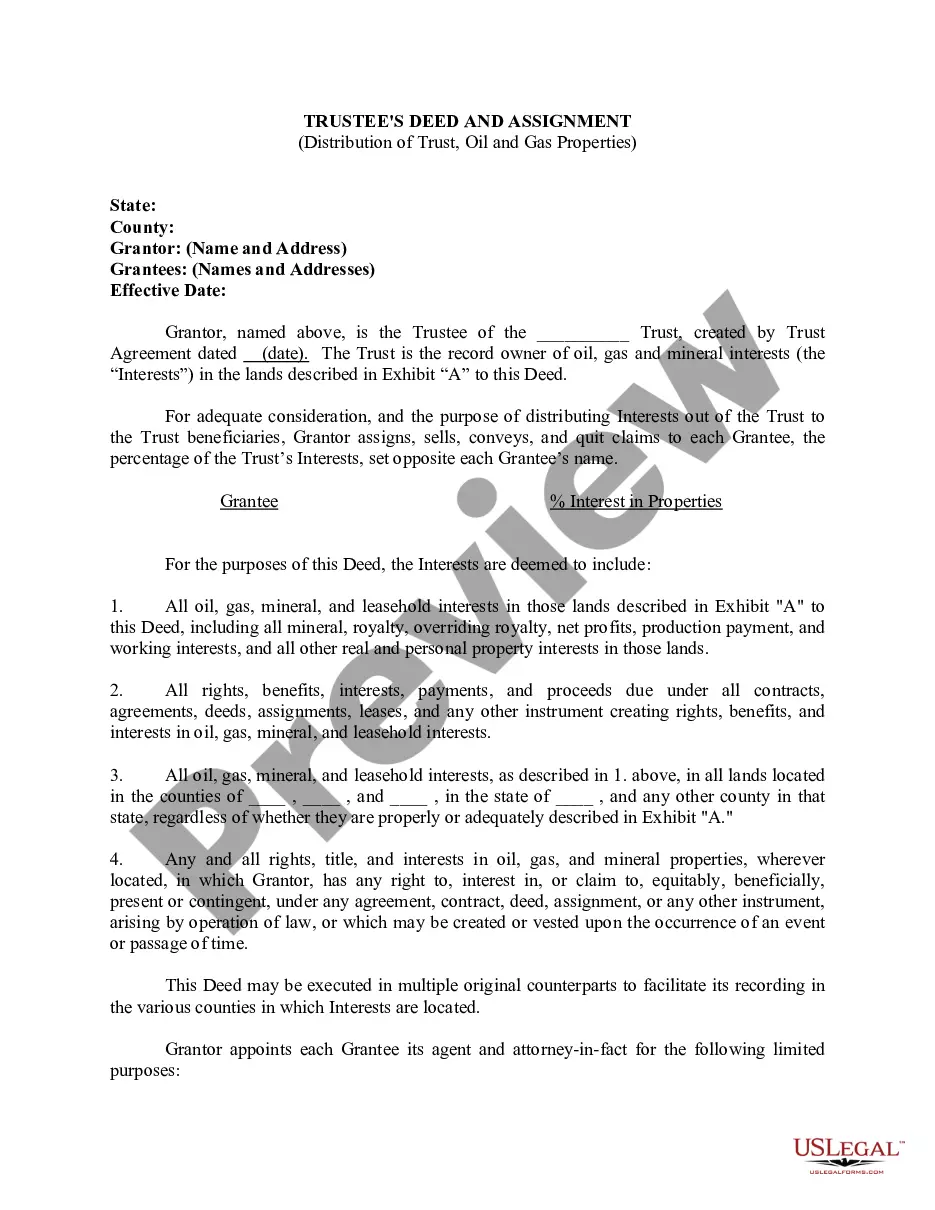
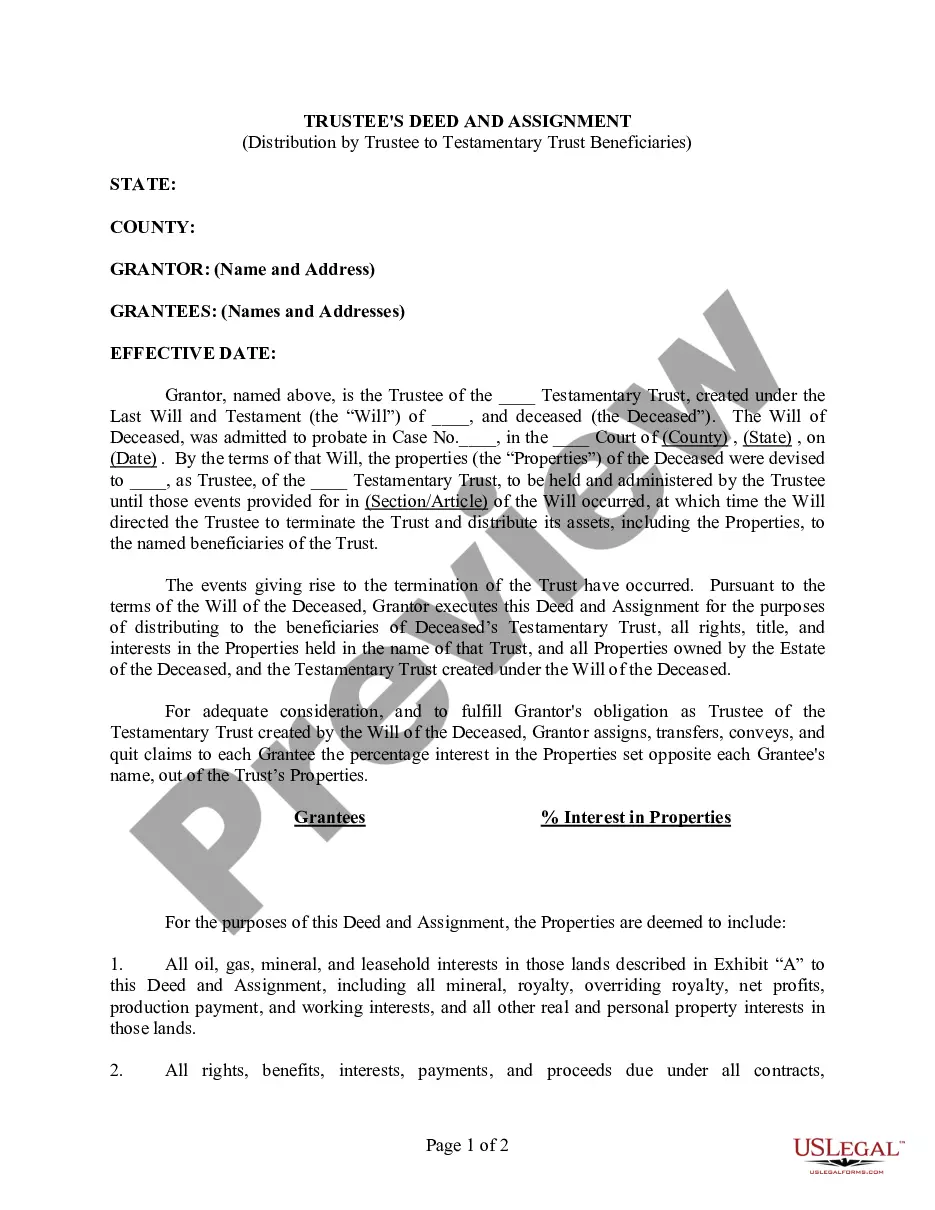
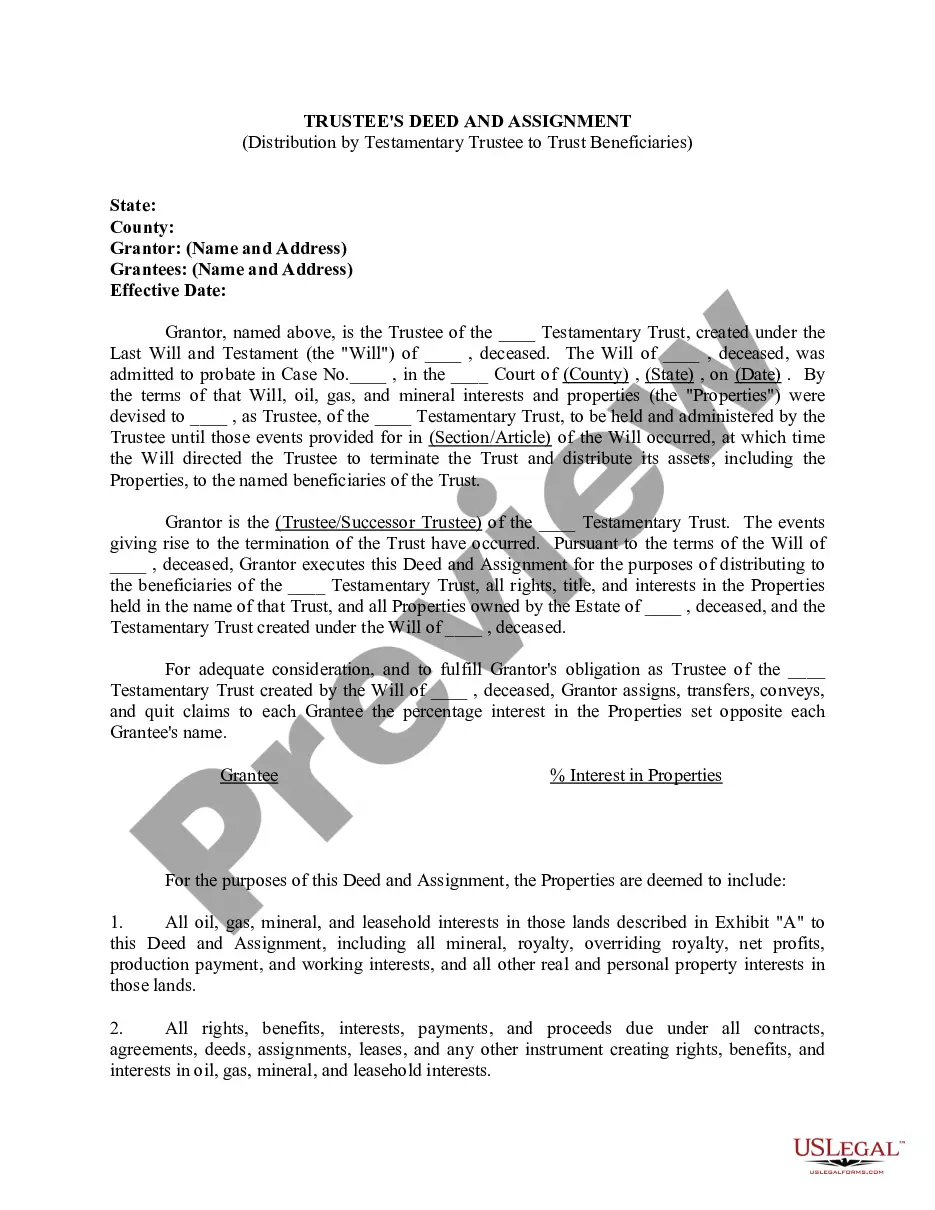
The Trustee's Deed and Assignment for Distributing Properties Out of Trust is a legal document used to transfer ownership of trust property to its beneficiaries after the trust has terminated. This form is essential for formalizing the distribution process in accordance with the terms outlined in the trust agreement, distinguishing it from other property transfer forms that may not relate specifically to trust distributions.
Key components of this form
- Grantor: The individual or entity transferring the property.
- Grantees: The beneficiaries receiving the property.
- Effective Date: The date the transfer takes effect.
- Property Description: Details of the oil, gas, mineral, and leasehold interests being assigned.
- Rights and Interests: A comprehensive list of rights related to the properties being distributed.

When this form is needed
This form is necessary when a trust has reached its termination as specified in the trust agreement. Use this form to legally distribute all trust properties to the listed beneficiaries, ensuring compliance with the trust's outlined procedures. It is critically important to execute this form to ensure that beneficiaries receive their entitled assets without disputes or legal complications.
Who can use this document
- Trustees responsible for managing the trust's assets.
- Beneficiaries who are receiving property from a terminated trust.
- Attorneys assisting clients in the trust distribution process.
Instructions for completing this form
- Identify the parties involved: Clearly state the names and addresses of the grantor and grantees.
- Specify the effective date: Enter the date when the transfer becomes effective.
- Detail the property interests: Provide a thorough description of the properties being assigned.
- List the beneficiaries: Indicate each beneficiary's name alongside their respective interests in the properties.
- Sign the document: Ensure the grantor signs the deed in their capacity as trustee.
Is notarization required?
This form needs to be notarized to ensure legal validity. US Legal Forms provides secure online notarization powered by Notarize, allowing you to complete the process through a verified video call, available anytime.
Get your form ready online
Our built-in tools help you complete, sign, share, and store your documents in one place.
Make edits, fill in missing information, and update formatting in US Legal Forms—just like you would in MS Word.
Download a copy, print it, send it by email, or mail it via USPS—whatever works best for your next step.
Sign and collect signatures with our SignNow integration. Send to multiple recipients, set reminders, and more. Go Premium to unlock E-Sign.
If this form requires notarization, complete it online through a secure video call—no need to meet a notary in person or wait for an appointment.
We protect your documents and personal data by following strict security and privacy standards.

Make edits, fill in missing information, and update formatting in US Legal Forms—just like you would in MS Word.

Download a copy, print it, send it by email, or mail it via USPS—whatever works best for your next step.

Sign and collect signatures with our SignNow integration. Send to multiple recipients, set reminders, and more. Go Premium to unlock E-Sign.

If this form requires notarization, complete it online through a secure video call—no need to meet a notary in person or wait for an appointment.

We protect your documents and personal data by following strict security and privacy standards.
Avoid these common issues
- Failing to include all required information about the properties and beneficiaries.
- Not properly signing the deed as the trustee, which could invalidate the transfer.
- Using incorrect or outdated property descriptions leading to confusion or disputes.
- Not specifying the effective date, which may create ambiguity about when the transfer is valid.
Benefits of using this form online
- Convenience of downloading and completing the form at your own pace.
- Editability allows you to customize details without the need for paper forms.
- Access to forms drafted by licensed attorneys ensures legal soundness.
Legal use & context
- This form is legally binding upon the completion of all signatures and necessary fields.
- It serves as a definitive record of property interests being transferred from the trust to the beneficiaries.
- Failure to use this form correctly may lead to disputes regarding property rights among beneficiaries.
What to keep in mind
- The Trustee's Deed and Assignment is crucial for distributing trust properties legally.
- Accurate completion of this form prevents legal conflicts among beneficiaries.
- Ensure that all required elements are completed to validate the distribution process.
Looking for another form?

Form popularity
FAQ
Distribute trust assets outright The grantor can opt to have the beneficiaries receive trust property directly without any restrictions. The trustee can write the beneficiary a check, give them cash, and transfer real estate by drawing up a new deed or selling the house and giving them the proceeds.
Party information: names and addresses of the trustor(s), trustee(s), beneficiary(ies), and guarantor(s) (if applicable) Property details: full address of the property and its legal description (which can be obtained from the County Recorder's Office)
Transferring property out of a trust can be simple or nearly impossible, depending on which kind of trust you formed. Typically, you act as the trustee if you form a revocable trust. You retain control of the property you place into it. You can sell it or move it back out of the trust as you see fit.
When you're ready to transfer trust real estate to the beneficiary who is named in the trust document to receive it, you'll need to prepare, sign, and record a deed. That's the document that transfers title to the property from you, the trustee, to the new owner.
Yes, properties held in a living revocable trust can be refinanced. However, refinancing a mortgage held in a trust involves specific steps which may occur outside of the refinancing transaction. It's important to ensure it's done correctly so there's no lapse in your homeowner's title insurance coverage.
Determine the Current Title and Vesting to Your Property. Prepare a Deed. Be Aware of Your Lender and Title Insurance. Prepare a Preliminary Change of Ownership Report. Execute Your Deed. Record Your Deed. Wait for the Deed to be Returned. Keep the Property in the Trust.
California Property TaxesTransferring real property to yourself as trustee of your own revocable living trust -- or back to yourself -- does not trigger a reassessment for property tax purposes. (Cal. Rev. & Tax Code § 62(d).)
Two documents are needed to transfer California real property from a trust to beneficiaries of the trust; a deed and an 'affidavit of death of trustee. ' An 'affidavit death of trustee' is a declaration, under oath, by the successor trustee.
Some owners are put off using solicitors duke to the deed of trust cost. Individuals can write out their own, and use someone else as a witness. However, this may have errors or not be a legally binding document. The investment of getting a deed of trust when buying a property is often worth it in the long term.