Georgia Self-Proving Affidavit
What this document covers
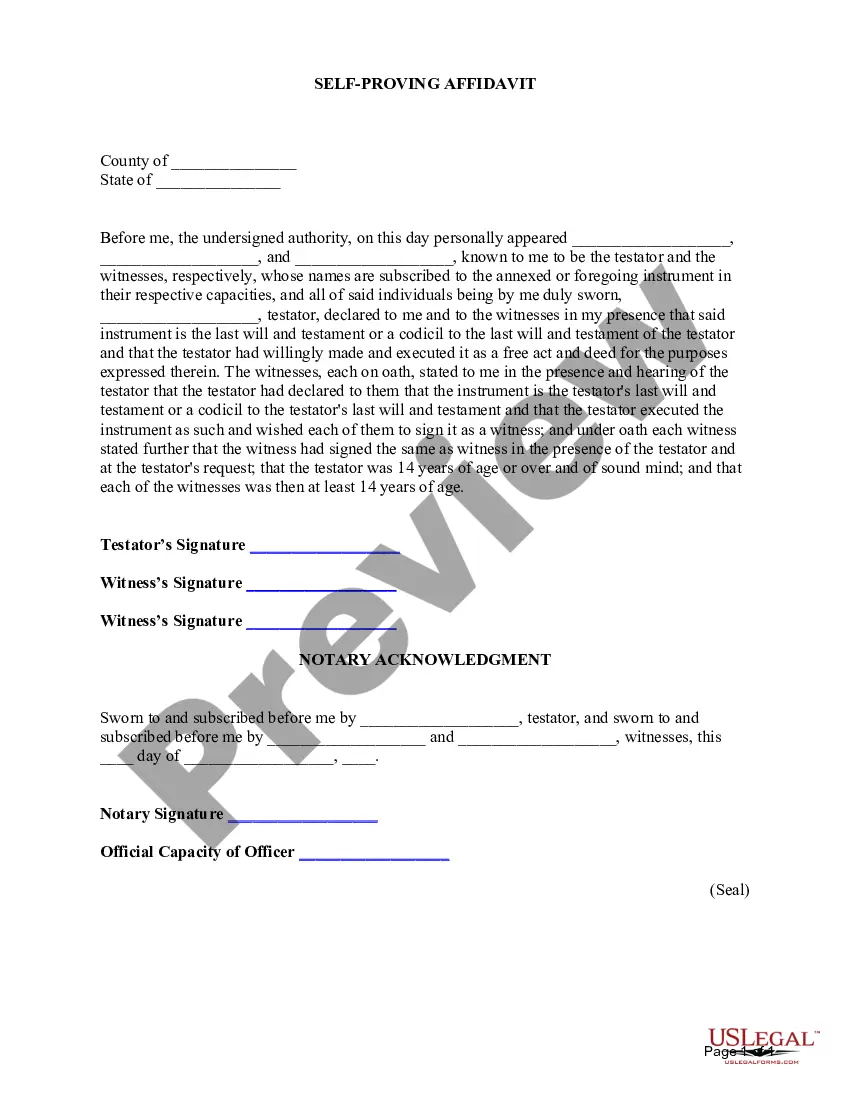
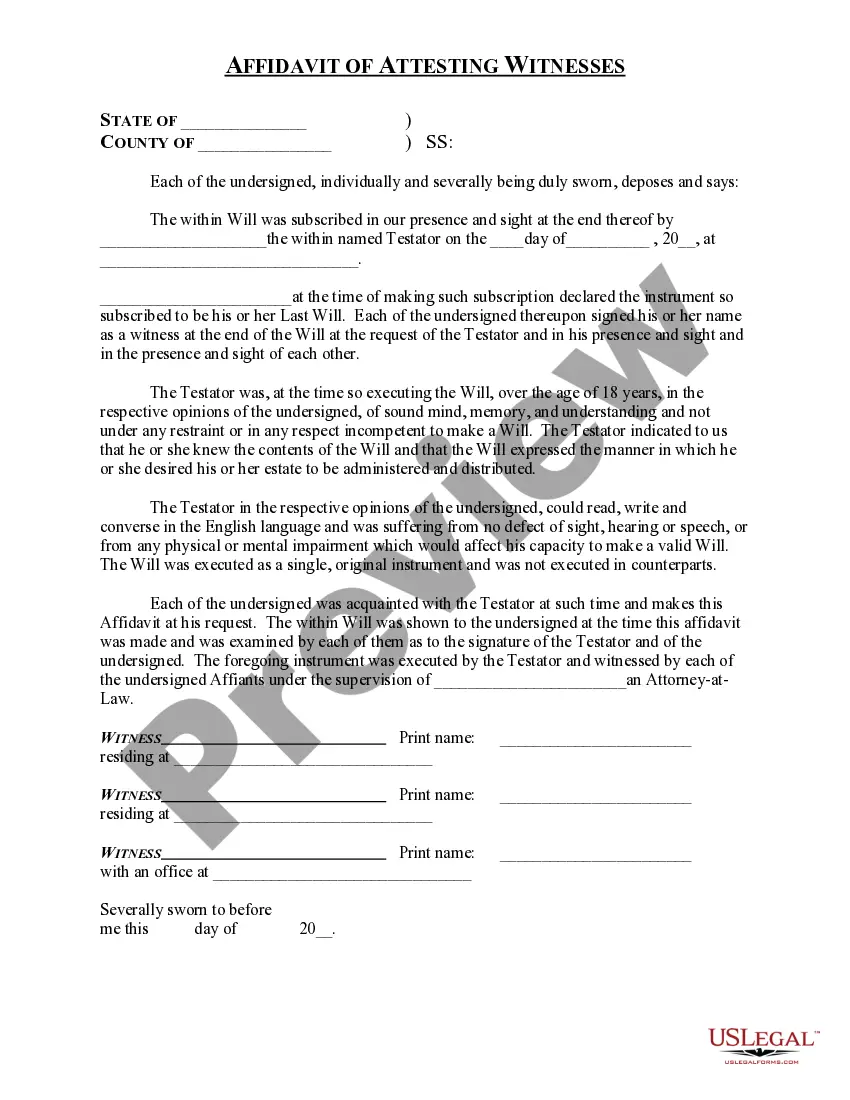
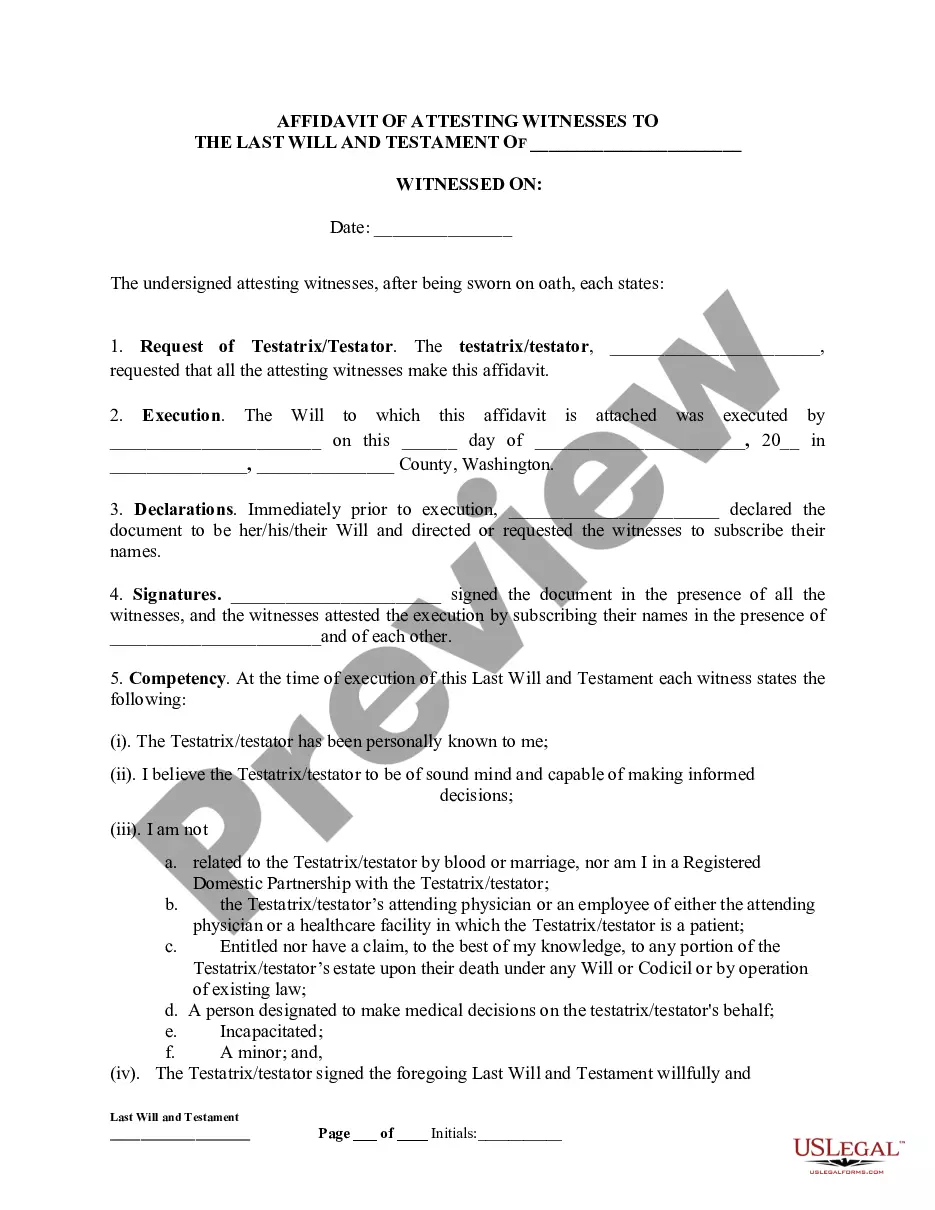
A Georgia self-proving affidavit is a sworn statement that is attached to a will to verify its validity. This affidavit is signed by the will-maker, known as the testator, and one or more witnesses. While the will itself is legally binding without this affidavit, including it helps streamline the probate process by affirming that the will was executed properly and witnessed. This form adds a layer of assurance to the will's authenticity, facilitating a smoother transition of assets after the testator's passing.
Key parts of this document
- County and state details where the affidavit is executed.
- Names and signatures of the testator and witnesses.
- A declaration confirming that the document is the last will and testament of the testator.
- Statement that witnesses were present during the execution of the will.
- Notary acknowledgment section for verification of signatures.
When to use this form
You should use the Georgia self-proving affidavit when you are creating a will and want to ensure that the document can be processed efficiently after your death. Including this affidavit can prevent the need for witnesses to appear in court during probate, as it establishes proof that the will was properly signed and executed. It is particularly helpful in preventing disputes regarding the will's validity.
Who needs this form
- Individuals creating a will in Georgia.
- Testators wanting to simplify the probate process for their heirs.
- Anyone seeking to establish clear evidence of their last wishes while minimizing potential challenges to the will.
Completing this form step by step
- Provide the names of the county and state at the beginning of the affidavit.
- Fill in the names of the testator and the witnesses in the designated sections.
- Have the testator declare that the attached document is their last will and testament and sign accordingly.
- Ensure that the witnesses also sign and acknowledge that they witnessed the testator's signature.
- Complete the notary acknowledgment with the date and signature of the notary public.
Notarization guidance
Yes, this form must be notarized to be legally valid. The notarization process authenticates the signatures of the testator and witnesses, ensuring that the affidavit can be properly used during the probate process. US Legal Forms offers an integrated online notarization service that is available 24/7, allowing you to complete the notarization securely via video call without needing to travel.
Get your form ready online
Our built-in tools help you complete, sign, share, and store your documents in one place.
Make edits, fill in missing information, and update formatting in US Legal Forms—just like you would in MS Word.
Download a copy, print it, send it by email, or mail it via USPS—whatever works best for your next step.
Sign and collect signatures with our SignNow integration. Send to multiple recipients, set reminders, and more. Go Premium to unlock E-Sign.
If this form requires notarization, complete it online through a secure video call—no need to meet a notary in person or wait for an appointment.
We protect your documents and personal data by following strict security and privacy standards.

Make edits, fill in missing information, and update formatting in US Legal Forms—just like you would in MS Word.

Download a copy, print it, send it by email, or mail it via USPS—whatever works best for your next step.

Sign and collect signatures with our SignNow integration. Send to multiple recipients, set reminders, and more. Go Premium to unlock E-Sign.

If this form requires notarization, complete it online through a secure video call—no need to meet a notary in person or wait for an appointment.

We protect your documents and personal data by following strict security and privacy standards.
Mistakes to watch out for
- Failing to have all signatures from the testator and witnesses before notarization.
- Not including the county and state at the start of the form.
- Leaving fields blank, particularly the notary section.
- Using non-compliant language that could invalidate the document.
Why use this form online
- Immediate access to a legally vetted template drafted by licensed attorneys.
- Easy download and editing to suit specific needs.
- Convenience of completing the form from home without scheduling in-person meetings.
- Secure storage options for your finished documents.
Looking for another form?
Form popularity
FAQ
Generally, the wording of the affidavit will be based closely on statements the affiant makes to your lawyer so that they will feel confident signing the finished product. The document must then be signed in front of a notary public.
Example: I, Jane Smith, swear that the information in my sworn statement is truthful to the best of my knowledge and understanding. Your statement of truth must be in the first person and you need to identify yourself in it. Keep it short and sweet.
In Georgia, a valid will must be in writing and signed by either the person making the will or someone designated by the person making the will.
What is a Self-Proving Affidavit? A self-proving affidavit is a sworn statement that witnesses and the person making a Will (the testator) sign in front of a notary public. It constitutes presumptive evidence that the testator signed the Will in ance with state laws.
What is a Self-Proving Affidavit? A self-proving affidavit is a sworn statement that witnesses and the person making a Will (the testator) sign in front of a notary public. It constitutes presumptive evidence that the testator signed the Will in ance with state laws.
An affidavit is a sworn statement put in writing. When you use an affidavit, you're claiming that the information within the document is true and correct to the best of your knowledge. Like taking an oath in court, an affidavit is only valid when you make it voluntarily and without any coercion.
For the will to be valid in Georgia, it must be properly witnessed ? meaning that two competent people who are at least 14 years old must sign the legal document, while in the presence of the testator. (Georgia Code § 53-4-20(b) and § 53-4-22(a)).
6 steps to writing an affidavit Title the affidavit. First, you'll need to title your affidavit.Craft a statement of identity. The very next section of your affidavit is what's known as a statement of identity.Write a statement of truth.State the facts.Reiterate your statement of truth.Sign and notarize.
Without the affidavit, the witnesses to your Will would need to be brought before the court to testify to its validity, either in person or via an affidavit. Finding these witnesses can prove to be a challenge?after so many years, they could have moved, become incapacitated, or passed away.