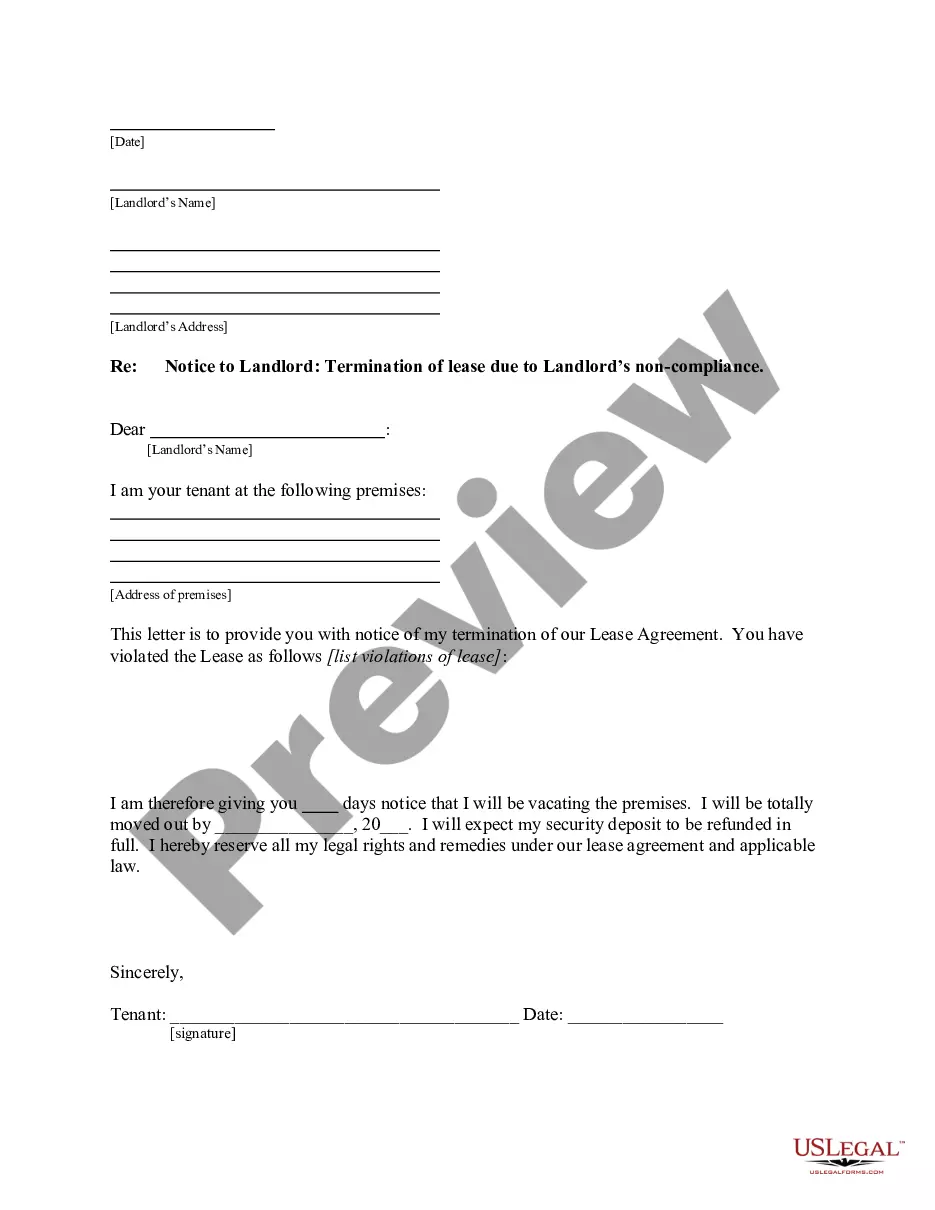
Small Estate Affidavit
What is this form?
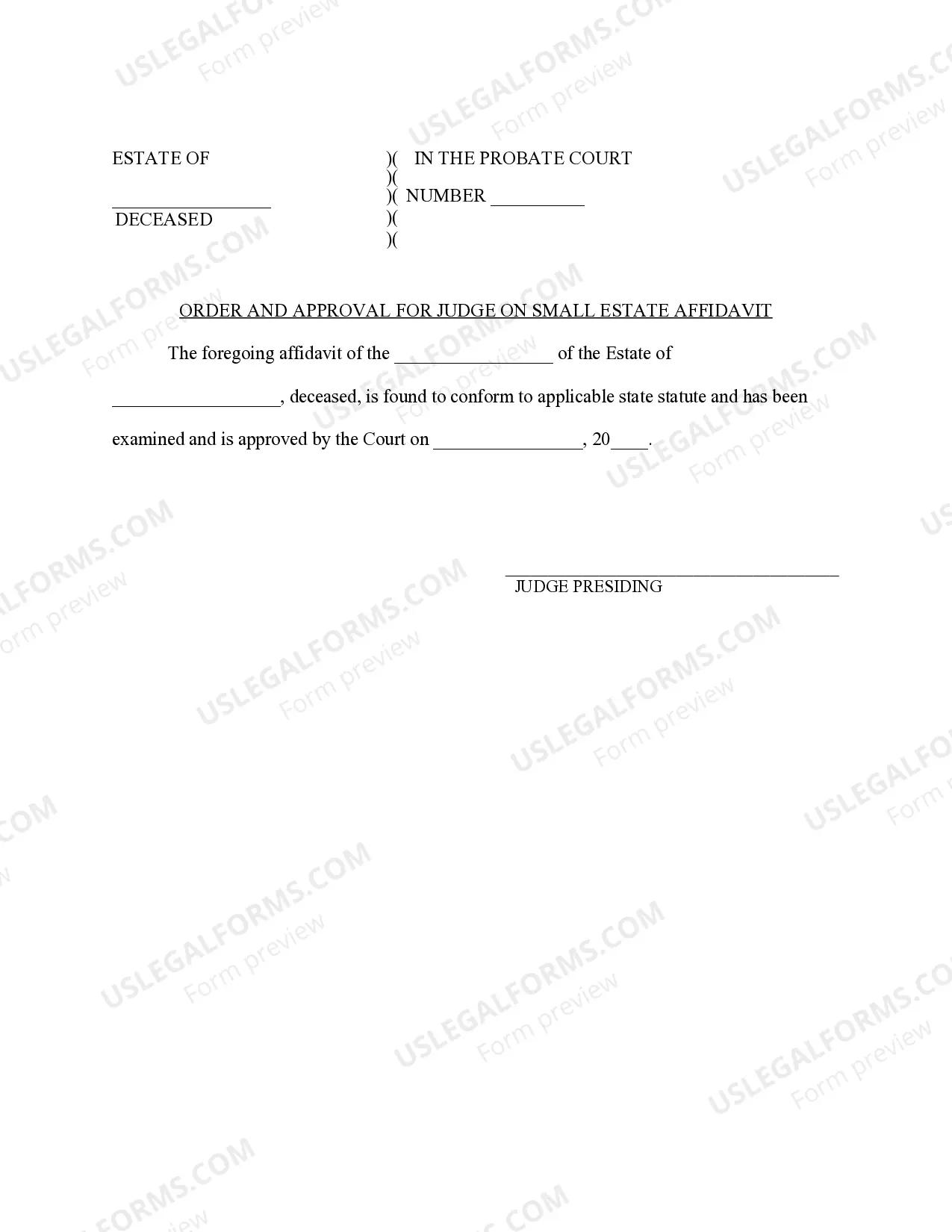
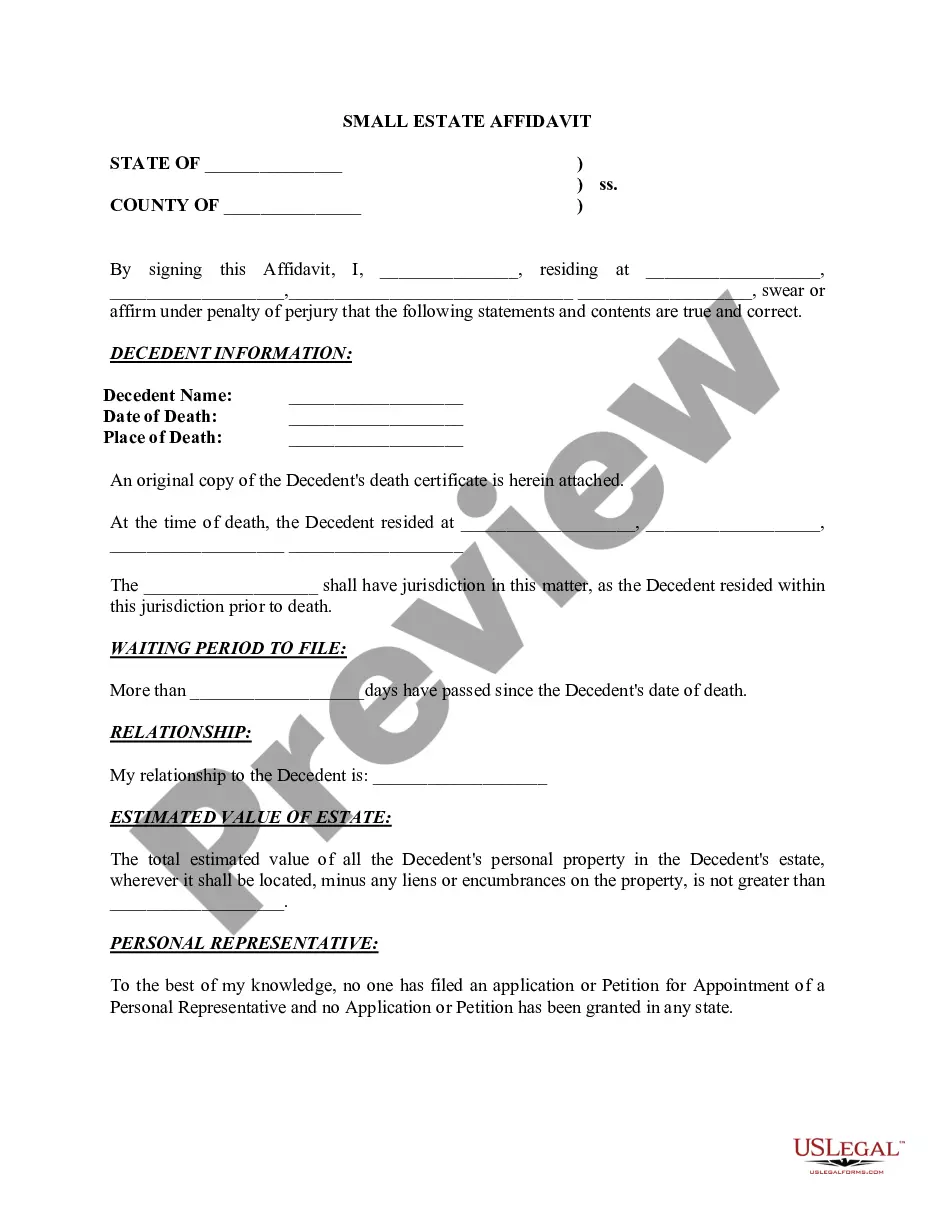
The Small Estate Affidavit is a legal document that allows heirs of a deceased individual to transfer property without a lengthy probate process. This affidavit simplifies the transfer of assets by allowing those entitled to inherit property to claim it directly, provided the estate meets specific value thresholds set by state laws. Unlike traditional probate proceedings, which can be time-consuming and costly, this form expedites access to the deceased's assets.
Form components explained
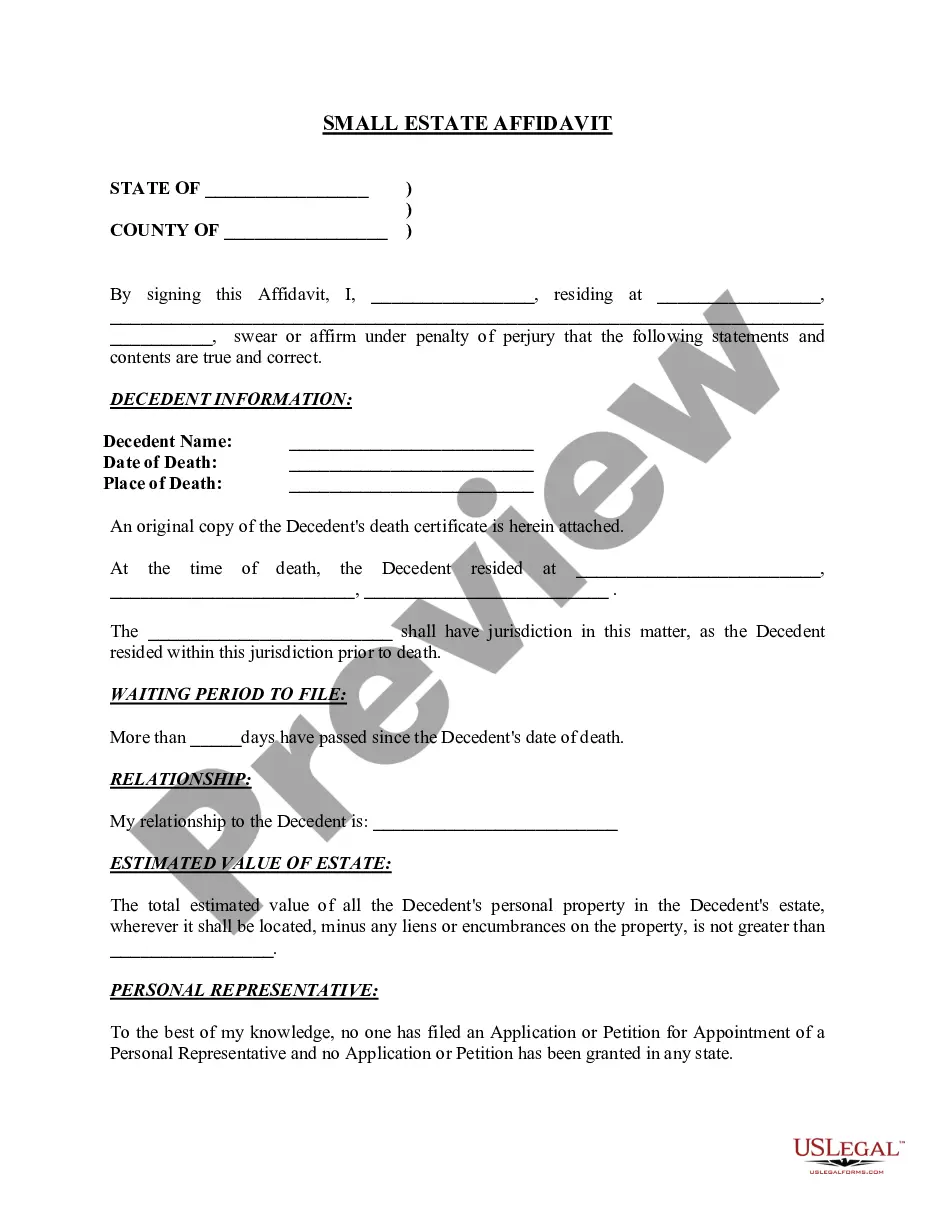
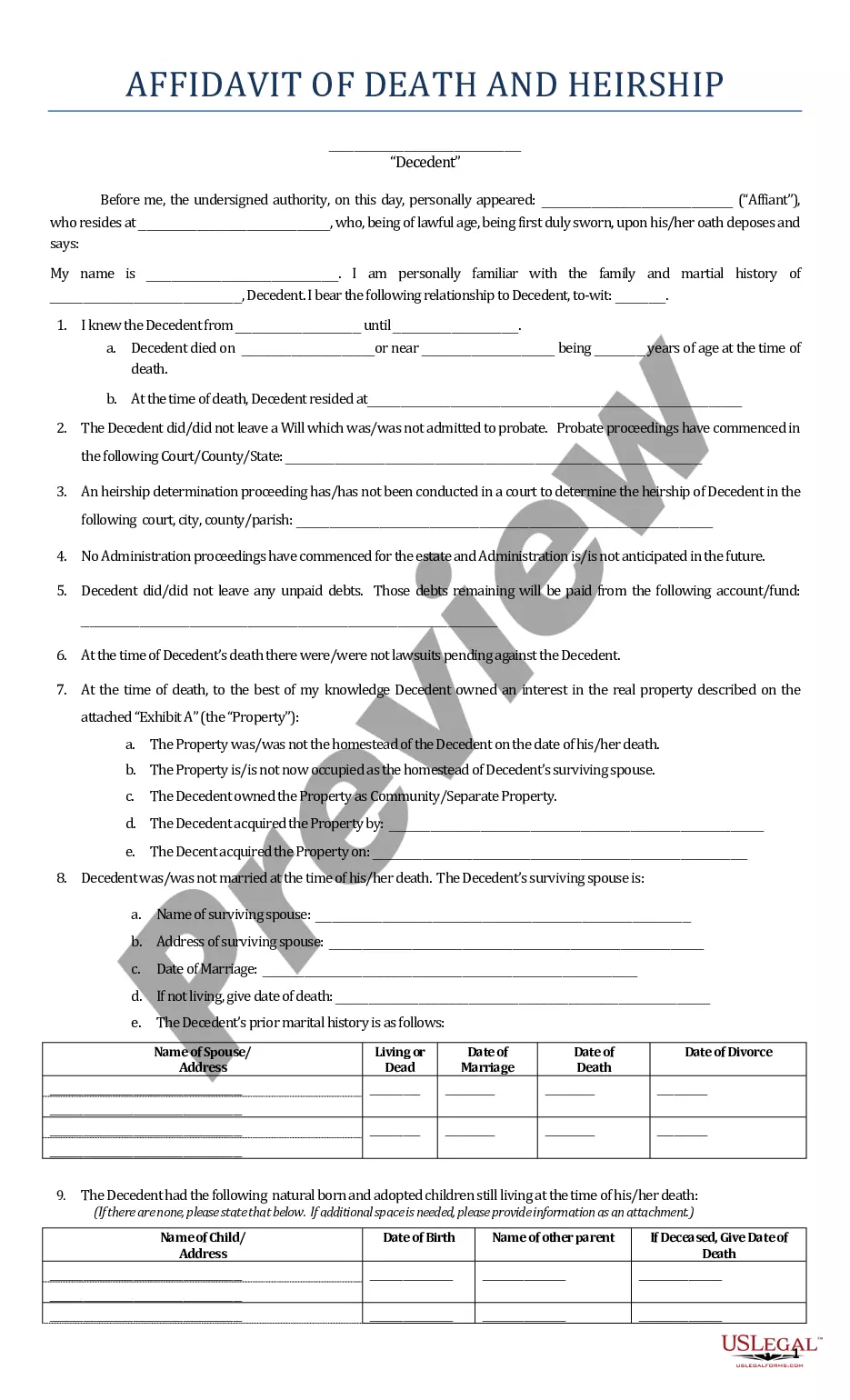
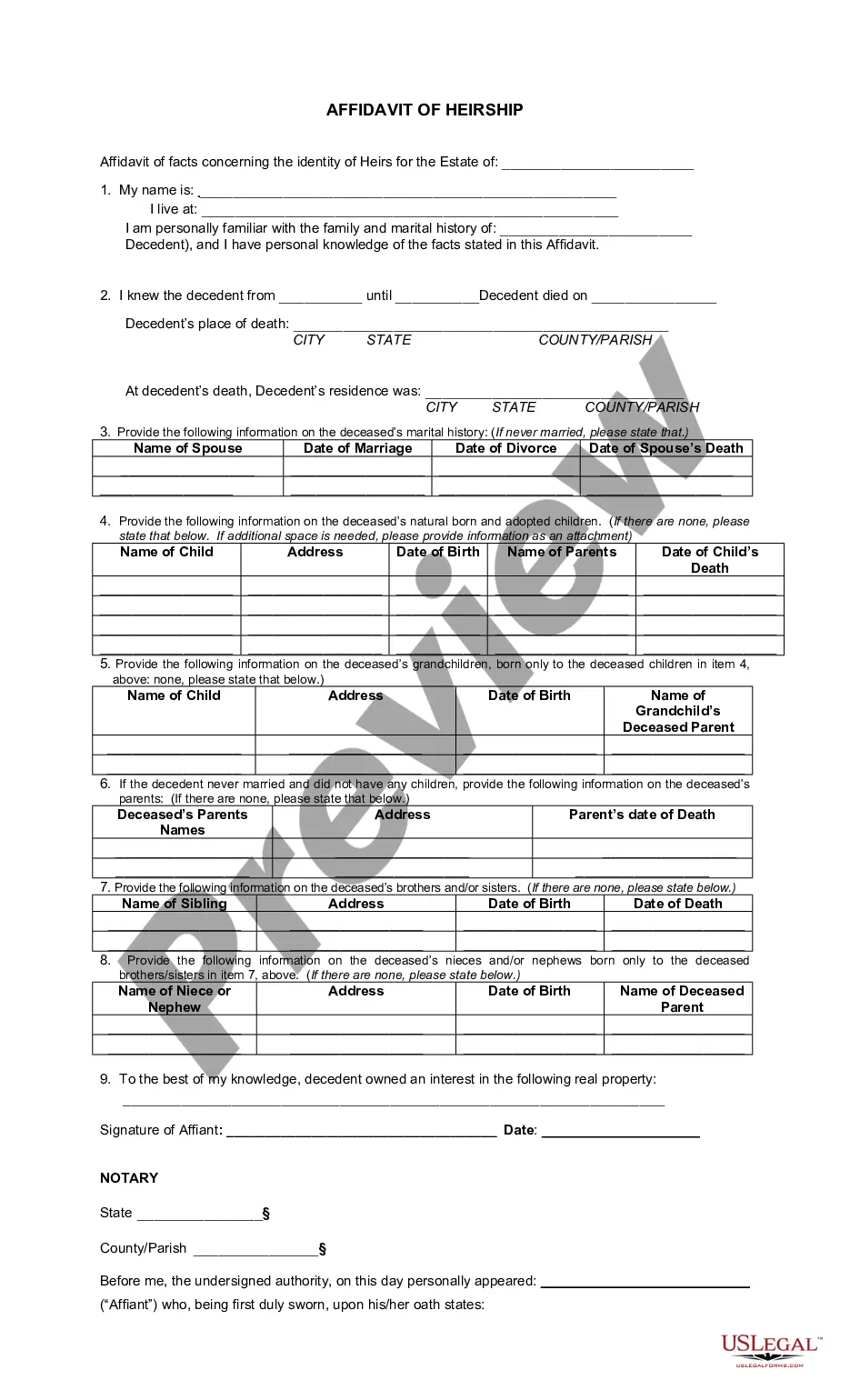
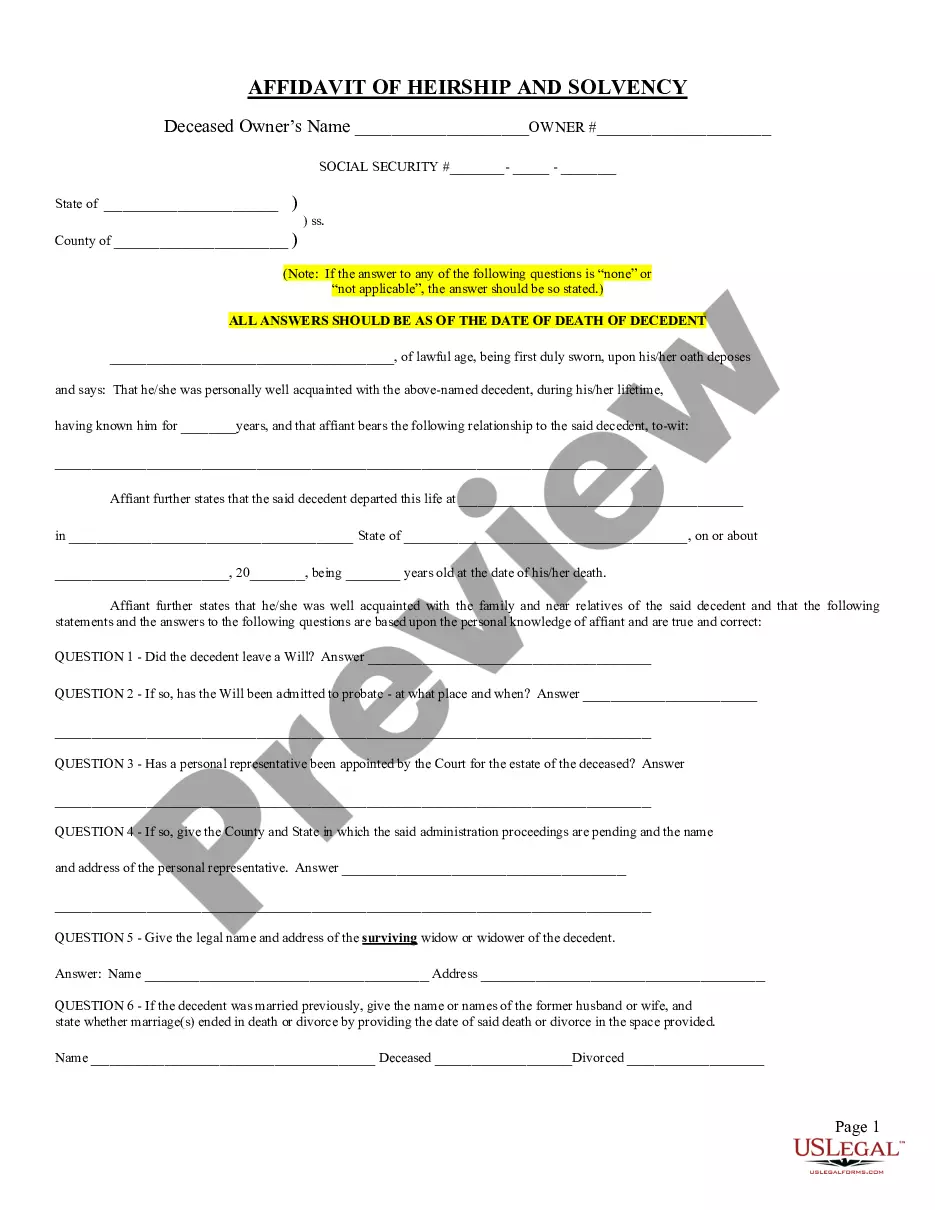
- Decedent Information: Details about the deceased individual, including their name, date of death, and previous residence.
- Waiting Period: A declaration confirming that the required waiting period after the decedent's death has passed.
- Relationship to Decedent: A statement indicating the affiant's relationship to the decedent.
- Estimated Value of Estate: A claim that the total value of the estate's assets does not exceed the statutory threshold.
- Description of Property: A detailed inventory of the property being claimed from the estate.
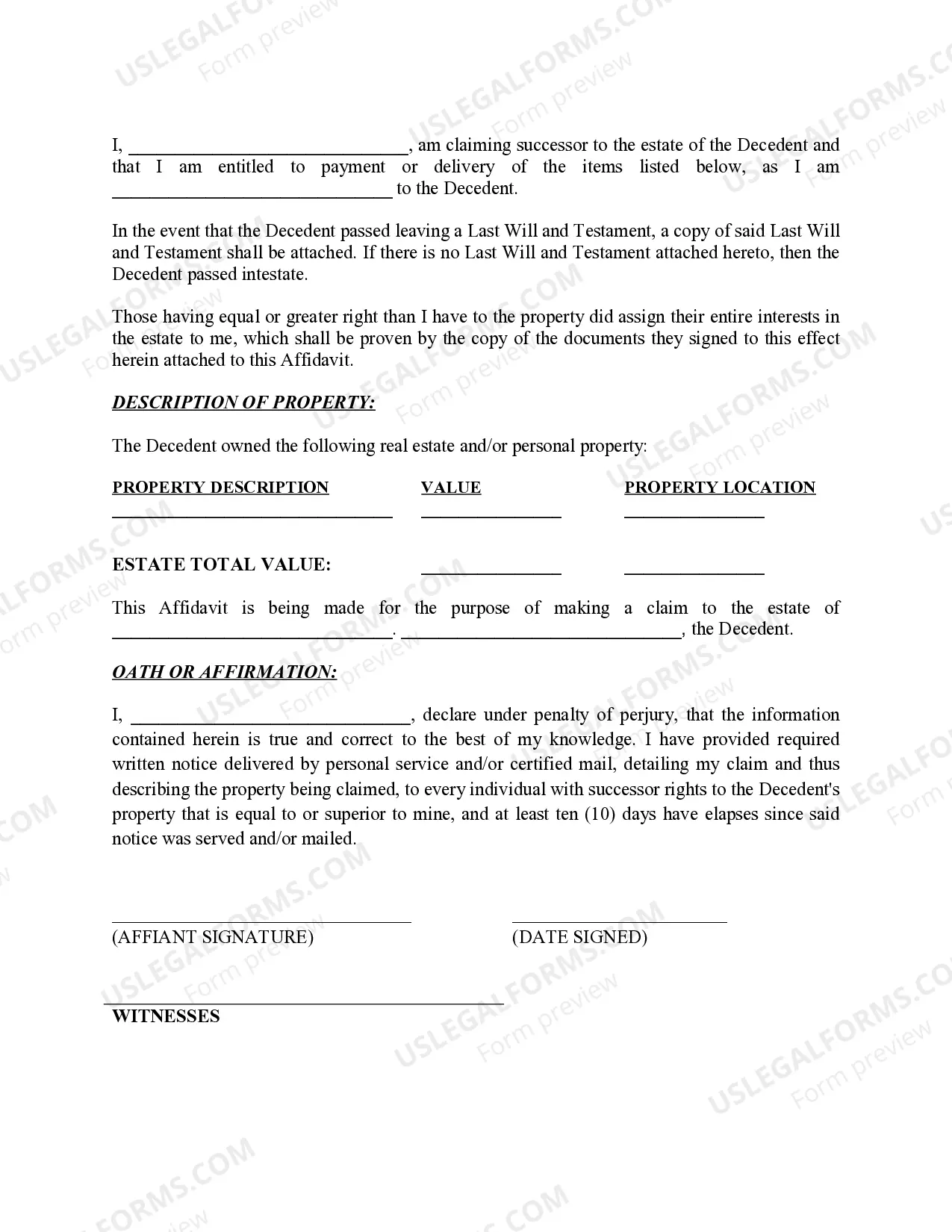
- Oath or Affirmation: A declaration under penalty of perjury that the information provided is accurate and complete.
Situations where this form applies
This form is used when an individual passes away and their estate's total value is below the specified threshold that allows for a small estate affidavit. It is particularly useful for heirs who need to access property and assets quickly, avoiding the probate court process. Situations where this form may be relevant include settling small estates, immediately claiming deceased family members' personal property, or transferring real estate owned by the decedent.
Who this form is for
- Heirs or beneficiaries of a deceased personâs estate.
- Individuals claiming property within a small estate.
- Family members or relatives of the decedent who are seeking to settle minor estate issues.
- Anyone needing to bypass the probate process for limited-value estates.
Steps to complete this form
- Gather necessary documents, including the decedent's death certificate and any relevant estate documents.
- Fill in the decedent's information, including name, date of death, and last residence.
- Specify your relationship to the decedent and confirm the estimated value of the estate.
- List the property being claimed, ensuring accurate descriptions and values.
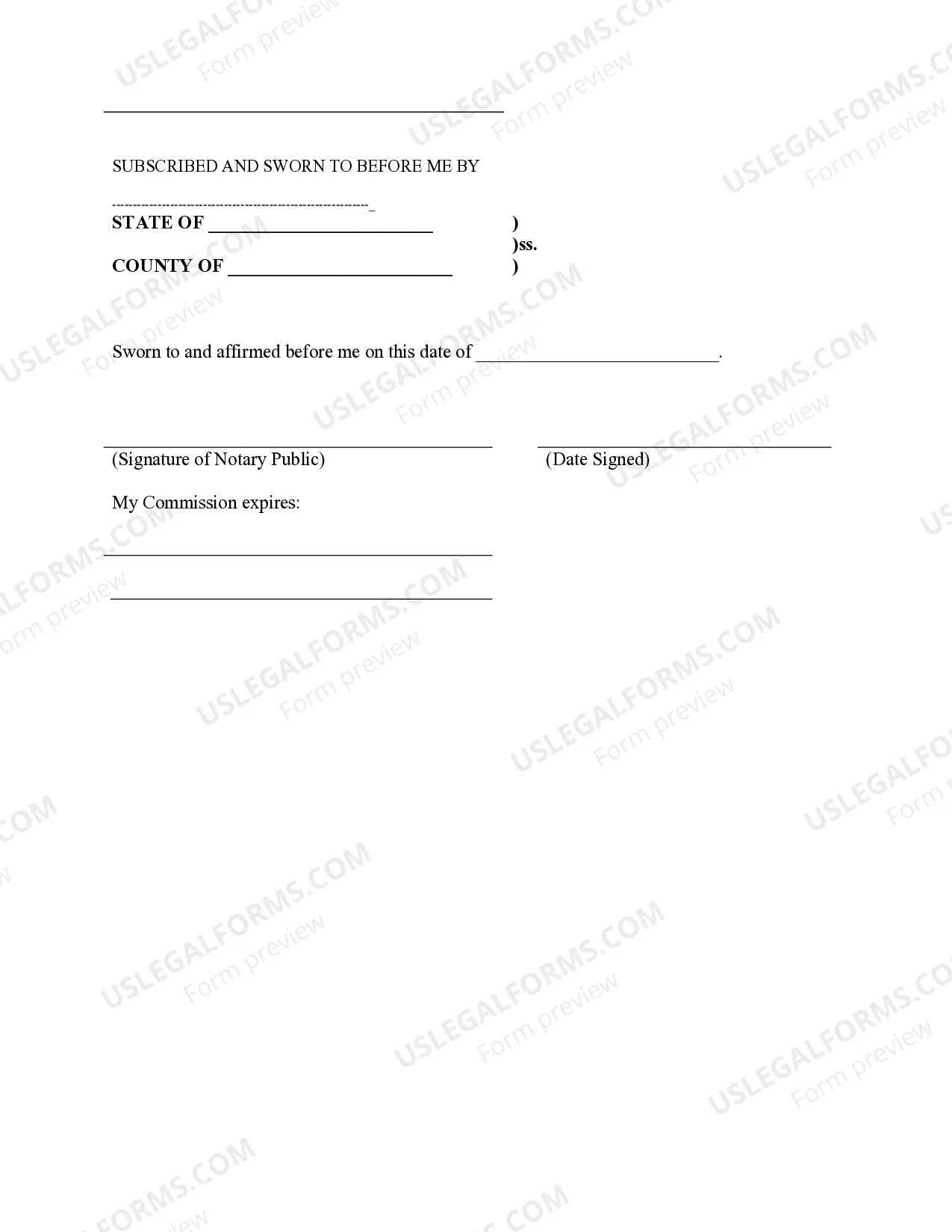
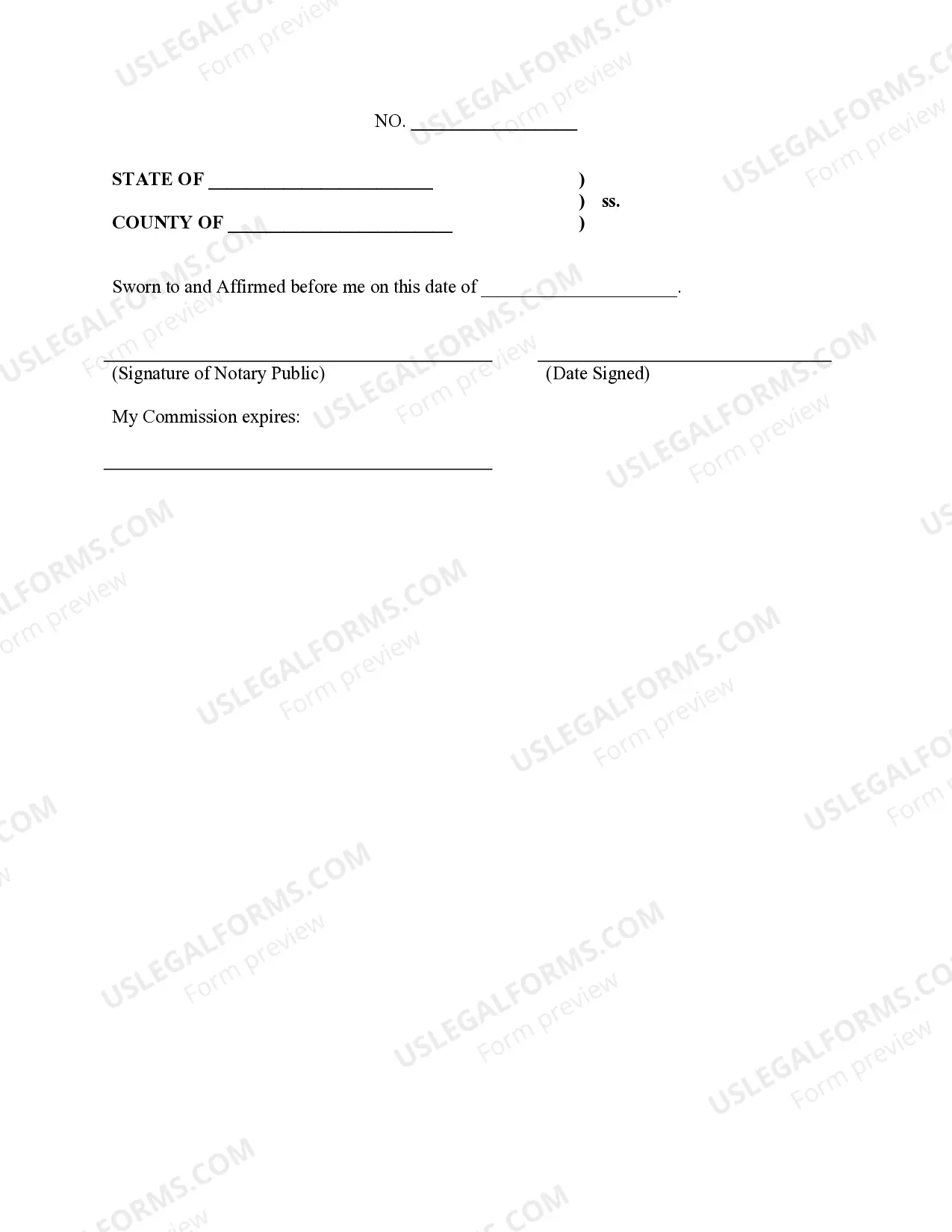
- Sign the affidavit and have it notarized as required by law.
Is notarization required?
Yes, this form must be notarized to be legally valid. US Legal Forms provides integrated online notarization, allowing for secure and convenient notarization through a video call, ensuring that your affidavit complies with legal requirements without needing to travel.
Get your form ready online
Our built-in tools help you complete, sign, share, and store your documents in one place.
Make edits, fill in missing information, and update formatting in US Legal Forms—just like you would in MS Word.
Download a copy, print it, send it by email, or mail it via USPS—whatever works best for your next step.
Sign and collect signatures with our SignNow integration. Send to multiple recipients, set reminders, and more. Go Premium to unlock E-Sign.
If this form requires notarization, complete it online through a secure video call—no need to meet a notary in person or wait for an appointment.
We protect your documents and personal data by following strict security and privacy standards.

Make edits, fill in missing information, and update formatting in US Legal Forms—just like you would in MS Word.

Download a copy, print it, send it by email, or mail it via USPS—whatever works best for your next step.

Sign and collect signatures with our SignNow integration. Send to multiple recipients, set reminders, and more. Go Premium to unlock E-Sign.

If this form requires notarization, complete it online through a secure video call—no need to meet a notary in person or wait for an appointment.

We protect your documents and personal data by following strict security and privacy standards.
Common mistakes to avoid
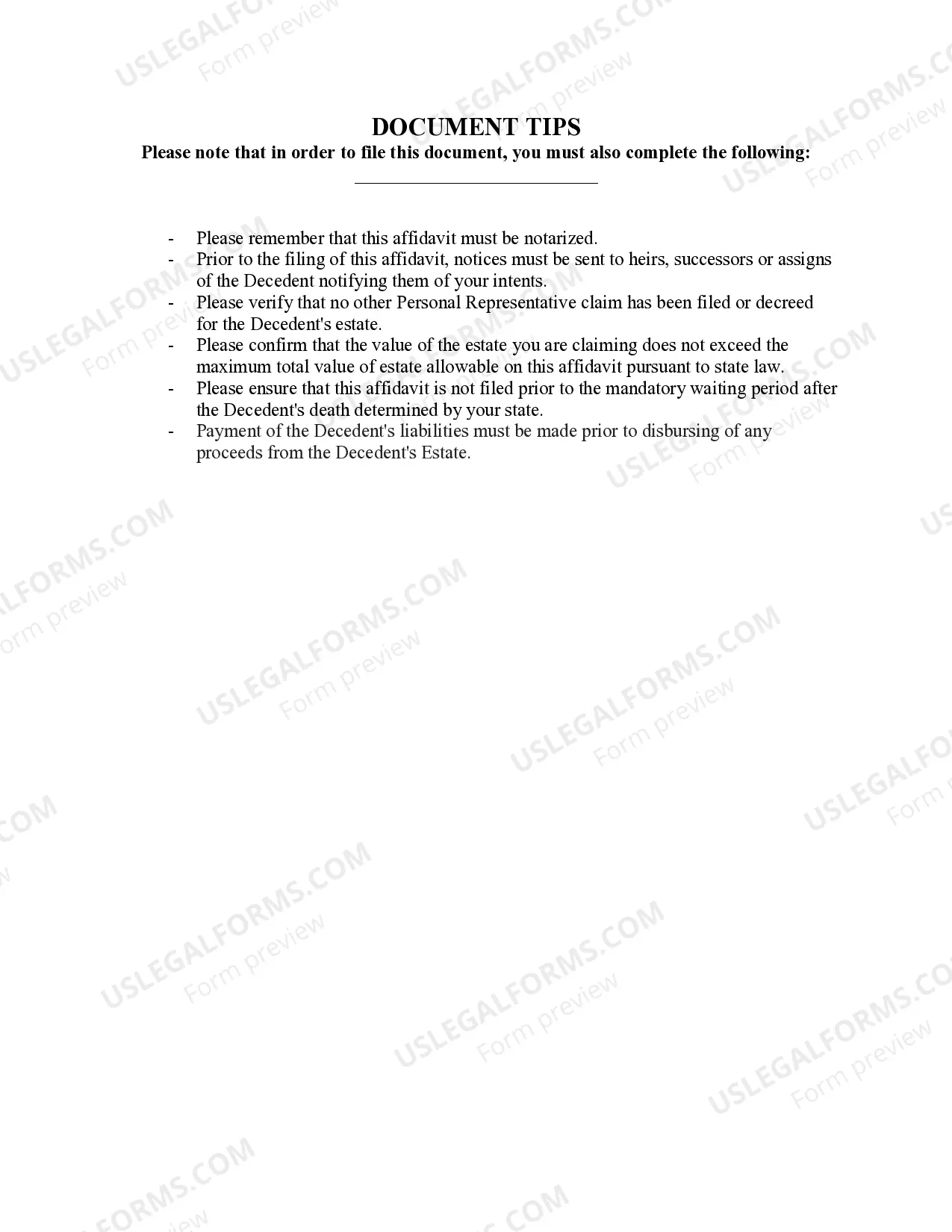
- Failing to attach the required death certificate.
- Not waiting the necessary period before filing the affidavit.
- Incorrectly estimating the total value of the estate.
- Failing to notify other potential heirs or beneficiaries as required.
- Errors in signatures or not including the necessary notarization.
Quick recap
- A Small Estate Affidavit allows heirs to claim property quickly and bypass probate.
- It is essential to ensure that the estate meets the required value limits for this form to be valid.
- Proper completion and notarization of the affidavit are crucial for it to be legally enforceable.
- Consulting local laws can help avoid common pitfalls associated with this process.
Looking for another form?
Form popularity
FAQ
The form must be notarized, so make sure you don't sign it until you can do so in the presence of a notary public. You'll also need to attach a copy of the death certificate and a certified copy of the will if there is one.
An Illinois small estate affidavit provides a streamlined way for an heir to gather and distribute the assets of a person who died, provided that the estate does not exceed $100,000. This form allows an heir to collect the personal property of the decedent without going to court.
Who may execute the Small Estate Affidavit? In Illinois, the Small Estates Affidavit may be executed by one or more heirs or legatees of the decedent. There is no requirement that all heirs sign. If the affiant is not a resident of Illinois, he submits himself to the jurisdiction thereof.
A small estate affidavit is a sworn legal document a person can use to assert a claim to assets from the estate of someone who has died. In Illinois, the affidavit is not filed with the court but can be presented to a person, bank, brokerage or other holder of an asset from the estate.
To be able to use the small estate affidavit in Illinois, you must meet the following requirements: The person who died didn't own any real property at the time of death. The total of all other property does not exceed $100,000.
A California small estate affidavit, or ?Petition to Determine Succession to Real Property,? is used by the rightful heirs to an estate of a person who died (the ?decedent?). The total net value of the estate cannot be more than $184,500 for it to qualify under this process and bypass probate.
It is not necessary to hire a lawyer to file a small estate affidavit. In fact, many probate courts provide forms on their website for the public's use.