Open Estate Affidavit and Indemnity Agreement
What is this form?
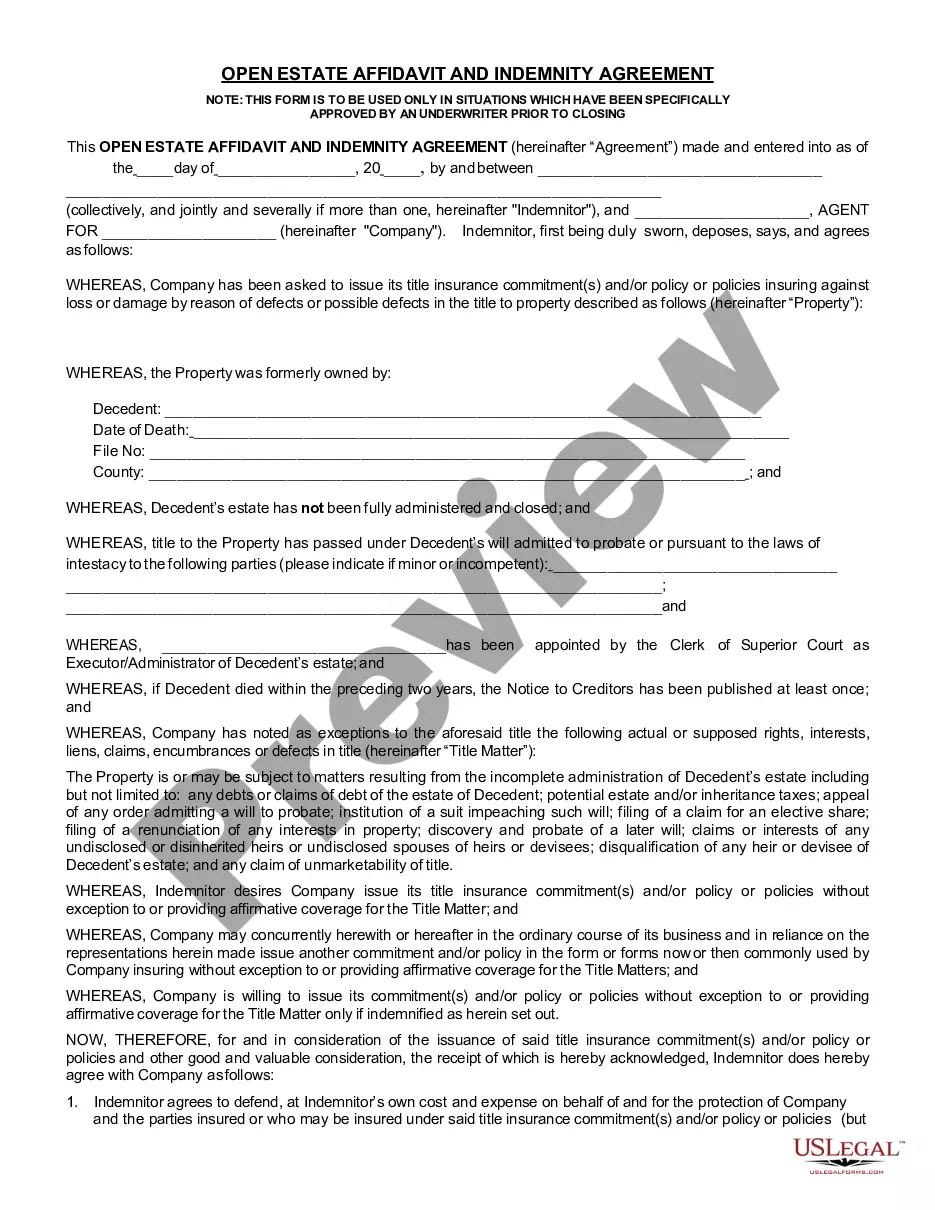
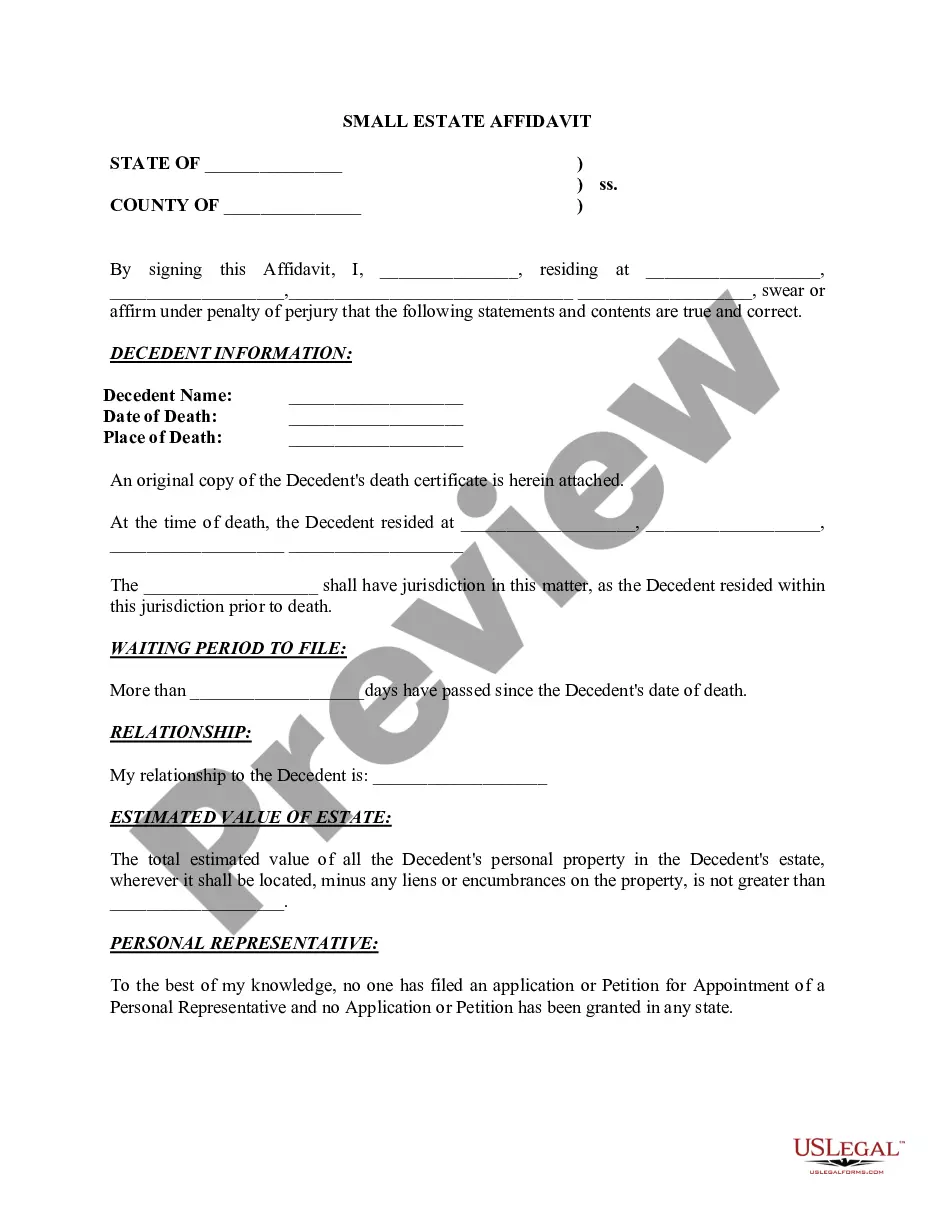
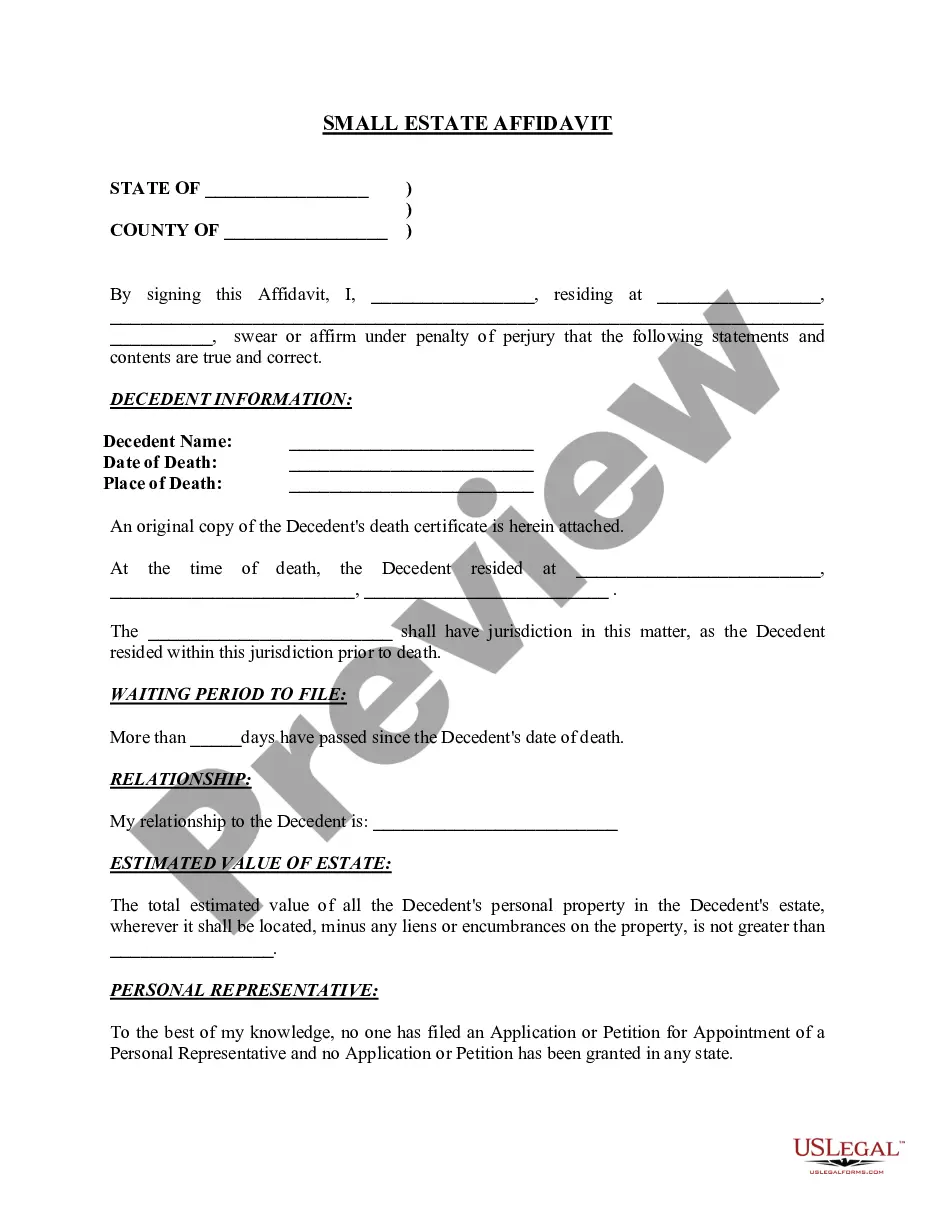
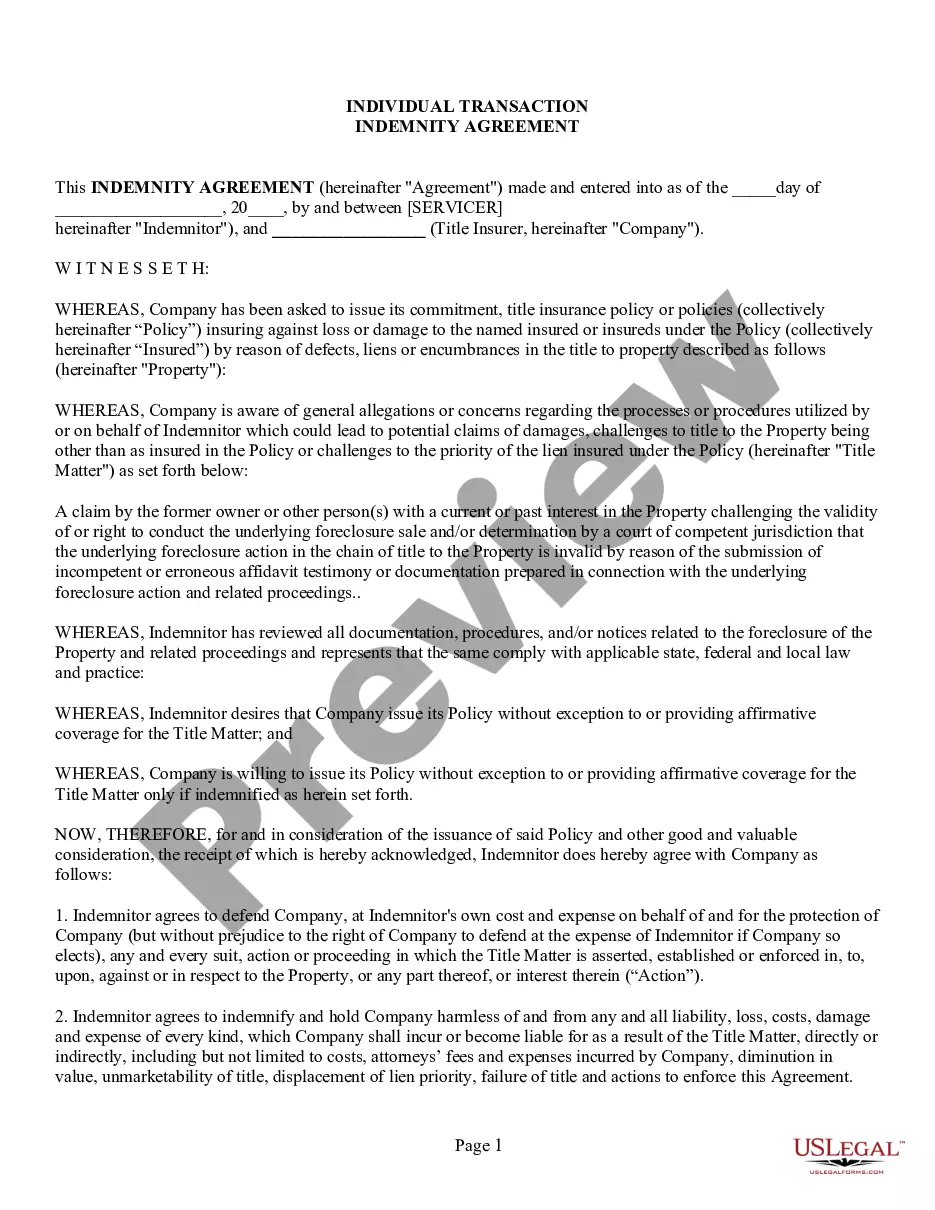
The Open Estate Affidavit and Indemnity Agreement is a legal document used when the estate of a deceased person has not been fully administered. This form allows heirs to affirm their ownership of the estate's property, providing an indemnity agreement to secure title insurance without exceptions related to unresolved estate matters. It helps to clarify and protect the interests of the involved parties while establishing the claim to both personal and real property, setting it apart from similar affidavits that may not address indemnity concerns.
Main sections of this form
- Identification of the Indemnitor and the Company providing title insurance.
- Details regarding the deceased person (decedent), including name, date of death, and county of residence.
- Assertion of heirs to the estate, specifying if any heirs are minors or incompetent.
- Statement of indemnification responsibilities concerning title issues arising from the incomplete estate administration.
- Conditions under which the Company will issue title insurance without exceptions or affirmative coverage.
- Signature line for involved parties, including notary acknowledgment for legal validation.
Common use cases
This form is typically used when an estate is still in the process of being probated, and the heirs or personal representatives need to establish ownership of the decedent's property. It is particularly necessary in real estate transactions where title insurance is required, but potential issues with the estate's administration might complicate the title's validity.
Intended users of this form
Who should use this form:
- Heirs of a deceased individual who seek to claim ownership of their inheritance.
- Executors or administrators of an estate needing to provide indemnification for title insurance.
- Real estate agents facilitating sales that involve properties under incomplete estate administration.
- Title insurance companies requiring assurance against potential title defects related to the estate.
Steps to complete this form
How to complete this form:
- Identify the parties involved, including the Indemnitor (i.e., heirs or administrators) and the Company providing title insurance.
- Provide the full name of the deceased, their date of death, and the corresponding county.
- List all heirs, indicating any minors or individuals with legal disabilities.
- Outline any potential title matters or concerns related to the estate that might affect the property.
- Sign the document in the presence of a notary public to ensure its legal validity.
Does this document require notarization?
Yes, this form must be notarized to be legally valid. Notarization ensures that the signatures are verified and the form can be properly acknowledged in legal proceedings. US Legal Forms offers integrated online notarization, allowing you to complete this step securely and efficiently via video call.
Get your form ready online
Our built-in tools help you complete, sign, share, and store your documents in one place.
Make edits, fill in missing information, and update formatting in US Legal Forms—just like you would in MS Word.
Download a copy, print it, send it by email, or mail it via USPS—whatever works best for your next step.
Sign and collect signatures with our SignNow integration. Send to multiple recipients, set reminders, and more. Go Premium to unlock E-Sign.
If this form requires notarization, complete it online through a secure video call—no need to meet a notary in person or wait for an appointment.
We protect your documents and personal data by following strict security and privacy standards.

Make edits, fill in missing information, and update formatting in US Legal Forms—just like you would in MS Word.

Download a copy, print it, send it by email, or mail it via USPS—whatever works best for your next step.

Sign and collect signatures with our SignNow integration. Send to multiple recipients, set reminders, and more. Go Premium to unlock E-Sign.

If this form requires notarization, complete it online through a secure video call—no need to meet a notary in person or wait for an appointment.

We protect your documents and personal data by following strict security and privacy standards.
Common mistakes
- Failing to identify all heirs, which can lead to future disputes or title issues.
- Not including all necessary details about the decedent and the property involved.
- Omitting the notarization step, which is crucial for the form's acceptance.
- Using vague language when describing potential title matters, which can create ambiguity.
Benefits of using this form online
- Quick and easy access to a legally vetted document tailored for your needs.
- Convenient online completion and downloadable format for immediate use.
- The ability to customize fields to accurately reflect the specifics of your situation.
- Reduced risk of errors with a professionally prepared form compared to self-drafted documents.
Looking for another form?
Form popularity
FAQ
There is usually no fee for filing a General Affidavit. Call the district clerk's office in the county where the case is on file to confirm.
Small estate affidavits are a fast and affordable way to transfer property after someone has died, when the decedent died without a will and the other requirements set out in the Texas Estates Code are satisfied.
Texas allows the heir of a person who has died without a will to avoid probate by using a summary administration process with a small estate affidavit. A small estate affidavit can allow an heir to claim bank accounts and other estate assets much faster and at far less cost than through a probate.
Indemnity is defined by statute in California as ?a contract by which one engages to save another from a legal consequence of the conduct of one of the parties, or of some other person.?1 In other words, one party (known as the indemnitor) agrees to be responsible for certain liabilities of another party (known as
Cost Of The Small Estate Affidavit Procedure The clerk's filing fee for this procedure is usually about $475 in Texas. That is generally the only court expense.
In Texas, however, a small estate affidavit is offered only where there is no will (also referred to as dying intestate) and for estates with a value of $75,000 or less. With some simple paperwork, your loved one's estate can be distributed without a costly court proceeding.
The small estate affidavit must show that the deceased's estate is worth $75,000 or less, the estate's assets cover any outstanding debts, and a few other requirements.
It is not necessary to hire a lawyer to file a small estate affidavit. In fact, many probate courts provide forms on their website for the public's use.