Ordinary Care-Definition
Understanding this form
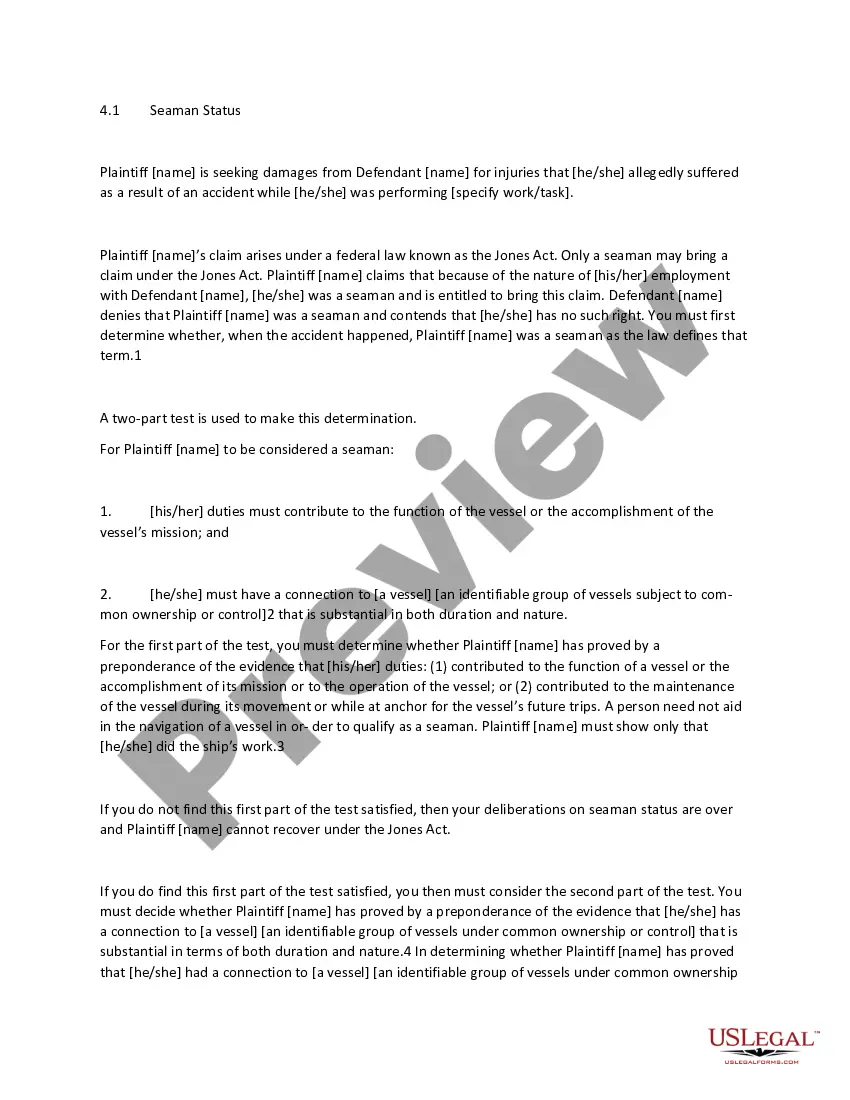
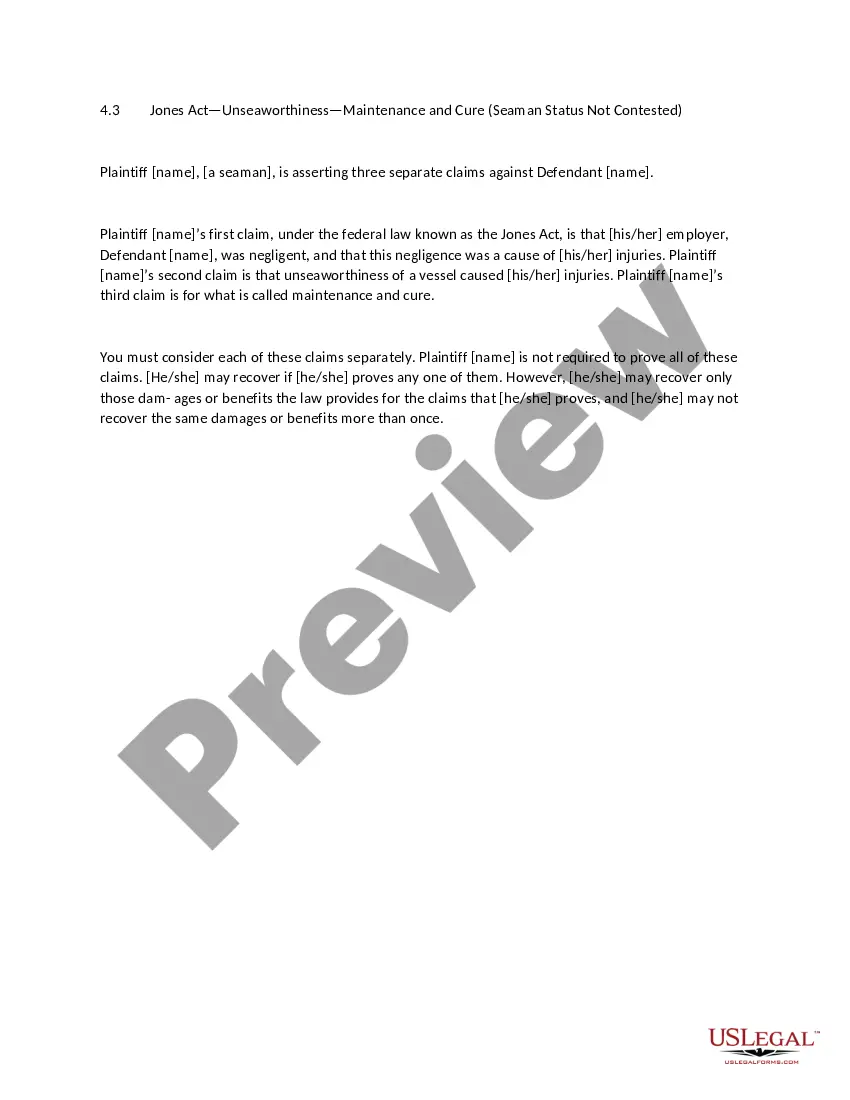
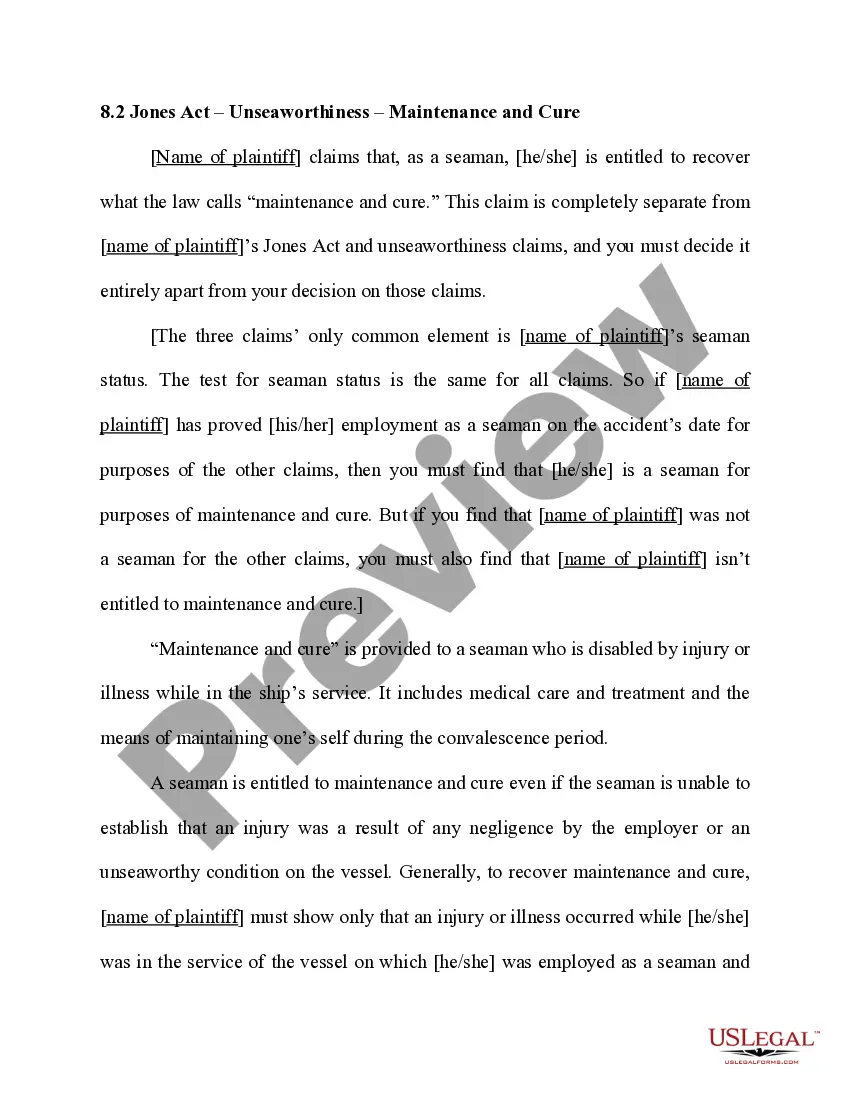
The Ordinary Care-Definition form is a legal document designed to clarify the criteria for seaman status under the Jones Act. This form is crucial for maritime workers seeking to establish eligibility for legal claims arising from injuries sustained while serving on a vessel. Unlike other injury claims, this form specifically addresses the unique legal definitions and requirements specific to maritime law.
Main sections of this form
- Definition of seaman status and its implications under the Jones Act.
- Two-part test for determining whether an individual qualifies as a seaman.
- Criteria for evaluating the connection to a vessel or group of vessels.
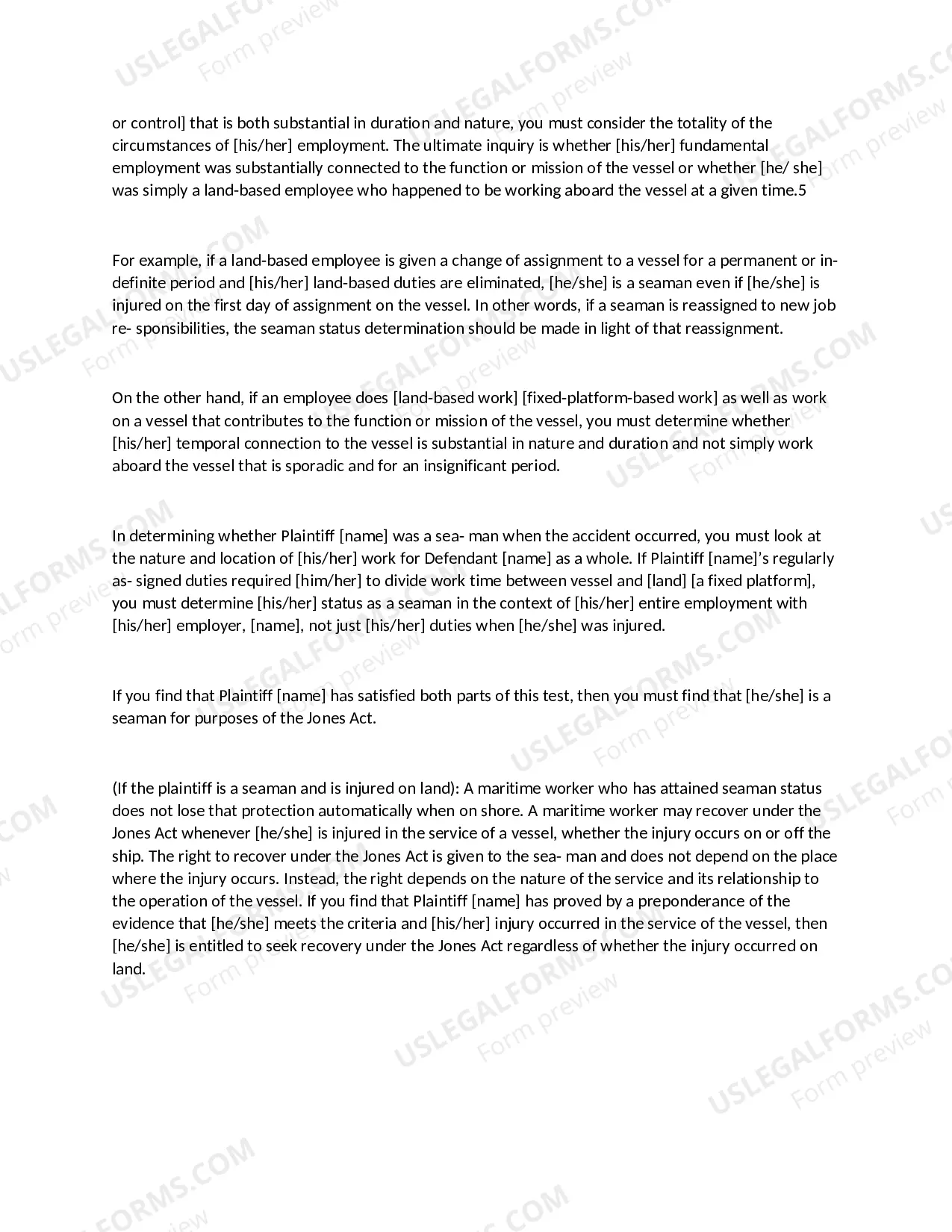
- Guidelines on how to assess an employee's duties and work location related to seaman status.
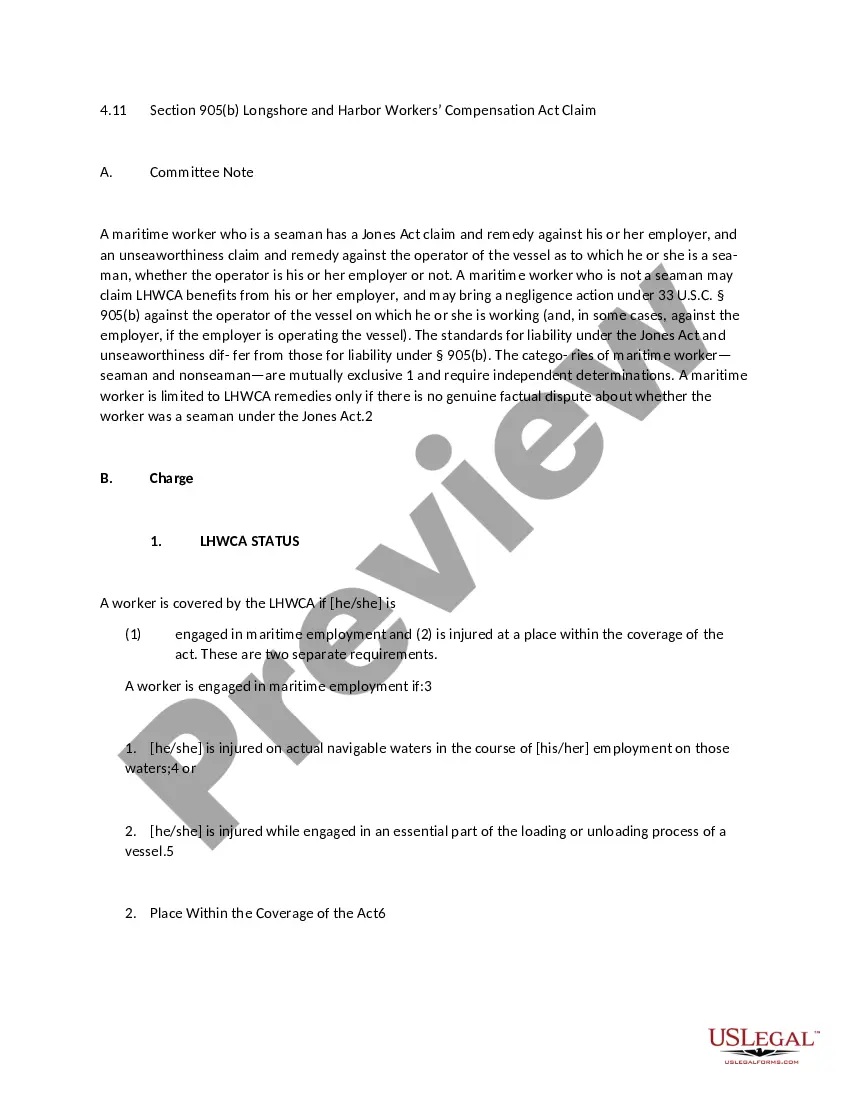
- Consideration of injuries sustained on land for those classified as seamen.
Common use cases
This form is used when a maritime worker seeks to establish their eligibility for a claim under the Jones Act. It is particularly important when the worker has suffered injuries while performing duties both on the vessel and potentially on shore. This form helps to determine if the worker meets the legal requirements to qualify as a seaman and thus have the right to pursue damages.
Who needs this form
- Maritime workers who believe they have seaman status under the Jones Act.
- Individuals seeking to file claims for injuries sustained while working aboard a vessel.
- Seamen or those reassigned to vessel duties who need to clarify their legal rights.
Completing this form step by step
- Identify the parties involved by entering the names of the plaintiff and defendant.
- Specify the work or tasks being performed at the time of the injury.
- Provide details related to the nature of the employment and the vessel involved.
- Confirm that duties contributed to the function or mission of the vessel.
- Document the substantial connection to a vessel in terms of duration and nature of employment.
Does this document require notarization?
In most cases, this form does not require notarization. However, some jurisdictions or signing circumstances might. US Legal Forms offers online notarization powered by Notarize, accessible 24/7 for a quick, remote process.
Get your form ready online
Our built-in tools help you complete, sign, share, and store your documents in one place.
Make edits, fill in missing information, and update formatting in US Legal Forms—just like you would in MS Word.
Download a copy, print it, send it by email, or mail it via USPS—whatever works best for your next step.
Sign and collect signatures with our SignNow integration. Send to multiple recipients, set reminders, and more. Go Premium to unlock E-Sign.
If this form requires notarization, complete it online through a secure video call—no need to meet a notary in person or wait for an appointment.
We protect your documents and personal data by following strict security and privacy standards.

Make edits, fill in missing information, and update formatting in US Legal Forms—just like you would in MS Word.

Download a copy, print it, send it by email, or mail it via USPS—whatever works best for your next step.

Sign and collect signatures with our SignNow integration. Send to multiple recipients, set reminders, and more. Go Premium to unlock E-Sign.

If this form requires notarization, complete it online through a secure video call—no need to meet a notary in person or wait for an appointment.

We protect your documents and personal data by following strict security and privacy standards.
Common mistakes to avoid
- Failing to clearly define the nature of the work performed at the time of injury.
- Not adequately demonstrating the connection to the vessel in terms of nature and duration.
- Overlooking the legal definitions of seaman status in the context of the claim.
- Assuming seaman status based on temporary assignments without proper documentation.
Advantages of online completion
- Easy access to legally compliant templates without the need to visit a law office.
- Editable fields allow users to personalize the form according to their specific circumstances.
- Instant downloads mean you can complete and submit your form without delays.
Legal use & context
- Establishing seaman status is crucial for pursuing claims under the Jones Act.
- This form helps clarify the legal obligations and rights of maritime workers.
- Injured workers must prove their seaman status to receive compensation for injuries.
Quick recap
- The Ordinary Care-Definition form is essential for determining seaman status in legal claims.
- Maritime law provides specific criteria that must be met for eligibility under the Jones Act.
- Accurate completion of the form can significantly impact the outcome of an injury claim.
Looking for another form?
Form popularity
FAQ
Ordinary Care: Any medicines, treatment, or procedure that offers a reasonable hope of benefit and can be obtained or used without excessive pain, cost, or inconvenience. Examples: IV fluids for a 30-year-old appendectomy patient. Nasogastric feedings for a baby with an esophageal fistula.
Ordinary duty of care means that property owners are expected to properly maintain the premises, including the areas around it. They are expected to inspect the property and make any necessary repairs to fix conditions that could be dangerous and lead to accidents.
Due care focuses on whether someone did what they were supposed to do, regardless of the situation. For example, if you're driving your car, you're expected to engage in safe behavior that prevents a car accident. You're expected to follow the speed limit and not text while driving.
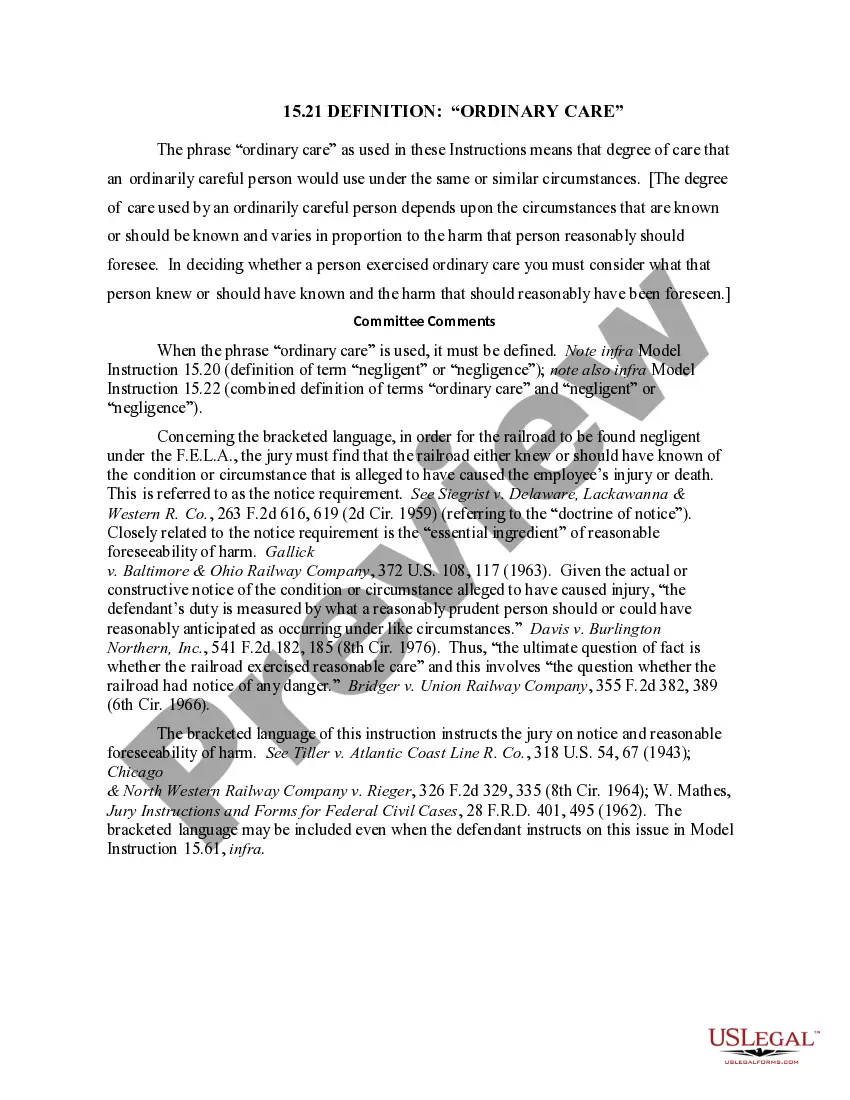
Ordinary care or reasonable care is what is expected of most people in most cases. The failure to exercise ordinary care may be negligence. This arises most often in the context of there being some duty owed, a breach of duty and resulting damage.
Slight care is the degree of care persons of ordinary prudence exercise concerning their own affairs of slight importance. Reasonable (or ordinary) care is that degree of care which may reasonably be expected from an ordinarily prudent and rational person in similar circumstances.
? Ordinary means = reasonable hope of benefit/success; not. overly burdensome; does not present an excessive risk. and are financially manageable. ? Proportionate to the state of the patient. ?
What distinguishes ?ordinary? from ?extraordinary? in Catholic moral theology is not whether the treatment is ?ordinary? in the sense of being normal or frequently used, but rather whether the treatment is beneficial (ordinary) or excessively burdensome (extraordinary) to the patient.
Simplistically put, if, from the perspective of the patient, the burden of treatment is low, then it is ordinary. But, if the patient perceives the burdens of treatment to be high, then it is extraordinary.