Duty to Use Ordinary Care
Overview of this form
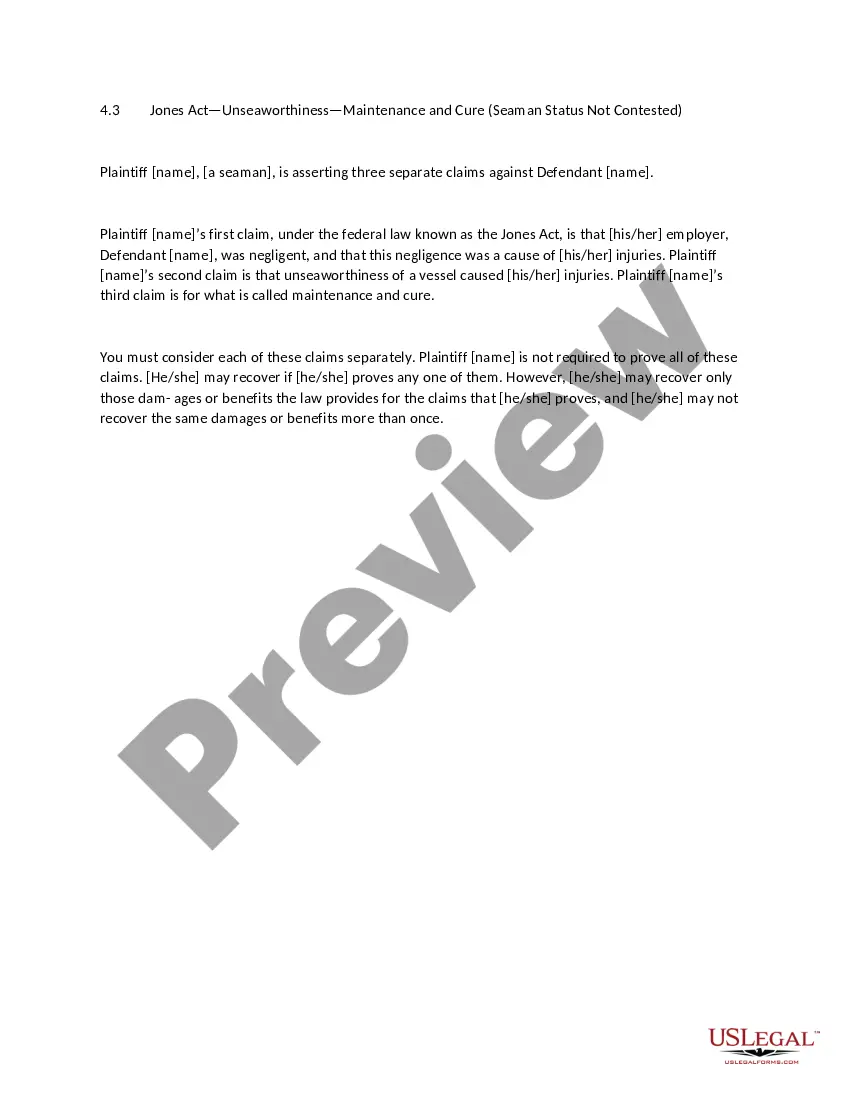
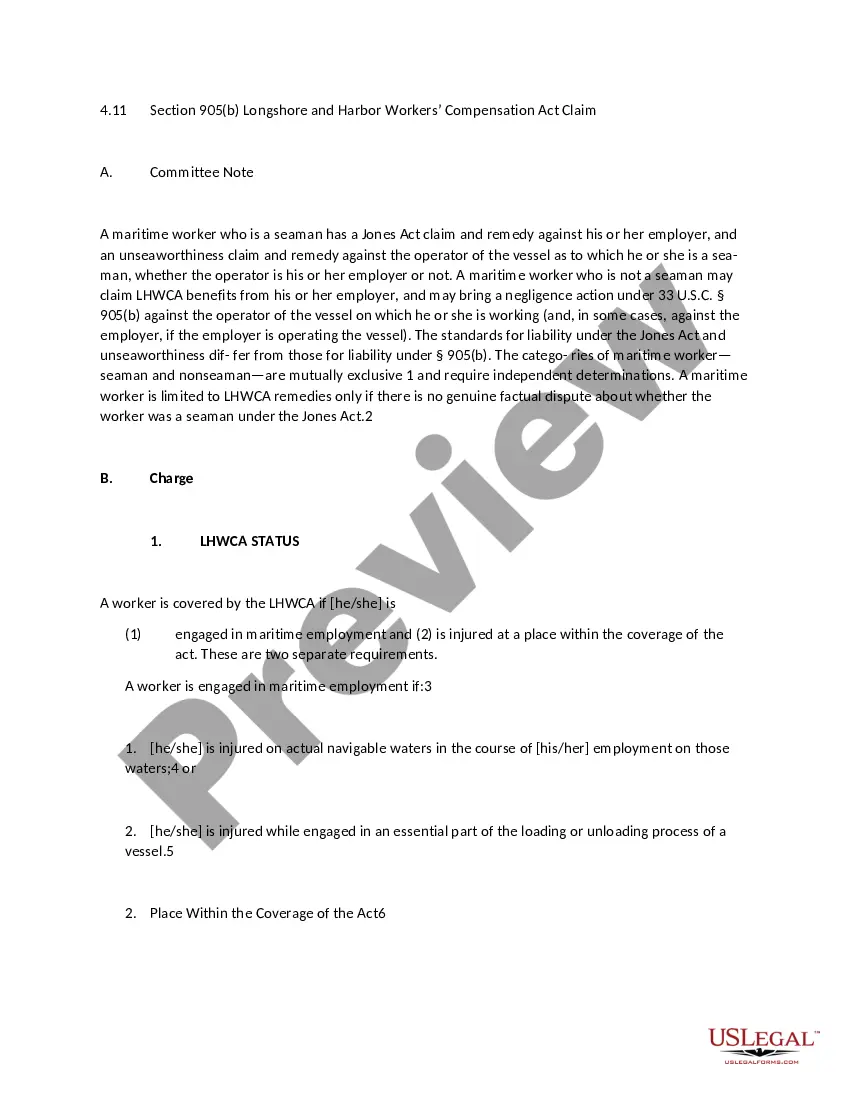
The Duty to Use Ordinary Care form outlines the legal responsibilities of employers toward seamen under federal law. This form is specifically designed for claims under the Jones Act and addresses issues of negligence, unseaworthiness, and maintenance and cure. Unlike other employment-related forms, it focuses on maritime law and the unique protections granted to seamen, providing a structured way to assert claims related to workplace injuries at sea.
Key components of this form
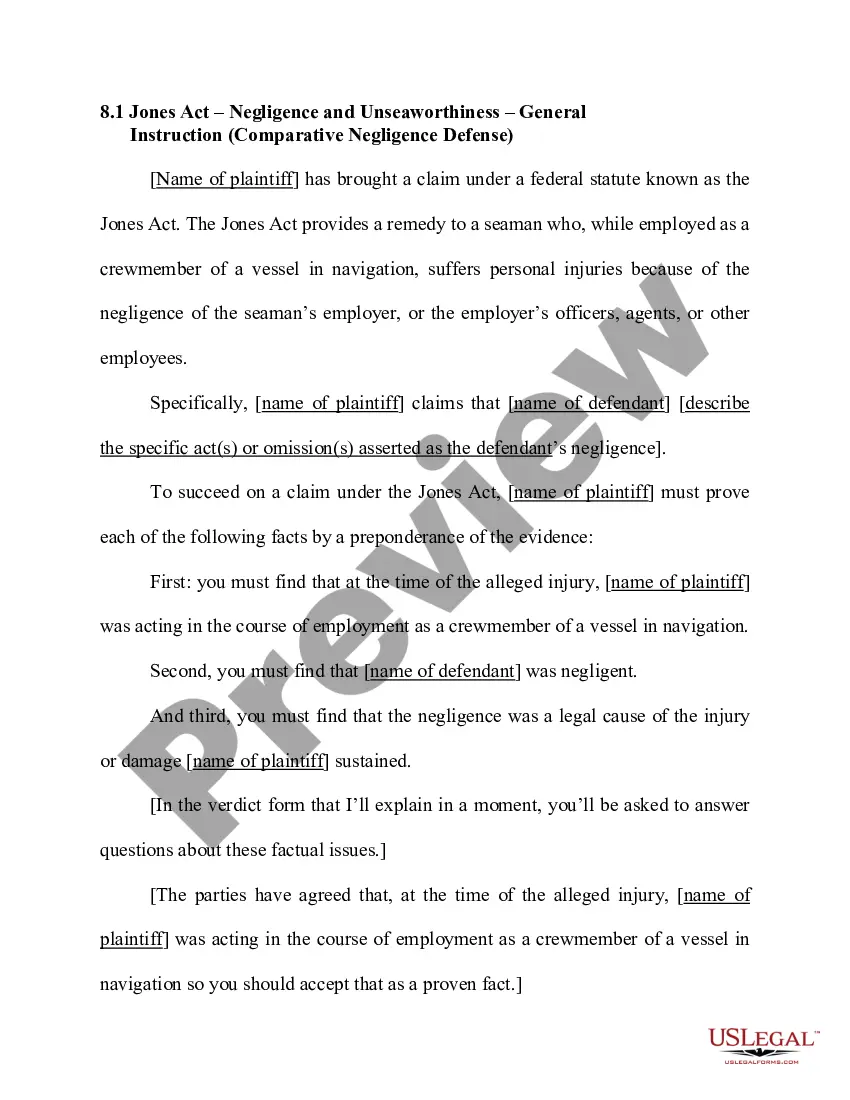
- Claim for negligence under the Jones Act.
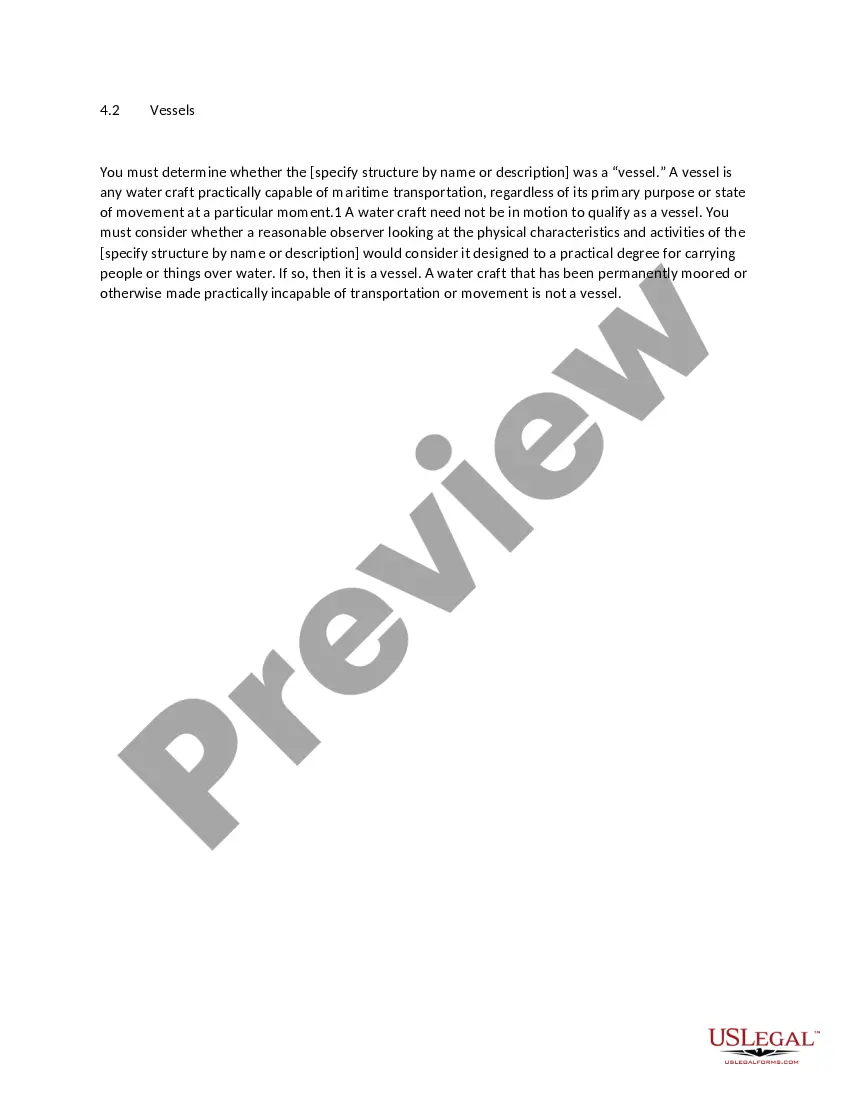
- Assertion of unseaworthiness of the vessel.
- Claim for maintenance and cure benefits.
- Flexibility to recover damages based on any one of the claims proved.
- Clear demarcation of damages recoverable without duplicating claims.
Common use cases
This form is necessary when a seaman seeks to file a claim for injuries sustained while working on a vessel. It is relevant in scenarios where a seaman believes that their employer's negligence directly contributed to their injuries, or when the vessel they were aboard was unseaworthy at the time of the injury. Additionally, this form is used when the seaman is entitled to maintenance and cure, which refers to compensation for medical expenses and daily living costs while recovering.
Who should use this form
- Seamen who have sustained injuries while working aboard a vessel.
- Individuals looking to claim compensation under the Jones Act.
- Maritime workers who need to address issues related to the seaworthiness of their vessel.
- Seamen requiring financial support for medical expenses and daily living during recovery.
How to prepare this document
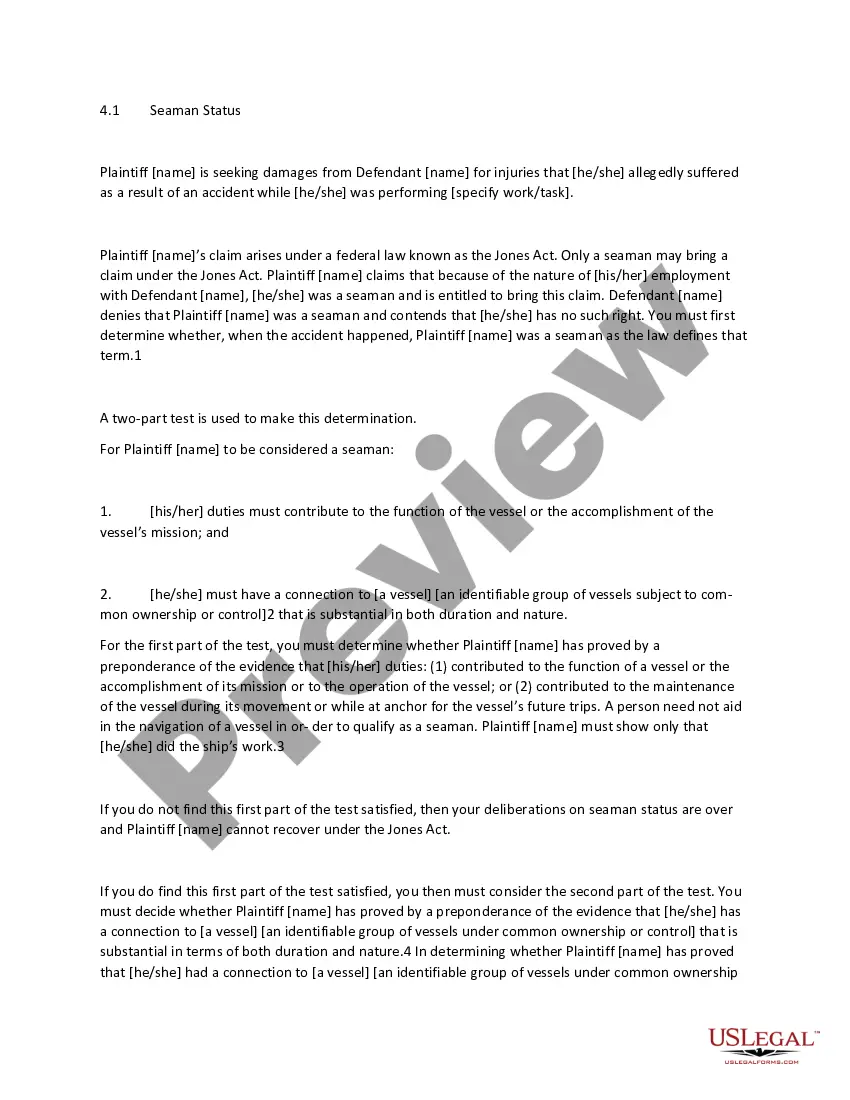
- Identify the plaintiff's name and seaman status.
- Clearly state the defendant's name, typically the employer.
- Outline each of the three claims: negligence, unseaworthiness, and maintenance and cure.
- Detail how each claim relates to the injuries sustained.
- Sign and date the form where indicated to complete the filing process.
Does this document require notarization?
This form does not typically require notarization to be legally valid. However, some jurisdictions or document types may still require it. US Legal Forms provides secure online notarization powered by Notarize, available 24/7 for added convenience.
Get your form ready online
Our built-in tools help you complete, sign, share, and store your documents in one place.
Make edits, fill in missing information, and update formatting in US Legal Forms—just like you would in MS Word.
Download a copy, print it, send it by email, or mail it via USPS—whatever works best for your next step.
Sign and collect signatures with our SignNow integration. Send to multiple recipients, set reminders, and more. Go Premium to unlock E-Sign.
If this form requires notarization, complete it online through a secure video call—no need to meet a notary in person or wait for an appointment.
We protect your documents and personal data by following strict security and privacy standards.

Make edits, fill in missing information, and update formatting in US Legal Forms—just like you would in MS Word.

Download a copy, print it, send it by email, or mail it via USPS—whatever works best for your next step.

Sign and collect signatures with our SignNow integration. Send to multiple recipients, set reminders, and more. Go Premium to unlock E-Sign.

If this form requires notarization, complete it online through a secure video call—no need to meet a notary in person or wait for an appointment.

We protect your documents and personal data by following strict security and privacy standards.
Typical mistakes to avoid
- Failing to specify the details of injuries and how they relate to the claims.
- Not clearly identifying the parties involved in the claims.
- Omitting supporting evidence or documentation necessary for each claim.
- Neglecting to complete all required sections of the form.
Advantages of online completion
- Convenience of immediate access and download from any device.
- Editability to customize the form according to specific needs without starting from scratch.
- Reliability of attorney-drafted content ensuring adherence to legal standards and terminology.
Legal use & context
- This form is enforceable under maritime law, specifically for claims involving seamen.
- It provides a structured approach to filing negligence and unseaworthiness claims.
- Seamen must be careful to meet the legal criteria to establish claims under the Jones Act.
Looking for another form?

Form popularity
FAQ
Duty of care. n. a requirement that a person act toward others and the public with the watchfulness, attention, caution and prudence that a reasonable person in the circumstances would use.
The "duty of care" refers to the obligations placed on people to act towards others in a certain way, in ance with certain standards. The term can have a different meaning depending on the legal context in which it is being used.
In a legal sense, a duty of care is a fiduciary responsibility that applies in areas where other people rely on you. A doctor has the duty of care to give you proper medical attention, and a factory owner has the duty of care to maintain a safe working environment, providing safety goggles and earplugs, for example.
In tort law, a duty of care is a legal obligation that is imposed on an individual, requiring adherence to a standard of reasonable care to avoid careless acts that could foreseeably harm others, and lead to claim in negligence. It is the first element that must be established to proceed with an action in negligence.
Negligence: Failing to exercise the standard of care that a reasonable person would exercise in similar circumstances.