Alabama Notice of Intent to Plead Guilty
Understanding this form
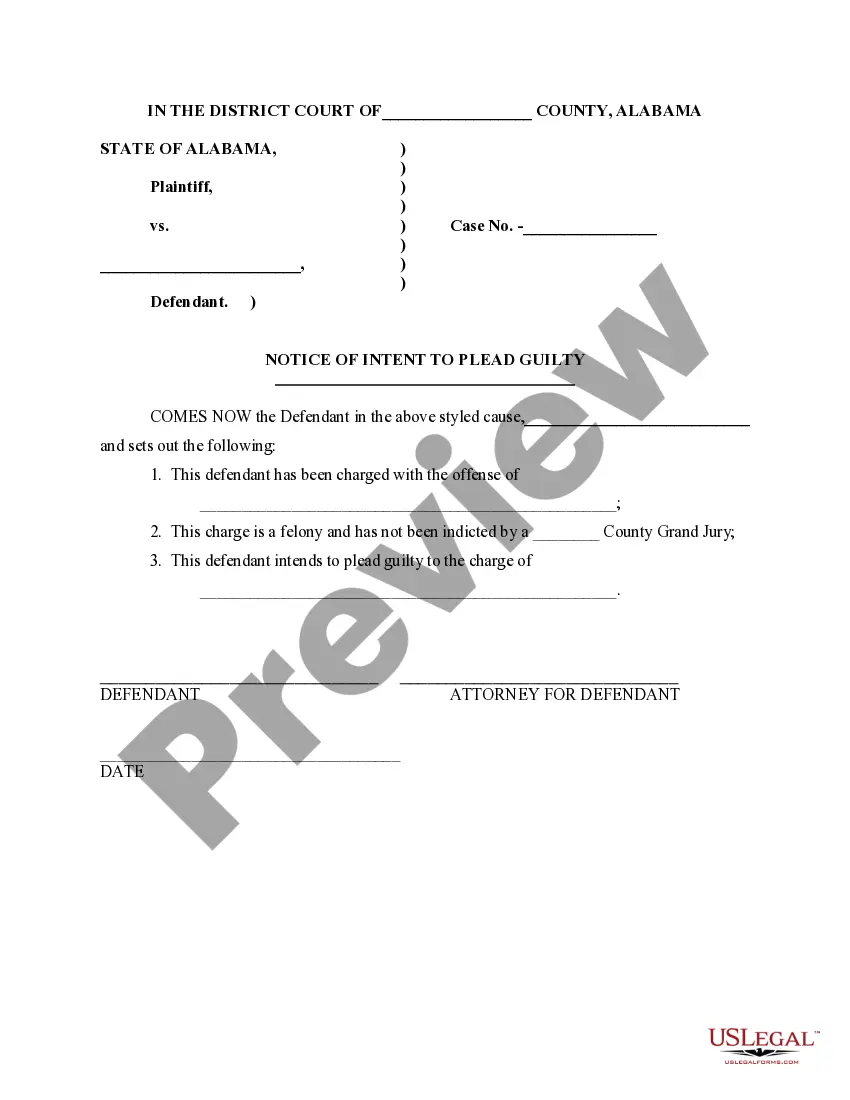
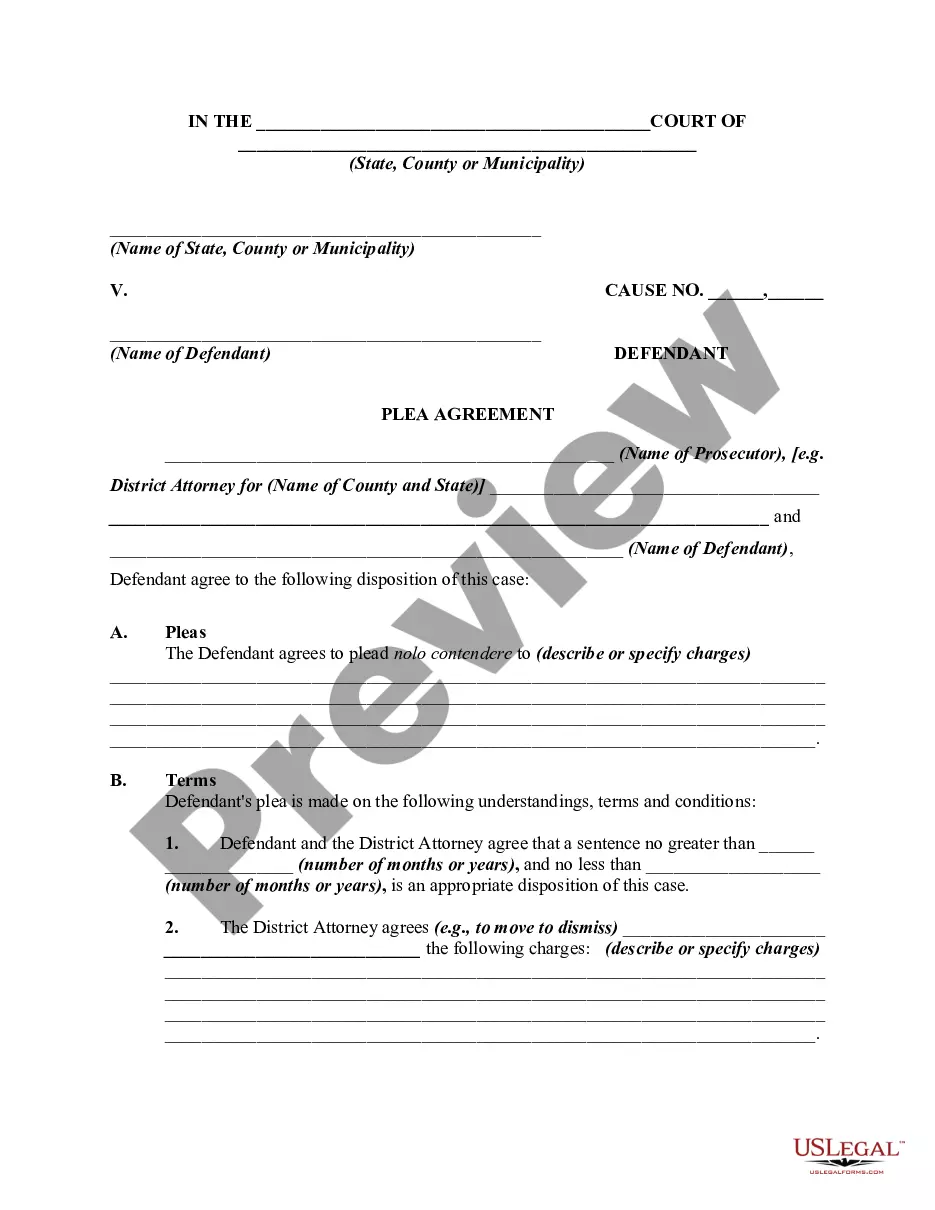
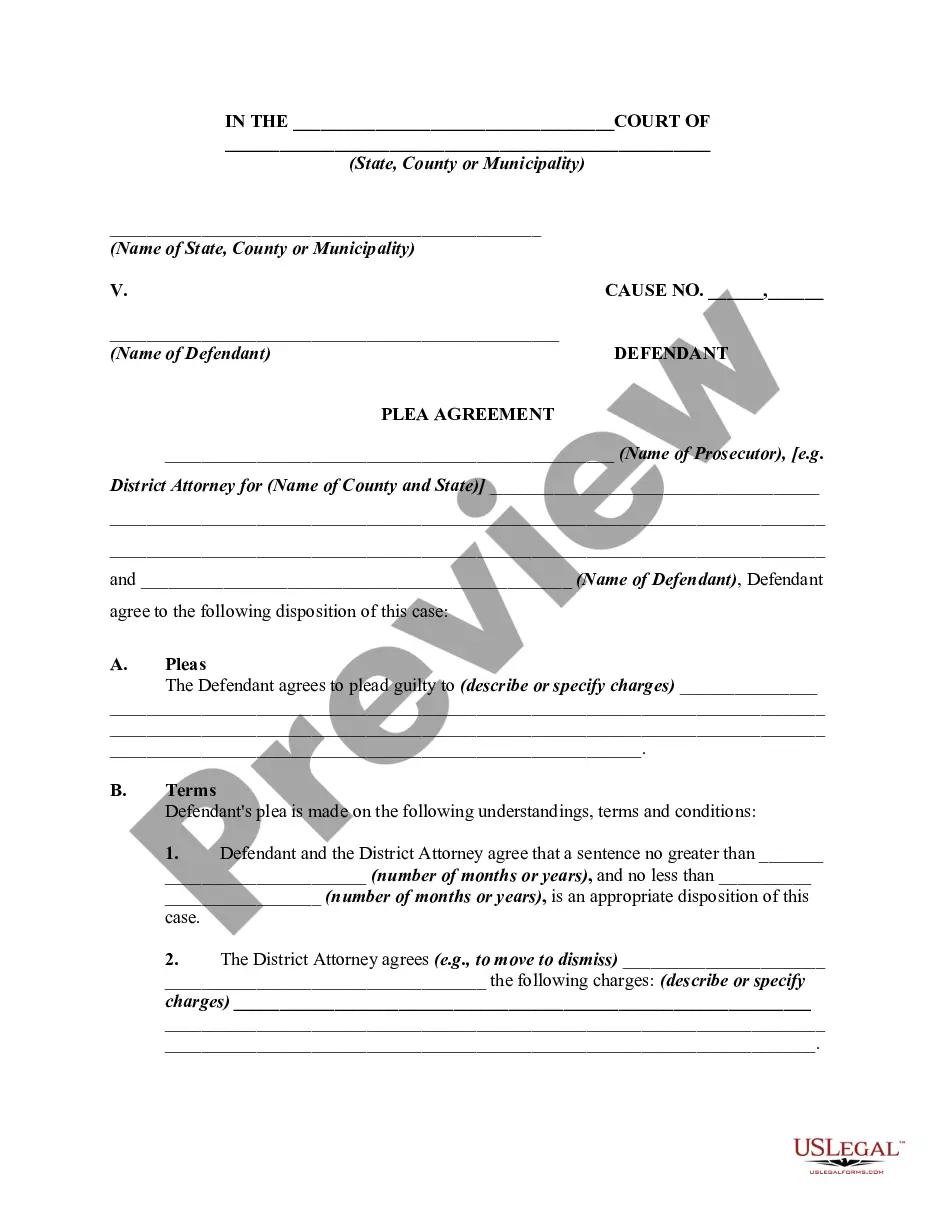
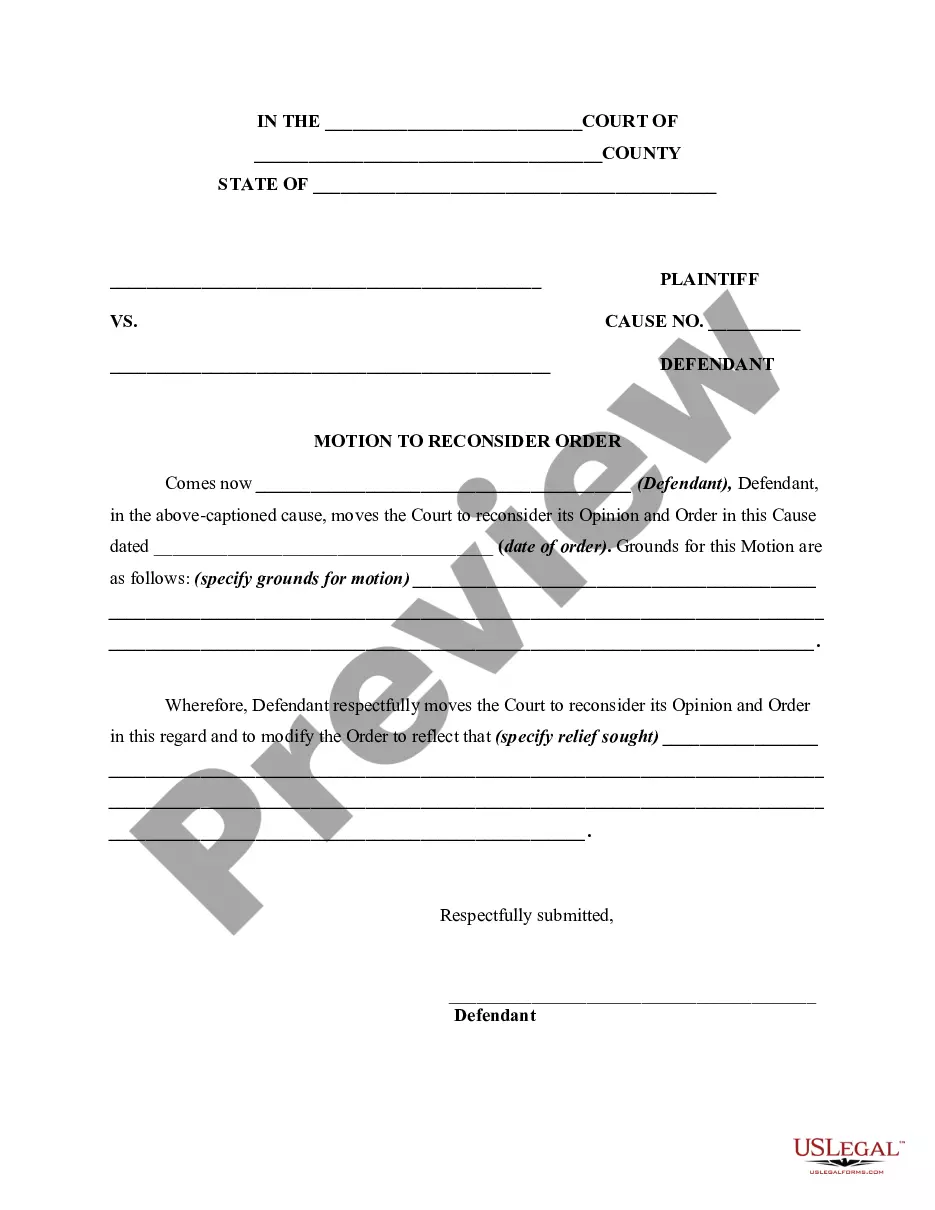
The Notice of Intent to Plead Guilty is a legal document that allows a defendant, through their attorney, to officially indicate their intent to plead guilty to criminal charges. This form communicates the defendant's decision before formal proceedings, differentiating it from other plea-related forms by focusing explicitly on a guilty plea rather than other options such as not guilty or no contest.
Key parts of this document
- Defendant's name and details of the case.
- Specification of the charge(s) against the defendant.
- Indication whether the charge is a felony or misdemeanor.
- A declaration of intent to plead guilty, including the specific charge.
- Signature and date fields for the defendant and their attorney.
When to use this document
This form is used when a defendant has decided to accept responsibility for the charges filed against them and wants to formally notify the court of this intent. It is most commonly employed in criminal cases when the defendant wants to expedite legal proceedings by acknowledging guilt rather than proceeding with a trial.
Who should use this form
This form is relevant for:
- Defendants facing criminal charges who wish to plead guilty.
- Attorneys representing defendants in criminal cases.
- Individuals looking to understand the implications and processes of entering a guilty plea.
How to complete this form
- Identify the defendant's full name and the relevant case number.
- Specify the charge(s) against the defendant clearly, and indicate if it is a felony or misdemeanor.
- Enter the specific charge the defendant intends to plead guilty to.
- Ensure both the defendant and their attorney provide signatures where indicated.
- Complete the date of signing to finalize the document.
Does this document require notarization?
Notarization is not commonly needed for this form. However, certain documents or local rules may make it necessary. Our notarization service, powered by Notarize, allows you to finalize it securely online anytime, day or night.
Get your form ready online
Our built-in tools help you complete, sign, share, and store your documents in one place.
Make edits, fill in missing information, and update formatting in US Legal Forms—just like you would in MS Word.
Download a copy, print it, send it by email, or mail it via USPS—whatever works best for your next step.
Sign and collect signatures with our SignNow integration. Send to multiple recipients, set reminders, and more. Go Premium to unlock E-Sign.
If this form requires notarization, complete it online through a secure video call—no need to meet a notary in person or wait for an appointment.
We protect your documents and personal data by following strict security and privacy standards.

Make edits, fill in missing information, and update formatting in US Legal Forms—just like you would in MS Word.

Download a copy, print it, send it by email, or mail it via USPS—whatever works best for your next step.

Sign and collect signatures with our SignNow integration. Send to multiple recipients, set reminders, and more. Go Premium to unlock E-Sign.

If this form requires notarization, complete it online through a secure video call—no need to meet a notary in person or wait for an appointment.

We protect your documents and personal data by following strict security and privacy standards.
Typical mistakes to avoid
- Failing to accurately specify the charge(s) leading to confusion in legal proceedings.
- Leaving signature fields blank or incorrectly filled, which can render the form invalid.
- Not entering the date, which is essential for the legal timeline of the case.
Why complete this form online
- Convenience of downloading and completing the form from anywhere.
- Editable fields allow for easy customization based on specific case details.
- Access to professionally drafted templates ensures legal accuracy.
What to keep in mind
- The Notice of Intent to Plead Guilty is a formal notification to the court.
- It is an essential step in the criminal justice process for defendants pleading guilty.
- Ensure accuracy in completion to avoid legal complications.
Looking for another form?
Form popularity
FAQ
So, the original Law & Order followed the detectives of a homicide squad. But they also investigated kidnappings, attempted murder, bombings, rape, and terrorism.Criminal Intent followed the "Major Case Squad" which is a real thing, but on TV they investigated murder and the real unit doesn't, apparently.
Criminal intent, generally speaking, refers to someone's state of mind at the time of her criminal action. Someone making a conscious decision to intentionally do something that is wrong or forbidden by the law possesses criminal intent.
Three types of criminal intent exist: (1) general intent, which is presumed from the act of commission (such as speeding); (2) specific intent, which requires preplanning and presdisposition (such as burglary); and (3) constructive intent, the unintentional results of an act (such as a pedestrian death resulting from
The Model Penal Code divides criminal intent into four states of mind listed in order of culpability: purposely, knowingly, recklessly, and negligently.
While stationed in MCS, Eames is partnered with Detective Robert Goren and is the senior partner of the two. In the season six premiere, Eames is kidnapped and tortured by Jo Gage (Martha Plimpton), the daughter of Dr. Declan Gage (John Glover), Goren's mentor. She rescues herself.
Captain Ross is shot and killed in the line of duty in the first part of the season 9 premiere "Loyalty" as a result of working undercover with the FBI on a RICO case. He is given a 21-gun salute at his funeral, with the entire Major Case Squad and many other NYPD officers and staff members in attendance.
Goldblum joined Criminal Intent in season eight, filling the void left by the departure of Chris Noth. Thesp has played Det. Zach Nichols over the past two years, at first alternating episodes with D'Onofrio.
In Criminal Law, criminal intent, also know as mens rea, is one of two elements that must be proven in order to secure a conviction (the other being the actual act, or actus reus). Some jurisdictions further classify intent into general and specific.
People who unintentionally engage in illegal conduct may be morally innocent; this is known as making a "mistake of fact." Someone who breaks the law because he or she honestly misperceives reality lacks mens rea and should not be charged with or convicted of a crime.