Small Estate Affidavit

What is this form?
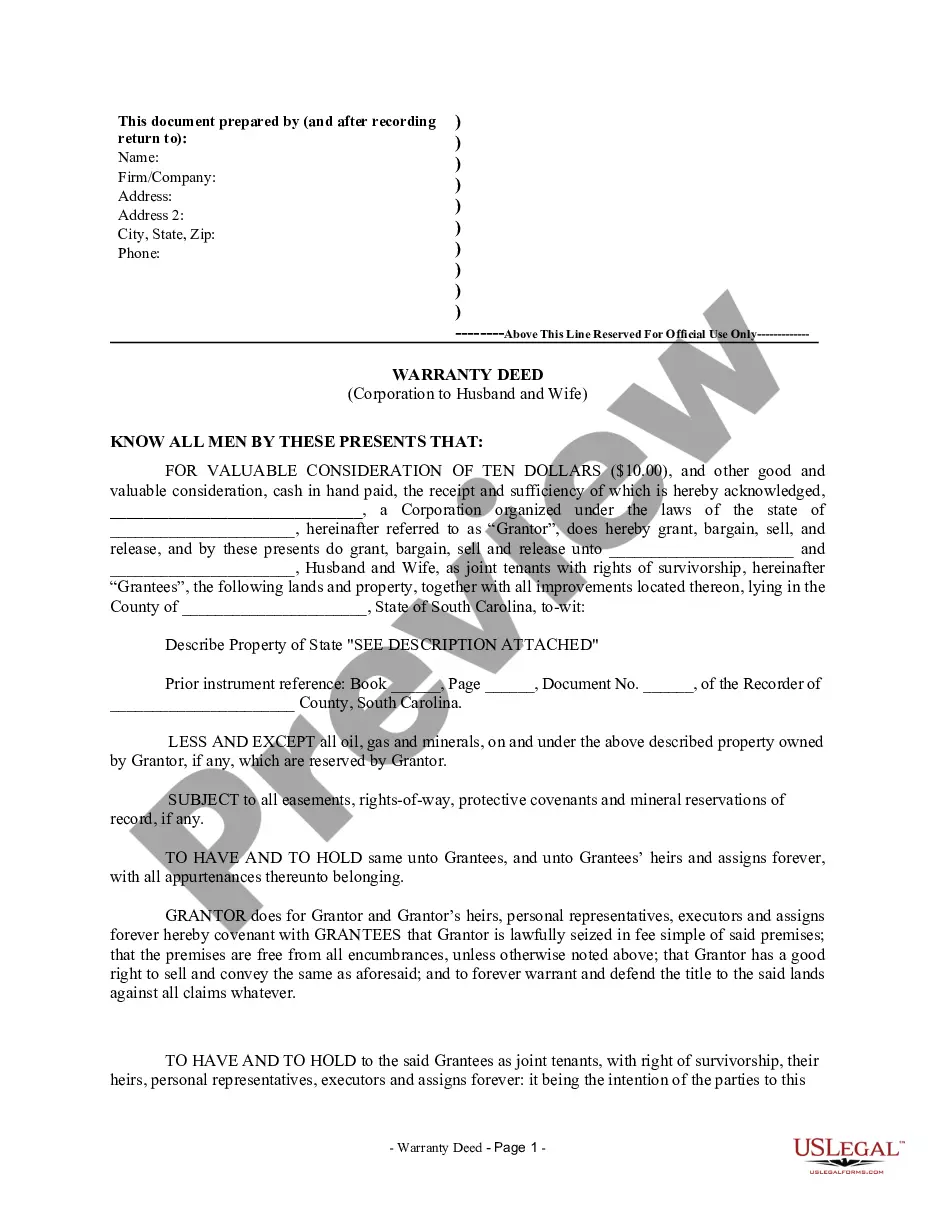
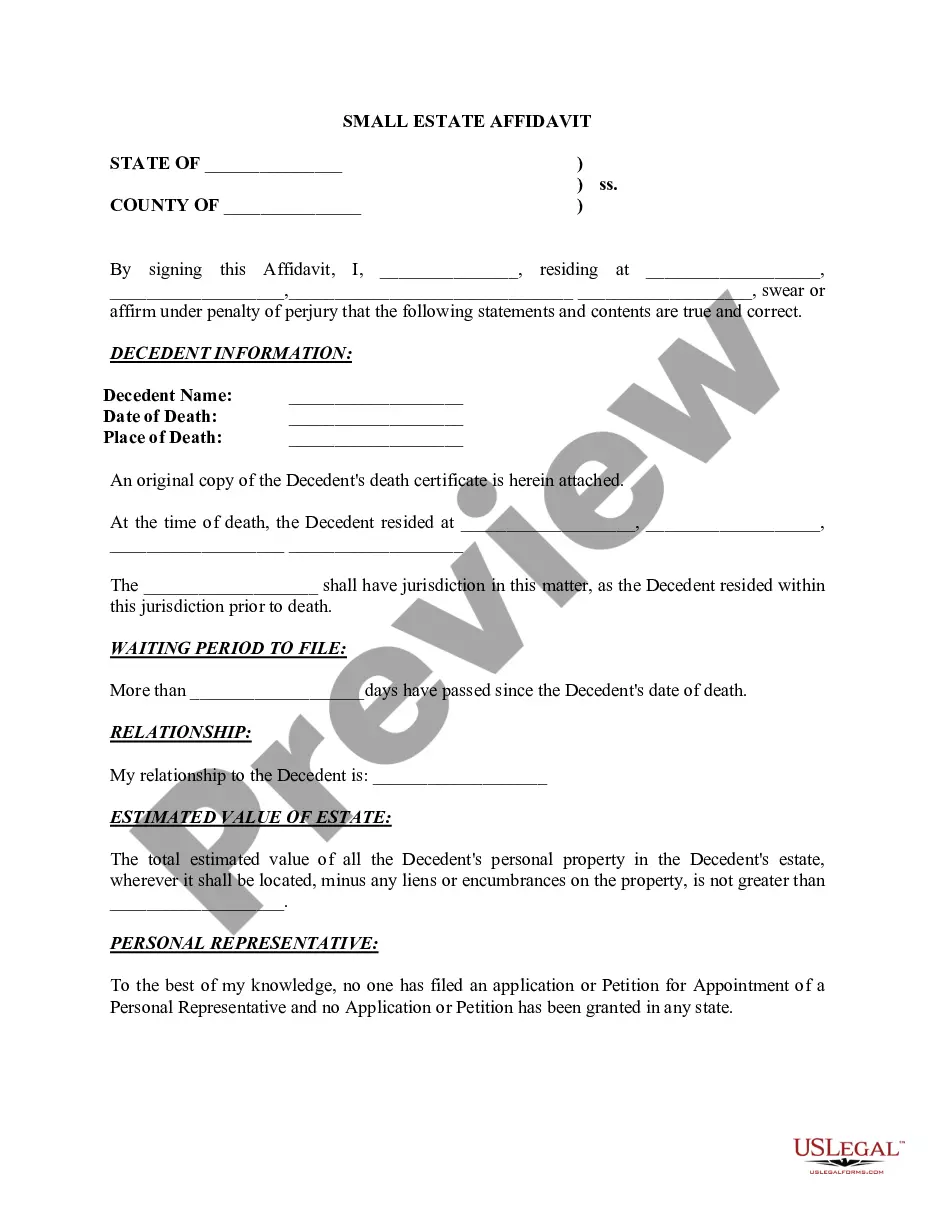
The Small Estate Affidavit is a legal document that allows a successor of a deceased person to reclaim property from an estate valued at less than $100,000. Unlike a full probate process, this affidavit simplifies the transfer of assets by allowing heirs or beneficiaries to affirm their relationship to the decedent and claim ownership of specific items without the need for court intervention.
What’s included in this form
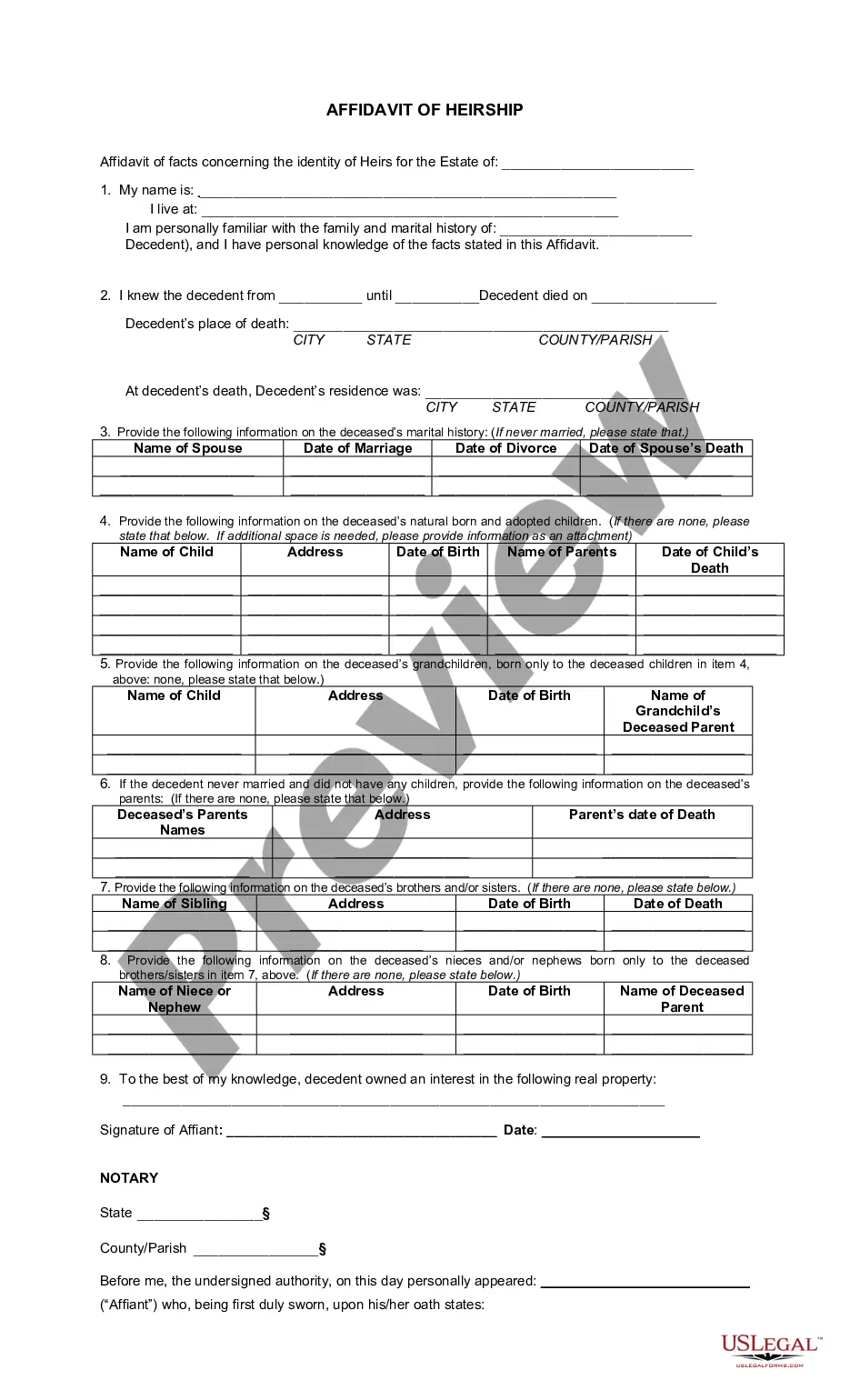
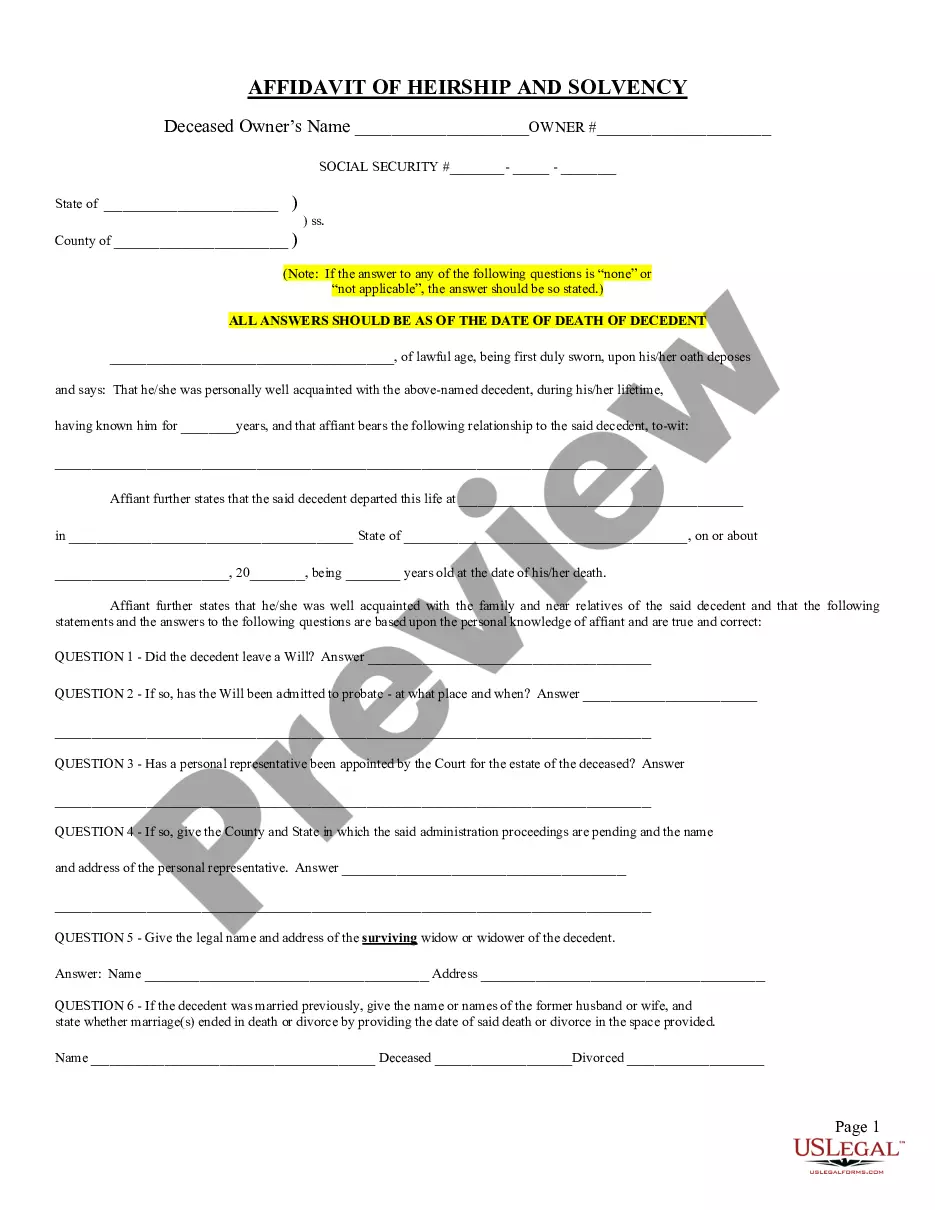
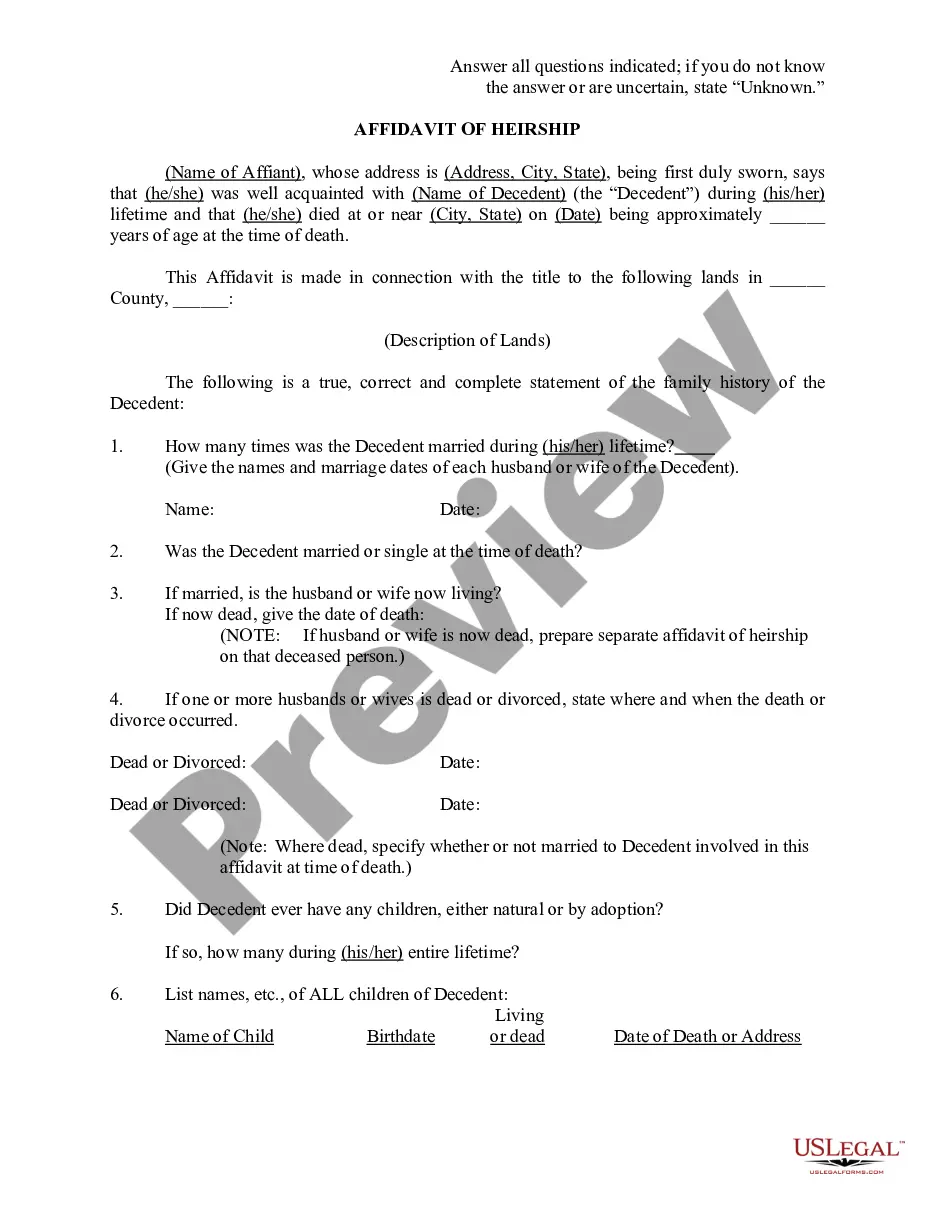
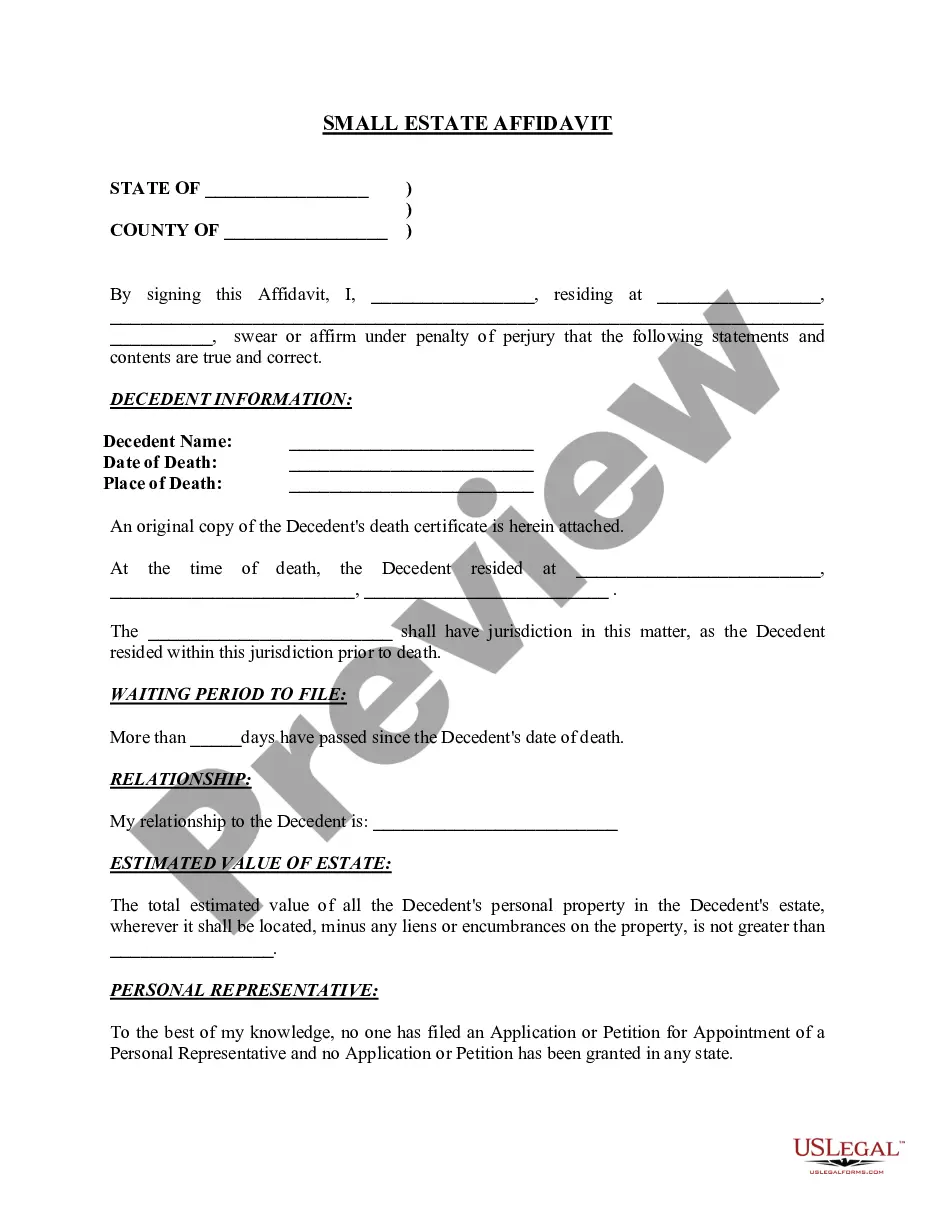
- Decedent Information: Collects details about the deceased, including their name, date, and place of death.
- Relationship: Identifies the affiant's relationship to the decedent.
- Estimated Value of Estate: States the total estimated value of the decedent's personal property.
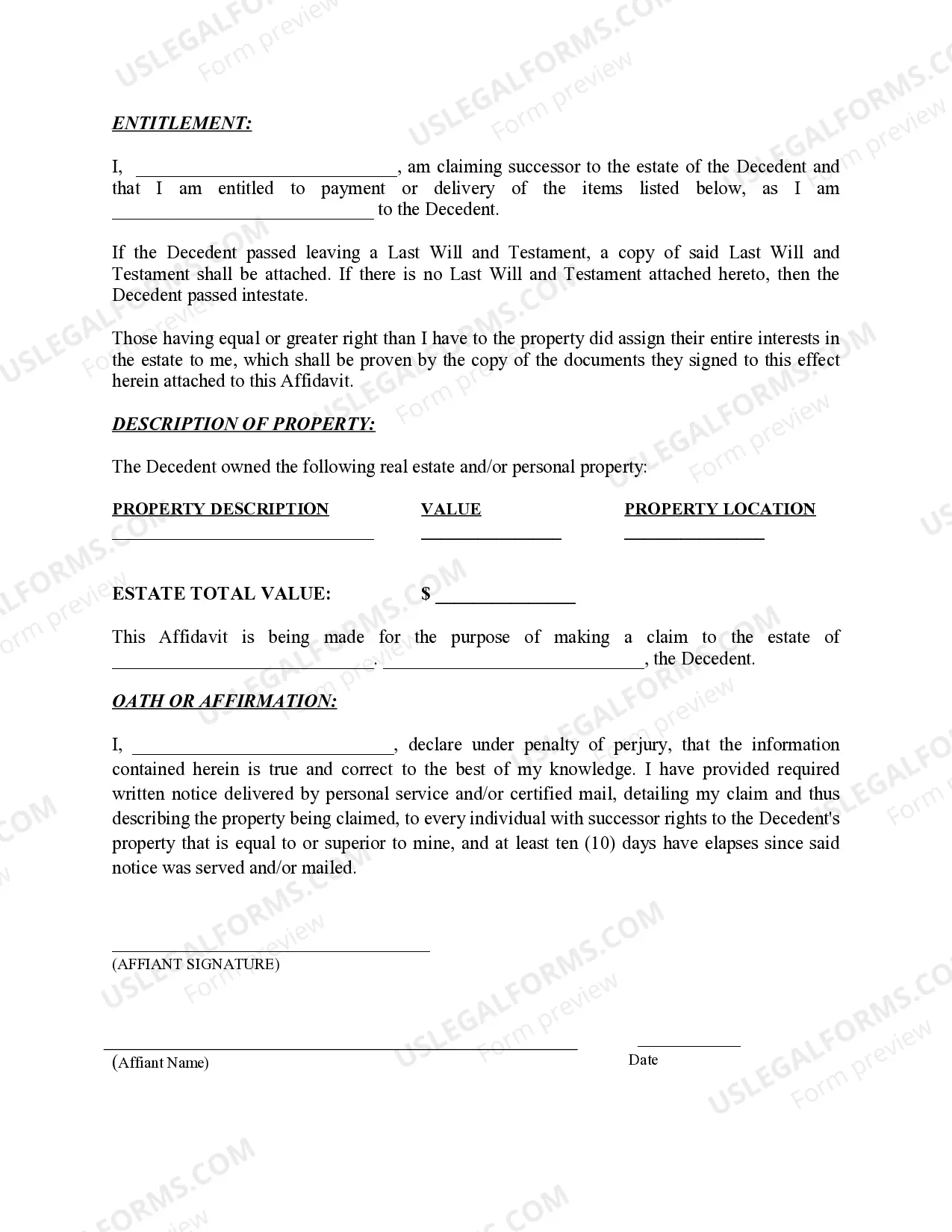
- Entitlement: Claims the affiant's right to receive the decedent's property.
- Description of Property: Lists real estate and personal property owned by the decedent.
- Oath or Affirmation: The affiant declares the information provided is true under penalty of perjury.
When to use this document
This form is typically used when an estate is valued below $100,000 and the heirs wish to claim property without undergoing formal probate proceedings. Situations may include the passing of a parent where the surviving child needs to access bank accounts or property, or when a spouse needs to transfer the title of a jointly owned house after their partner's death.
Intended users of this form
- Heirs or beneficiaries of a decedent's estate.
- Individuals seeking to claim sole entitlement to property left by a deceased relative.
- Successors who believe they have the right to inherit items from an estate under state law.
How to prepare this document
- Fill in the decedent's information, including their name and date of death.
- State your relationship to the decedent clearly.
- Estimate and enter the total value of the estate you are claiming.
- List the property you intend to claim along with its estimated value and location.
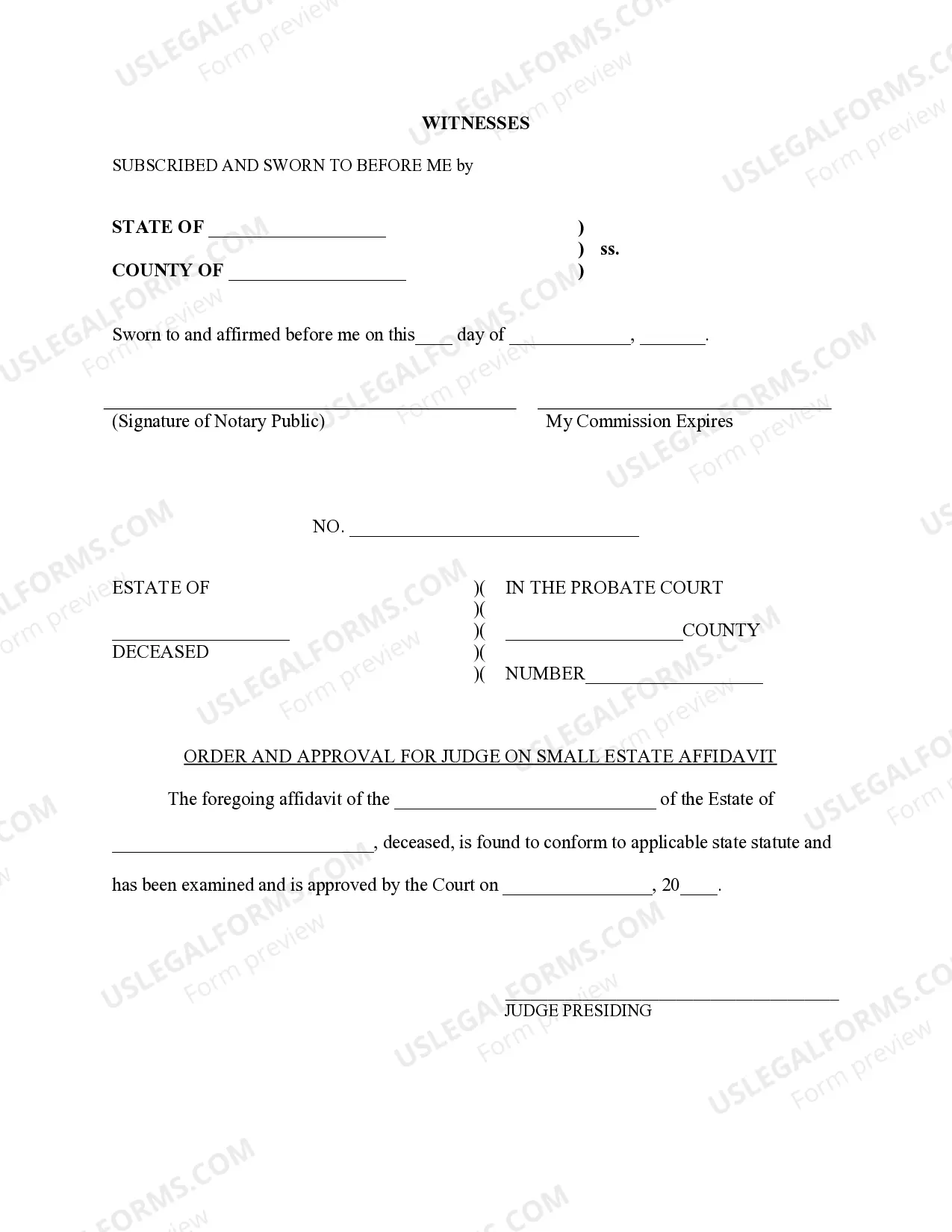
- Sign the affidavit in the presence of a notary public.
Does this document require notarization?
Yes, this form must be notarized to be legally valid. Having a notary public witness your signature ensures that the affidavit is executed properly and can help prevent disputes regarding authenticity.
Get your form ready online
Our built-in tools help you complete, sign, share, and store your documents in one place.
Make edits, fill in missing information, and update formatting in US Legal Forms—just like you would in MS Word.
Download a copy, print it, send it by email, or mail it via USPS—whatever works best for your next step.
Sign and collect signatures with our SignNow integration. Send to multiple recipients, set reminders, and more. Go Premium to unlock E-Sign.
If this form requires notarization, complete it online through a secure video call—no need to meet a notary in person or wait for an appointment.
We protect your documents and personal data by following strict security and privacy standards.

Make edits, fill in missing information, and update formatting in US Legal Forms—just like you would in MS Word.

Download a copy, print it, send it by email, or mail it via USPS—whatever works best for your next step.

Sign and collect signatures with our SignNow integration. Send to multiple recipients, set reminders, and more. Go Premium to unlock E-Sign.

If this form requires notarization, complete it online through a secure video call—no need to meet a notary in person or wait for an appointment.

We protect your documents and personal data by following strict security and privacy standards.
Avoid these common issues
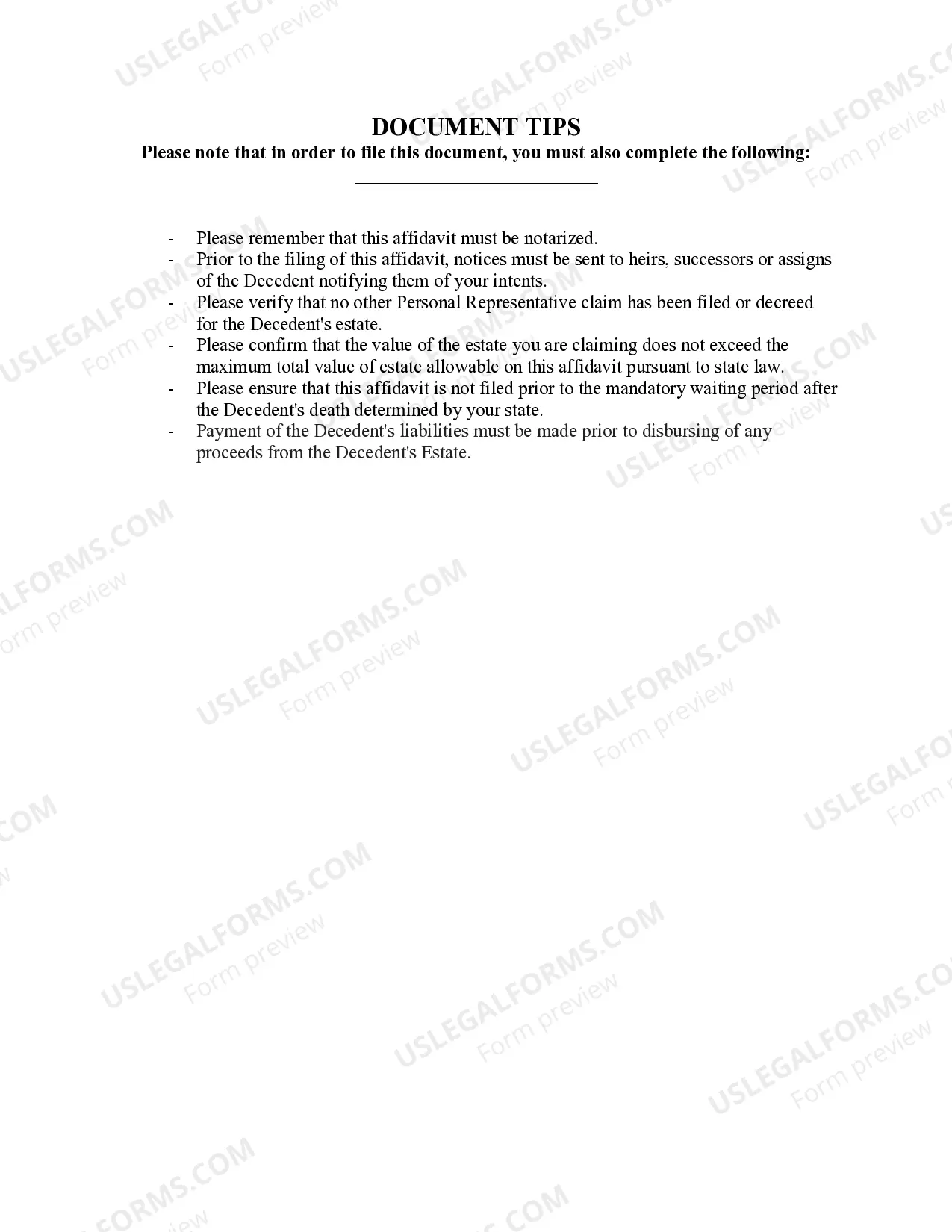
- Not including all required signatures or failing to notarize the document.
- Overestimating the value of the estate, which may lead to legal issues.
- Failing to notify other potential heirs before filing the affidavit.
Why complete this form online
- Convenience of downloading and completing the form from home.
- Easy editability to accommodate specific details relevant to your situation.
- Access to reliable templates drafted by licensed attorneys ensuring legal compliance.
Looking for another form?

Form popularity
FAQ
The form must be notarized, so make sure you don't sign it until you can do so in the presence of a notary public. You'll also need to attach a copy of the death certificate and a certified copy of the will if there is one.
An Illinois small estate affidavit provides a streamlined way for an heir to gather and distribute the assets of a person who died, provided that the estate does not exceed $100,000. This form allows an heir to collect the personal property of the decedent without going to court.
Who may execute the Small Estate Affidavit? In Illinois, the Small Estates Affidavit may be executed by one or more heirs or legatees of the decedent. There is no requirement that all heirs sign. If the affiant is not a resident of Illinois, he submits himself to the jurisdiction thereof.
A small estate affidavit is a sworn legal document a person can use to assert a claim to assets from the estate of someone who has died. In Illinois, the affidavit is not filed with the court but can be presented to a person, bank, brokerage or other holder of an asset from the estate.
To be able to use the small estate affidavit in Illinois, you must meet the following requirements: The person who died didn't own any real property at the time of death. The total of all other property does not exceed $100,000.
A California small estate affidavit, or ?Petition to Determine Succession to Real Property,? is used by the rightful heirs to an estate of a person who died (the ?decedent?). The total net value of the estate cannot be more than $184,500 for it to qualify under this process and bypass probate.
It is not necessary to hire a lawyer to file a small estate affidavit. In fact, many probate courts provide forms on their website for the public's use.