Arbitration Case Submission Form
About this form
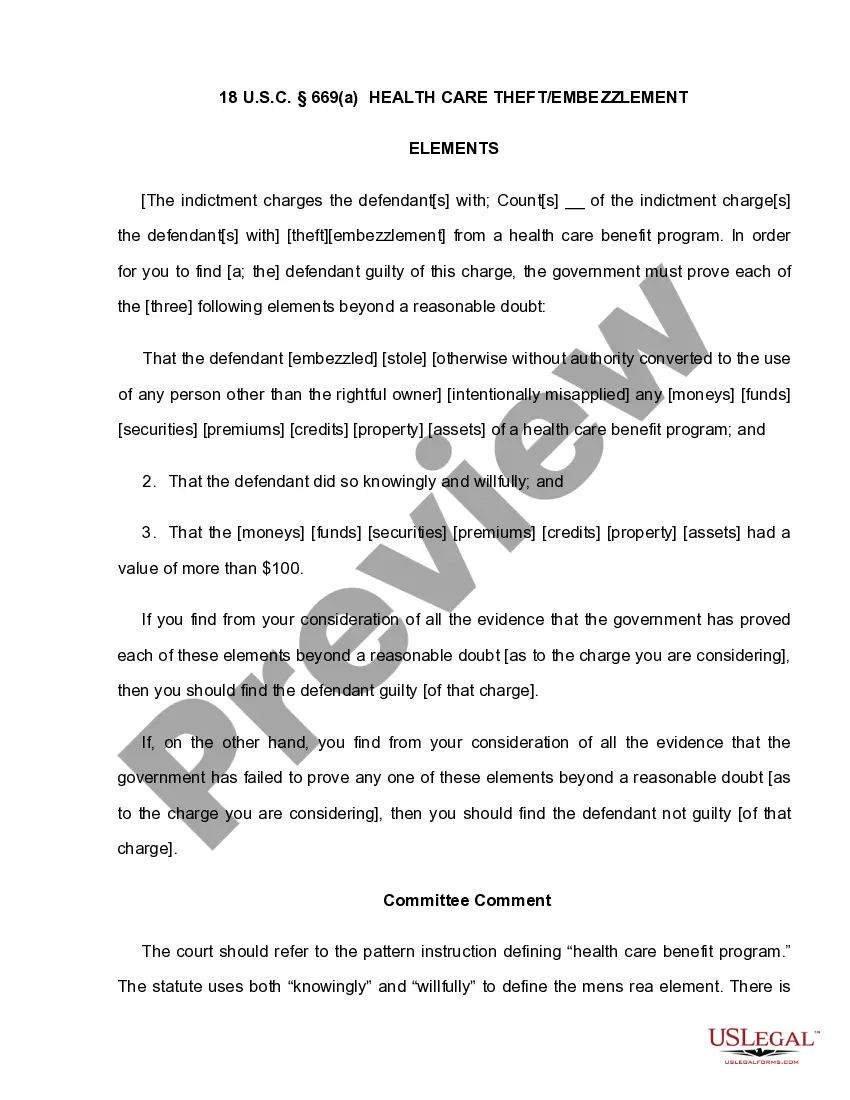
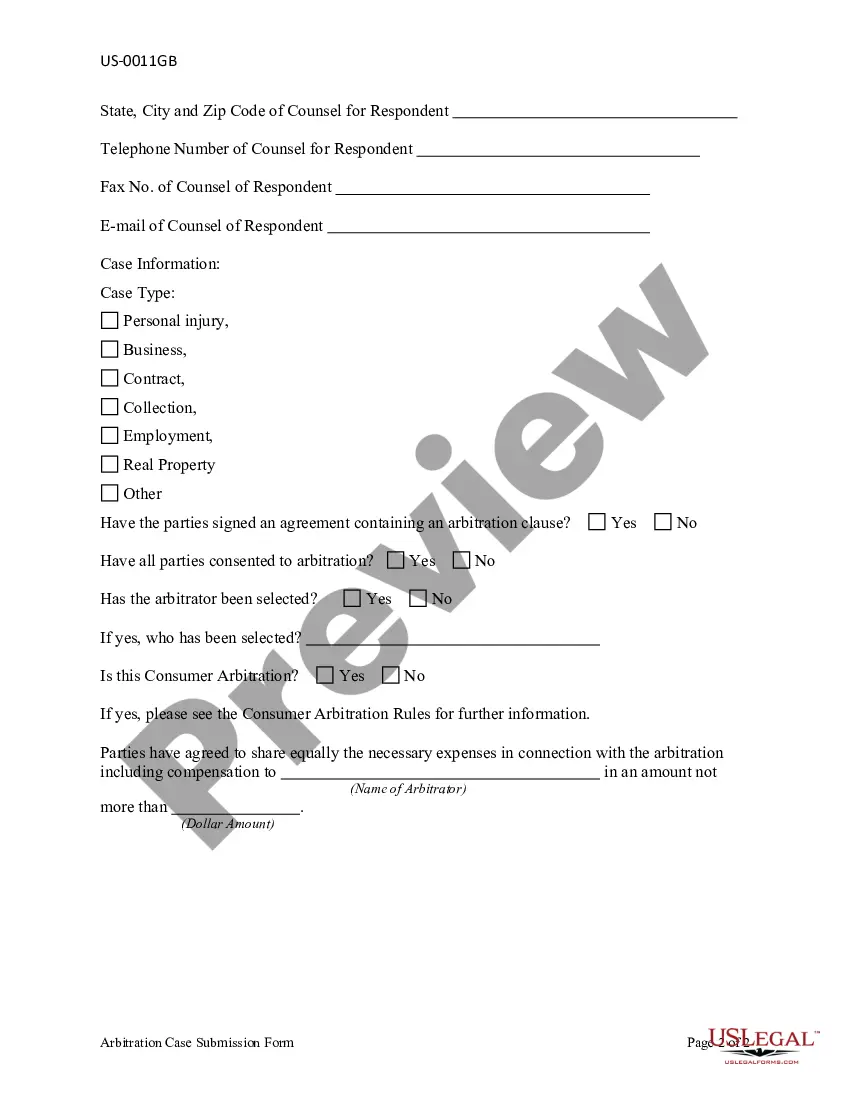
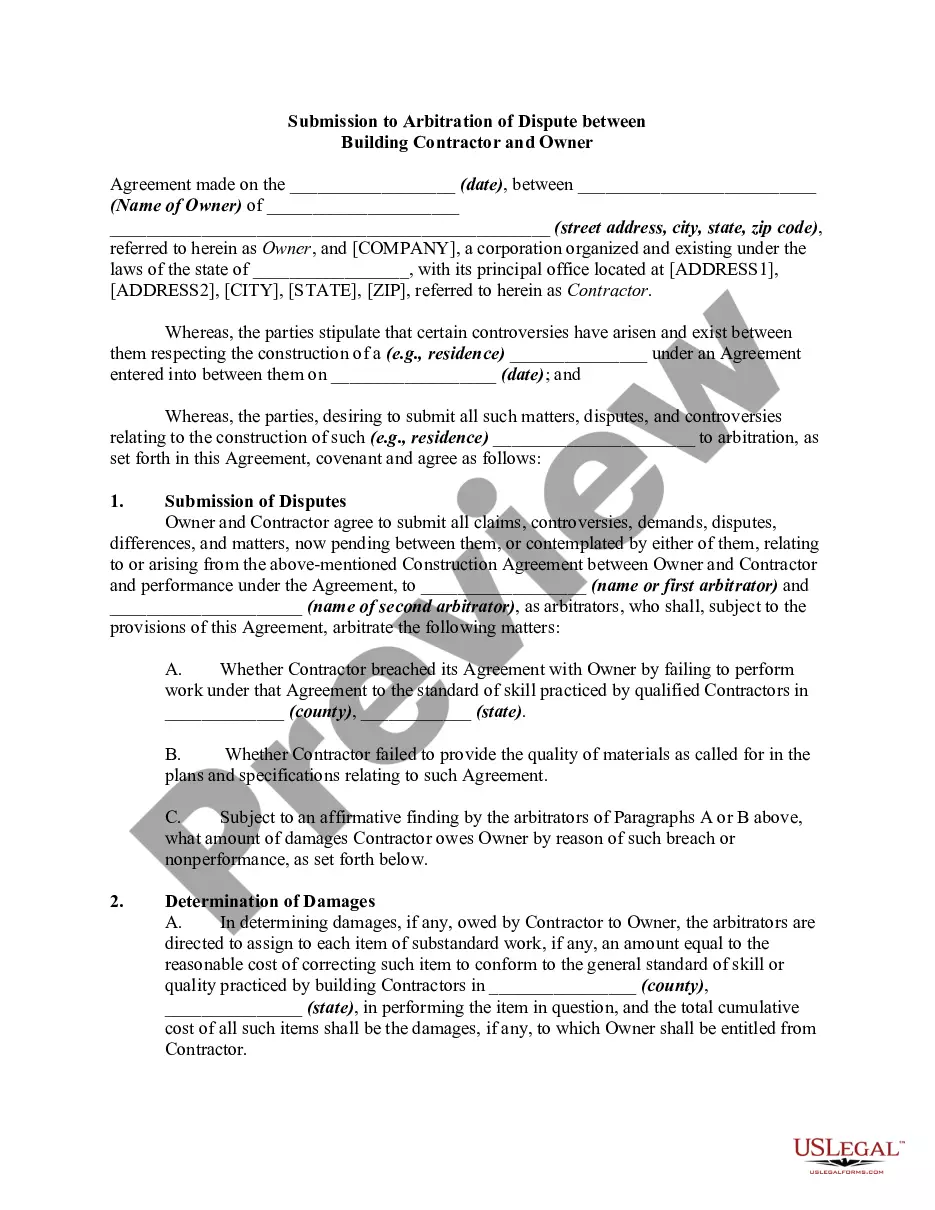
The Arbitration Case Submission Form is a legal document used by parties involved in a dispute who have agreed to resolve their litigation through binding arbitration. This form initiates the arbitration process by formally submitting the case to an arbitrator. It is specifically designed for situations where both parties have consented to arbitration in accordance with an agreement, distinguishing it from other forms of legal dispute resolution documentation.
Key parts of this document
- Parties involved: Identification of all parties agreeing to the arbitration.
- Agreement to arbitrate: A clear statement affirming both parties' consent to resolve their dispute through arbitration.
- Details of the dispute: A concise overview of the issues to be arbitrated.
- Signature lines: Areas for each party to sign, confirming their agreement to the submission.
- Contact information: Sections for providing the contact details of each party for further correspondence.



Situations where this form applies
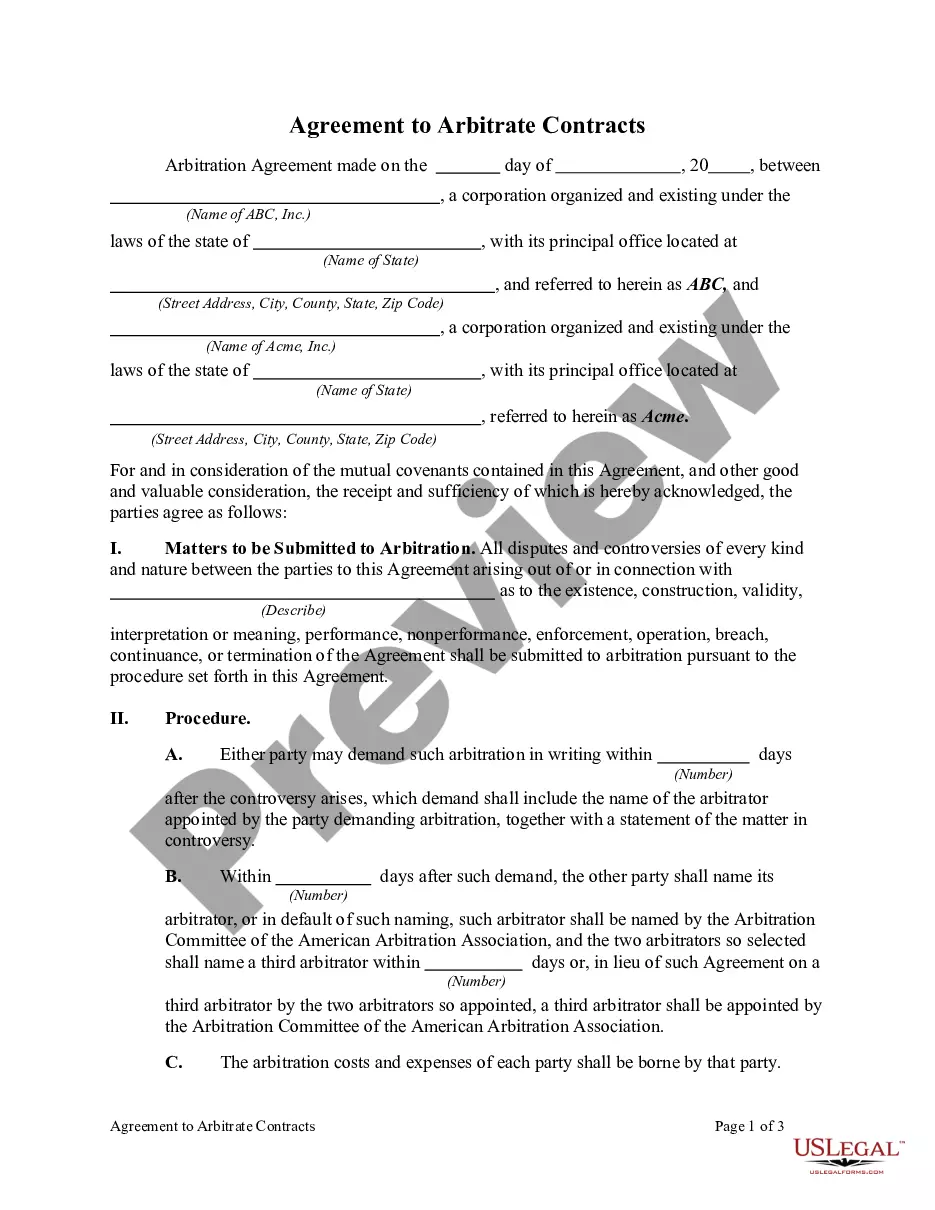
This form is essential when two or more parties agree to settle their disputes through arbitration rather than traditional court proceedings. It should be used in scenarios where there is a binding arbitration clause in a contract, or both parties mutually decide to submit their issues to arbitration for resolution. Examples include business contract disputes, employment disputes, or any situation where parties seek a quicker and less formal resolution than litigation.
Intended users of this form
- Individuals or businesses engaged in a legal dispute with another party.
- Lawyers representing clients who prefer arbitration over litigation.
- Any parties that have a prior agreement to arbitrate disputes.
Instructions for completing this form
- Identify the parties: Fill in the names and contact information of all parties involved in the dispute.
- Provide details of the dispute: Enter a brief description of the issues you wish to arbitrate.
- Affirm agreement: Include statements confirming that both parties agree to resolve their dispute through arbitration.
- Sign the form: Each party should sign the document to validate the submission.
- Submit the form: After completing and signing, send the form to the designated arbitrator or arbitration organization.
Notarization requirements for this form
Notarization is not commonly needed for this form. However, certain documents or local rules may make it necessary. Our notarization service, powered by Notarize, allows you to finalize it securely online anytime, day or night.
Get your form ready online
Our built-in tools help you complete, sign, share, and store your documents in one place.
Make edits, fill in missing information, and update formatting in US Legal Forms—just like you would in MS Word.
Download a copy, print it, send it by email, or mail it via USPS—whatever works best for your next step.
Sign and collect signatures with our SignNow integration. Send to multiple recipients, set reminders, and more. Go Premium to unlock E-Sign.
If this form requires notarization, complete it online through a secure video call—no need to meet a notary in person or wait for an appointment.
We protect your documents and personal data by following strict security and privacy standards.

Make edits, fill in missing information, and update formatting in US Legal Forms—just like you would in MS Word.

Download a copy, print it, send it by email, or mail it via USPS—whatever works best for your next step.

Sign and collect signatures with our SignNow integration. Send to multiple recipients, set reminders, and more. Go Premium to unlock E-Sign.

If this form requires notarization, complete it online through a secure video call—no need to meet a notary in person or wait for an appointment.

We protect your documents and personal data by following strict security and privacy standards.
Typical mistakes to avoid
- Failing to include all parties' names and contact information.
- Not providing enough detail about the dispute, which may lead to delays.
- Missing signatures from one or more parties.
- Submitting the form without confirming mutual consent to arbitration.
Advantages of online completion
- Convenience: Access and complete the form from anywhere at any time.
- Editability: Easily make changes or updates as needed before finalizing.
- Reliability: Forms are drafted by licensed attorneys to ensure legal validity.
Legal use & context
- The Arbitration Case Submission Form is legally binding once signed by all parties.
- It is essential for establishing the framework for the arbitration process.
- Arbitration is generally a quicker and more private alternative to court litigation.
Key takeaways
- The Arbitration Case Submission Form is used to initiate binding arbitration between parties.
- Ensure all relevant parties sign and provide accurate information to avoid delays.
- Refer to local laws for any state-specific requirements regarding arbitration.
Looking for another form?


Form popularity
FAQ
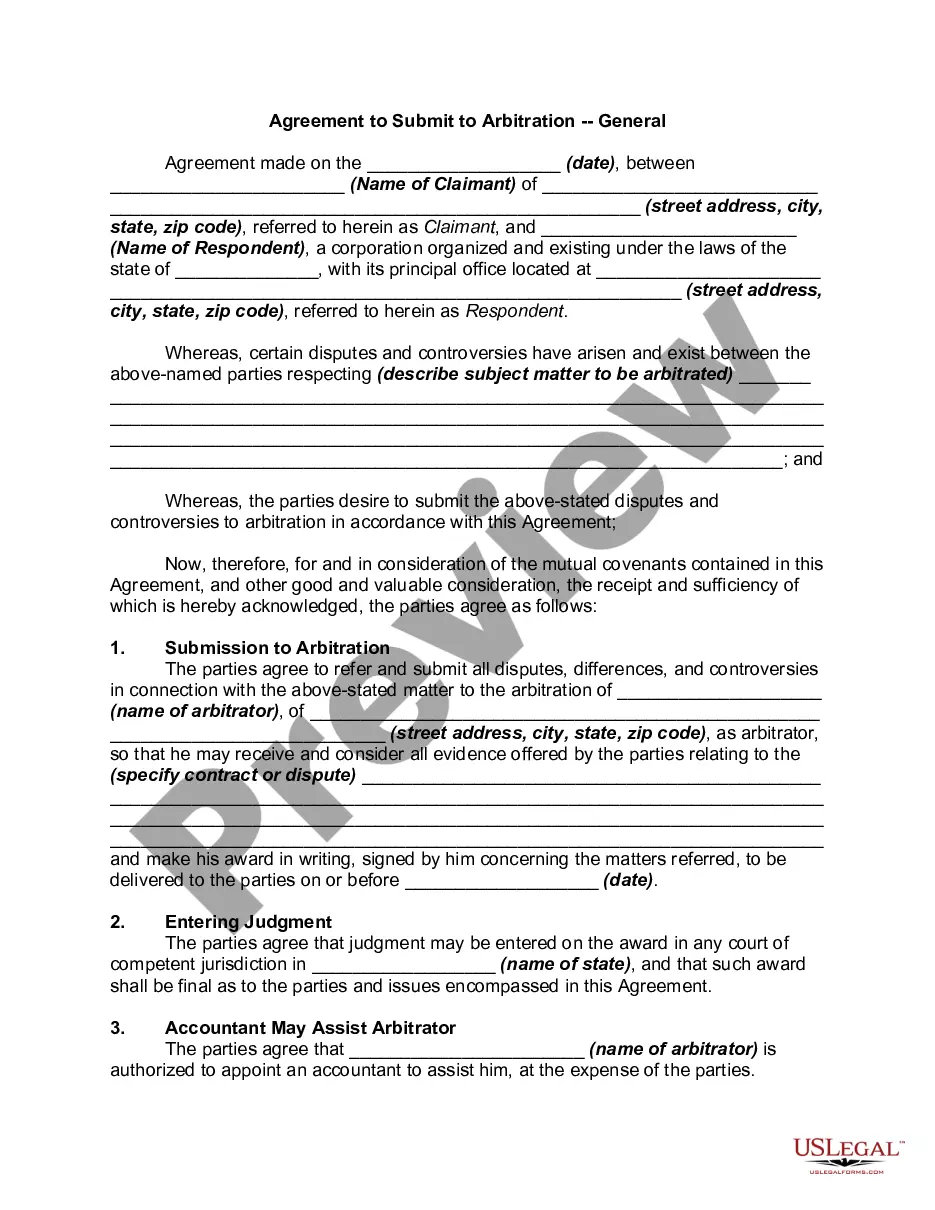
In the submission agreement, the parties agree to submit only a specific dispute to arbitration. They can do so at the time the dispute arises, while the parties are engaged in negotiations for a resolution, or even if the dispute is already being actively litigated in court.
Beginning an Arbitration Letter Start off your letter the same way you would any business letter: with the date, your name and address, the respondent company's name and address and, if applicable, the name and address of both your legal representative and the respondent's legal representative.
Although arbitration is used broadly to describe a method of alternative dispute resolution, arbitrations themselves can take many forms. In almost any arbitration, however, the complaining party will send the opposing party a notice of their intent to arbitrate a dispute, outlining the basis for the dispute.
An example of an arbitration would be when two people who are divorcing cannot agree on terms and allow a third party to come in to help them negotiate.
The arbitration process usually starts with the complaining party giving notice to the other about their intent to arbitrate a dispute. The notice includes the nature and basis for the proceeding. Following this notice the other party has a period of time to file a written response.
Far too few parties are aware of submission agreements, which allow parties to submit their dispute to arbitration, even in the absence of an arbitration clause in the underlying contract.The dispute referred to arbitration shall be decided in accordance with the law of specify jurisdiction.
You can begin the arbitration by submitting a Demand for Arbitration, which contains basic information about the dispute, including: (a) the names, addresses, and phone numbers of the parties involved (you and EasyExpunctions, in most cases); (b) a description of the dispute; (c) and a short statement of the relief you
In general, a Request for Arbitration or a Notice of Arbitration must contain the names of each of the parties, the names of the parties' representatives, a description of the dispute giving rise to claims, a statement of the relief sought, a description of the agreement containing the arbitration clause, the choice of
A demand that the dispute be referred to arbitration under the WIPO Arbitration Rules. the names and full communication details of the parties and their representatives. a copy of the arbitration agreement and, if applicable, any separate choice-of-law clause.