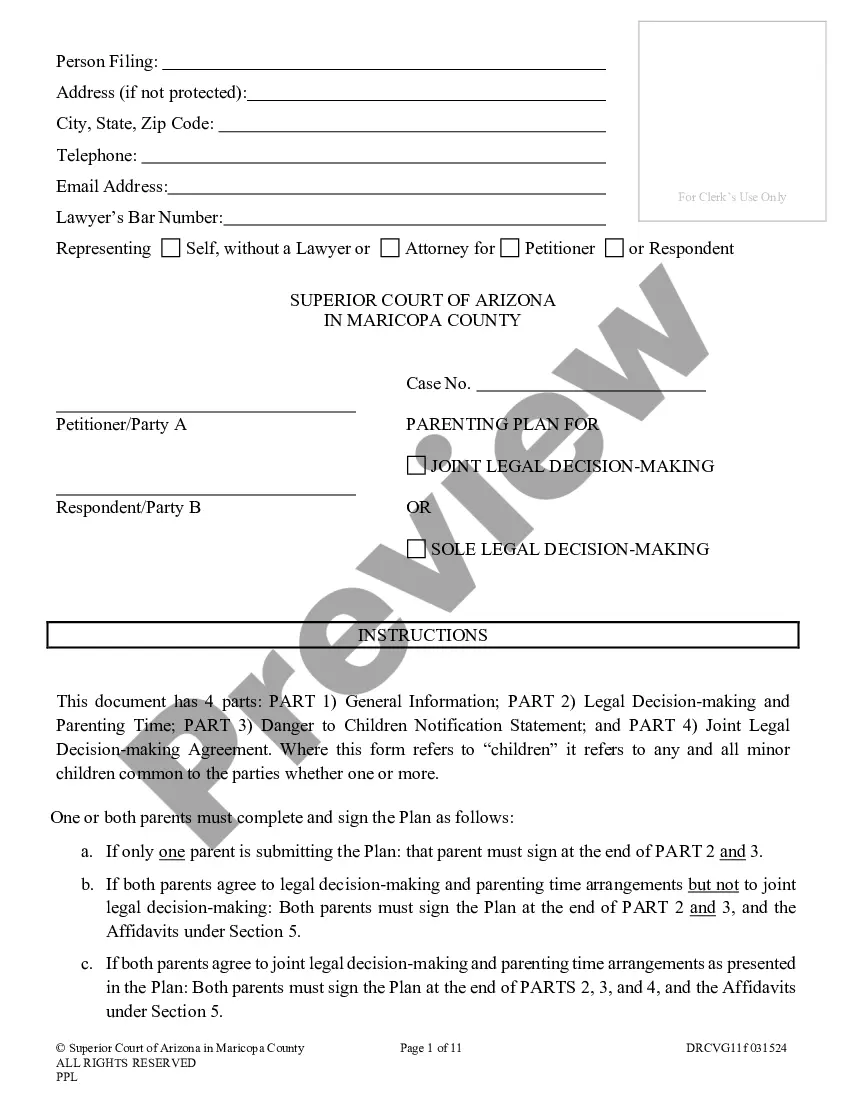
Nominee Agreement to Hold Title to Real Property
About this form
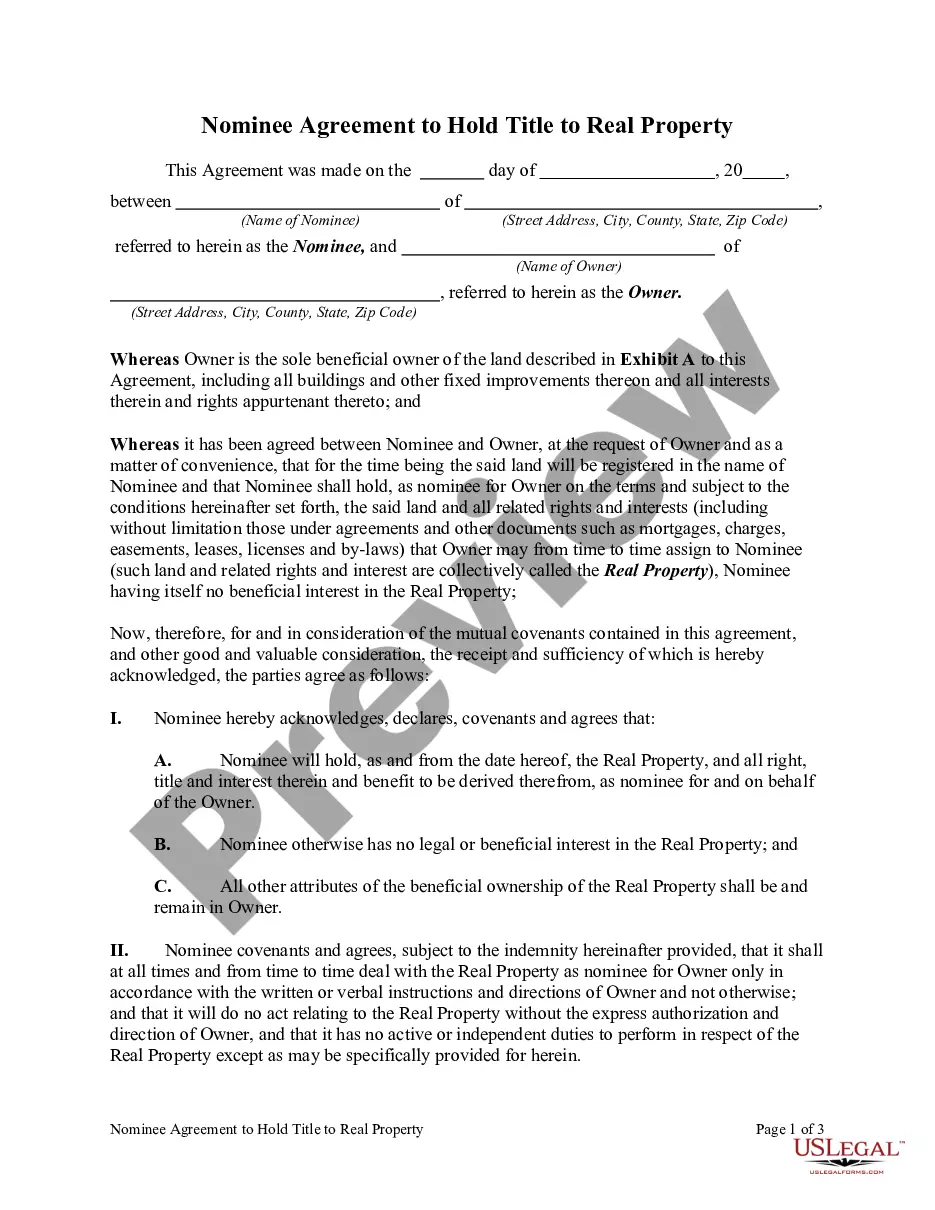
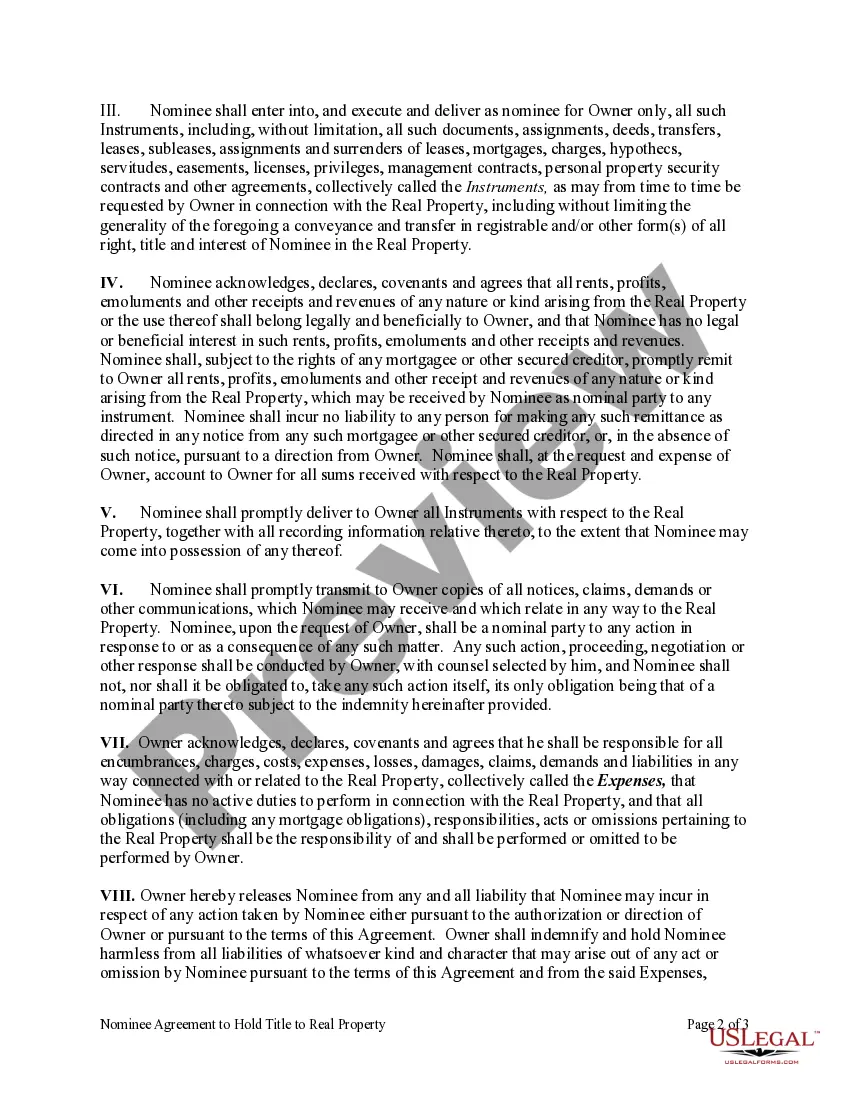
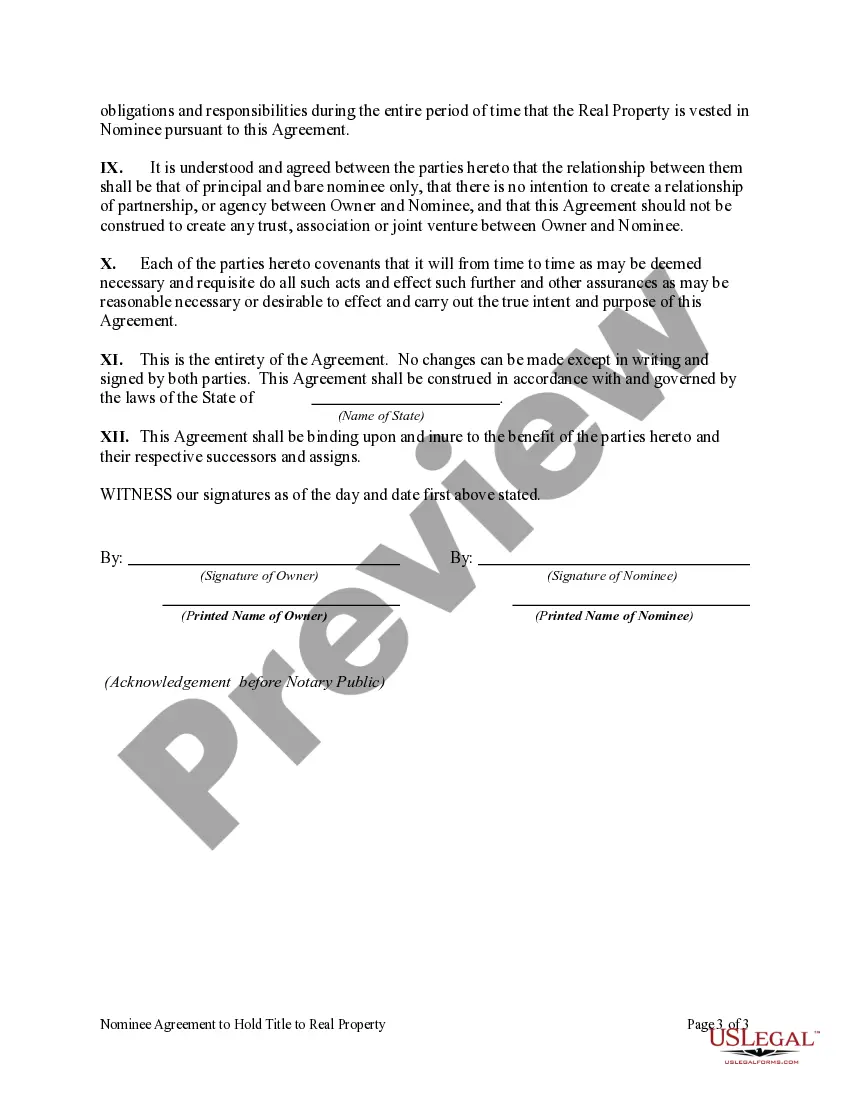
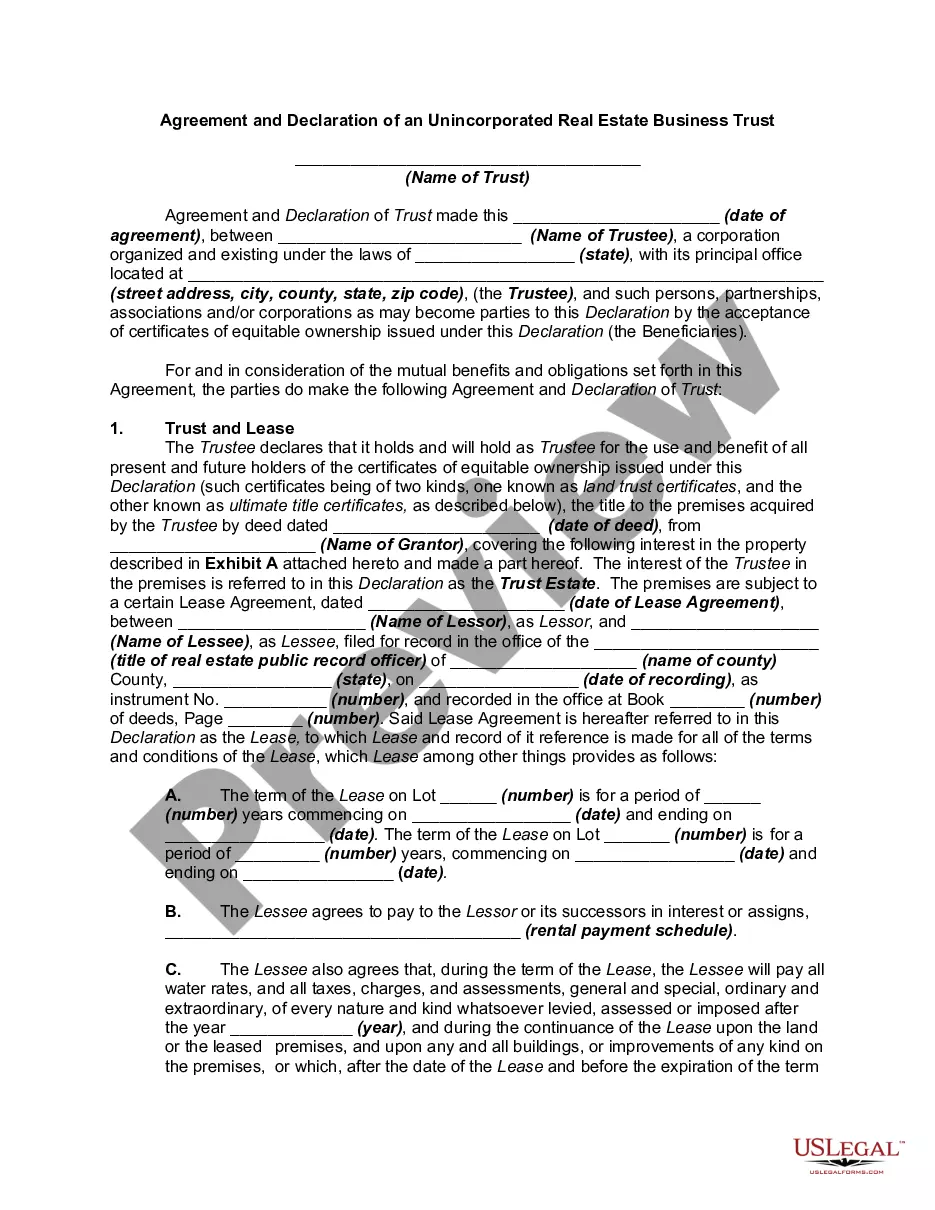
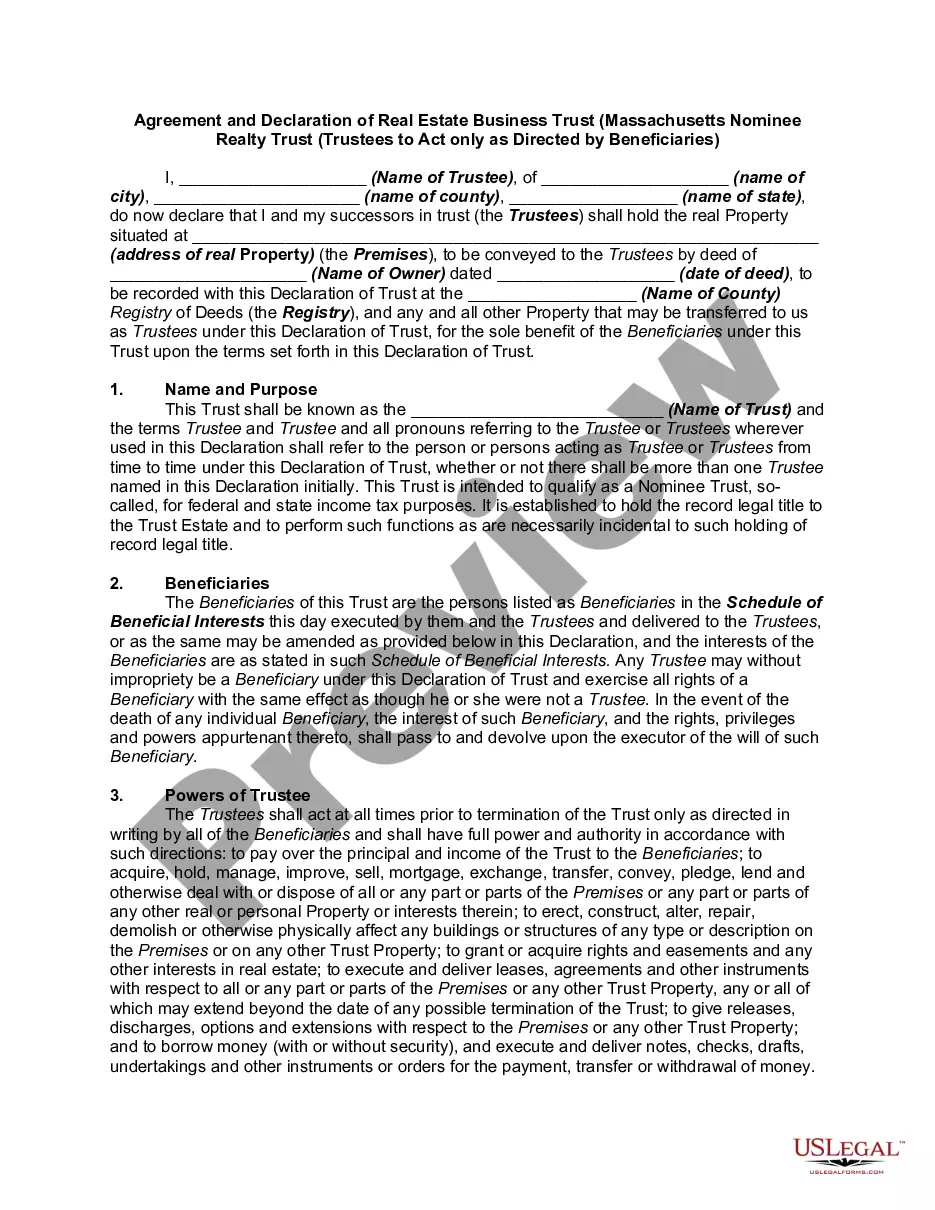
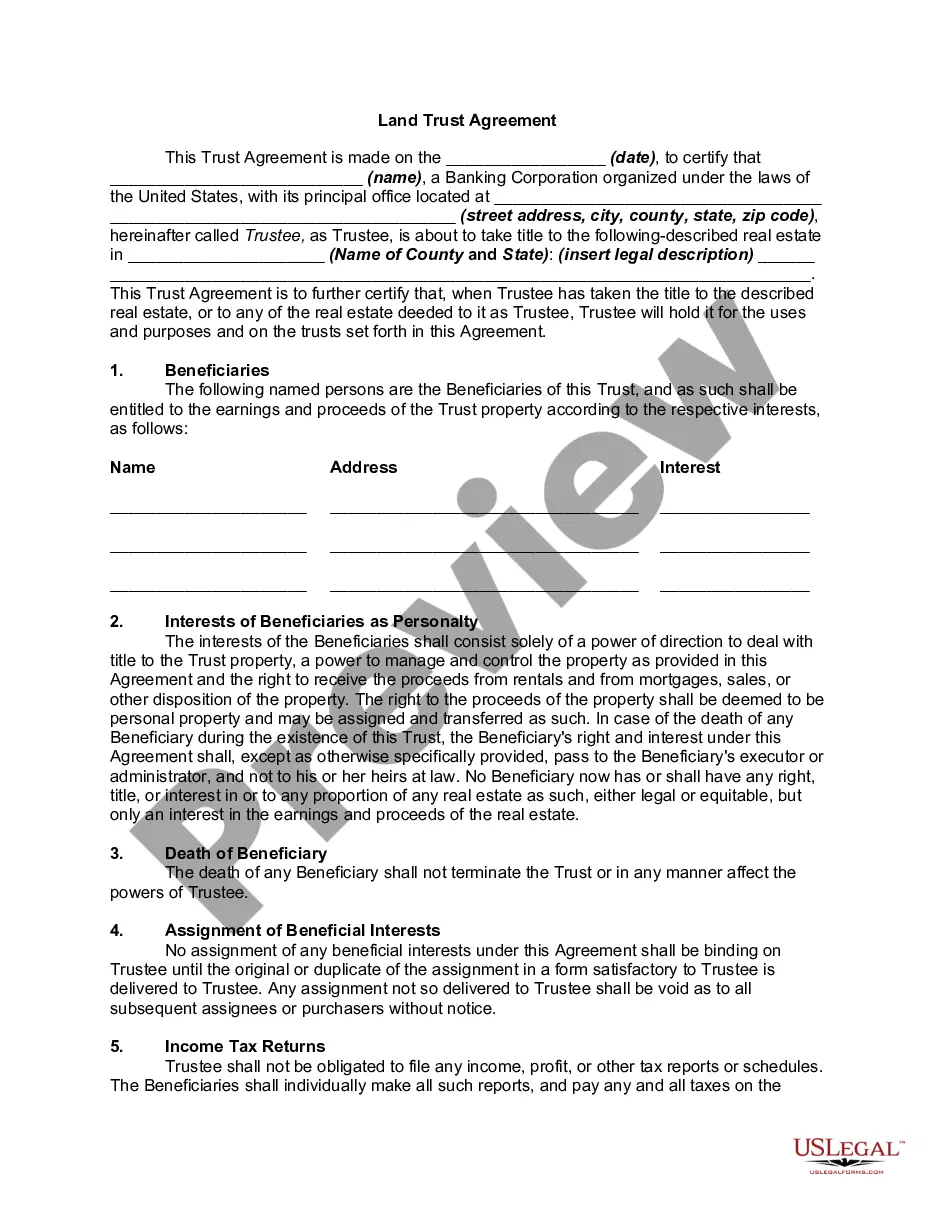
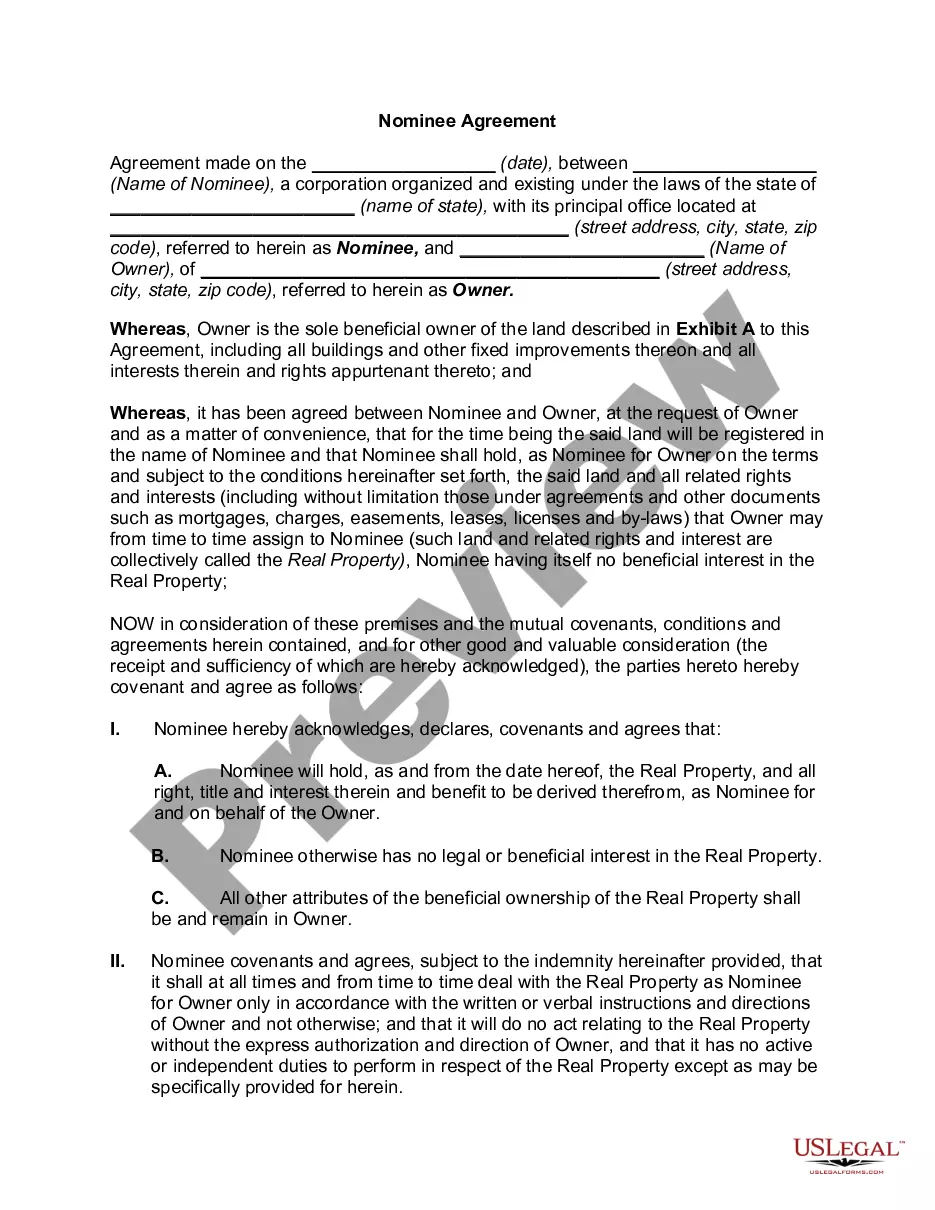
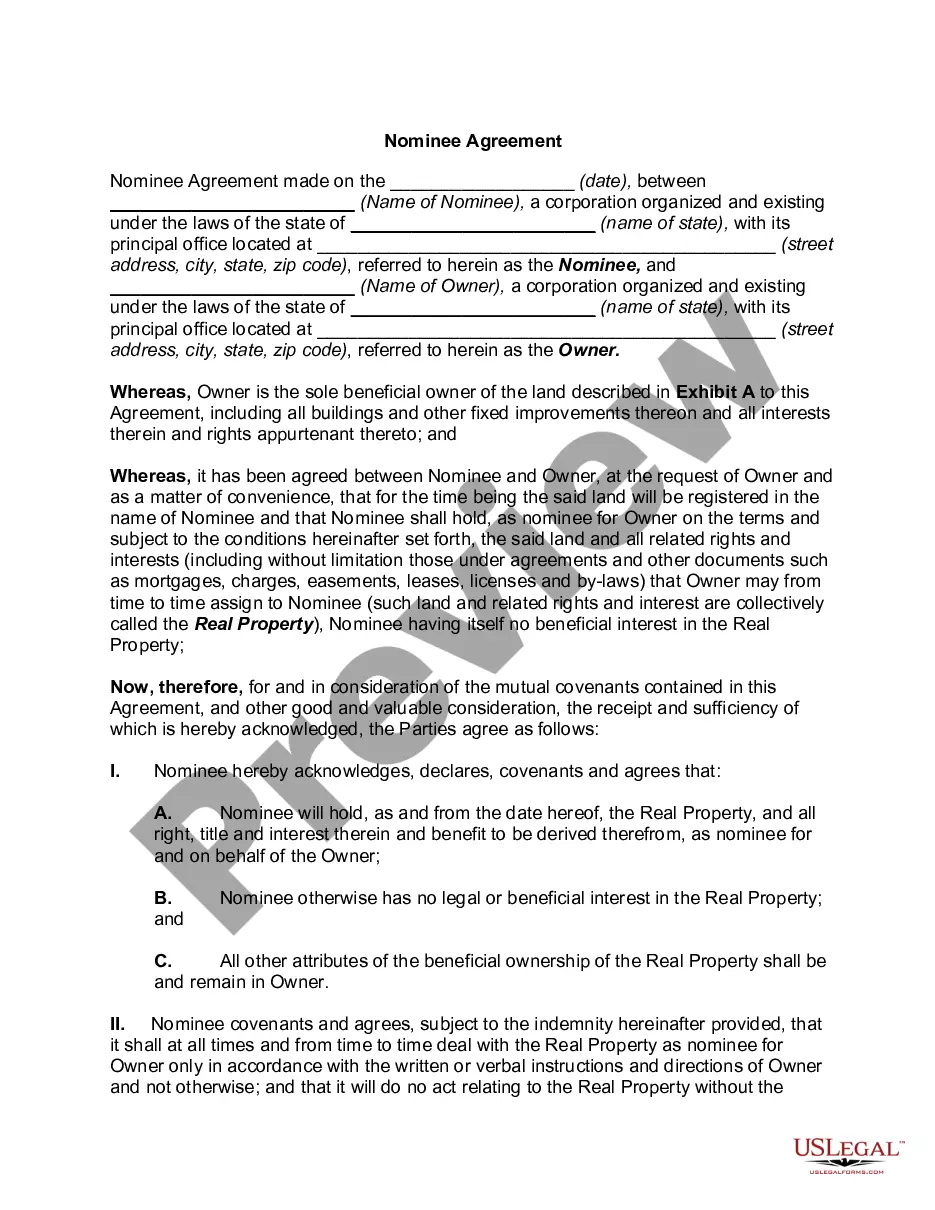
The Nominee Agreement to Hold Title to Real Property is a legal document that establishes a nominee relationship between the owner of real property and the nominee. In this arrangement, the nominee holds bare legal title to the property on behalf of the owner, serving primarily as a conduit for transactions and administrative tasks regarding the property. This form is distinct from other property ownership documents as it clarifies that the nominee does not have any beneficial interest in the property itself.
Key components of this form
- Identification of the parties involved: nominee and owner.
- Declaration of the nominee's role and limitations regarding the property.
- Instructions for the nominee to act solely on the owner's behalf.
- Provision for handling any income or revenues from the property.
- Clauses regarding indemnification and responsibility for property-related expenses.
When to use this form
This form should be used when an owner wishes to transfer the title of a property to a nominee for administrative convenience or when the owner needs someone else to manage certain aspects of the property without transferring beneficial ownership. Typical scenarios include real estate investment arrangements, estate planning, or when confidentiality and privacy are desired in property ownership.
Who this form is for
- Property owners looking to simplify property management.
- Individuals involved in real estate transactions requiring a nominee.
- Trustees managing properties on behalf of beneficiaries.
- Investors wanting to maintain anonymity in property ownership.
Instructions for completing this form
- Identify the parties involved by ensuring the names of the nominee and owner are clearly stated.
- Specify the real property being transferred, including its address and legal description.
- Clearly outline the responsibilities of the nominee and all instructions for handling the property.
- Include any provisions regarding indemnification and liabilities related to the property.
- Ensure all parties sign the agreement in the presence of a notary public if applicable.
Does this document require notarization?
Notarization is required for this form to take effect. Our online notarization service, powered by Notarize, lets you verify and sign documents remotely through an encrypted video session, available 24/7.
Get your form ready online
Our built-in tools help you complete, sign, share, and store your documents in one place.
Make edits, fill in missing information, and update formatting in US Legal Forms—just like you would in MS Word.
Download a copy, print it, send it by email, or mail it via USPS—whatever works best for your next step.
Sign and collect signatures with our SignNow integration. Send to multiple recipients, set reminders, and more. Go Premium to unlock E-Sign.
If this form requires notarization, complete it online through a secure video call—no need to meet a notary in person or wait for an appointment.
We protect your documents and personal data by following strict security and privacy standards.

Make edits, fill in missing information, and update formatting in US Legal Forms—just like you would in MS Word.

Download a copy, print it, send it by email, or mail it via USPS—whatever works best for your next step.

Sign and collect signatures with our SignNow integration. Send to multiple recipients, set reminders, and more. Go Premium to unlock E-Sign.

If this form requires notarization, complete it online through a secure video call—no need to meet a notary in person or wait for an appointment.

We protect your documents and personal data by following strict security and privacy standards.
Mistakes to watch out for
- Failing to clearly identify the property involved in the agreement.
- Not specifying the nominee's limitations or responsibilities.
- Forgetting to include all necessary signatures, including the notary if required.
- Ignoring state-specific legal requirements that may apply to the agreement.
Why use this form online
- Convenience of downloading and completing the form at your own pace.
- Editability to customize the document for specific needs and circumstances.
- Access to reliable legal templates created by licensed attorneys.
- Quick turnaround for obtaining the necessary legal documentation.
Looking for another form?



Form popularity
FAQ
A nominee agreement is a document whereby one person agrees to act on behalf of another person in certain matters, usually related to the legal system.A nominee may receive a payment for services, or may agree to conduct the affairs of another out of benevolence.
As per law, a nominee is a trustee, not the owner of the assets. In other words, a nominee is only a caretaker of your assets. The nominee will only hold your money/asset as a trustee and will be legally bound to transfer it to the legal heirs. For most investments, a legal heir is entitled to the deceased's assets.
Definition: A person who receives the benefit in case of death of the insured person is a nominee. Nominee is usually the spouse, children or parents.The insured person can nominate one or more person as his/her nominee.
A nominee trust is a legal arrangement whereby a person, termed the settlor, appoint another person, termed the "nominee" or "trustee", to be the owner of the legal title to some property.
Living trusts, Totten trusts, and nominee trusts are the main types of revocable trusts. They can be revoked, amended, or terminated by the trust grantor, the person who creates the trust, any time before his or her death.
1.1.12 the Nominations Agreement means a binding agreement with the. Council for the nomination of persons to the Affordable Housing Units. substantially in the form set out in Schedule 6 hereof.
According to law, a nominee is a trustee or caretaker of the assets. He/she is not the owner but an individual who will be legally bound to transfer the asset to the legal heirs.
Real estate businesses use single-purpose corporations referred to as "nominee companies" to hold the legal title to land while the beneficial interest is held in a separate entity.