Jury Instruction - Verdict
About this form
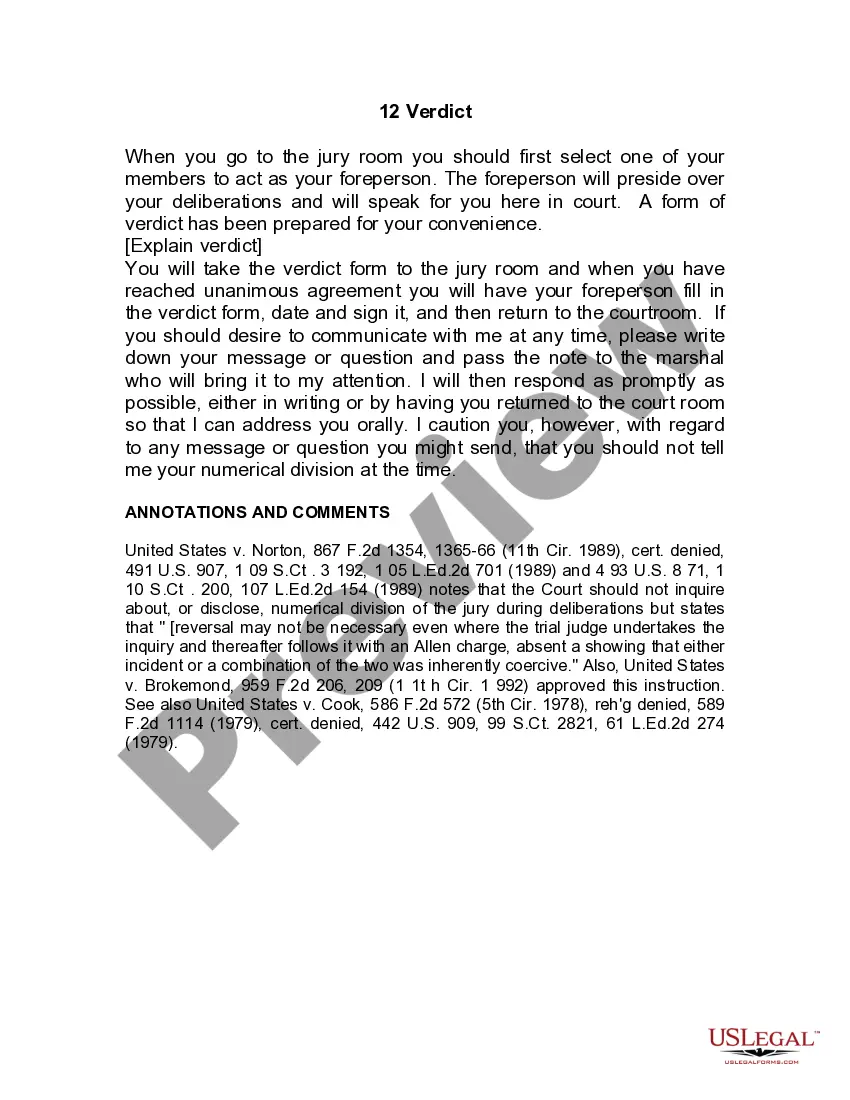
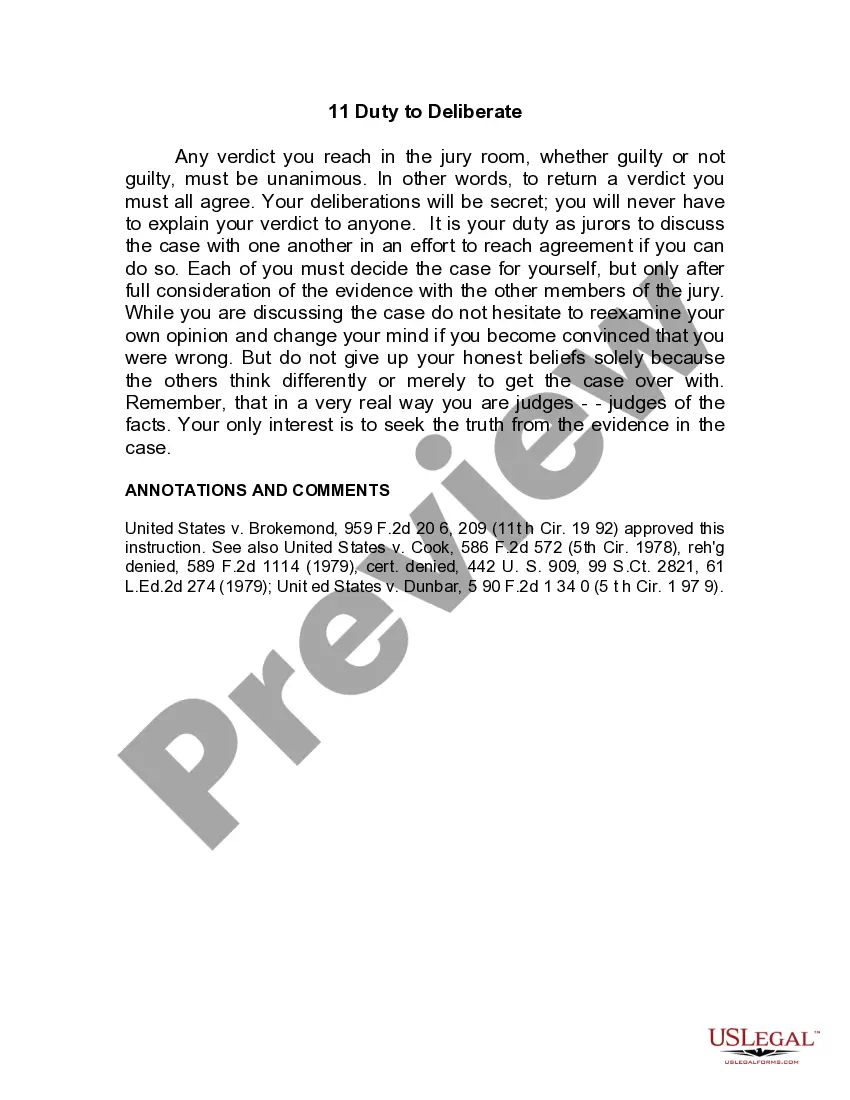
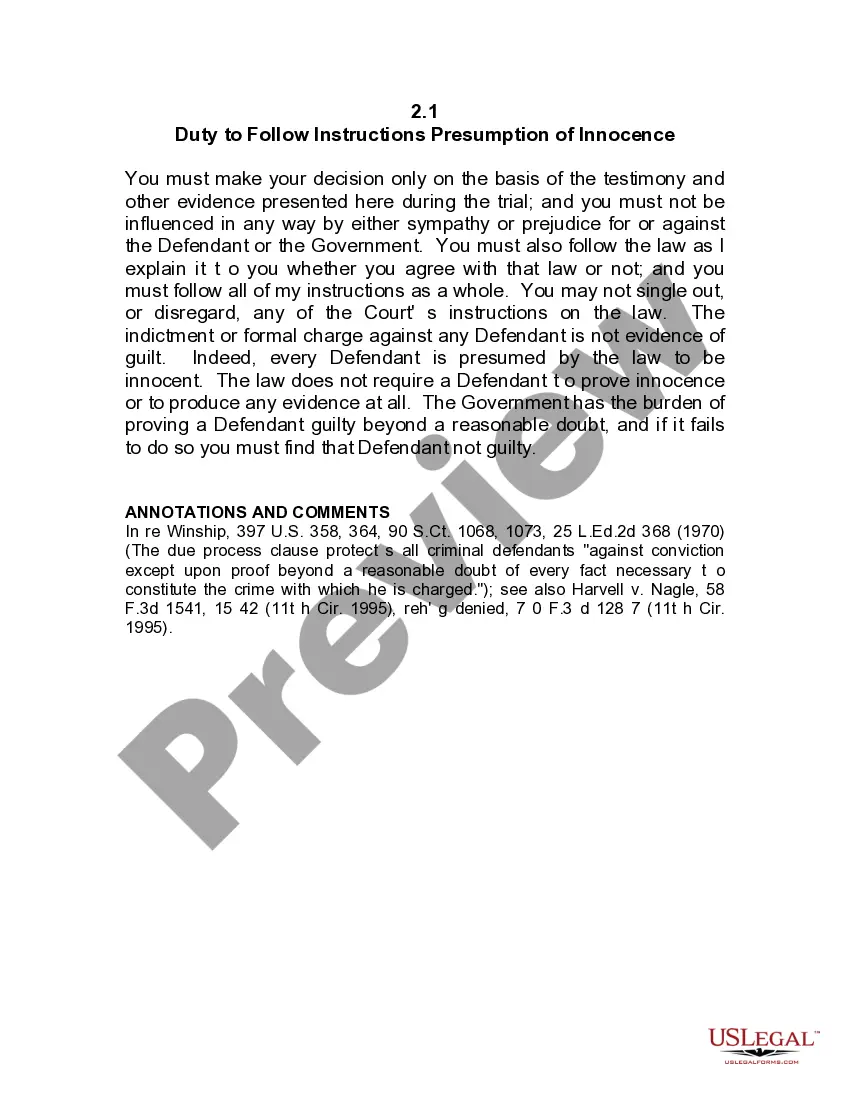
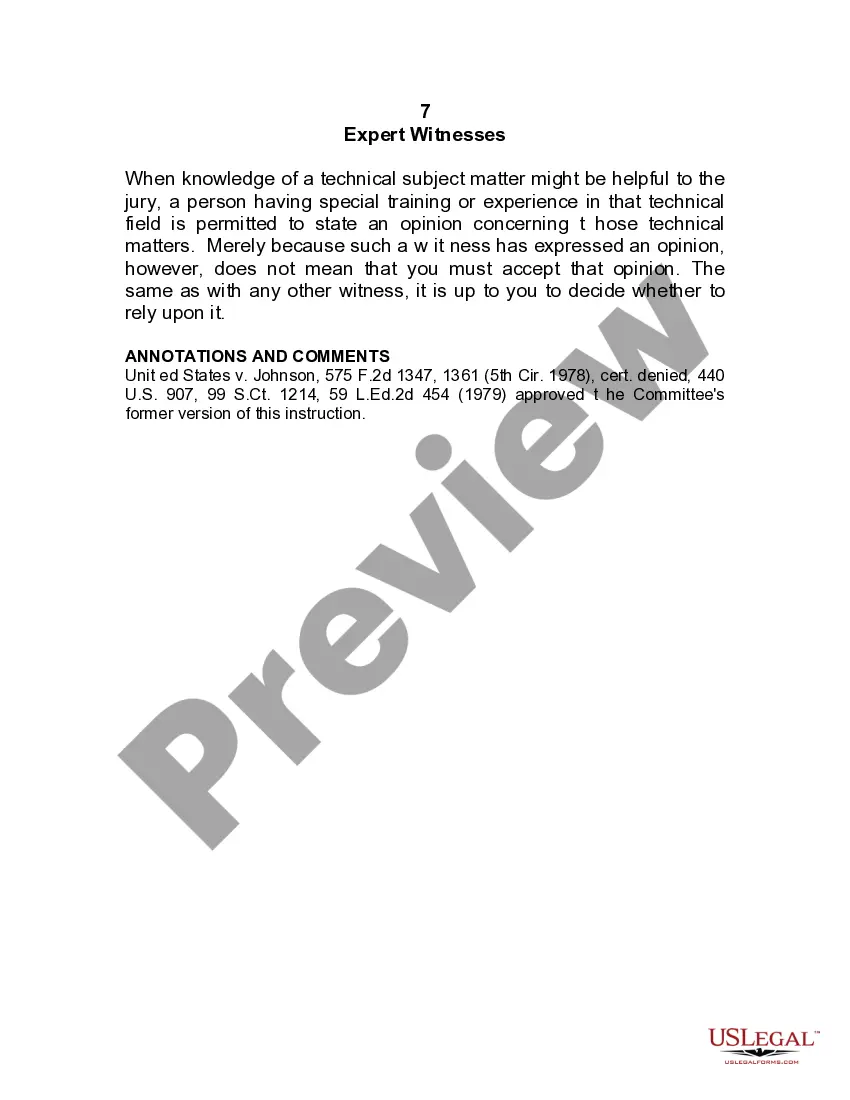
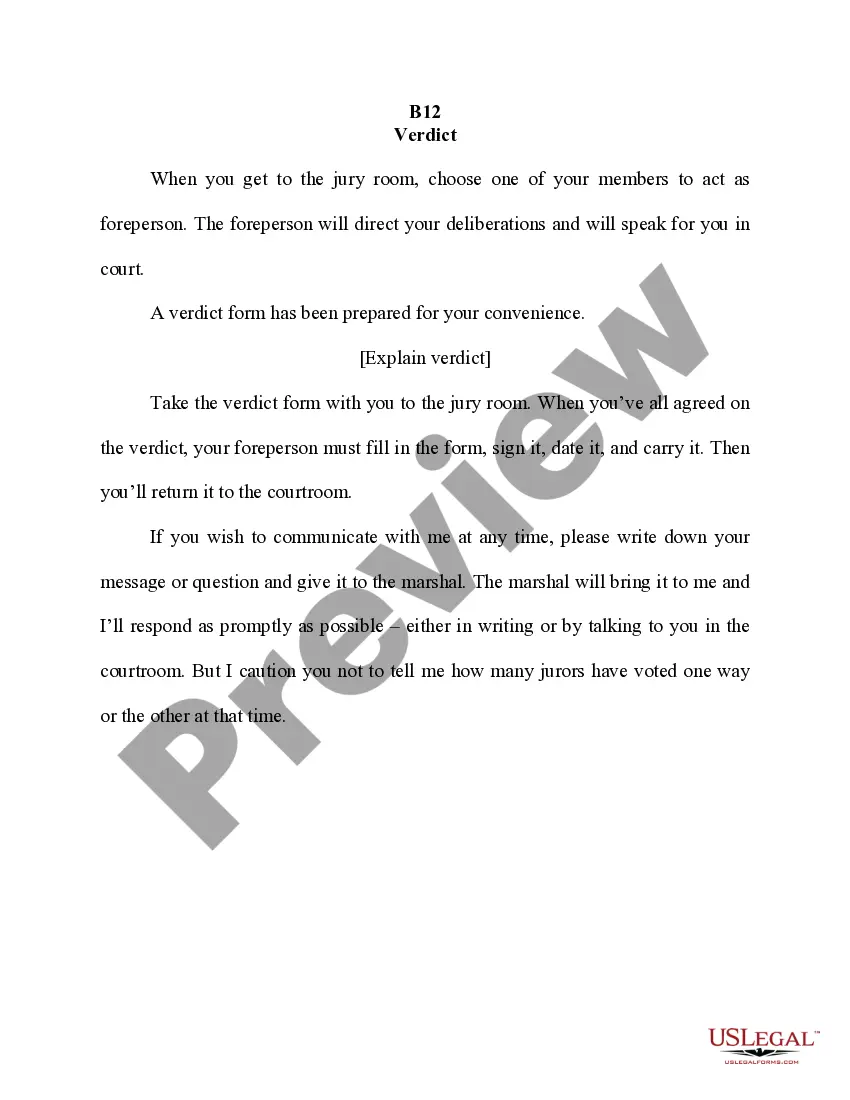
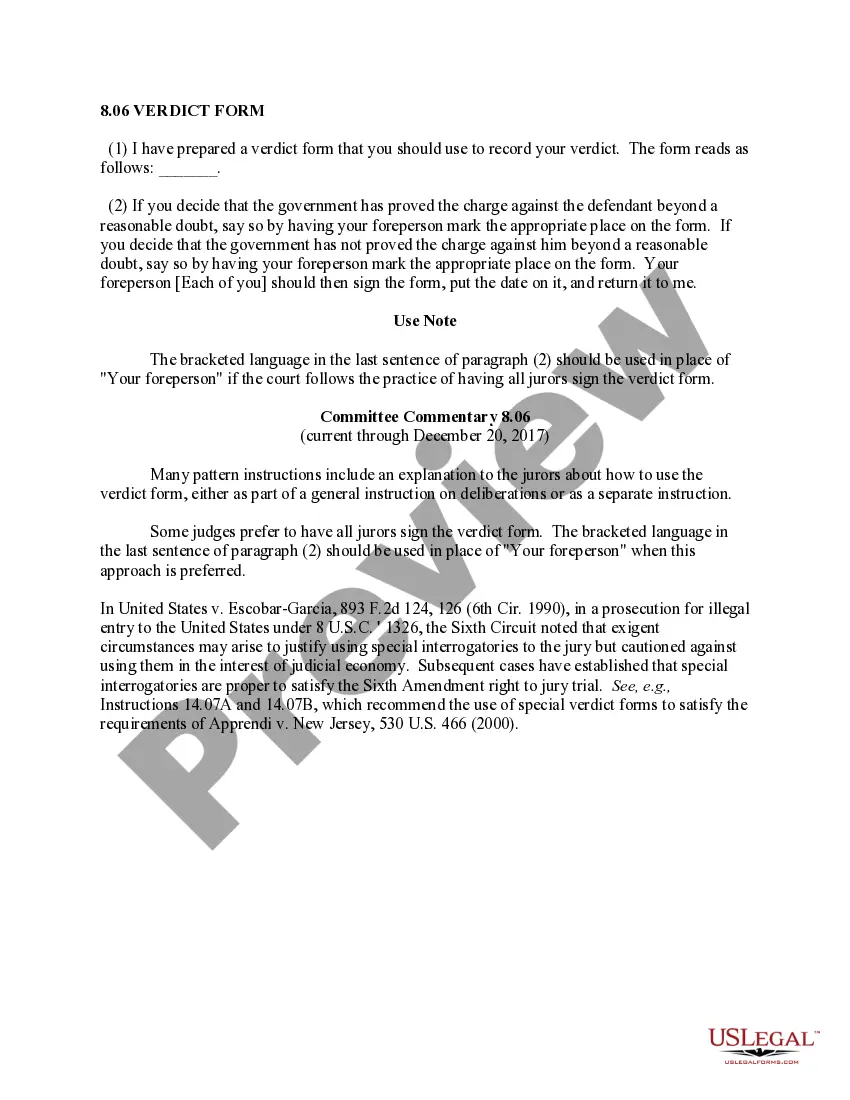
The Jury Instruction - Verdict form provides sample instructions for juries in the United States regarding how to deliberate and reach a verdict. This form is essential for guiding jurors through their responsibilities while ensuring that they understand the process they must follow to arrive at a unanimous decision. Unlike other legal documents, this form is tailored specifically for juror instructions and helps clarify roles within the jury room.
Form components explained
- Selection of foreperson: Identifies a jury member to lead deliberations.
- Verdict form structure: A designated area for jurors to record their unanimous decision.
- Communication procedures: Guidelines for how jurors can communicate with the presiding judge during deliberations.
- Cautions regarding numerical division: Instructions to avoid disclosing how jurors are leaning during discussions.
When to use this document
This form should be used during trial proceedings once the jury has heard all the evidence and is ready to begin deliberations. It is vital when jurors are prepared to discuss the case, reach a verdict, and formalize their decision according to the prescribed instructions.
Who can use this document
- Judges overseeing jury trials who need to provide clear instructions to jurors.
- Attorneys representing clients in legal proceedings requiring jury participation.
- Jurors who are selected to serve in a case and need guidance on their duties.
Steps to complete this form
- Choose a member of the jury to be the foreperson.
- Take the verdict form to the jury room for completion once a unanimous decision is reached.
- Ensure the foreperson fills in the verdict form accurately, including the date and signatures.
- Communicate any questions to the presiding judge if needed, following proper procedures for sending messages.
Notarization guidance
Notarization is not commonly needed for this form. However, certain documents or local rules may make it necessary. Our notarization service, powered by Notarize, allows you to finalize it securely online anytime, day or night.
Get your form ready online
Our built-in tools help you complete, sign, share, and store your documents in one place.
Make edits, fill in missing information, and update formatting in US Legal Forms—just like you would in MS Word.
Download a copy, print it, send it by email, or mail it via USPS—whatever works best for your next step.
Sign and collect signatures with our SignNow integration. Send to multiple recipients, set reminders, and more. Go Premium to unlock E-Sign.
If this form requires notarization, complete it online through a secure video call—no need to meet a notary in person or wait for an appointment.
We protect your documents and personal data by following strict security and privacy standards.

Make edits, fill in missing information, and update formatting in US Legal Forms—just like you would in MS Word.

Download a copy, print it, send it by email, or mail it via USPS—whatever works best for your next step.

Sign and collect signatures with our SignNow integration. Send to multiple recipients, set reminders, and more. Go Premium to unlock E-Sign.

If this form requires notarization, complete it online through a secure video call—no need to meet a notary in person or wait for an appointment.

We protect your documents and personal data by following strict security and privacy standards.
Mistakes to watch out for
- Failing to select a foreperson before discussing the case.
- Not adhering to the instruction to keep numerical divisions confidential.
- Omitting to date and sign the verdict form before submission.
Why use this form online
- Easy access and immediate download.
- Customizable to fit specific case needs.
- Prepared by licensed attorneys for reliable use in legal proceedings.
Legal use & context
- This form serves as an official instruction guide for juries and is essential for maintaining the integrity of the jury process.
- It assists in ensuring that jurors fulfill their duties according to the law, emphasizing the need for a unanimous verdict.
Key takeaways
- The Jury Instruction - Verdict form is crucial for guiding jurors through deliberation.
- Understanding the communication protocols can enhance the efficiency of jury discussions.
- It is designed to be used in various states, allowing for broad applicability across the U.S.
Looking for another form?


Form popularity
FAQ
The Judge will always seek a unanimous verdict first. That is a verdict upon which all the jurors are agreed, so either guilty or not guilty.If they cannot do that he will tell them that a majority verdict will be accepted. In a jury of 12 no more than two jurors can disagree.
A jury instruction is given by the judge to the jury to explain what is happening in the court, to explain the points of law relevant to the case, to explain certain aspects of the evidence presented and to assist the jurors in understanding their duties in reaching a verdict.
These are civil or criminal jury instructions approved by a state court, bench committee, or bar association. They are commonly used by courts in the relevant jurisdiction, as they ease the process of drafting fair jury instructions and theoretically do not have errors.
The jury listens to the evidence during a trial, decides what facts the evidence has established, and draws inferences from those facts to form the basis for their decision.If the jury finds the accused guilty or liable, it is up to the judge to sentence the defendant.
The judge instructs the jury about the relevant laws that should guide its deliberations. (In some jurisdictions, the court may instruct the jury at any time after the close of evidence.The judge reads the instructions to the jury. This is commonly referred to as the judge's charge to the jury.
The Sixth Amendment's guarantee of a trial by an impartial jury requires that a jury's verdict must be based on nothing else but the evidence and law presented to them in court.
Jury instructions, directions to the jury, or judge's charge are legal rules that jurors should follow when deciding a case.
A judgment notwithstanding the verdict (or JNOV) is an order by a judge after a jury has returned its verdict. The judge can overturn the jury's verdict if he or she feels it cannot reasonably be supported by the evidence or if it contradicts itself.