Verdict
Overview of this form
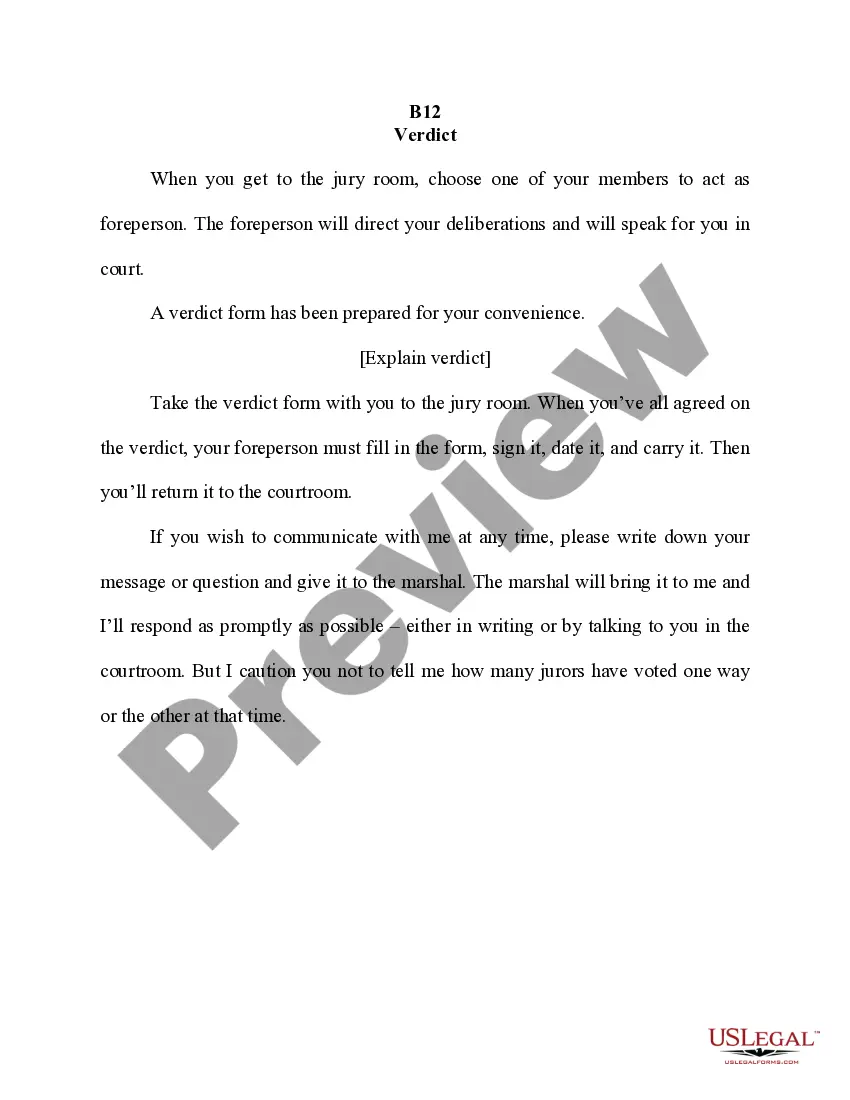
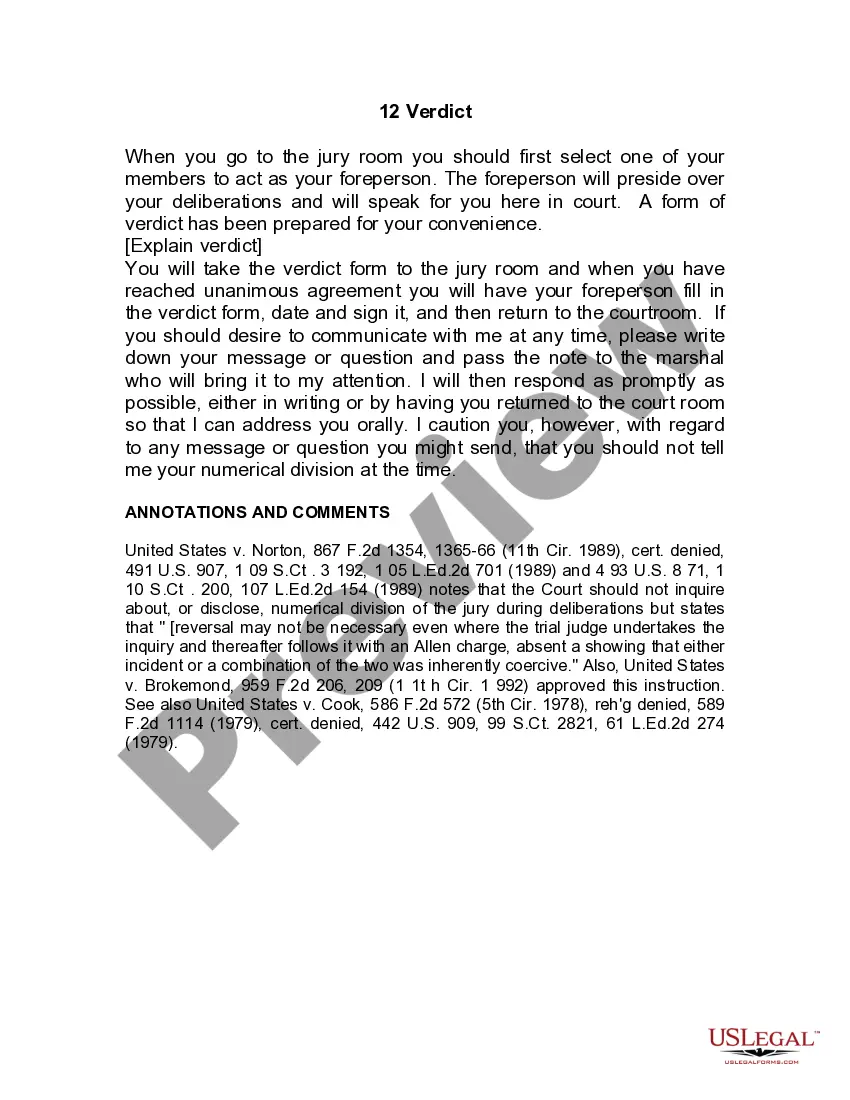
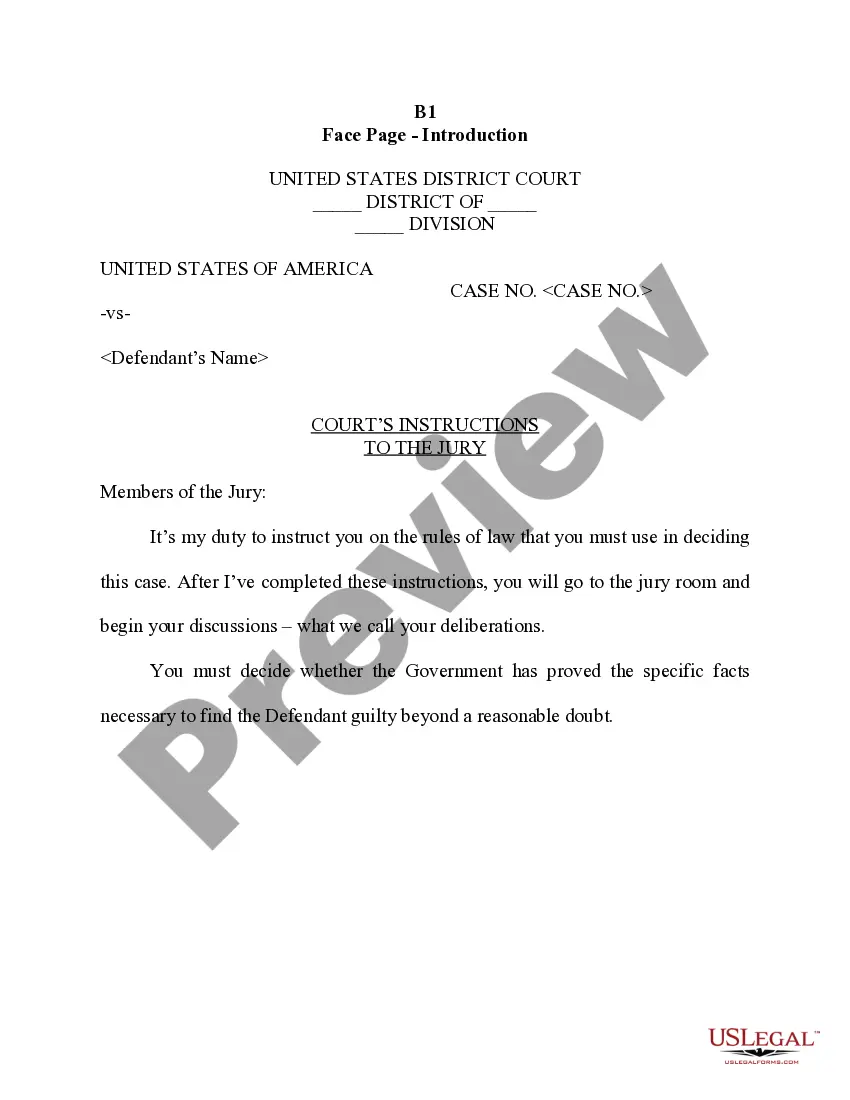
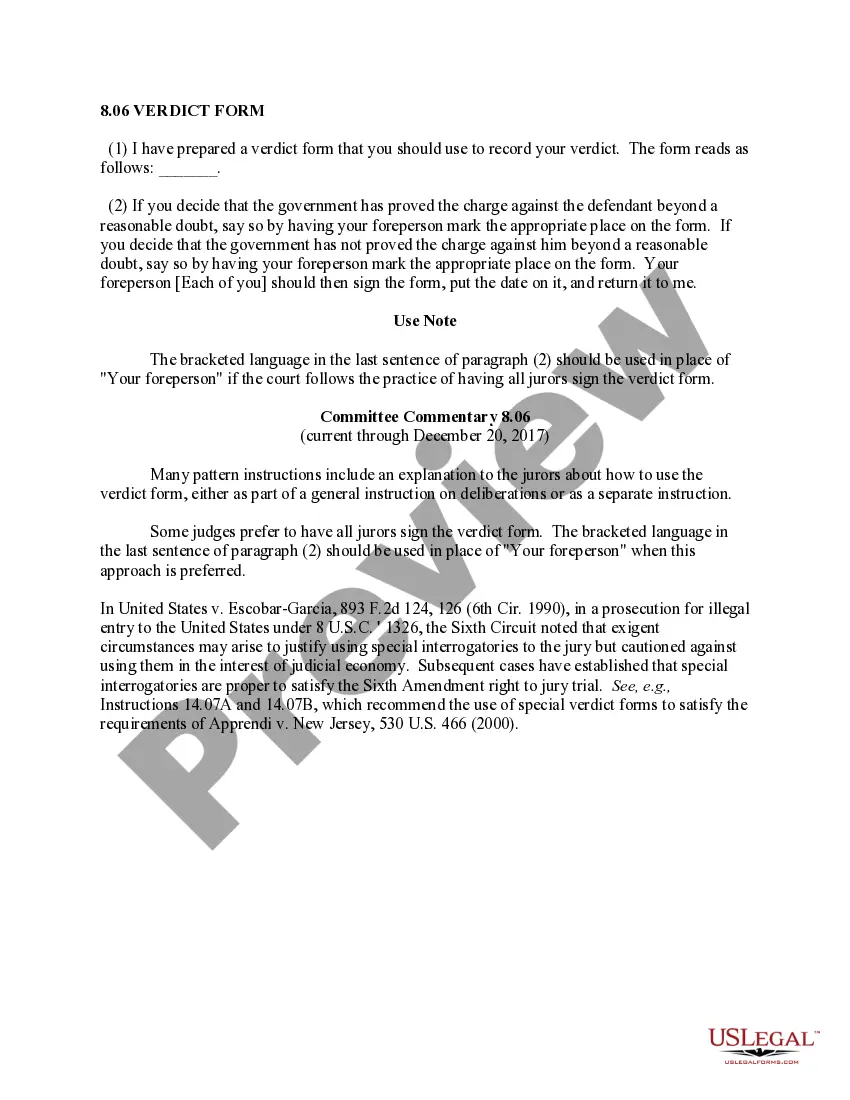
The Verdict form is a crucial document used by juries to communicate their final decision in a legal case. It provides a structured way for jurors to express their consensus after deliberation. Unlike other jury-related forms, this Verdict form specifically outlines how to record the jury's decision and signifies the conclusion of a trial phase in court proceedings.
Form components explained
- Instructions for selecting a foreperson to lead jury deliberations.
- A prepared verdict form for jurors to indicate their agreement on the case outcome.
- Space for the foreperson to sign and date the form before submitting it to the court.
- Guidelines for communicating with the judge if jury members have questions during deliberations.
When to use this form
This form is used after jurors have completed their deliberations on a case. It is needed whenever a jury has come to a decision regarding the facts of the trial and must formally document their verdict to be submitted to the court.
Who needs this form
- Jurors who have been selected to deliberate on a case.
- Members of the jury tasked with conveying the verdict to the court.
- Foreperson elected among the jurors to oversee the completion of the verdict form.
Instructions for completing this form
- Select a foreperson among jury members to lead the deliberation.
- Review the prepared verdict form before entering the jury room.
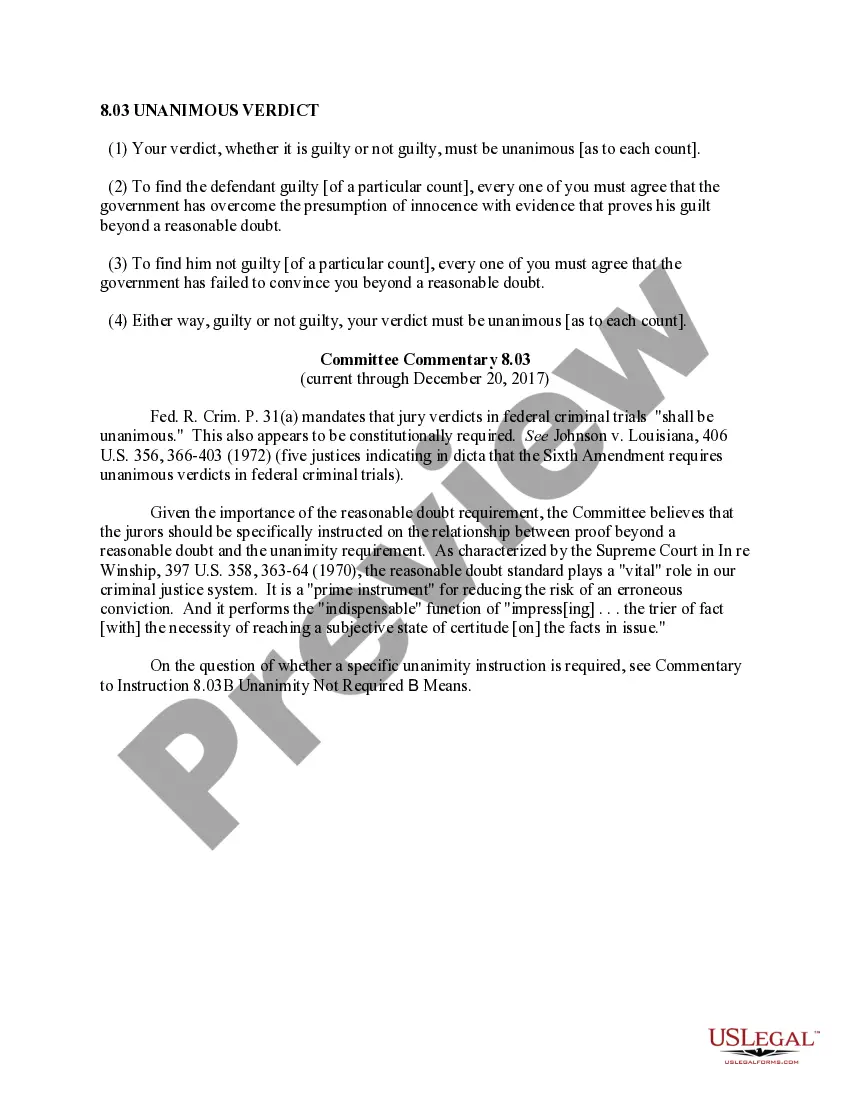
- Reach a unanimous decision on the case outcome.
- Have the foreperson sign and date the verdict form once the decision is made.
- Return the completed form to the court as instructed by the judge.
Does this document require notarization?
Notarization is generally not required for this form. However, certain states or situations might demand it. You can complete notarization online through US Legal Forms, powered by Notarize, using a verified video call available anytime.
Get your form ready online
Our built-in tools help you complete, sign, share, and store your documents in one place.
Make edits, fill in missing information, and update formatting in US Legal Forms—just like you would in MS Word.
Download a copy, print it, send it by email, or mail it via USPS—whatever works best for your next step.
Sign and collect signatures with our SignNow integration. Send to multiple recipients, set reminders, and more. Go Premium to unlock E-Sign.
If this form requires notarization, complete it online through a secure video call—no need to meet a notary in person or wait for an appointment.
We protect your documents and personal data by following strict security and privacy standards.

Make edits, fill in missing information, and update formatting in US Legal Forms—just like you would in MS Word.

Download a copy, print it, send it by email, or mail it via USPS—whatever works best for your next step.

Sign and collect signatures with our SignNow integration. Send to multiple recipients, set reminders, and more. Go Premium to unlock E-Sign.

If this form requires notarization, complete it online through a secure video call—no need to meet a notary in person or wait for an appointment.

We protect your documents and personal data by following strict security and privacy standards.
Common mistakes
- Failing to select a foreperson before starting deliberations.
- Submitting the verdict form without the foreperson's signature and date.
- Discussing how individual jurors voted before submitting the verdict.
Benefits of completing this form online
- Convenient access to a standardized verdict form drafted by legal professionals.
- Editability allows jurors to fill out the form according to their collective decision.
- Reliable format ensures that all necessary components are included for court submission.
Legal use & context
- This form acts as the official record of the jury's decision and is required for the legal process following a trial.
- Ensures that the verdict is documented in compliance with federal rules.
- Failure to accurately complete the form could result in delays or complications in the judicial process.
Main things to remember
- The Verdict form is essential for documenting the jury's final decision.
- Following proper procedures is vital to ensure the form is valid.
- Being aware of potential mistakes can enhance the jury's effectiveness during deliberation.
Looking for another form?

Form popularity
FAQ
Verdict. / (?v??d?kt) / noun. the findings of a jury on the issues of fact submitted to it for examination and trial; judgment. any decision, judgment, or conclusion.
The formal decision issued by a jury on the issues of fact that were presented at trial. VERDICT. The formal decision issued by a jury on the issues of fact that were presented at trial.Privy Verdict.Public Verdict.General Verdict.Partial Verdict.Special Verdict.
FORMS OF VERDICT Multiple counts: A. ?We, the Jury, find the defendant, (guilty; not guilty; not guilty by reason of mental disease or defect; or not guilty and not guilty by reason of mental disease or defect) of , as charged in Count 1 of the Indictment/Complaint.?
If the judge tries the case, the judge's decision is called a judgment. If a jury tries the case, the jury's decision is called a verdict.
Types of Verdicts General Verdict. Special Verdict. Directed Verdict. Judgment Notwithstanding the Verdict.
The verdict is the final decision of the case entered by the judge. The person against whom a criminal charge is filed by the prosecution is called the defendant, whereas the person sued in a civil case is called the respondent. When a defendant wants to sue the plaintiff, the defendant files a counterclaim.
: the finding or decision of a jury on the matter submitted to it in trial. : opinion, judgment.
/?v??.d?kt/ an opinion or decision made after judging the facts that are given, especially one made at the end ofSee more at verdict.