Nominee Agreement
What is this form?
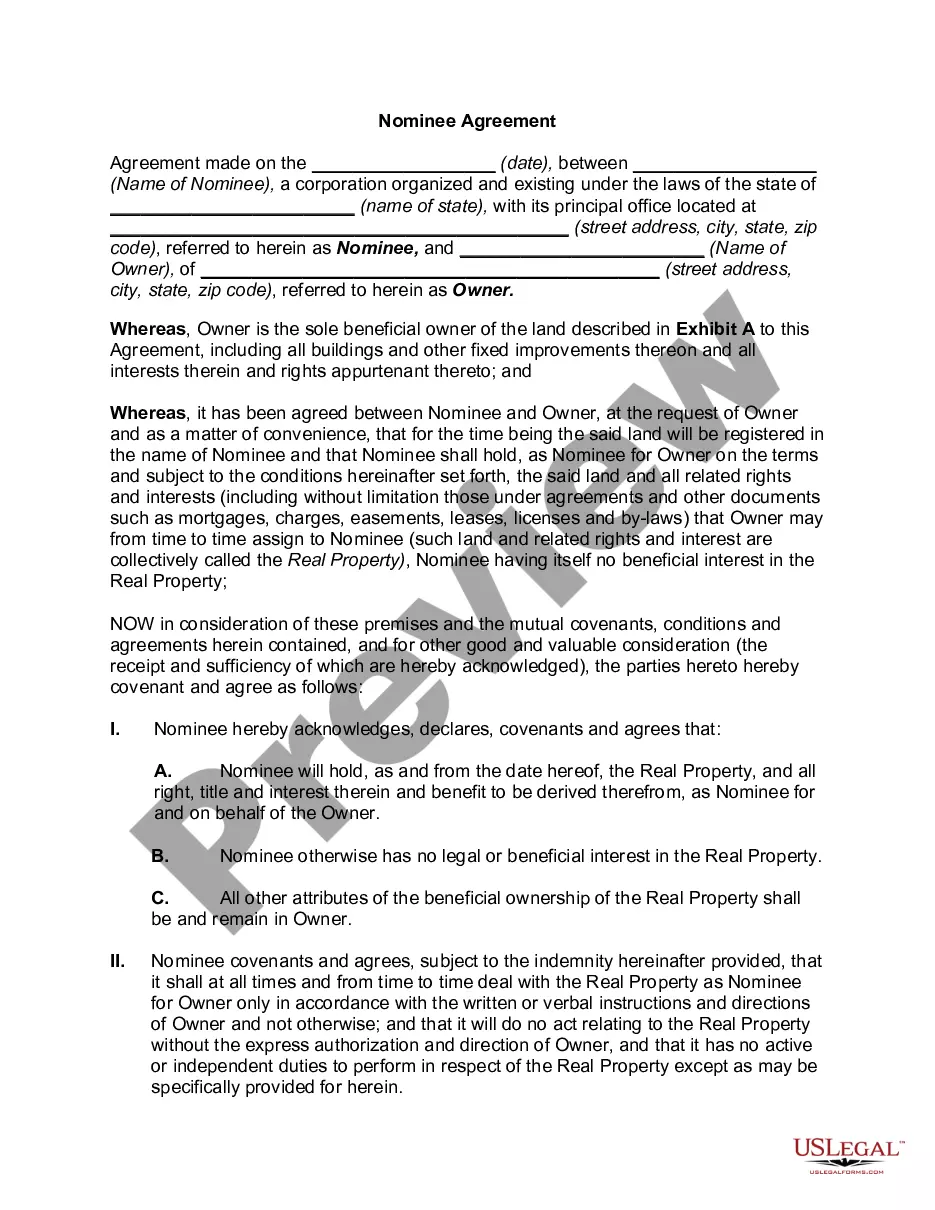
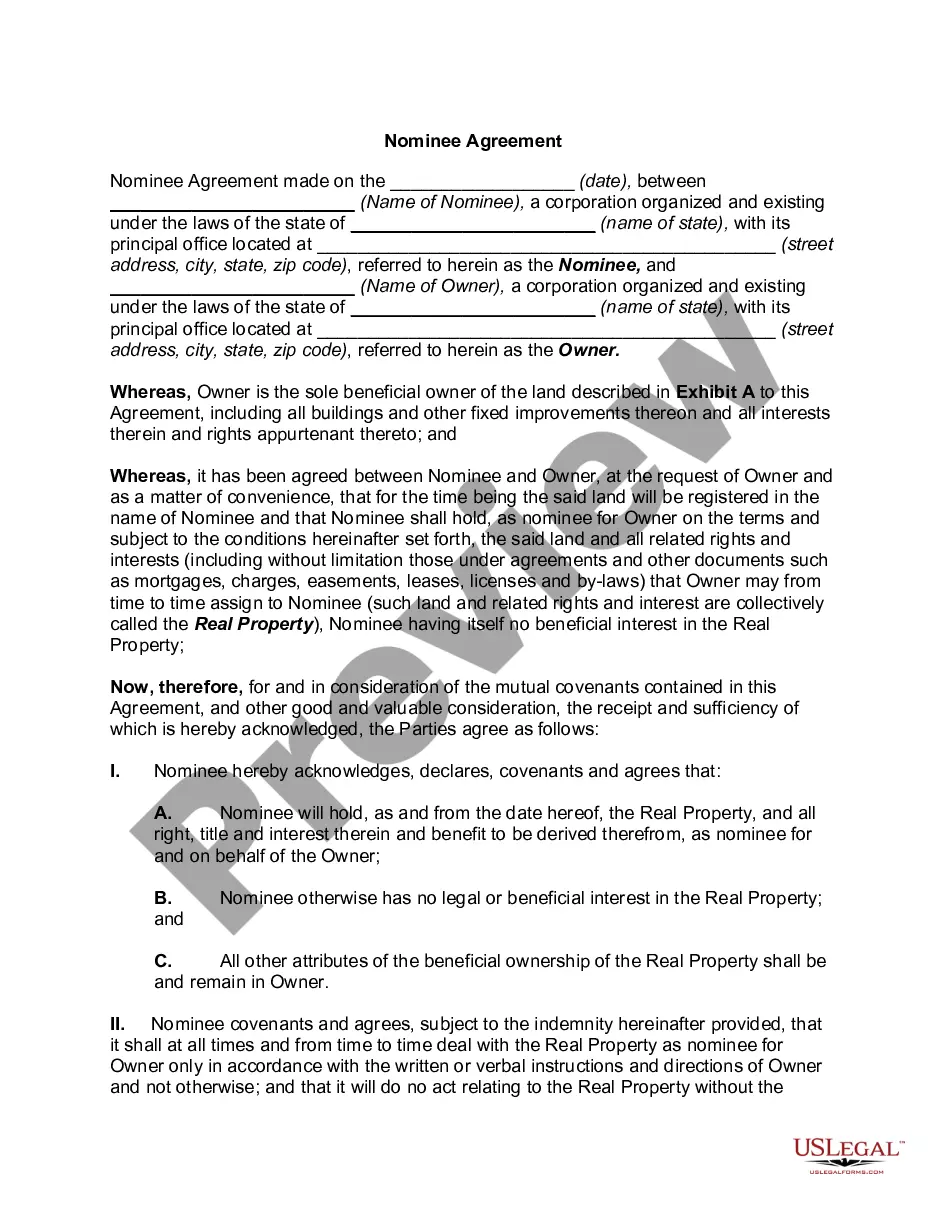
A nominee agreement is a legal document in which an owner designates a nominee to hold property on their behalf. This arrangement allows the owner to retain beneficial ownership while the nominee manages or executes transactions related to the property. The nominee has no beneficial interests in the property, which ensures clear ownership and liability delineation between the owner and nominee, differentiating this agreement from other property management contracts.
What’s included in this form
- Date of the agreement.
- Names and addresses of the nominee and owner.
- Declaration of ownership details, including property description.
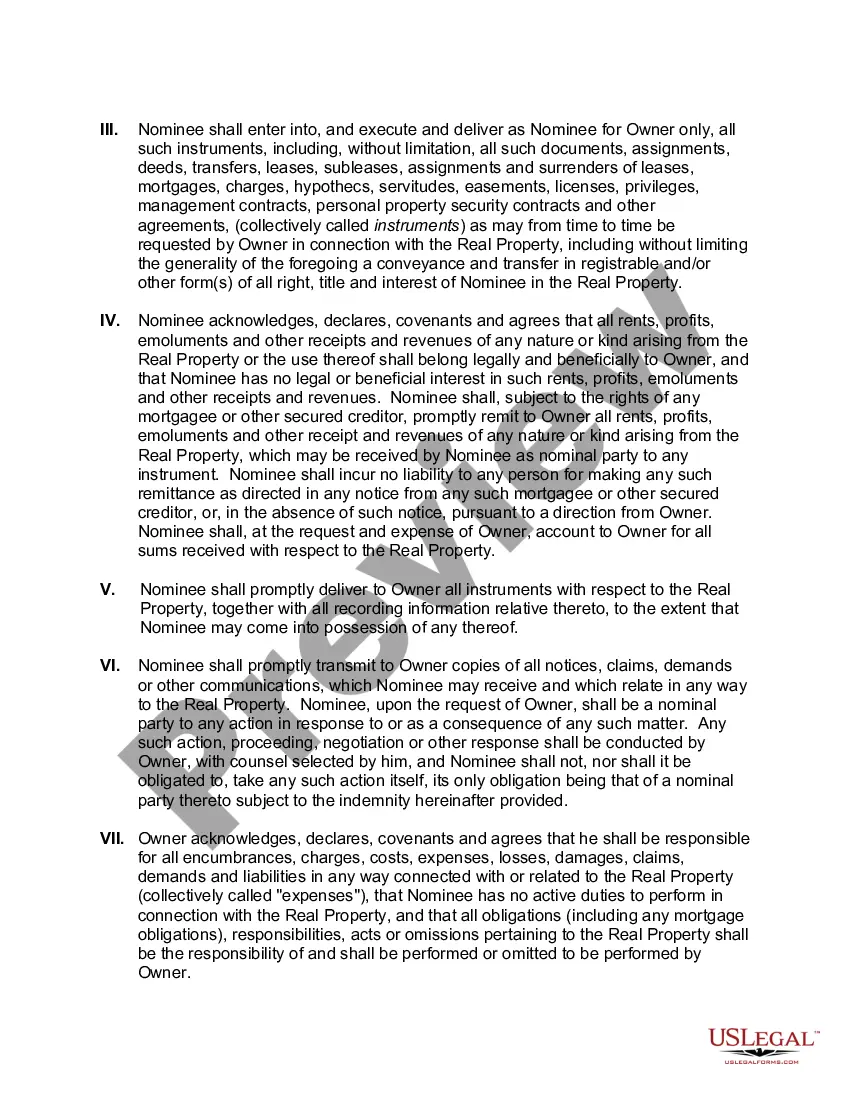
- Clarification of the nominee's obligations and limitations.
- Conditions under which the nominee must act on behalf of the owner.
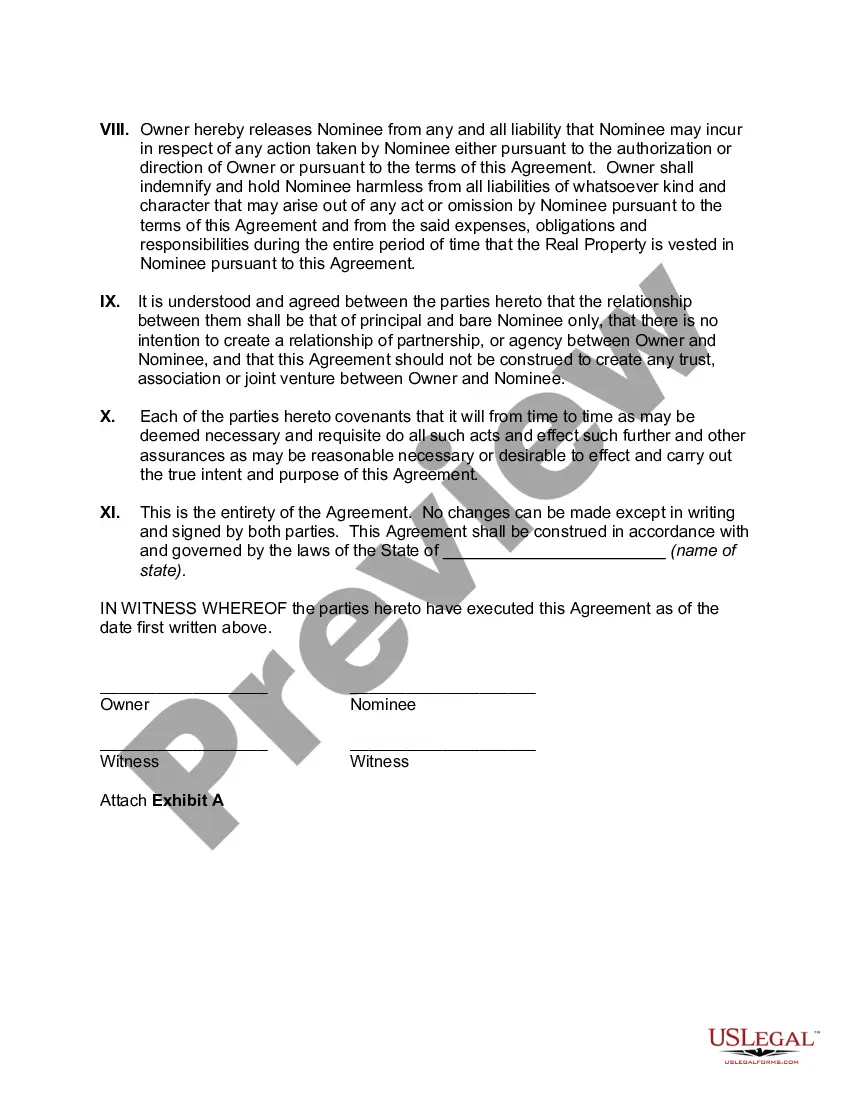
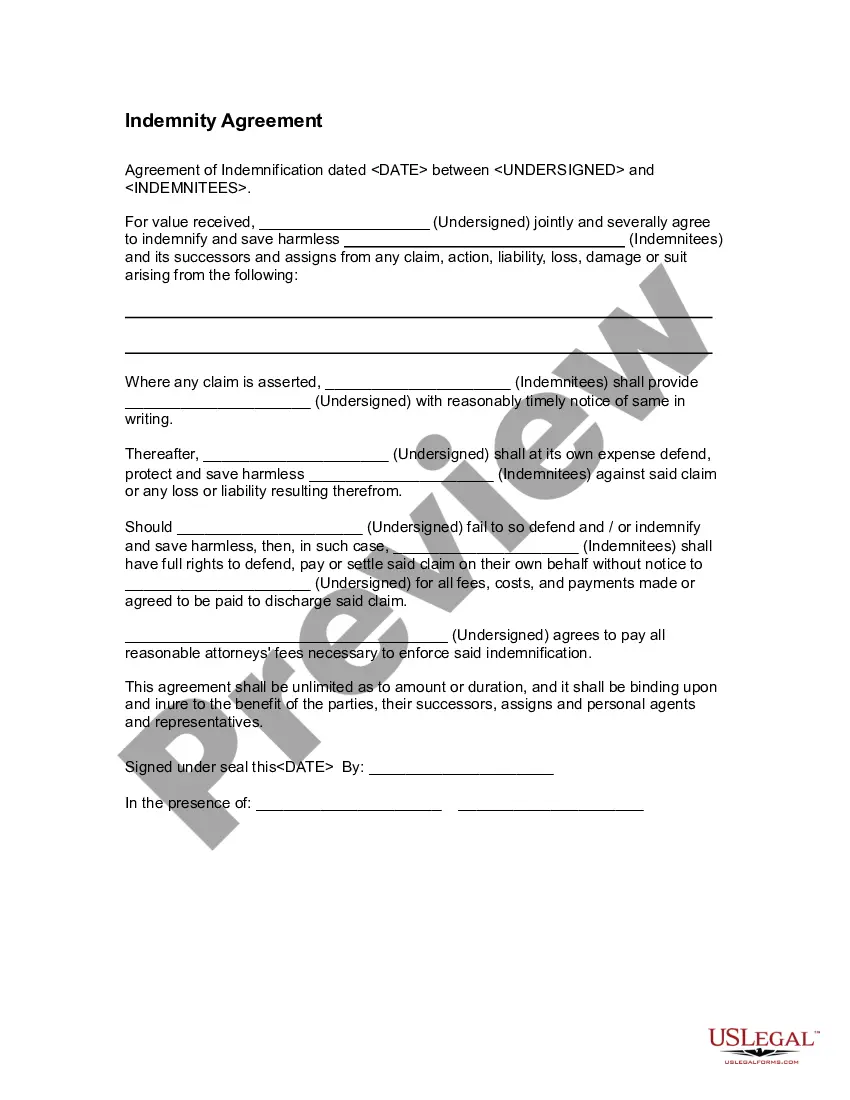
- Indemnification clause for the nominee against liability.
Situations where this form applies
This nominee agreement should be used when an owner wants to designate another party to hold property, often for reasons like privacy, convenience in management, or ease of transactions. It can be particularly useful when the owner wishes to simplify property transfer processes or transactions without relinquishing actual ownership rights.
Who needs this form
This form is suitable for:
- Property owners seeking to delegate management responsibilities.
- Individuals or corporations involved in real estate ventures.
- Those looking to maintain anonymity regarding property ownership.
- Individuals who may wish to facilitate easier transactions without legal complexities.
Completing this form step by step
- Identify the date when the agreement is executed.
- Enter the full names and addresses of both the nominee and the owner.
- Describe the property being held by the nominee accurately.
- Ensure both parties understand and agree to the terms of nominee responsibilities.
- Obtain signatures from both parties and witnesses if required.
Does this document require notarization?
This form must be notarized to be legally valid. US Legal Forms provides secure online notarization powered by Notarize, allowing you to complete the process through a verified video call.
Get your form ready online
Our built-in tools help you complete, sign, share, and store your documents in one place.
Make edits, fill in missing information, and update formatting in US Legal Forms—just like you would in MS Word.
Download a copy, print it, send it by email, or mail it via USPS—whatever works best for your next step.
Sign and collect signatures with our SignNow integration. Send to multiple recipients, set reminders, and more. Go Premium to unlock E-Sign.
If this form requires notarization, complete it online through a secure video call—no need to meet a notary in person or wait for an appointment.
We protect your documents and personal data by following strict security and privacy standards.

Make edits, fill in missing information, and update formatting in US Legal Forms—just like you would in MS Word.

Download a copy, print it, send it by email, or mail it via USPS—whatever works best for your next step.

Sign and collect signatures with our SignNow integration. Send to multiple recipients, set reminders, and more. Go Premium to unlock E-Sign.

If this form requires notarization, complete it online through a secure video call—no need to meet a notary in person or wait for an appointment.

We protect your documents and personal data by following strict security and privacy standards.
Typical mistakes to avoid
- Failing to accurately identify the property being held.
- Not defining the nominee's responsibilities clearly.
- Omitting witness signatures when required by state law.
- Assuming the agreement does not require legal review.
Why use this form online
- Convenient accessibility and download options.
- Forms are drafted by licensed attorneys for legal compliance.
- Easy editing capabilities to customize your agreement.
- Reliable and secure process for managing legal documents.
Looking for another form?
Form popularity
FAQ
The Nominee Agreement is a contract where an owner designates a nominee to hold property on the owner's behalf, while the owner retains beneficial ownership. It clarifies who may act for the owner, and sets the nominee’s obligations and limitations, including conditions under which they must act and an indemnification provision to protect the nominee. The form outlines the key terms to govern that relationship.
A Nominee Agreement includes essential details: the date of the agreement; names and addresses of the nominee and owner; a declaration of ownership details with the property description; clarity of the nominee's obligations and limitations; conditions under which the nominee must act on the owner's behalf; and an indemnification clause protecting the nominee from liability.
The form contemplates the owner designating a nominee to hold the property on the owner's behalf, with the nominee having no beneficial interests. This arrangement helps separate ownership from control, ensuring clear ownership, liability delineation, and that the owner's rights are upheld under the agreement.
The Nominee Agreement does not list specific exclusions or disqualifications for nominees. It focuses on the parties, the property, and the nominee's duties and liability. For any particular restrictions, consult a licensed attorney to ensure the arrangement meets the owner's objectives and applicable laws.
A nominee is not the owner under this form. The owner retains beneficial ownership and the nominee holds the property on the owner's behalf, with no beneficial interests. The agreement delineates the nominee's duties and liabilities to maintain that separation between ownership and control.
The Nominee Agreement differs from a standard property management agreement by designating a named person or entity to hold property for the owner, with the nominee having no beneficial interests. It creates clear ownership and liability delineation and includes an indemnification clause for the nominee, rather than the typical management-focused terms.