Contractor Agreement
About this form
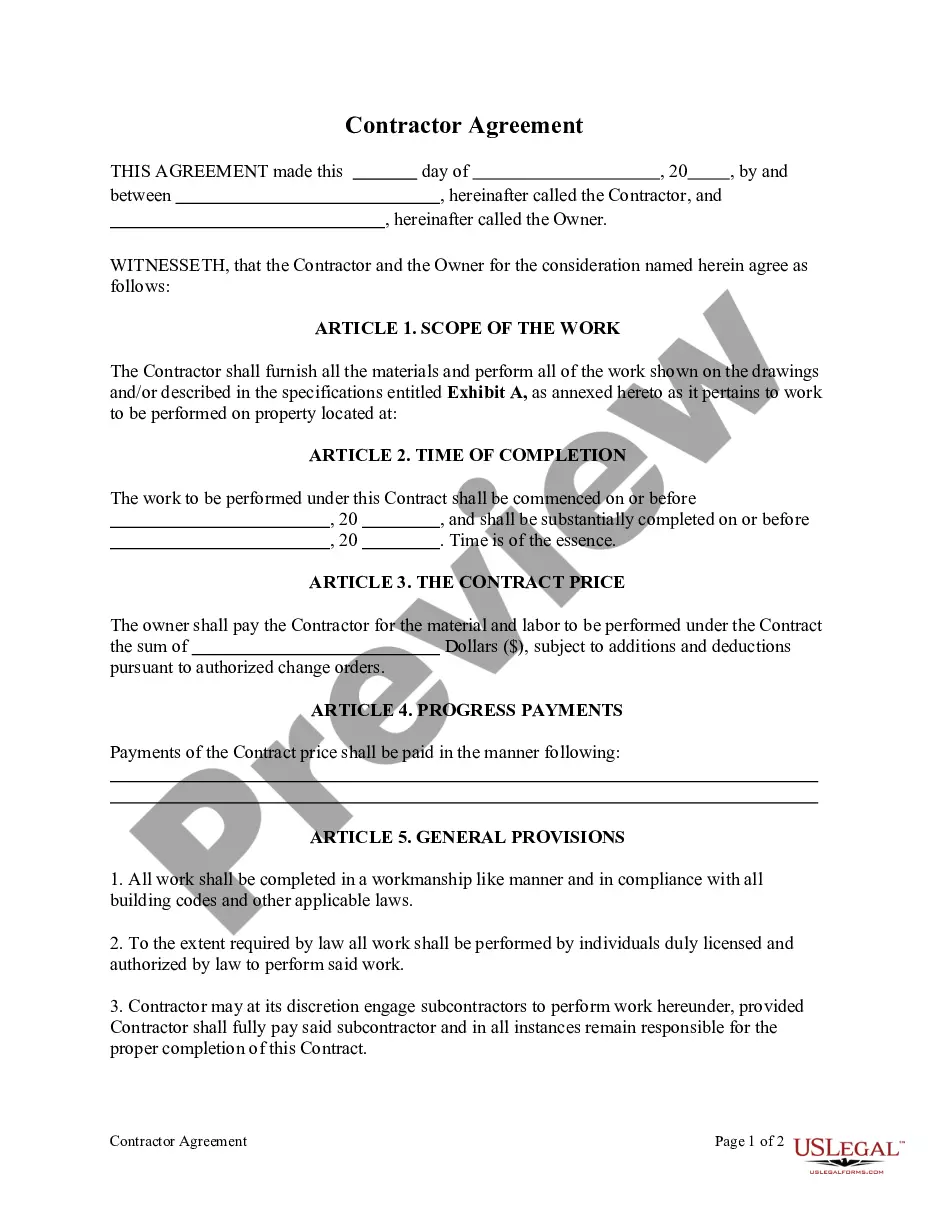
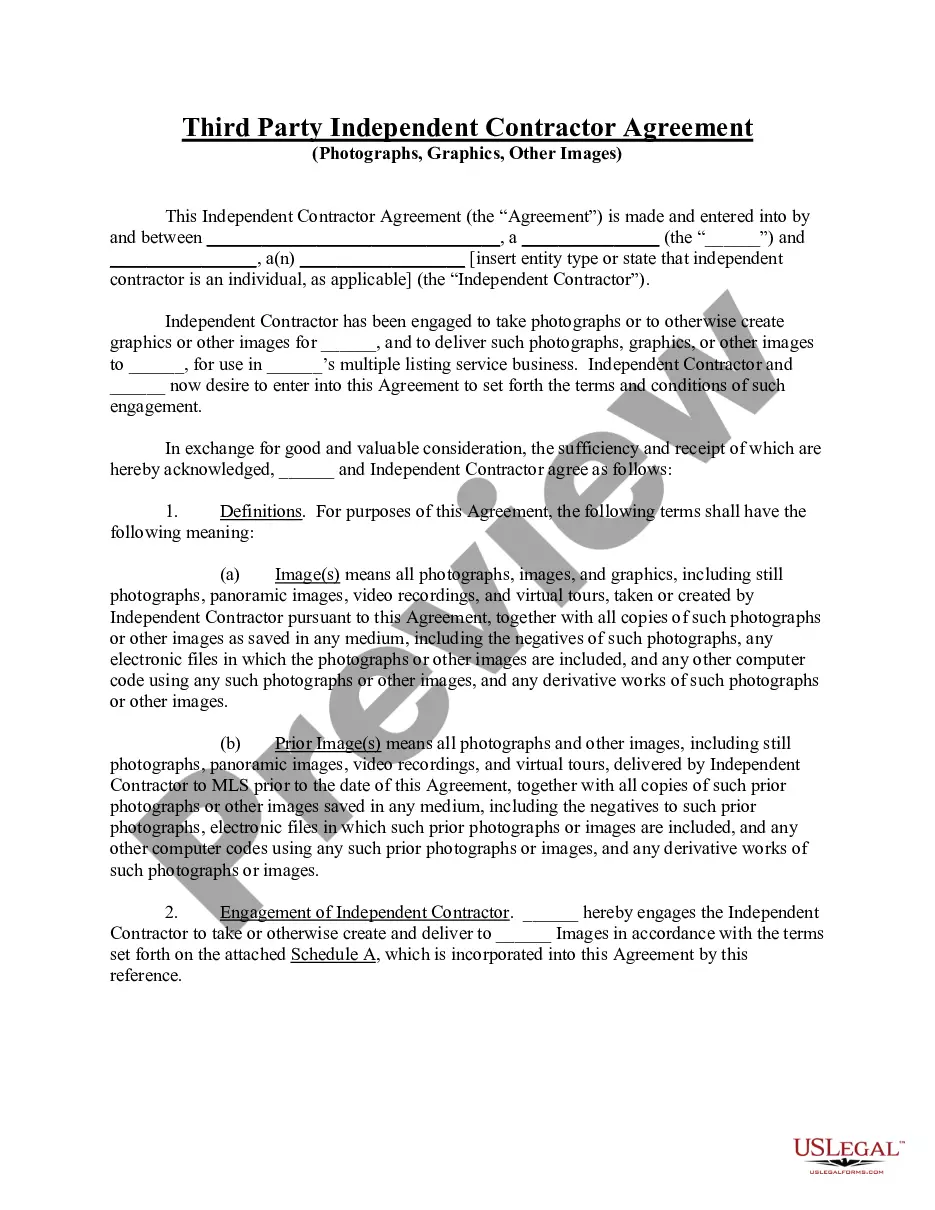
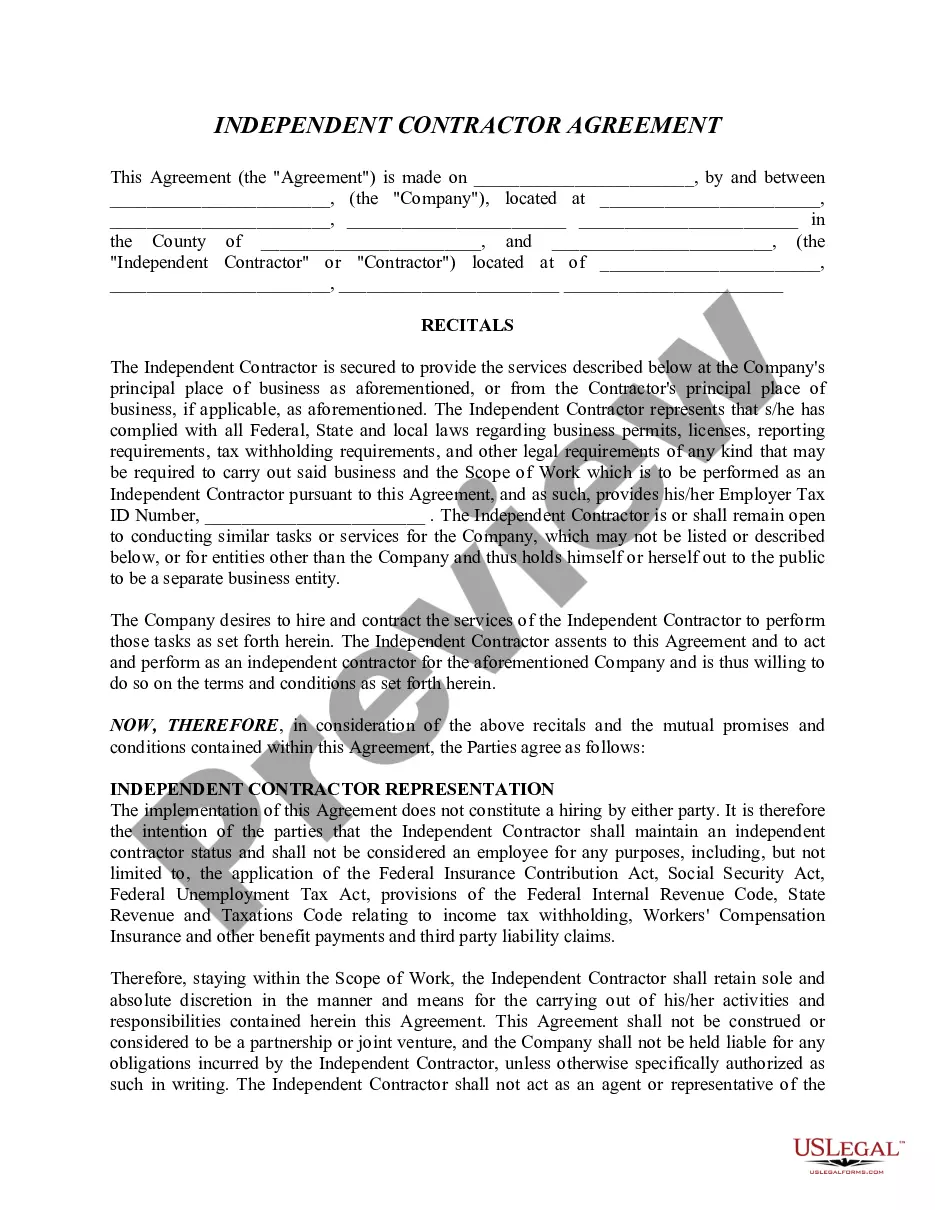
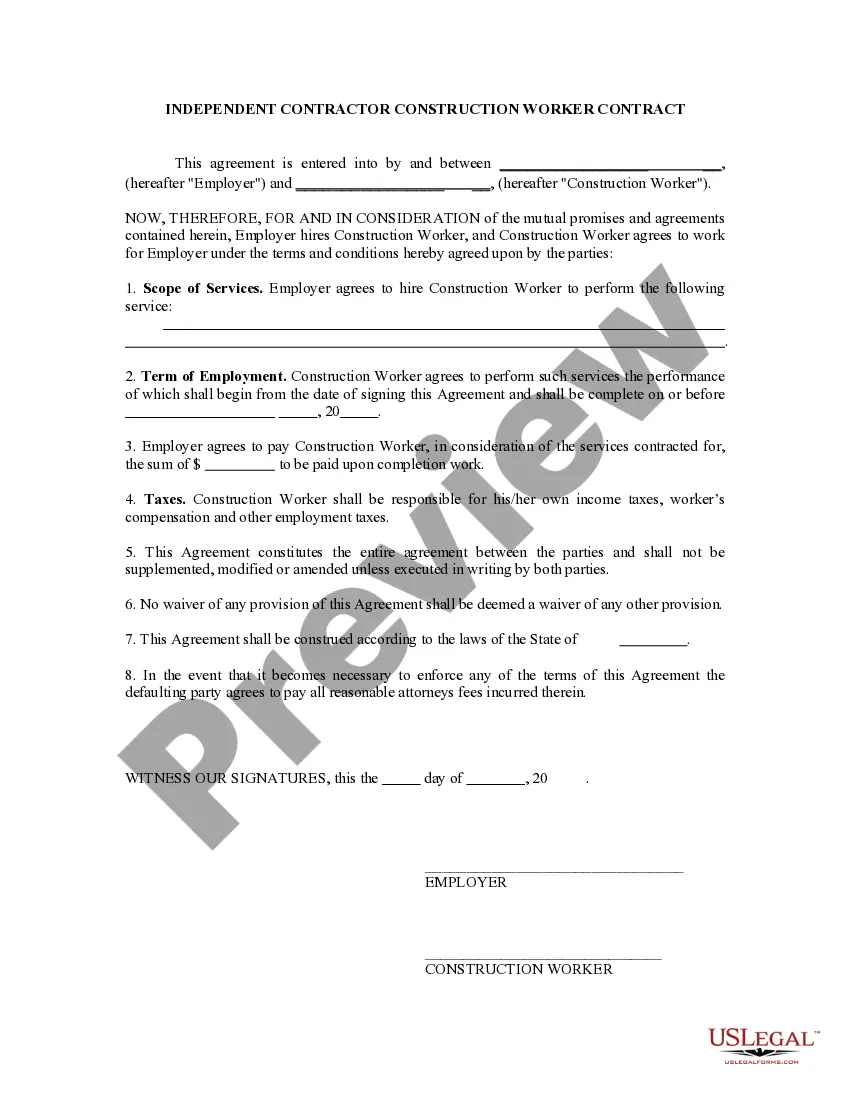
The Contractor Agreement is a legally binding document between an owner and a contractor that outlines the terms and conditions for construction projects. This form specifies the scope of work, timeframes, payment terms, and responsibilities, ensuring that both parties are clear on expectations. Unlike similar forms, this agreement focuses specifically on the relationship between the owner and the contractor, detailing the project management aspects involved in construction work.
Key components of this form
- Scope of Work: Defines the specific tasks and materials required for the project.
- Time of Completion: Outlines the timeline for starting and completing the work.
- Payment Terms: Details how and when payments will be made.
- Subcontractor Provisions: Allows the contractor to hire subcontractors and outlines their responsibilities.
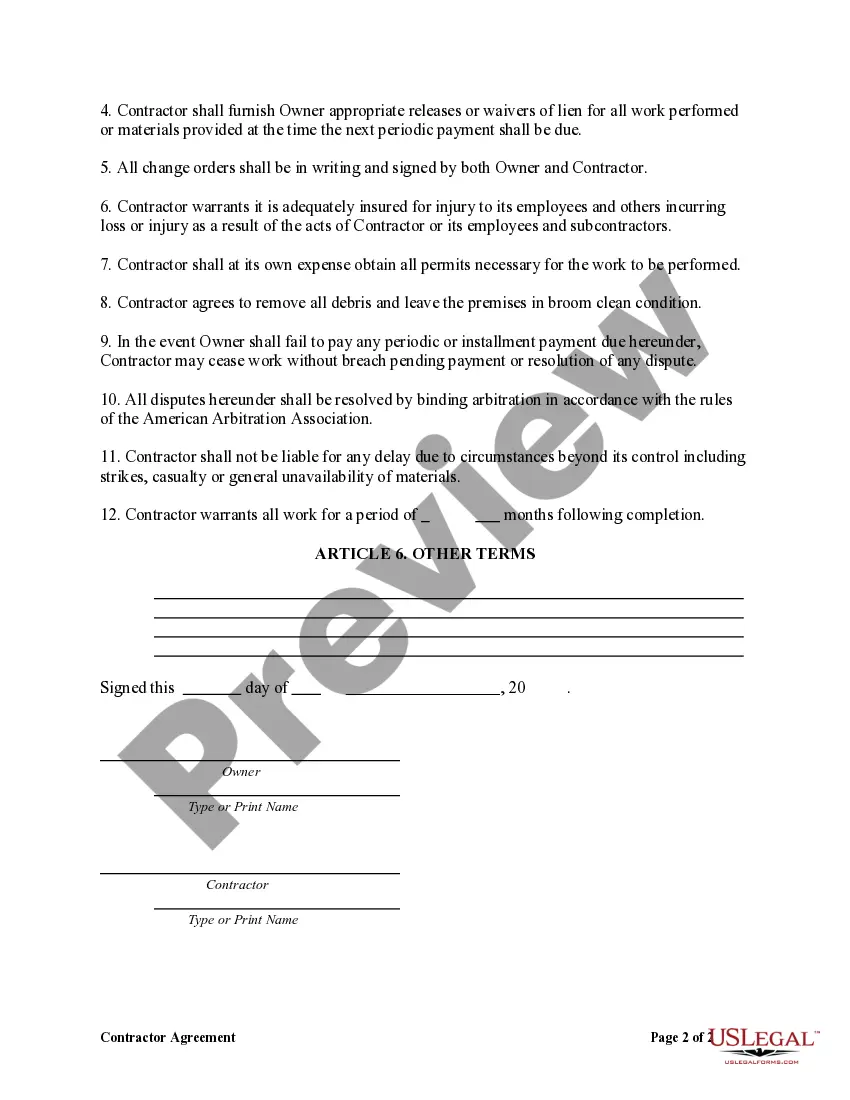
- Liens and Releases: Ensures lien waivers are provided to the owner for work done.
- Dispute Resolution: Specifies that disputes will be settled through binding arbitration.
When to use this document
This Contractor Agreement should be used when a property owner hires a contractor for construction or renovation projects. It is suitable for projects of all sizes, ranging from small home renovations to large-scale construction jobs, where a formalized agreement is necessary to protect both parties' interests.
Intended users of this form
- Property Owners: Those looking to hire contractors for construction work.
- Contractors: Professionals managing construction projects who need to formalize agreements with clients.
- Subcontractors: Those who may be engaged by the contractor and need clarity on terms.
Instructions for completing this form
- Identify the parties: Enter the names and contact information of the contractor and the owner.
- Define the scope: Clearly outline the work to be completed and attach any relevant drawings or specifications.
- Set deadlines: Specify the commencement and completion dates for the project.
- Detail payment structure: Include total payment amounts and payment schedules.
- Include signatures: Ensure that both parties sign and date the agreement to make it enforceable.
Does this document require notarization?
This form does not typically require notarization to be legally valid. However, some jurisdictions or document types may still require it. US Legal Forms provides secure online notarization powered by Notarize, available 24/7 for added convenience.
Get your form ready online
Our built-in tools help you complete, sign, share, and store your documents in one place.
Make edits, fill in missing information, and update formatting in US Legal Forms—just like you would in MS Word.
Download a copy, print it, send it by email, or mail it via USPS—whatever works best for your next step.
Sign and collect signatures with our SignNow integration. Send to multiple recipients, set reminders, and more. Go Premium to unlock E-Sign.
If this form requires notarization, complete it online through a secure video call—no need to meet a notary in person or wait for an appointment.
We protect your documents and personal data by following strict security and privacy standards.

Make edits, fill in missing information, and update formatting in US Legal Forms—just like you would in MS Word.

Download a copy, print it, send it by email, or mail it via USPS—whatever works best for your next step.

Sign and collect signatures with our SignNow integration. Send to multiple recipients, set reminders, and more. Go Premium to unlock E-Sign.

If this form requires notarization, complete it online through a secure video call—no need to meet a notary in person or wait for an appointment.

We protect your documents and personal data by following strict security and privacy standards.
Avoid these common issues
- Failing to define the scope of work clearly, leading to misunderstandings.
- Not including a detailed timeline for project completion.
- Leaving out necessary lien waiver provisions, which can create risks for the owner.
- Neglecting to have both parties sign the agreement, making it unenforceable.
Benefits of using this form online
- Convenience: Easily download and complete the form from anywhere at any time.
- Editability: Customize the agreement to fit your specific project requirements.
- Reliability: Form templates are created by licensed attorneys, ensuring legal compliance.
Legal use & context
- This agreement is enforceable under state contract law when properly executed by both parties.
- Ensure compliance with local construction laws concerning permits and safety regulations.
- Disputes under this agreement are subject to binding arbitration, which may limit certain legal remedies.
Quick recap
- The Contractor Agreement establishes clear roles and responsibilities for construction projects.
- It's essential to define the scope of work, payment terms, and project timelines.
- Proper execution of the agreement is crucial for enforceability and legal protection.
Looking for another form?


Form popularity
FAQ
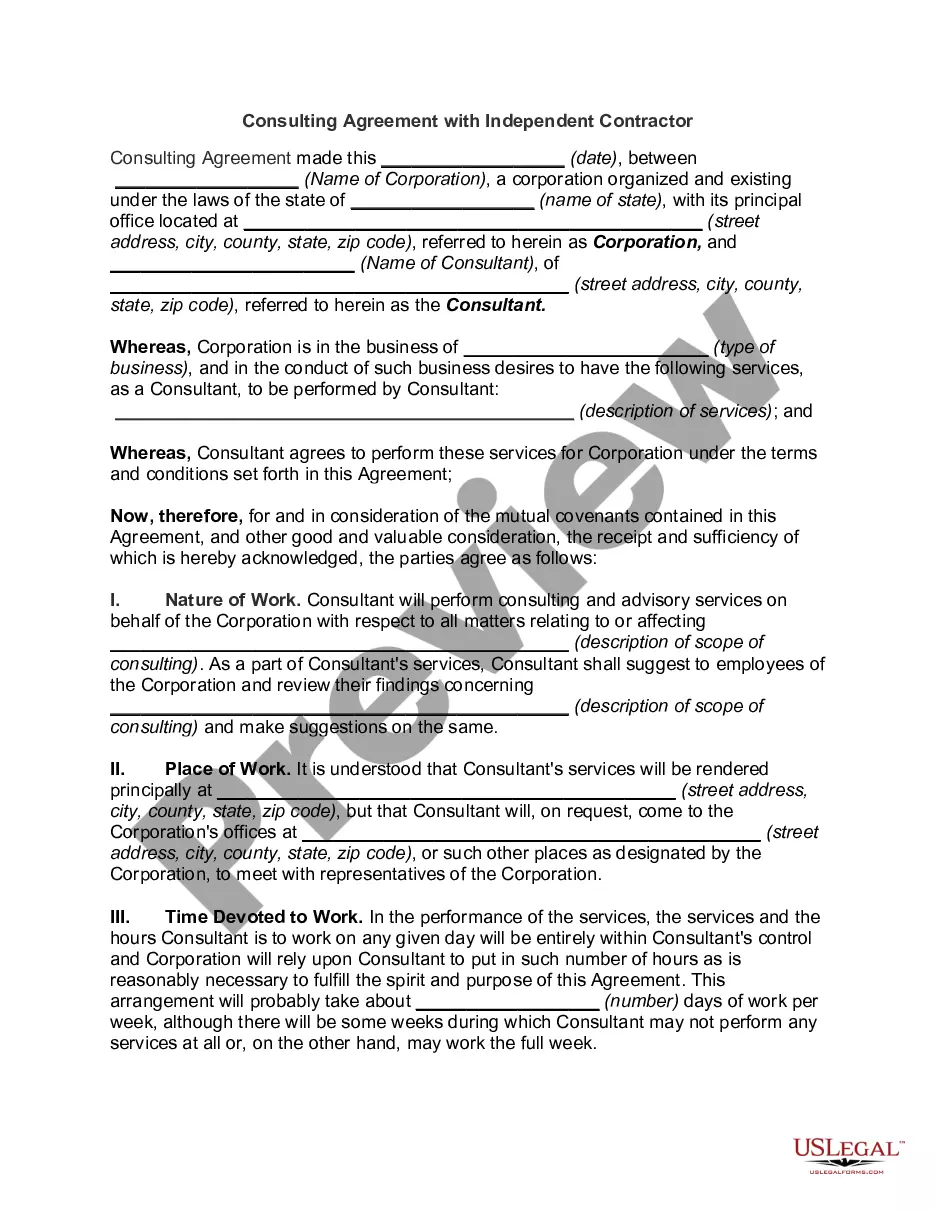
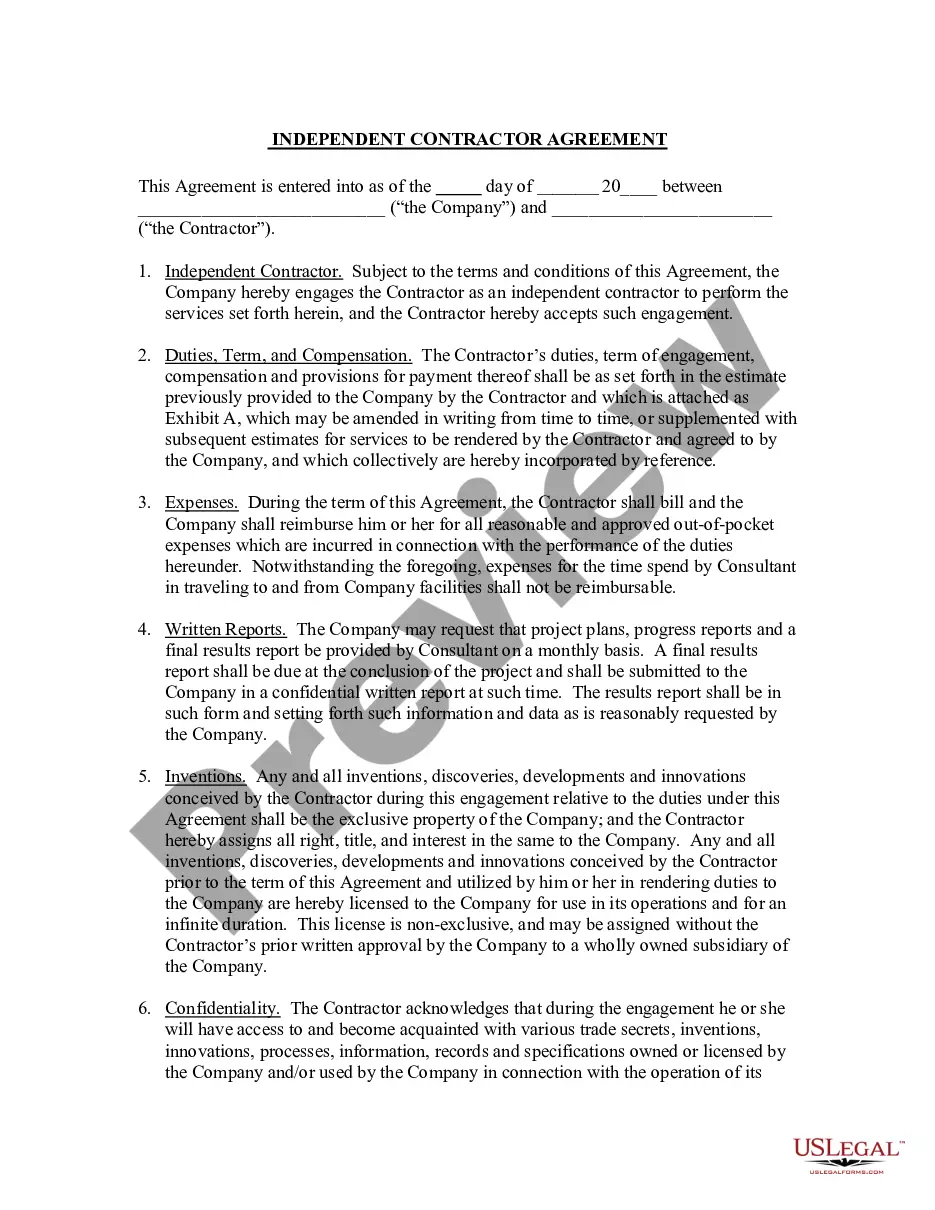
An independent contractor agreement is a document that an employer uses to hire a freelancer for a specific job. By extension, it distinguishes the independent contractor from an employee of the business for legal and tax purposes.
Name of contractor and contact information. Name of homeowner and contact information. Describe property in legal terms. List attachments to the contract. The cost. Failure of homeowner to obtain financing. Description of the work and the completion date. Right to stop the project.
A contract is a legally binding document that details the expectations and responsibilities of all parties involved in a home improvement project. It clarifies the goals of both homeowner and contractor, and it protects each party's rights regarding the project.
Timeframe or key milestones of the project; hours of work; deliverables of the project; and. way the business will pay the contractor for their services.
Identifying/Contact Information. Title and Description of the Project. Projected Timeline and Completion Date. Cost Estimate and Payment Schedule. Stop Work Clause and Stop Payment Clause. Act of God Clause. Change Order Agreement. Warranty.
Terms. This is the first section of any agreement or contract and states the names and locations of the parties involved. Responsibilities & Deliverables. Payment-Related Details. Confidentiality Clause. Contract Termination. Choice of Law.
What is an independent contractor? Also known as a consultant or freelancer, an independent contractor is a business or individual that is typically self-employed and provides a product or service for a customer in exchange for monetary compensation.