Operating Cost Escalations Provision
About this form
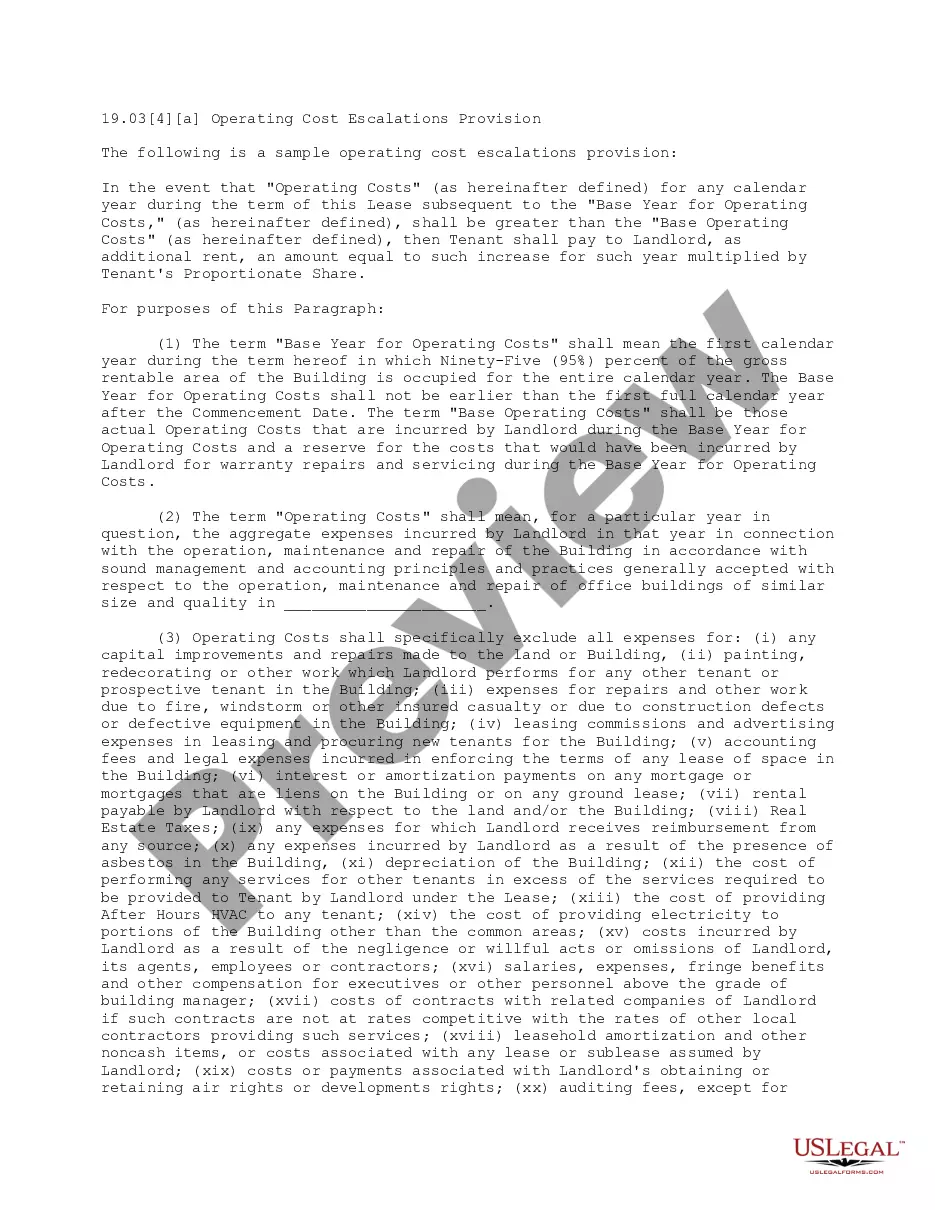
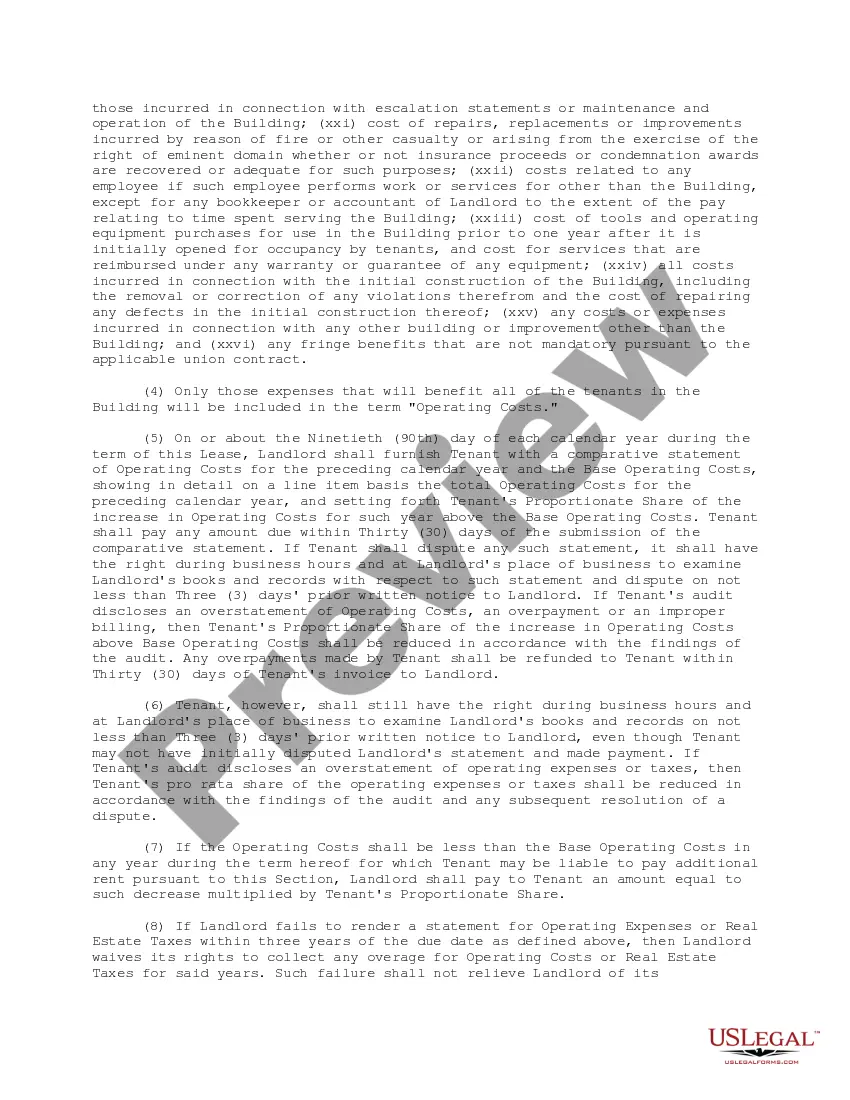
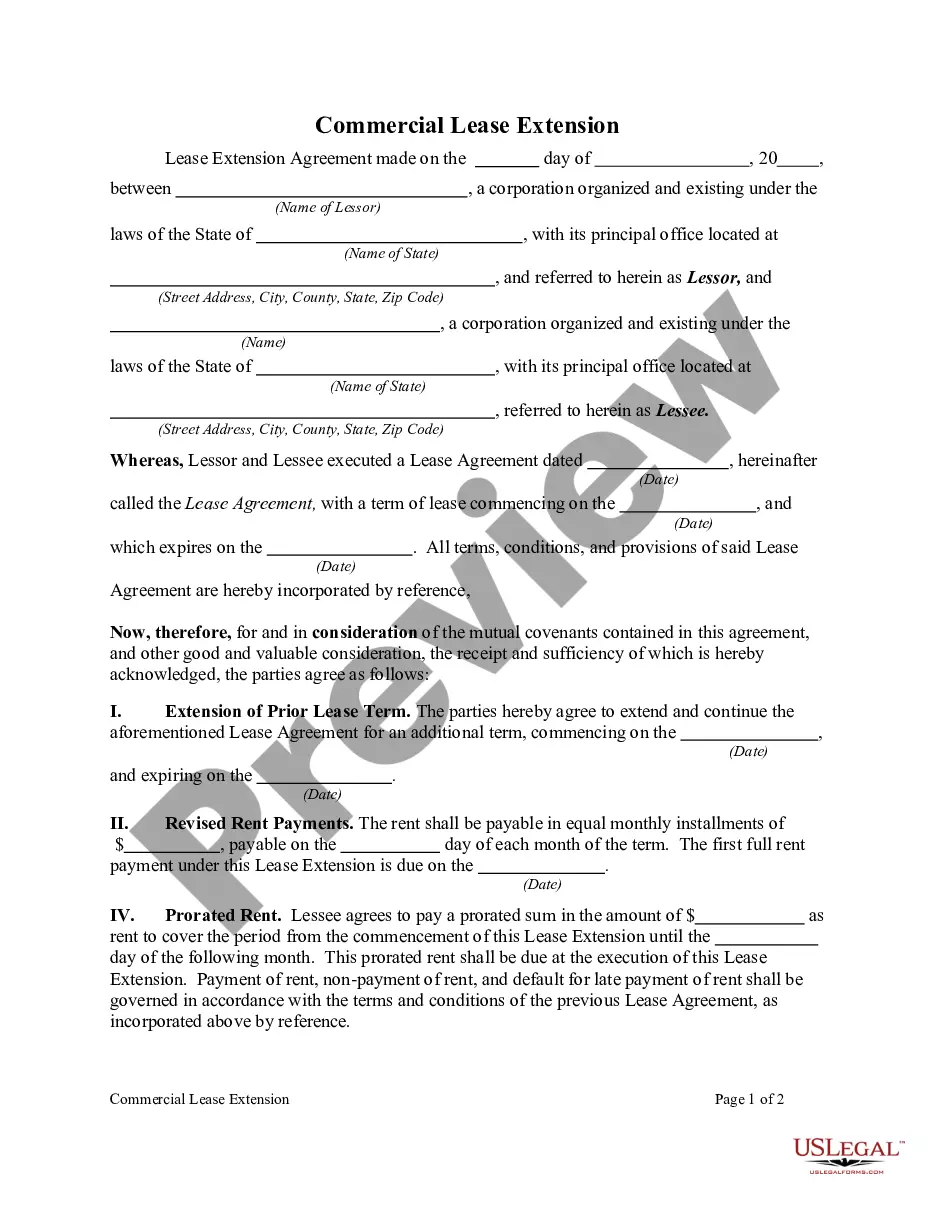
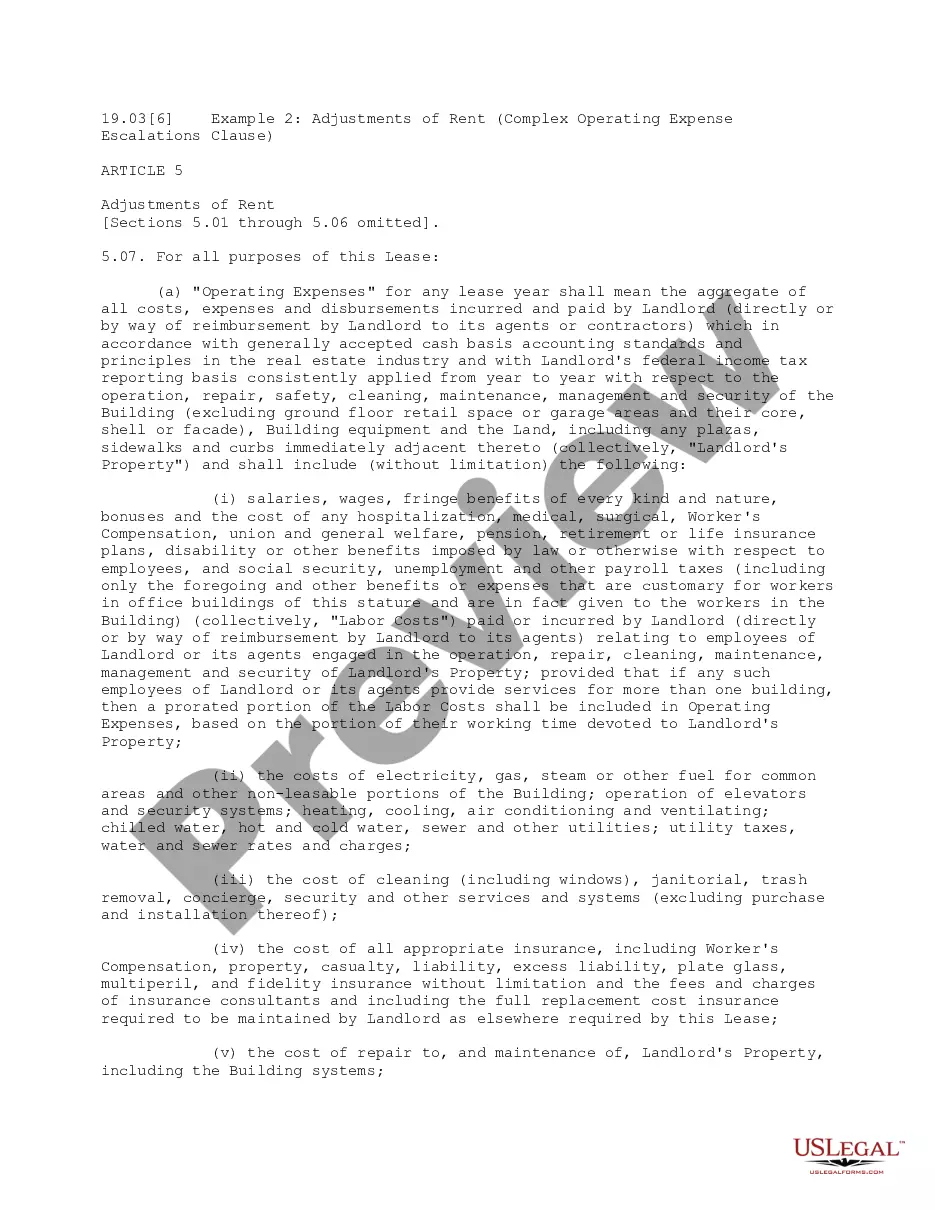
The Operating Cost Escalations Provision is a legal document used in office leases to outline how the tenant will contribute to increases in operating costs beyond a set baseline. This provision ensures that if operating costs rise, the tenant will be responsible for their share, calculated based on their proportionate share of the leased space. It is vital for both landlords and tenants to clearly understand their financial obligations regarding fluctuating costs, distinguishing it from standard lease agreements that may not address operating cost escalations.
Key parts of this document
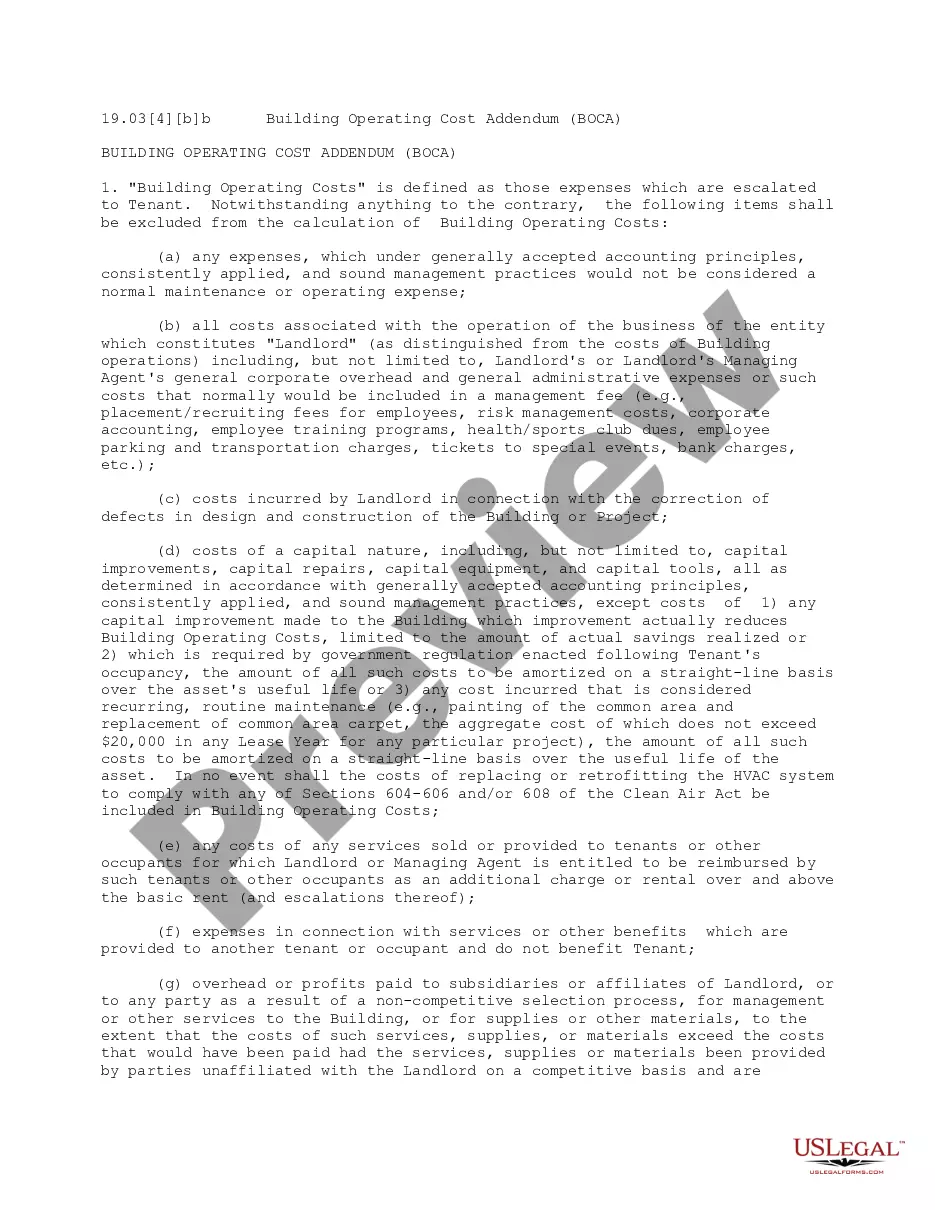
- Definition of Base Year for Operating Costs, establishing the initial cost baseline.
- Clear outline of Operating Costs that can be passed on to tenants, ensuring transparency.
- Exclusions that specify which costs are not included in operating expenses.
- Tenant audit rights for disputing operating cost statements, ensuring fairness.
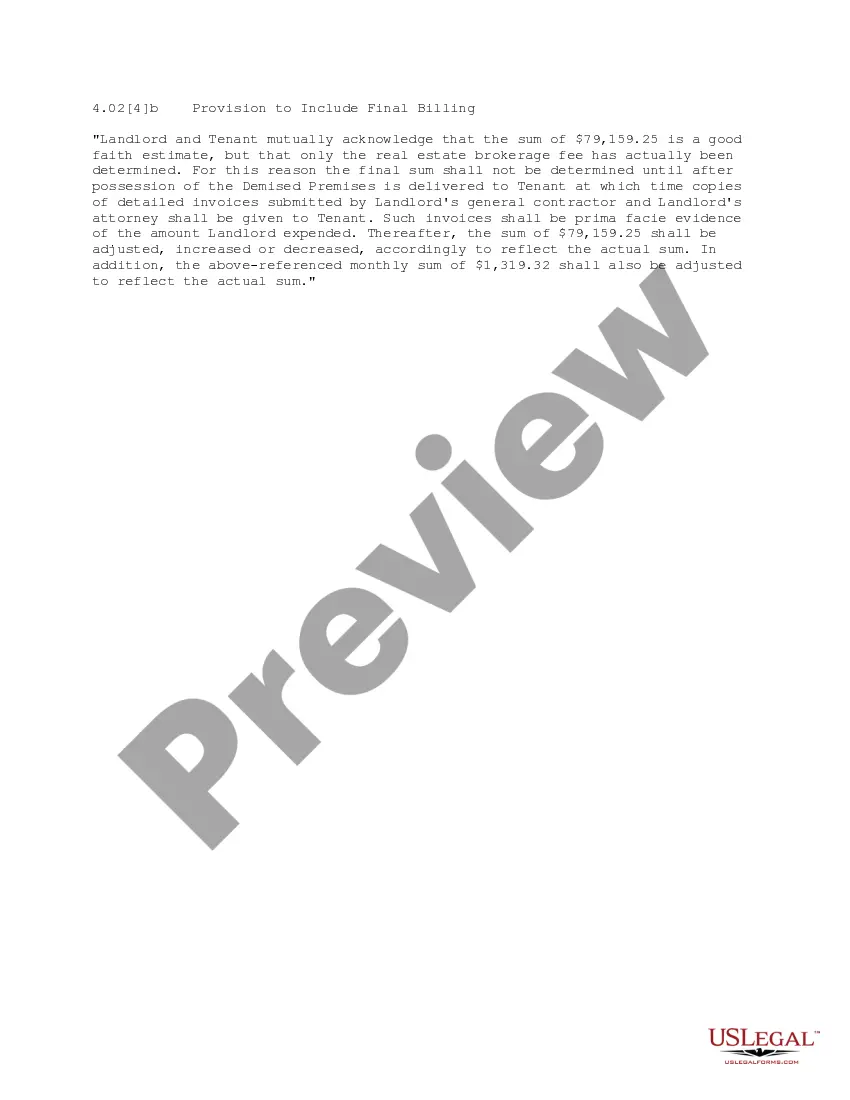
- Procedures for reporting increases in operating costs and payment timelines.


Situations where this form applies
This form is essential for landlords and tenants when negotiating office leases that involve shared operational expenses. It should be used when establishing the terms of rental agreements, particularly in scenarios where operating costs may fluctuate significantly due to factors such as maintenance, repairs, and utilities over time. Having a clear operating cost escalations provision helps prevent disputes and fosters a mutual understanding of financial responsibilities.
Who should use this form
Ideal users of this form include:
- Landlords managing commercial office spaces who want to outline potential cost increases.
- Tenants seeking to understand their financial obligations under a lease.
- Real estate professionals and attorneys involved in drafting or reviewing commercial lease agreements.
- Businesses planning to lease office space in shared buildings, ensuring they account for variable costs.
Instructions for completing this form
- Identify the parties involved: clearly state the landlord and tenant names and addresses.
- Define the Base Year for Operating Costs to establish the initial expense level.
- Outline what constitutes Operating Costs and list any exclusions explicitly.
- Set forth the method for calculating the Tenant's Proportionate Share of increased costs.
- Describe the procedures for disputes, including tenant audit rights.
- Include any relevant payment timelines and reporting obligations for the landlord.
Notarization guidance
This form does not typically require notarization to be legally valid. However, some jurisdictions or document types may still require it. US Legal Forms provides secure online notarization powered by Notarize, available 24/7 for added convenience.
Get your form ready online
Our built-in tools help you complete, sign, share, and store your documents in one place.
Make edits, fill in missing information, and update formatting in US Legal Forms—just like you would in MS Word.
Download a copy, print it, send it by email, or mail it via USPS—whatever works best for your next step.
Sign and collect signatures with our SignNow integration. Send to multiple recipients, set reminders, and more. Go Premium to unlock E-Sign.
If this form requires notarization, complete it online through a secure video call—no need to meet a notary in person or wait for an appointment.
We protect your documents and personal data by following strict security and privacy standards.

Make edits, fill in missing information, and update formatting in US Legal Forms—just like you would in MS Word.

Download a copy, print it, send it by email, or mail it via USPS—whatever works best for your next step.

Sign and collect signatures with our SignNow integration. Send to multiple recipients, set reminders, and more. Go Premium to unlock E-Sign.

If this form requires notarization, complete it online through a secure video call—no need to meet a notary in person or wait for an appointment.

We protect your documents and personal data by following strict security and privacy standards.
Common mistakes to avoid
- Failing to define the Base Year clearly, which can lead to confusion about cost responsibilities.
- Not specifying exclusions in operating costs, leading to unexpected expenses for tenants.
- Omitting details on how tenants can audit costs, which may hinder their ability to dispute charges.
- Not including timelines for cost reporting and tenant payments, which can result in late fees or disputes.
Benefits of completing this form online
- Convenience of immediate download and access to legally vetted templates.
- Editability allows for customization to fit specific leasing situations without needing extensive legal knowledge.
- Reliability of using a document drafted by licensed attorneys, ensuring compliance with legal standards.
Legal use & context
- This provision is legally enforceable as part of a commercial lease agreement.
- It sets a clear framework for handling fluctuating operating costs, promoting fair practices.
- Tenants are advised to understand this provision to avoid unexpected financial liabilities.
Looking for another form?


Form popularity
FAQ
Operating Expense = $1.20 million + $2.00 million + $1.00 million + $0.75 million + $0.50 million + $0.30 million. Operating Expense = $5.75 million.
Non-operating expense, like its name implies, is an accounting term used to describe expenses that occur outside of a company's day-to-day activities. These types of expenses include monthly charges like interest payments on debt but can also include one-off or unusual costs.
An operating expense is an expense a business incurs through its normal business operations. Often abbreviated as OPEX, operating expenses include rent, equipment, inventory costs, marketing, payroll, insurance, step costs, and funds allocated for research and development.
The primary types of operating expenses include payments that are related to compensation, sales and marketing, office supplies and non-facility fees.
Rent and utilities. Wages and salaries. Accounting and legal fees. Overhead costs such as selling, general, and administrative expenses (SG&A) Property taxes. Business travel. Interest paid on debt.
Examples of operating costs include: Accounting and legal fees. Bank charges. Sales and marketing costs.
The normal operating expense ratio range is typically between 60% to 80%, and the lower it is, the better. Below 70%, you're doing a really good job of controlling expenses, says Vice President AgDirect Credit Jerry Auel.
From a company's income statement take the total cost of goods sold, which can also be called cost of sales. Find total operating expenses, which should be farther down the income statement. Add total operating expenses and cost of goods sold or COGS to arrive at the total operating costs for the period.
An escalator clause is also known as an escalation clause, where the provision allows for an automatic increase in the wages or prices. The increase in the wages and prices are included in contracts such that they must be activated when certain conditions occur, such as when the cost of living or inflation increases.