Building Operating Cost Addendum
Understanding this form
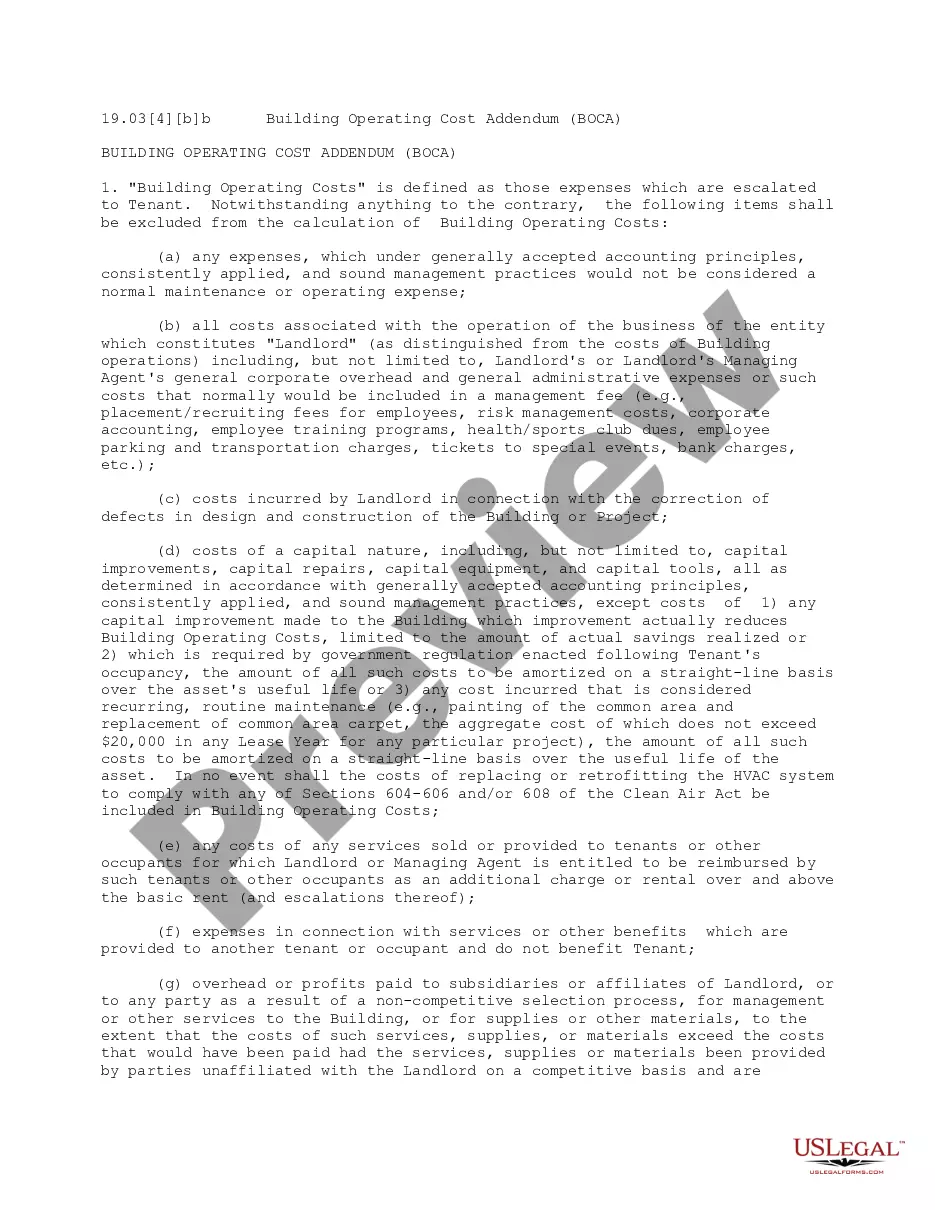
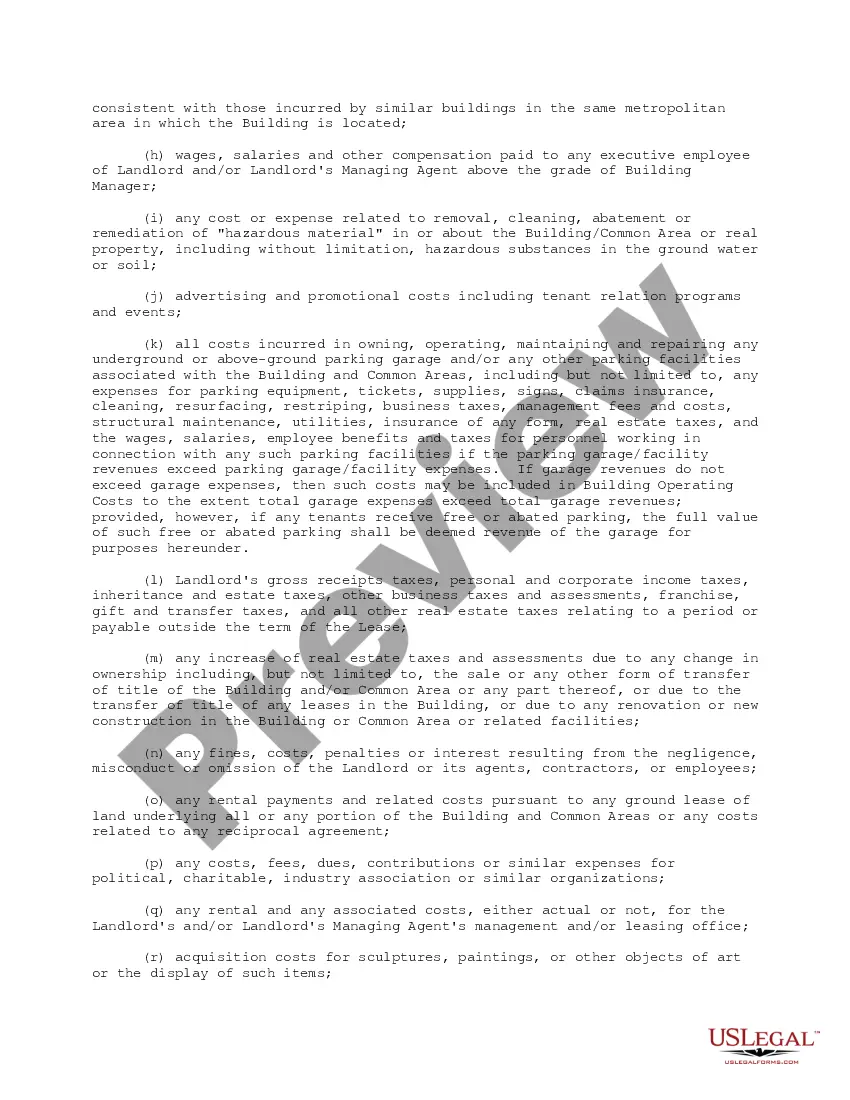
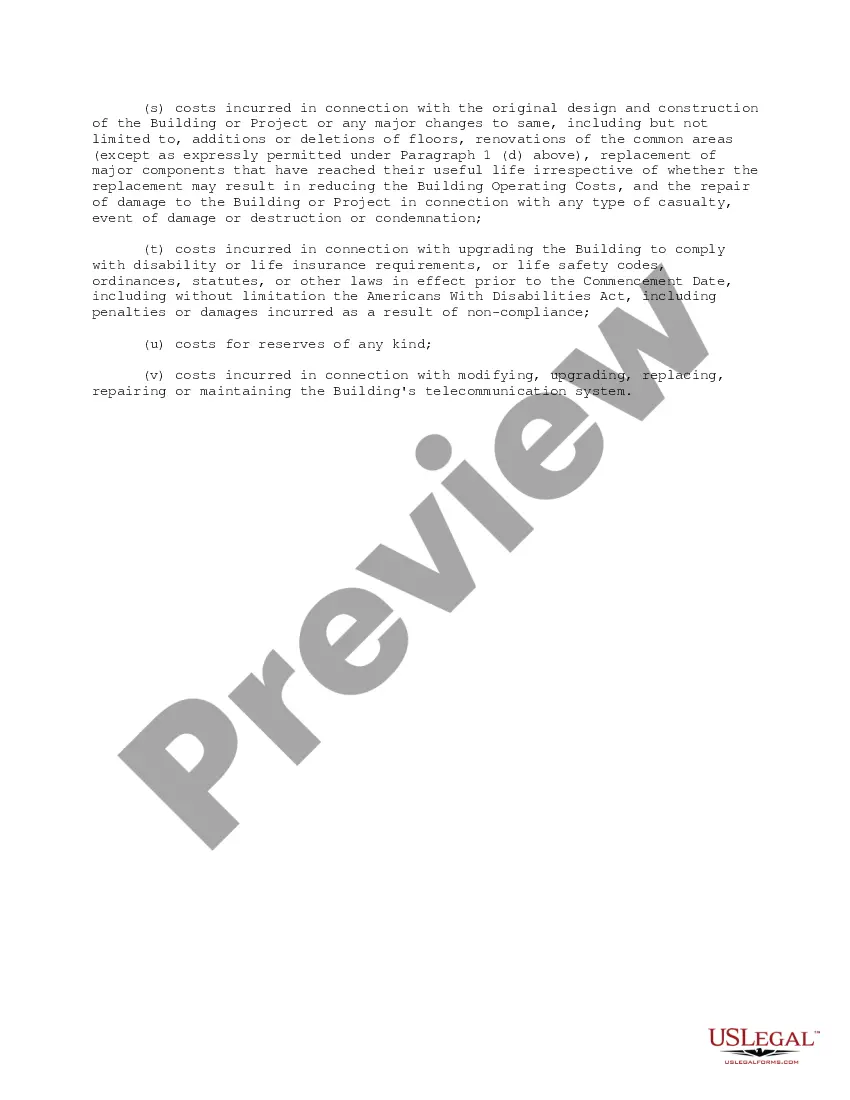
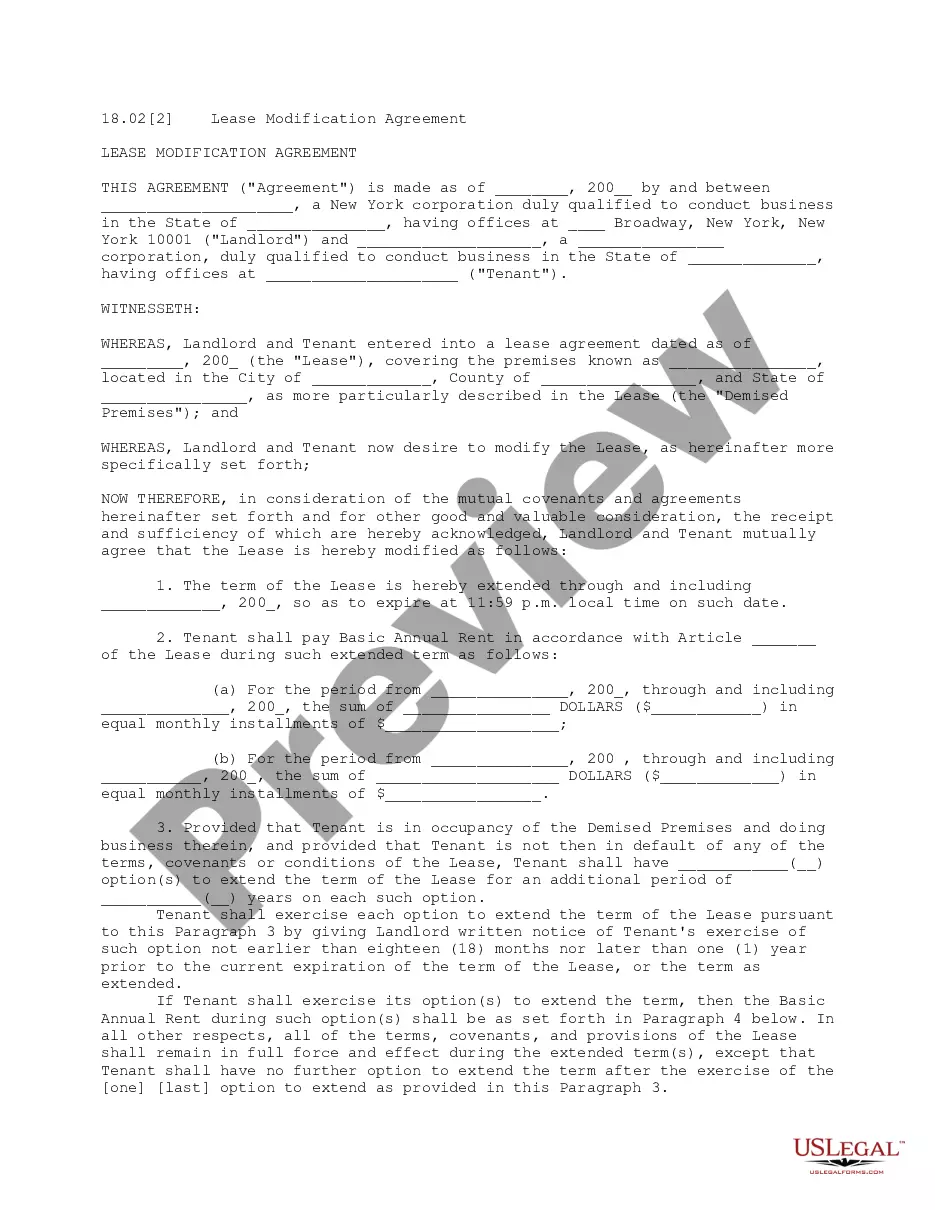
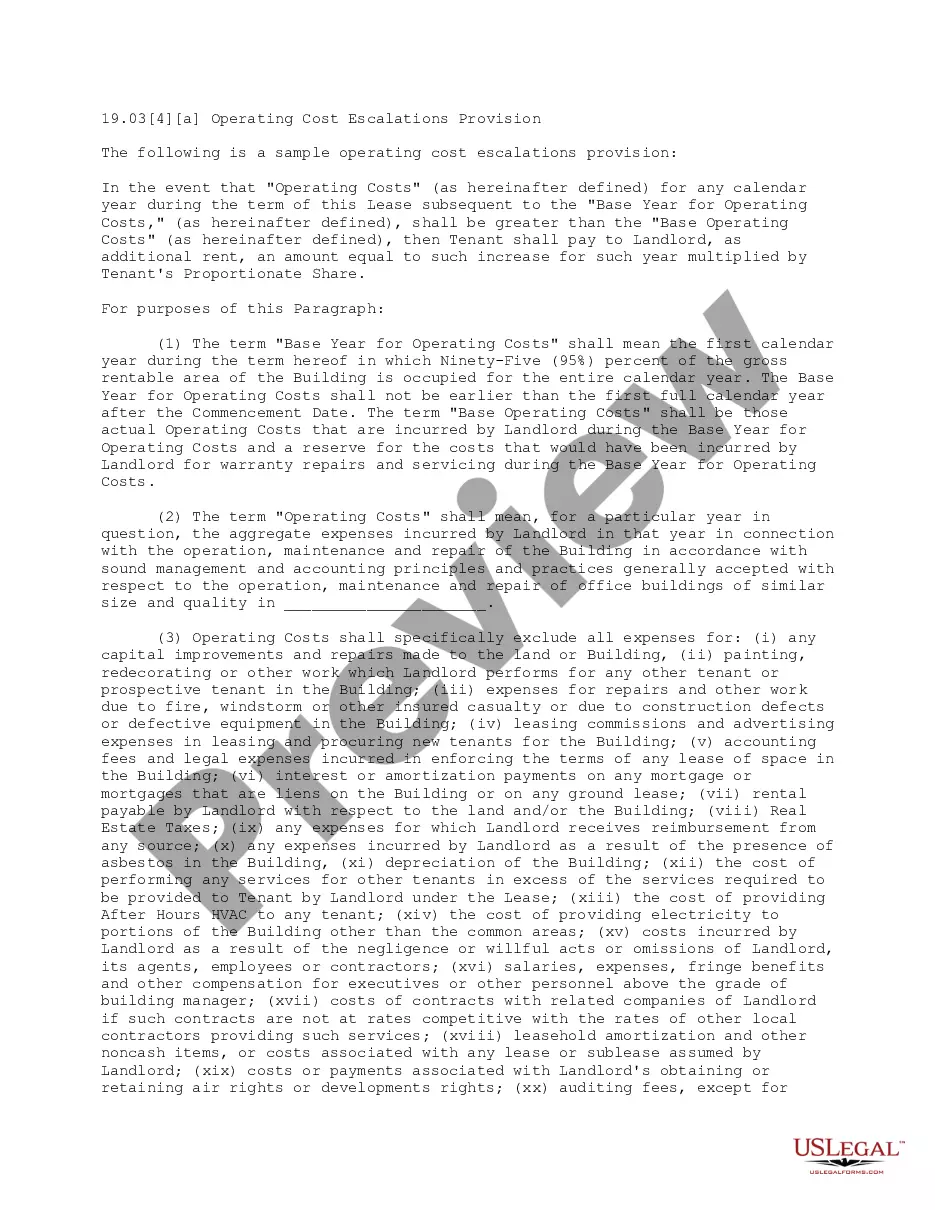
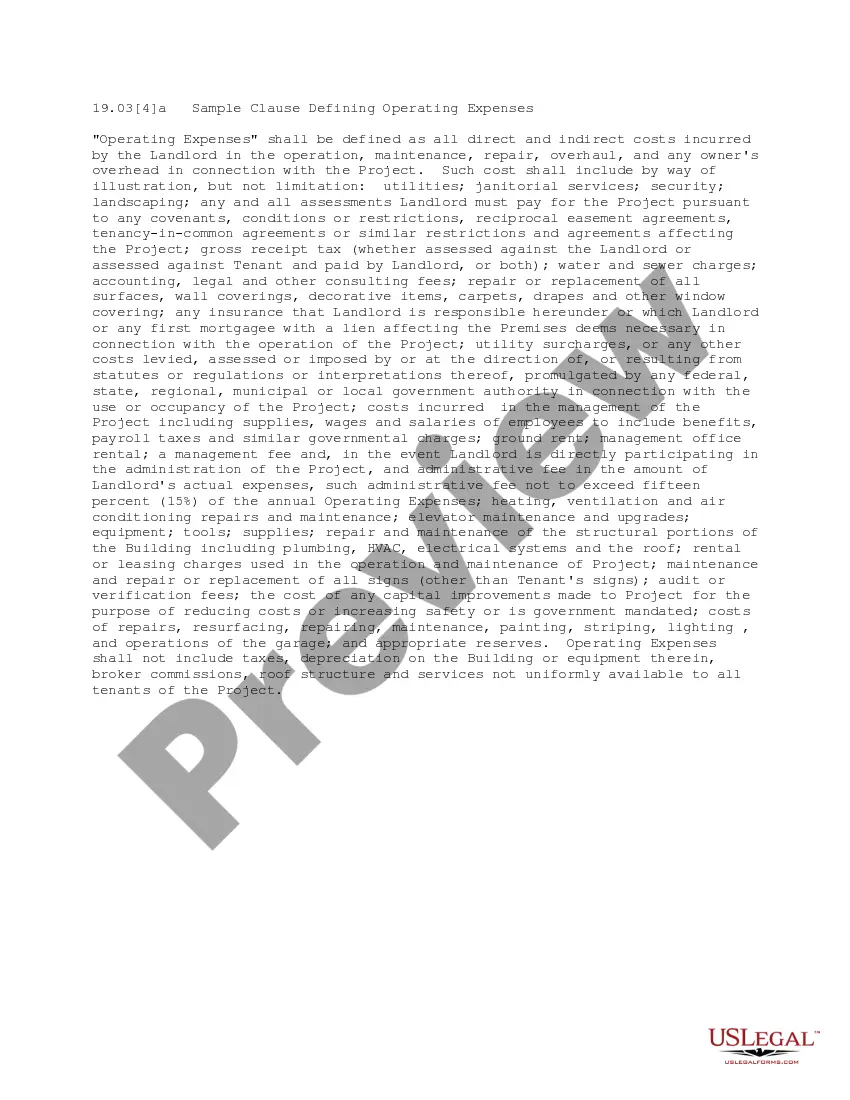
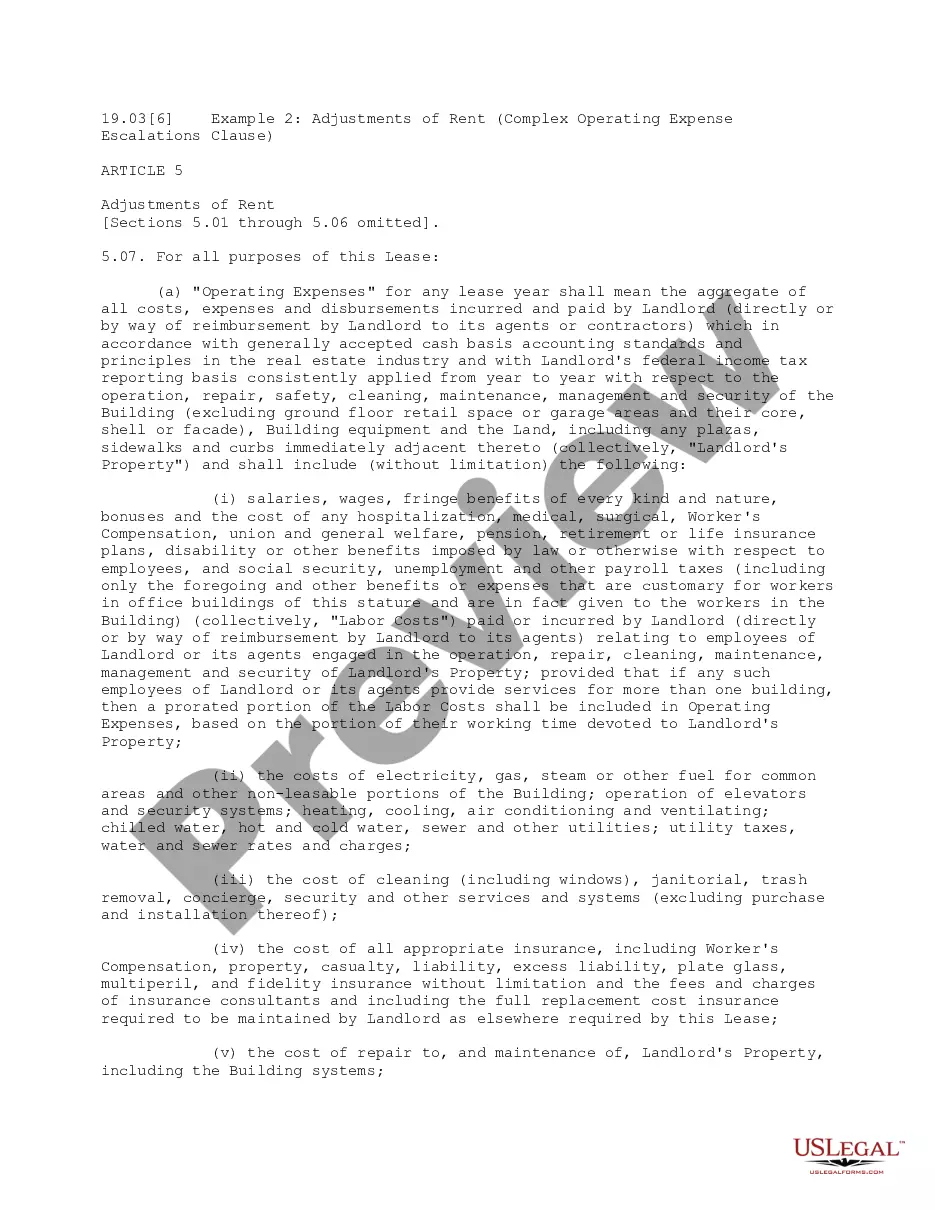
The Building Operating Cost Addendum is a legal document that supplements an office lease by detailing the building operating expenses that will be passed on to the tenant. This addendum specifies various costs that are excluded from the calculation of these operating expenses, ensuring transparency and clarity between landlords and tenants. Unlike standard lease agreements, this form focuses specifically on the nuances of operating costs, making it essential for landlords and tenants to understand their financial responsibilities.
Key parts of this document
- Definition of building operating costs and exclusions.
- Clarification of expenses not considered normal maintenance.
- Detailed list of items excluded from building operating costs.
- Guidelines for capital expenses and government-mandated improvements.
- Provisions regarding services sold to other tenants.
Common use cases
This form should be used when entering into an office lease agreement that includes provisions for operating costs to be passed to the tenant. It is essential for landlords wishing to clearly outline which expenses are covered and which are excluded. Additionally, tenants can utilize this addendum to fully understand their financial obligations regarding building operating expenses, ensuring they are not surprised by additional charges.
Who can use this document
- Landlords who own commercial properties and want to define operating expenses.
- Tenants entering office lease agreements who wish to understand their cost responsibilities.
- Property managers overseeing commercial properties that require clarity in lease agreements.
Steps to complete this form
- Identify the parties involved: Include the landlord's and tenant's names and addresses.
- Specify the property: Clearly indicate the address and details of the leased building.
- List the excluded expenses: Ensure all expenses that are not to be included in operating costs are detailed as per the clauses.
- Review for completeness: Check that all relevant sections are filled accurately to avoid misunderstandings.
- Sign and date the document: Both parties should sign to acknowledge their agreement to the terms outlined in the addendum.
Notarization requirements for this form
This form does not typically require notarization unless specified by local law. However, if there are specific requirements based on the lease agreement or jurisdiction, please consult a local attorney or legal expert to confirm.
Get your form ready online
Our built-in tools help you complete, sign, share, and store your documents in one place.
Make edits, fill in missing information, and update formatting in US Legal Forms—just like you would in MS Word.
Download a copy, print it, send it by email, or mail it via USPS—whatever works best for your next step.
Sign and collect signatures with our SignNow integration. Send to multiple recipients, set reminders, and more. Go Premium to unlock E-Sign.
If this form requires notarization, complete it online through a secure video call—no need to meet a notary in person or wait for an appointment.
We protect your documents and personal data by following strict security and privacy standards.

Make edits, fill in missing information, and update formatting in US Legal Forms—just like you would in MS Word.

Download a copy, print it, send it by email, or mail it via USPS—whatever works best for your next step.

Sign and collect signatures with our SignNow integration. Send to multiple recipients, set reminders, and more. Go Premium to unlock E-Sign.

If this form requires notarization, complete it online through a secure video call—no need to meet a notary in person or wait for an appointment.

We protect your documents and personal data by following strict security and privacy standards.
Mistakes to watch out for
- Failing to clearly define all excluded expenses, leading to potential disputes later.
- Not reviewing the form for jurisdiction-specific requirements.
- Allowing the addendum to be unsigned or improperly dated, which can affect its validity.
Why use this form online
- Immediate access to a professionally drafted document tailored for ease of use.
- Edit and customize the form to fit specific lease agreements effortlessly.
- Secure and reliable option to ensure all parts of the agreement are properly covered.
- This form provides a clear framework for expenses, helping to reduce misunderstandings.
- It serves as documentation that can be referenced in case of disputes over operating costs.
- Exclusions listed in the addendum can protect tenants from unexpected costs.
What to keep in mind
- The Building Operating Cost Addendum defines which expenses are excluded for tenants.
- Clear documentation of costs helps both landlords and tenants manage expectations.
- Be aware of state-specific rules that may affect the terms outlined in the addendum.
Looking for another form?
Form popularity
FAQ
When to Use an AddendumAddenda are modifications added to an existing agreement to add or change a few of its terms and conditions. It does not replace the original contract.
Don't leave it out include it at the end of your Word document as an addendum. Adding an addendum in Microsoft Word follows almost the same process you're already taking to create your Word documents.
An addendum to a real estate contract or purchase agreement is a document attached to and made a part of the original contract at the time it is prepared. It can be explanatory, informational, or indicate other requirements that aren't clearly spelled out in the contract.
The function of an addendum is to modify, clarify, or nullify a portion of the original document, which could be as simple as extending the dates for which the contract is valid or as complex as redefining the payment schedules and deliverables.
An amendment is typically used to change something that's part of an original contract.An addendum is used to clarify and add things that were not initially part of the original contract or agreement.
Writing a Contract Addendum Name the parties to the contract. Indicate the addendum's effective date, using the same date format used in the original contract. Indicate the elements of the original contract that the addendum intends to change. Concisely but clearly describe the desired changes.
An addendum is an attachment to a contract that modifies the terms and conditions of the original contract. Addendums are used to efficiently update the terms or conditions of many types of contracts.
An example of an addendum being used would be if the parties wanted to add something to the original document. For instance, an individual who is purchasing a house may not want to purchase all of the furniture that is being left behind. However, after thinking about it further, he changes his mind.