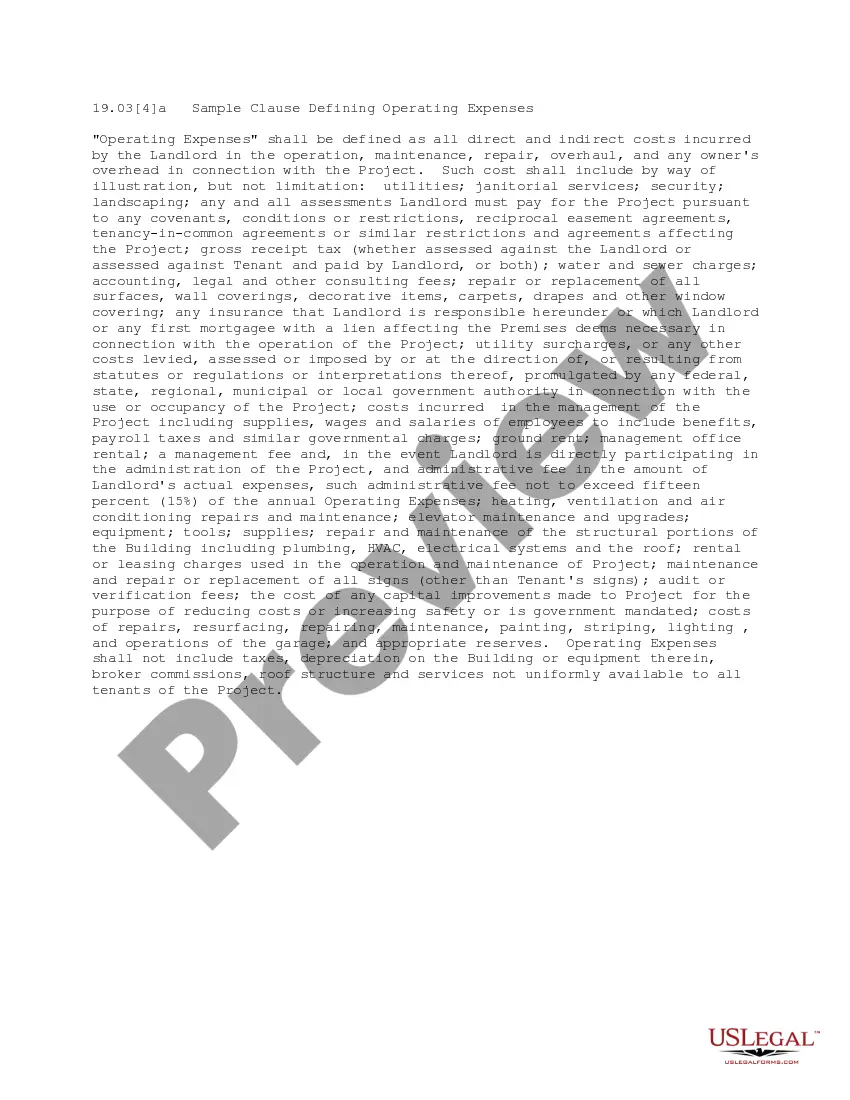
Clause Defining Operating Expenses
Understanding this form
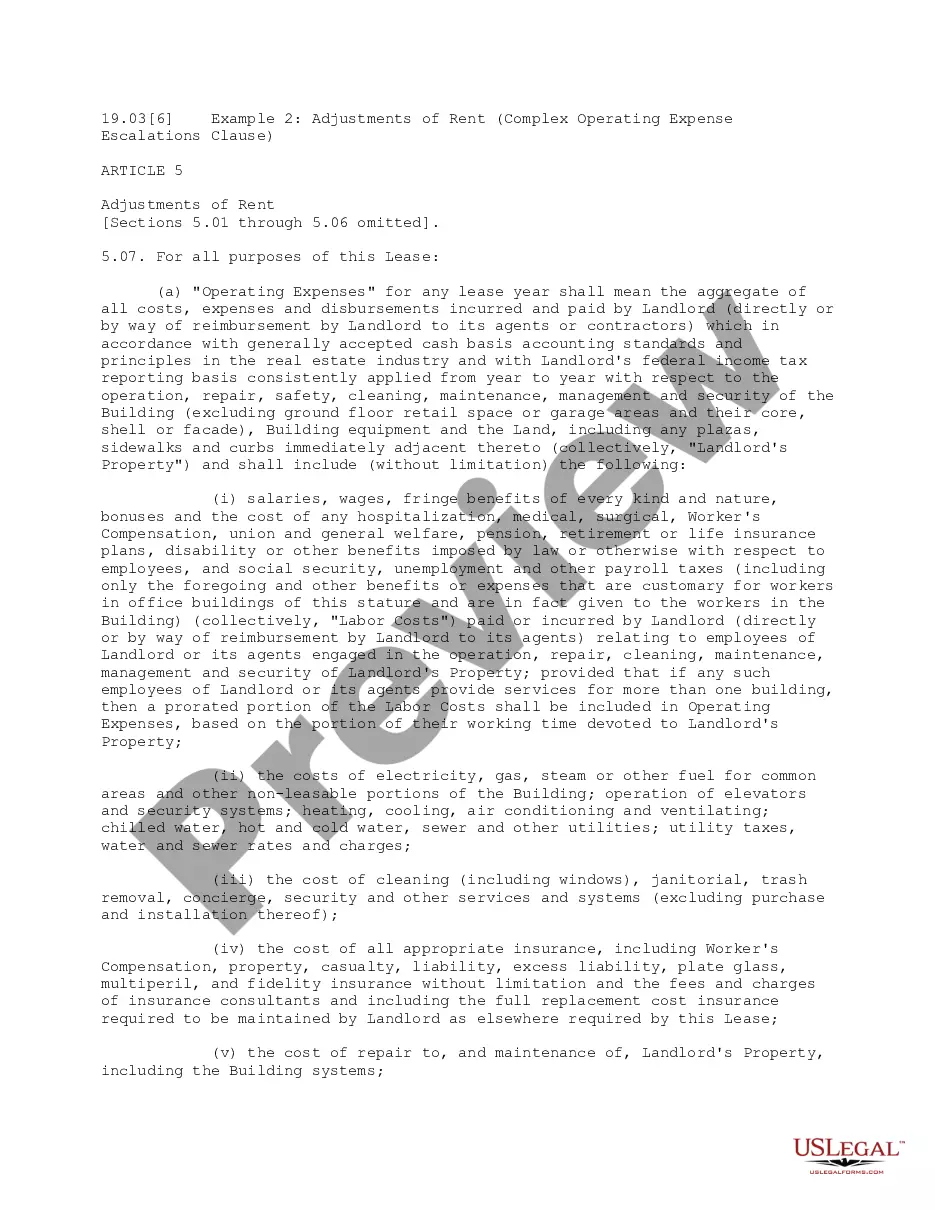
The Clause Defining Operating Expenses is a crucial component of an office lease agreement. It outlines all direct and indirect costs that landlords incur while managing a property. This form helps both landlords and tenants understand what expenses are included in the lease, differentiating it from other lease forms that may not specify operating costs. By clearly defining these expenses, this clause protects both parties and ensures transparency in financial responsibilities.
Key parts of this document
- Definition of operating expenses, including direct and indirect costs.
- Examples of operating expenses such as utilities, janitorial services, and landscaping.
- Exclusions from operating expenses, like broker commissions and depreciation.
- Requirements for the landlord regarding assessments and necessary repairs.
- Limitations on administrative fees associated with managing the property.
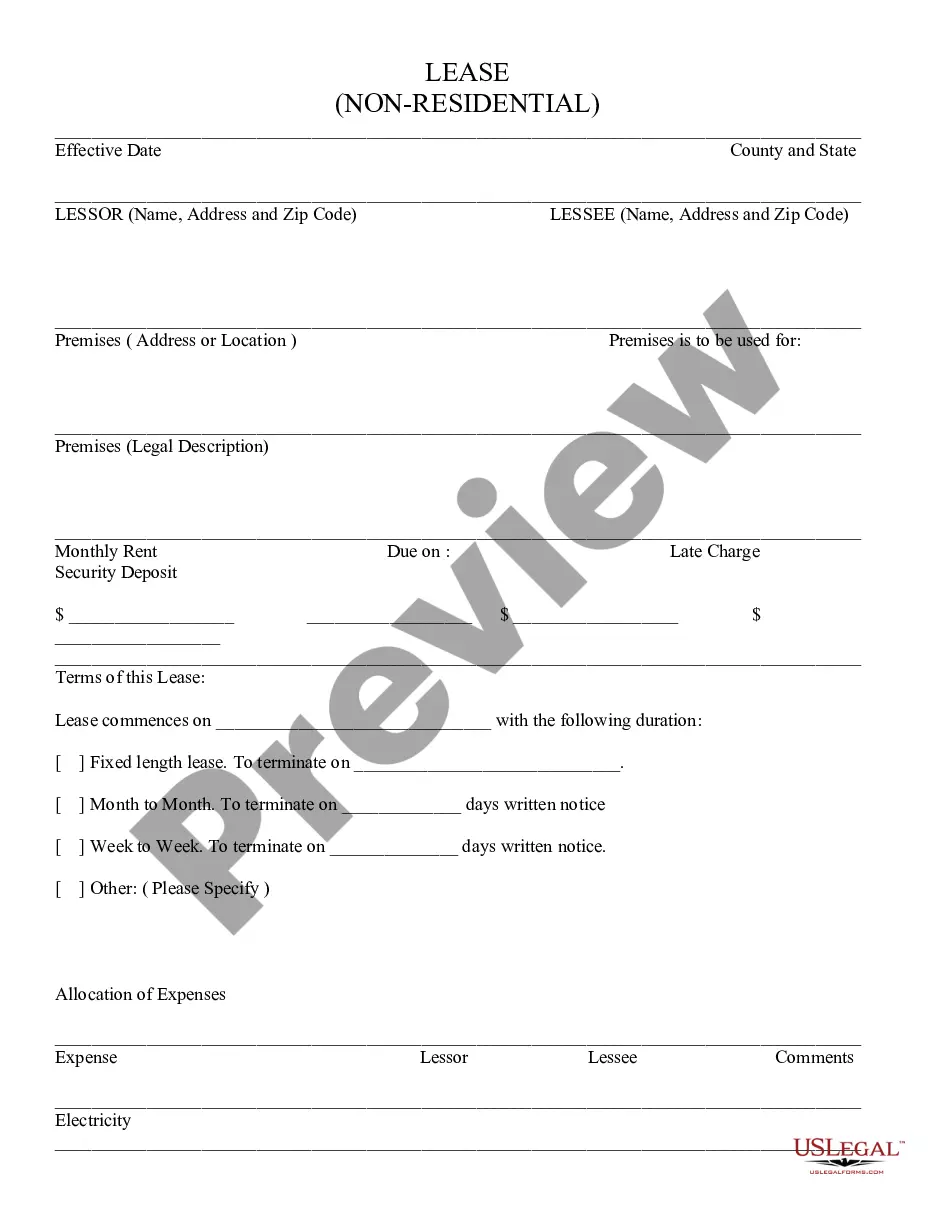
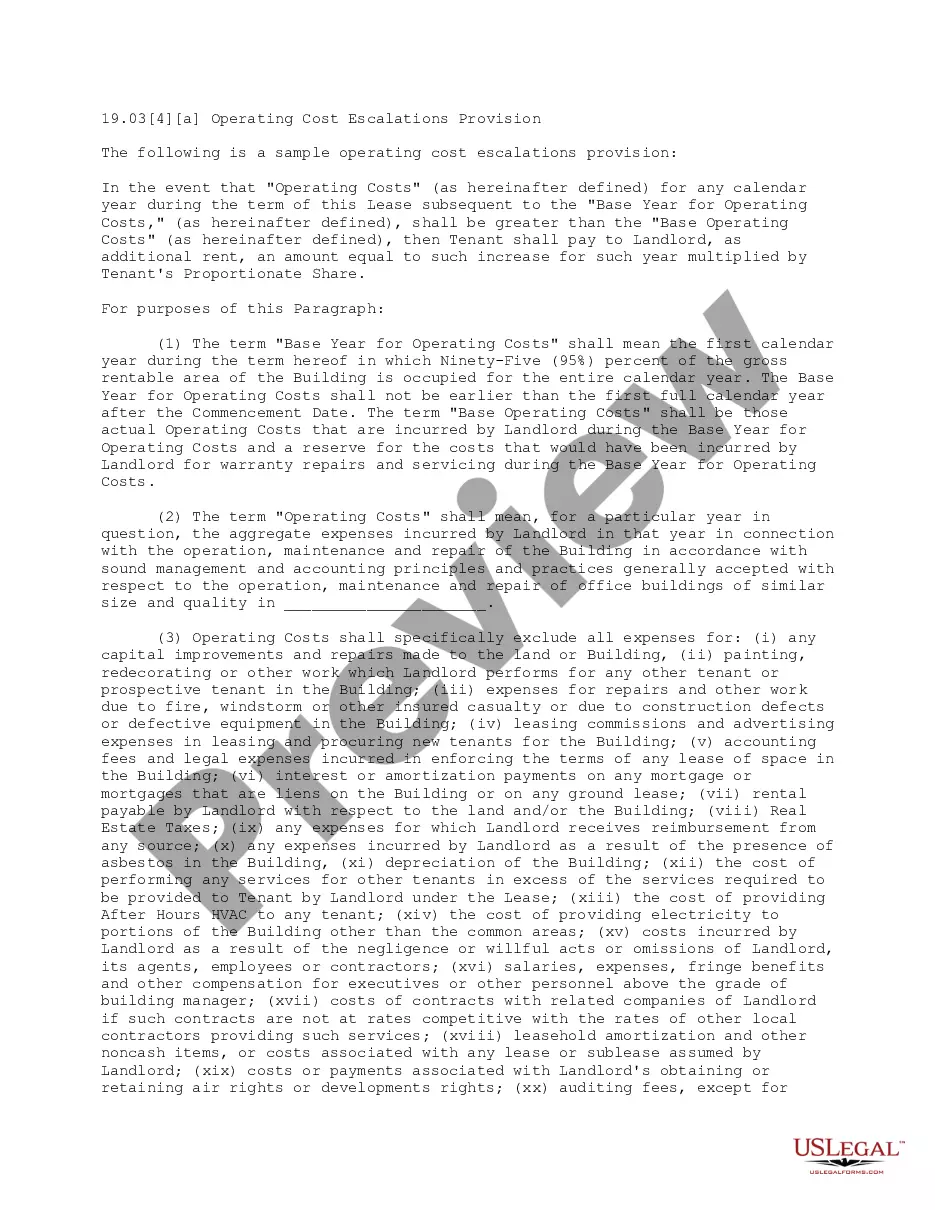
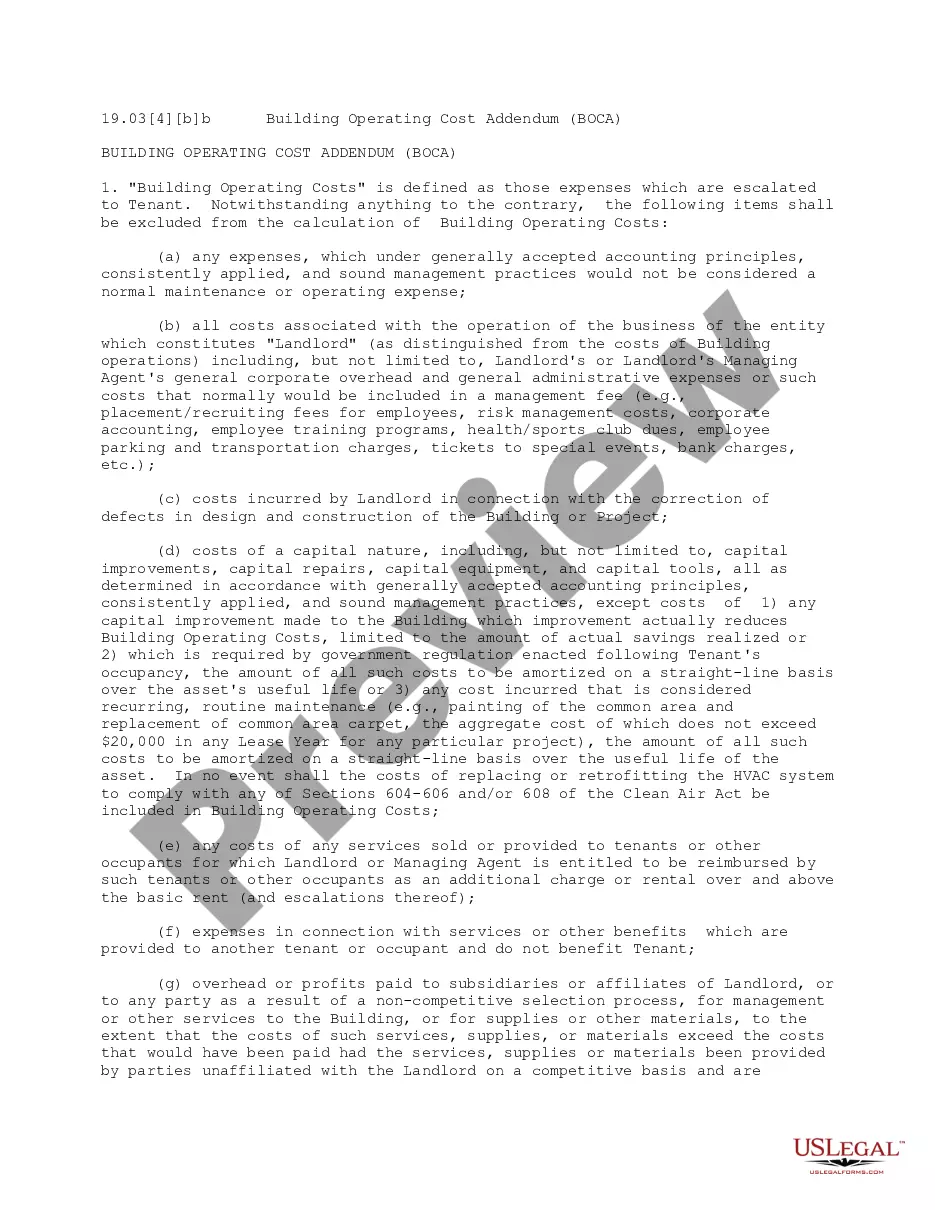

When to use this document
This form is used when drafting or reviewing an office lease agreement. It's particularly important in commercial leasing scenarios where clear definitions of costs are vital. It can be utilized during lease negotiations or as part of lease renewals to clarify operating costs. This ensures both landlords and tenants are aware of their financial obligations throughout the tenancy.
Who this form is for
This form is intended for:
- Landlords looking to clearly outline operating costs in lease agreements.
- Tenants wanting to understand their potential financial obligations under a lease.
- Real estate professionals involved in commercial property leasing or management.
- Attorneys preparing or reviewing commercial leases.
Steps to complete this form
- Identify the parties involved, including the landlord and tenant.
- Specify the property address and description.
- Detail the definition of operating expenses per the provided clause.
- List specific examples of what constitutes operating expenses.
- Include any exclusions from operating expenses as necessary.
- Have both parties review and sign the document to confirm agreement.
Does this document require notarization?
Notarization is generally not required for this form. However, certain states or situations might demand it. You can complete notarization online through US Legal Forms, powered by Notarize, using a verified video call available anytime.
Get your form ready online
Our built-in tools help you complete, sign, share, and store your documents in one place.
Make edits, fill in missing information, and update formatting in US Legal Forms—just like you would in MS Word.
Download a copy, print it, send it by email, or mail it via USPS—whatever works best for your next step.
Sign and collect signatures with our SignNow integration. Send to multiple recipients, set reminders, and more. Go Premium to unlock E-Sign.
If this form requires notarization, complete it online through a secure video call—no need to meet a notary in person or wait for an appointment.
We protect your documents and personal data by following strict security and privacy standards.

Make edits, fill in missing information, and update formatting in US Legal Forms—just like you would in MS Word.

Download a copy, print it, send it by email, or mail it via USPS—whatever works best for your next step.

Sign and collect signatures with our SignNow integration. Send to multiple recipients, set reminders, and more. Go Premium to unlock E-Sign.

If this form requires notarization, complete it online through a secure video call—no need to meet a notary in person or wait for an appointment.

We protect your documents and personal data by following strict security and privacy standards.
Mistakes to watch out for
- Failing to clearly define all operating expenses can lead to disputes.
- Leaving out exclusions that might impact the total cost for tenants.
- Not updating the clause to reflect changes in property management practices.
- Neglecting to have both parties sign the document, leading to unenforceability.
Benefits of using this form online
- Convenient access to form templates that can be downloaded and customized.
- Editability allows for adjustments based on individual lease terms and conditions.
- Reliable documents drafted with legal expertise ensure compliance and accuracy.
- Instant availability improves efficiency in lease negotiations and documentation.
Legal use & context
- This clause helps mitigate misunderstandings between landlords and tenants regarding financial responsibilities.
- Enforceable under most leasing laws, provided it is clearly understood by all parties.
- Can assist in legal proceedings should disputes arise over operating costs.
Looking for another form?




Form popularity
FAQ
The primary types of operating expenses include payments that are related to compensation, sales and marketing, office supplies and non-facility fees.
Operating Expense = $1.20 million + $2.00 million + $1.00 million + $0.75 million + $0.50 million + $0.30 million. Operating Expense = $5.75 million.
Non-operating expense, like its name implies, is an accounting term used to describe expenses that occur outside of a company's day-to-day activities. These types of expenses include monthly charges like interest payments on debt but can also include one-off or unusual costs.
Rent and utilities. Wages and salaries. Accounting and legal fees. Overhead costs such as selling, general, and administrative expenses (SG&A) Property taxes. Business travel. Interest paid on debt.
Also known as pre-operative expenses, preliminary expenses are shown on the asset side of a balance sheet. The portion which is written off from the gross profit in the current year is shown on the income statement and the remaining balance is placed in the balance sheet.
Also known as pre-operative expenses, preliminary expenses are shown on the asset side of a balance sheet. The portion which is written off from the gross profit in the current year is shown on the income statement and the remaining balance is placed in the balance sheet.
An operating expense is an expense a business incurs through its normal business operations. Often abbreviated as OPEX, operating expenses include rent, equipment, inventory costs, marketing, payroll, insurance, step costs, and funds allocated for research and development.
Operating Expense = $1.20 million + $2.00 million + $1.00 million + $0.75 million + $0.50 million + $0.30 million. Operating Expense = $5.75 million.