Conflicts Between Printed Form and Added Terms
Understanding this form
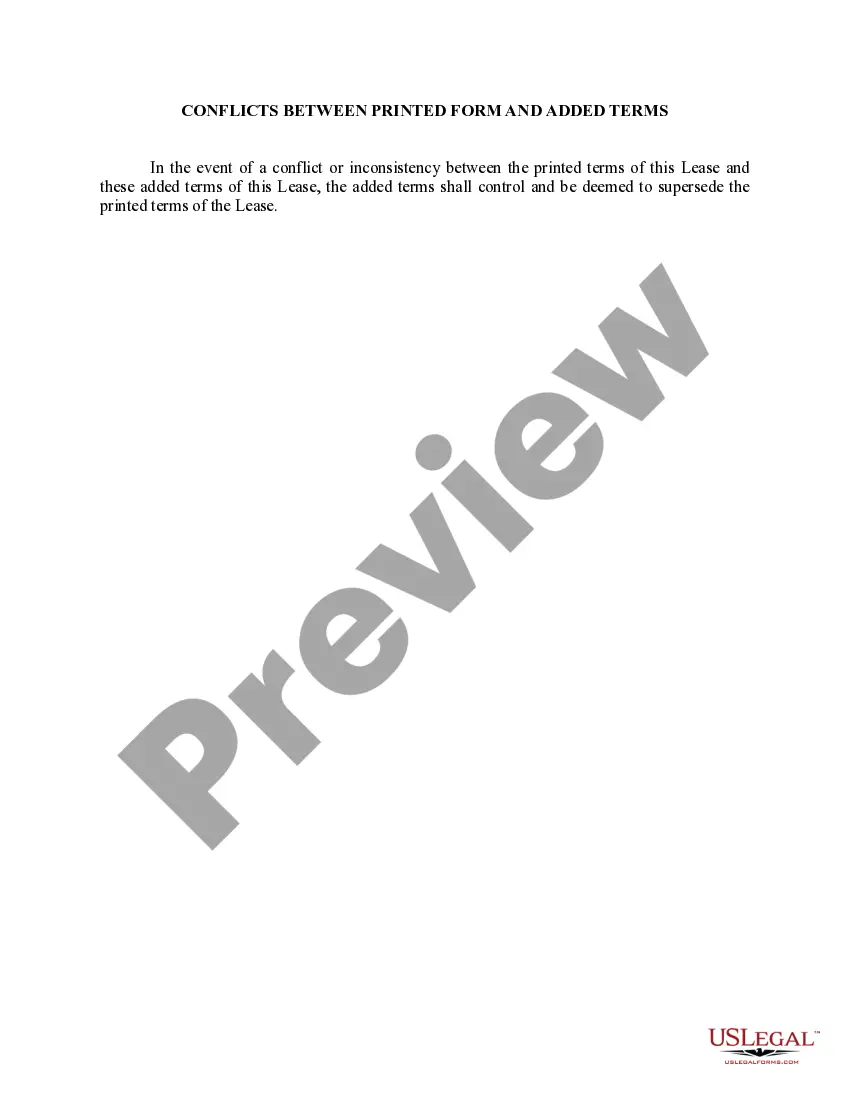
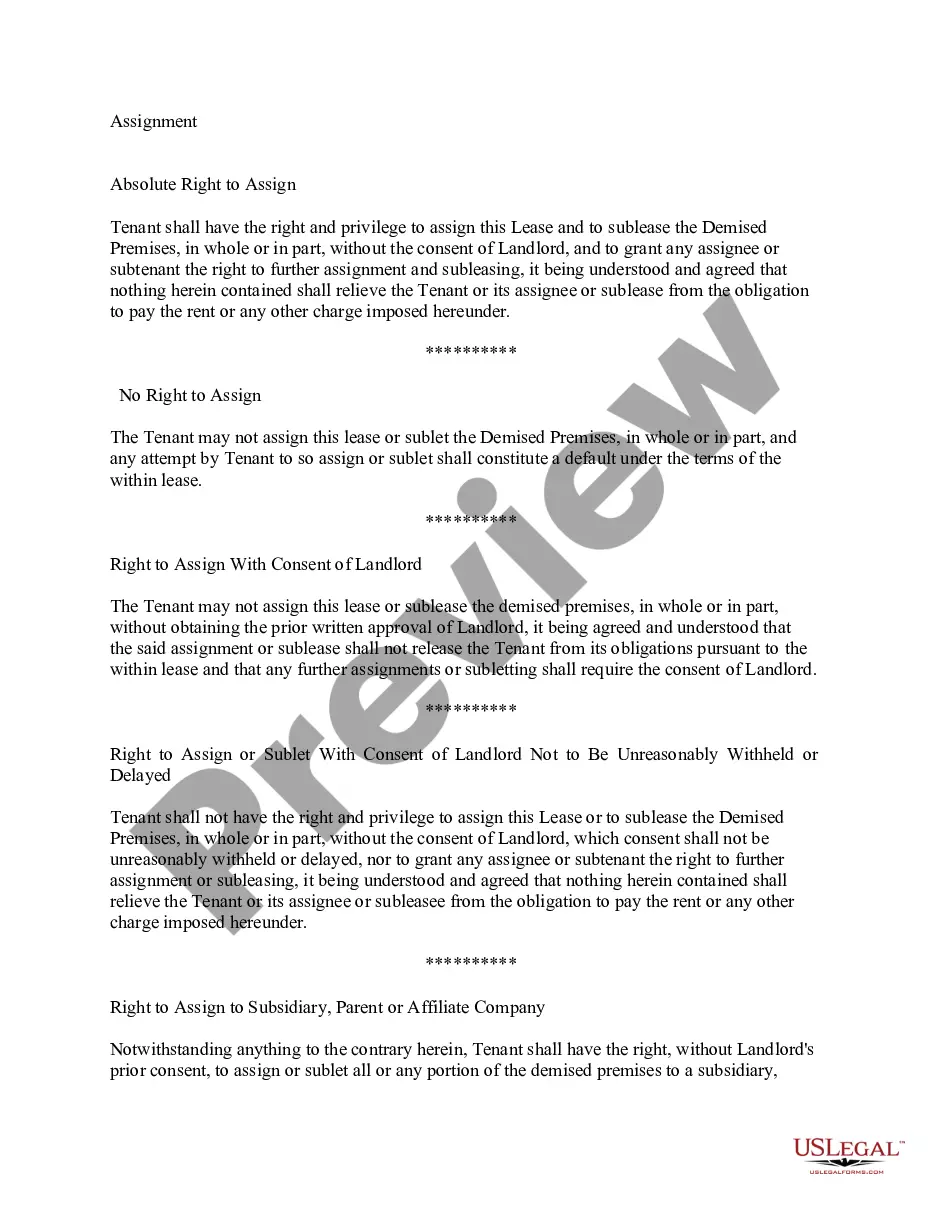
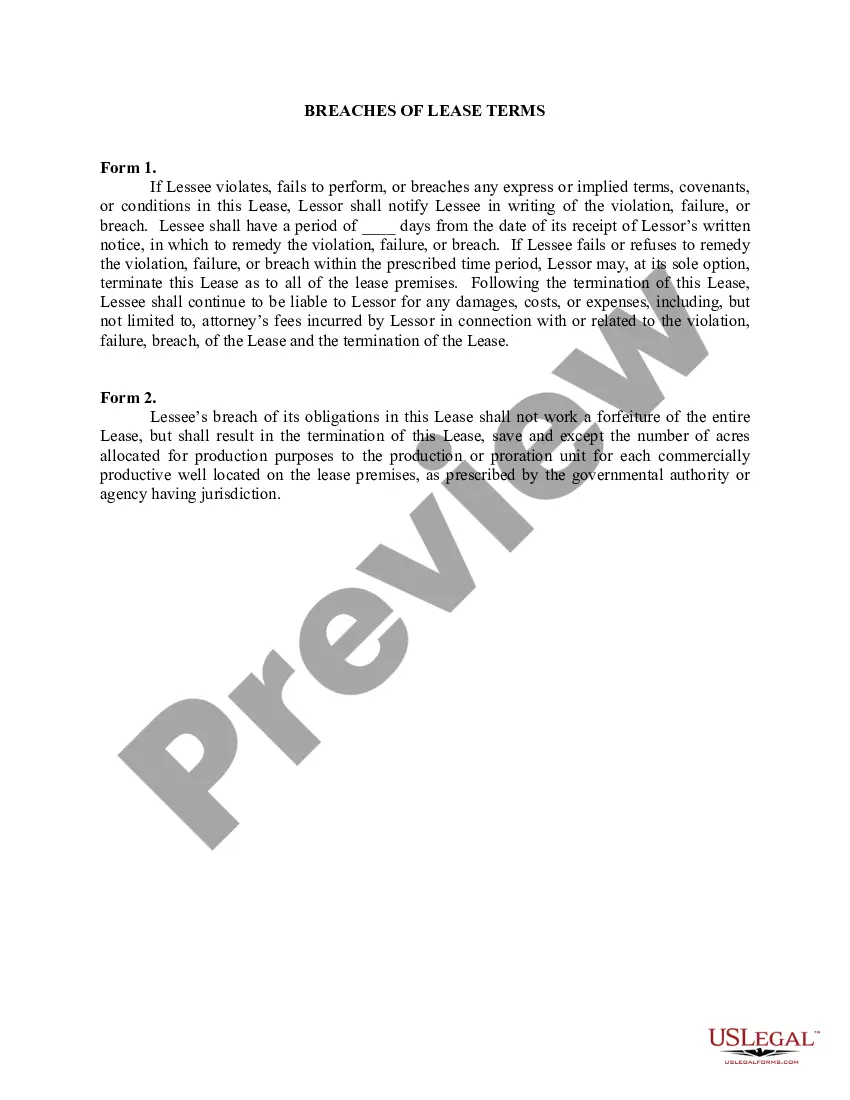
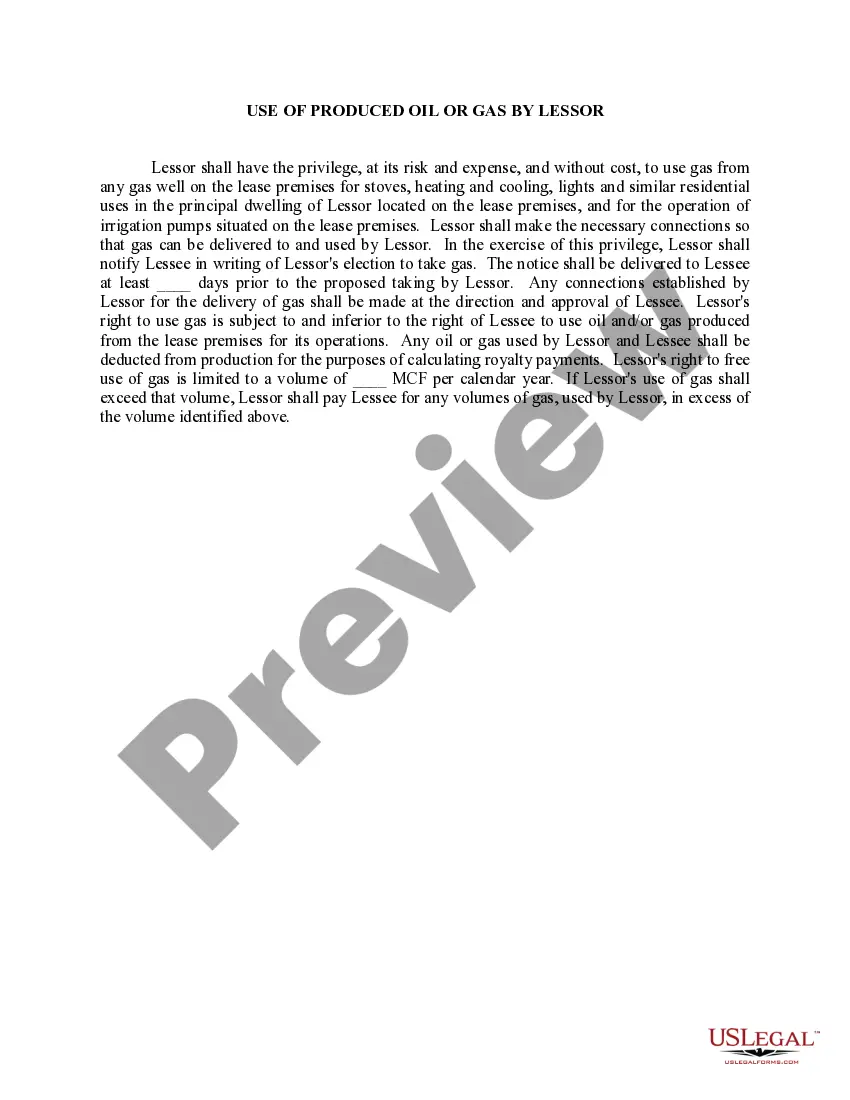
The Conflicts Between Printed Form and Added Terms form is a lease rider that clarifies which terms govern a lease agreement when there is a discrepancy between the standard printed terms and any additional terms negotiated by the parties. This form is essential for ensuring that the specific agreements made by the parties take precedence over the standard language, thereby providing clarity and reducing conflicts in lease transactions.
Key components of this form
- Conflict resolution clause: Specifies that added terms will take priority over printed terms.
- Identification of added terms: Space to clearly outline any additional agreements made between the parties.
Situations where this form applies
This form should be used during lease negotiations when the parties wish to include specific terms that modify or contradict the standard lease provisions. It is particularly useful in commercial leases, residential leases, or any situation where unique terms are necessary to reflect the agreement between the landlord and tenant.
Who should use this form
This form is intended for:
- Landlords seeking to clarify lease agreements with tenants.
- Tenants who wish to ensure their negotiated terms are respected in the lease.
- Real estate professionals managing lease transactions on behalf of clients.
Completing this form step by step
- Identify the parties involved in the lease agreement.
- Clearly state the specific additional terms that need to supersede the printed lease terms.
- Ensure all parties agree and initial next to each added term for acknowledgment.
- Review the completed document for accuracy before signing.
- Distribute copies of the signed form to all parties involved.
Does this document require notarization?
This form does not typically require notarization to be legally valid. However, some jurisdictions or document types may still require it. US Legal Forms provides secure online notarization powered by Notarize, available 24/7 for added convenience.
Get your form ready online
Our built-in tools help you complete, sign, share, and store your documents in one place.
Make edits, fill in missing information, and update formatting in US Legal Forms—just like you would in MS Word.
Download a copy, print it, send it by email, or mail it via USPS—whatever works best for your next step.
Sign and collect signatures with our SignNow integration. Send to multiple recipients, set reminders, and more. Go Premium to unlock E-Sign.
If this form requires notarization, complete it online through a secure video call—no need to meet a notary in person or wait for an appointment.
We protect your documents and personal data by following strict security and privacy standards.

Make edits, fill in missing information, and update formatting in US Legal Forms—just like you would in MS Word.

Download a copy, print it, send it by email, or mail it via USPS—whatever works best for your next step.

Sign and collect signatures with our SignNow integration. Send to multiple recipients, set reminders, and more. Go Premium to unlock E-Sign.

If this form requires notarization, complete it online through a secure video call—no need to meet a notary in person or wait for an appointment.

We protect your documents and personal data by following strict security and privacy standards.
Common mistakes
- Failing to initial the added terms, which can lead to confusion.
- Overlooking the necessity to clearly define the additional terms.
- Not ensuring all parties have a copy of the completed form.
Benefits of completing this form online
- Convenience of instant access and downloadable format.
- Editability, allowing users to tailor terms to their specific needs.
- Reliability as the form is drafted by licensed attorneys to meet legal standards.
Legal use & context
- Ensures that specific agreements made between landlords and tenants are legally recognized.
- Provides a clear framework for resolving disputes arising from lease term conflicts.
- Helps protect both parties by establishing agreed-upon terms in writing.
Quick recap
- This form is essential for resolving conflicts between printed lease terms and additional negotiated terms.
- All parties should ensure clarity and mutual agreement on the added terms.
- Using this form helps to avoid future disputes regarding lease agreements.
Looking for another form?


Form popularity
FAQ
A conflict is a struggle between people which may be physical, or between conflicting ideas. The word comes from Latin conflingere Conflingere means to come together for a battle.Conflicts arise because there are needs, values or ideas that are seen to be different, and there is no means to reconcile the dispute.
In particular, three types of conflict are common in organizations: task conflict, relationship conflict, and value conflict.
(Entry 1 of 2) 1 : fight, battle, war an armed conflict. 2a : competitive or opposing action of incompatibles : antagonistic state or action (as of divergent ideas, interests, or persons) a conflict of principles.
Avoiding the Conflict. Avoiding or withdrawing from a conflict requires no courage or consideration for the other party. Giving In. Giving in or accommodating the other party requires a lot of cooperation and little courage. Standing your Ground. Compromising. Collaborating.
Person vs. Person. Also called man vs. Person vs. Nature. Person vs. Society. Person vs. Technology. Person vs. Supernatural. Person vs. Self. Person vs. Destiny (Fate/Luck/God)
(Entry 1 of 2) 1 : fight, battle, war an armed conflict. 2a : competitive or opposing action of incompatibles : antagonistic state or action (as of divergent ideas, interests, or persons) a conflict of principles.
The opposing force created, the conflict within the story generally comes in four basic types: Conflict with the self, Conflict with others, Conflict with the environment and Conflict with the supernatural.
Character vs. Self. Character vs. Character. Character vs. Nature. Character vs. Supernatural. Character vs. Technology. Character vs. Society.
In literature, conflict is the problem or struggle that the protagonist must face.Examples of Conflict: 1. In Hamlet, Hamlet has a conflict with his uncle, whom he suspects of murdering his father in order to be king. Hamlet also has some internal conflict, as he struggles with his own feelings during the play.