Breaches of Lease Terms
Understanding this form
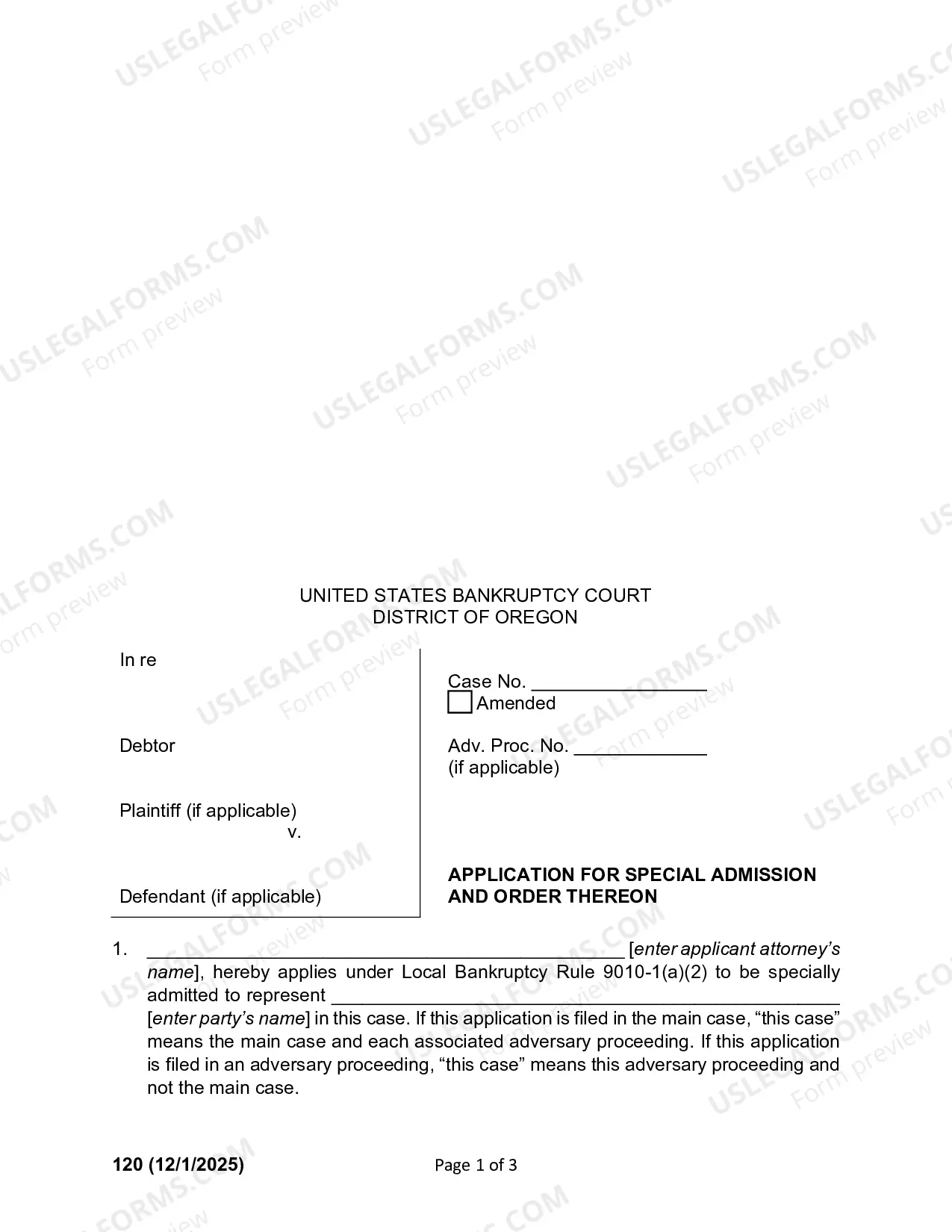
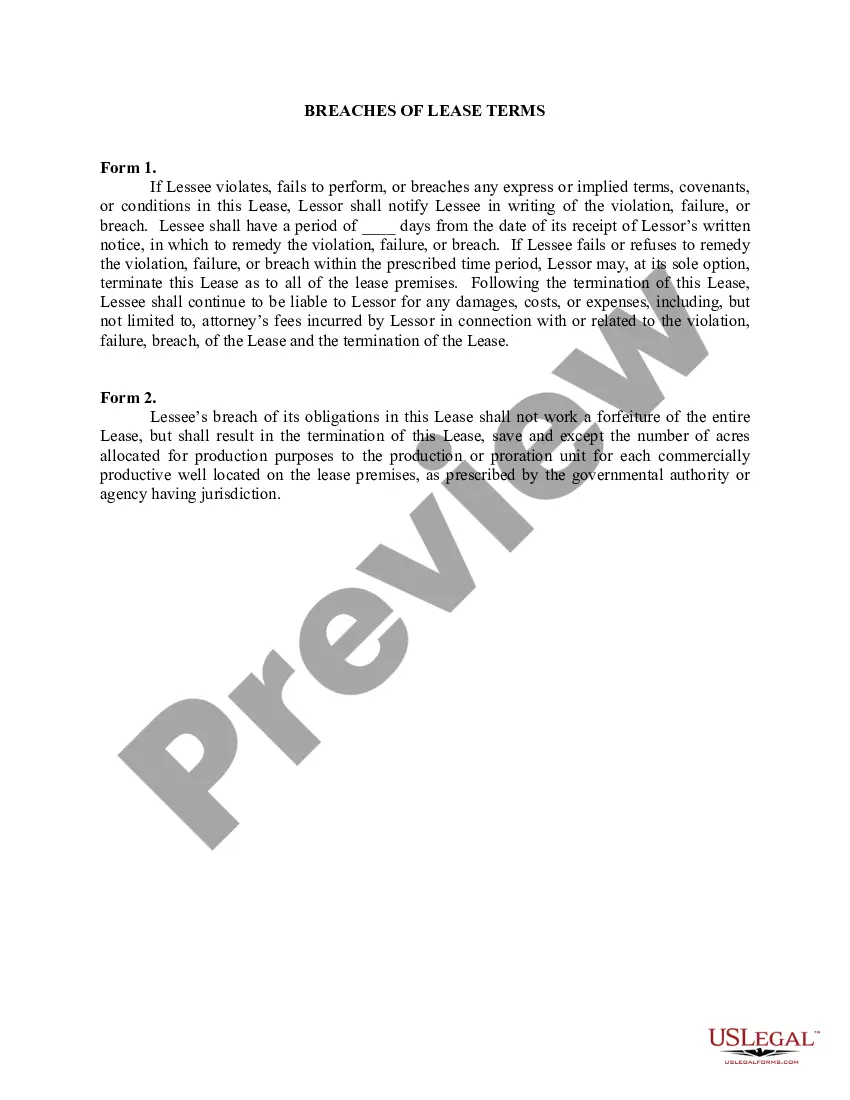
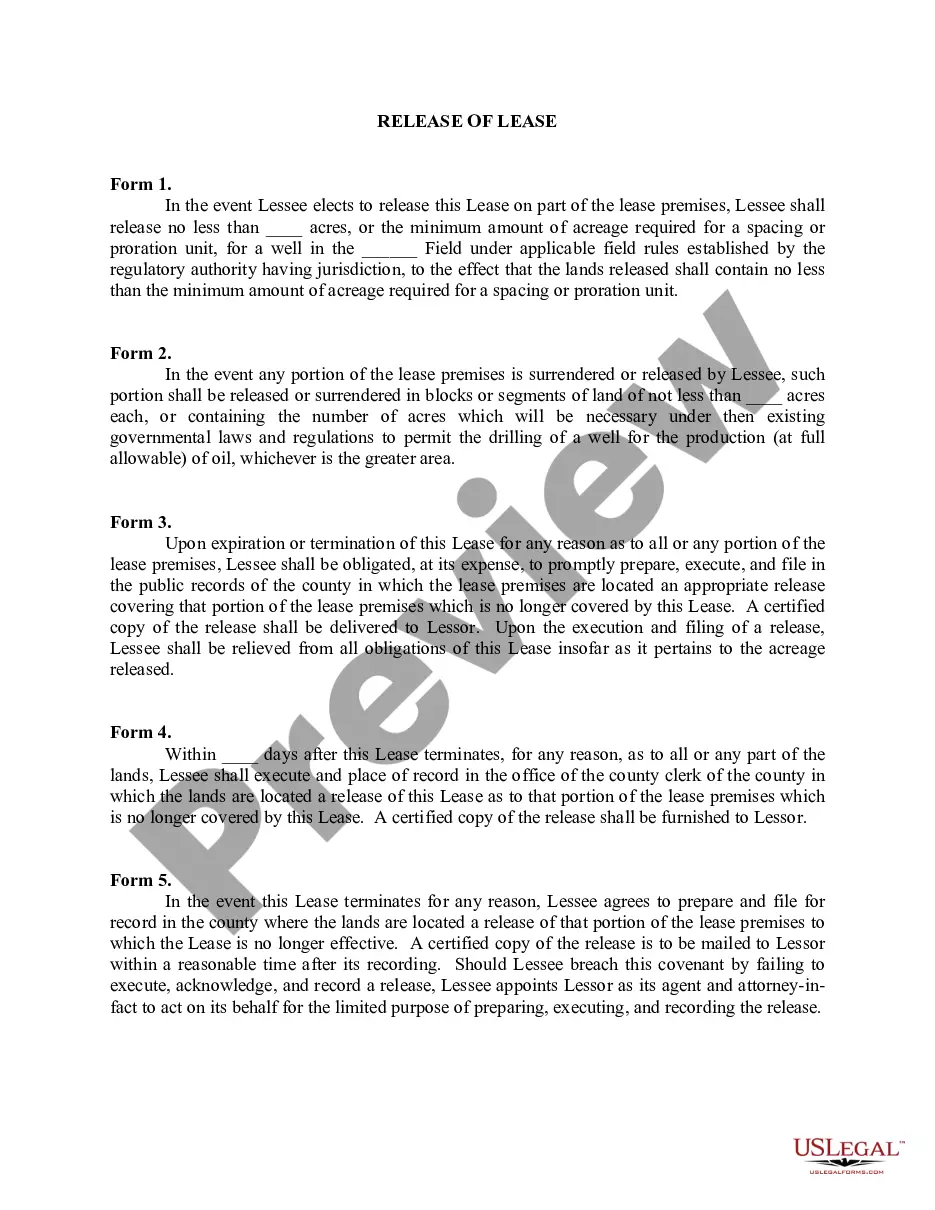
The Breaches of Lease Terms form is a legal document used to outline specific provisions related to violations of a lease agreement. This form allows lessors to address particular concerns and limitations regarding the lessee's rights beyond the standard lease. It is essential for ensuring all parties understand their obligations and the consequences of a breach, making it distinct from general lease agreements.
Main sections of this form
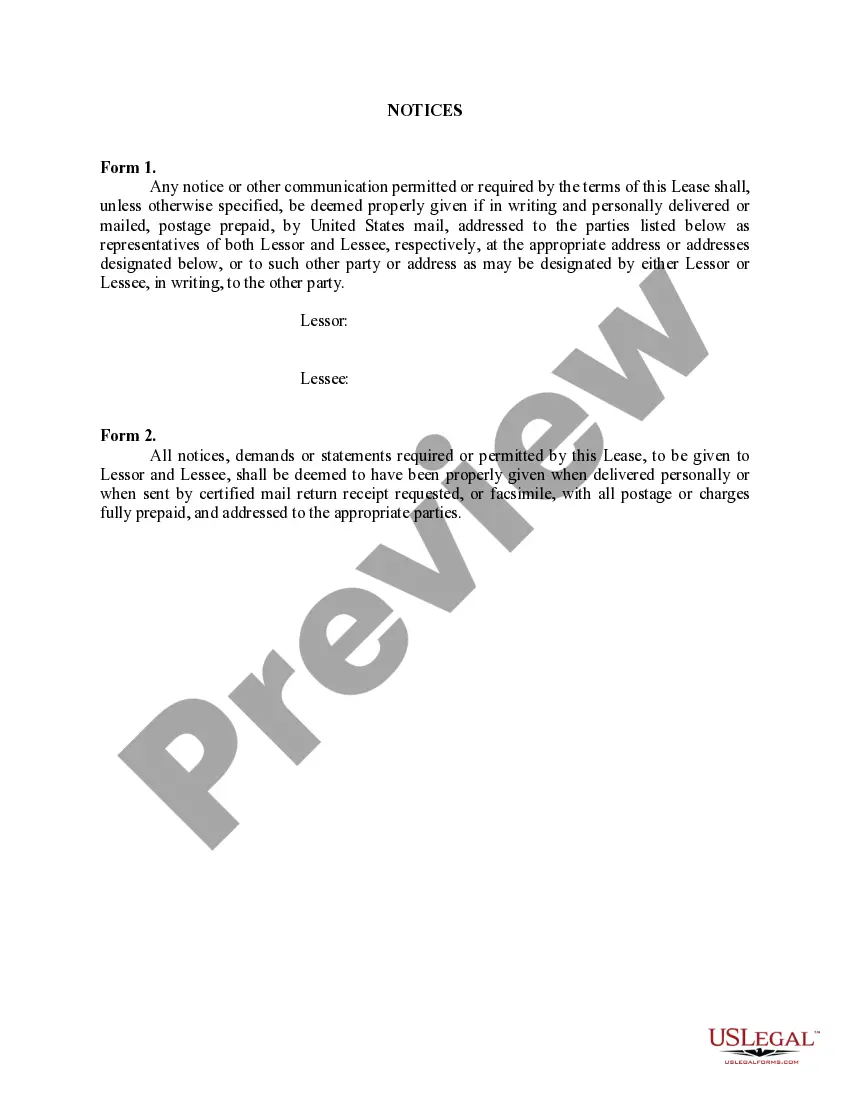
- Notification clause: Specifies how the lessor must inform the lessee of any lease violations.
- Remedy period: Defines the time frame in which the lessee must correct any breach after being notified.
- Termination conditions: Outlines the conditions under which the lease may be terminated due to a breach.
- Liability for damages: States that the lessee remains liable for any damages incurred as a result of the breach.
- Exclusions from forfeiture: Clarifies that certain aspects of the lease may remain in effect despite a breach.

When this form is needed
This form should be utilized when a lessor encounters a breach of lease terms by the lessee, such as failure to pay rent or non-compliance with lease conditions. It is particularly useful when the lessor wishes to formalize the process of notifying the lessee and outlining their rights and obligations in case of a lease violation.
Who needs this form
- Lessors who need to address specific concerns in an oil and gas lease.
- Property owners looking to enforce lease terms and protect their rights.
- Landlords who want to clarify the process of addressing breaches in lease agreements.
How to prepare this document
- Identify the parties: Clearly state the names of the lessor and lessee involved in the lease agreement.
- Specify the lease terms: Fill in details about the lease, such as the property address and specific obligations.
- Outline notification procedures: Detail how the lessee will be informed of any breaches.
- Set the remedy period: Indicate the number of days the lessee has to address the issue after receiving notice.
- Include liabilities and exclusions: Clarify any damages the lessee is responsible for in the event of a breach.
Notarization requirements for this form
This form does not typically require notarization to be legally valid. However, some jurisdictions or document types may still require it. US Legal Forms provides secure online notarization powered by Notarize, available 24/7 for added convenience.
Get your form ready online
Our built-in tools help you complete, sign, share, and store your documents in one place.
Make edits, fill in missing information, and update formatting in US Legal Forms—just like you would in MS Word.
Download a copy, print it, send it by email, or mail it via USPS—whatever works best for your next step.
Sign and collect signatures with our SignNow integration. Send to multiple recipients, set reminders, and more. Go Premium to unlock E-Sign.
If this form requires notarization, complete it online through a secure video call—no need to meet a notary in person or wait for an appointment.
We protect your documents and personal data by following strict security and privacy standards.

Make edits, fill in missing information, and update formatting in US Legal Forms—just like you would in MS Word.

Download a copy, print it, send it by email, or mail it via USPS—whatever works best for your next step.

Sign and collect signatures with our SignNow integration. Send to multiple recipients, set reminders, and more. Go Premium to unlock E-Sign.

If this form requires notarization, complete it online through a secure video call—no need to meet a notary in person or wait for an appointment.

We protect your documents and personal data by following strict security and privacy standards.
Common mistakes to avoid
- Failing to specify the exact remedies or time periods for remedying a breach.
- Not providing clear notification instructions for the lessee.
- Omitting important details related to liability for damages.
Why use this form online
- Convenience of downloading and printing from any location.
- Editable formats that allow users to customize the form as needed.
- Access to legally vetted templates drafted by licensed attorneys.
Legal use & context
This form ensures that the lease agreement remains enforceable and clarifies the obligations of both parties in case of a breach. It is critical for protecting the rights of lessors while allowing lessees an opportunity to remedy violations.
Looking for another form?


Form popularity
FAQ
The rental property address, including unit number (if applicable) The names of all tenants on the lease agreement. The date the lease violation notice was written. The specific reason for the notice. The time and date the violation occurred (if applicable)
In many cases, the lease may give the tenant the option to pay an early termination fee. If this is the case, tenants can expect to pay one to two months' rent in order to exit the lease agreement.
A lease is automatically void when it is against the law, such as a lease for an illegal purpose. In other circumstances, like fraud or duress, a lease can be declared void at the request of one party but not the other.
The date that the tenant warning letter was written. The name and the basic personal information of the tenant. The name of the landlord or the owner of the property. The reason why a tenant warning letter has been written.
Your name, and the landlord's name and address. The date you're writing the letter. Informing the landlord you're breaking your lease early. The reason why you're breaking your lease. The building and apartment you're vacating. The date by which you're vacating.
If a tenant fails to pay rent, breaks a rule, or significantly damages the property, then it is considered breach of contract and you have grounds for eviction. If there are people living in the unit that are not on the lease, then that is also breach of contract and you have grounds to evict them.
If you are found by the court to be in breach of the lease, the court could order you to pay damages, legal costs and/or ask you to put right any breach if it is possible to do so. The landlord may also seek possession of your flat which is also referred to as forfeiture.
If a resident fails to abide by the agreed-upon terms, legal action can be taken. If an eviction is the end-result of this action, it will stay listed on the resident's record for up to seven years. The most common reason evictions are requested involves failure to pay rent.
Trespassing or harassment from your landlord or property manager is considered a legal reason to break your lease. Read more about these common ways to legally break a lease to see if any of the circumstances above are applicable to your situation.