Access by Lessor
About this form
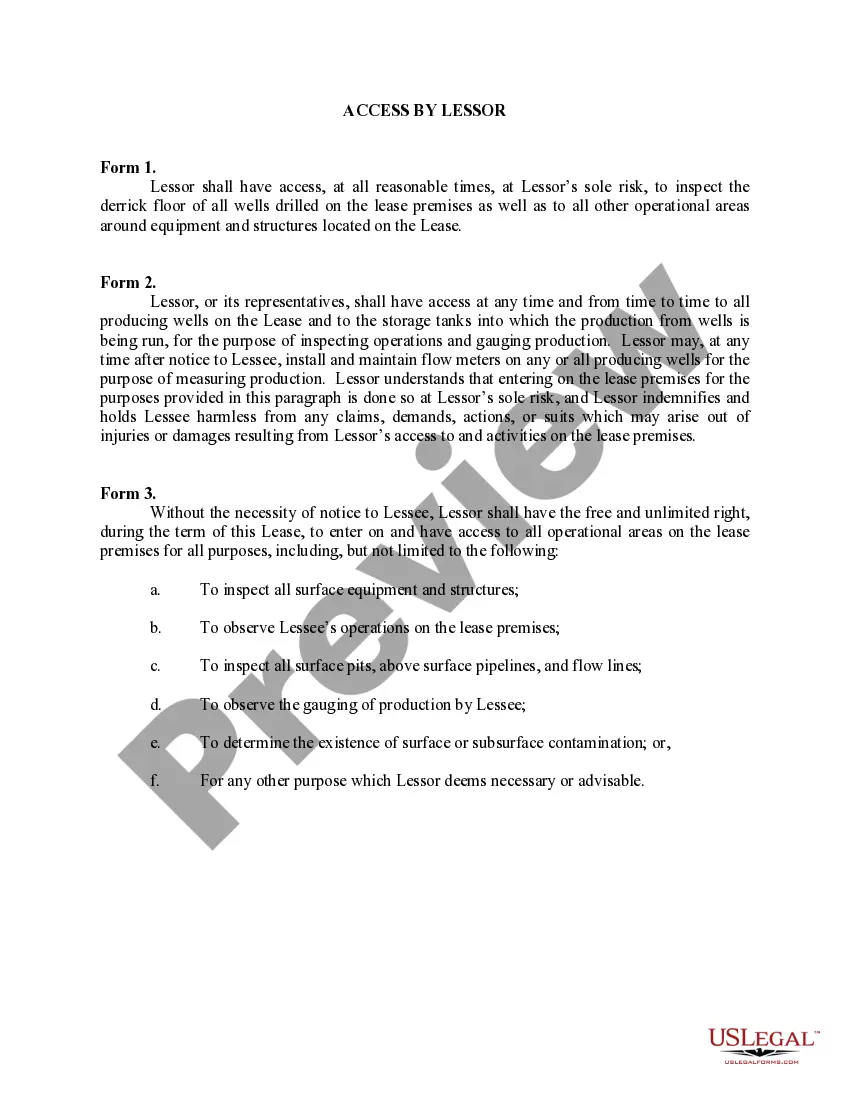
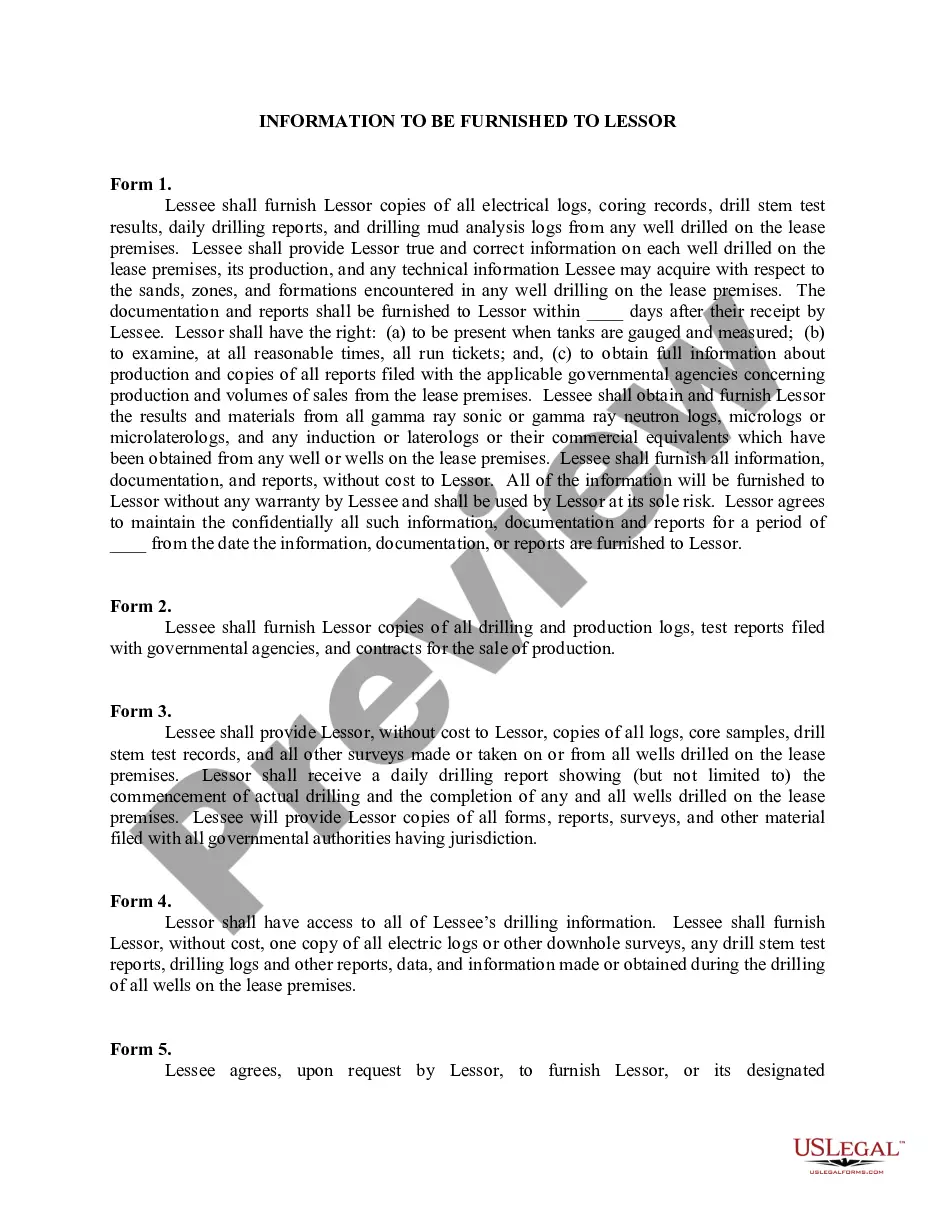
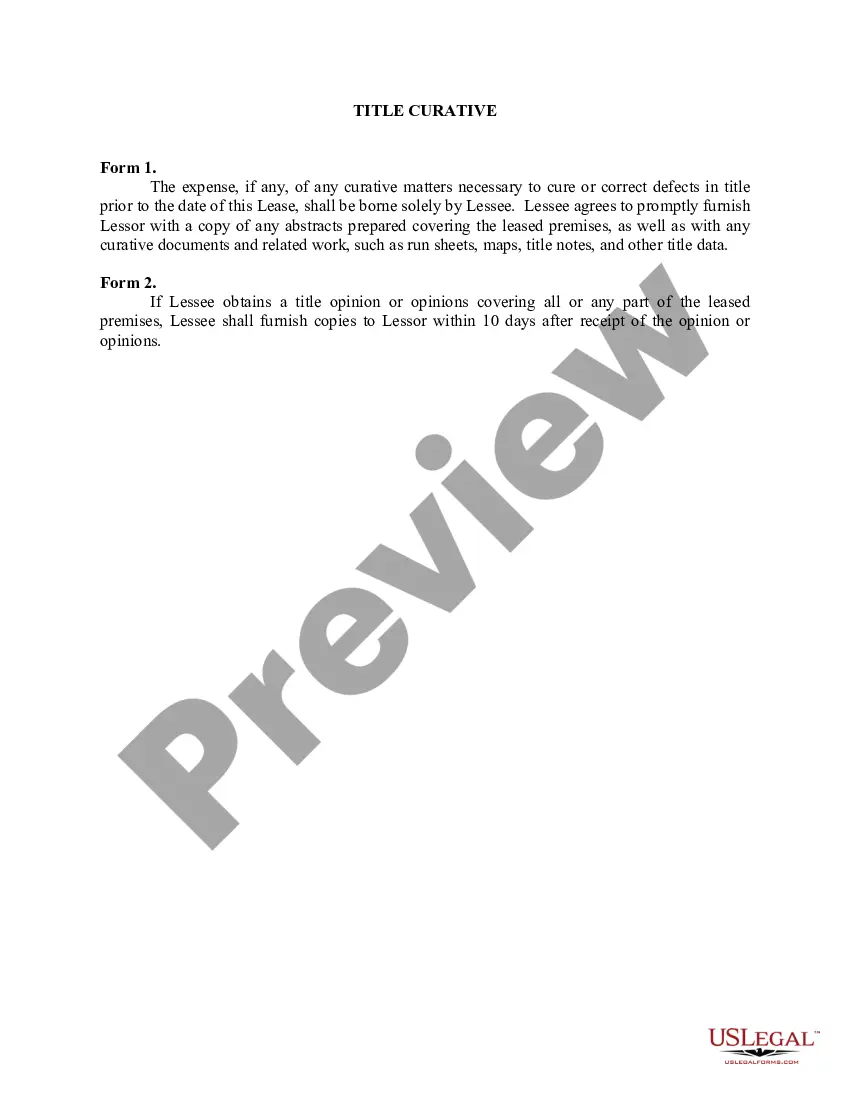
The Access by Lessor form is a legal document that allows the lessor, or their representatives, the right to access leased properties for inspection and operational purposes. This form is specifically designed to outline the conditions under which the lessor can enter the premises, ensuring clarity and protection for both parties involved. It is essential for situations involving oil and gas leases or other production-related agreements, distinguishing itself from standard lease agreements by focusing on access rights and operational oversight.
What’s included in this form
- Access rights for the lessor to inspect wells and operational areas.
- Indemnification clause protecting the lessee from claims due to access by the lessor.
- Conditions of access without prior notice to the lessee.
- Rights to install and maintain flow meters for production measurement.
- Scope of inspections, including equipment, structures, containment, and operations.

When to use this document
This form should be utilized when a lessor needs to establish their right of access to leased properties. It is particularly relevant in oil and gas leases, where oversight of production activities and equipment is critical. You may need this form if there are responsibilities related to inspecting operation sites, monitoring production output, or ensuring compliance with environmental standards.
Who this form is for
- Lessor or property owner seeking access to leased premises.
- Representatives of the lessor needing to inspect production activity.
- Lessee who wants to formalize access rights in a lease agreement.
Steps to complete this form
- Identify and enter the parties involved (lessor and lessee).
- Specify the property location and details of the leased premises.
- Outline the access rights granted to the lessor, including conditions and limitations.
- Include any indemnification clauses and terms regarding risks associated with access.
- Sign and date the form to finalize the agreement.
Notarization requirements for this form
This form does not typically require notarization to be legally valid. However, some jurisdictions or document types may still require it. US Legal Forms provides secure online notarization powered by Notarize, available 24/7 for added convenience.
Get your form ready online
Our built-in tools help you complete, sign, share, and store your documents in one place.
Make edits, fill in missing information, and update formatting in US Legal Forms—just like you would in MS Word.
Download a copy, print it, send it by email, or mail it via USPS—whatever works best for your next step.
Sign and collect signatures with our SignNow integration. Send to multiple recipients, set reminders, and more. Go Premium to unlock E-Sign.
If this form requires notarization, complete it online through a secure video call—no need to meet a notary in person or wait for an appointment.
We protect your documents and personal data by following strict security and privacy standards.

Make edits, fill in missing information, and update formatting in US Legal Forms—just like you would in MS Word.

Download a copy, print it, send it by email, or mail it via USPS—whatever works best for your next step.

Sign and collect signatures with our SignNow integration. Send to multiple recipients, set reminders, and more. Go Premium to unlock E-Sign.

If this form requires notarization, complete it online through a secure video call—no need to meet a notary in person or wait for an appointment.

We protect your documents and personal data by following strict security and privacy standards.
Mistakes to watch out for
- Failing to clearly define the scope of access, leading to misunderstandings.
- Not including indemnification clauses, which can expose the lessee to liability.
- Overlooking local regulations that might impose additional requirements.
Advantages of online completion
- Convenient downloading and printing from anywhere.
- Editable templates that allow customization to fit specific needs.
- Access to forms drafted by licensed attorneys for legal reliability.
Looking for another form?


Form popularity
FAQ
Renter Responsibilities You will maintain the property in a clean and habitable condition. You will inform the landlord when issues arise that could harm the value of the property. You will pay for any repairs due to your negligence or misuse of the property.
Complying with all state and local health and building codes. Maintaining structural components and a reasonably weather-protected unit. Providing the necessary heat, electric, and hot and cold water facilities. Making any requested repairs promptly.
Fundamental responsibilities of landlords include: providing and maintaining the property in a clean and reasonable standard; giving proper receipts and maintaining records of all transactions pertaining to the tenancy; paying council rates and taxes; maintaining locks to ensure the property's security; and lodging the
What is a Lessor? A lessor is essentially someone who grants a lease to someone else. As such, a lessor is the owner of an asset that is leased under an agreement to a lessee. The lessee makes a one-time payment or a series of periodic payments to the lessor in return for the use of the asset.
It is in fact illegal for a landlord or agent to enter the premises without permission from the tenant. Ultimately, a landlord has no right of entry unless the tenant grants access or the landlord is given permission by the courts.
If you disagree with the landlord/agent about reasonable access, apply to the Tribunal for an order to specify or limit the days and times on which they can show the premises. If you refuse access, the landlord/agent can apply to the Tribunal for an order that authorises them or any other person to enter the premises.
Yes, your tenant is within their rights to refuse you access to the property. In a lot of cases, tenants will refuse because the date and time isn't convenient for them and will suggest an alternative date or ask you to rearrange. However, some tenants will persistently try to obstruct you from entering the property.
Quiet enjoyment You are paying rent to the landlord for exclusive use as the property as your home and as such you have the right to decide who enters it and when. If a landlord enters your home without permission they are, technically, trespassing, unless they have a court order to allow them otherwise.
The lessor is bound to deliver the leased property to the lessee in good condition. The lessor is bound to reimburse the lessee for any necessary and reasonable expenses incurred by the latter for the preservation of the leased property.