Title Curative
About this form
The Title Curative form is a specialized lease rider designed for use in oil and gas lease transactions. It allows the lessor to incorporate additional provisions into the lease agreement, addressing specific concerns or limitations on the lessee's rights. This form is particularly useful when issues with the title or ownership of the leased premises need to be clarified or remedied before the agreement is finalized.
Main sections of this form
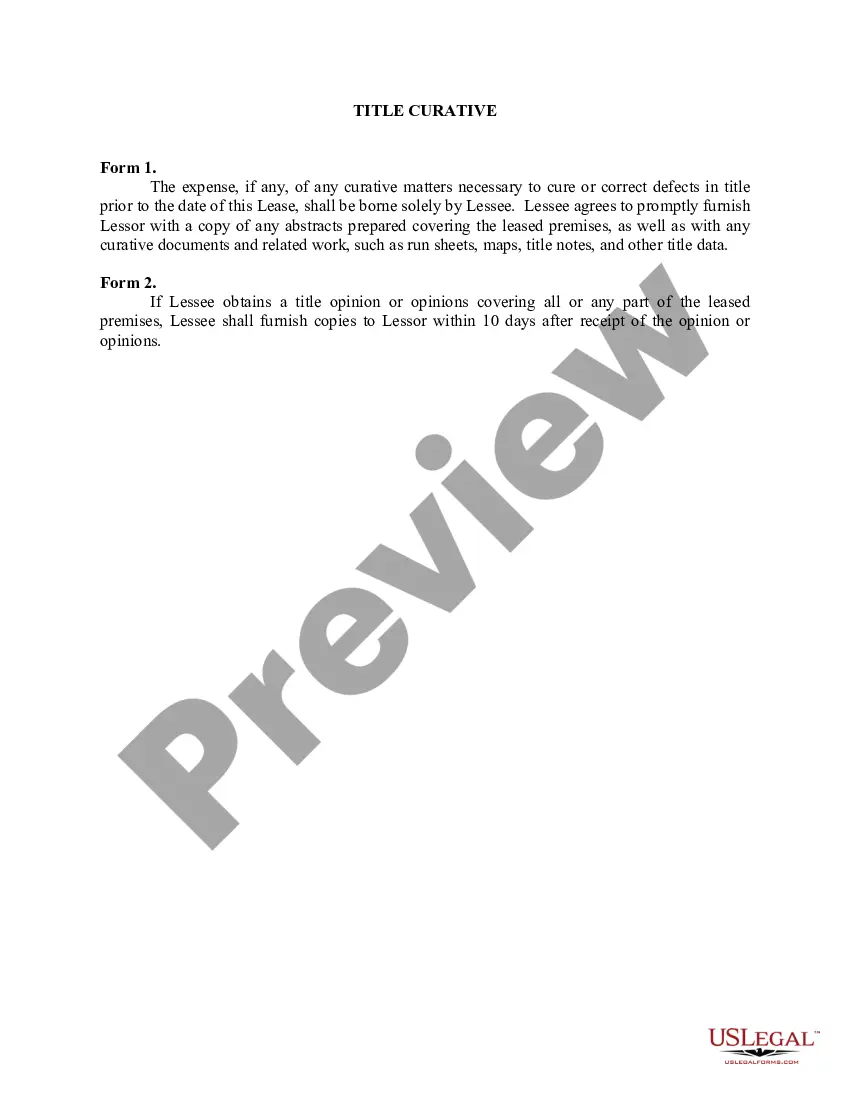
- The lessee is responsible for all expenses related to curing any title defects prior to the lease date.
- Lessee must provide the lessor with copies of any abstracts or curative documents related to the leased premises.
- Lessee is required to furnish copies of title opinions to the lessor within ten days of receipt.

When this form is needed
This form should be used when entering into an oil and gas lease, especially if there are potential issues with the title. It is particularly relevant for lessors who wish to explicitly establish their rights and ensure that any title defects are handled appropriately before finalizing the lease agreement.
Who can use this document
- Lessors who are leasing out land for oil and gas exploration.
- Lessee companies or individuals engaged in oil and gas leasing.
- Legal professionals assisting clients in lease negotiations.
Instructions for completing this form
- Identify and enter the names of the lessor and lessee at the top of the form.
- Specify the property that is being leased, including any relevant details such as boundaries or existing conditions.
- Clearly state any additional provisions or limitations regarding the lessee's rights.
- Include the necessary clauses regarding title curative matters and timelines for document provision.
- Ensure all parties sign and date the form to validate the agreement.
Is notarization required?
This form usually doesn’t need to be notarized. However, local laws or specific transactions may require it. Our online notarization service, powered by Notarize, lets you complete it remotely through a secure video session, available 24/7.
Get your form ready online
Our built-in tools help you complete, sign, share, and store your documents in one place.
Make edits, fill in missing information, and update formatting in US Legal Forms—just like you would in MS Word.
Download a copy, print it, send it by email, or mail it via USPS—whatever works best for your next step.
Sign and collect signatures with our SignNow integration. Send to multiple recipients, set reminders, and more. Go Premium to unlock E-Sign.
If this form requires notarization, complete it online through a secure video call—no need to meet a notary in person or wait for an appointment.
We protect your documents and personal data by following strict security and privacy standards.

Make edits, fill in missing information, and update formatting in US Legal Forms—just like you would in MS Word.

Download a copy, print it, send it by email, or mail it via USPS—whatever works best for your next step.

Sign and collect signatures with our SignNow integration. Send to multiple recipients, set reminders, and more. Go Premium to unlock E-Sign.

If this form requires notarization, complete it online through a secure video call—no need to meet a notary in person or wait for an appointment.

We protect your documents and personal data by following strict security and privacy standards.
Avoid these common issues
- Failing to thoroughly review the lease terms for clarity on title issues.
- Not providing the necessary abstracts and curative documents as stipulated.
- Missing signatures from all required parties, leading to an invalid agreement.
Benefits of using this form online
- Convenience of accessing legal templates 24/7 from any device.
- Editable forms allow users to tailor content to their specific needs.
- Reliability of templates drafted by licensed attorneys ensures legal compliance.
Looking for another form?


Form popularity
FAQ
Many title issues can be resolved by filing one of three common documents: A quit claim deed removes an heir and clears up title among co-owners or spouses. A release of lien/judgment removes a paid mortgage or spousal or child support lien. A deed of reconveyance records payment of a mortgage under a deed of trust.
Methods include: discharge by the recording of a satisfaction of the mortgage removing the realty from the lien of the mortgage by recording a release; discharge by court order; and, in some limited cases, discharge by a filing by a third party, such as a title insurer, a court-appointed personal representative, or an
When a buyer approaches a mortgage lender for buying a property, it is imperative that the property has clear titles so that no legal issues arise later.In other words, a title search is a search of all title records applicable to a particular property to determine if the current title is good.
A title processor works with real estate title applicants to ensure everything is submitted correctly. As a title processor, your responsibilities include completing and reviewing forms and applications, organizing applicant documents and records, and preparing files for submission.
If however, this is not your debt and the lien has wrongfully been placed on your property, then you should first seek to get the creditor/lender to voluntarily release the lien. If they refuse, you could then file a lawsuit to get the lien removed and possibly obtain damages for slander of title.
The role of a title company is to verify that the title to the real estate is legitimately given to the home buyer. Essentially, they make sure that a seller has the rights to sell the property to a buyer.
A title search examines city records to find out the property's title history. These records include deeds, court records, property and name indexes, and many other documents.Some hindrances that can be found in the title search include mortgage claims, liens, title claims, judgements, and other outstanding claims.
The term defective title refers to an impaired title on an asset or a piece of property. The defect or impairment on a title can be in the form of a lien, mortgage, or judgment. Because other parties can lay claim to the property or asset, the title cannot be legally transferred to someone else.
In other words, a title search is a search of all title records applicable to a particular property to determine if the current title is good.They include written documents, such as deeds and mortgages, tax, marriage, and probate records, and any other document that may affect the title of a property.