Interview Planning Control Guide
About this form
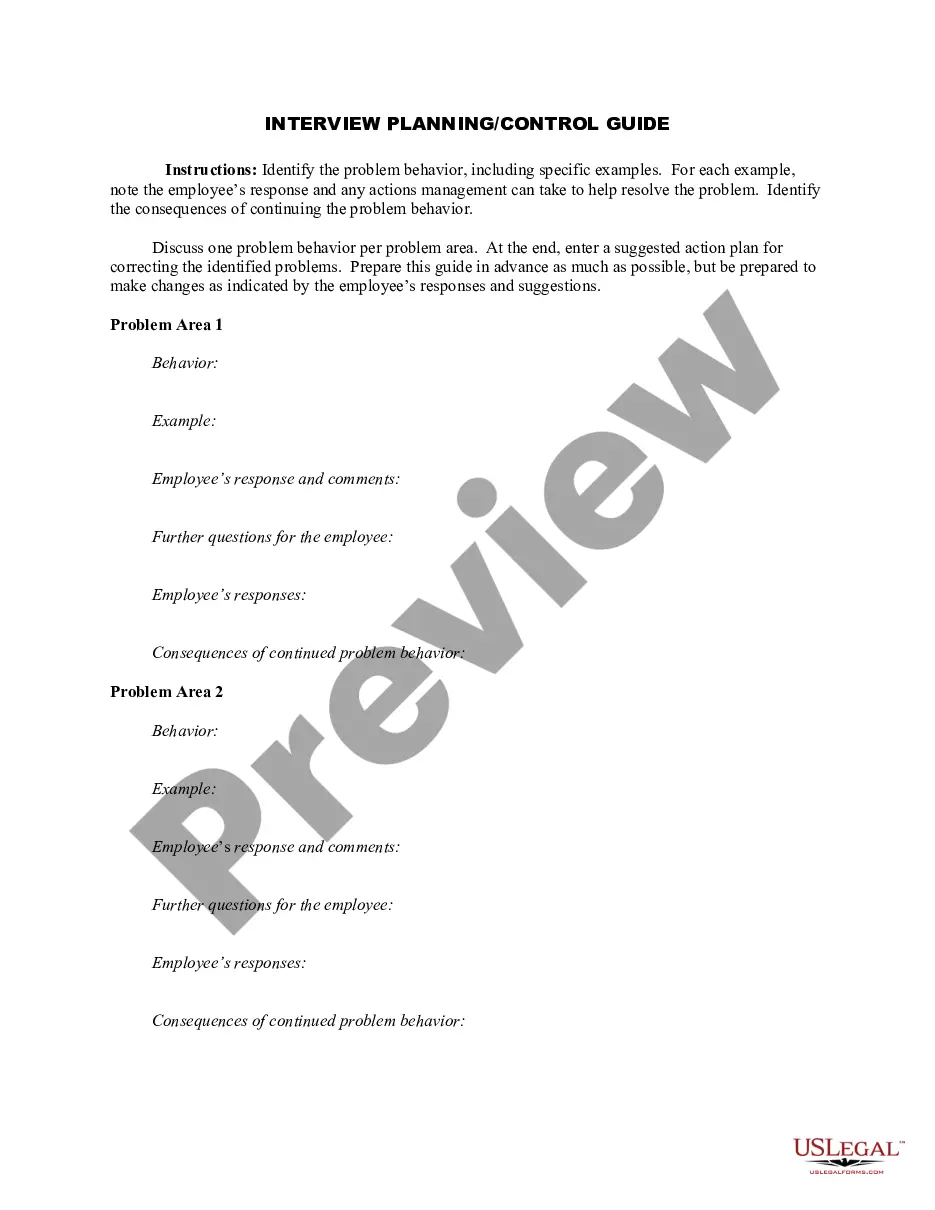
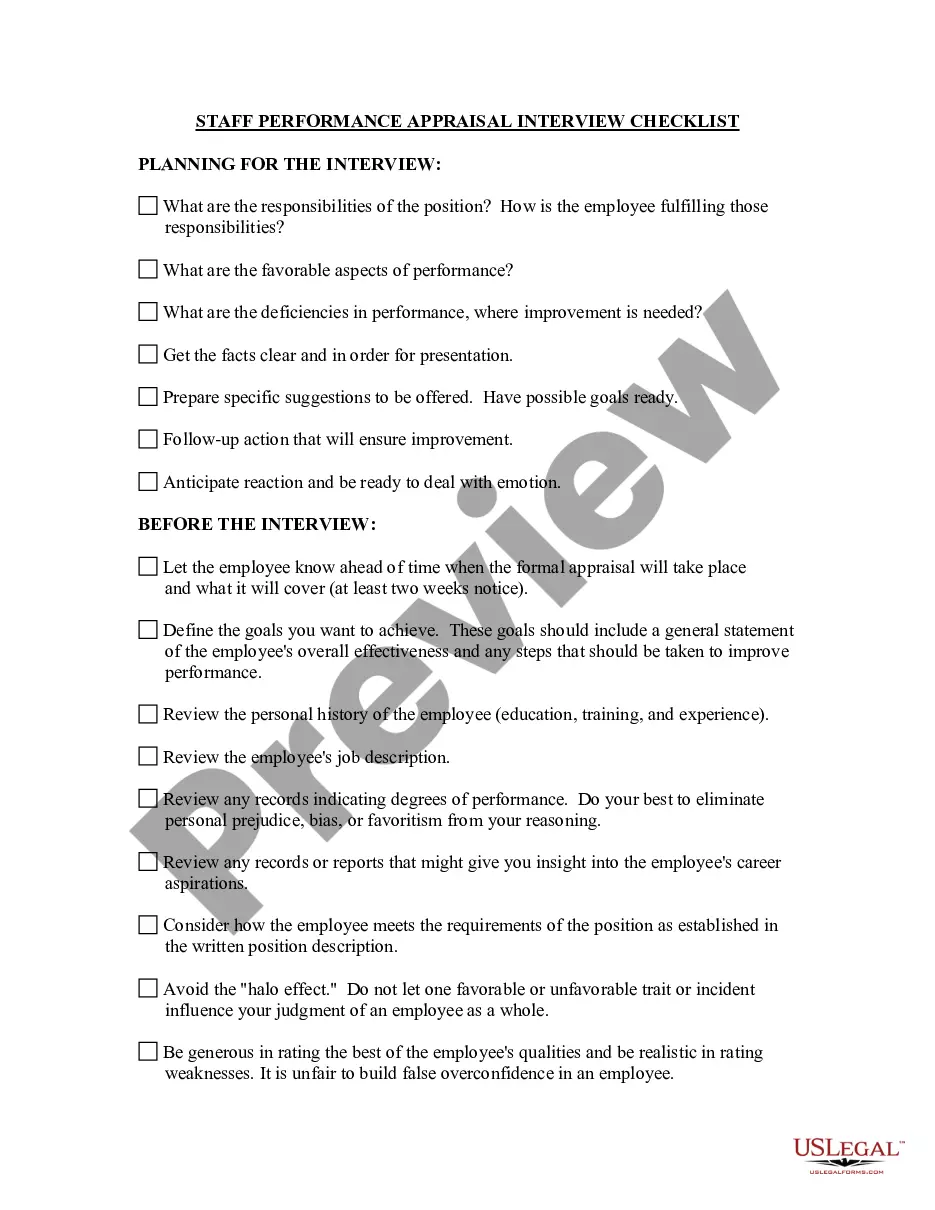
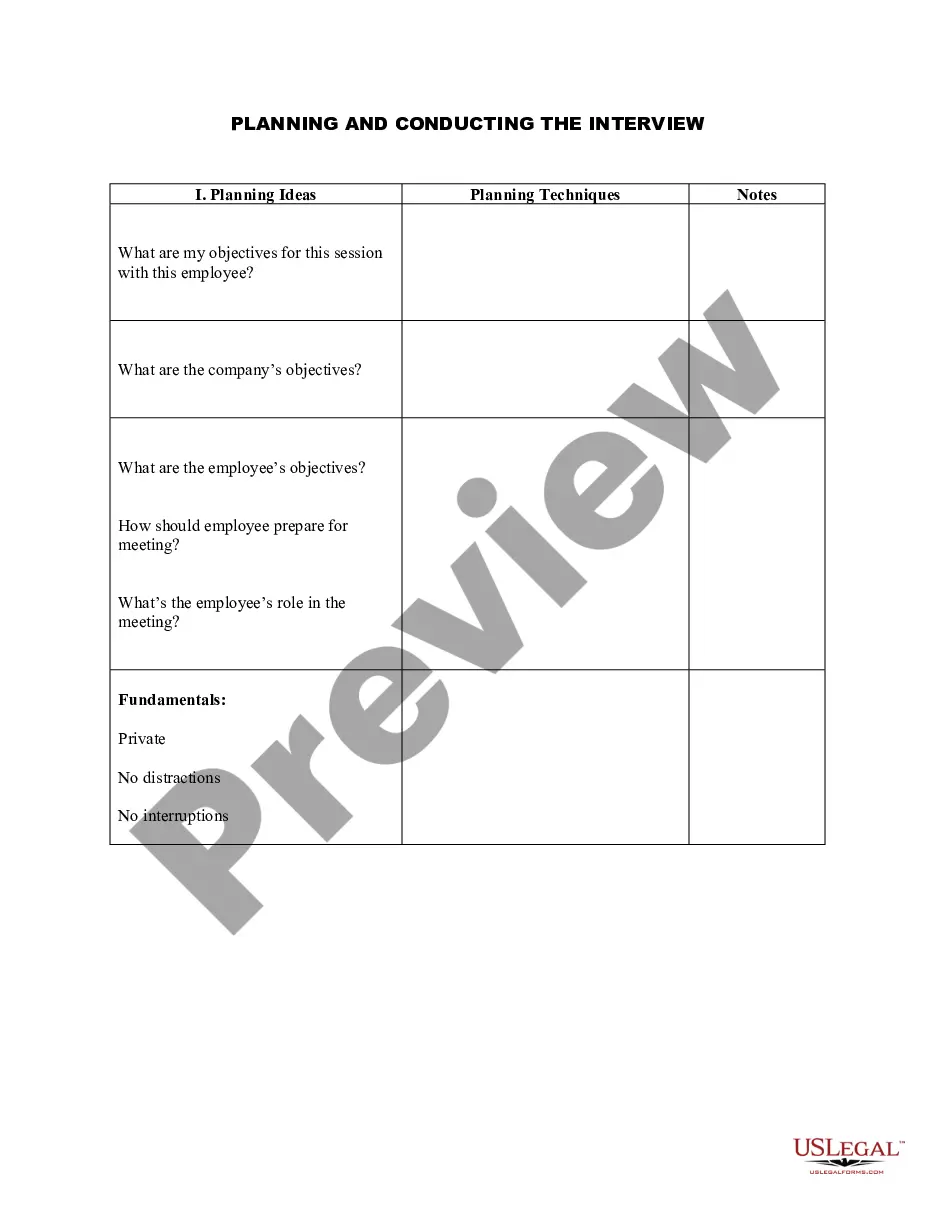
The Interview Planning Control Guide is a tool designed to assist employers in managing employee performance evaluations. This form allows for the identification of problematic behaviors, enabling in-depth discussions during appraisal interviews. It distinguishes itself from other performance management tools by providing structured guidance for addressing specific behaviors and drafting personalized action plans aimed at resolving workplace issues.
Key parts of this document
- Identification of problem behaviors: Clearly define the specific behaviors that need to be addressed.
- Examples of behaviors: Space is provided for documenting instances of the identified behaviors.
- Employee responses: Capture feedback and responses from the employee regarding the identified issues.
- Consequences of continued behavior: Outline potential consequences if the problematic behavior persists.
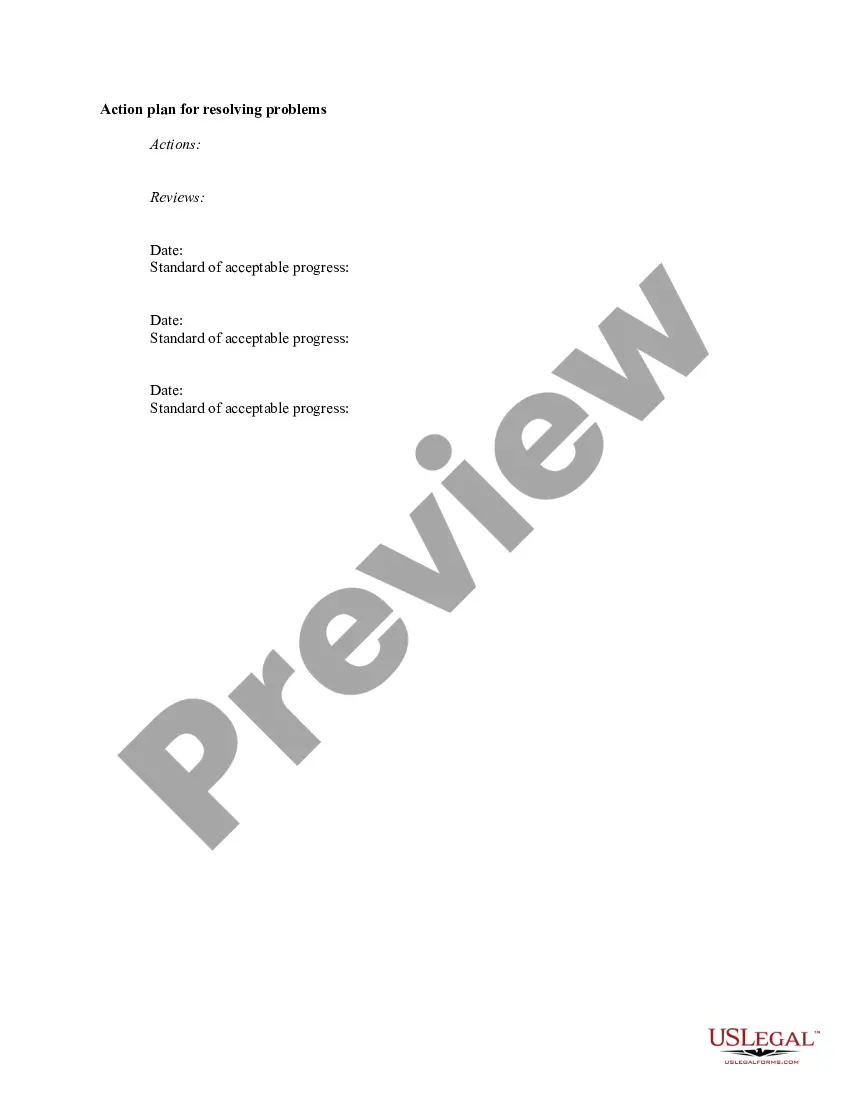
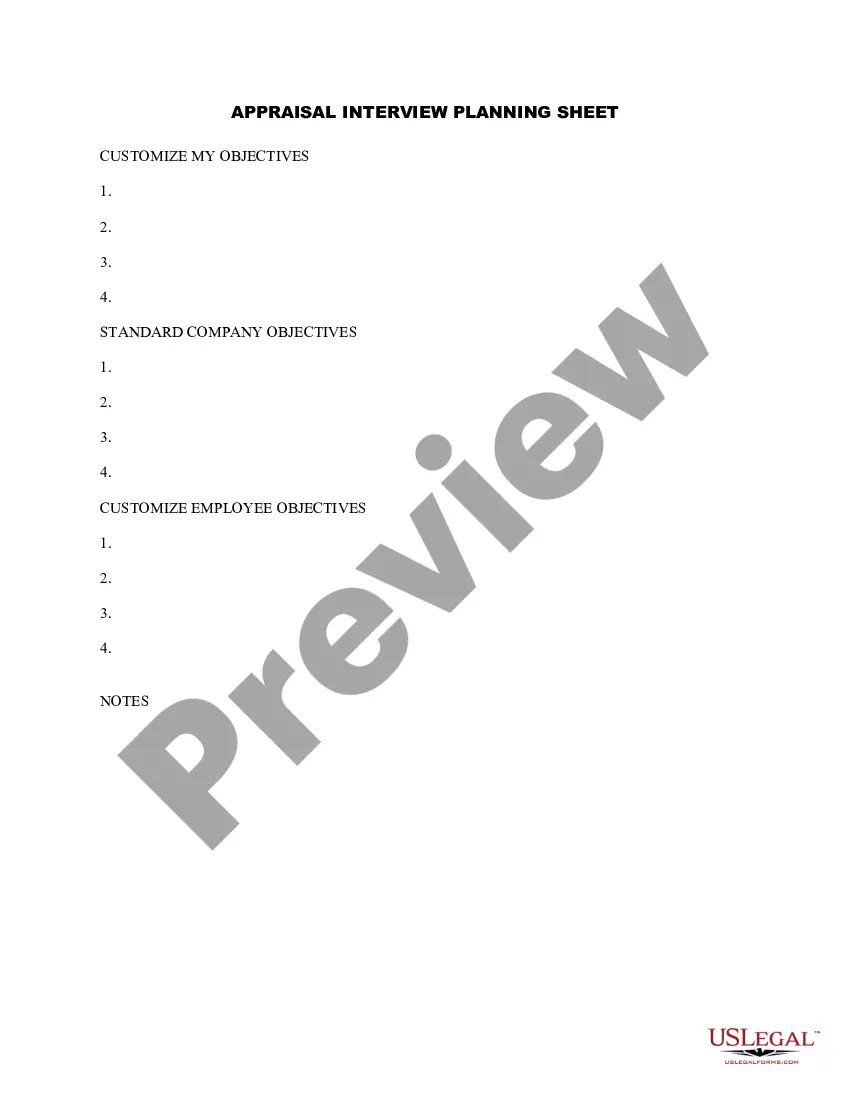
- Action plan: Create a customized action plan for improvement based on the interview discussion.
Common use cases
This form should be used during scheduled performance appraisals when there are concerns regarding specific employee behaviors. It is particularly helpful when preparing for discussions around performance improvement or behavioral expectations. The guide ensures that employers are equipped to handle such conversations thoughtfully and systematically.
Who needs this form
- HR professionals involved in employee evaluations.
- Managers conducting performance reviews.
- Team leaders addressing specific behavioral issues within their teams.
- Anyone responsible for overseeing workplace performance standards and employee relations.
How to complete this form
- Identify and document the problem behavior you wish to address.
- Provide concrete examples of the behavior for clarity.
- Record the employee's responses during the appraisal discussion.
- Outline any consequences for continued problematic behavior.
- Develop a clear action plan tailored to help the employee improve.
Does this form need to be notarized?
Notarization is generally not required for this form. However, certain states or situations might demand it. You can complete notarization online through US Legal Forms, powered by Notarize, using a verified video call available anytime.
Get your form ready online
Our built-in tools help you complete, sign, share, and store your documents in one place.
Make edits, fill in missing information, and update formatting in US Legal Forms—just like you would in MS Word.
Download a copy, print it, send it by email, or mail it via USPS—whatever works best for your next step.
Sign and collect signatures with our SignNow integration. Send to multiple recipients, set reminders, and more. Go Premium to unlock E-Sign.
If this form requires notarization, complete it online through a secure video call—no need to meet a notary in person or wait for an appointment.
We protect your documents and personal data by following strict security and privacy standards.

Make edits, fill in missing information, and update formatting in US Legal Forms—just like you would in MS Word.

Download a copy, print it, send it by email, or mail it via USPS—whatever works best for your next step.

Sign and collect signatures with our SignNow integration. Send to multiple recipients, set reminders, and more. Go Premium to unlock E-Sign.

If this form requires notarization, complete it online through a secure video call—no need to meet a notary in person or wait for an appointment.

We protect your documents and personal data by following strict security and privacy standards.
Common mistakes
- Failing to document specific examples of behavior can lead to misunderstandings.
- Not integrating employee feedback may result in a one-sided perspective.
- Overlooking the consequences of behavior can diminish the seriousness of issues discussed.
- Leaving the action plan vague without clear steps for improvement can lead to confusion.
Benefits of completing this form online
- Convenience: Easily accessible from any device, allowing for on-the-go preparation.
- Editability: Users can personalize the form to fit individual situations effortlessly.
- Secure storage: Forms can be saved electronically, ensuring that documentation is easily retrievable.
- Structured guidance: The form provides a clear framework for evaluations, making the process straightforward and effective.
Legal use & context
- The form establishes a clear framework for addressing workplace behavior issues.
- Using this guide supports a fair and consistent approach to performance management.
- A completed form can serve as documentation in case of disputes regarding employee performance.
Main things to remember
- The Interview Planning Control Guide is designed to assist in managing employee behavior issues during performance appraisals.
- Completing the form thoroughly can lead to constructive discussions that facilitate employee improvement.
- This guide can be tailored to fit specific workplace environments while ensuring compliance with workplace standards.
Looking for another form?



Form popularity
FAQ
Tell Me About Yourself. Why Do You Want This Job? Why Should We Hire You? What Is Your Greatest Strength? What Is Your Greatest Weakness? Why Do You Want to Leave (or Have Left) Your Job? What Are Your Salary Expectations? How Do You Handle Stress and Pressure?
What are your weaknesses? Why should we hire you? Why do you want to work here? What are your goals? Why did you leave (or why are you leaving) your job? When were you most satisfied in your job? What can you do for us that other candidates can't? What are three positive things your last boss would say about you?
The STAR method is a structured manner of responding to a behavioral-based interview question by discussing the specific situation, task, action, and result of the situation you are describing. Situation: Describe the situation that you were in or the task that you needed to accomplish.
Tell Me About Yourself. Why Do You Want This Job? Why Should We Hire You? What Is Your Greatest Strength? What Is Your Greatest Weakness? Why Do You Want to Leave (or Have Left) Your Job? What Are Your Salary Expectations? How Do You Handle Stress and Pressure?
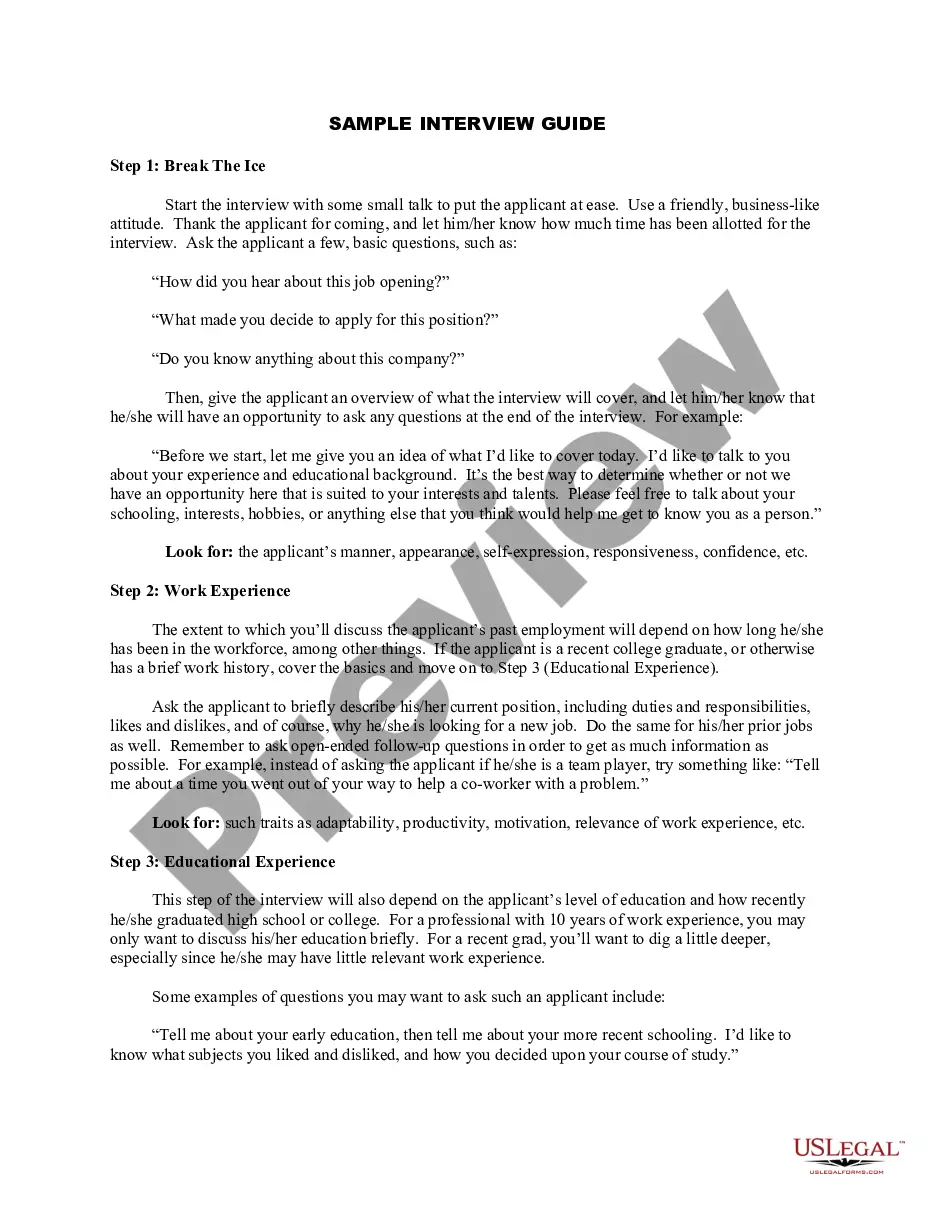
#1) Introductions. One of the most important steps in the interview process just so happens to be the first. #2) Small Talk. After introductions are finished, it is a good idea conduct a bit of small talk with the candidate. #3) Information Gathering. #4) Question/Answer. #5) Wrapping Up.
Select the best format for your interviews. Choose your interview questions carefully. Keep it relevant to the job. Be consistent with all candidates. Be ready to answer applicants' questions. Arrange a suitable location. Make sure interviewers have the right skills.
Tell me about yourself. How would you describe yourself? What makes you unique? Why do you want to work here? What interests you about this role? What motivates you? What are you passionate about? Why are you leaving your current job?
Be positive. You'll be a more attractive candidate (and coworker!) Set goals. Prior to interviewing, take the time to write down where you want to be in 1 year, 3 years and 5 years. Sell what you can do. Know what benefits and skills you bring to the table. Ask the right questions in the right way.
Tell me about yourself. What are your weaknesses? Why should we choose you for this job? What are your hobbies outside of work? Where do you see yourself in five years' time? Why are you leaving your current position? What are your main strengths? Why do you want to work here?