Abstracts
What is this form?
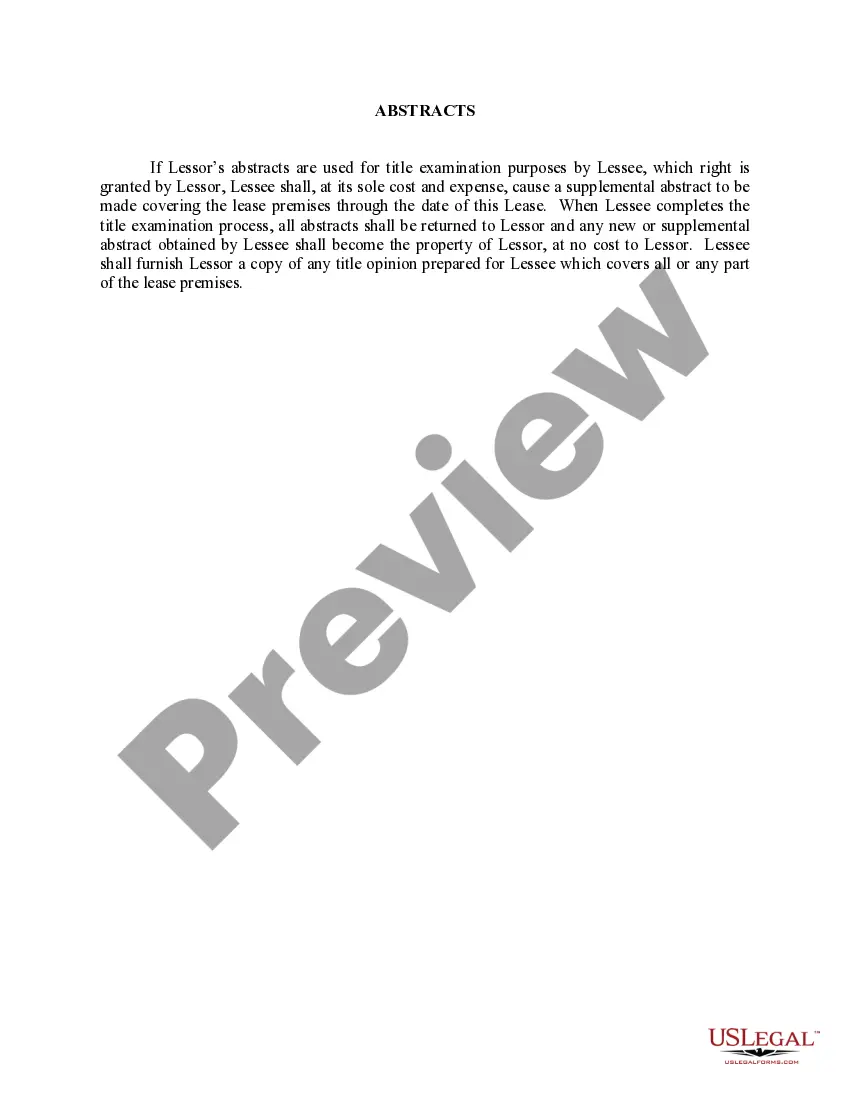
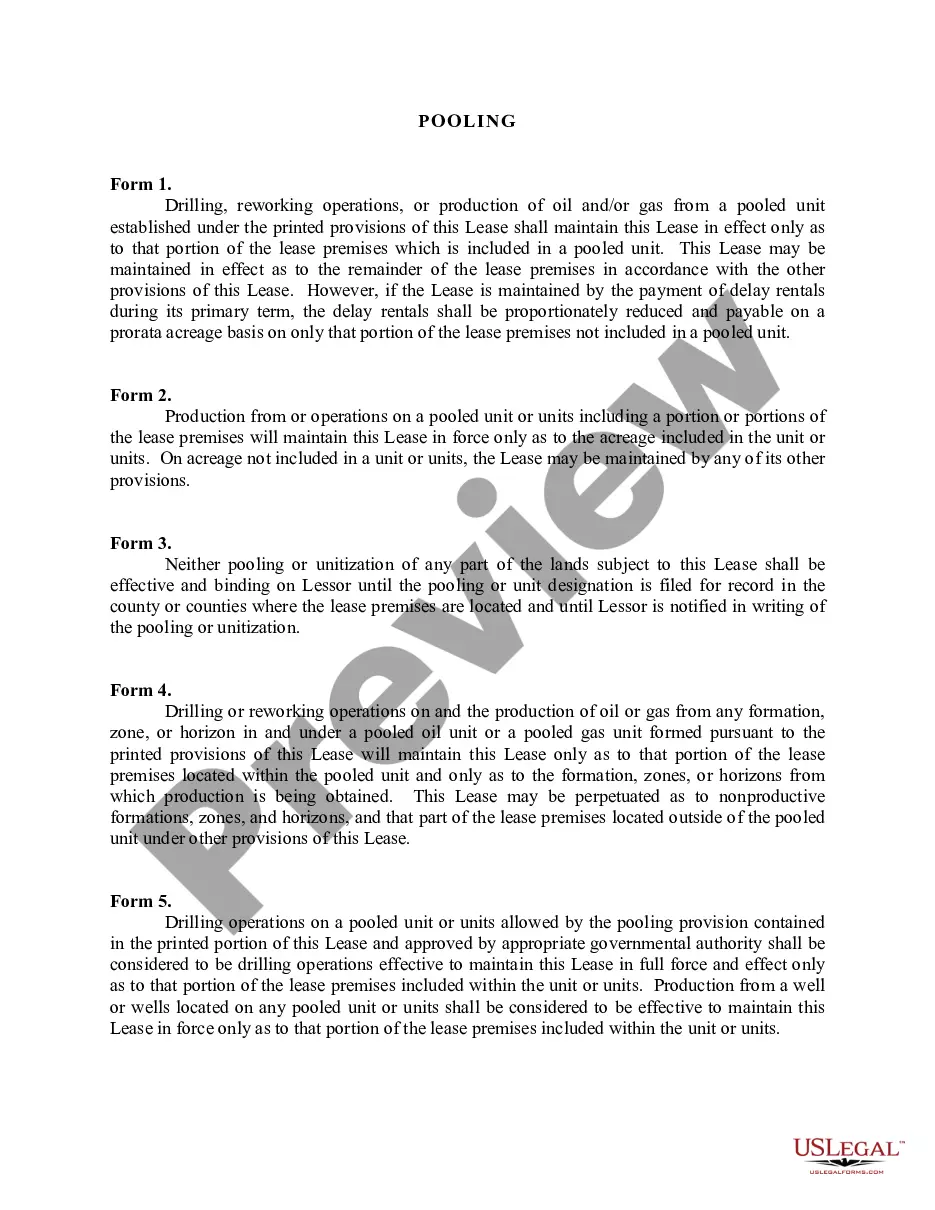
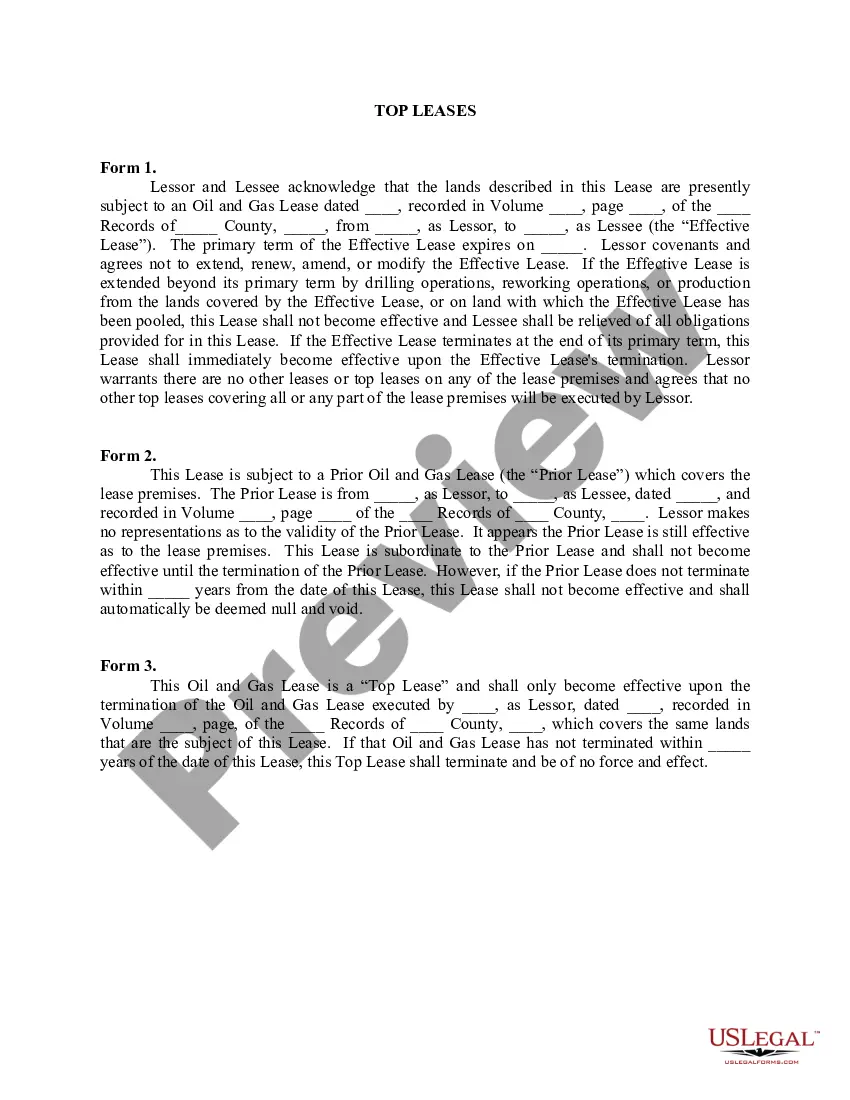
The Abstracts form is a legal document used in lease transactions, specifically related to oil and gas leases. This form allows Lessors to outline additional provisions and limitations in the lease agreement with the Lessee. It distinguishes itself from standard lease templates by permitting customization based on specific concerns that the Lessor may have regarding the Lessee's rights and obligations under the lease.
Key parts of this document
- Identification of parties involved: Lessor and Lessee.
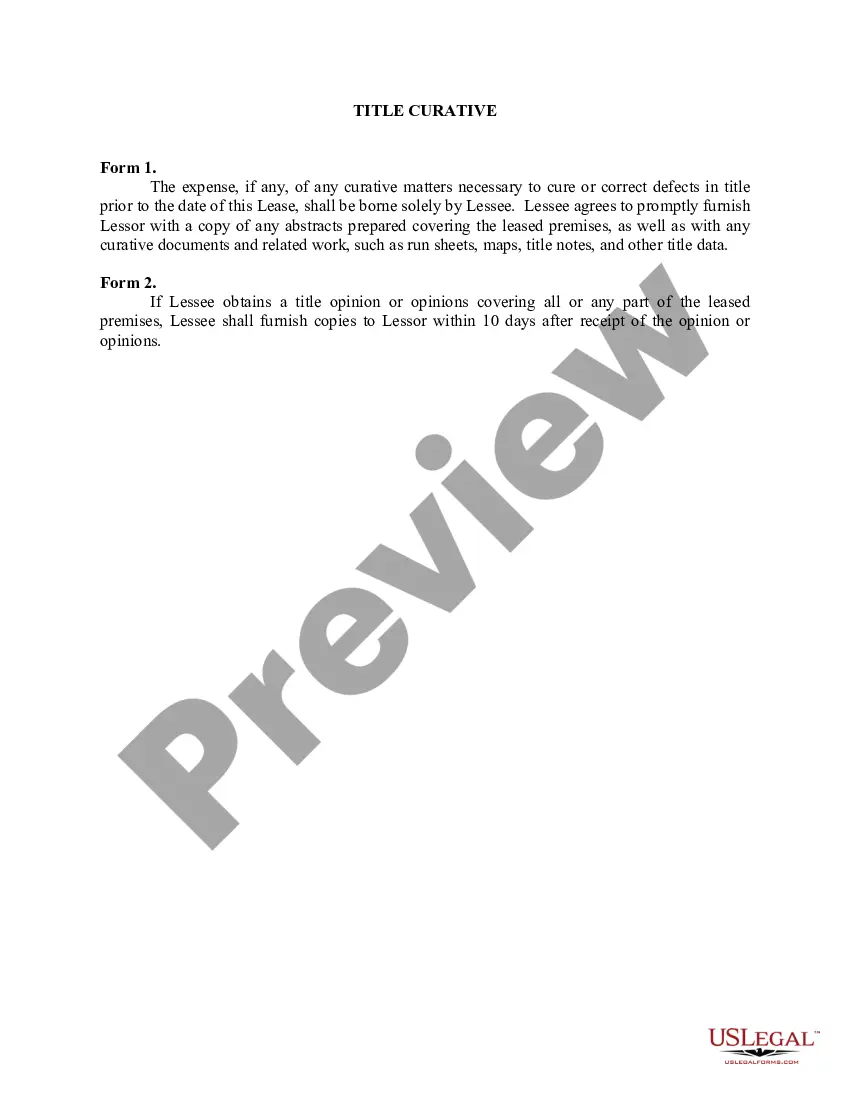
- Rights and responsibilities regarding title examination.
- Details on the creation and ownership of supplemental abstracts.
- Requirement for a title opinion covering the lease premises.
When to use this form
This form should be used when a Lessor is engaged in a lease transaction and wants to specify additional terms that address their specific interests in the lease agreement. It is particularly useful in the context of oil and gas leases where title examinations are necessary before finalizing the lease.
Who needs this form
- Lessors entering into leasing agreements for oil and gas exploration.
- Landowners seeking to protect their rights in lease negotiations.
- Individuals wanting to customize standard lease terms based on unique circumstances.
Instructions for completing this form
- Identify the parties involved, including the Lessor and Lessee.
- Specify the rights granted and any limitations desired by the Lessor.
- Enter the details regarding the title examination process, including responsibilities for costs.
- Provide information about any supplemental abstracts and their ownership.
- Make sure to include any requirements for a title opinion related to the lease premises.
Is notarization required?
Notarization is not commonly needed for this form. However, certain documents or local rules may make it necessary. Our notarization service, powered by Notarize, allows you to finalize it securely online anytime, day or night.
Get your form ready online
Our built-in tools help you complete, sign, share, and store your documents in one place.
Make edits, fill in missing information, and update formatting in US Legal Forms—just like you would in MS Word.
Download a copy, print it, send it by email, or mail it via USPS—whatever works best for your next step.
Sign and collect signatures with our SignNow integration. Send to multiple recipients, set reminders, and more. Go Premium to unlock E-Sign.
If this form requires notarization, complete it online through a secure video call—no need to meet a notary in person or wait for an appointment.
We protect your documents and personal data by following strict security and privacy standards.

Make edits, fill in missing information, and update formatting in US Legal Forms—just like you would in MS Word.

Download a copy, print it, send it by email, or mail it via USPS—whatever works best for your next step.

Sign and collect signatures with our SignNow integration. Send to multiple recipients, set reminders, and more. Go Premium to unlock E-Sign.

If this form requires notarization, complete it online through a secure video call—no need to meet a notary in person or wait for an appointment.

We protect your documents and personal data by following strict security and privacy standards.
Typical mistakes to avoid
- Failing to clearly state specific provisions or limitations.
- Omitting essential parties' information.
- Not including the required title opinion or abstract details.
Why use this form online
- Convenience of downloading and printing at your location.
- Editability allows for customization specific to your needs.
- Reliability of forms drafted by licensed attorneys.
Legal use & context
- The Abstracts form is legally binding once completed and executed by involved parties.
- It should be used carefully to protect the rights of the Lessor during lease negotiations.
- Non-compliance with the terms outlined may lead to disputes or legal challenges.
What to keep in mind
- The Abstracts form is crucial for customizing oil and gas lease agreements.
- Ensure clarity in all terms and obligations to prevent disputes.
- Consult with legal professionals if you are uncertain about the form's requirements.
Looking for another form?
Form popularity
FAQ
Introduction. This is the firs at part of the abstract, and should be brief and attractive to the reader at the same time. Research significance. This usually answers the question: Why did you do this research? Methodology. Results. Conclusion.
Informative (a brief overview of your research) Descriptive (including the research aim, objectives of your project, and the analytical methodologies applied) Critical (the key outcomes and limitations of your work should be described) Written in a formal language.
The context or background information for your research; the general topic under study; the specific topic of your research. the central questions or statement of the problem your research addresses. what's already known about this question, what previous research has done or shown.
An abstract summarizes, usually in one paragraph of 300 words or less, the major aspects of the entire paper in a prescribed sequence that includes: 1) the overall purpose of the study and the research problem(s) you investigated; 2) the basic design of the study; 3) major findings or trends found as a result of your
The abstract should begin with a brief but precise statement of the problem or issue, followed by a description of the research method and design, the major findings, and the conclusions reached.
Write your paper. Review the requirements. Consider your audience and publication. Determine the type of abstract. Explain the problem. Explain your methods. Describe your results. Give a conclusion.
Begin writing the abstract after you have finished writing your paper. Pick out the major objectives/hypotheses and conclusions from your Introduction and Conclusion sections. Select key sentences and phrases from your Methods section. Identify the major results from your Results section.
An abstract summarizes, usually in one paragraph of 300 words or less, the major aspects of the entire paper in a prescribed sequence that includes: 1) the overall purpose of the study and the research problem(s) you investigated; 2) the basic design of the study; 3) major findings or trends found as a result of your