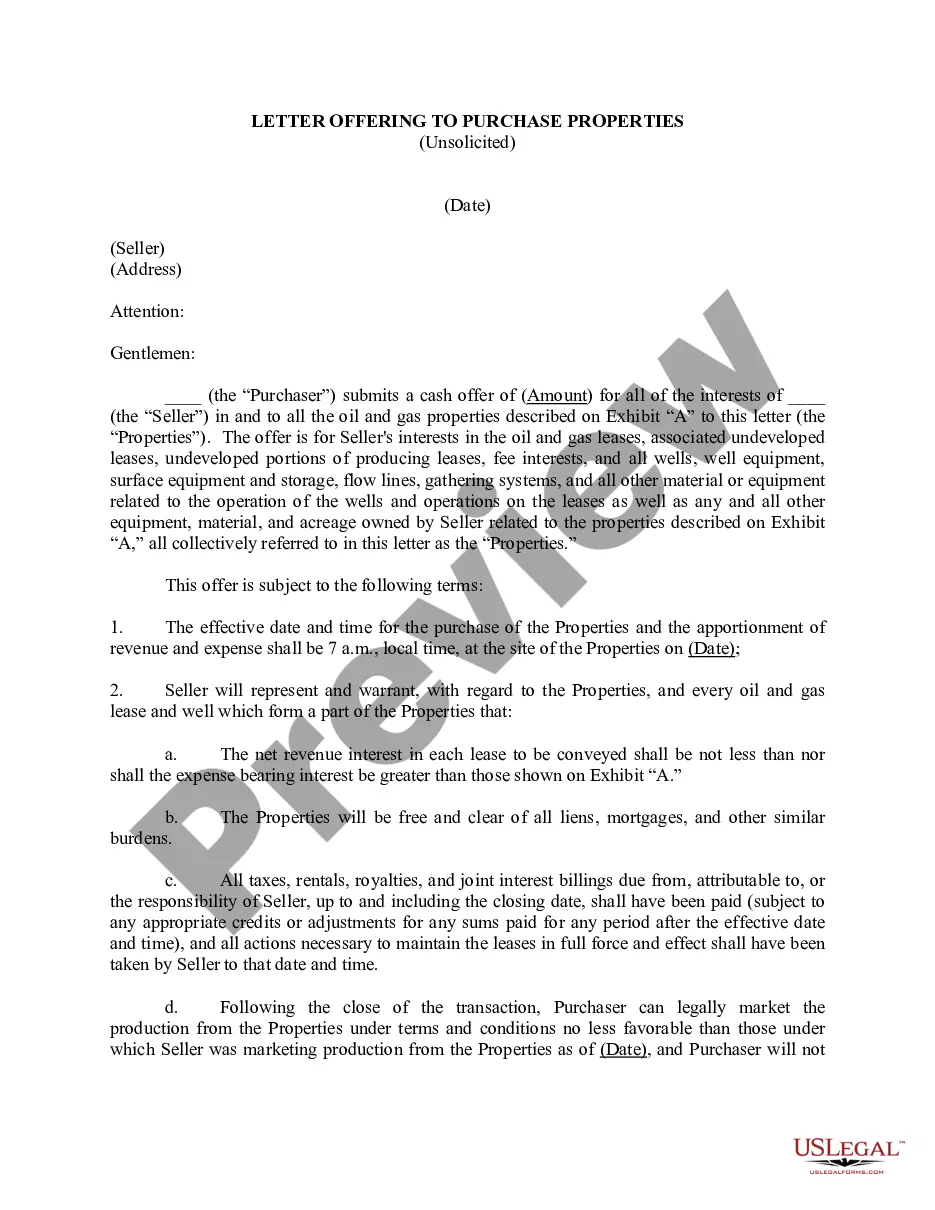
Sample Letter for Claim Settlement Against Decedent's Estate
Overview of this form
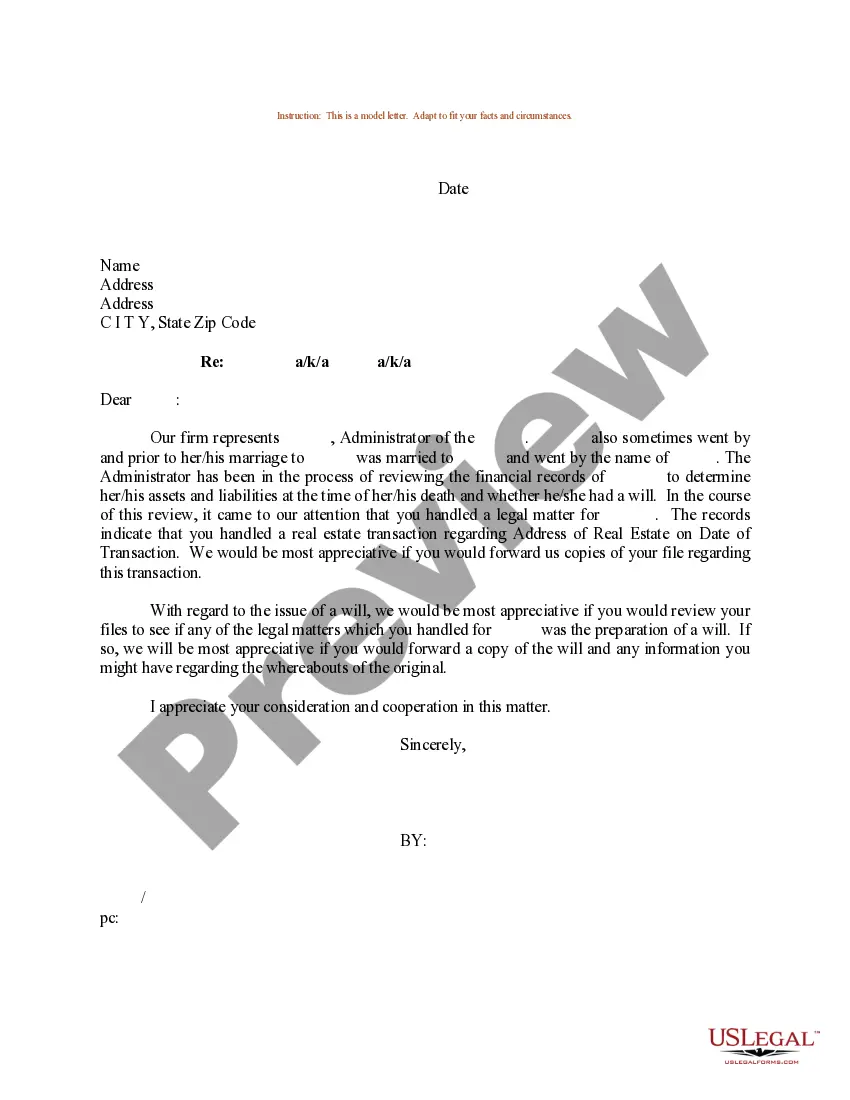
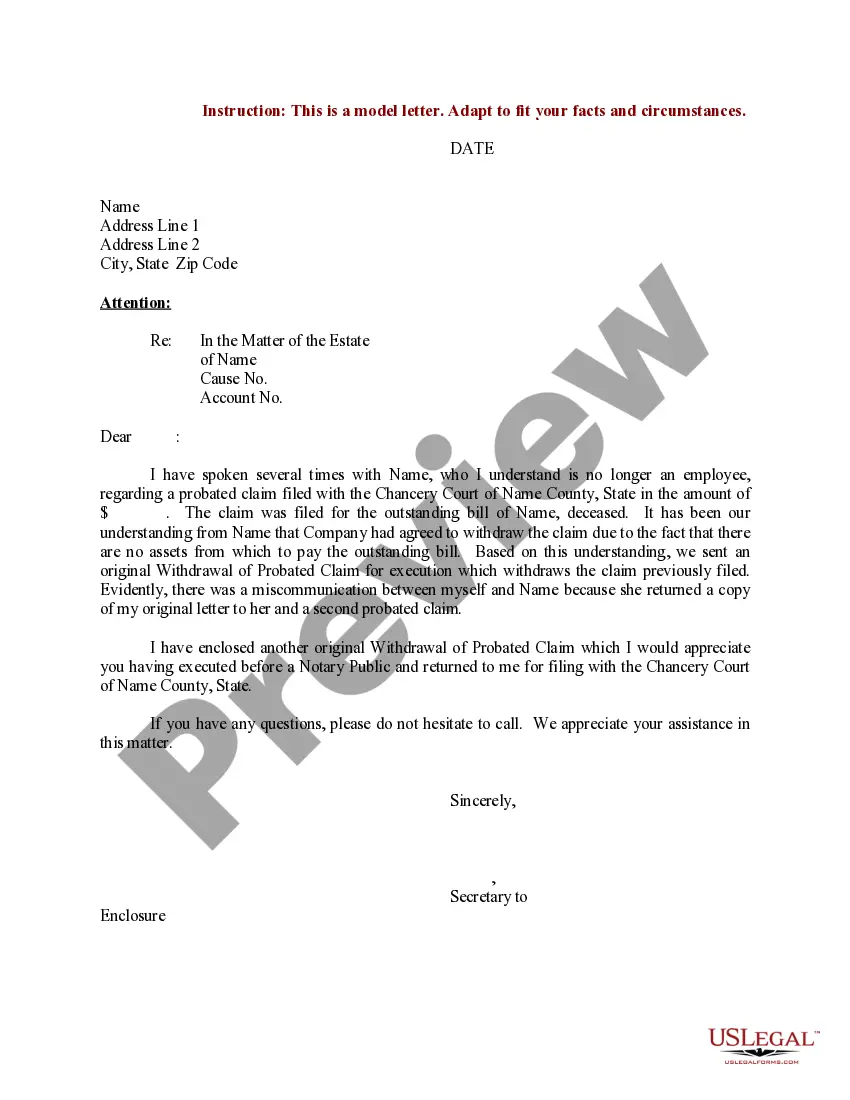
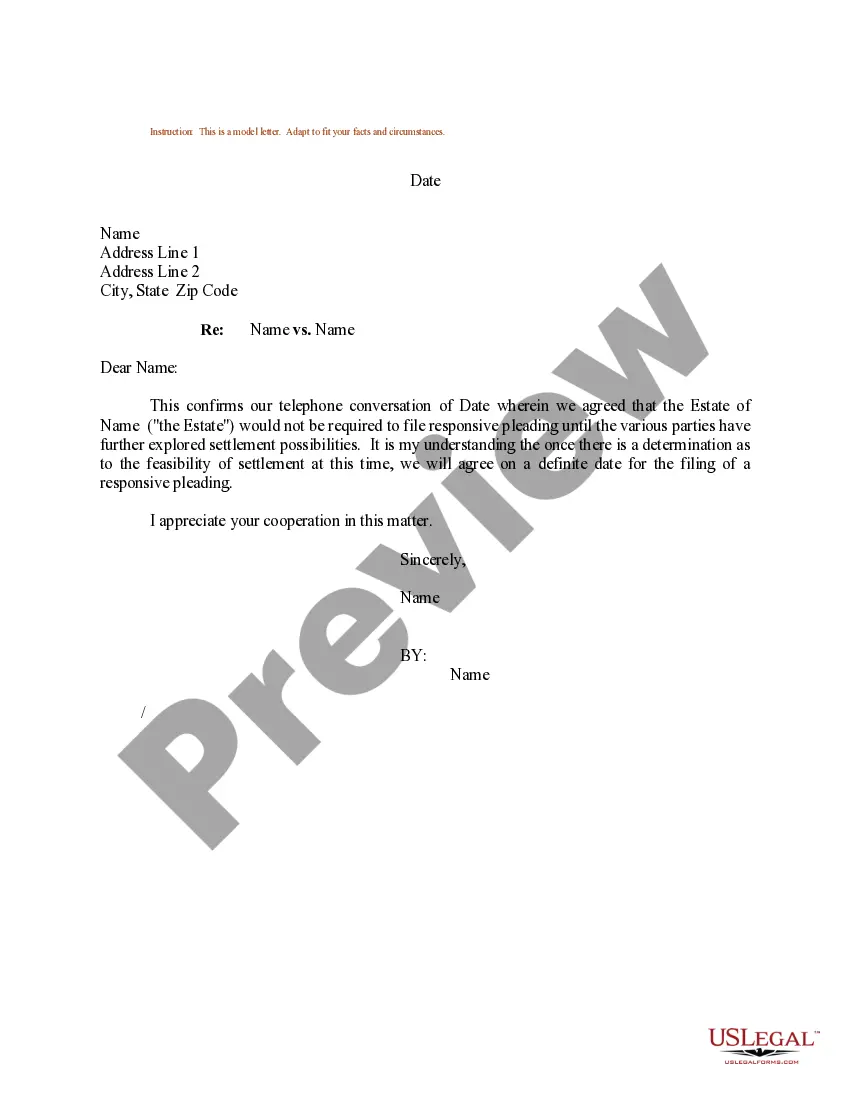
The Sample Letter for Claim Settlement Against Decedent's Estate is a legal document designed to facilitate communication regarding claims against the estate of a deceased person. This form helps clarify the claim being made and ensures that the estate's executors or administrators are informed. It differs from other estate-related forms by serving specifically as a formal letter rather than a petition or legal notice.
Form components explained
- Date: The date the letter is written.
- Recipient's information: Name and address of the executor or administrator of the estate.
- Subject line: A clear indication of the purpose of the letter.
- Body: A concise message expressing appreciation and inviting follow-up questions.
- Sender's signature: Space for the claimant to sign.


Common use cases
This form should be used when a claimant seeks to settle a claim against the estate of a deceased individual. Situations include when an individual believes they are owed money or property by the estate, or when seeking compensation for a debt owed by the decedent. This letter serves to formally communicate the claim to the estate's representatives.
Intended users of this form
This letter is intended for:
- Beneficiaries of the estate seeking claims.
- Creditors wanting to establish their claims against the decedent's estate.
- Legal representatives acting on behalf of a claimant.
Instructions for completing this form
- Enter the current date at the top of the letter.
- Include the recipient's name and address accurately.
- Specify the subject line to reflect the nature of the claim.
- Write a clear and concise message outlining your request and express your willingness to discuss the matter further.
- Signature: Sign the letter at the bottom and include your printed name.
Is notarization required?
This form does not typically require notarization unless specified by local law. However, always check your jurisdiction's legal requirements regarding claims against estates to be sure.
Get your form ready online
Our built-in tools help you complete, sign, share, and store your documents in one place.
Make edits, fill in missing information, and update formatting in US Legal Forms—just like you would in MS Word.
Download a copy, print it, send it by email, or mail it via USPS—whatever works best for your next step.
Sign and collect signatures with our SignNow integration. Send to multiple recipients, set reminders, and more. Go Premium to unlock E-Sign.
If this form requires notarization, complete it online through a secure video call—no need to meet a notary in person or wait for an appointment.
We protect your documents and personal data by following strict security and privacy standards.

Make edits, fill in missing information, and update formatting in US Legal Forms—just like you would in MS Word.

Download a copy, print it, send it by email, or mail it via USPS—whatever works best for your next step.

Sign and collect signatures with our SignNow integration. Send to multiple recipients, set reminders, and more. Go Premium to unlock E-Sign.

If this form requires notarization, complete it online through a secure video call—no need to meet a notary in person or wait for an appointment.

We protect your documents and personal data by following strict security and privacy standards.
Typical mistakes to avoid
- Failing to address the letter to the correct executor or administrator.
- Not specifying the claim amount or details clearly in the letter.
- Neglecting to sign the letter before sending.
Why use this form online
- Convenience: Downloadable format allows you to complete it at your pace.
- Editability: You can easily customize the letter to suit your specific situation.
- Reliability: Forms are crafted by licensed attorneys to ensure legal compliance.
Legal use & context
- This letter serves as a formal communication regarding claims against an estate.
- Properly documented claims can often facilitate smoother probate proceedings.
- It is advisable to maintain copies of all correspondence related to the claim.
Summary of main points
- This form provides a structured way to express claims against a deceased person's estate.
- Using this letter can help clarify claims and expedite estate settlement processes.
- Always ensure compliance with your local laws when using the form.
Looking for another form?


Form popularity
FAQ
Keep the letter brief and straightforward as it is a legal document. Confirm the situation whereby probate has been granted. Was it written in the will? Clearly outline the obligations of the recipient so they know what is required of them. Sign the letter to make it legally binding.
Mention the obvious and that you wish to change the current beneficiary to a new one. Provide accurate details of the new beneficiary and double check the spelling. Specify that if any documentation or details not included are needed that you may be contacted with contact information enclosed.
I am very keen to claim the insured money as early as possible so that we can meet the expenses of my family as my Father was the only earning person. Please let me know the formalities to be completed and I shall be grateful to you if you kindly take necessary action in this matter at your earliest convenience.
An executor letter authorizes a person or organization to act on behalf of a decedent's estate as an executor.It's also called "letters of testamentary" or "letters of administration" in some jurisdictions.
Give the letter a personal touch and address each of your heirs and beneficiaries personally. Tell them any last wishes you may have or any hopes you have for their future. Write as clearly as possible. Use specific details and avoid using shorthand.
Claim on the death of an insured person. From. (Name) (Address) (Date) To. The Manager. (Insurance Company Name) (Address) Dear Sir, Letter to the Insurance Company informing of the Death of the Policy Holder and Requesting to pay the Insured Amount to his Nominee.
Letters of Administration are granted by a Surrogate Court or probate registry to appoint appropriate people to deal with a deceased person's estate where property will pass under Intestacy Rules or where there are no executors living (and willing and able to act) having been validly appointed under the deceased's will