Sample Letter for Estate Settlement
What this document covers
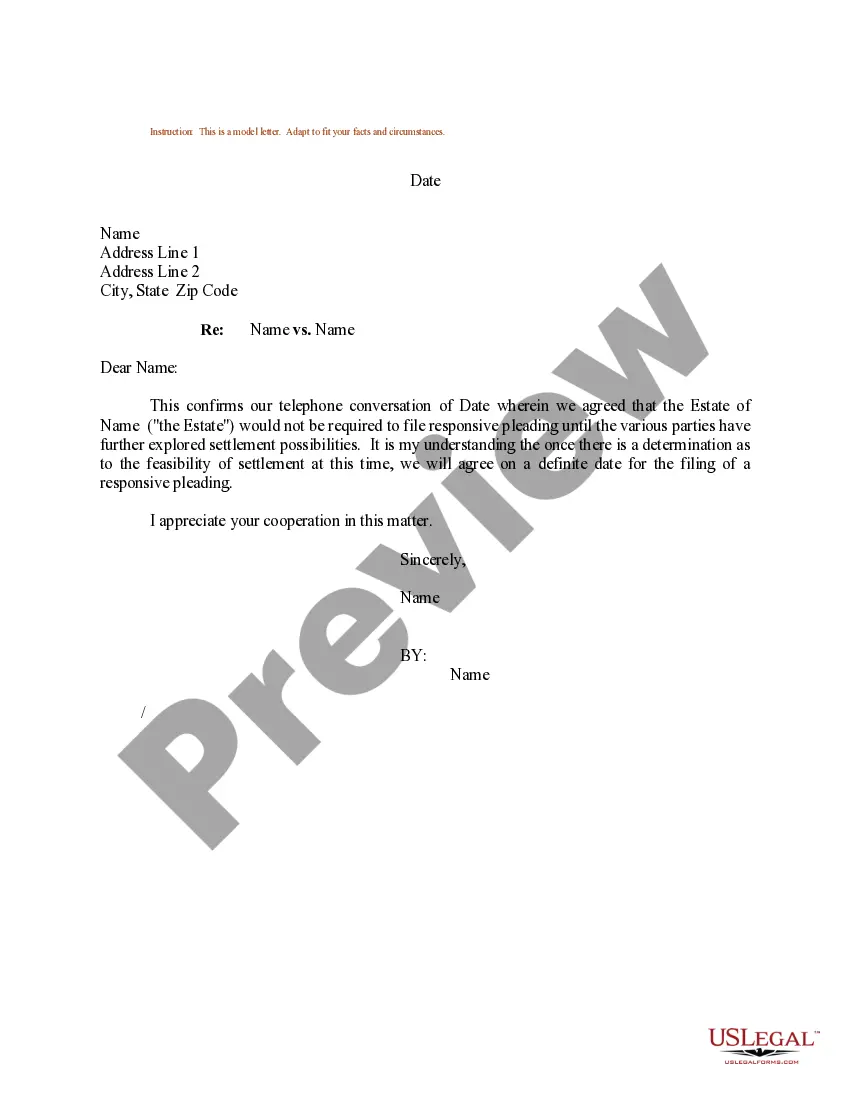
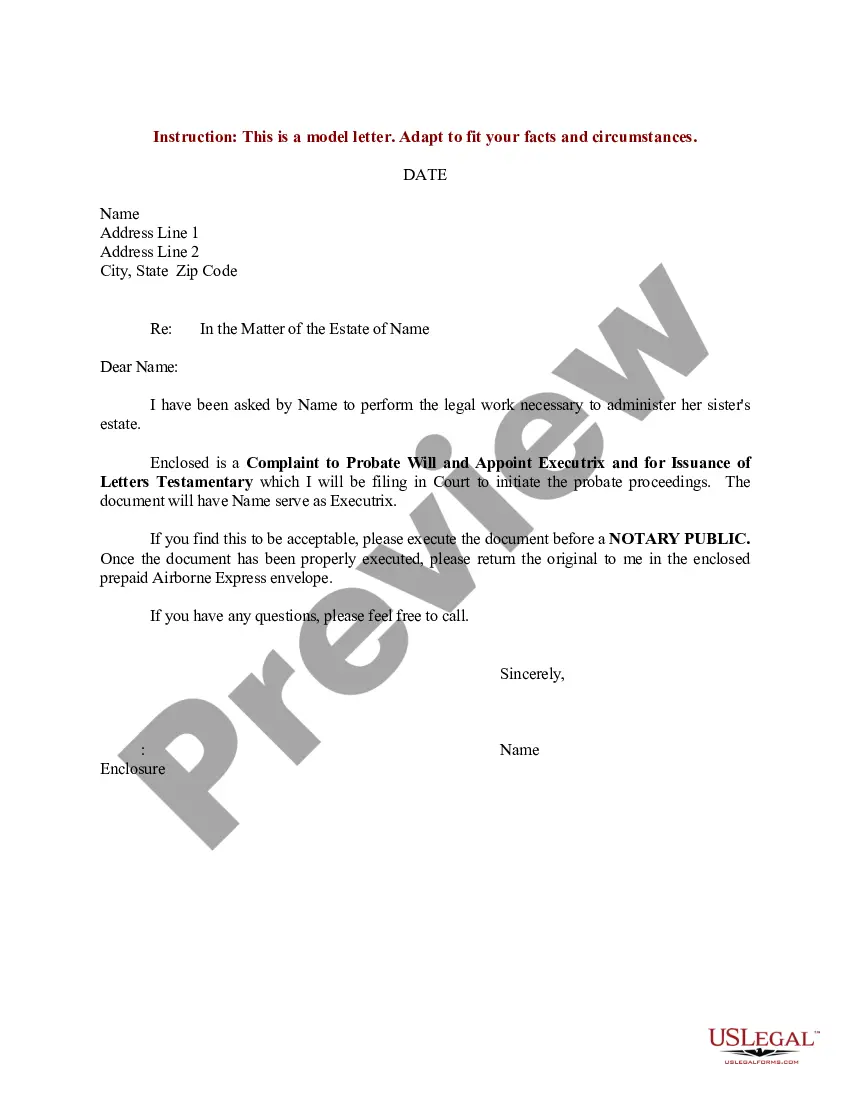
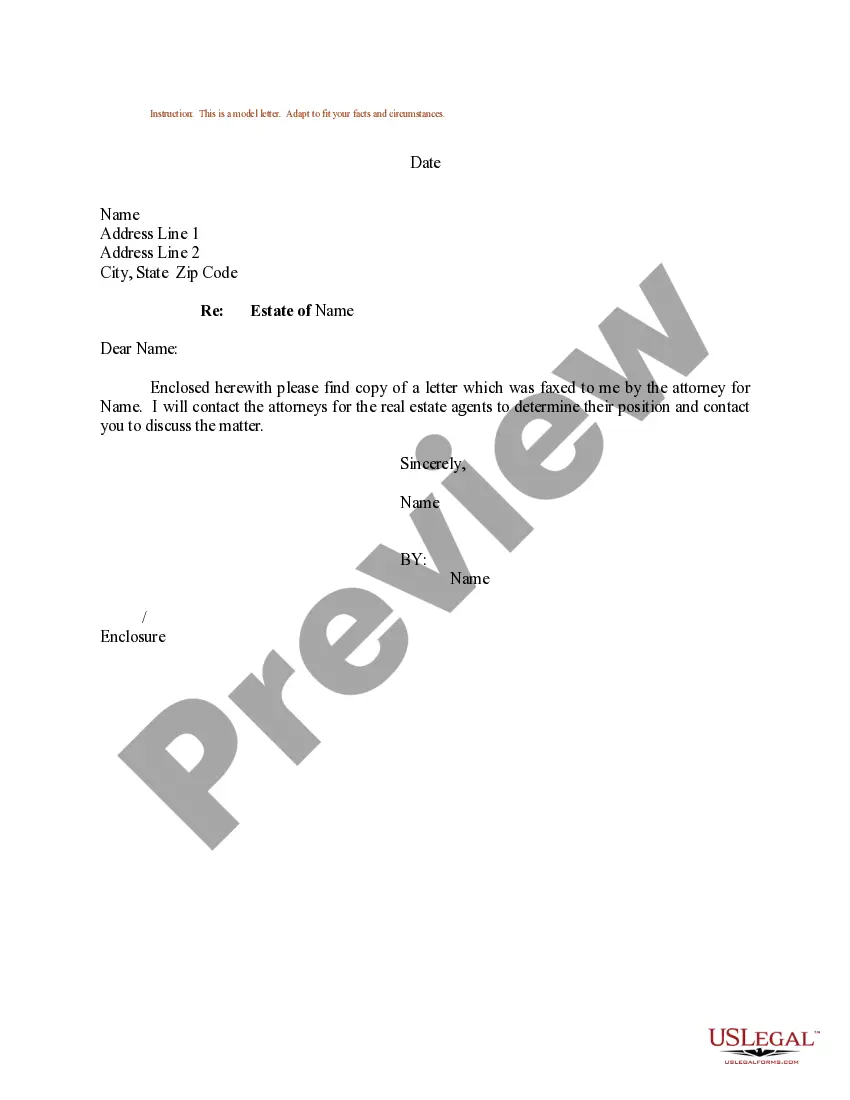
This form is a Sample Letter for Estate Settlement, created in a Word format. It serves as a formal communication confirming discussions about settling the affairs of a deceased person's estate, clarifying that no immediate legal actions are needed while negotiations continue. This letter is particularly useful in estate settlements, distinguishing it from other legal forms by focusing on non-responsive pleadings until settlement talks are explored.
Key components of this form
- Date of the letter
- Address section for the sender and recipient
- Reference to the telephone conversation regarding the estate
- Details about the agreement to delay filing responsive pleadings
- Closing remarks expressing appreciation for cooperation
- Signature block for the sender's name and authorized representative

When to use this document
This letter should be used when parties involved in an estate settlement wish to confirm arrangements discussed over the phone, specifically an agreement to pause responsive legal actions while exploring potential settlement options. It is especially relevant after initial communications regarding the estate's affairs.
Who can use this document
- Executors or administrators of an estate
- Legal representatives involved in estate settlements
- Beneficiaries or heirs negotiating settlement terms
- Attorneys handling estate-related communications
Instructions for completing this form
- Enter the date at the top of the letter.
- Fill in both the sender's and recipient's contact information.
- Specify the names of the parties discussed in the settlement talks.
- Outline the agreement regarding the delay of responsive pleadings.
- Include a closing statement showing appreciation for cooperation.
- Sign the document, including the name and title of the sender.
Does this form need to be notarized?
This form does not typically require notarization unless specified by local law. However, ensuring its validity by following proper legal procedures is essential.
Get your form ready online
Our built-in tools help you complete, sign, share, and store your documents in one place.
Make edits, fill in missing information, and update formatting in US Legal Forms—just like you would in MS Word.
Download a copy, print it, send it by email, or mail it via USPS—whatever works best for your next step.
Sign and collect signatures with our SignNow integration. Send to multiple recipients, set reminders, and more. Go Premium to unlock E-Sign.
If this form requires notarization, complete it online through a secure video call—no need to meet a notary in person or wait for an appointment.
We protect your documents and personal data by following strict security and privacy standards.

Make edits, fill in missing information, and update formatting in US Legal Forms—just like you would in MS Word.

Download a copy, print it, send it by email, or mail it via USPS—whatever works best for your next step.

Sign and collect signatures with our SignNow integration. Send to multiple recipients, set reminders, and more. Go Premium to unlock E-Sign.

If this form requires notarization, complete it online through a secure video call—no need to meet a notary in person or wait for an appointment.

We protect your documents and personal data by following strict security and privacy standards.
Avoid these common issues
- Failing to include the date of the letter.
- Not clearly identifying all parties involved in the settlement talks.
- Omitting the appreciation closing, which adds a professional touch.
- Forgetting to sign the letter, making it invalid.
Benefits of using this form online
- Easy to download and edit as needed.
- Access to expert drafts tailored by licensed attorneys.
- Convenient format that can be customized to fit personal circumstances.
- Fast and secure retrieval of legal documents without in-person meetings.
Looking for another form?


Form popularity
FAQ
Naming a Qualified Executor The most important guideline in naming an executor is to choose some-one you trust enough to have access to your personal records and finances after your death. Many people choose someone who is also named to get a substantial amount of property under the will.
Give the letter a personal touch and address each of your heirs and beneficiaries personally. Tell them any last wishes you may have or any hopes you have for their future. Write as clearly as possible. Use specific details and avoid using shorthand.
A Letter of Appointment of Executor helps prove you have been put in charge of someone's estate after they have passed away. As Executor, you've been given the duty to manage the estate and carry out the directions of the will; however, a court may require official documentation.
Keep the letter brief and straightforward as it is a legal document. Confirm the situation whereby probate has been granted. Was it written in the will? Clearly outline the obligations of the recipient so they know what is required of them. Sign the letter to make it legally binding.
Write only one beneficiary on each line. Make sure that you write the full names of all beneficiaries. For example, if you name you children as beneficiaries, DO NOT merely write children on one of the lines; instead write the full names of each of your children on separate lines.
An executor letter authorizes a person or organization to act on behalf of a decedent's estate as an executor.It's also called "letters of testamentary" or "letters of administration" in some jurisdictions.
Identify persons the executor should notify of your death. Include family members, close friends and business associates, including your attorney. Provide contact information for each person, as well as any final message or instructions to be given. Describe your important estate documents and their exact location.
The Letters of Executorship and Letters of Authority can only be obtained from the Office of the Master of the High Court.
Give the house, the land or the business to just one child and make up the difference with a monetary share for the others. Alternatively, stipulate that the asset be sold and the proceeds divided evenly. That way, the one who really wants the asset can buy the others out.