Accident Waiver and Release of Liability Form
What this document covers
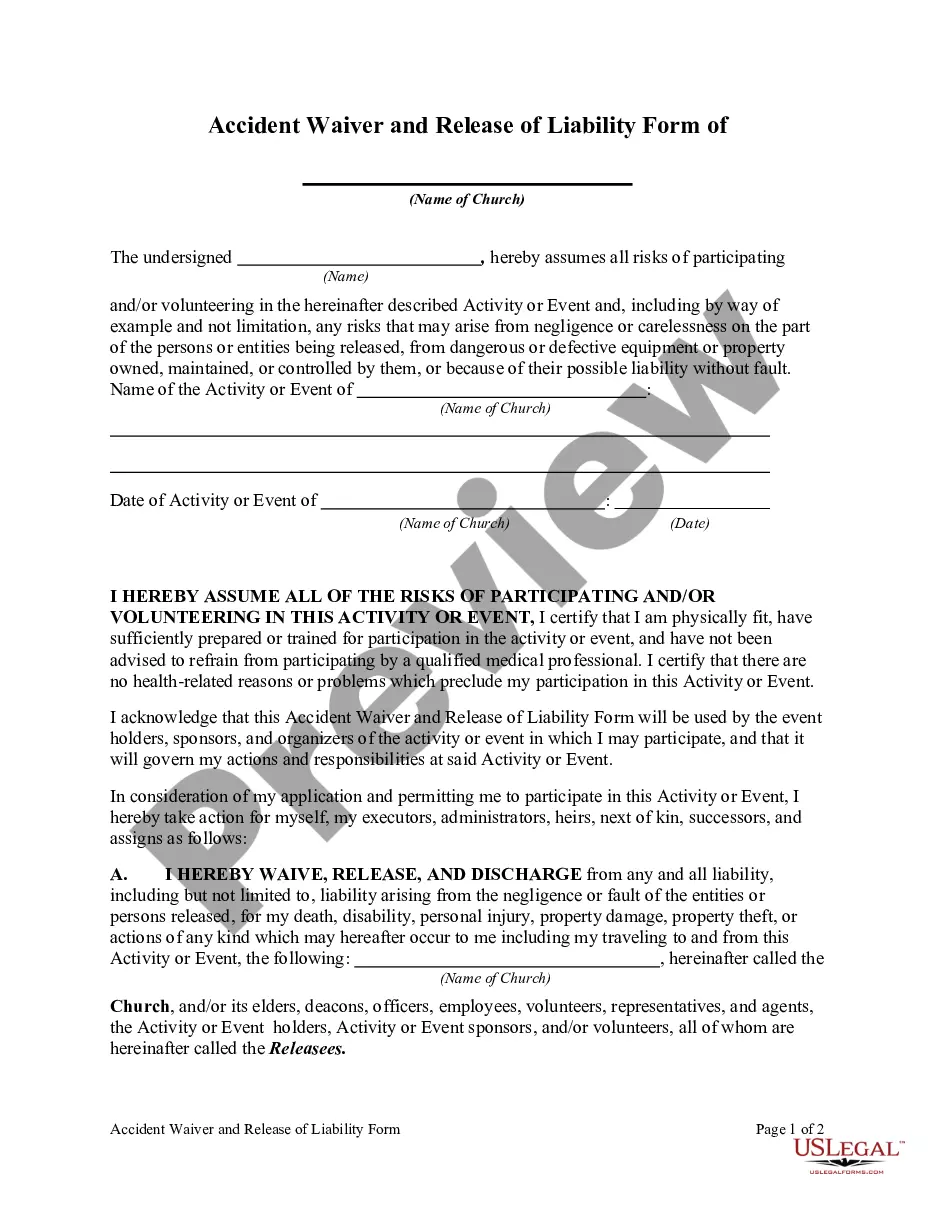
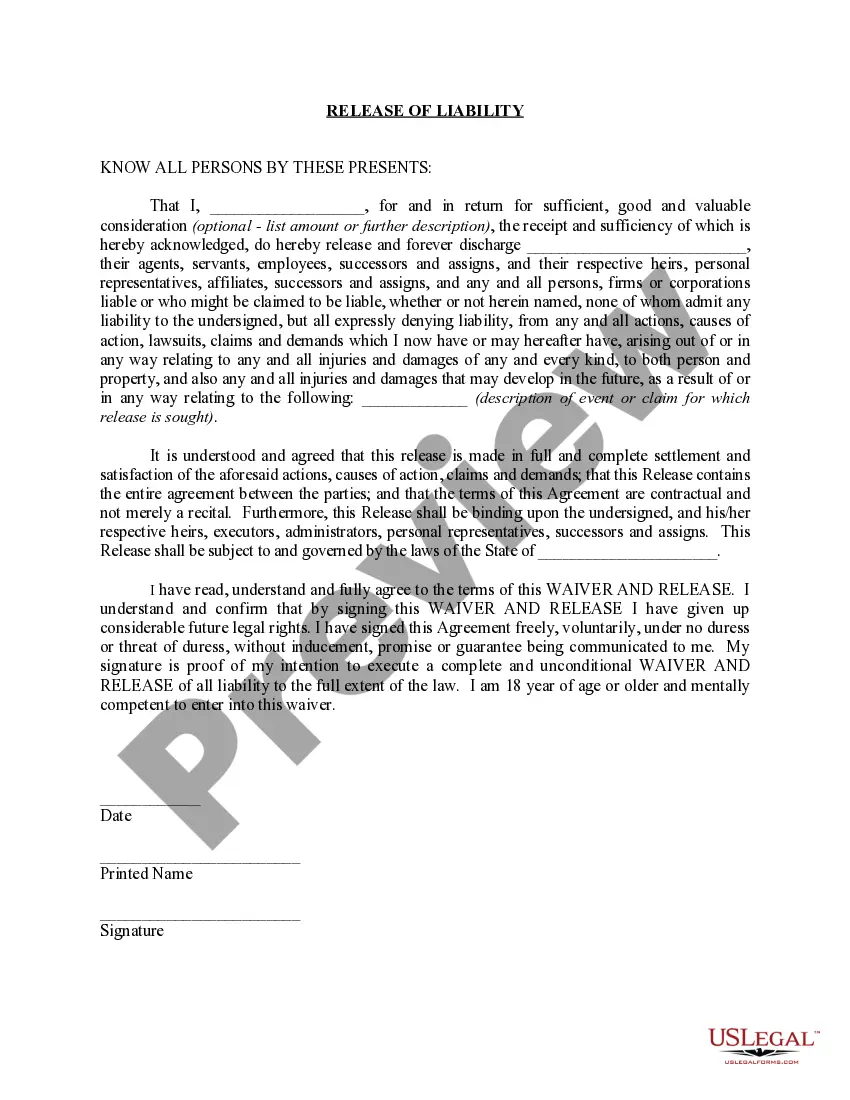
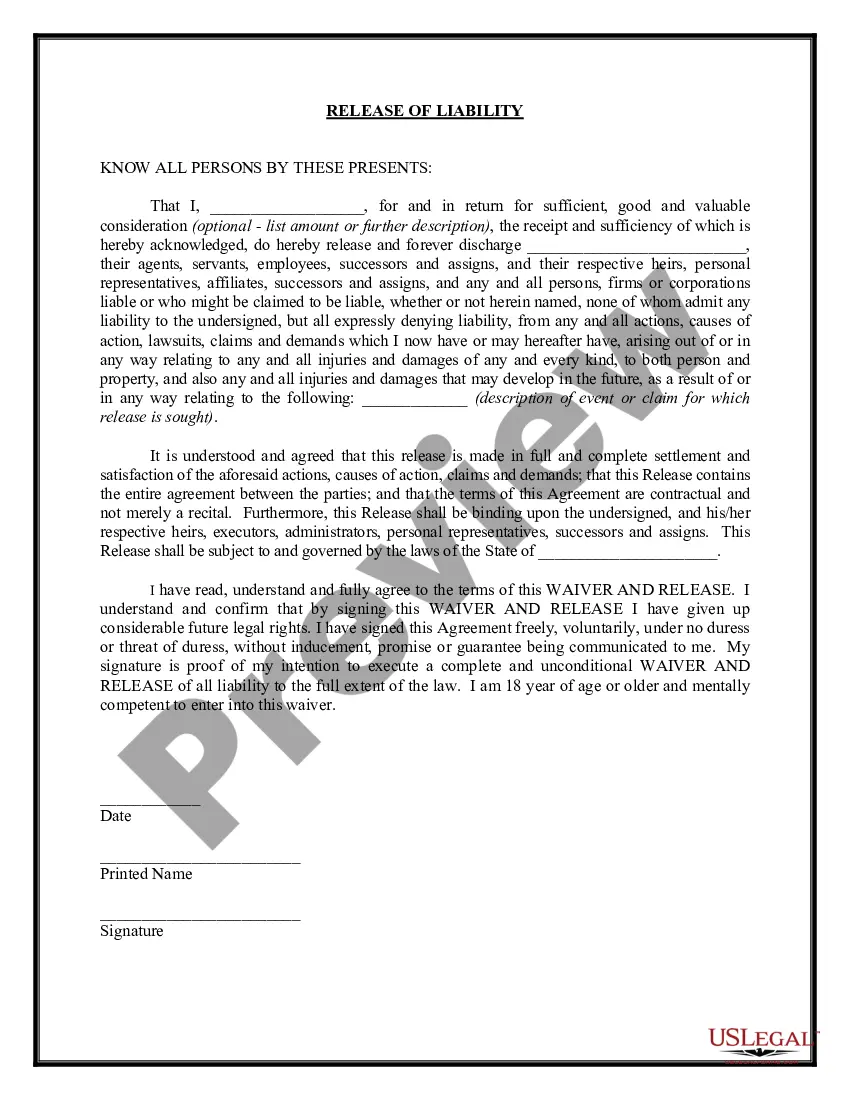
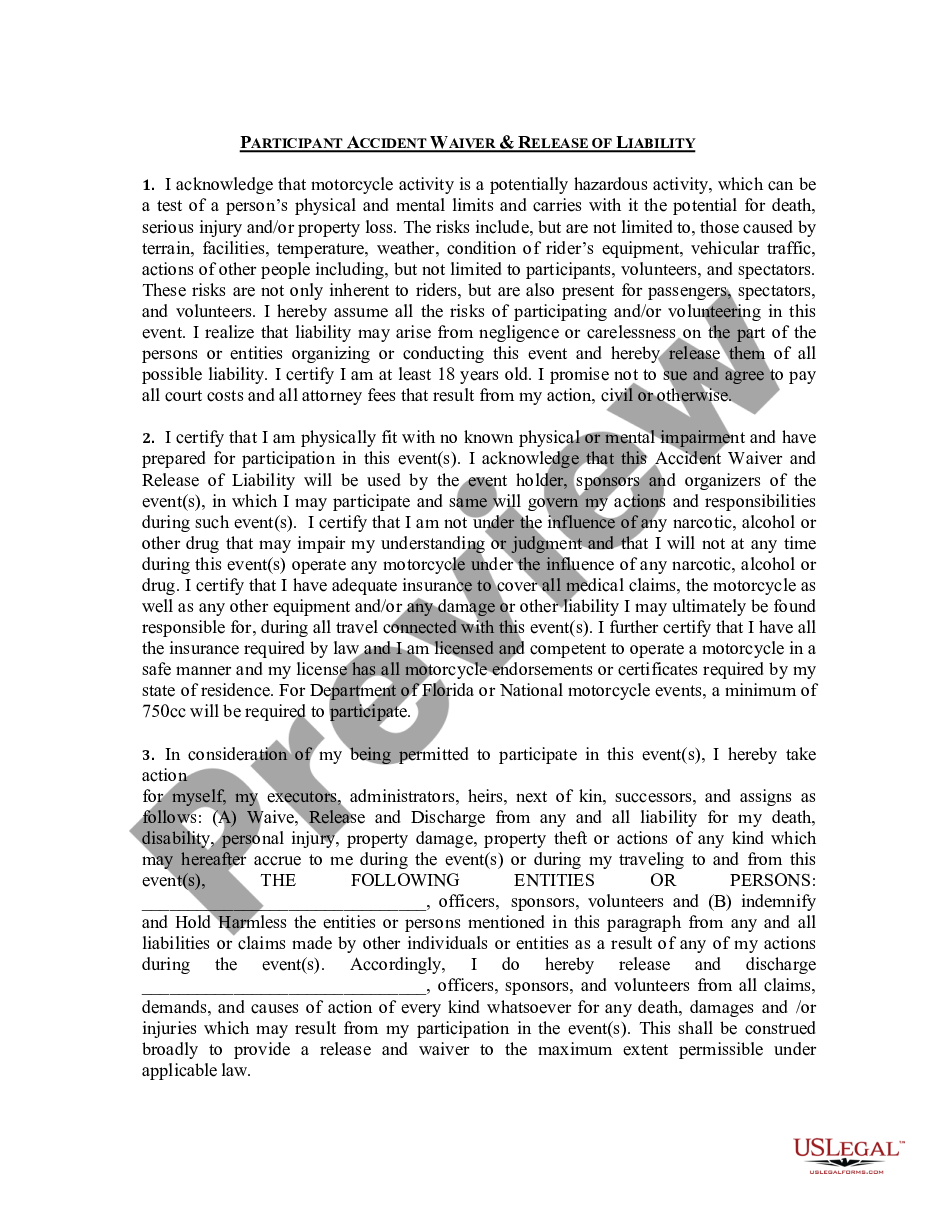
The Accident Waiver and Release of Liability Form is a legal document used by participants in potentially risky activities. This form serves to relinquish the right to sue for injuries that may occur during the event. Unlike other waivers, this form is designed specifically for individuals participating in activities organized by others, ensuring all parties clearly understand their responsibilities and potential liabilities.
Key parts of this document
- Acknowledgement of risks associated with the activity or event.
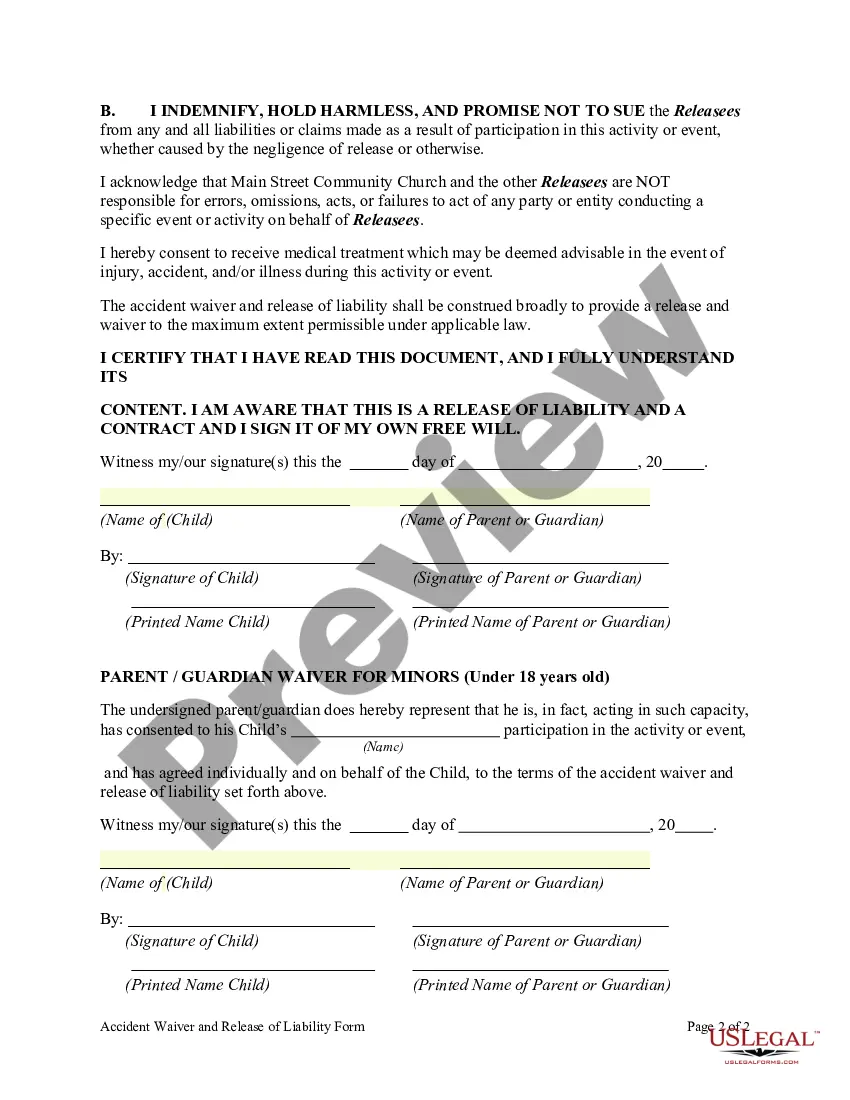
- Indemnification clause protecting the organizers from claims.
- Consent for medical treatment in case of injury.
- Integration of personal representativesâapplicable to heirs and successors.
When this form is needed
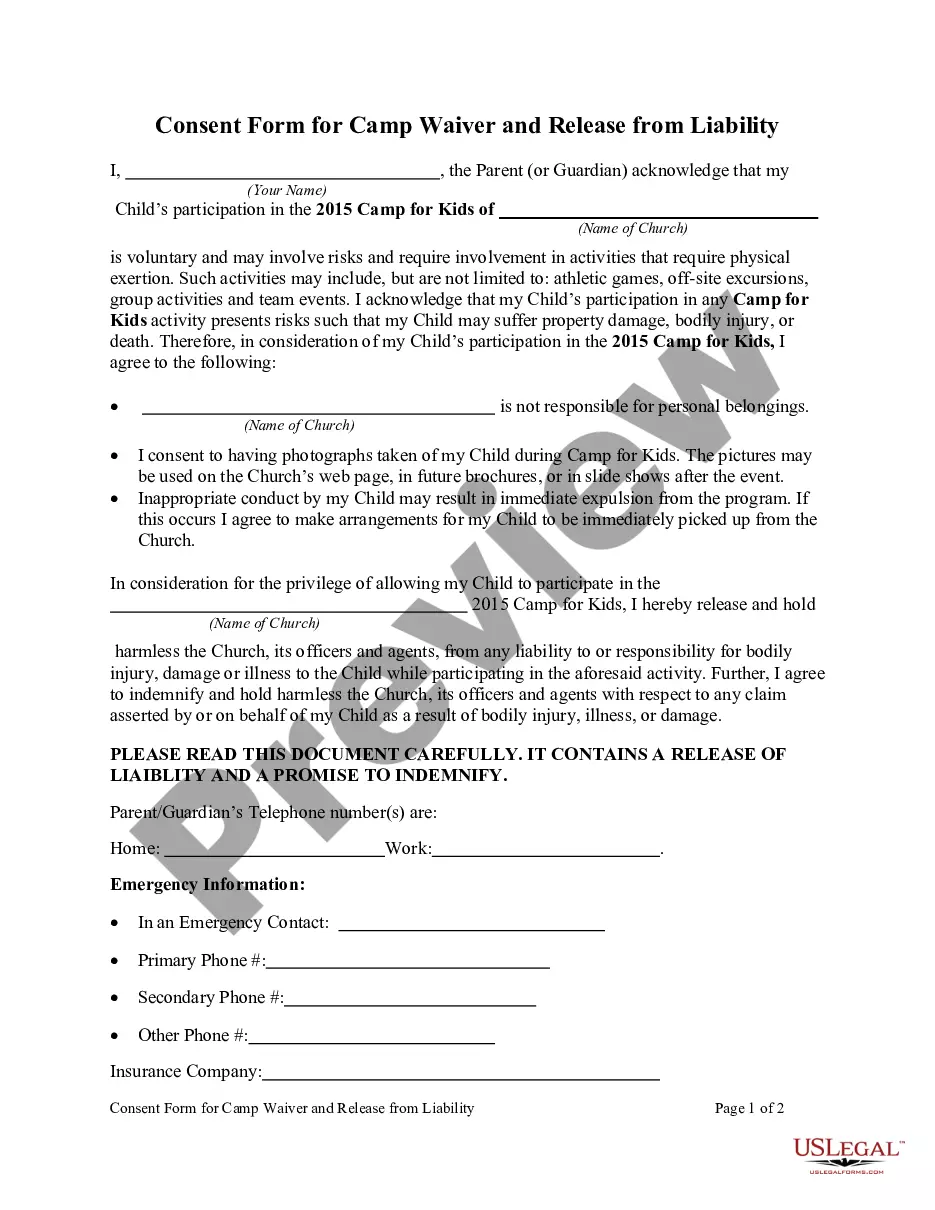
This form should be used whenever participants engage in activities that may involve physical risk, such as sports events, community gatherings, or adventure activities. It is essential for organizations to protect themselves from liability claims that may arise from accidents or injuries sustained during these events.
Who this form is for
- Event organizers looking to mitigate liability for activities.
- Participants in recreational or organized events that involve physical activity.
- Community organizations hosting events that may present risks to participants.
How to prepare this document
- Identify all parties involved, including the organizers and participants.
- Carefully read through the waiver and all its provisions.
- Fill in your name, date, and any other required personal information.
- Indicate your understanding of the risks involved by signing the form.
- Ensure that a representative from the organizing entity countersigns if necessary.
Does this form need to be notarized?
This form does not typically require notarization unless specified by local law. However, to ensure it holds up in a legal context, itâs best practice to have it witnessed or notarized where applicable.
Get your form ready online
Our built-in tools help you complete, sign, share, and store your documents in one place.
Make edits, fill in missing information, and update formatting in US Legal Forms—just like you would in MS Word.
Download a copy, print it, send it by email, or mail it via USPS—whatever works best for your next step.
Sign and collect signatures with our SignNow integration. Send to multiple recipients, set reminders, and more. Go Premium to unlock E-Sign.
If this form requires notarization, complete it online through a secure video call—no need to meet a notary in person or wait for an appointment.
We protect your documents and personal data by following strict security and privacy standards.

Make edits, fill in missing information, and update formatting in US Legal Forms—just like you would in MS Word.

Download a copy, print it, send it by email, or mail it via USPS—whatever works best for your next step.

Sign and collect signatures with our SignNow integration. Send to multiple recipients, set reminders, and more. Go Premium to unlock E-Sign.

If this form requires notarization, complete it online through a secure video call—no need to meet a notary in person or wait for an appointment.

We protect your documents and personal data by following strict security and privacy standards.
Avoid these common issues
- Failing to read the entire document before signing.
- Not providing accurate personal details.
- Missing the counter-signature from event organizers when required.
Advantages of online completion
- Easy access to a legally vetted document that can be customized to fit specific needs.
- Quick download for immediate use without the need for in-person visits.
- Editable format allows for personalization and efficient completion.
Legal use & context
- This form may not always be enforceable in court, depending on state laws.
- Courts may examine the language of the release and the circumstances under which it was signed.
- Understanding local laws about liability waivers is crucial for both parties.
Summary of main points
- The Accident Waiver and Release of Liability Form protects event organizers from legal claims.
- Participants must understand and acknowledge the risks of the activity.
- All parties involved should complete the form accurately and sign it before participation.
Looking for another form?
Form popularity
FAQ
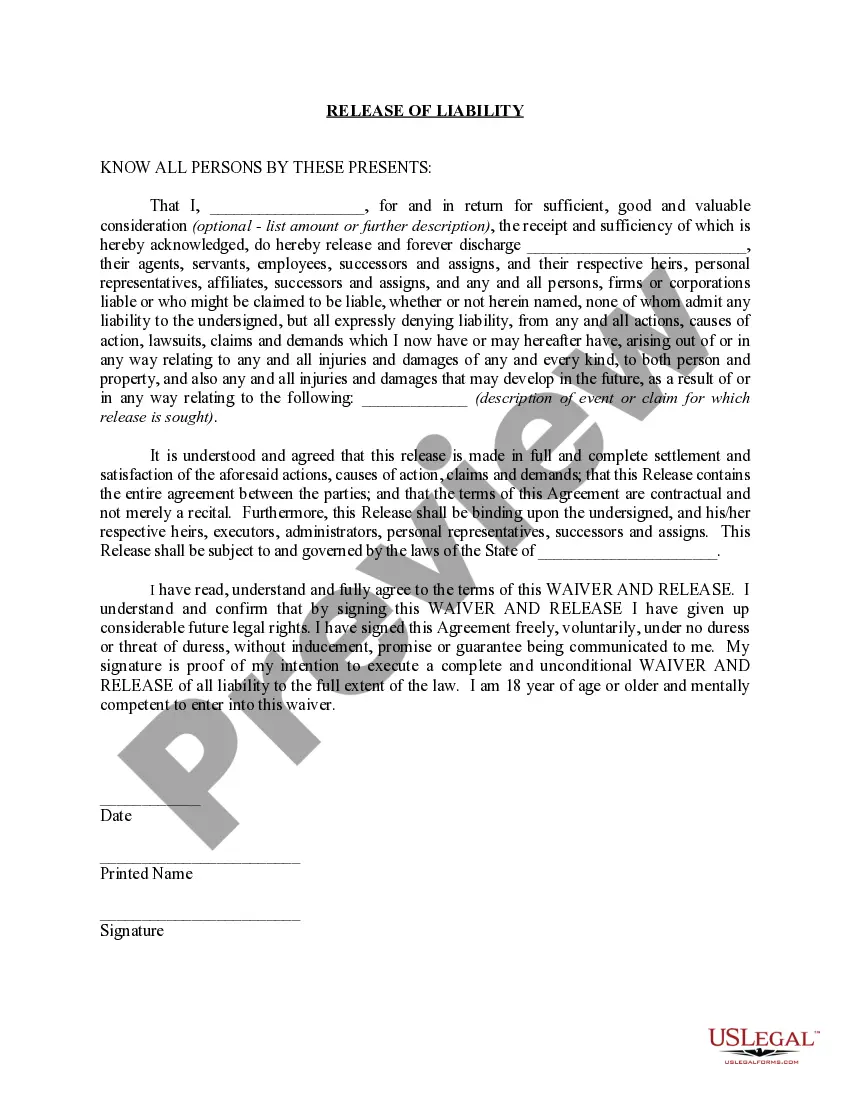
A release and waiver agreement is an enforceable promise not to pursue legal action in exchange for compensation. The releasee gives money or some other form of compensation to the releasor, who then agrees not to press charges, sue, or take any other legal action against the releasee.
All parties involved in the incident. A statement saying you were involved in the accident that caused the injury. The total amount of the property damage. A statement that releases the defendant from any future claims or damages that are related to the incident.
A liability waiver, or release waiver, is a legal document that a company or organization requires members of the public to sign in order to protect their organization from being sued if you sustain an injury.Depending on the facts of your case, you may still be able to file a lawsuit and recover damages.
If you've been injured due to negligent actions, you can sue even if you signed a waiver. Winning a lawsuit concerning negligence is not uncommon. Many celebrities have sued for negligence even though they signed documents stating they understood the risks.
Your average car accident settlement might be approximately $21,000. It is likely to fall somewhere between $14,000 and $28,000. The settlement is generally higher for more severe or permanent injuries. You'll also get paid more if the other driver was found to be driving under the influence.
Both parties involved in the accident should be identified. The letter should state that the payment is full and final, and that the injured party releases the responsible party from all present and future claims. If applicable, terms and conditions for payment should be mentioned.
In California, a liability waiver must be clear, unambiguous, and explicit. In other words, waivers cannot be printed in faded ink, in small font, on the back of a paper, or in an otherwise ambiguous form. If the waiver that you sign is not represented clearly, it may not hold up in the event of a lawsuit.
Release Versus Waiver The main difference between releases and waivers is the transferring of ownership. When rights are released, they are transferred to another party. When rights are waived, they are gone altogether.In the case of the skydiver, they might be asked to sign a release form rather than a waiver.
A liability waiver, or release of liability, is a legal document that a company or organization has you sign in order to protect them from being sued in the event that you are injured.