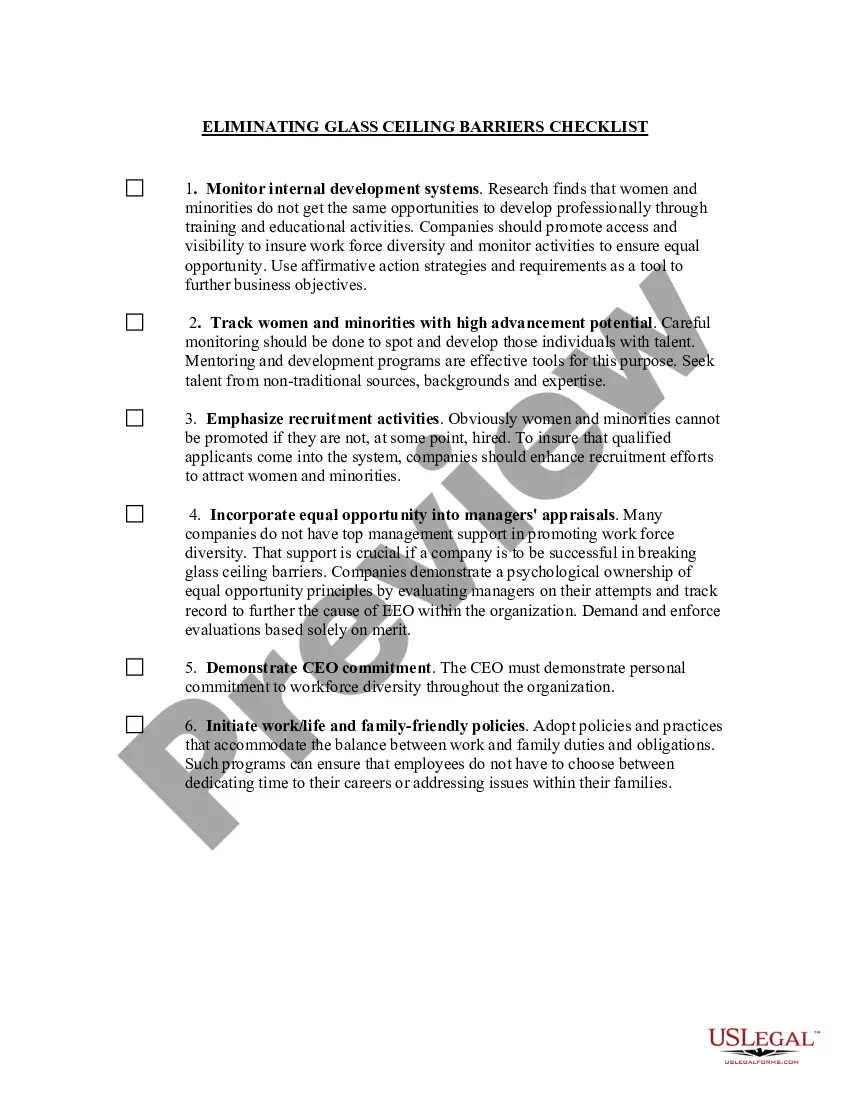
Eliminating Glass Ceiling Barriers Checklist
About this form
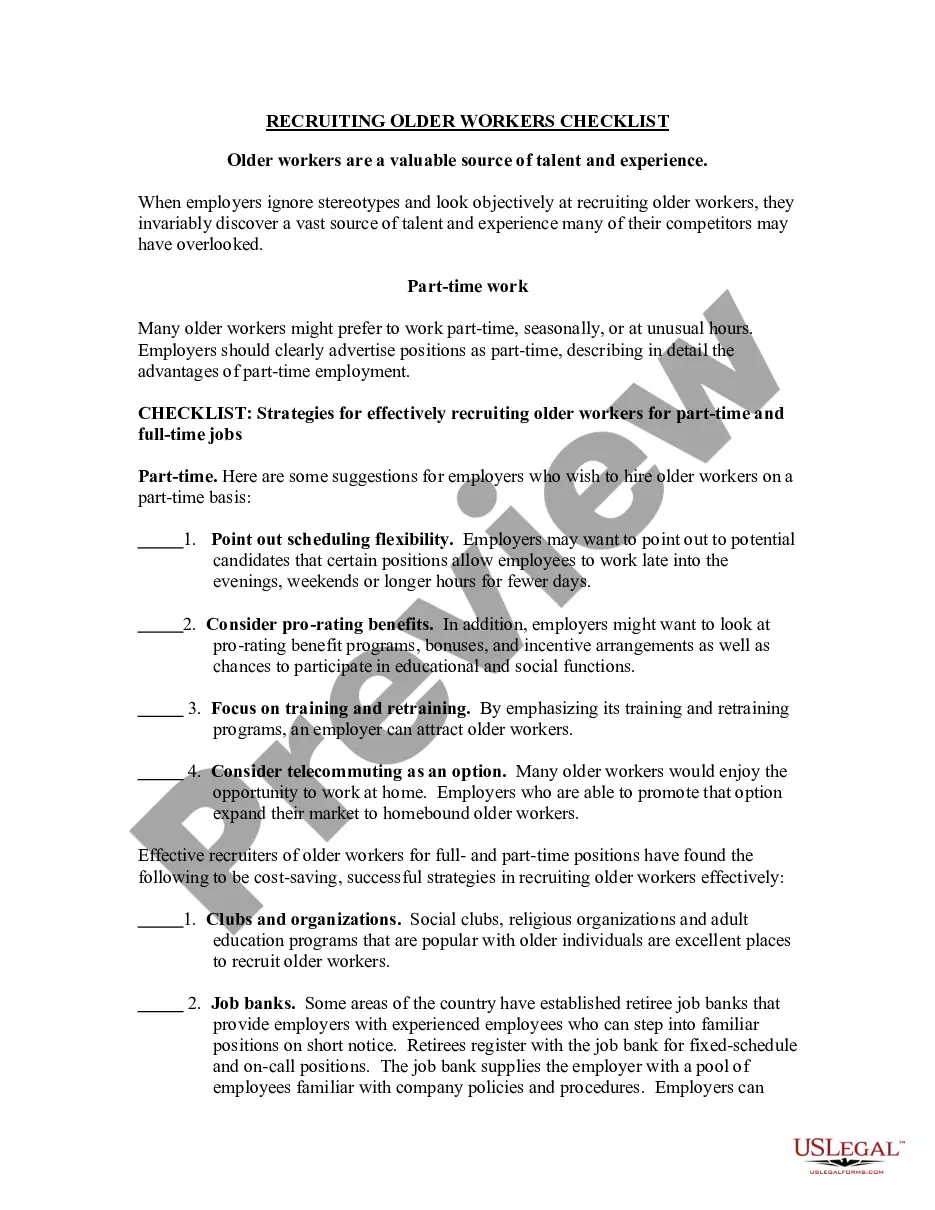
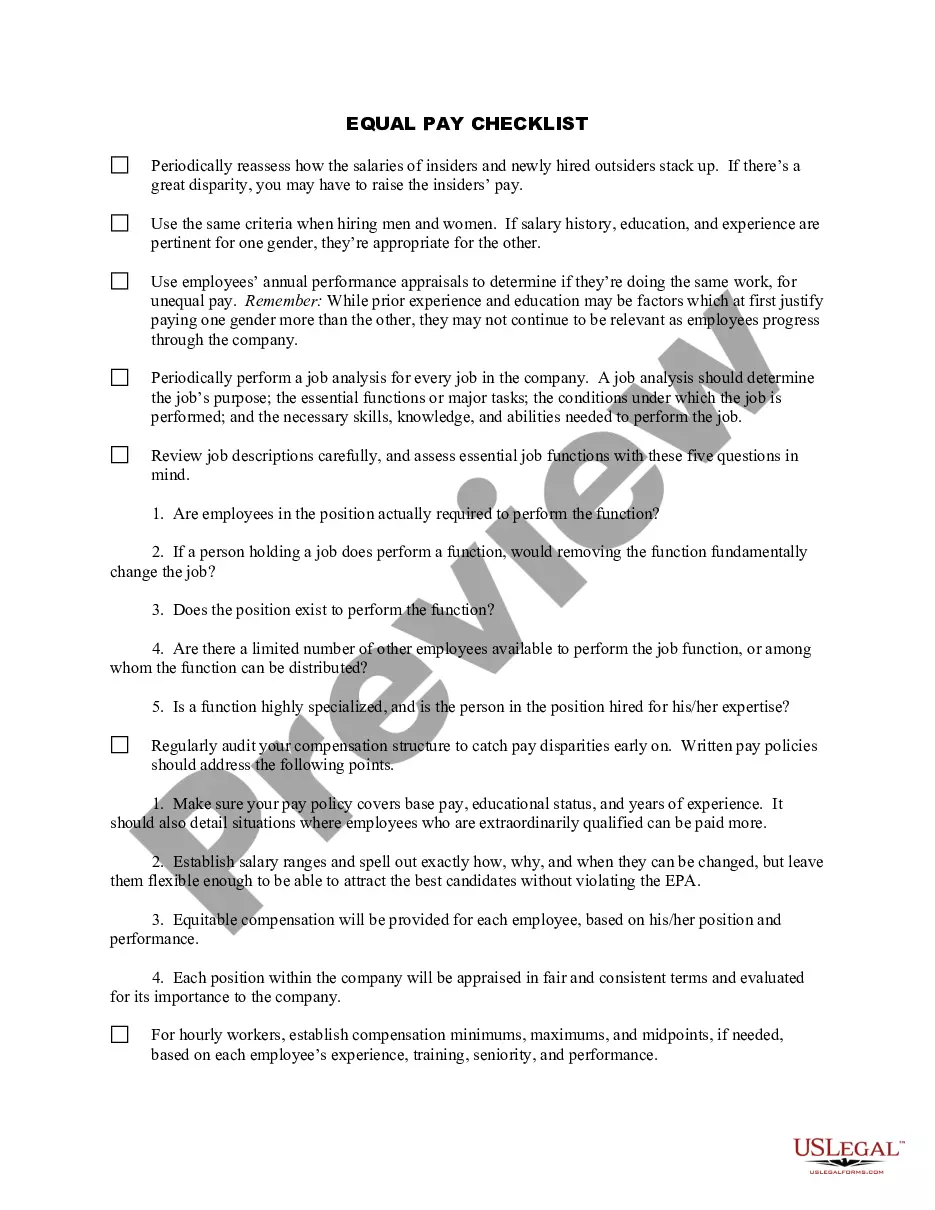
The Eliminating Glass Ceiling Barriers Checklist is a practical tool designed to help management identify and remove barriers to workforce diversity within their corporate culture. This checklist distinguishes itself by offering actionable strategies specifically aimed at promoting equal opportunities for women and minorities in the workplace.
Key parts of this document
- Monitoring internal development systems for equitable training and educational opportunities.
- Tracking advancement potential of women and minorities to foster talent development.
- Emphasizing enhanced recruitment activities to attract diverse applicants.
- Incorporating equal opportunity metrics into manager appraisals for accountability.
- Demonstrating CEO commitment to diversity initiatives within the organization.
- Initiating work/life and family-friendly policies to support employees' professional and personal responsibilities.

When to use this document
This checklist is useful when organizations are looking to assess and improve their diversity practices. It is particularly valuable during times of leadership change, strategic planning sessions, or as part of an annual review of company policies aiming to foster inclusion.
Who needs this form
- Human resources professionals responsible for diversity initiatives.
- Company management looking to enhance workplace equality.
- Diversity and inclusion officers seeking structured approaches to improve corporate culture.
- Organizational leaders aiming to fulfill corporate social responsibility goals.
Steps to complete this form
- Review your current internal development systems to ensure equal access.
- Identify and track women and minorities who exhibit high advancement potential.
- Enhance recruitment efforts focused on attracting diverse candidates.
- Incorporate equal opportunity considerations into manager evaluations.
- Ensure visible commitment to diversity from top leadership, especially the CEO.
- Implement family-friendly policies that support work/life balance.
Does this document require notarization?
In most cases, this form does not require notarization. However, some jurisdictions or signing circumstances might. US Legal Forms offers online notarization powered by Notarize, accessible 24/7 for a quick, remote process.
Get your form ready online
Our built-in tools help you complete, sign, share, and store your documents in one place.
Make edits, fill in missing information, and update formatting in US Legal Forms—just like you would in MS Word.
Download a copy, print it, send it by email, or mail it via USPS—whatever works best for your next step.
Sign and collect signatures with our SignNow integration. Send to multiple recipients, set reminders, and more. Go Premium to unlock E-Sign.
If this form requires notarization, complete it online through a secure video call—no need to meet a notary in person or wait for an appointment.
We protect your documents and personal data by following strict security and privacy standards.

Make edits, fill in missing information, and update formatting in US Legal Forms—just like you would in MS Word.

Download a copy, print it, send it by email, or mail it via USPS—whatever works best for your next step.

Sign and collect signatures with our SignNow integration. Send to multiple recipients, set reminders, and more. Go Premium to unlock E-Sign.

If this form requires notarization, complete it online through a secure video call—no need to meet a notary in person or wait for an appointment.

We protect your documents and personal data by following strict security and privacy standards.
Typical mistakes to avoid
- Failing to monitor the progress of diversity initiatives over time.
- Neglecting to provide adequate resources for mentorship and training programs.
- Overemphasizing recruitment without ensuring retention and development of diverse employees.
- Not involving top management in the commitment to diversity and inclusion efforts.
Why use this form online
- Convenient access to a structured checklist that can be downloaded and used at any time.
- Editable format allows for customization to fit specific organizational needs.
- Reliable guidance from content drafted by licensed attorneys ensures legal soundness.
Quick recap
- The checklist is an essential tool for identifying and eliminating glass ceiling barriers.
- Implementation of diverse practices benefits the organization's culture and legal standing.
- Management commitment is crucial for the success of diversity initiatives.
Looking for another form?

Form popularity
FAQ
The glass ceiling is a popular metaphor for explaining the inability of many women to advance past a certain point in their occupations and professions, regardless of their qualifications or achievements. In this article, we review sociological research on glass ceiling effects at work.
One example of the glass ceiling can be seen in the office of the president of the United States. There's no law that prevents a woman from occupying this office, yet it still hasn't happened. Now let's take a company with a diverse workforce, boasting a good percentage of women and minorities throughout the ranks.
New research finds the glass ceiling -- that invisible barrier to advancement that women face at the top levels of the workplace -- remains as intractable as ever and is a drag on the economy.Although women have surpassed men in educational attainment, they are vastly underrepresented in top-paying jobs.
Few women tend to reach positions in the upper echelon of society, and organizations are largely still almost exclusively lead by men. Studies have shown that the glass ceiling still exists in varying levels in different nations and regions across the world.
Earning less than men who do the same job. Being treated as incompetent. Experiencing microaggressions regularly. Receiving less support than men who do the same job.
Why Do Glass Ceilings Exist? Glass ceilings are often the result of unconscious bias instinctive, underlying beliefs about ethnicity, gender, age, sexuality, social class, religion, and so on. This may be largely unintentional.
The term "glass ceiling" refers to the sometimes-invisible barrier to success that many women come up against in their careers.On the occasions when there was more than one woman manager at a meeting, there were usually comments made if the two sat together.
The glass ceiling effect is the pervasive resistance to the efforts of women and minorities to reach the top ranks of management in major corporations.If women did return to work, they were believed to be less dedicated employees because of their maternal duties.