Complaint regarding Slip and Fall
What this document covers
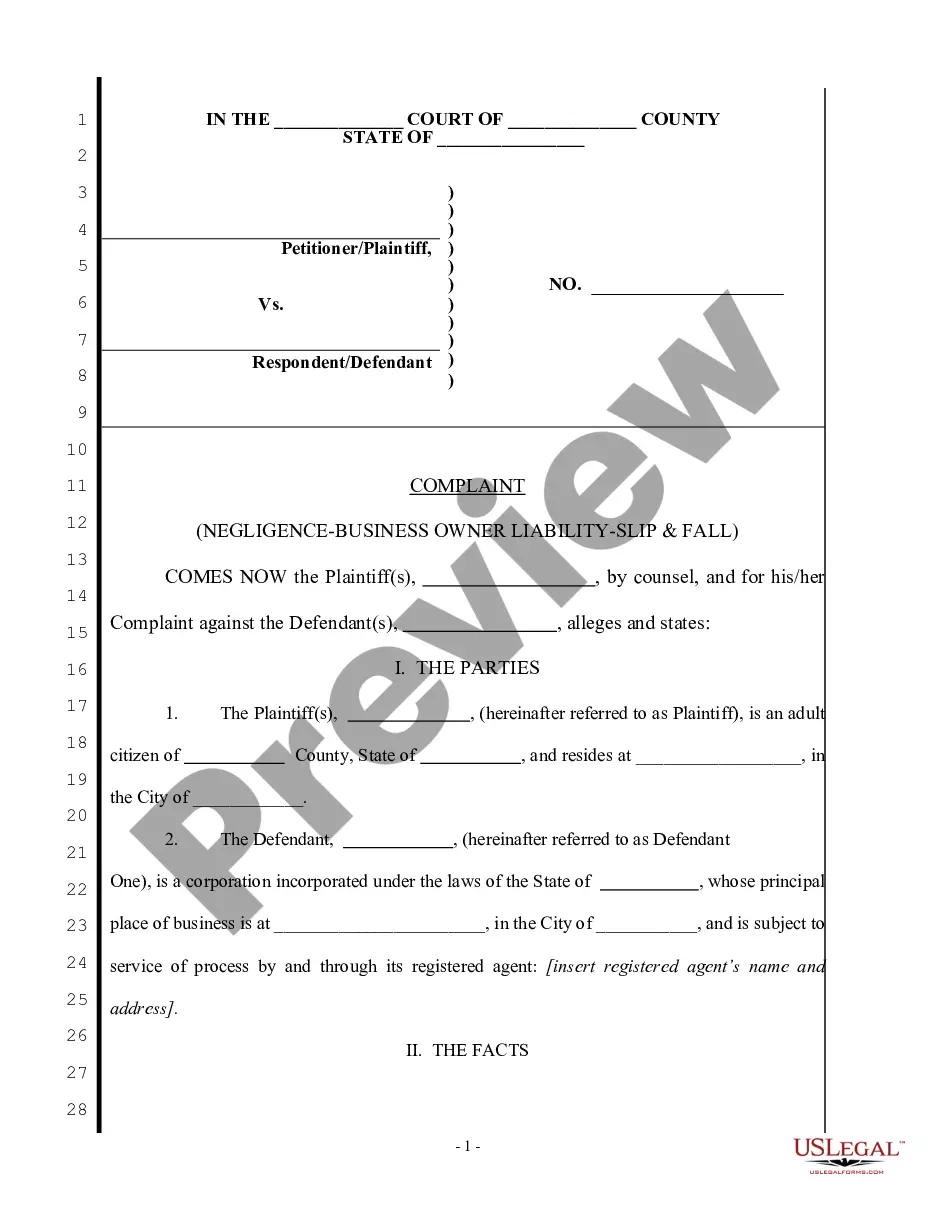
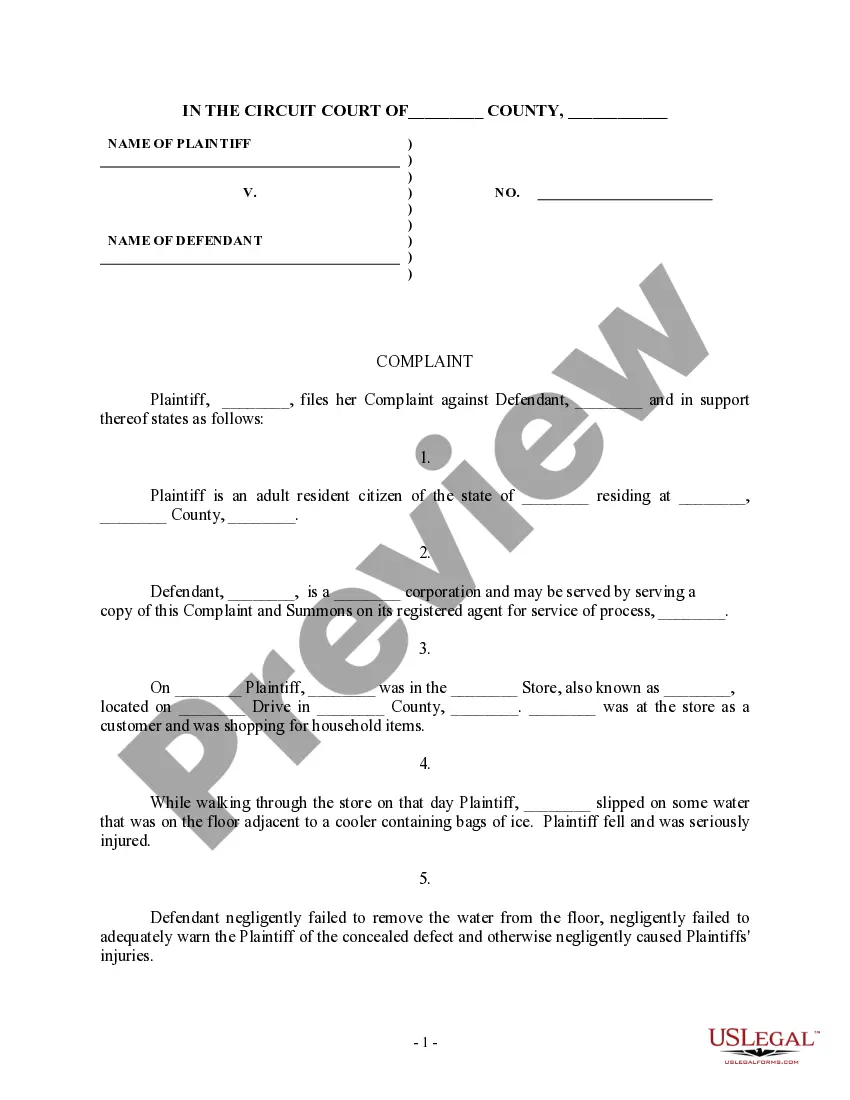
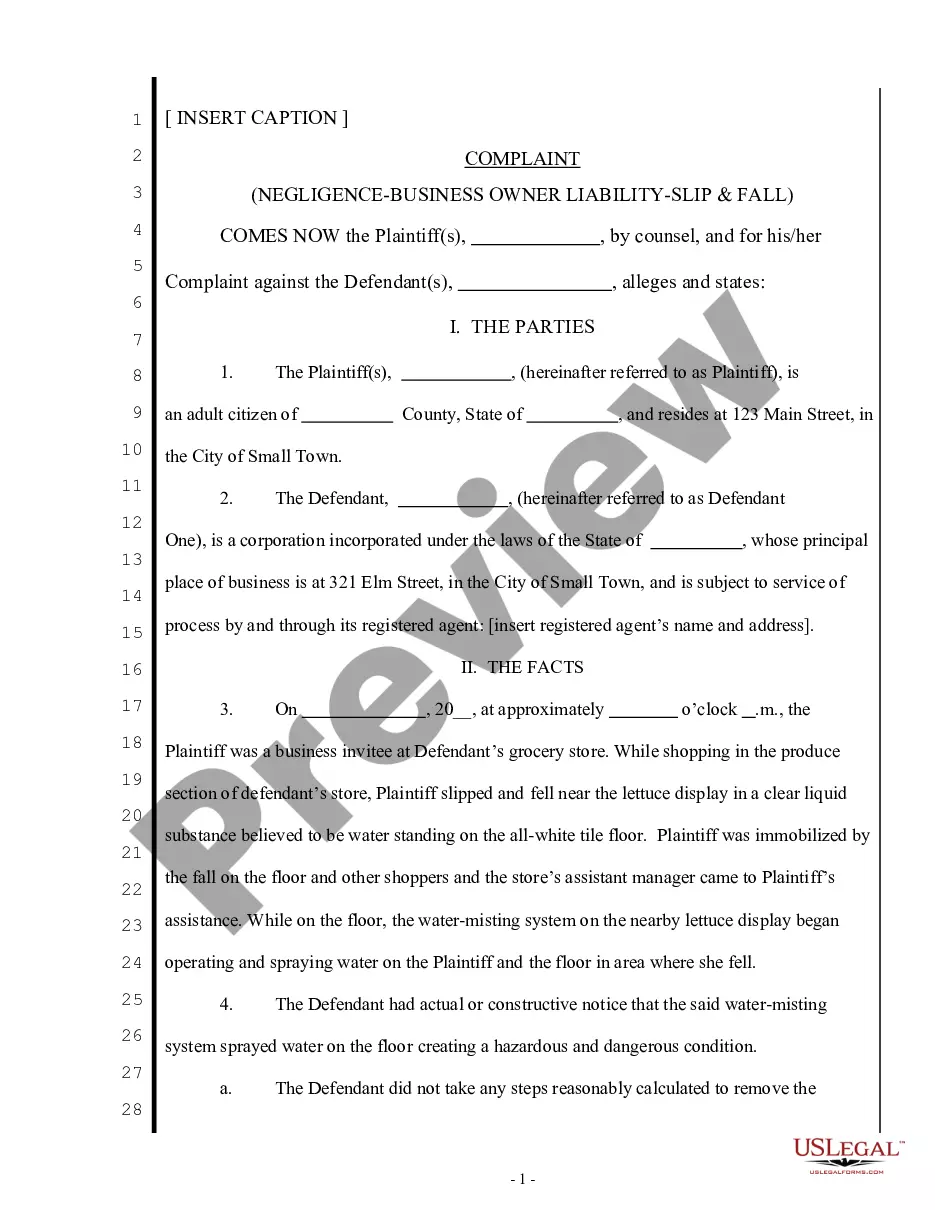
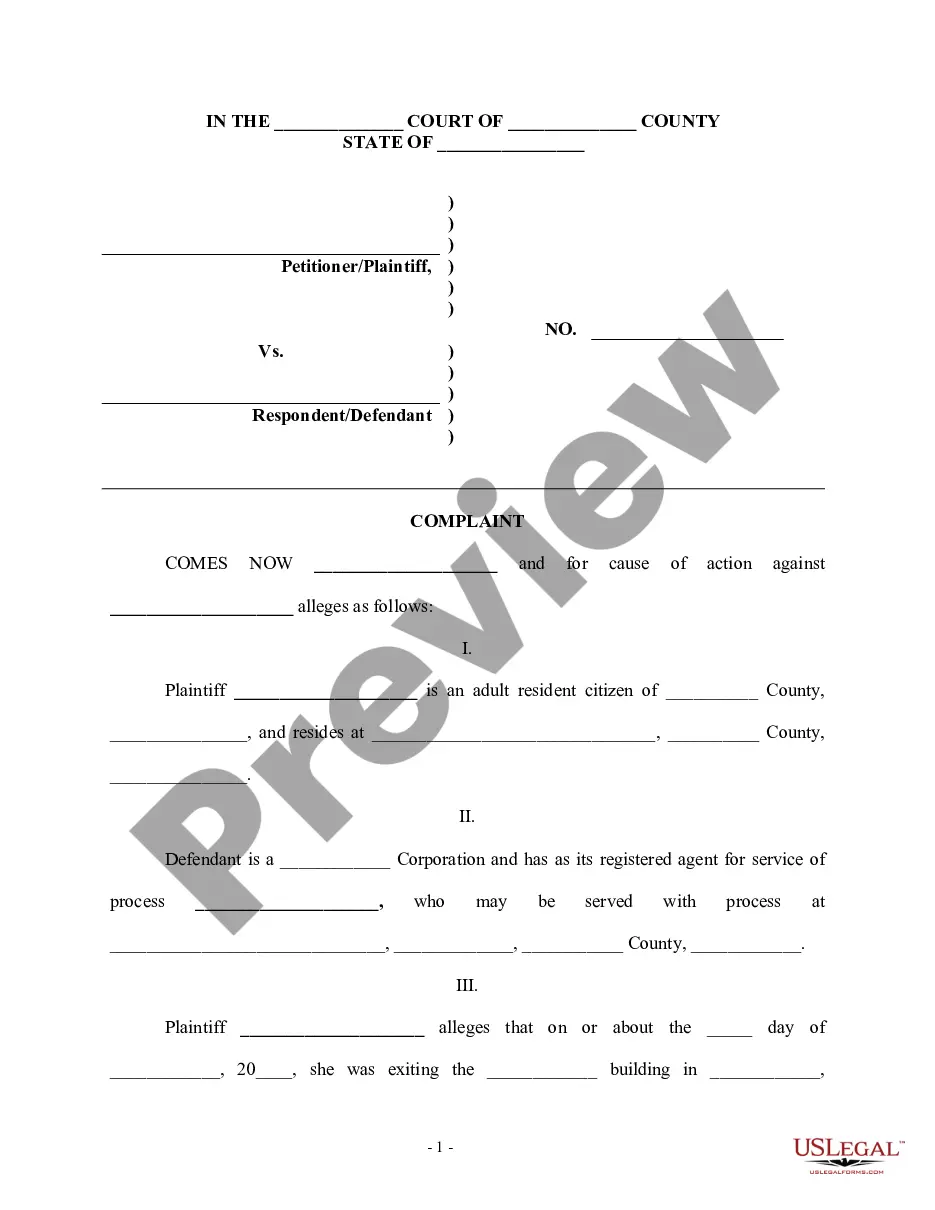
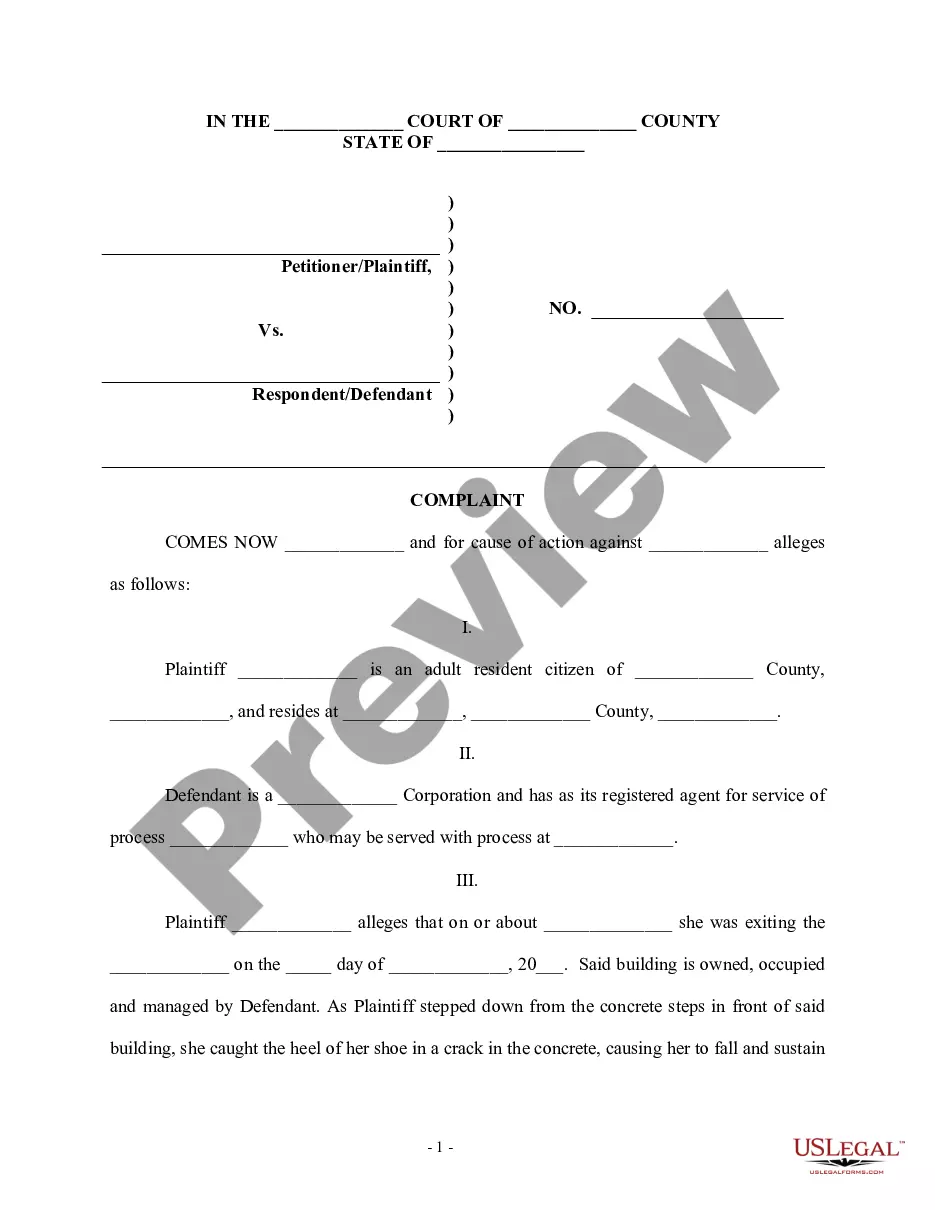
This Complaint regarding Slip and Fall form is a legal document used to file a personal injury lawsuit against a business owner. It seeks damages due to injuries sustained by a plaintiff after slipping and falling on the premises of the defendant. This form is specifically designed for personal injury claims resulting from slip and fall accidents, distinguishing it from other personal injury complaints that may involve different circumstances or types of injuries.
Key parts of this document
- The Parties: Identification of the plaintiff and defendant, including their addresses.
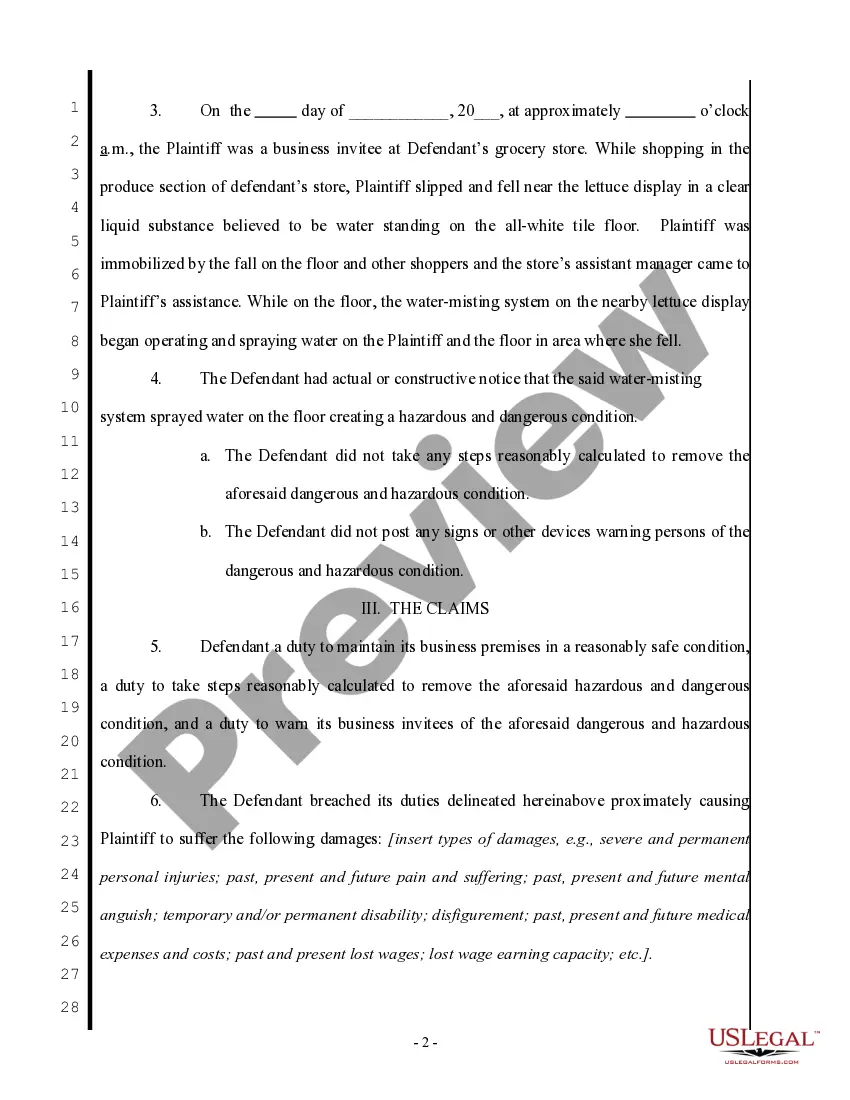
- The Facts: A detailed account of the incident, including the location, circumstances, and conditions that led to the slip and fall.
- The Claims: An assertion of the defendant's responsibilities and their failure to maintain safe premises, along with the damages incurred by the plaintiff.
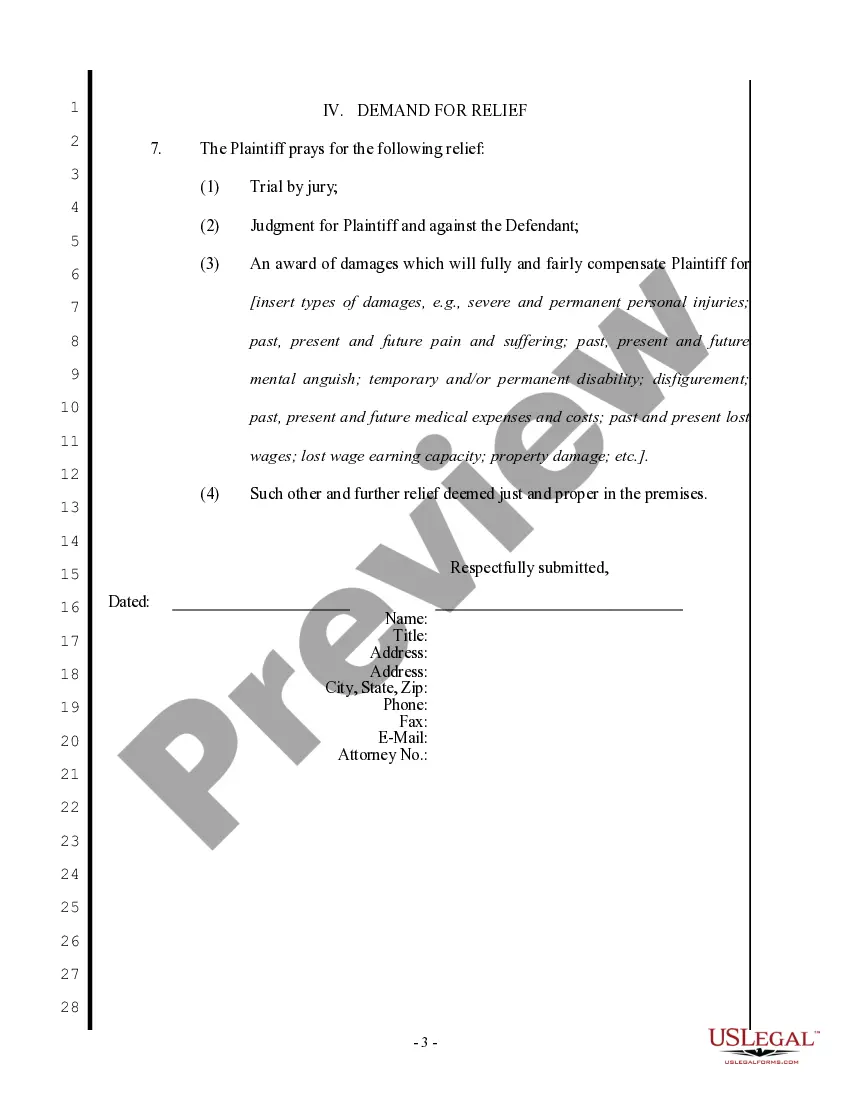
- Demand for Relief: A request for specific actions to be taken by the court, including compensation for damages.

When to use this form
This form should be used when an individual has sustained injuries from a slip and fall incident on a business owner's premises. If you have experienced a slip and fall due to unsafe conditions, such as wet floors or lack of warning signs, and are seeking compensation for medical expenses, lost wages, or other damages, this form is essential for initiating legal action.
Intended users of this form
- Individuals who have experienced a slip and fall in a public or private business setting.
- Those seeking legal recourse against a business owner for injuries sustained on their property.
- Anyone needing to document their claims and seek compensation for damages resulting from their injuries.
Instructions for completing this form
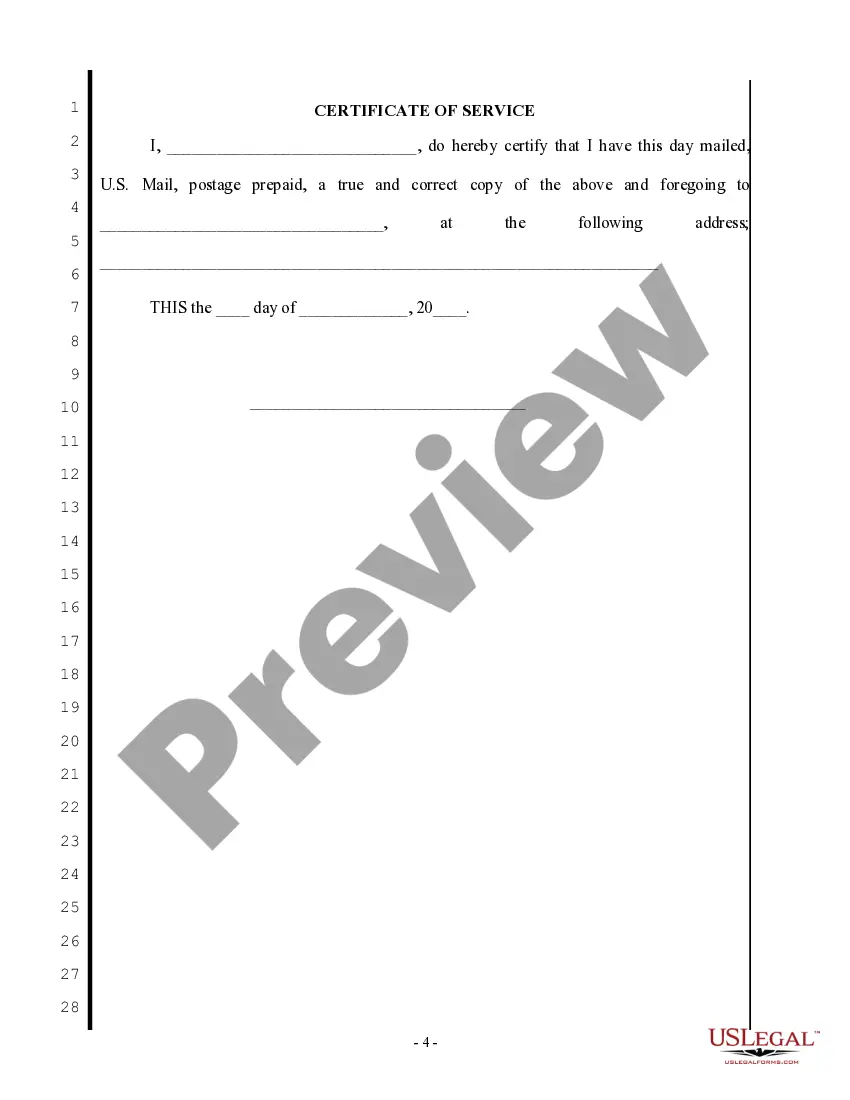
- Identify the parties by entering the names and addresses of the plaintiff and defendant.
- Describe the facts of the incident, including the date, time, and specific location of the fall.
- Document the hazardous condition that led to the slip and fall, including any witnesses present.
- State the claims against the defendant, detailing their negligence and your resulting injuries.
- Specify the relief sought, outlining the damages you wish to claim, including medical expenses and lost wages.
- Sign and date the form in the appropriate areas before filing it with the court.
Notarization guidance
This form does not typically require notarization unless specified by local law. However, it is advisable to check with your jurisdictionâs requirements to ensure compliance with filing rules.
Get your form ready online
Our built-in tools help you complete, sign, share, and store your documents in one place.
Make edits, fill in missing information, and update formatting in US Legal Forms—just like you would in MS Word.
Download a copy, print it, send it by email, or mail it via USPS—whatever works best for your next step.
Sign and collect signatures with our SignNow integration. Send to multiple recipients, set reminders, and more. Go Premium to unlock E-Sign.
If this form requires notarization, complete it online through a secure video call—no need to meet a notary in person or wait for an appointment.
We protect your documents and personal data by following strict security and privacy standards.

Make edits, fill in missing information, and update formatting in US Legal Forms—just like you would in MS Word.

Download a copy, print it, send it by email, or mail it via USPS—whatever works best for your next step.

Sign and collect signatures with our SignNow integration. Send to multiple recipients, set reminders, and more. Go Premium to unlock E-Sign.

If this form requires notarization, complete it online through a secure video call—no need to meet a notary in person or wait for an appointment.

We protect your documents and personal data by following strict security and privacy standards.
Common mistakes
- Failing to include all relevant facts surrounding the incident.
- Not specifying or clearly detailing the damages being claimed.
- Omitting necessary signatures or dates from the form.
- Using vague language that does not clearly establish negligence on the part of the defendant.
Advantages of online completion
- Convenience of downloading the form from home at any time.
- Ability to edit and customize the form to suit your specific incident and needs.
- Access to templates drafted by licensed attorneys, ensuring legal validity.
Looking for another form?


Form popularity
FAQ
This form is a legal document used to file a personal injury lawsuit against a business owner after a slip and fall. It outlines the plaintiff, the incident, the legal claims, and the relief sought for damages. It's designed to document injuries from a premises-based accident and to initiate a civil action in multi-state personal injury cases.
Whether a slip and fall case is successful depends on evidence of unsafe conditions, causation, and damages. This form helps you present those elements by listing the parties, the incident facts, and the damages you seek in the complaint. Outcomes vary by case and jurisdiction; consult an attorney for an assessment of your specific claim.
This form initiates a civil action; it does not determine settlement terms. Accepting the first offer should be weighed against the damages documented in the The Claims and Demand for Relief sections, including medical expenses and lost wages. Always consider legal guidance before agreeing to a settlement in a slip and fall case.
Compensation varies and depends on the damages you prove in the complaint, including medical expenses, lost wages, and any other losses. This form helps you itemize those damages under The Claims and Demand for Relief. There is no fixed amount stated in the form; settlement or court awards depend on the case.
Pain and suffering can be part of damages in slip and fall claims where evidence shows the impact on comfort, enjoyment of life, or mental distress. This form supports seeking those damages by documenting the incident and resulting harms. Whether to pursue pain and suffering depends on the facts and should be discussed with a qualified attorney.
This form targets slip and fall premises liability and includes sections specifically for detailing the incident location, conditions, and warning signs. It emphasizes premises-related claims and organizes information into The Parties, The Facts, The Claims, and Demand for Relief, which distinguishes it from more generic personal injury complaints.