Liquidation Agreement regarding Debtor's Collateral in Satisfaction of Indebtedness
Overview of this form
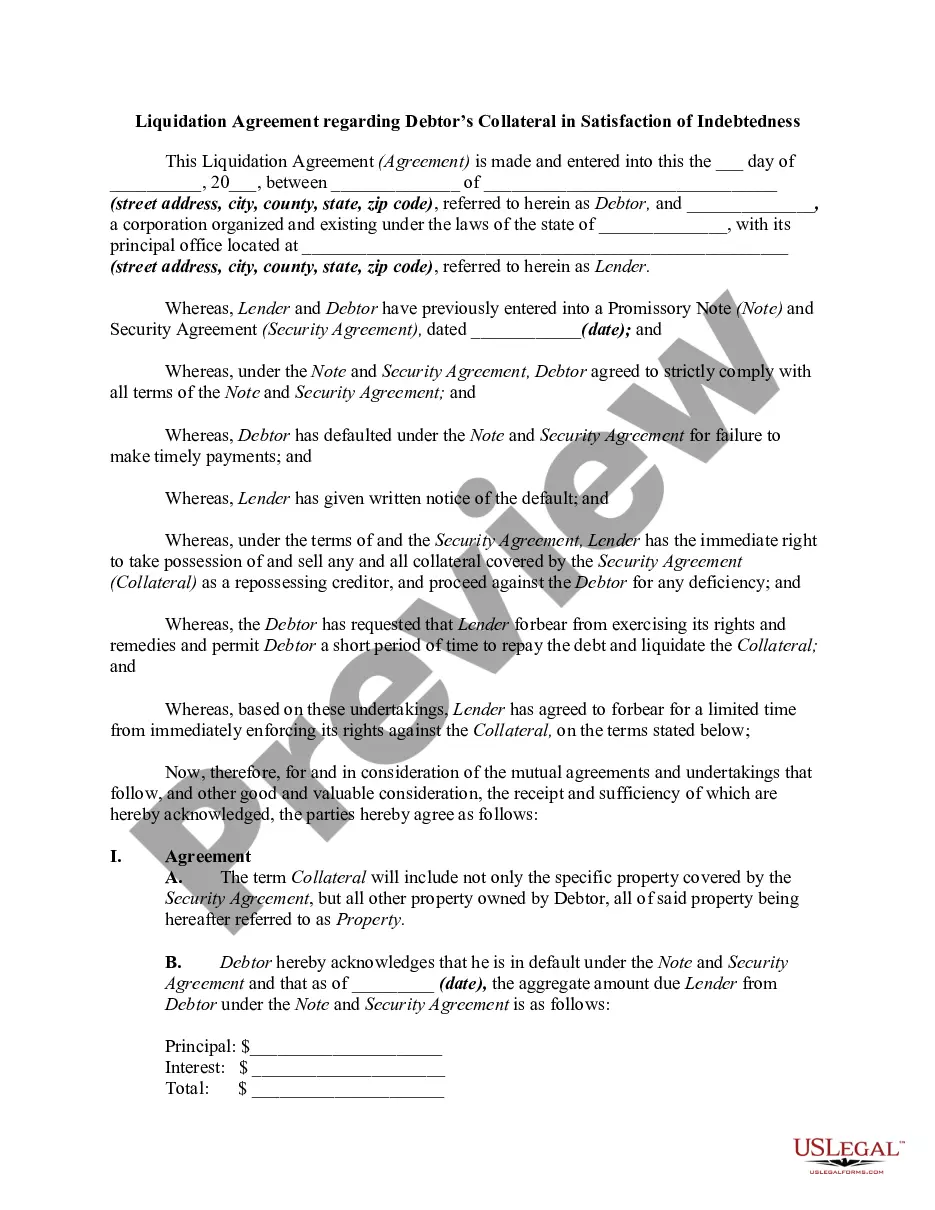
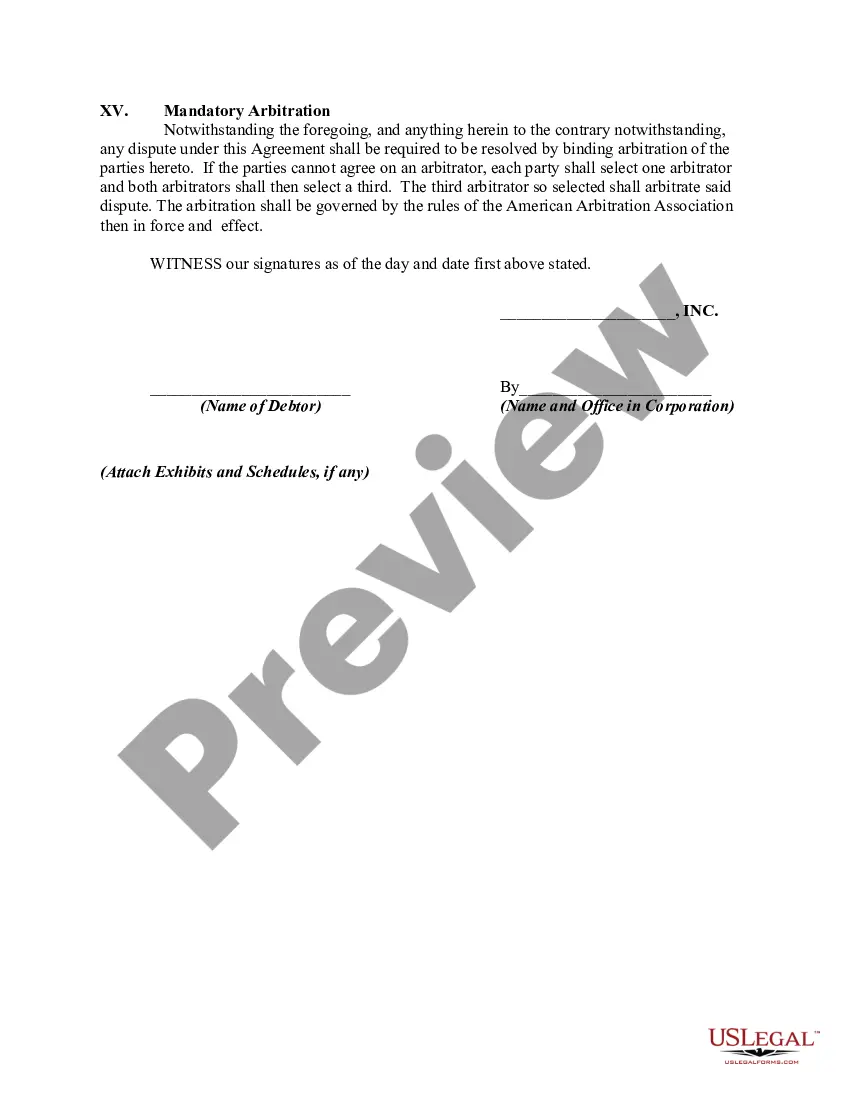
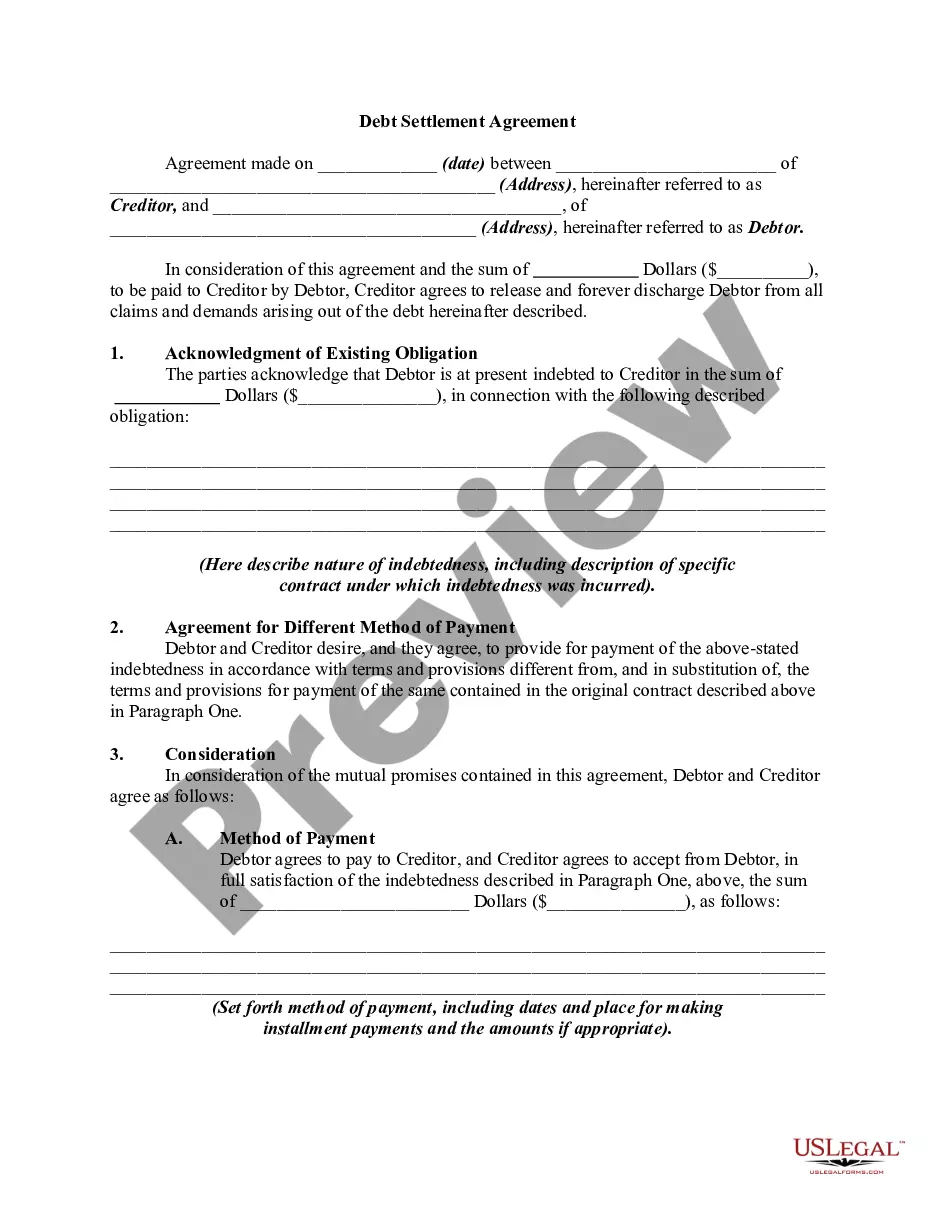
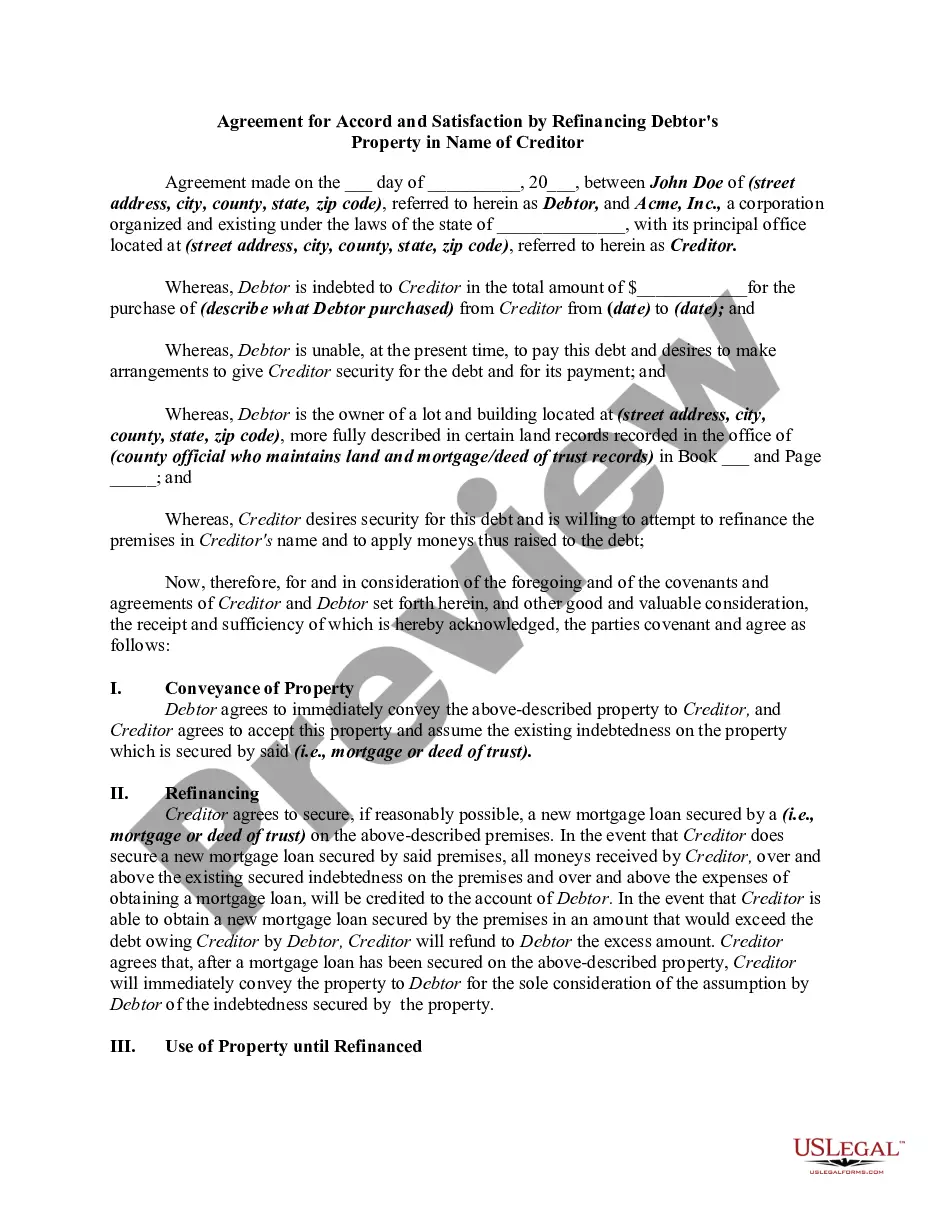
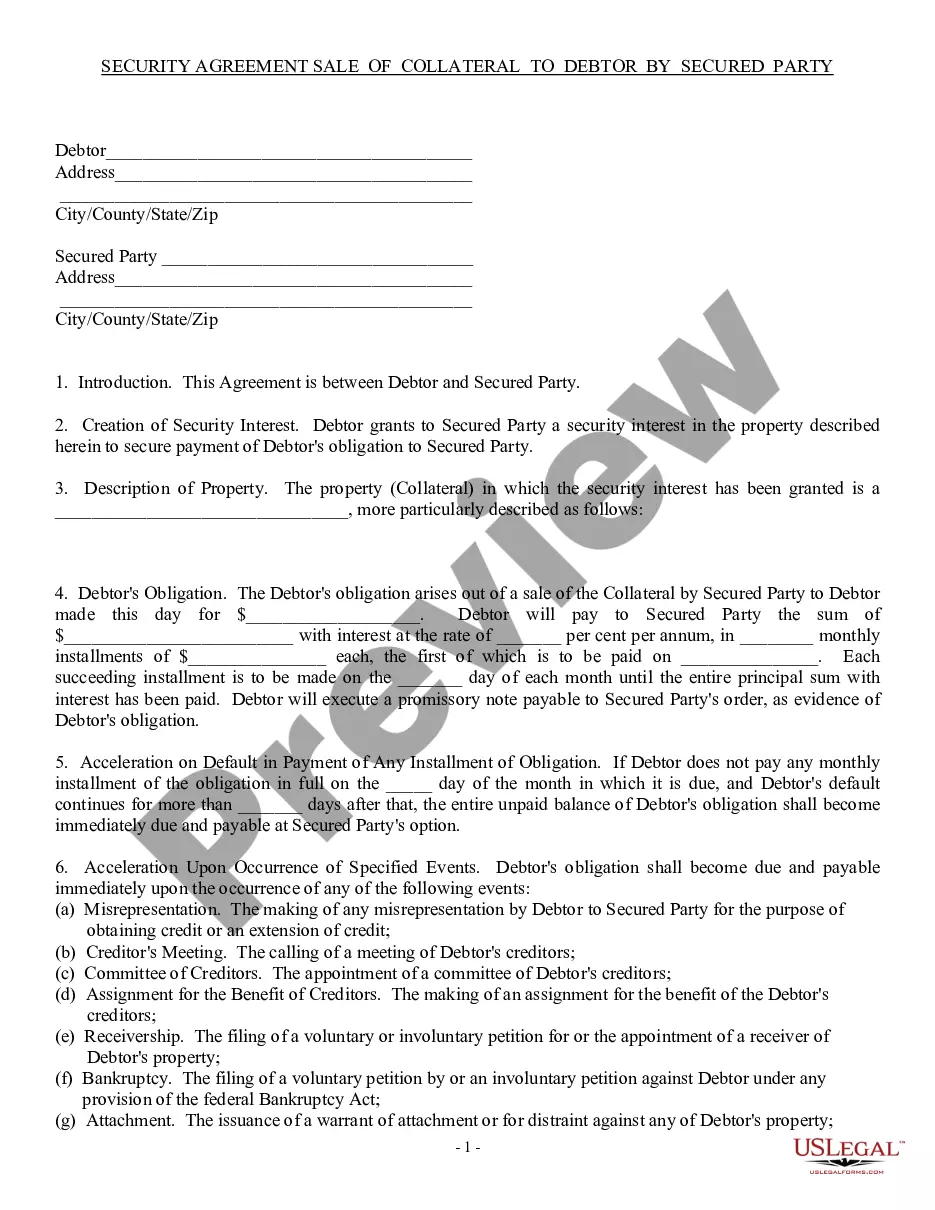
The Liquidation Agreement regarding Debtor's Collateral in Satisfaction of Indebtedness is a legal document that outlines the terms under which a lender agrees to temporarily forbear from enforcing their rights against collateral due to the debtor's default on a promissory note and security agreement. This form allows the debtor a limited period to repay the debt and liquidate the collateral while protecting the lender's interests.
Key components of this form
- Identification of the parties involved: Lender and Debtor, including their respective contact information.
- Definition of collateral: Specific property covered under the security agreement and other relevant assets.
- Details of the existing debt: Outline of principal, interest, and total amounts due as of a specified date.
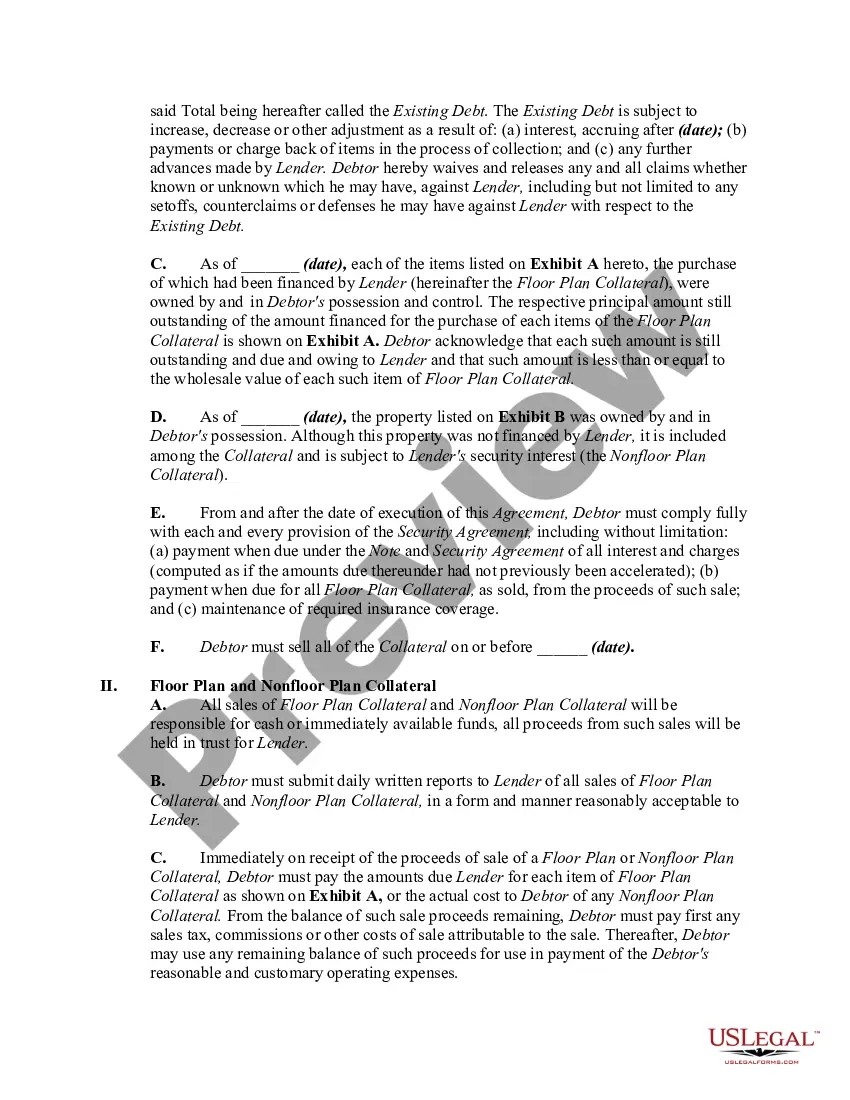
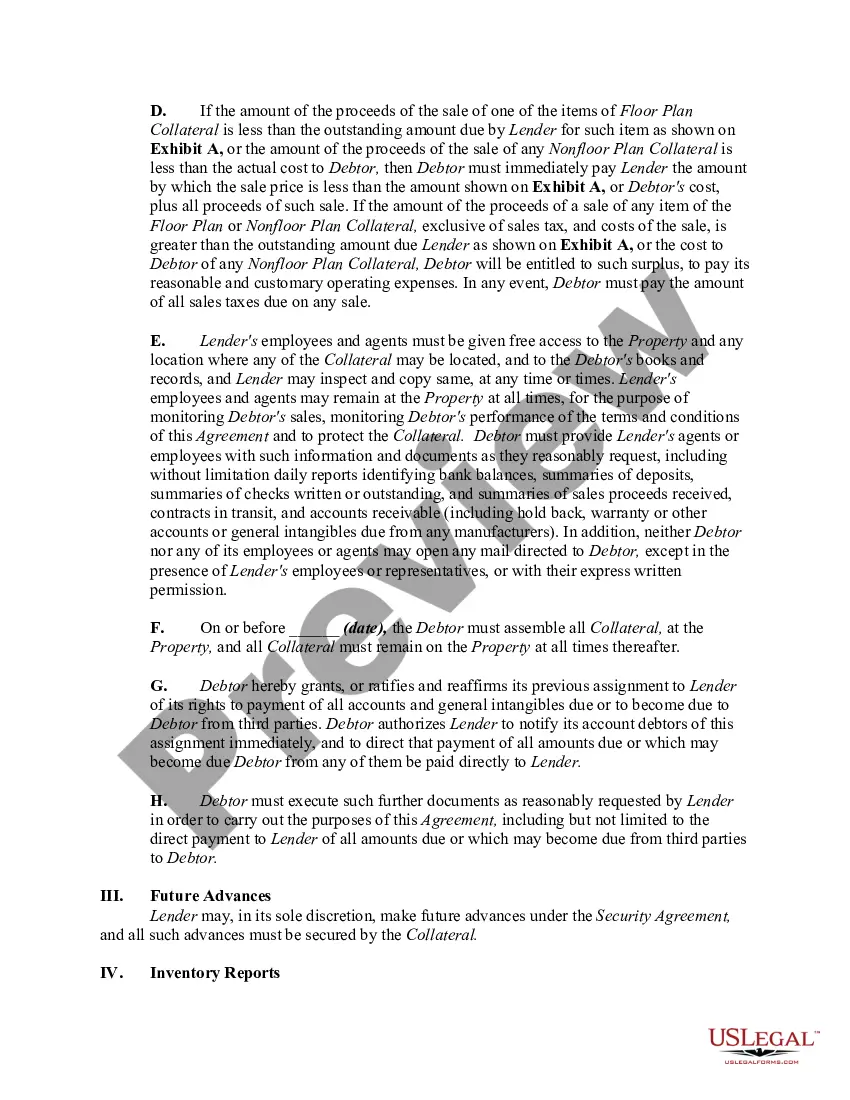
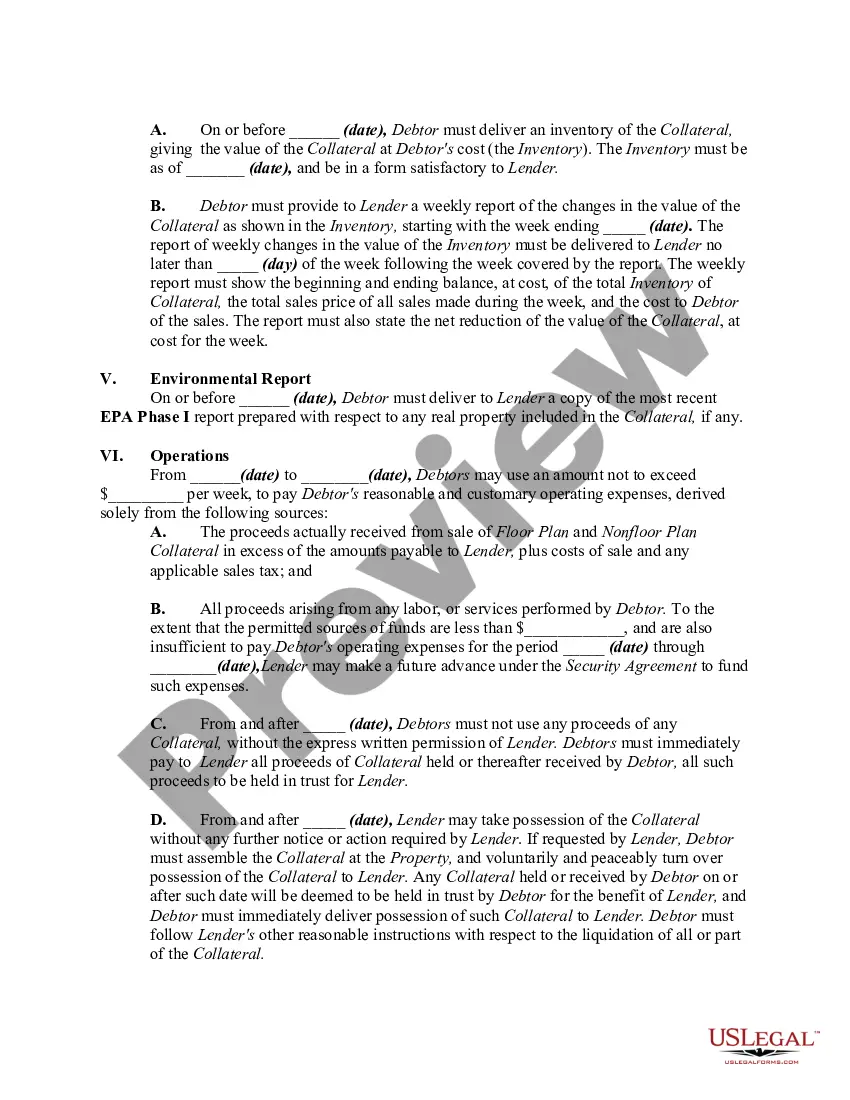
- Sale requirements: Guidelines on how the collateral should be sold and reported to the lender.
- Obligations of the debtor: Compliance with previous agreements and requirements for payment and reporting.
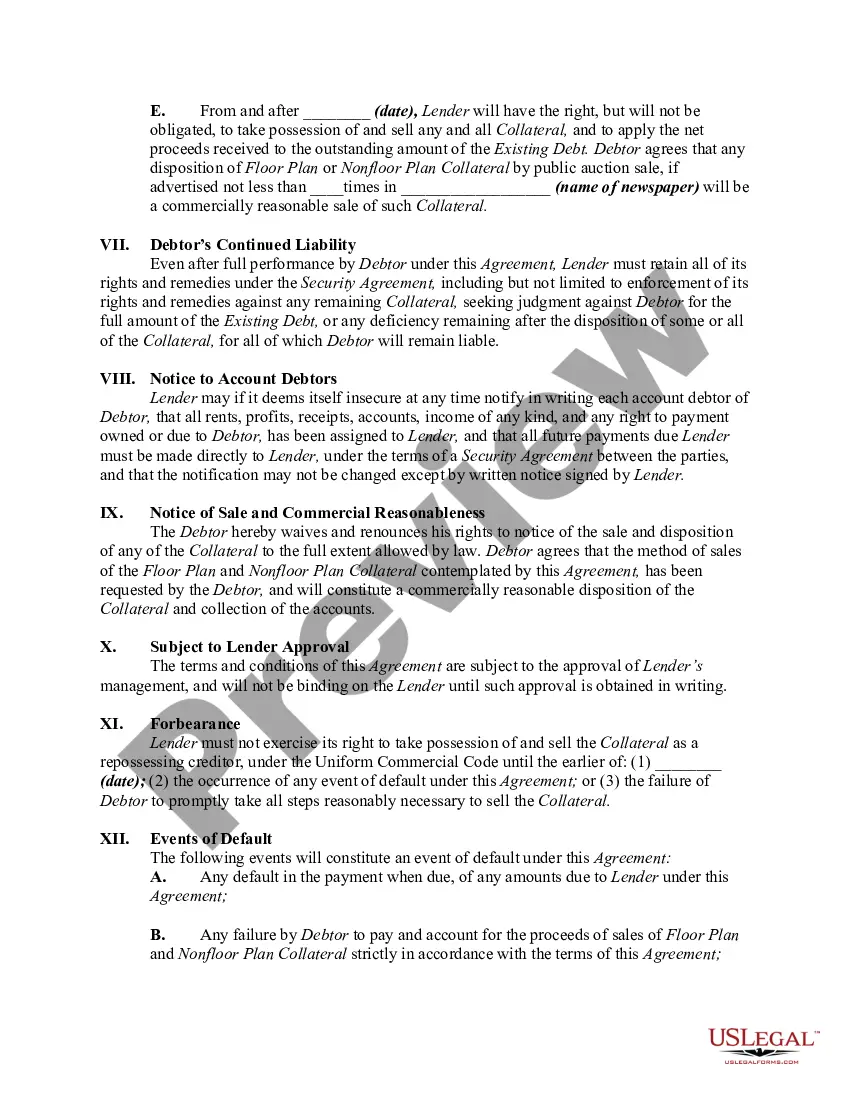
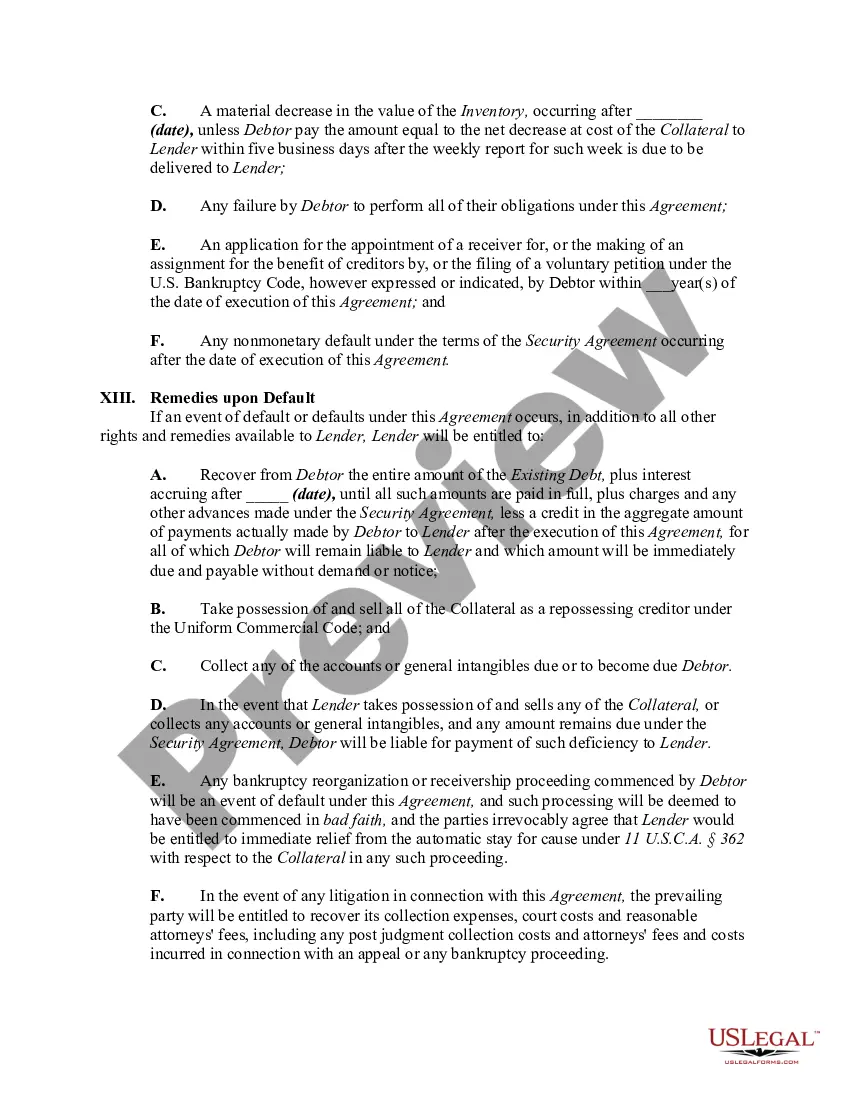
- Conditions of default: Circumstances that may result in further action by the lender if not adhered to.
When this form is needed
This form is typically used when a debtor has defaulted on a loan, and the lender wishes to provide a temporary reprieve, allowing the debtor to attempt to repay the outstanding balance and liquidate collateral without immediate repossession. It is beneficial in situations where the debtor shows intent to meet their obligations but requires time to arrange repayments.
Intended users of this form
This form is intended for:
- Lenders looking to provide a period of forbearance to their borrowers.
- Debtors who have defaulted on their loans and require a structured approach to repay their debts.
- Businesses that have a secured debt and need a negotiated solution to liquidate collateral.
Completing this form step by step
To complete the Liquidation Agreement, follow these steps:
- Identify the parties: Fill in the names and addresses of the Debtor and Lender as defined in the document.
- Specify the collateral: Clearly outline the items that are considered collateral, including those under both floor plan and non-floor plan agreements.
- Document the existing debt: Enter relevant dates and financial figures for the principal, interest, and total debt owed.
- Establish sale guidelines: Define the timeline and procedures for selling the collateral and reporting to the lender.
- Sign and date the agreement: Ensure all parties sign and date the document to indicate their agreement to the terms provided.
Notarization guidance
This form does not typically require notarization unless specified by local law. However, obtaining notarization can provide an added layer of authentication and legal strength to the agreement.
Get your form ready online
Our built-in tools help you complete, sign, share, and store your documents in one place.
Make edits, fill in missing information, and update formatting in US Legal Forms—just like you would in MS Word.
Download a copy, print it, send it by email, or mail it via USPS—whatever works best for your next step.
Sign and collect signatures with our SignNow integration. Send to multiple recipients, set reminders, and more. Go Premium to unlock E-Sign.
If this form requires notarization, complete it online through a secure video call—no need to meet a notary in person or wait for an appointment.
We protect your documents and personal data by following strict security and privacy standards.

Make edits, fill in missing information, and update formatting in US Legal Forms—just like you would in MS Word.

Download a copy, print it, send it by email, or mail it via USPS—whatever works best for your next step.

Sign and collect signatures with our SignNow integration. Send to multiple recipients, set reminders, and more. Go Premium to unlock E-Sign.

If this form requires notarization, complete it online through a secure video call—no need to meet a notary in person or wait for an appointment.

We protect your documents and personal data by following strict security and privacy standards.
Common mistakes
- Failing to correctly identify all parties involved in the agreement.
- Not specifying the collateral accurately, leading to confusion in enforcement.
- Omitting critical dates or financial information, which can invalidate the agreement.
- Neglecting to have all parties sign and date the agreement before it is executed.
Benefits of using this form online
- Convenient access to a comprehensive legal template drafts by licensed attorneys.
- Editable format allows personalization to fit specific situations or requirements.
- Quick availability for urgent financial negotiations, ensuring timely responses.
Legal use & context
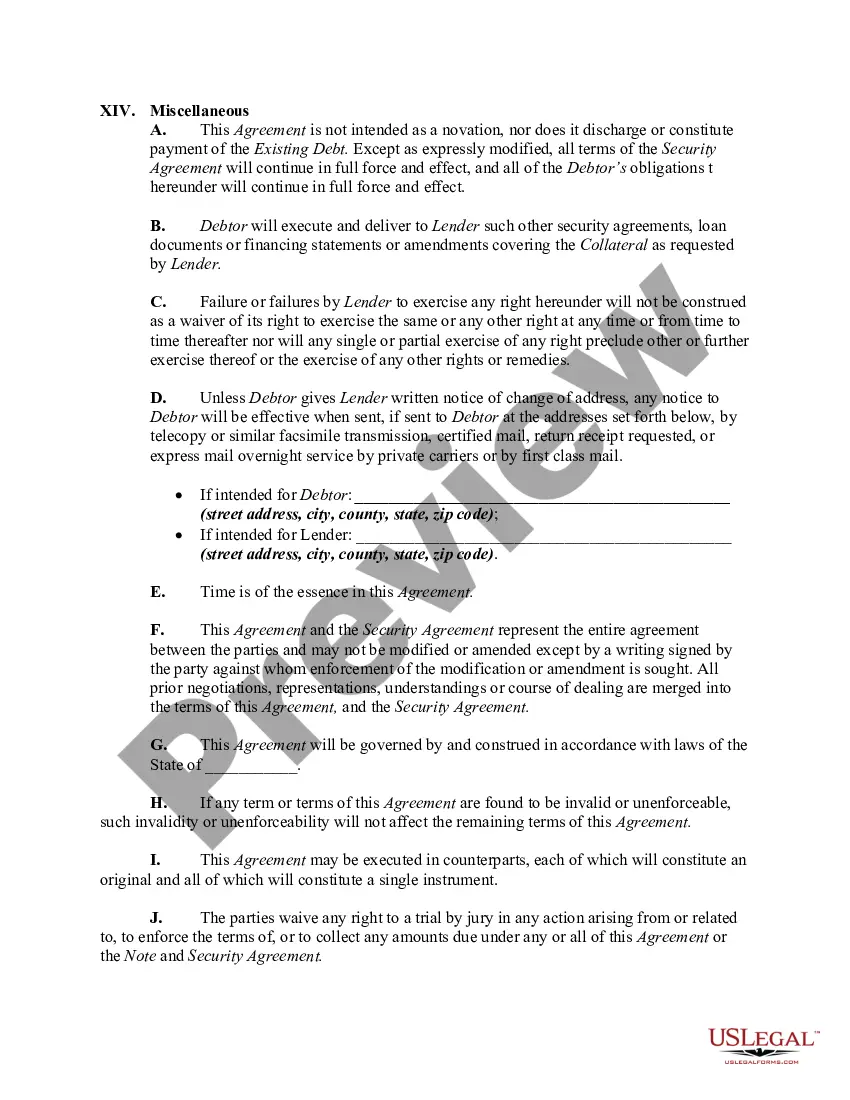
- This agreement allows debtors to negotiate terms with the lender while preserving their collateral.
- Clear obligations laid out within the agreement help prevent future legal disputes regarding the default.
- The agreement must comply with the applicable laws of the state in which it is enforced.
Main things to remember
- The Liquidation Agreement is a strategic tool for debtors to manage defaults effectively.
- Both lenders and debtors have defined roles and responsibilities within the agreement.
- Accurate completion of the form is crucial for its enforceability and effectiveness.
Looking for another form?

Form popularity
FAQ
By securing Passthrough services, your internal HR staff members can focus on other tasks associated with your contingent workers. The Passthrough service steps into that role, handling everything from payroll to tax filings to benefit administration for that segment of your workforce.
Under a pass-through arrangement, the contracting authority and service agree a fixed rate for the employer's contribution rate. If this amount varies, the service provider can recover the amount of any increase from the contracting authority through an adjustment to the contract price.
What is a liquidating agreement? A liquidating agreement in construction is an agreement between a contractor and subcontractor where the contractor liquidates its liability to the subcontractor but only to the extent it is able to recover for the subcontractor's claim from the owner.
Pass-through costs are fees paid towards other companies who operate and maintain the electricity network. These charges are approved each year by the energy regulator and are charged by all suppliers.These charges have always been there, but are generally included within the standing charge, unit rate or both.
Pass-through costs The service provider is passing a cost directly through to the client without adding any value or assuming risk. Resale Perhaps the most common of pass-through costs, is the service provider re-selling a product (hardware, software, etc) with the client having the financial risk.
Pass Through Electricity Contract: You agree to some, not all rates and charges upfront, with the remainder being 'passed through' to you at cost. Pass Through Pros: Consumer takes on more risk, which lowers the costs. Enables you to benefit if costs fall in the future.
A Liquidation Agreement is an agreement between two or more partners to end a business partnership. By entering into this agreement, you will not immediately terminate the partnership, but instead the partnership will continue until the "winding up" of the business is concluded.
Generally, a pass-through claim is one where a party who has suffered damages asserts a claim against a third-party believed to be responsible through one or more intervening parties that has a contract with the alleged responsible party.