Sperm Donor Agreement

Overview of this form
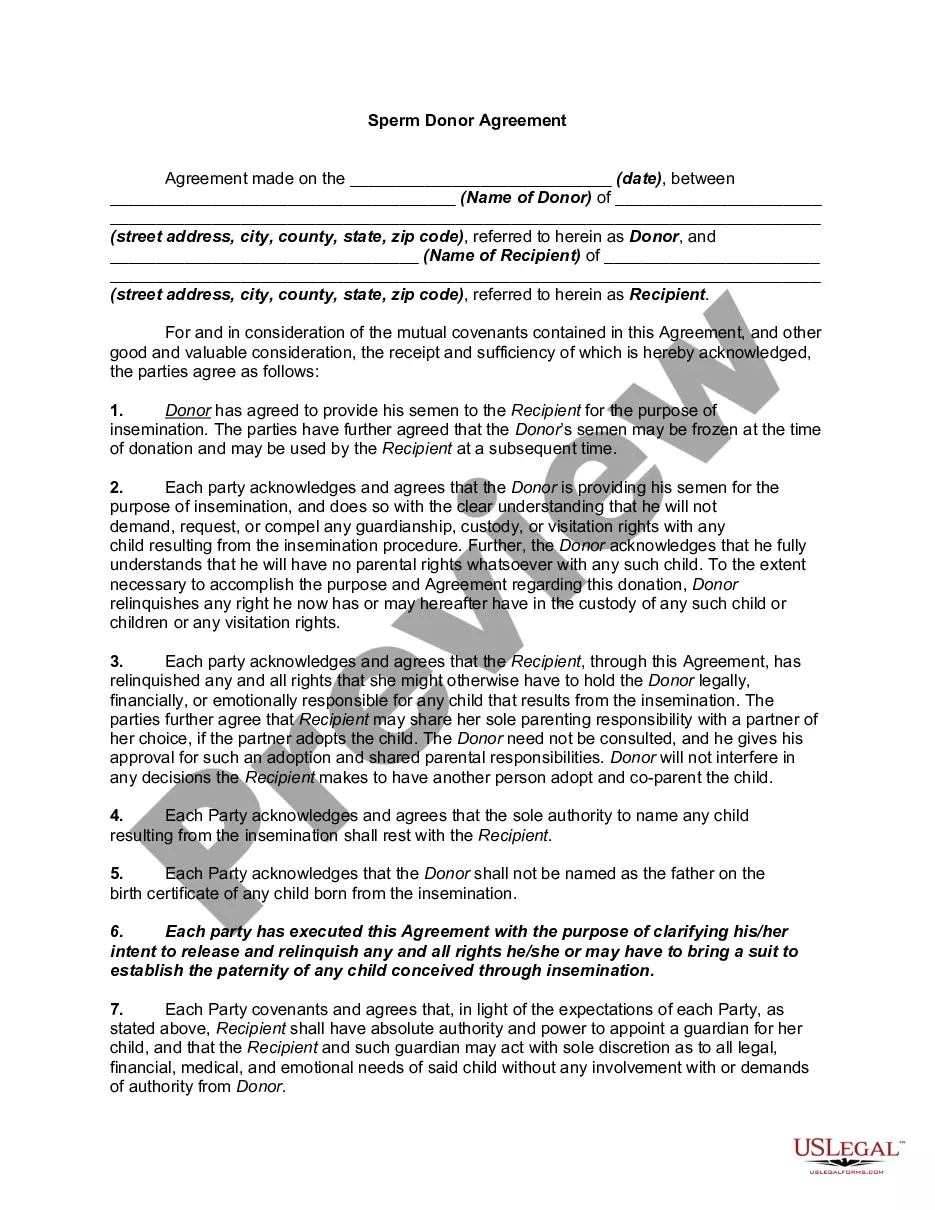
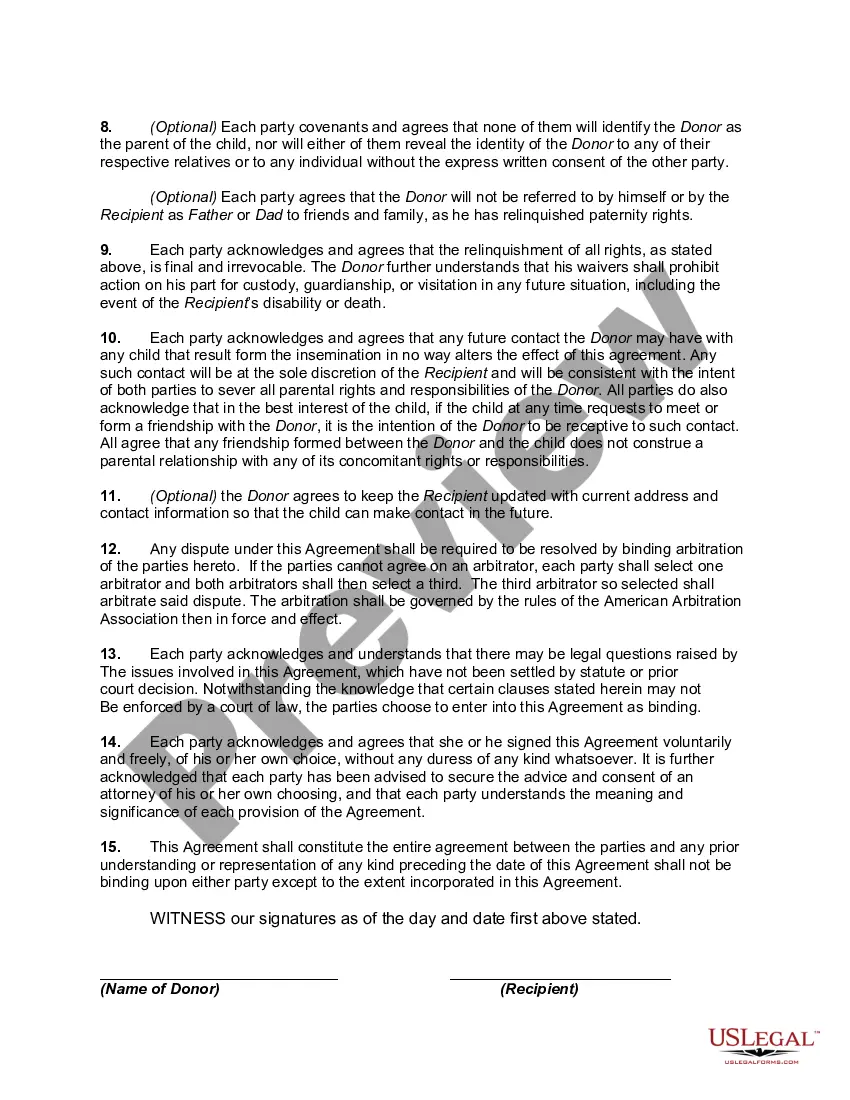
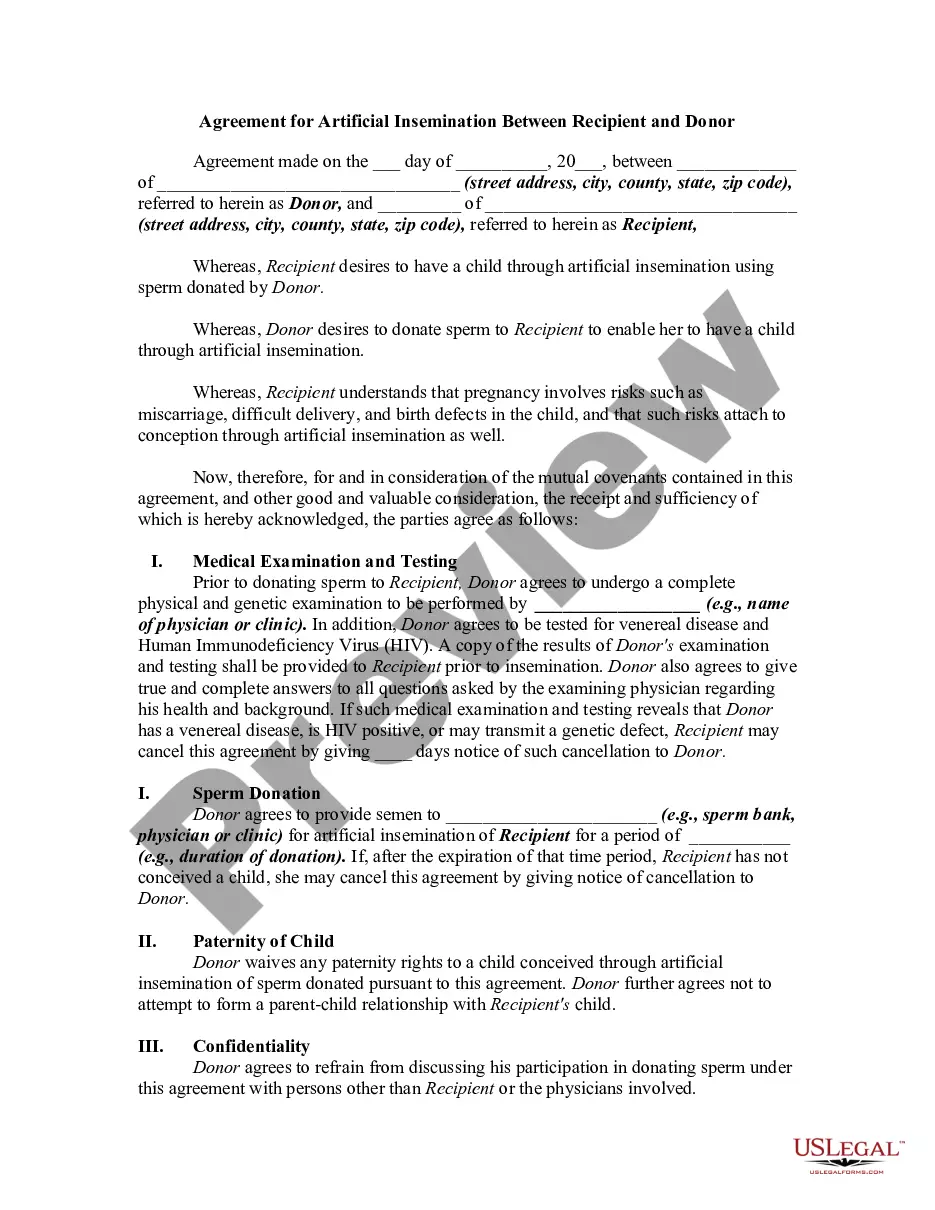
The Sperm Donor Agreement is a legal document that outlines the terms and conditions under which a sperm donor provides his sperm to a recipient for the purpose of insemination. This agreement clarifies the rights and responsibilities of both the donor and recipient, ensuring that the donor relinquishes any parental rights and the recipient assumes full responsibility for the resulting child. Unlike other family law agreements, this form specifically addresses the unique relationship and agreements that arise from sperm donation, emphasizing the donor's lack of rights once the sperm is donated.
Main sections of this form
- Date of the agreement.
- Names and addresses of both the donor and recipient.
- Terms regarding the purpose of the sperm donation and insemination.
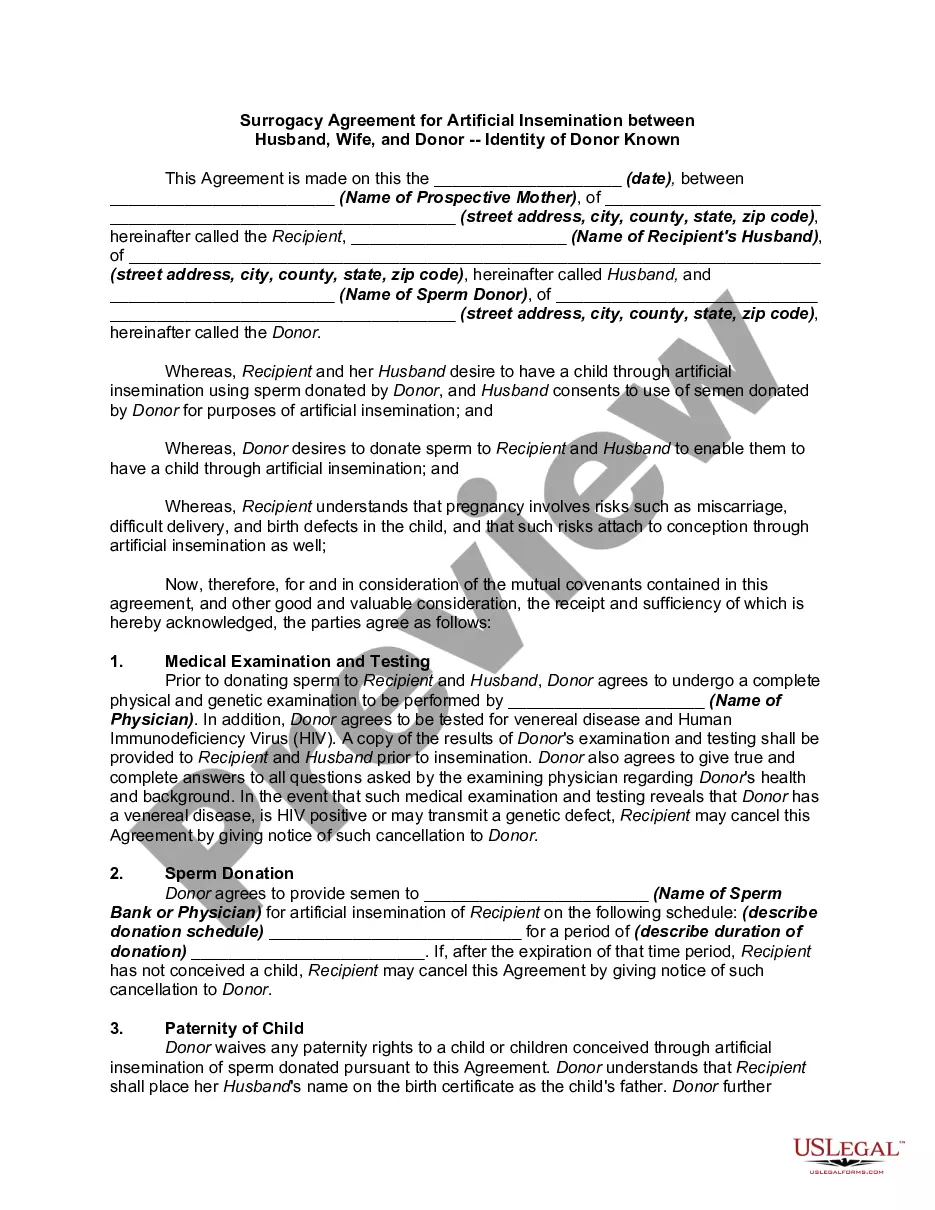
- Clarification of parental rights and responsibilities of the donor and recipient.
- Provisions for naming the child and issuing the birth certificate.
- Optional clauses about confidentiality and contact information.
When to use this document
This form is needed in situations where a man agrees to donate his sperm to a woman or couple for the purpose of achieving pregnancy. It is useful when the parties wish to formalize their agreement to ensure that the donor has no legal claims or responsibilities concerning any children conceived through the donation. This agreement is especially important in the current legal landscape where donor anonymity and parental rights can vary based on jurisdiction.
Intended users of this form
- Individuals or couples seeking sperm donation from a known donor.
- Men wishing to donate sperm and clarify their lack of parental rights.
- Recipients who want to ensure legal protection regarding parenting responsibilities.
- Those who want to formalize arrangements clearly to avoid future disputes.
Completing this form step by step
- Clearly identify the date of the agreement.
- Enter the full names and addresses of both the donor and recipient.
- Review and agree to the terms concerning the provision and use of sperm.
- Ensure both parties acknowledge and sign the agreement with appropriate witnesses or notarization if required.
- Keep a copy of the signed agreement for future reference.
Does this document require notarization?
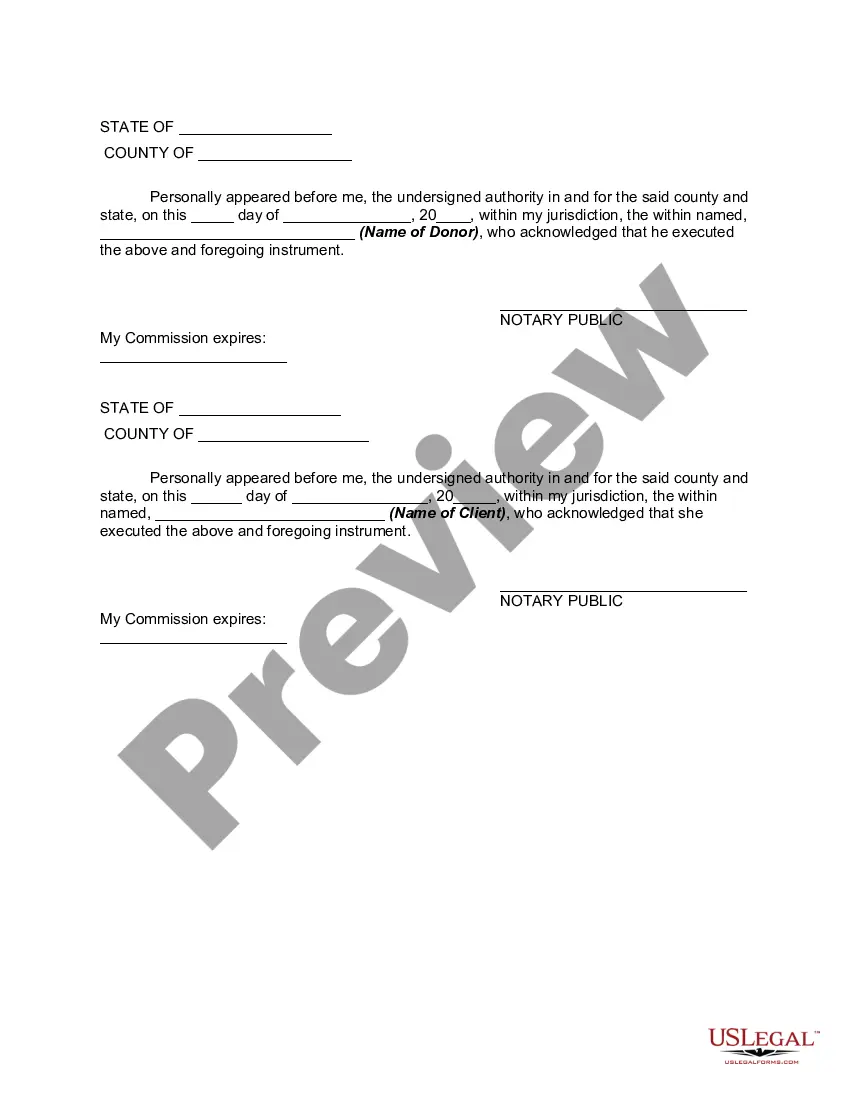
This form does not typically require notarization unless specified by local law. However, having the agreement notarized can add an additional layer of authenticity and legal standing to the document, ensuring both parties' identities and commitments are verified.
Get your form ready online
Our built-in tools help you complete, sign, share, and store your documents in one place.
Make edits, fill in missing information, and update formatting in US Legal Forms—just like you would in MS Word.
Download a copy, print it, send it by email, or mail it via USPS—whatever works best for your next step.
Sign and collect signatures with our SignNow integration. Send to multiple recipients, set reminders, and more. Go Premium to unlock E-Sign.
If this form requires notarization, complete it online through a secure video call—no need to meet a notary in person or wait for an appointment.
We protect your documents and personal data by following strict security and privacy standards.

Make edits, fill in missing information, and update formatting in US Legal Forms—just like you would in MS Word.

Download a copy, print it, send it by email, or mail it via USPS—whatever works best for your next step.

Sign and collect signatures with our SignNow integration. Send to multiple recipients, set reminders, and more. Go Premium to unlock E-Sign.

If this form requires notarization, complete it online through a secure video call—no need to meet a notary in person or wait for an appointment.

We protect your documents and personal data by following strict security and privacy standards.
Avoid these common issues
- Failing to fully read and understand the terms before signing.
- Omitting critical details such as names or addresses.
- Not considering local laws which may affect enforceability.
- Neglecting to consult with a legal professional for clarification.
Benefits of using this form online
- Convenient access to legal documents from anywhere.
- Easy customization to tailor the agreement to specific situations.
- Reliable templates drafted by licensed attorneys.
- Immediate download for quick use without waiting for paperwork.
Legal use & context
- The Sperm Donor Agreement protects the rights of both the donor and recipient.
- It clearly delineates the absence of parental rights for the donor.
- It helps avoid future disputes over custody or parental responsibilities.
- Enforceability can be affected by state laws regarding parental rights and sperm donation.
What to keep in mind
- The Sperm Donor Agreement clarifies the legal relationship between the donor and recipient.
- Both parties should fully understand their rights and obligations under the agreement.
- Consulting local laws before using this form is crucial to ensure legality.
- This format provides a convenient and immediate solution for formalizing sperm donation arrangements.
Looking for another form?

Form popularity
FAQ
Donor Agreements involve an agreement between a donor and recipient parent/s that clarifies the relationships and expectations between the parties. Donor Agreements are often used between sperm donors and their donor recipients, and not so often with egg donors.
Yes! California law treats any person who provides sperm that is used for assisted reproduction as a sperm donor and not a parent if they are not married to the person giving birth.Otherwise, they may be inappropriately treated as a sperm donor without any parental rights.
Costs vary, since sperm banks and fertility centers all set their own prices, but a vial of donor sperm generally costs $900 to $1,000. The insemination procedure itself is often about $200 to $400, though it can be higher. A lot of people will try twice per cycle, which doubles those costs.
An average ejaculate yields between 2 and 4 one cc vials of semen. One vial equals one insemination. There is no way to predict exactly how many inseminations/vials will produce a pregnancy but on average it takes between 4 and 8 attempts when the vials have at minimum 20 mil motile sperm per cc.
California law provides protections for both receivers and donors of sperm for the purposes of artificial insemination.Provided that he can, a sperm donor may then be able to seek custody over and visitation rights with his child.
Conceiving with donor sperm and IUI Costs vary, since sperm banks and fertility centers all set their own prices, but a vial of donor sperm generally costs $900 to $1,000. The insemination procedure itself is often about $200 to $400, though it can be higher.
Donor agreements are an important part of protecting the legal rights of all parties because they memorialize the parties' intent at the time of the donation.For example, the donor may agree that he shall not engage in high risk sexual behavior until he has completed the donations.
Yes! California law treats any person who provides sperm that is used for assisted reproduction as a sperm donor and not a parent if they are not married to the person giving birth.Otherwise, they may be inappropriately treated as a sperm donor without any parental rights.