Employee Grievance Procedures
What this document covers
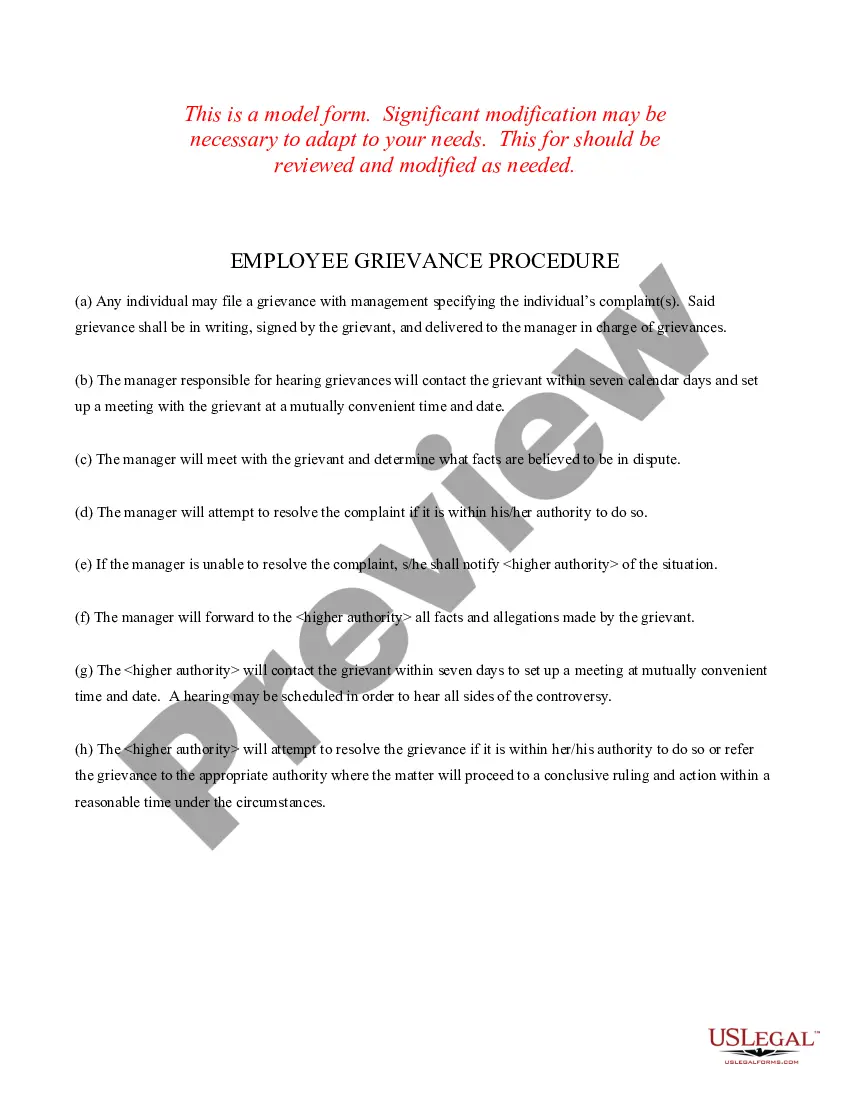
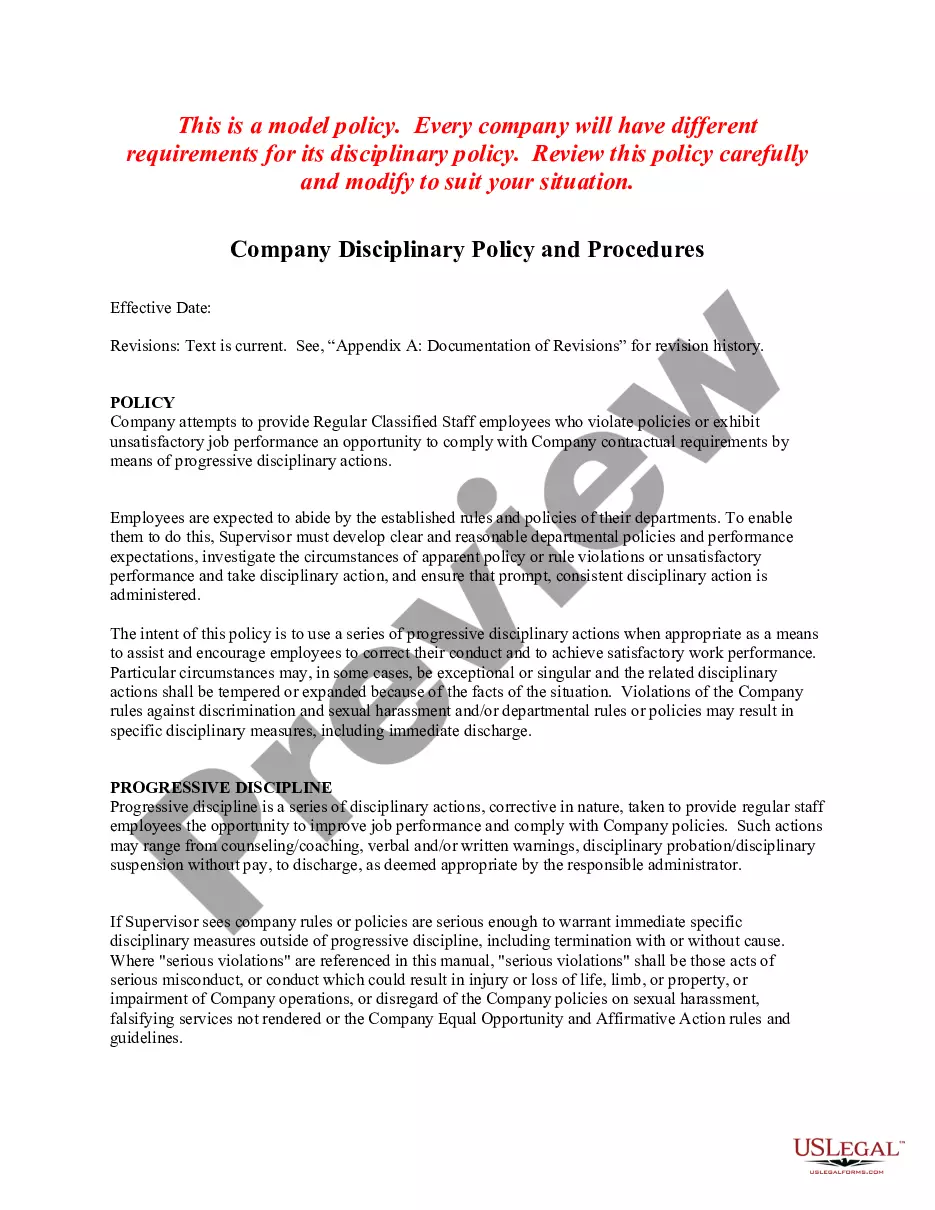
The Employee Grievance Procedure is a legal document designed to establish a clear process for employees to file complaints within an organization. This form outlines the steps management must take to address grievances and ensures that employee concerns are handled appropriately. It is essential for promoting a fair workplace and mitigating disputes, differing from other employment forms by its specific focus on grievance handling procedures.
Key components of this form
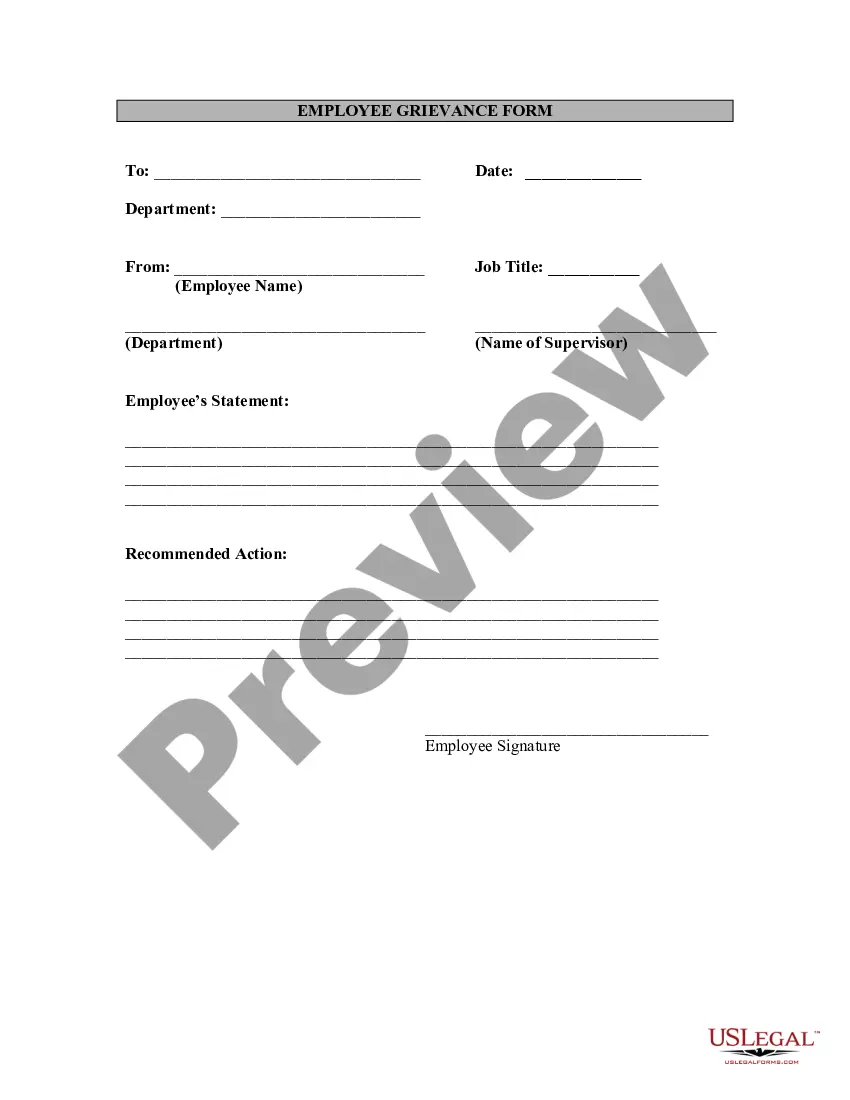
- Written grievance requirement: The complaint must be documented and signed by the employee.
- Manager's responsibilities: The manager must reach out to the employee within seven calendar days.
- Fact determination: A meeting is held to assess the facts underlying the grievance.
- Resolution attempt: The manager will try to resolve the issue if it is within their authority.
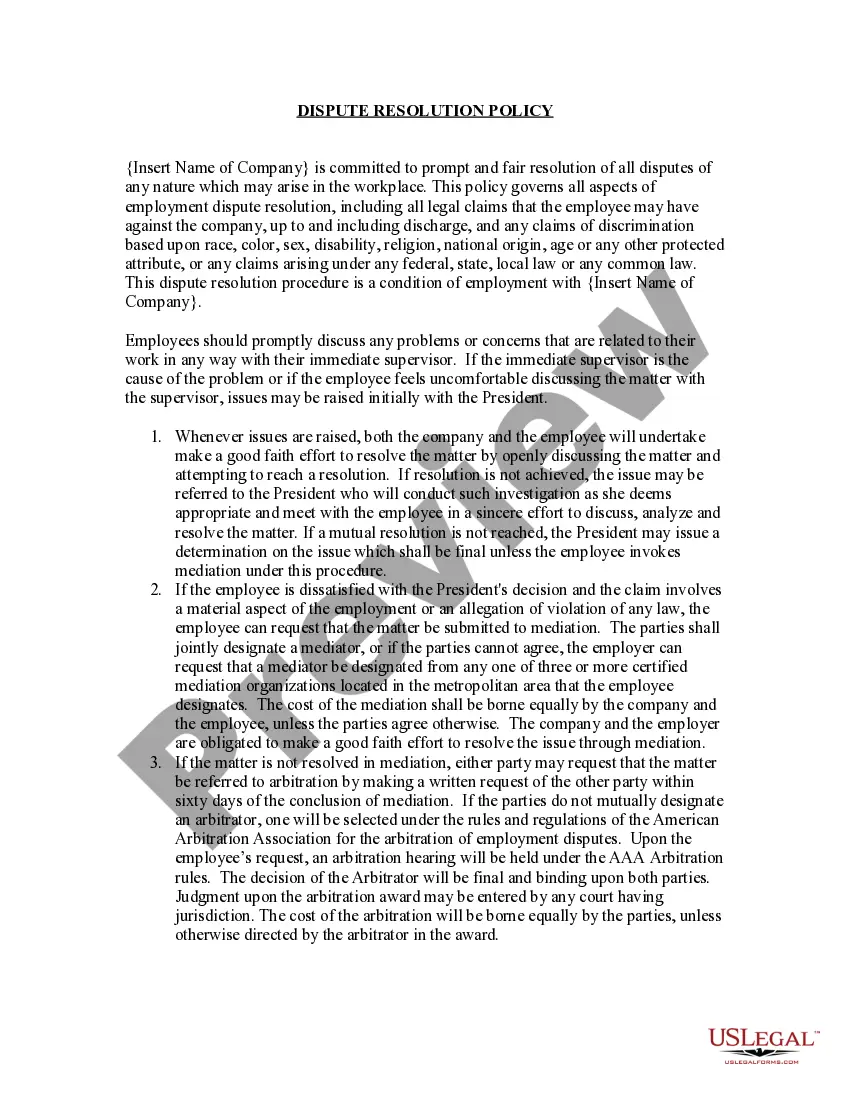
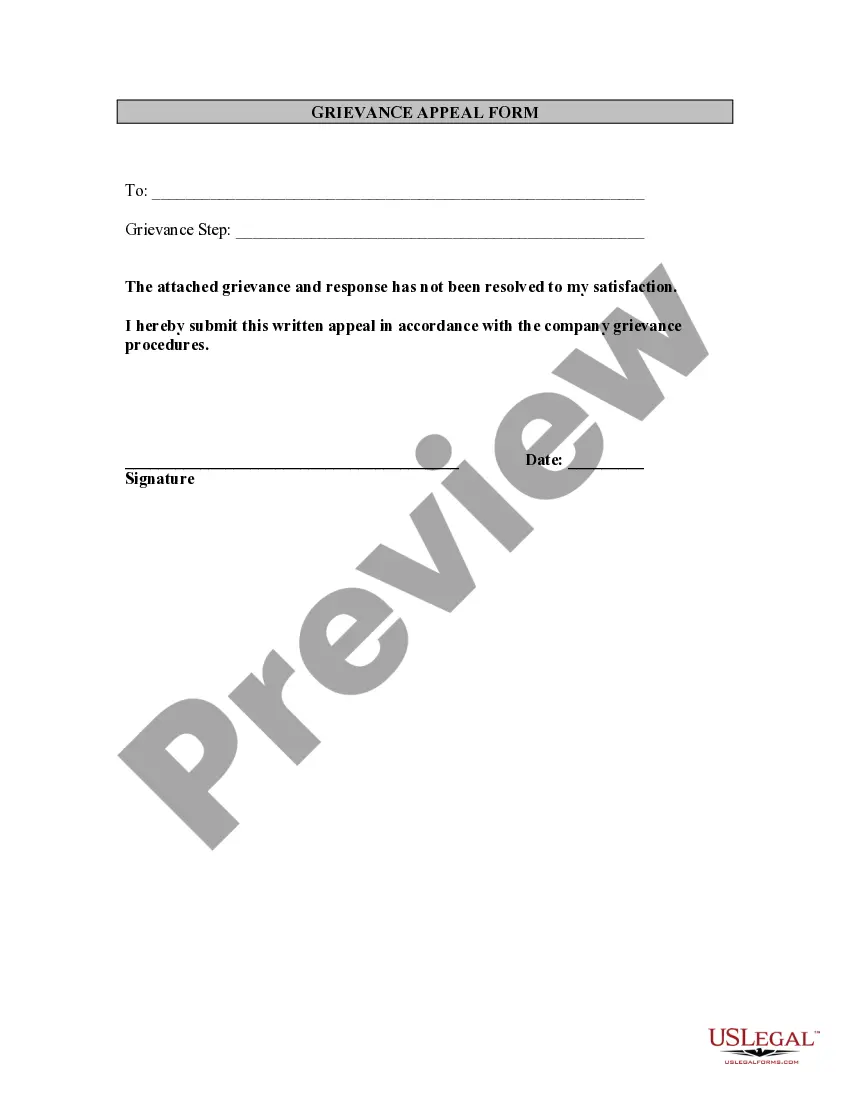
- Escalation process: If unresolved, the grievance is escalated to higher management for further action.
- Timeline for response: Higher authority must contact the employee within seven days after escalation.

When this form is needed
This form should be used when an employee wants to formally express dissatisfaction with workplace conditions, decisions, or treatment. Examples include issues related to harassment, discrimination, job responsibilities, or management actions that the employee feels are unfair. It is a vital tool for ensuring that grievances are documented and addressed systematically.
Intended users of this form
- Employees seeking to file a grievance regarding workplace issues.
- HR departments responsible for managing employee relations and complaint resolution.
- Managerial staff who need to follow a structured process for handling grievances.
- Employers of all sizes looking to maintain a fair and transparent workplace.
Instructions for completing this form
- Identify the employee filing the grievance and provide their contact information.
- Clearly state the nature of the grievance in detail.
- Sign and date the grievance document before submission.
- Submit the completed form to the designated manager in charge of grievances.
- Follow up if there is no response within the outlined timeframe.
Notarization requirements for this form
Notarization is not commonly needed for this form. However, certain documents or local rules may make it necessary. Our notarization service, powered by Notarize, allows you to finalize it securely online anytime, day or night.
Get your form ready online
Our built-in tools help you complete, sign, share, and store your documents in one place.
Make edits, fill in missing information, and update formatting in US Legal Forms—just like you would in MS Word.
Download a copy, print it, send it by email, or mail it via USPS—whatever works best for your next step.
Sign and collect signatures with our SignNow integration. Send to multiple recipients, set reminders, and more. Go Premium to unlock E-Sign.
If this form requires notarization, complete it online through a secure video call—no need to meet a notary in person or wait for an appointment.
We protect your documents and personal data by following strict security and privacy standards.

Make edits, fill in missing information, and update formatting in US Legal Forms—just like you would in MS Word.

Download a copy, print it, send it by email, or mail it via USPS—whatever works best for your next step.

Sign and collect signatures with our SignNow integration. Send to multiple recipients, set reminders, and more. Go Premium to unlock E-Sign.

If this form requires notarization, complete it online through a secure video call—no need to meet a notary in person or wait for an appointment.

We protect your documents and personal data by following strict security and privacy standards.
Avoid these common issues
- Failing to provide a clear and detailed description of the grievance.
- Not adhering to the required timelines for submission and follow-up.
- Submitting the form without a signature.
- Neglecting to escalate the grievance if it remains unresolved after initial management contact.
Advantages of online completion
- Instant access to standardized grievance procedures tailored by licensed attorneys.
- Convenient downloading and editing options to customize the form as needed.
- Easier tracking and management of grievances through documented records.
- Reduces the risk of misunderstandings with clear guidelines and steps outlined.
Looking for another form?


Form popularity
FAQ
An individual grievance is a complaint that an action by management has violated the rights of an individual as set out in the collective agreement or law, or by some unfair practice. Examples of this type of grievance include: discipline, demotion, classification disputes, denial of benefits, etc.
Step-3 where a national APWU representative meets with an area postal official if resolution does not occur at step-2, and. Step-4 finally, binding arbitration in front of a neutral arbitrator selected jointly by the parties to hear the grievance.
A grievance procedure is a means of internal dispute resolution by which an employee may have his or her grievances addressed. Most collective bargaining agreements include procedures for filing and resolving grievances.Grievances are brought to the employee's immediate supervisor.
Bring the grievance to your immediate supervisor. Escalate the complaint to the direct report of the supervisor. Consider mediation. Escalate the issue to the HR department if the above fails. Consider appealing at a higher level in case none of the above solutions work.
Individual Grievances. When an individual employee grieves against a management action like demotion based on bias, non payment of salary, workplace harassment etc. Group Grievances. Union Grievances.
Writing a letter to your employer setting out the details of your grievance. a meeting with your employer to discuss the issue. the ability to appeal your employer's decision.