Disciplinary Procedures
What is this form?
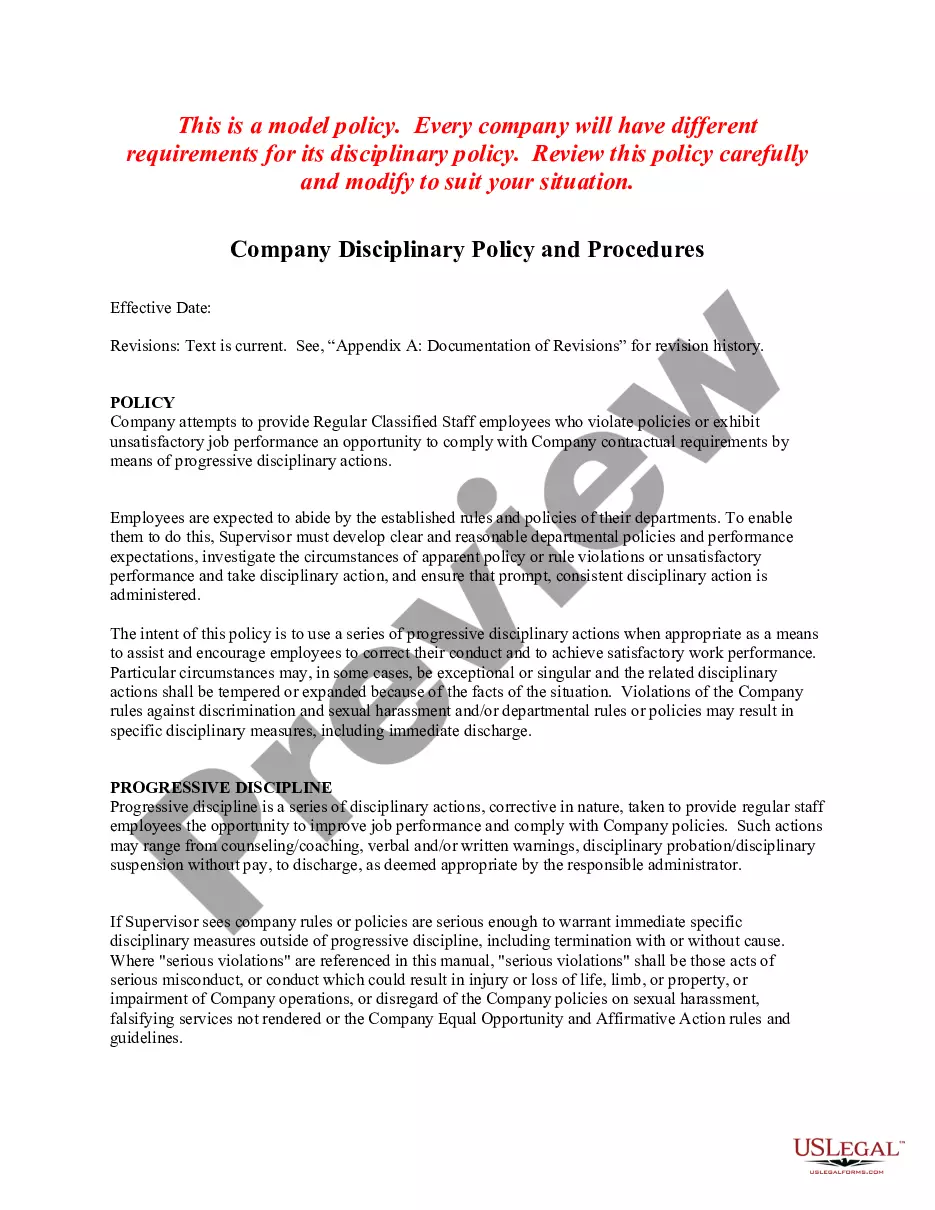
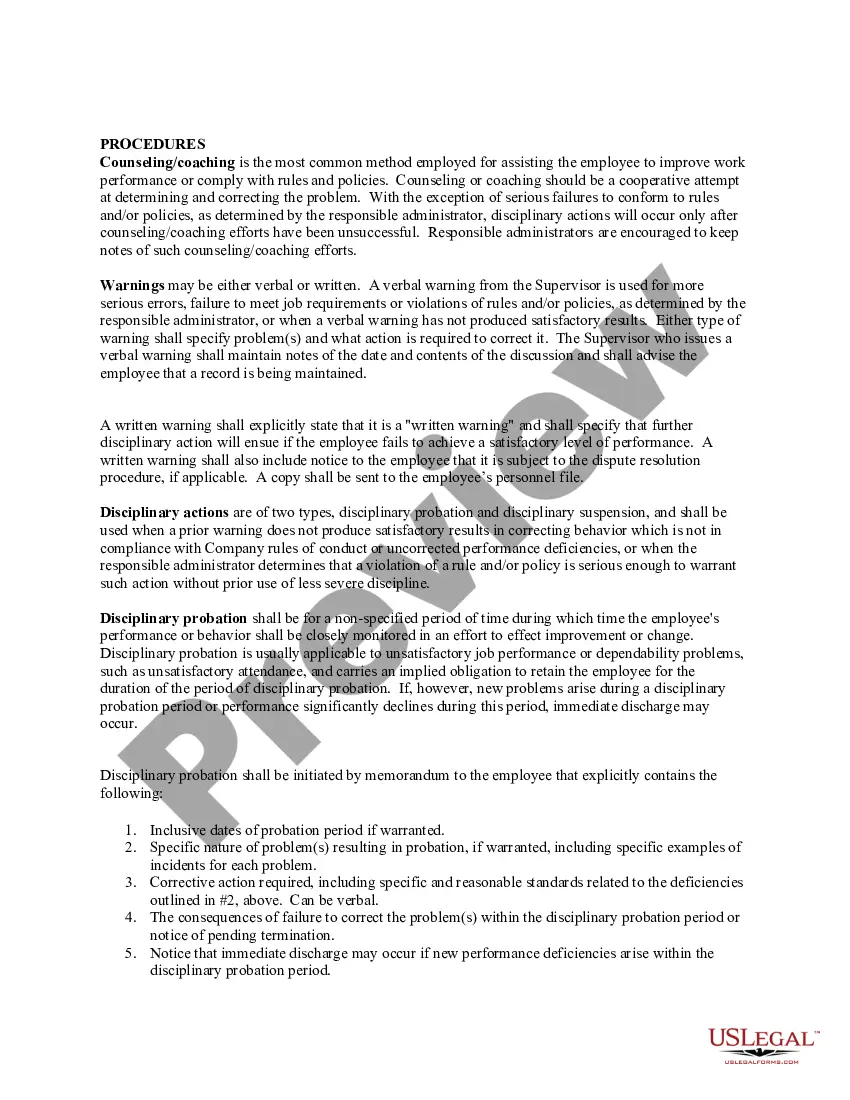
The Disciplinary Procedures form is a critical tool for employers navigating employee performance issues and policy violations. It establishes a framework for progressive discipline, allowing organizations to address employee misconduct while providing opportunities for improvement. This form is designed to help employers maintain a structured approach to employee management, ensuring consistency and fairness in disciplinary actions. This differs from other employment forms by specifically focusing on the procedural aspects of discipline in the workplace.
Main sections of this form
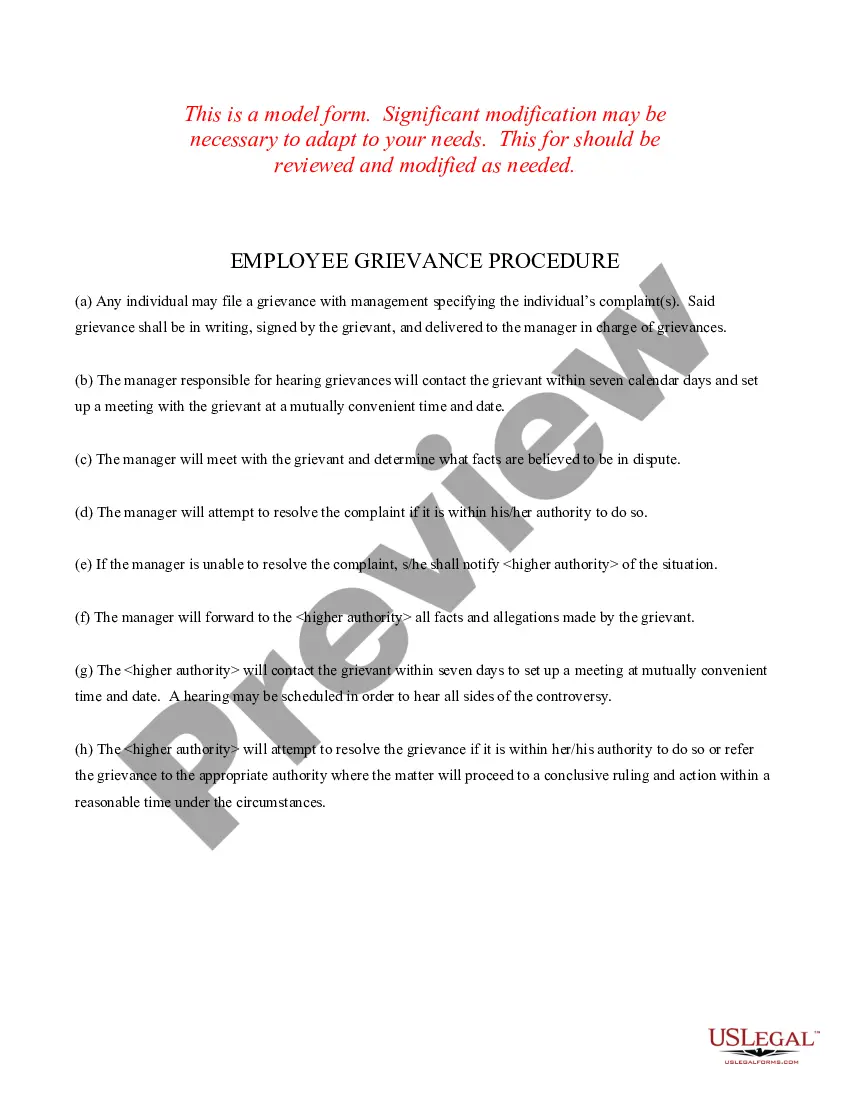
- Policy statement outlining the intent and scope of disciplinary actions.
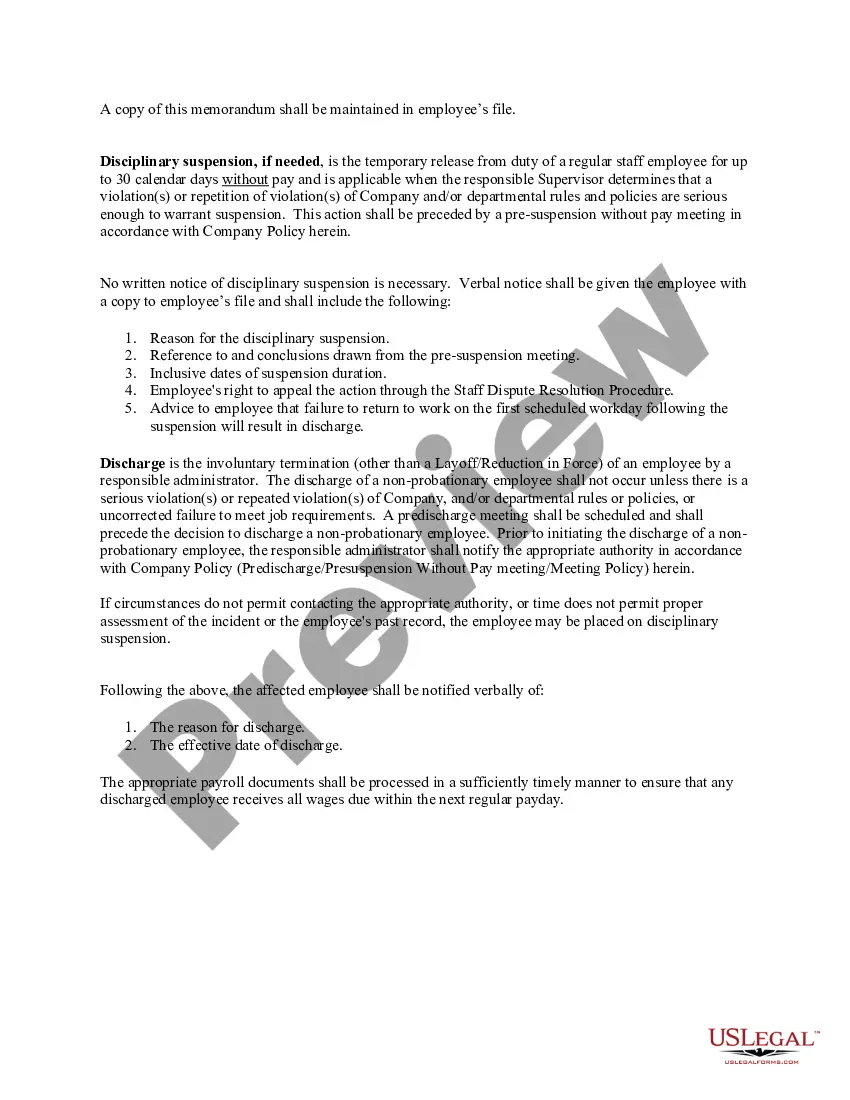
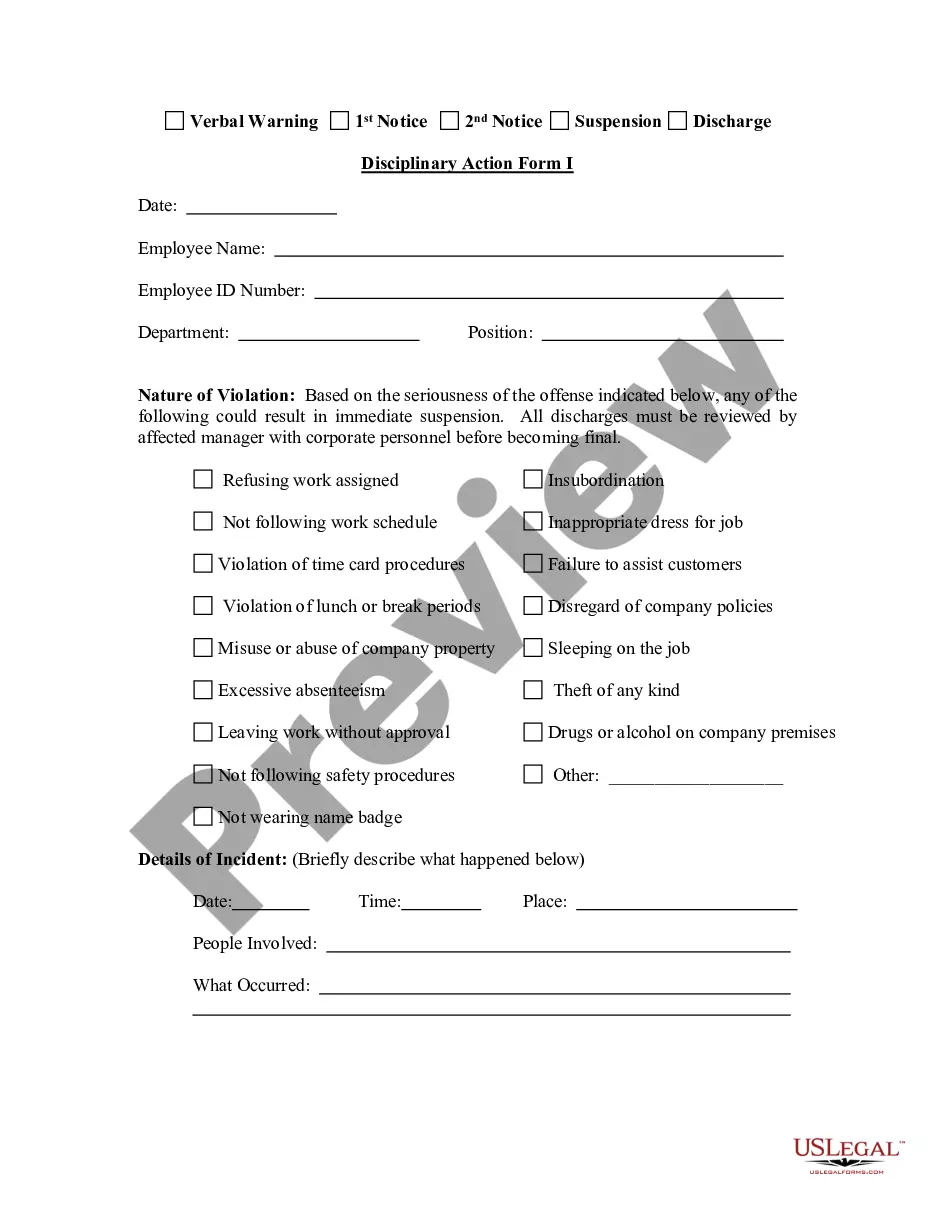
- Description of progressive discipline stages, including counseling, warnings, probation, and suspension.
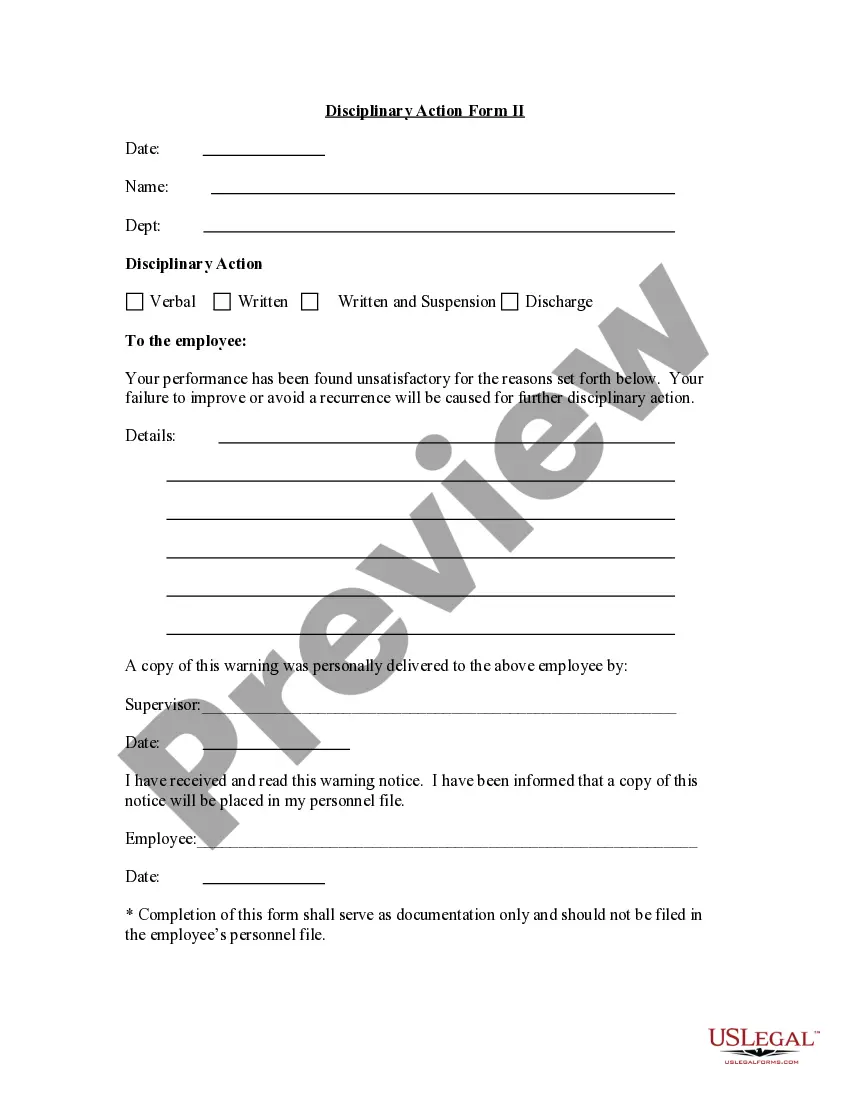
- Procedures for documenting counseling and disciplinary actions.
- Guidelines for immediate disciplinary measures in cases of serious violations.
- Documentation requirements for maintaining records of disciplinary actions.
When to use this document
This form should be used when an employer needs to address an employee's unsatisfactory performance or policy violations. It's particularly relevant in situations where employees show consistent issues with behavior, attendance, or compliance with company rules. Using the Disciplinary Procedures form ensures that disciplinary measures are clearly defined, communicated, and documented, reducing the risk of misunderstandings or potential legal disputes.
Who can use this document
- Human resource professionals in any organization.
- Managers and supervisors responsible for employee oversight.
- Business owners seeking to establish or maintain fair discipline practices.
- Legal professionals advising organizations on employment law.
How to complete this form
- Review the current employee performance issues or policy violations.
- Document previous counseling or disciplinary actions taken.
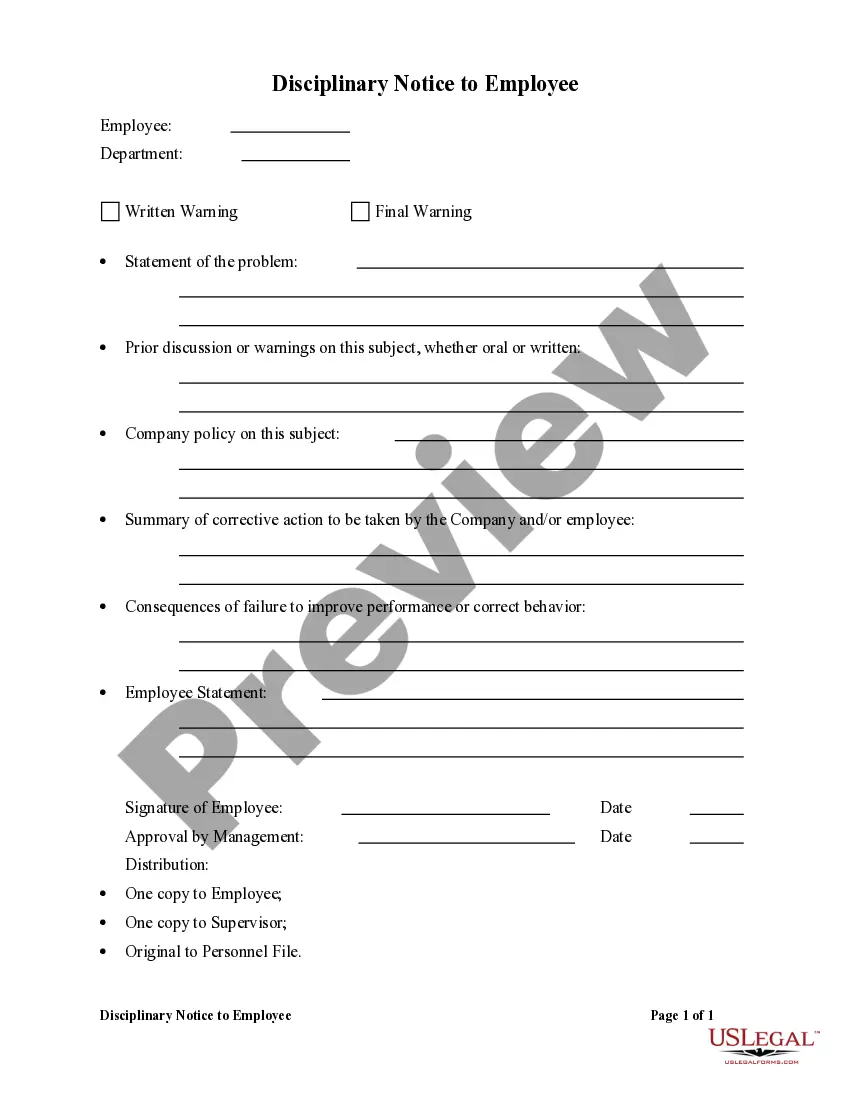
- Identify the specific type of disciplinary action to be taken (e.g., warning, probation, suspension).
- Communicate the action to the employee in writing, detailing expectations for improvement.
- Maintain a record of all communications and actions taken in accordance with company policy.
Does this form need to be notarized?
This form does not typically require notarization to be legally valid. However, some jurisdictions or document types may still require it. US Legal Forms provides secure online notarization powered by Notarize, available 24/7 for added convenience.
Get your form ready online
Our built-in tools help you complete, sign, share, and store your documents in one place.
Make edits, fill in missing information, and update formatting in US Legal Forms—just like you would in MS Word.
Download a copy, print it, send it by email, or mail it via USPS—whatever works best for your next step.
Sign and collect signatures with our SignNow integration. Send to multiple recipients, set reminders, and more. Go Premium to unlock E-Sign.
If this form requires notarization, complete it online through a secure video call—no need to meet a notary in person or wait for an appointment.
We protect your documents and personal data by following strict security and privacy standards.

Make edits, fill in missing information, and update formatting in US Legal Forms—just like you would in MS Word.

Download a copy, print it, send it by email, or mail it via USPS—whatever works best for your next step.

Sign and collect signatures with our SignNow integration. Send to multiple recipients, set reminders, and more. Go Premium to unlock E-Sign.

If this form requires notarization, complete it online through a secure video call—no need to meet a notary in person or wait for an appointment.

We protect your documents and personal data by following strict security and privacy standards.
Avoid these common issues
- Failing to document previous counseling or disciplinary actions.
- Not providing clear expectations or timelines for improvement.
- Skipping progressive discipline steps without justification.
- Neglecting to follow company policy regarding disciplinary procedures.
- Relying on verbal communications without written follow-up.
Why use this form online
- Immediate access to legally vetted templates designed by licensed attorneys.
- Convenient download and storage options for easy record keeping.
- Ability to customize the form to suit specific organizational needs.
- Time-saving compared to drafting a disciplinary procedure from scratch.
Legal use & context
- This form helps ensure compliance with labor laws concerning employee rights and disciplinary actions.
- Using this form can aid in legal protection against wrongful termination claims.
- Following established disciplinary procedures promotes fairness and transparency in the workplace.
Main things to remember
- The Disciplinary Procedures form is crucial for maintaining an organized approach to employee discipline.
- Progressive discipline allows employees a chance to improve and adhere to company policies.
- Documentation is essential for legal protection and clarity in disciplinary processes.
Looking for another form?
Form popularity
FAQ
Step 1: Counseling and verbal warning. Step 1 creates an opportunity for the immediate supervisor to bring attention to the existing performance, conduct or attendance issue. Step 2: Written warning. Step 3: Suspension and final written warning. Step 4: Recommendation for termination of employment.
Step 1: Is formal action necessary? Step 2: Commencing a disciplinary process planning is key! Step 3: Suspension. Step 4: Investigation. Step 5: Information to be given to the employee before the disciplinary hearing. Step 6: Statutory Right to be Accompanied. Step 7: Record keeping. Step 8: The Decision.
Step 1: Is formal action necessary? Step 2: Commencing a disciplinary process planning is key! Step 3: Suspension. Step 4: Investigation. Step 5: Information to be given to the employee before the disciplinary hearing. Step 6: Statutory Right to be Accompanied. Step 7: Record keeping. Step 8: The Decision.
Review the employee's file and performance records. Prepare for the employee discussion. Hold a meeting with the employee. State objectives of the disciplinary action. Ask for the employee's input. Provide a copy of the disciplinary action to the employee. Schedule a follow-up.
Keep it private. Hold the discipline meeting in a private location, away from co-workers. Have a witness. Be straightforward. Remain calm. Be respectful. Explain impact to the company. Work with the employee to find a solution. State the consequences.
Step One: Statement of grounds for action and invitation to meeting. Step Two: Meeting. Step Three: Appeal. Step One: Statement of grounds for action. Step Two: Appeal.
A letter setting out the issue. A meeting to discuss the issue. A disciplinary decision. A chance to appeal this decision.
Have an employee discipline form. Conduct a full and fair investigation. Get the facts. Be objective. Be clear and specific. Complete the form while the facts are fresh. Get the employee's acknowledgement. Allow the employee to explain the conduct.