Employee Grievance Form
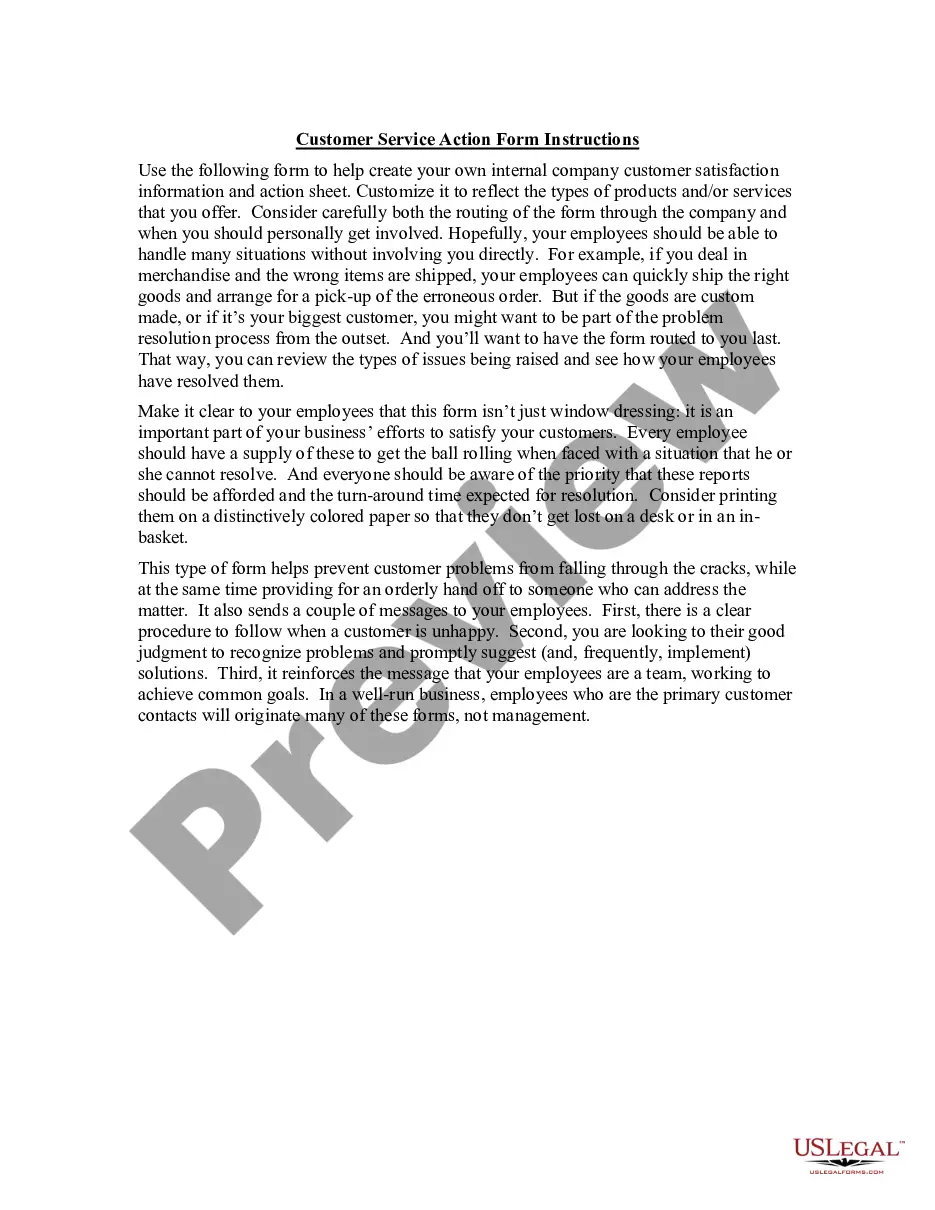
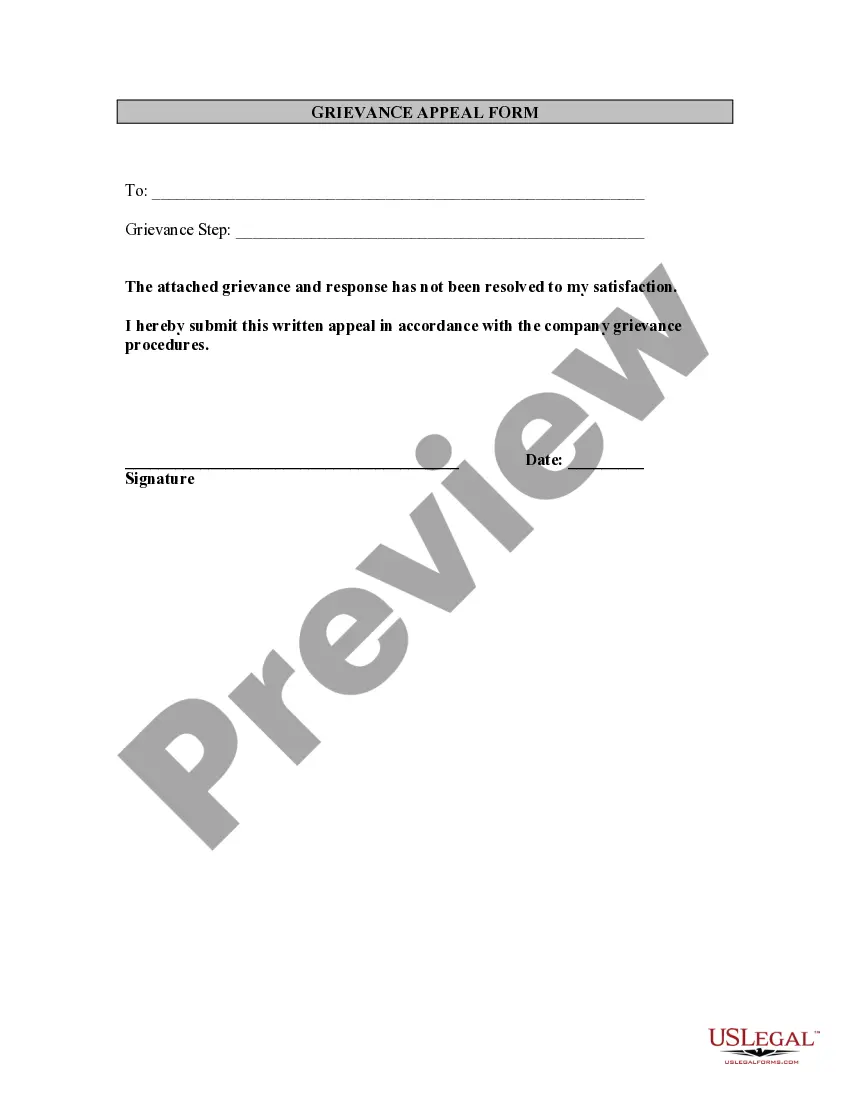
About this form
The Employee Grievance Form is a document that allows an employee to formally initiate grievance procedures within a company. This form serves as a structured way for employees to express dissatisfaction regarding workplace issues, ensuring that their concerns are documented and reviewed by management. It is distinct from informal complaints as it follows established procedures for grievance resolution within an organization.
Form components explained
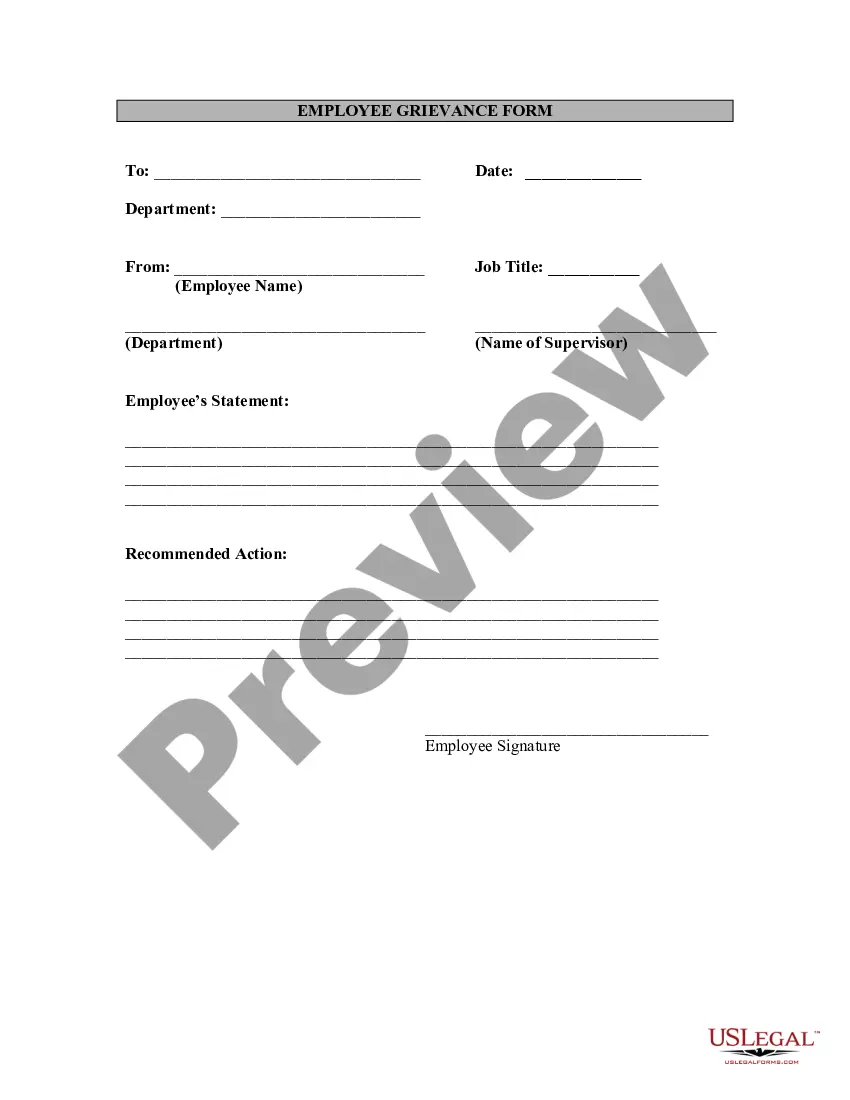
- Employee information: Includes the employee's name and job title.
- Date: The date the grievance is being filed.
- Department: The department where the employee works.
- Supervisor's name: The name of the employee's direct supervisor.
- Employee's statement: Detailed description of the grievance or issue.
- Recommended action: Suggestions on how the grievance could be resolved.
- Employee signature: A signature to verify the form's authenticity.
When this form is needed
This form should be used when an employee encounters issues at work that they feel need to be formally addressed, such as harassment, discrimination, unsafe working conditions, or conflicts with coworkers. It is an integral step in the grievance process, ensuring that concerns are raised officially and allowing the employer to investigate the matter appropriately.
Who needs this form
This form is intended for:
- Employees who wish to formally report grievances within their workplace.
- Human Resources personnel who oversee grievance procedures.
- Supervisors and management involved in the resolution of employee grievances.
Completing this form step by step
- Fill in your full name and job title at the top of the form.
- Enter the current date and your department.
- Specify the name of your immediate supervisor.
- Clearly state your grievance in the employee's statement section, providing as much detail as possible.
- Include any recommended action you believe should be taken regarding your grievance.
- Sign the form to verify your submission and ensure it is officially recorded.
Does this document require notarization?
This form does not typically require notarization unless specified by local law. It is sufficient to submit the signed form to your employer to initiate the grievance process.
Get your form ready online
Our built-in tools help you complete, sign, share, and store your documents in one place.
Make edits, fill in missing information, and update formatting in US Legal Forms—just like you would in MS Word.
Download a copy, print it, send it by email, or mail it via USPS—whatever works best for your next step.
Sign and collect signatures with our SignNow integration. Send to multiple recipients, set reminders, and more. Go Premium to unlock E-Sign.
If this form requires notarization, complete it online through a secure video call—no need to meet a notary in person or wait for an appointment.
We protect your documents and personal data by following strict security and privacy standards.

Make edits, fill in missing information, and update formatting in US Legal Forms—just like you would in MS Word.

Download a copy, print it, send it by email, or mail it via USPS—whatever works best for your next step.

Sign and collect signatures with our SignNow integration. Send to multiple recipients, set reminders, and more. Go Premium to unlock E-Sign.

If this form requires notarization, complete it online through a secure video call—no need to meet a notary in person or wait for an appointment.

We protect your documents and personal data by following strict security and privacy standards.
Common mistakes to avoid
- Failing to include enough detail in the employee's statement section.
- Not providing specific dates or relevant facts related to the grievance.
- Neglecting to sign the form before submission.
- Submitting the form to the wrong department or supervisor.
Advantages of online completion
- Convenience: Fill out the form from any device at your own pace.
- Editability: Easily make changes before final submission.
- Reliability: Downloadable forms ensure you have access to the document when needed.
Summary of main points
- The Employee Grievance Form is essential for formally addressing workplace grievances.
- Clear and detailed completion of the form can facilitate a more effective resolution process.
- The form is suitable for use across multiple states without specific regional requirements.
Looking for another form?


Form popularity
FAQ
Ask employee to fill out a grievance form. Talk with the employee to ensure the matter is understood completely. Provide the employee who faces allegations with a copy of the grievance.
Employee grievance refers to the discontentment of an employee with the corporate and its management. A company or employer is expected to provide an employee with a safe working environment, clear knowledge of job responsibilities, adequate compensation, respect etc.
These are the most common examples of employee grievances. Pay and benefits. Bullying. Work conditions.
Grievance Top 8 Types: Visible Grievances or Hidden Grievances, Real or Imaginary, Expressed or Implied, Oral or Written and a Few Other Types. It is an uphill task to give clear-cut boundaries of types of grievances. However on the basis of nature of the grievances different types of grievances can be possible.
Individual grievance. One person grieves that a management action has violated their rights under the collective agreement. Group grievance. A group grievance complains that management action has hurt a group of individuals in the same way. Policy or Union grievance.
An individual grievance is a complaint that an action by management has violated the rights of an individual as set out in the collective agreement or law, or by some unfair practice. Examples of this type of grievance include: discipline, demotion, classification disputes, denial of benefits, etc.
1Informal meeting with supervisor. Before filing a grievance, encourage employees to talk with their manager first.2Formal grievance in writing. Consider creating a grievance form for employees to fill out.3Evaluate the grievance.4Conduct a formal investigation.5Resolution.
Keep your letter to the point. You need to give enough detail for your employer to be able to investigate your complaint properly. keep to the facts. never use abusive or offensive language. explain how you felt about the behaviour you are complaining about but don't use emotive language.
A grievance is any dissatisfaction or feeling of injustice having connection with one's employment situation which is brought to the attention of management. Speaking broadly, a grievance is any dissatisfaction that adversely affects organizational relations and productivity.