Business Continuity Plan
What this document covers
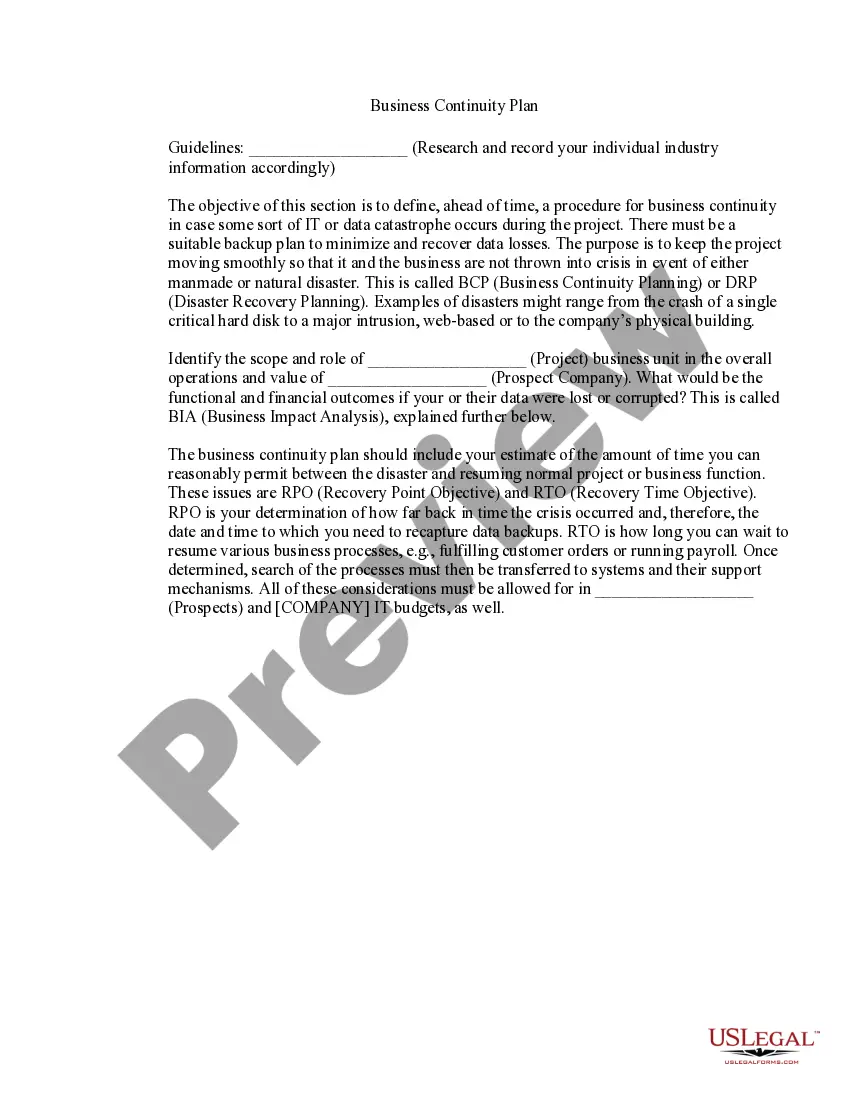
The Business Continuity Plan is a strategic document designed to ensure that a business can continue to operate during and after a disruptive event. This form outlines procedures to manage crises, including natural disasters or IT failures, and emphasizes the importance of minimizing downtime and data loss. Understanding the difference between this form and other planning documents, such as risk management plans, is crucial for effective crisis management.
Main sections of this form
- Guidelines for industry-specific planning and procedures.
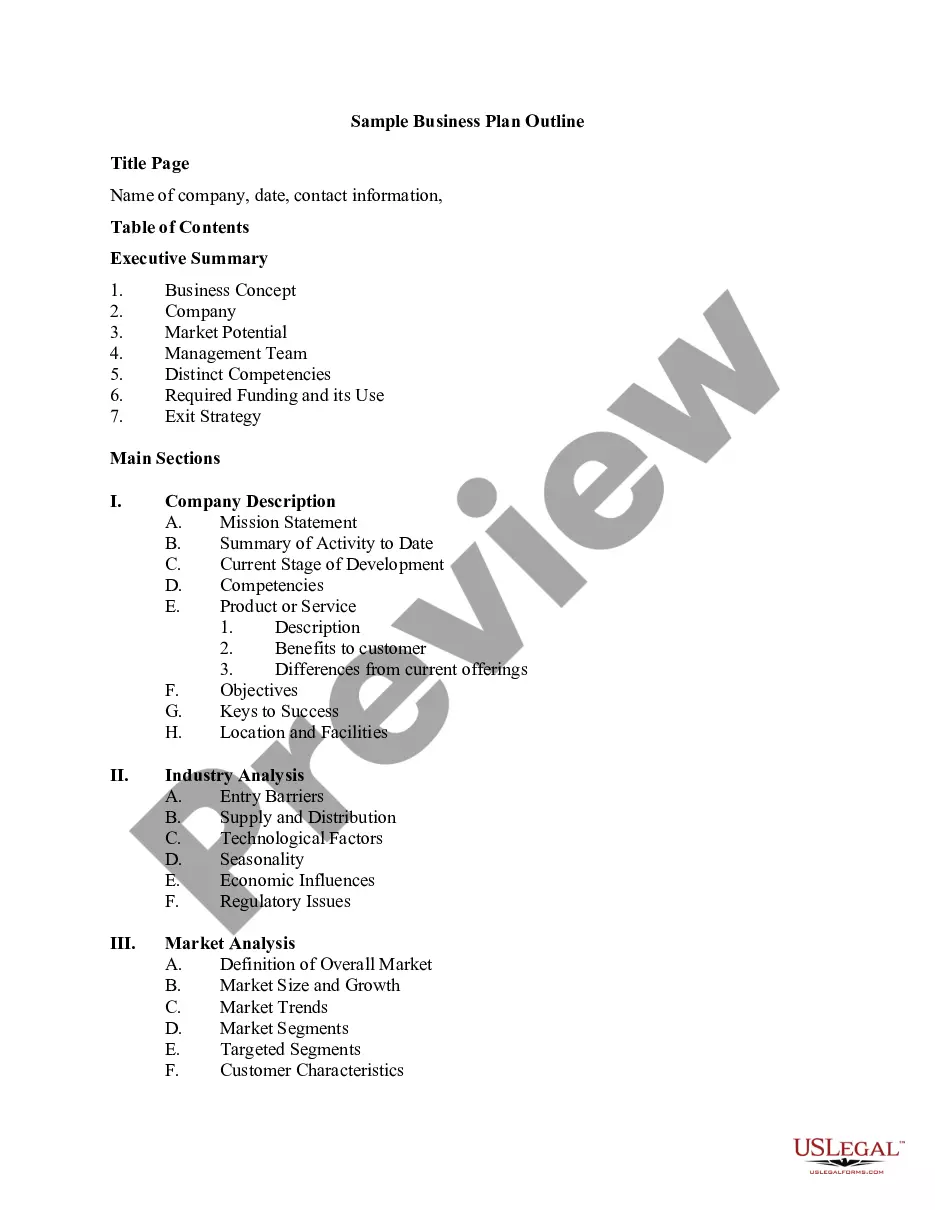
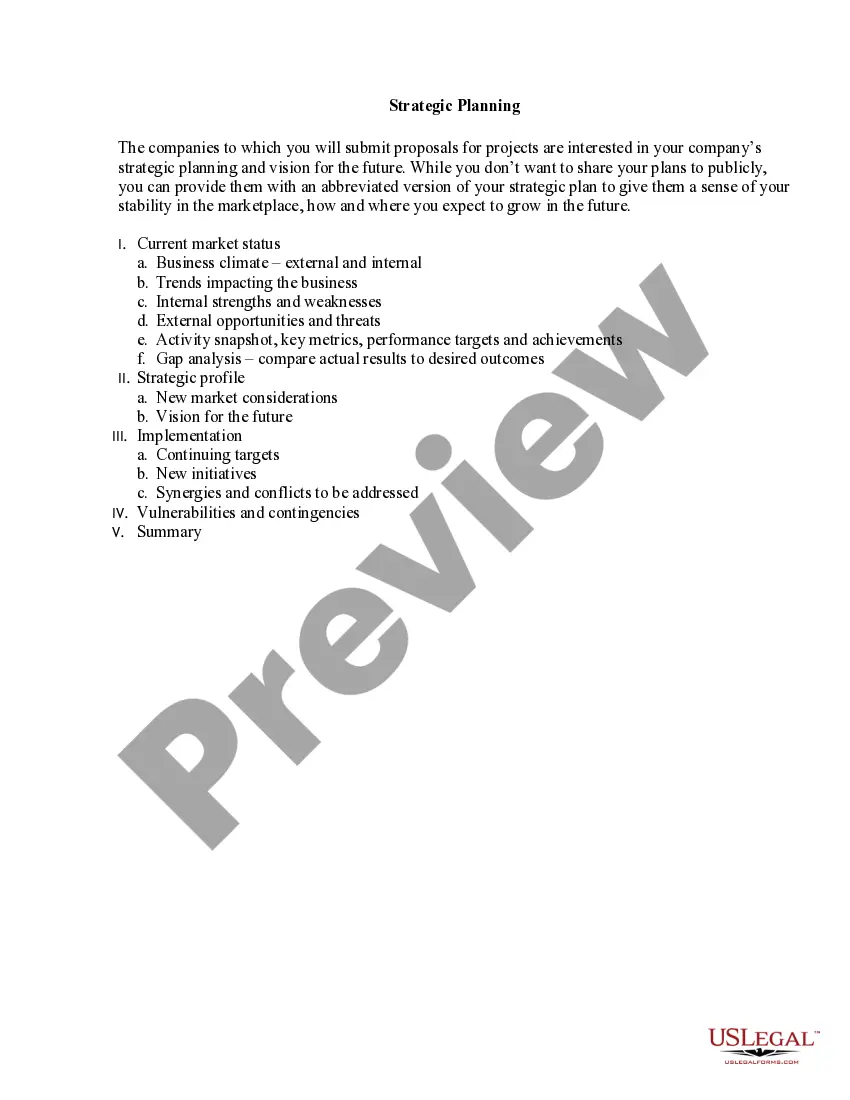
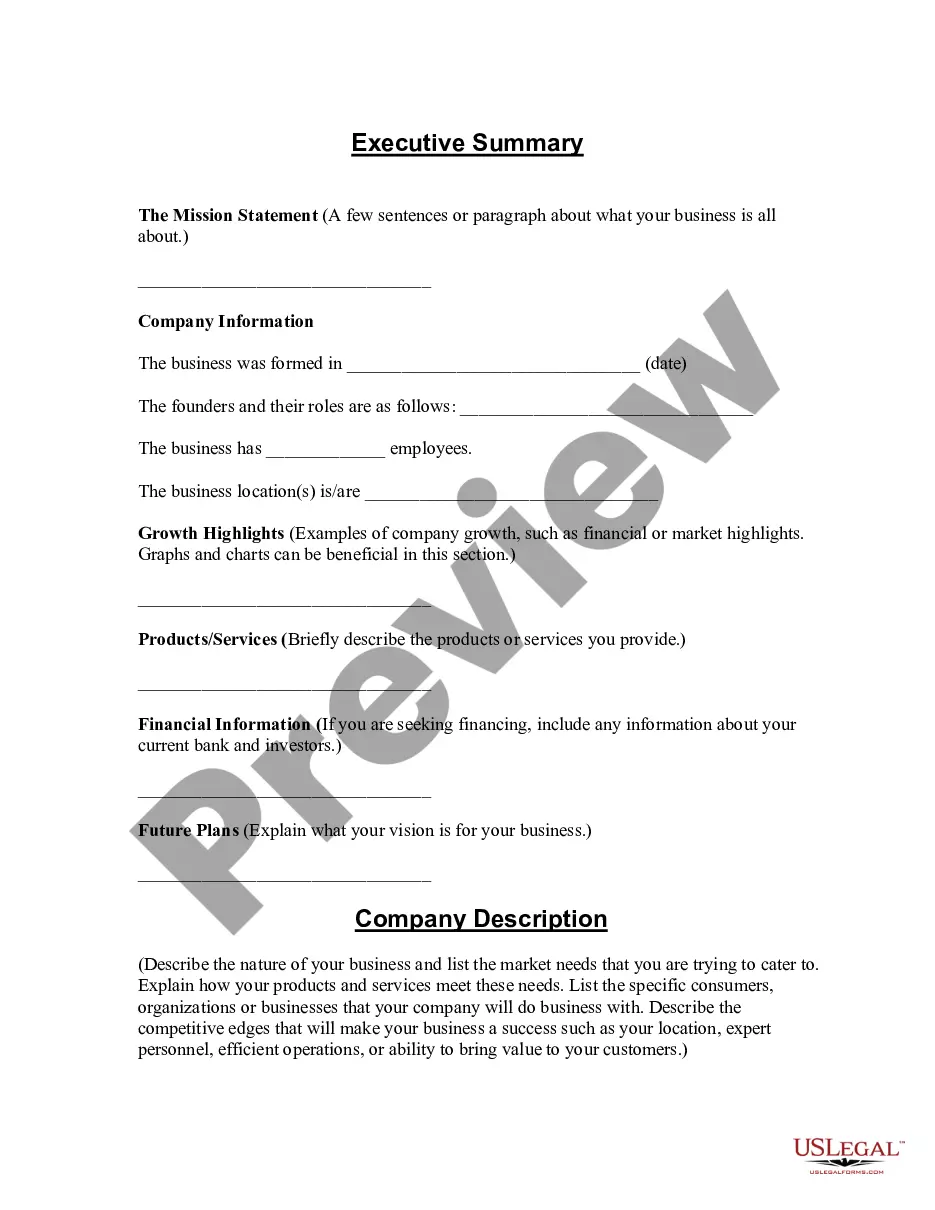
- Identification of critical business units and their roles.
- Business Impact Analysis (BIA) to evaluate potential losses.
- Recovery Point Objective (RPO) and Recovery Time Objective (RTO) determinations.
- Integration of plans into IT budgets and operations.
Situations where this form applies
This form is essential when developing a comprehensive strategy for maintaining business operations in the event of a disaster. It is particularly useful for businesses in sectors where data integrity and operational continuity are critical, such as technology, finance, and healthcare. Use this plan when preparing for potential disruptions from IT failures, natural disasters, or other crisis scenarios that could affect your business continuity.
Who should use this form
This form is suitable for:
- Business owners and executives looking to safeguard their operations.
- Project managers responsible for overseeing risk management.
- IT managers tasked with ensuring data security and backup systems.
- Compliance officers needing to meet regulatory requirements.
How to complete this form
- Identify and define the critical business units involved in your operations.
- Conduct a Business Impact Analysis to assess the potential impact of data loss.
- Establish the Recovery Point Objective (RPO) for data recovery needs.
- Determine the Recovery Time Objective (RTO) for resuming normal operations.
- Integrate the continuity plan into your overall business strategy and IT budgeting.
Does this form need to be notarized?
Notarization is generally not required for this form. However, certain states or situations might demand it. You can complete notarization online through US Legal Forms, powered by Notarize, using a verified video call available anytime.
Get your form ready online
Our built-in tools help you complete, sign, share, and store your documents in one place.
Make edits, fill in missing information, and update formatting in US Legal Forms—just like you would in MS Word.
Download a copy, print it, send it by email, or mail it via USPS—whatever works best for your next step.
Sign and collect signatures with our SignNow integration. Send to multiple recipients, set reminders, and more. Go Premium to unlock E-Sign.
If this form requires notarization, complete it online through a secure video call—no need to meet a notary in person or wait for an appointment.
We protect your documents and personal data by following strict security and privacy standards.

Make edits, fill in missing information, and update formatting in US Legal Forms—just like you would in MS Word.

Download a copy, print it, send it by email, or mail it via USPS—whatever works best for your next step.

Sign and collect signatures with our SignNow integration. Send to multiple recipients, set reminders, and more. Go Premium to unlock E-Sign.

If this form requires notarization, complete it online through a secure video call—no need to meet a notary in person or wait for an appointment.

We protect your documents and personal data by following strict security and privacy standards.
Common mistakes
- Neglecting to conduct a thorough Business Impact Analysis.
- Failing to update the plan regularly to reflect changes in business operations.
- Not involving key stakeholders in the development process.
- Underestimating the recovery time needed for specific business functions.
Benefits of using this form online
- Convenient access to a securely stored digital format.
- Easy to customize according to specific business needs.
- Reliable source of information drafted by licensed attorneys.
- Supports real-time updates to reflect operational changes.
Looking for another form?
Form popularity
FAQ
The four P's of business continuity are people, processes, premises, and providers: People - This covers your staff, customers and clients.
The Essential 3 Elements of a High-Functioning BCM Plan Emergency Management and Response. Crisis Management and Communication. Business Restoration and Operational Recovery. Testing and Updating are Crucial to BCM Plan Success.
A business continuity plan has three key elements: Resilience, recovery and contingency. An organization can increase resilience by designing critical functions and infrastructures with various disaster possibilities in mind; this can include staffing rotations, data redundancy and maintaining a surplus of capacity.
Basically, the business continuity management lifecycle has six phases to it: program management, understanding the organization, determining the BCM strategy, developing and implementing a BCM response, exercising the response, as well as maintaining, reviewing and embedding BCM in the organization's culture.
A business continuity plan outlines how you plan on keeping your business operational if there's an unplanned or severe disruption to your usual services. The business continuity plan includes, for example, data recovery and backup procedures, strategies for resuming office productivity, and communication guidelines. 6 Things Your Business Continuity Plan Should Include thinksecurenet.com ? blog ? 6-things-your-... thinksecurenet.com ? blog ? 6-things-your-...
Seven Ways to Start Your Business Continuity Plan Determine your greatest risk potential.Establish your Power Needs.Create a communications plan.Prepare your supply chain.Make sure you have enough insurance to recover.Protect your critical data in the Cloud.Test the plan. Seven Ways to Start Your Business Continuity Plan sba.gov ? blog ? seven-ways-start-your-busi... sba.gov ? blog ? seven-ways-start-your-busi...
What are the 5 key components of a business continuity plan? Risks and potential business impact.Planning an effective response.Roles and responsibilities.Communication.Testing and training.Building your own business continuity plan.
Here are five steps to help you get started. Step 1: Assemble a Business Continuity Management Team.Step 2: Ensure the Safety and Wellbeing of Your Employees.Step 3: Understand the Risks to Your Company.Step 4: Implement Recovery Strategies.Step 5: Test, Test Again and Make Improvements.
Four Steps to Developing an Effective Business Continuity Plan Identify threats or risks.Conduct a business impact analysis.Adopt controls for prevention and mitigation.Test, exercise and improve your plan routinely.