Sample Business Plan Template
About this form
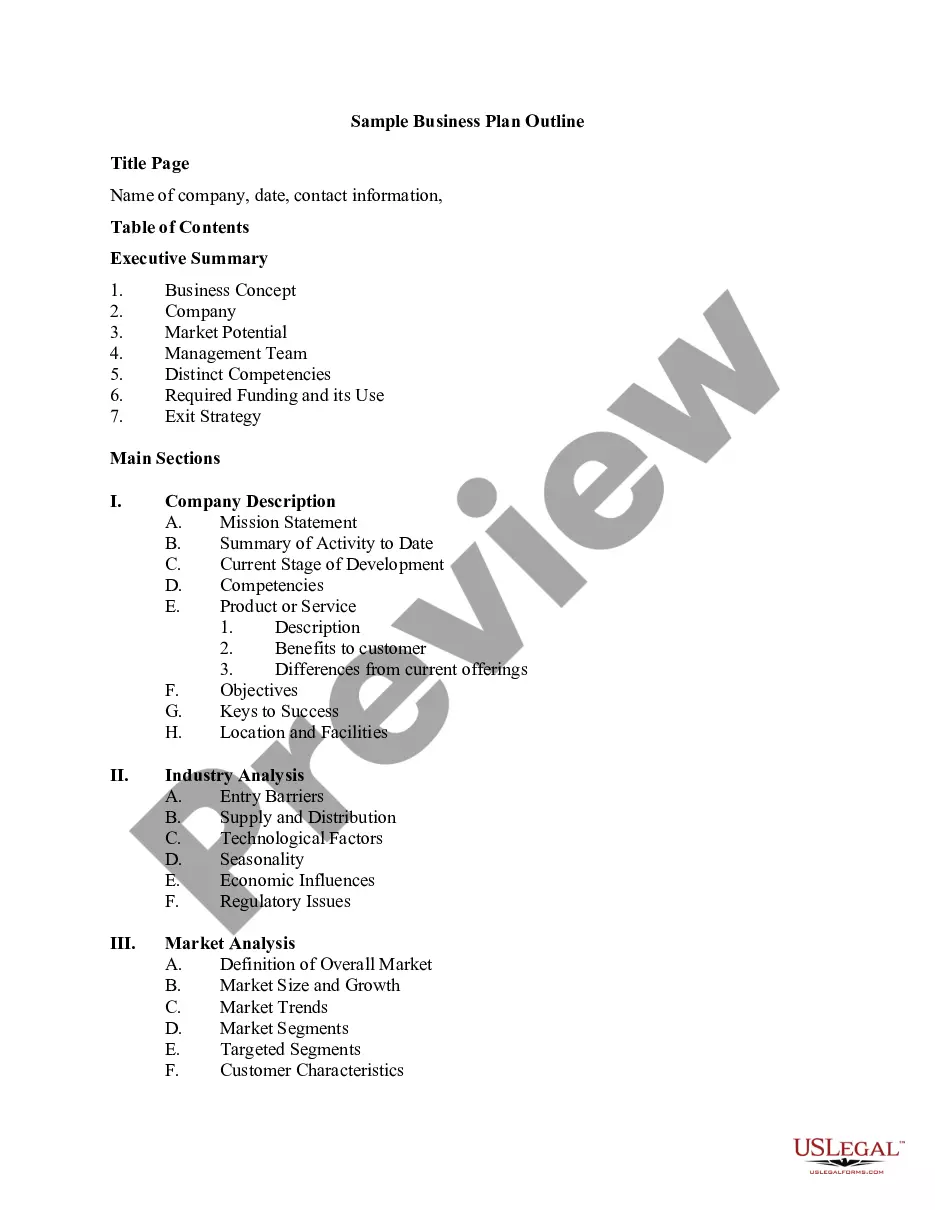
The Sample Business Plan Template is a structured document designed to assist entrepreneurs in outlining their business concept. This template acts as a roadmap for detailing the mission, products or services, market analysis, financial projections, and funding needs. It is valuable for seeking funding and engaging potential stakeholders, distinguishing itself from simpler business plan examples by offering comprehensive guidelines supported by legal considerations.
What’s included in this form
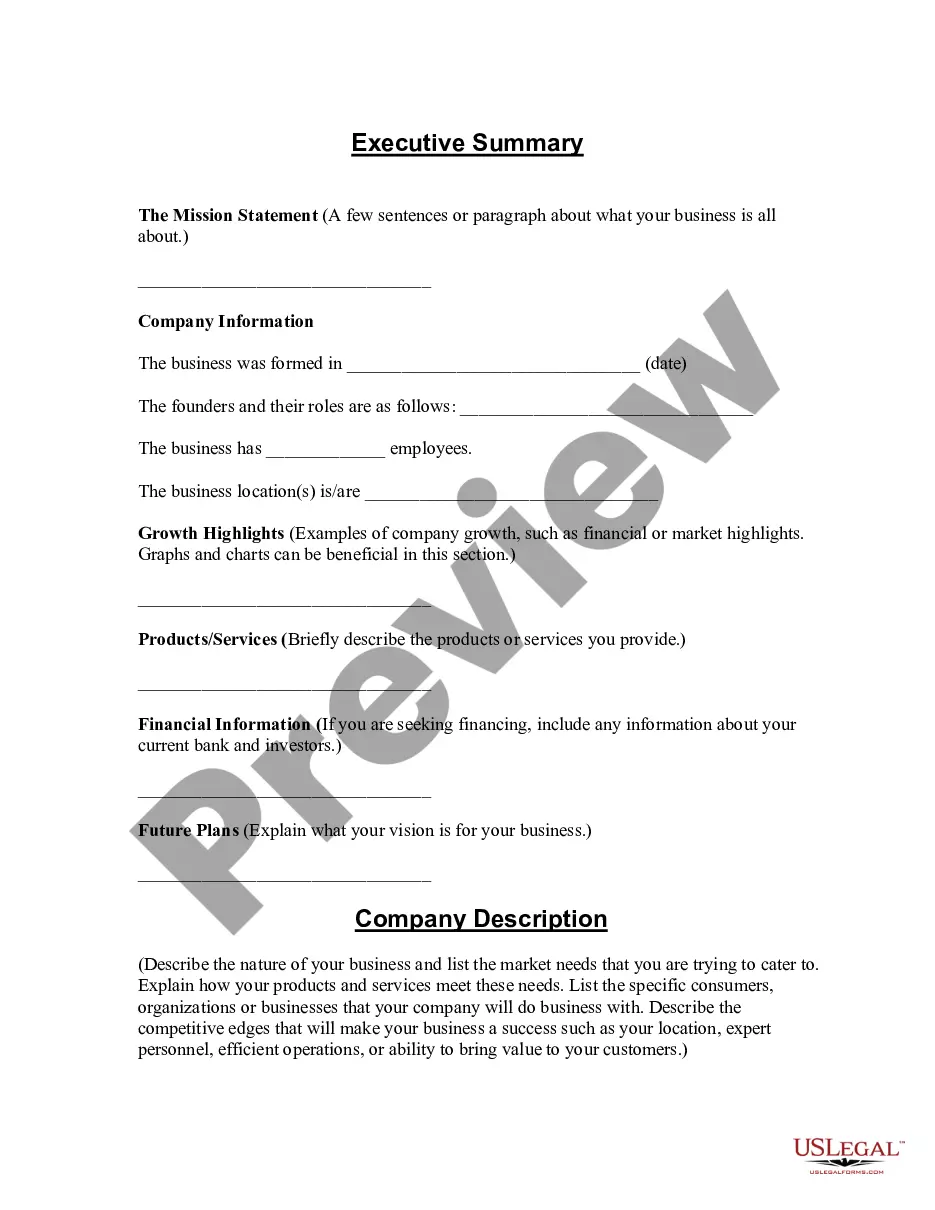
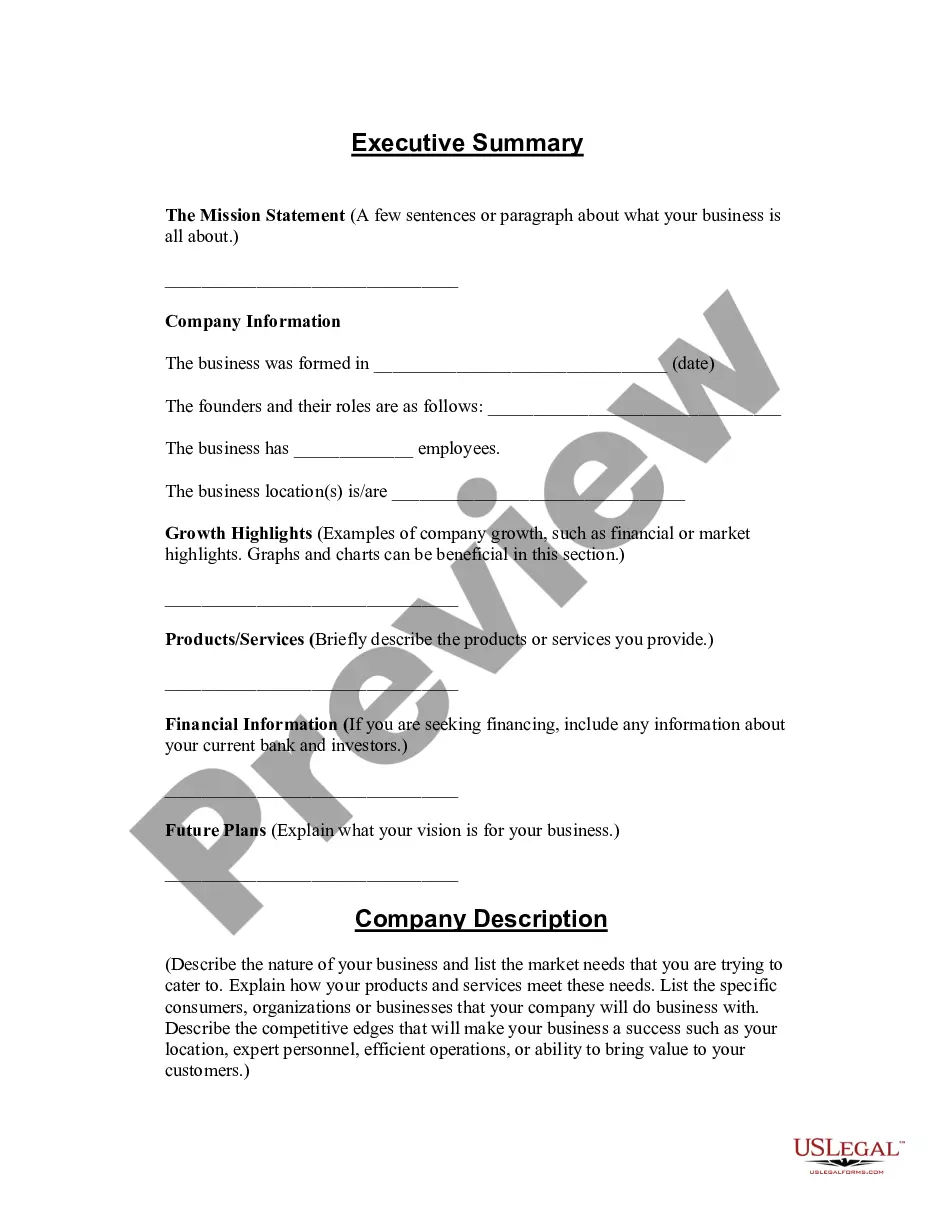
- Mission Statement: A concise summary of your business's purpose.
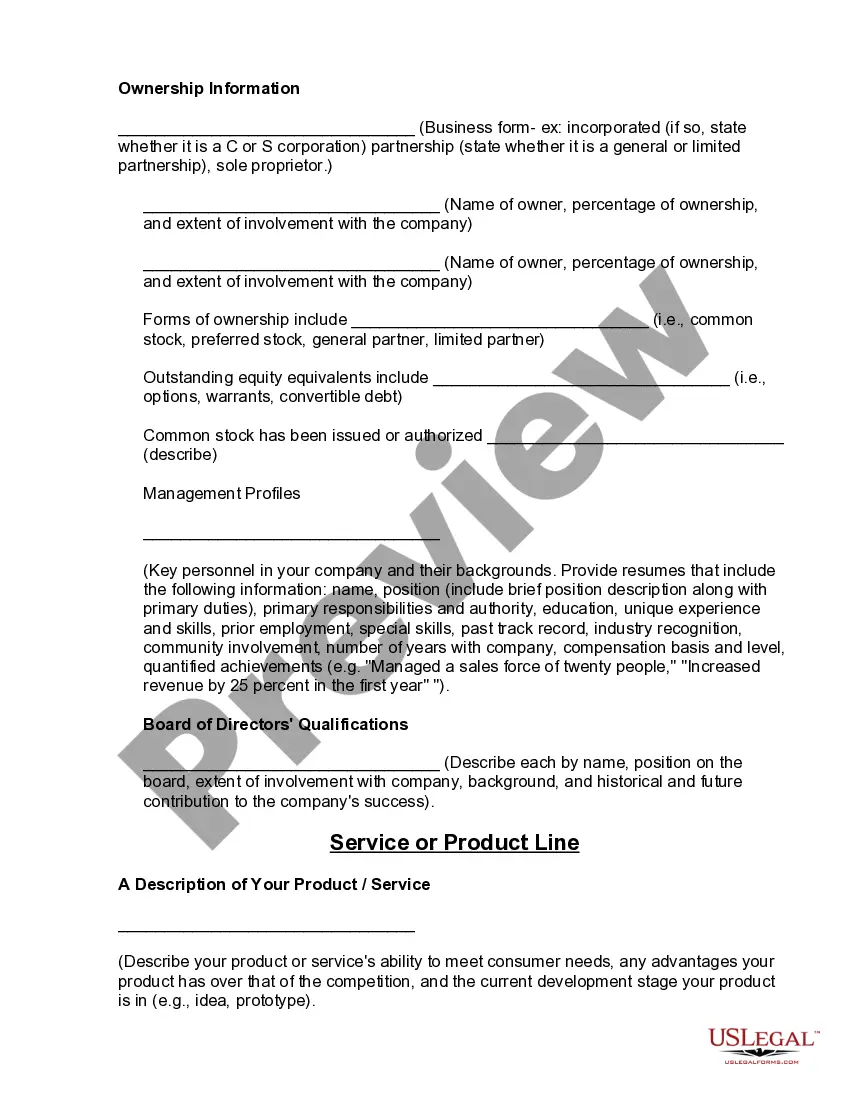
- Company Information: Key details including formation date and team structure.
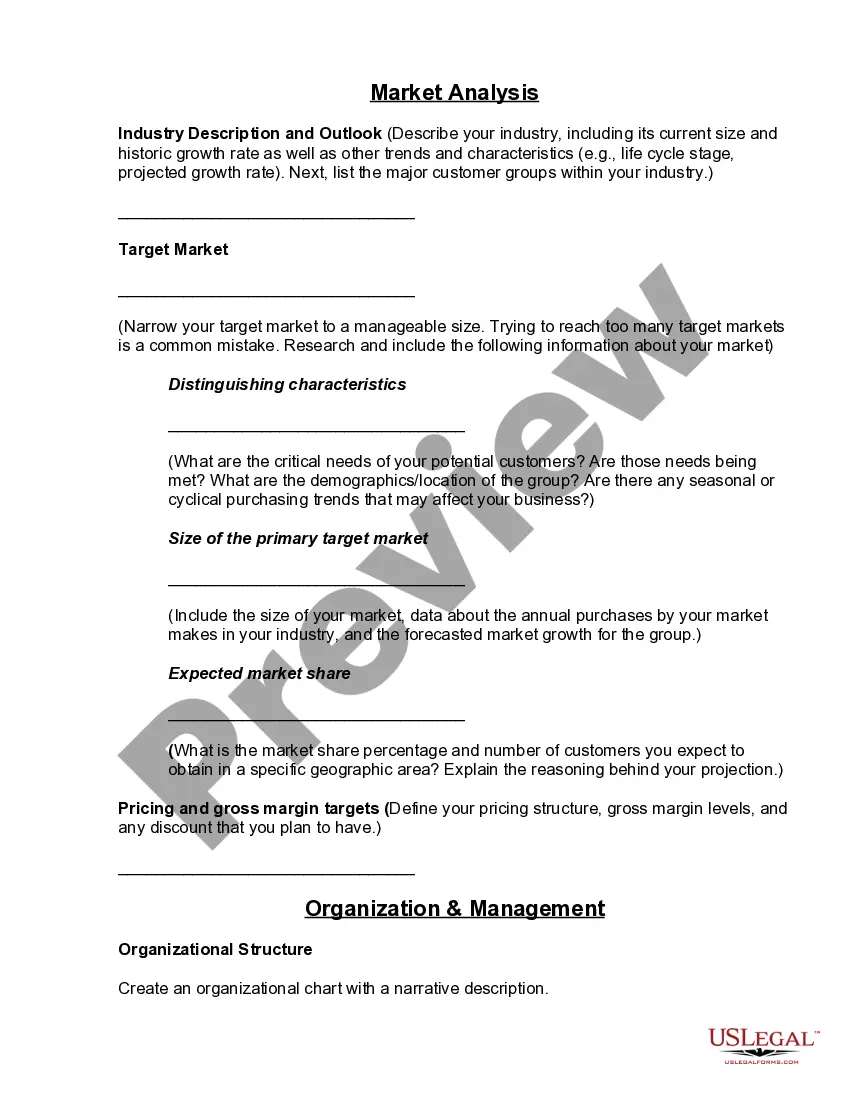
- Market Analysis: Insights into industry trends and target customers.
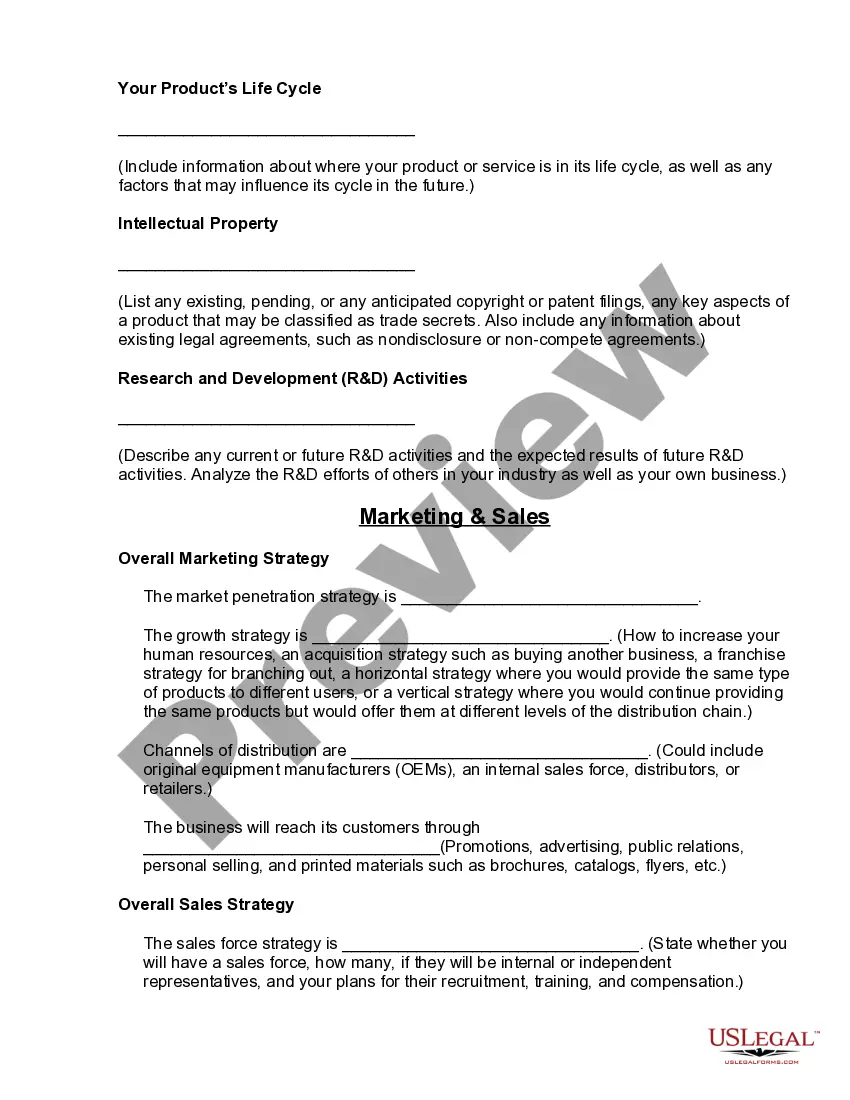
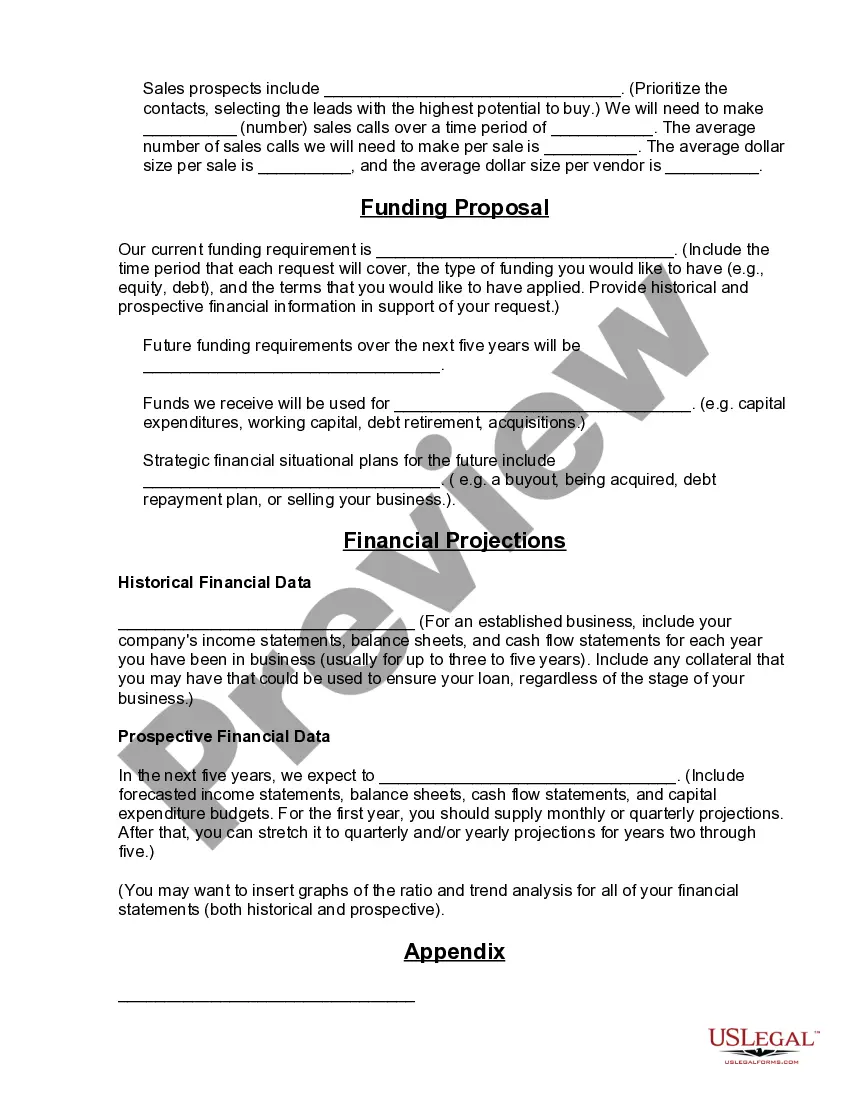
- Funding Proposal: Information on funding needs and usage plans.
- Financial Projections: Detailed forecasts of future income and expenses.
When to use this document
This form is ideal when starting a new business, revising an existing business plan, or seeking funding from investors or financial institutions. It's also useful for presenting your business concept to potential partners or stakeholders to gain insights and feedback.
Intended users of this form
- Entrepreneurs launching a new business.
- Small business owners looking to update their business strategy.
- Individuals seeking investment or loans for business ventures.
- Business consultants providing guidance to clients.
Instructions for completing this form
- Identify the mission statement reflecting your business's core values and goals.
- Fill out company information including founding date, team roles, and employee count.
- Conduct market analysis to identify trends and target market characteristics.
- Detail your funding proposal, stating how much funding you need and its intended use.
- Compile financial projections to outline expected revenue and expenses for the next five years.
Does this document require notarization?
This form does not typically require notarization unless specified by local law. However, ensure that any submissions to funding entities or legal requirements comply with applicable regulations.
Get your form ready online
Our built-in tools help you complete, sign, share, and store your documents in one place.
Make edits, fill in missing information, and update formatting in US Legal Forms—just like you would in MS Word.
Download a copy, print it, send it by email, or mail it via USPS—whatever works best for your next step.
Sign and collect signatures with our SignNow integration. Send to multiple recipients, set reminders, and more. Go Premium to unlock E-Sign.
If this form requires notarization, complete it online through a secure video call—no need to meet a notary in person or wait for an appointment.
We protect your documents and personal data by following strict security and privacy standards.

Make edits, fill in missing information, and update formatting in US Legal Forms—just like you would in MS Word.

Download a copy, print it, send it by email, or mail it via USPS—whatever works best for your next step.

Sign and collect signatures with our SignNow integration. Send to multiple recipients, set reminders, and more. Go Premium to unlock E-Sign.

If this form requires notarization, complete it online through a secure video call—no need to meet a notary in person or wait for an appointment.

We protect your documents and personal data by following strict security and privacy standards.
Mistakes to watch out for
- Failing to define a clear mission statement.
- Neglecting thorough market research and analysis.
- Underestimating financial projections or funding needs.
- Overlooking competition and market trends.
- Not including actionable steps in the business plan.
Benefits of completing this form online
- Easy access to a structured format that guides you through the planning process.
- Editable fields that allow for customization of your business details.
- Convenience of downloading the form for offline use and printing.
- Reliable templates crafted by licensed attorneys ensuring legal compliance.
Legal use & context
- The business plan serves as a strategic tool for both internal guidance and external funding requests.
- It is not a legally binding document but rather a foundational outline for business operations and expectations.
Quick recap
- A well-structured business plan is crucial for securing funding and guiding a business's future.
- Utilizing the Sample Business Plan Template can help streamline the planning process.
- Thorough research and realistic projections are key to a successful business plan.
Looking for another form?
Form popularity
FAQ
Research, research, research. Determine the purpose of your plan. Create a company profile. Document all aspects of your business. Have a strategic marketing plan in place. Make it adaptable based on your audience. Explain why you care.
INSTRUCTIONS: Briefly summarize what your company does. The executive summary should be very short and you can go into more detail later in the plan. INSTRUCTIONS: Describe your target customer or market segments. Again, keep things very brief in the executive summary and add more detail later in the plan.
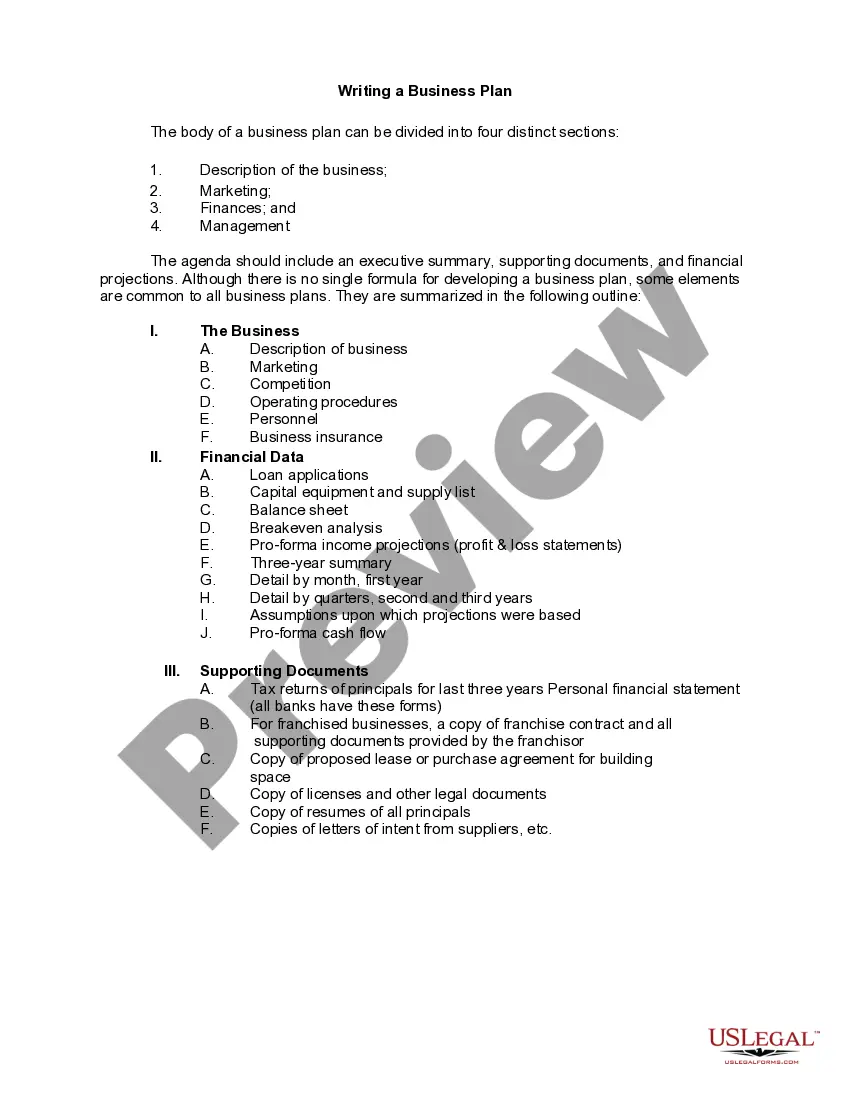
Step 1: Write an Executive Summary. Step 2: Write a Business Description. Step 3: Market and Competitive Analysis. Step 4: Operational Structure. Step 5: Product Description. Step 6: Raise Capital. Step 7: Financial Analysis and Projections. Step 8: Appendix.
Summary. Write one or two sentences about ONE of the following: Market Analysis. Include a couple of sentences about: Competitive Analysis. Write no more than two or three sentences about: Strategy. Focus a couple of sentences on: Products and Services. Write a sentence or two on: Marketing and Sales. Operations. Financials.
Executive summary. The executive summary is arguably the most important section of a business plan, because it needs to draw your readers into your plan and entice them to continue reading. Company description. Products and services. Market analysis. Management team. Financial plan.
If you're new to writing a business plan, The Balance's template is one of the most user-friendly options you'll find. This template is the most helpful one on the list in my opinion because it's such a comprehensive and well written guide and helps you through every section.
Executive summary. Briefly tell your reader what your company is and why it will be successful. Company description. Market analysis. Organization and management. Service or product line. Marketing and sales. Funding request. Financial projections.
Executive Summary. Company Description. Products and Services. Market analysis: Strategy and Implementation: Organization and Management Team: Financial plan and projections:
Executive Summary. Company Description. Market Analysis. Organization & Management. Service or Product Line. Marketing & Sales. Funding Request. Financial Projections.