Sample Business Plan Outline
About this form
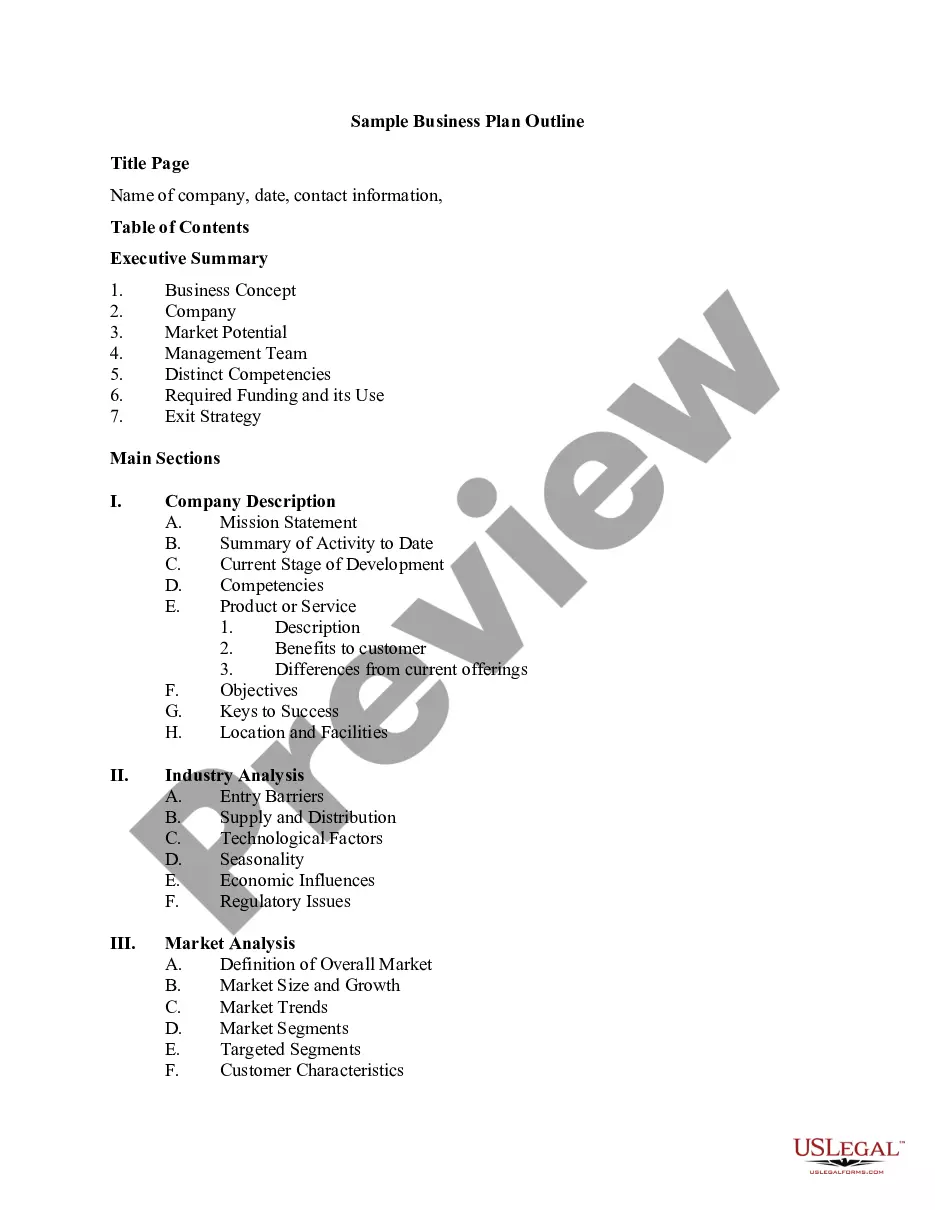
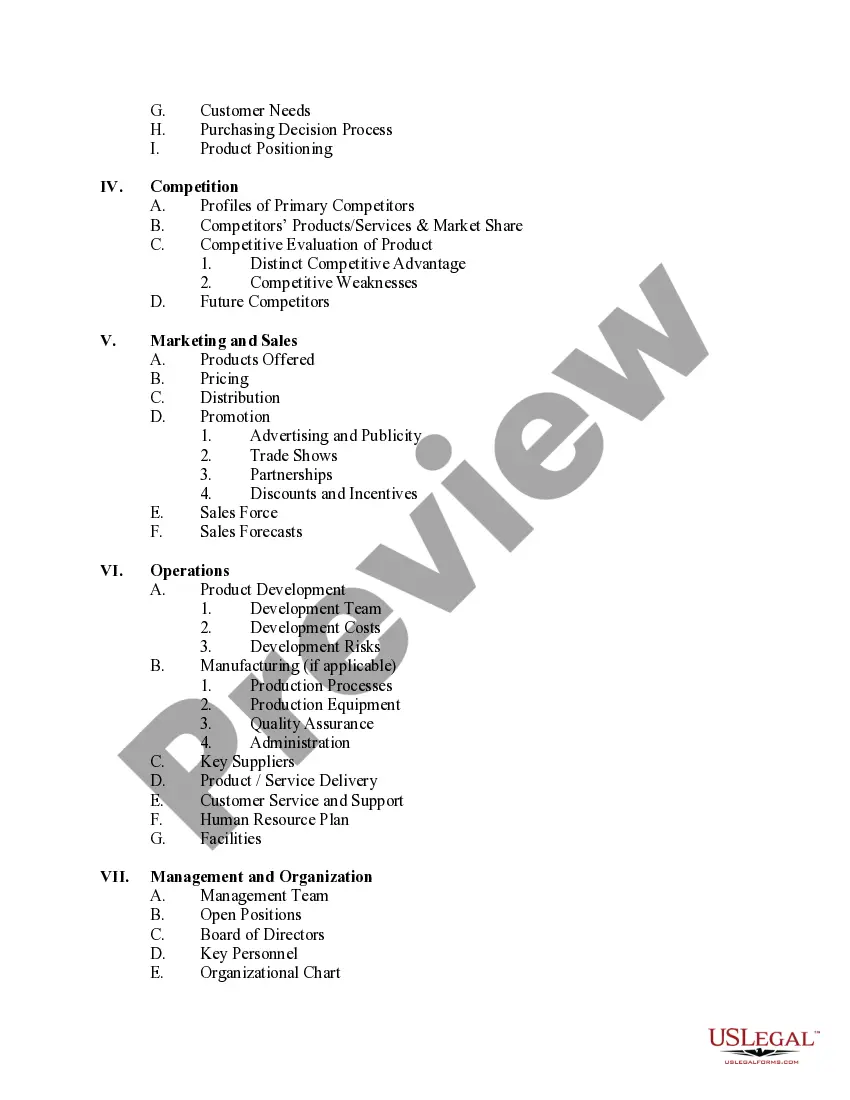
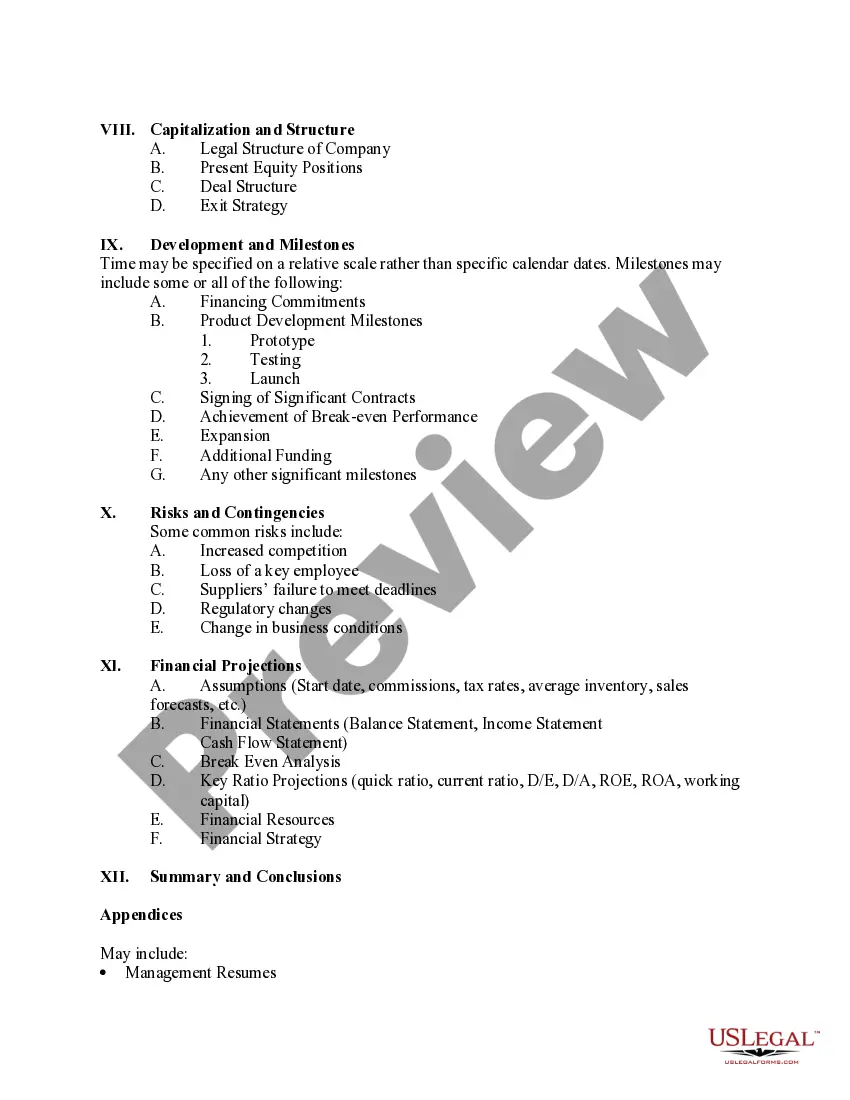
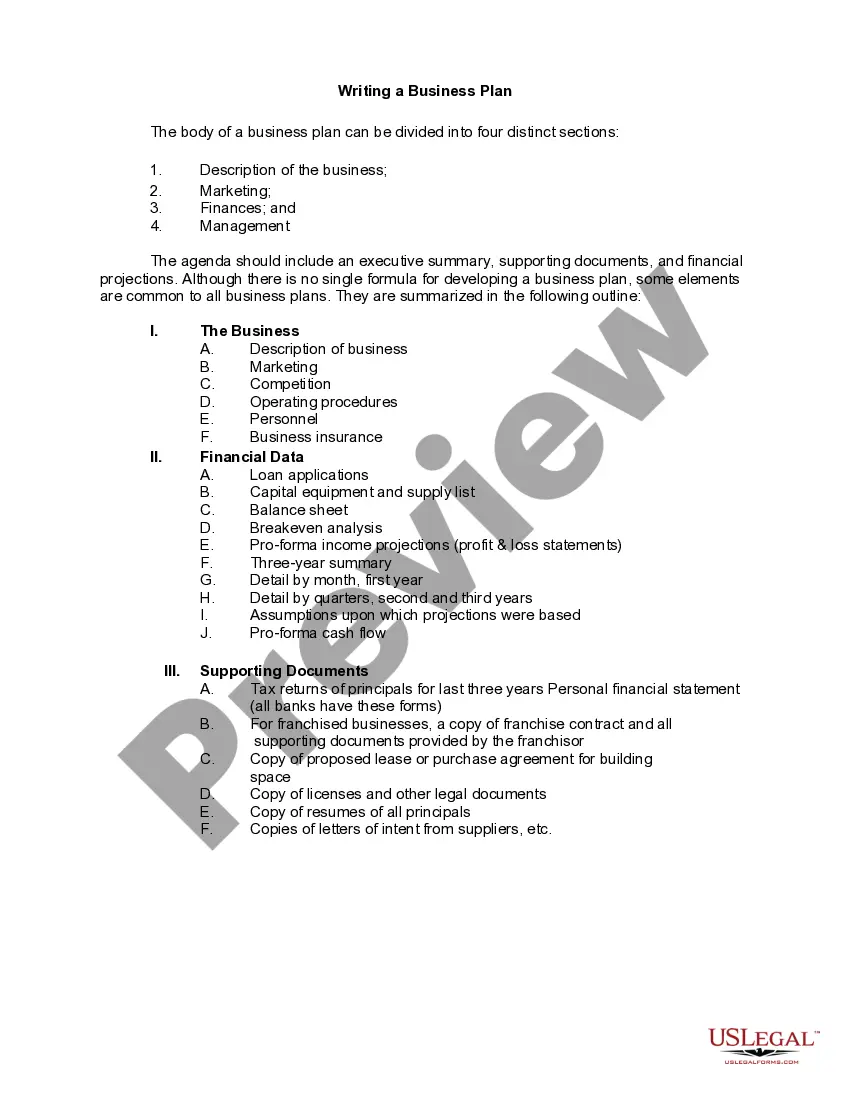
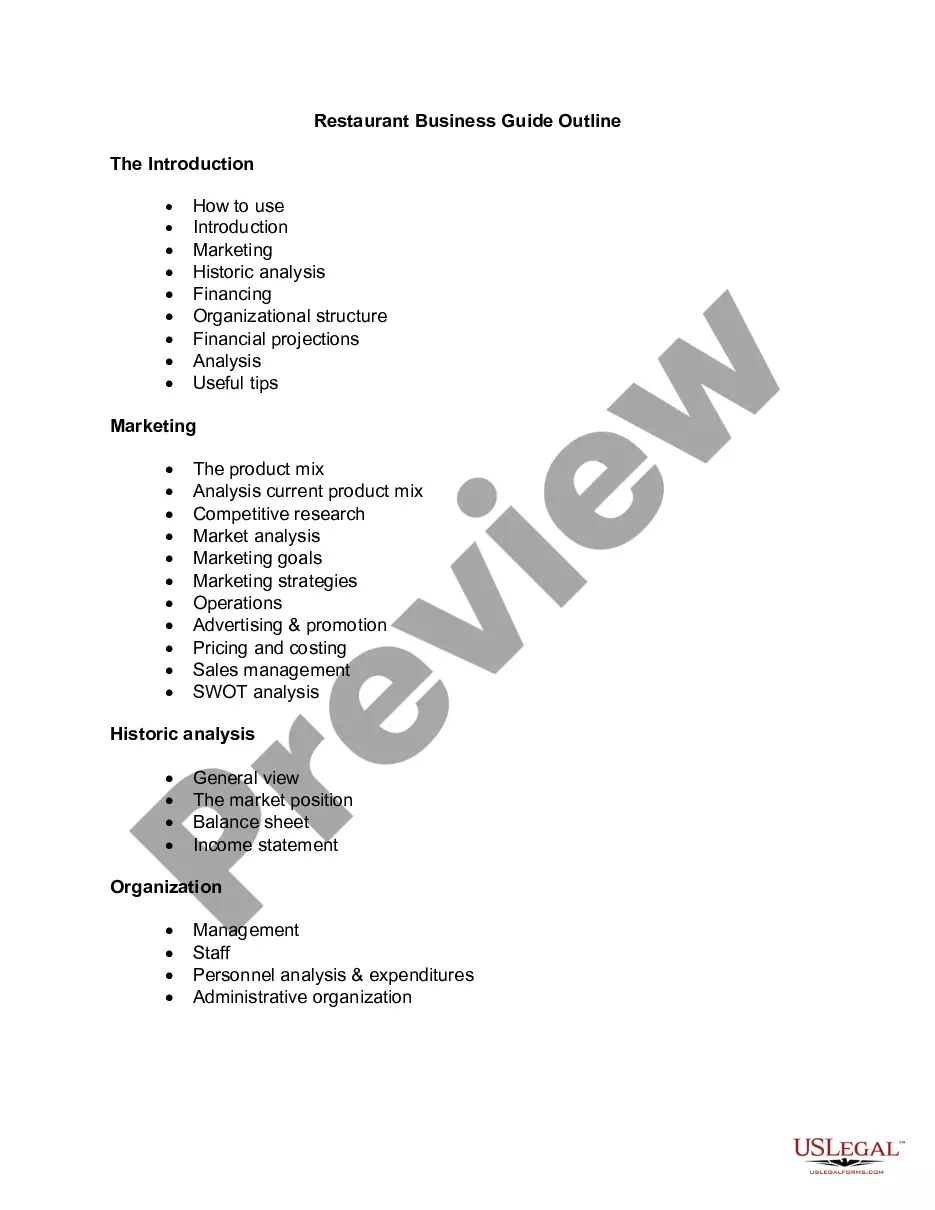
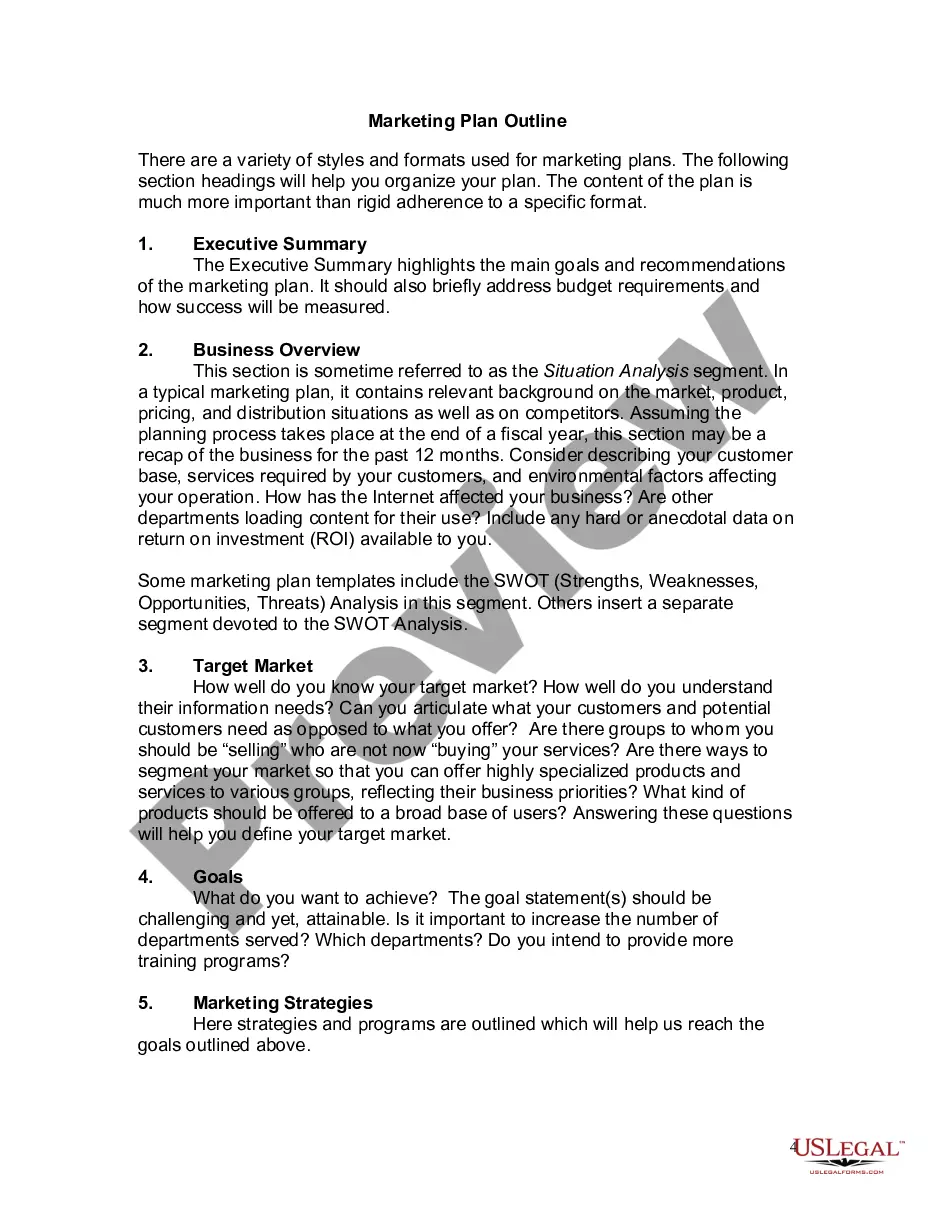
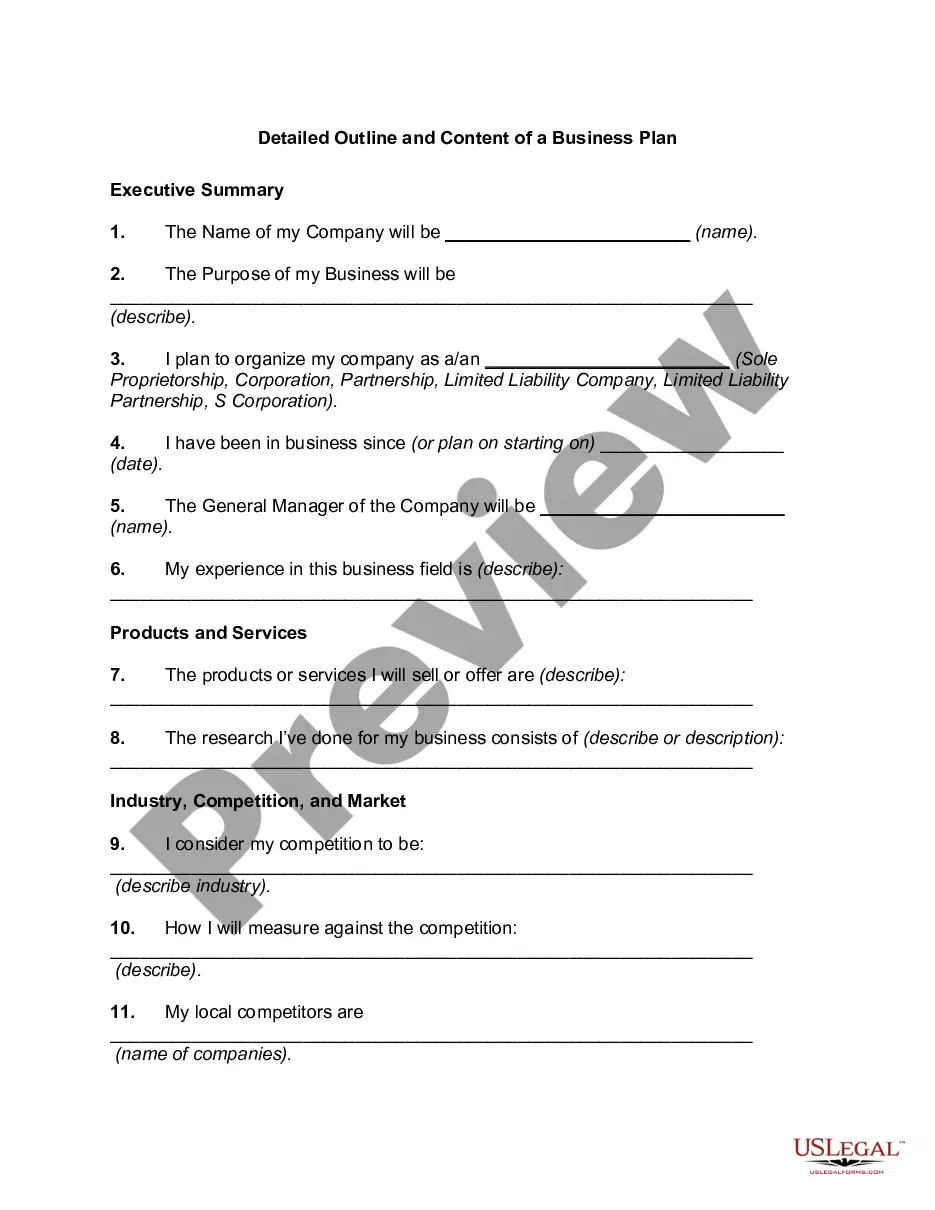
The Sample Business Plan Outline is a structured document designed to help entrepreneurs articulate their business goals and strategies. This form differs from general business templates by providing detailed sections that cover every aspect of a business, including market analysis, management, and financial projections. Whether starting a new business or seeking to refine an existing one, this outline serves as a comprehensive guide to outline key objectives and track progress.
Key components of this form
- Title page detailing the company name, date, and contact information.
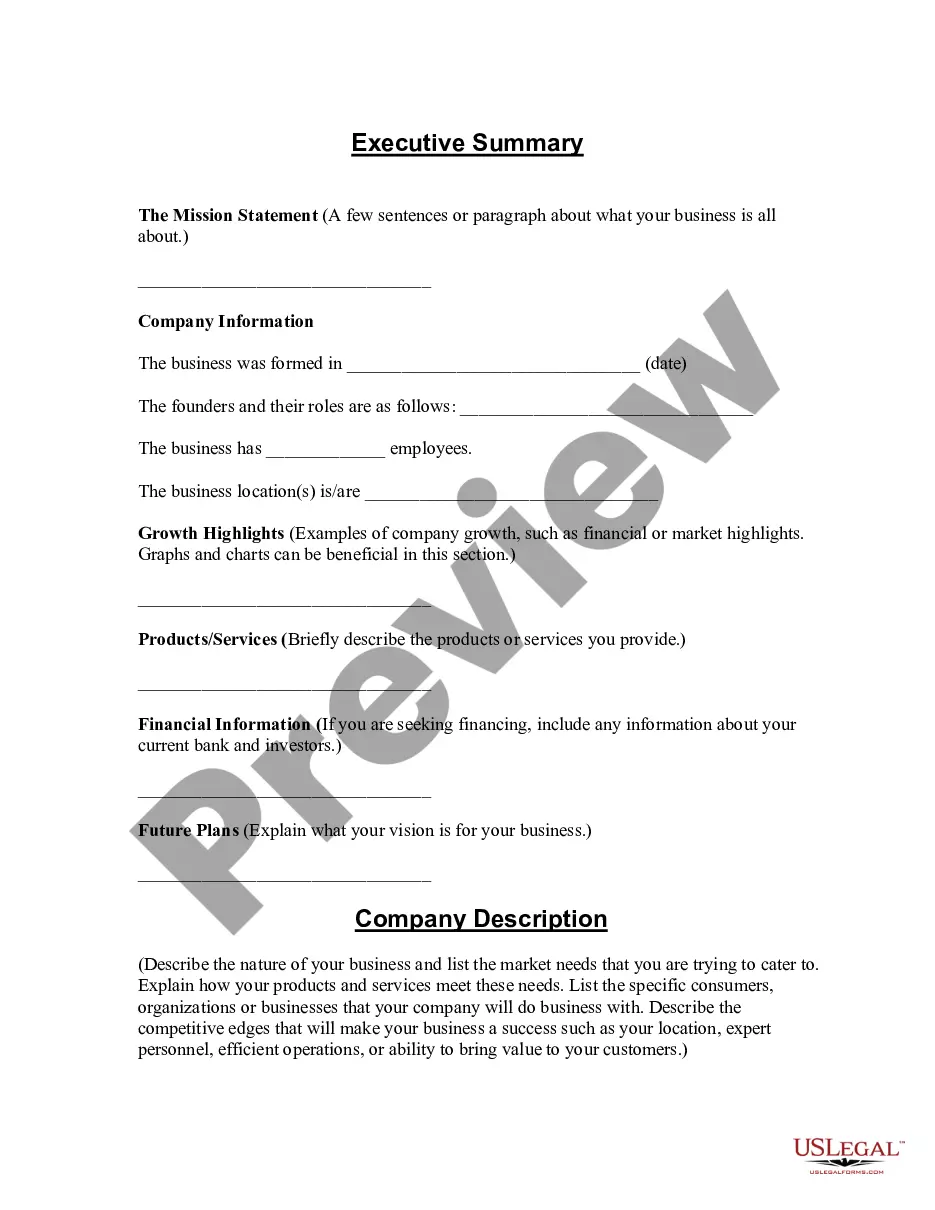
- Executive summary summarizing the business concept and required funding.
- Company description, including mission statement and product/service details.
- Market analysis focusing on overall market definition and customer characteristics.
- Financial projections outlining expected income, expenses, and profitability timelines.
- Risks and contingencies acknowledging potential challenges and their impacts.

Common use cases
This form is essential for various scenarios, including drafting a business plan for a startup, applying for loans or investments, or evaluating and strategizing for an existing business. It serves as a roadmap to allocate resources effectively, identify opportunities, and prepare for challenges in the business landscape.
Who this form is for
- Entrepreneurs preparing to launch a new business.
- Business owners seeking to plan for growth or restructure operations.
- Individuals applying for funding or investment.
- Teams collaborating on business strategies and objectives.
How to complete this form
- Identify the business concept and define clear goals.
- Outline the company's structure, mission, and distinctive strengths.
- Conduct thorough market research to analyze potential customers and competitors.
- Develop financial forecasts, including profit expectations and break-even analysis.
- Review and refine the completed business plan to ensure clarity and focus.
Does this form need to be notarized?
Notarization is not commonly needed for this form. However, certain documents or local rules may make it necessary. Our notarization service, powered by Notarize, allows you to finalize it securely online anytime, day or night.
Get your form ready online
Our built-in tools help you complete, sign, share, and store your documents in one place.
Make edits, fill in missing information, and update formatting in US Legal Forms—just like you would in MS Word.
Download a copy, print it, send it by email, or mail it via USPS—whatever works best for your next step.
Sign and collect signatures with our SignNow integration. Send to multiple recipients, set reminders, and more. Go Premium to unlock E-Sign.
If this form requires notarization, complete it online through a secure video call—no need to meet a notary in person or wait for an appointment.
We protect your documents and personal data by following strict security and privacy standards.

Make edits, fill in missing information, and update formatting in US Legal Forms—just like you would in MS Word.

Download a copy, print it, send it by email, or mail it via USPS—whatever works best for your next step.

Sign and collect signatures with our SignNow integration. Send to multiple recipients, set reminders, and more. Go Premium to unlock E-Sign.

If this form requires notarization, complete it online through a secure video call—no need to meet a notary in person or wait for an appointment.

We protect your documents and personal data by following strict security and privacy standards.
Typical mistakes to avoid
- Neglecting to research the market thoroughly, leading to unrealistic projections.
- Focusing too heavily on products/services without considering customer needs.
- Failing to update the business plan regularly as conditions change.
- Overlooking financial details, such as cash flow or funding requirements.
Advantages of online completion
- Convenient access to a structured outline that saves time in planning.
- Easy editing of sections to tailor the business plan to specific needs.
- Reliable templates drafted by licensed attorneys, ensuring legal soundness.
Quick recap
- The Sample Business Plan Outline serves as a comprehensive guide for articulating business strategies.
- It is essential for both new and existing businesses looking to navigate various challenges.
- Using this online template allows for ease of access and customization.
- Regular updates to the business plan can help in adapting to ongoing market changes.
Looking for another form?

Form popularity
FAQ
INSTRUCTIONS: Briefly summarize what your company does. The executive summary should be very short and you can go into more detail later in the plan. INSTRUCTIONS: Describe your target customer or market segments. Again, keep things very brief in the executive summary and add more detail later in the plan.
Create an executive summary. Compose your company description. Summarize market research and potential. Conduct competitive analysis. Describe your product or service. Develop a marketing and sales strategy. Compile your business financials.
INSTRUCTIONS: Briefly summarize what your company does. The executive summary should be very short and you can go into more detail later in the plan. INSTRUCTIONS: Describe your target customer or market segments. Again, keep things very brief in the executive summary and add more detail later in the plan.
Conduct market research. Market research will tell you if there's an opportunity to turn your idea into a successful business. Write your business plan. Fund your business. Pick your business location. Choose a business structure. Choose your business name. Register your business. Get federal and state tax IDs.
Step 1: Write an Executive Summary. Step 2: Write a Business Description. Step 3: Market and Competitive Analysis. Step 4: Operational Structure. Step 5: Product Description. Step 6: Raise Capital. Step 7: Financial Analysis and Projections. Step 8: Appendix.
Research, research, research. Determine the purpose of your plan. Create a company profile. Document all aspects of your business. Have a strategic marketing plan in place. Make it adaptable based on your audience. Explain why you care.
Executive summary. Briefly tell your reader what your company is and why it will be successful. Company description. Market analysis. Organization and management. Service or product line. Marketing and sales. Funding request. Financial projections.
Executive summary. The executive summary is arguably the most important section of a business plan, because it needs to draw your readers into your plan and entice them to continue reading. Company description. Products and services. Market analysis. Management team. Financial plan.
Summary. Write one or two sentences about ONE of the following: Market Analysis. Include a couple of sentences about: Competitive Analysis. Write no more than two or three sentences about: Strategy. Focus a couple of sentences on: Products and Services. Write a sentence or two on: Marketing and Sales. Operations. Financials.