Settlement Agreement Providing for Transfer of Domain Name
Overview of this form
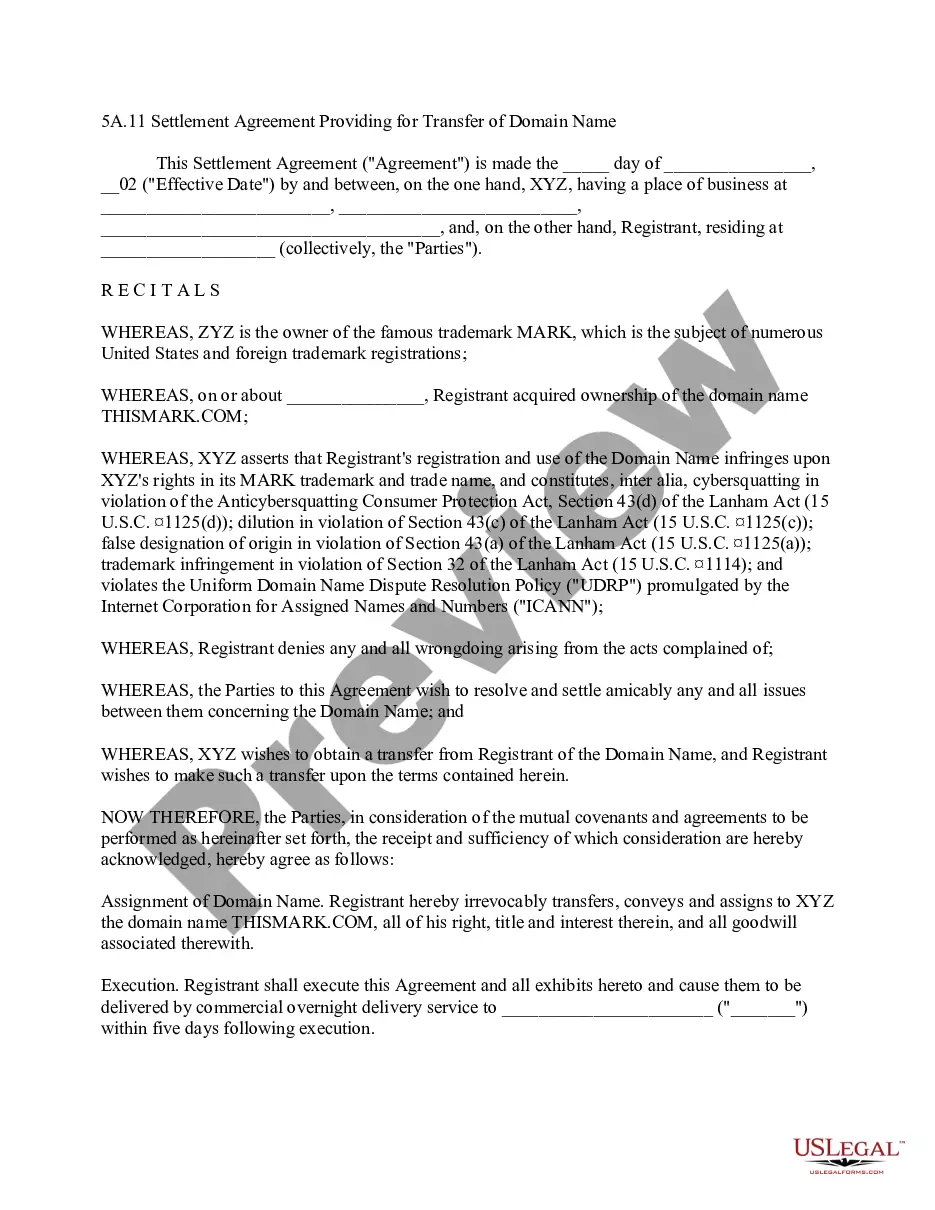
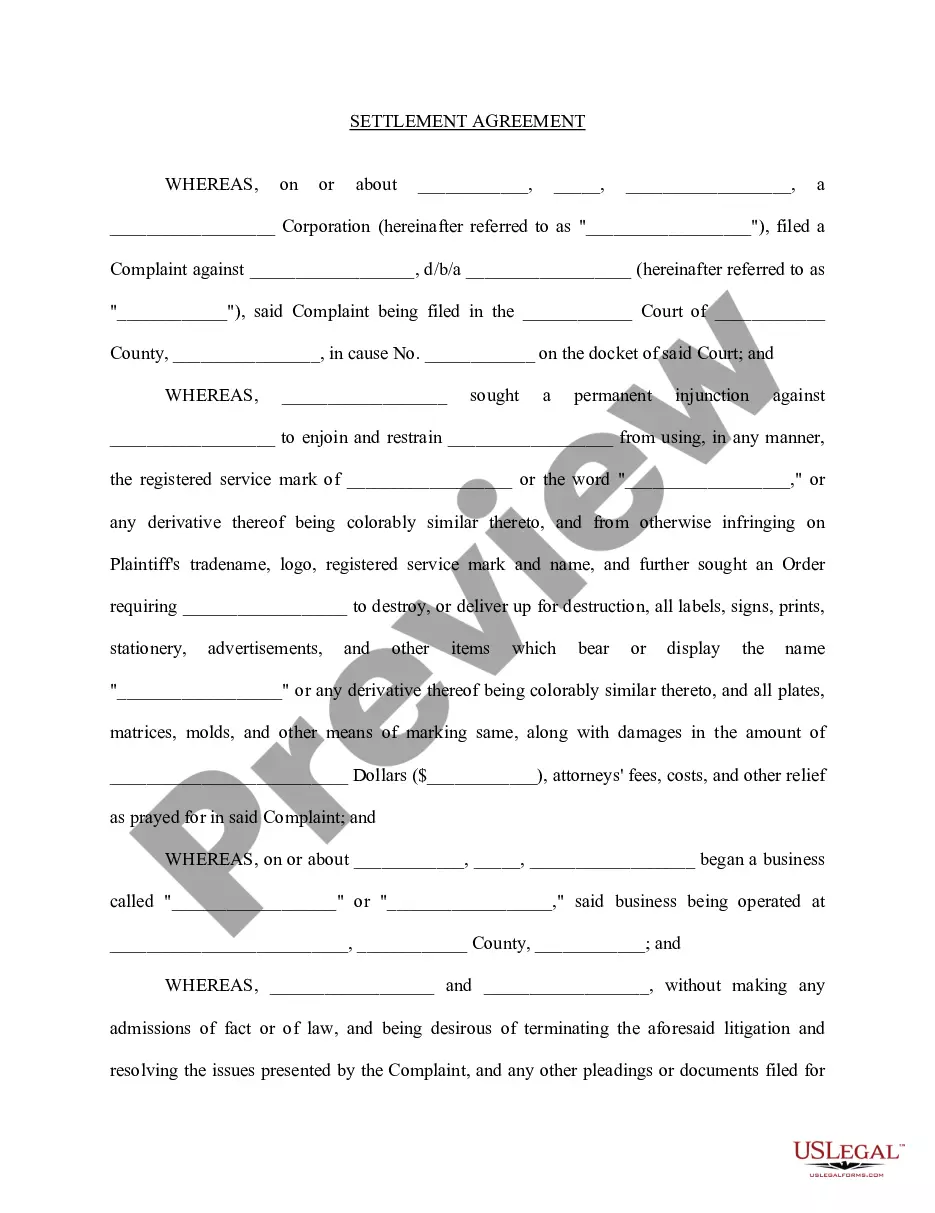
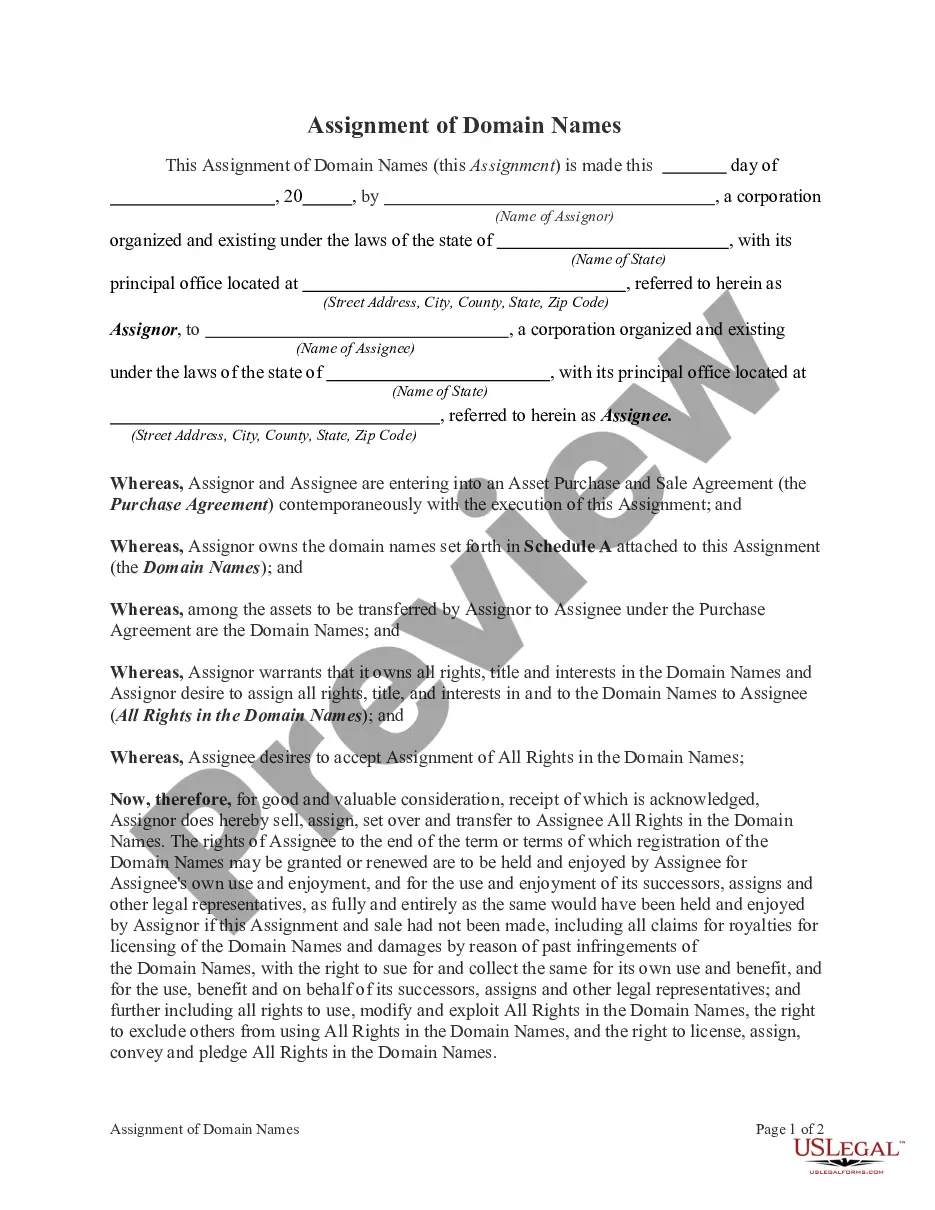
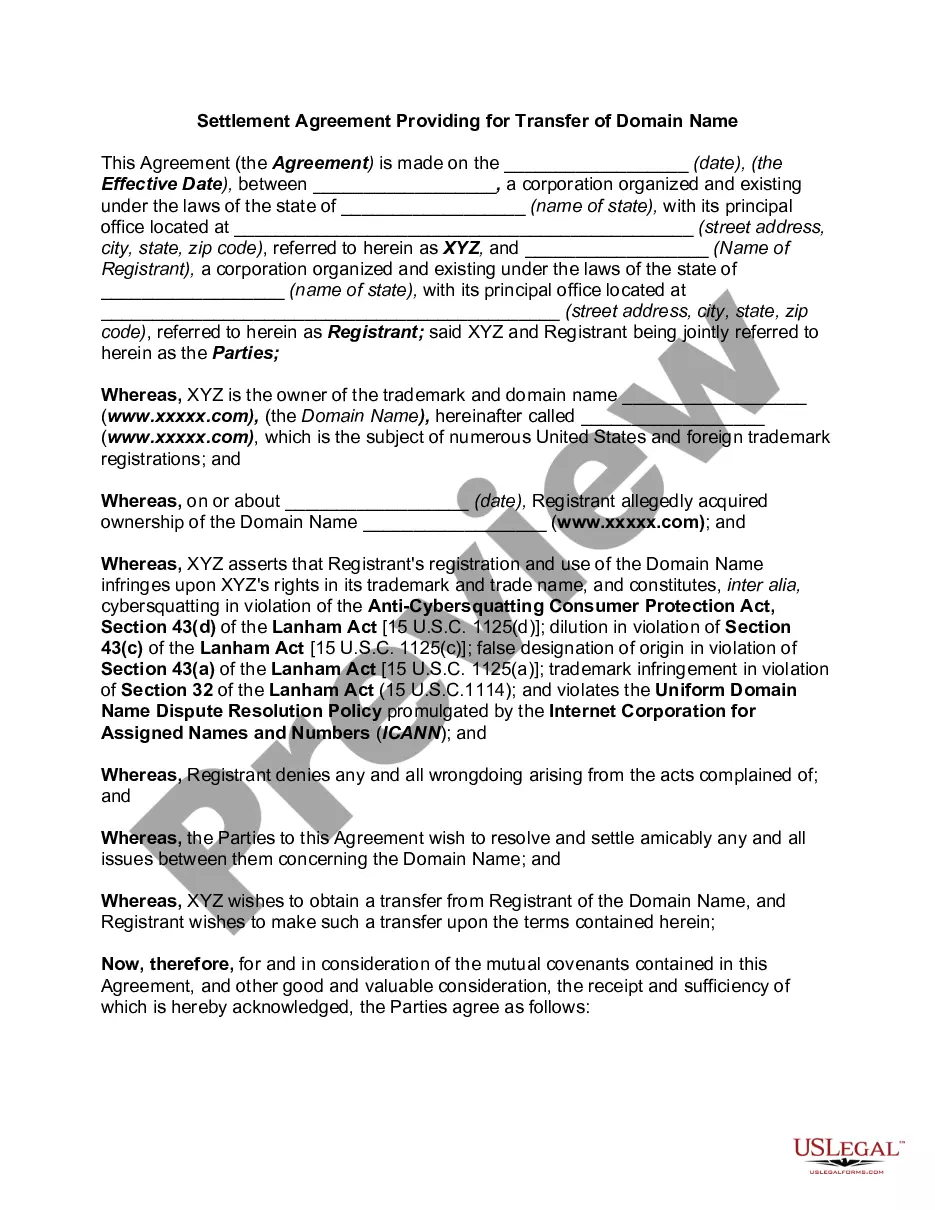
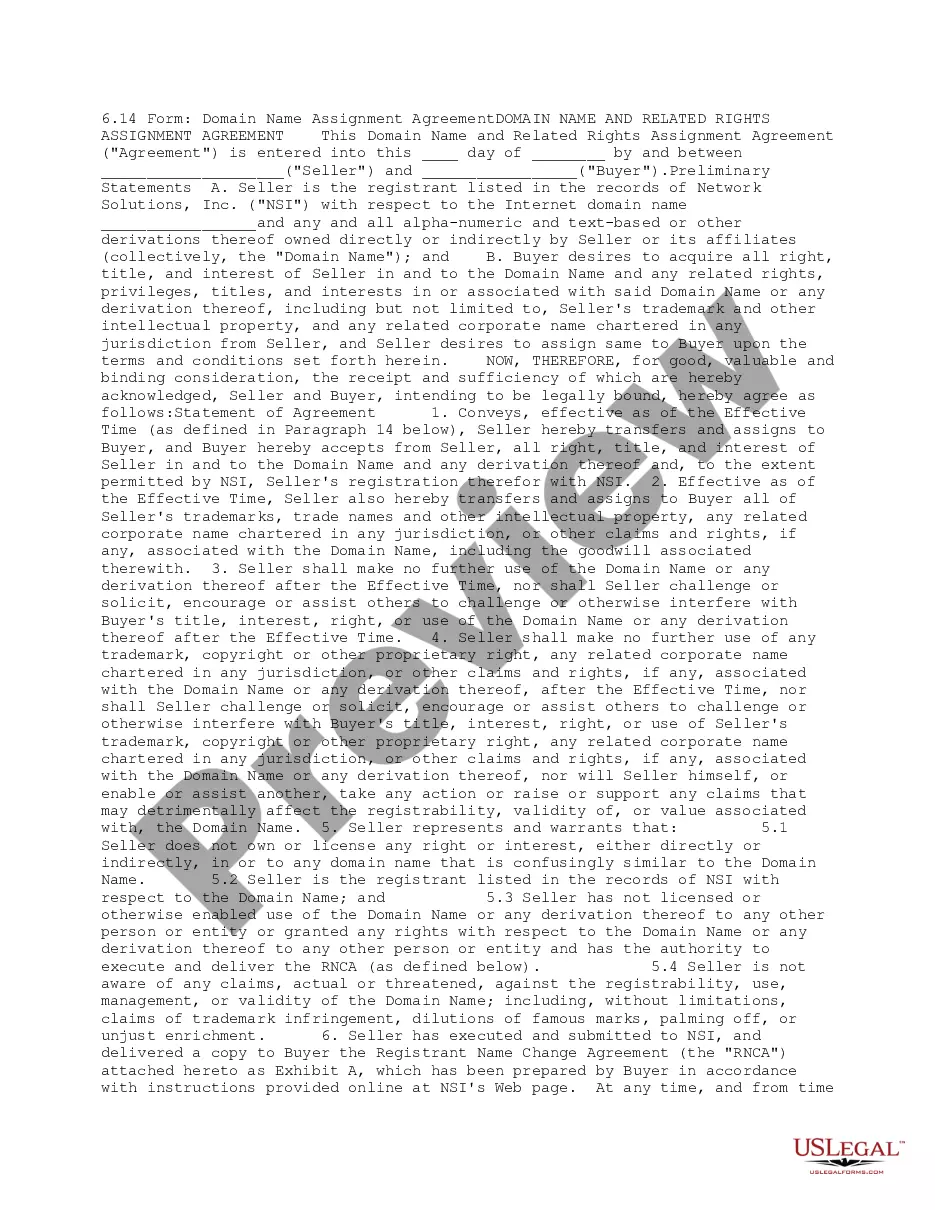
The Settlement Agreement Providing for Transfer of Domain Name is a legal document designed to resolve disputes between two parties regarding domain name ownership. This form is specifically useful in the context of the computer, internet, and software industries, and is distinct from other agreements that may not address domain name transfers. It provides a structured way for the current domain name registrant and the aggrieved party to agree on the transfer of the domain, ensuring a clear understanding of each party's rights and obligations.
Form components explained
- Effective Date: The date the agreement becomes active.
- Parties Involved: Identification of the owner of the trademark and the registrant of the domain name.
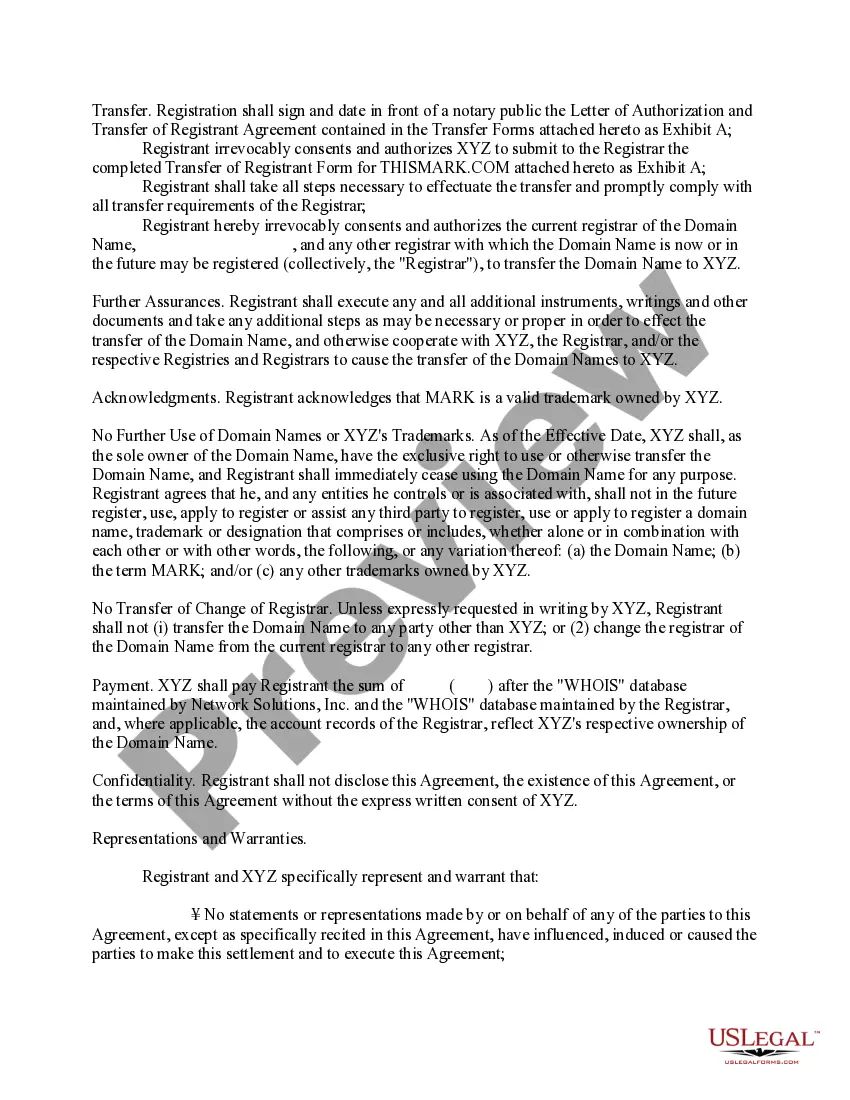
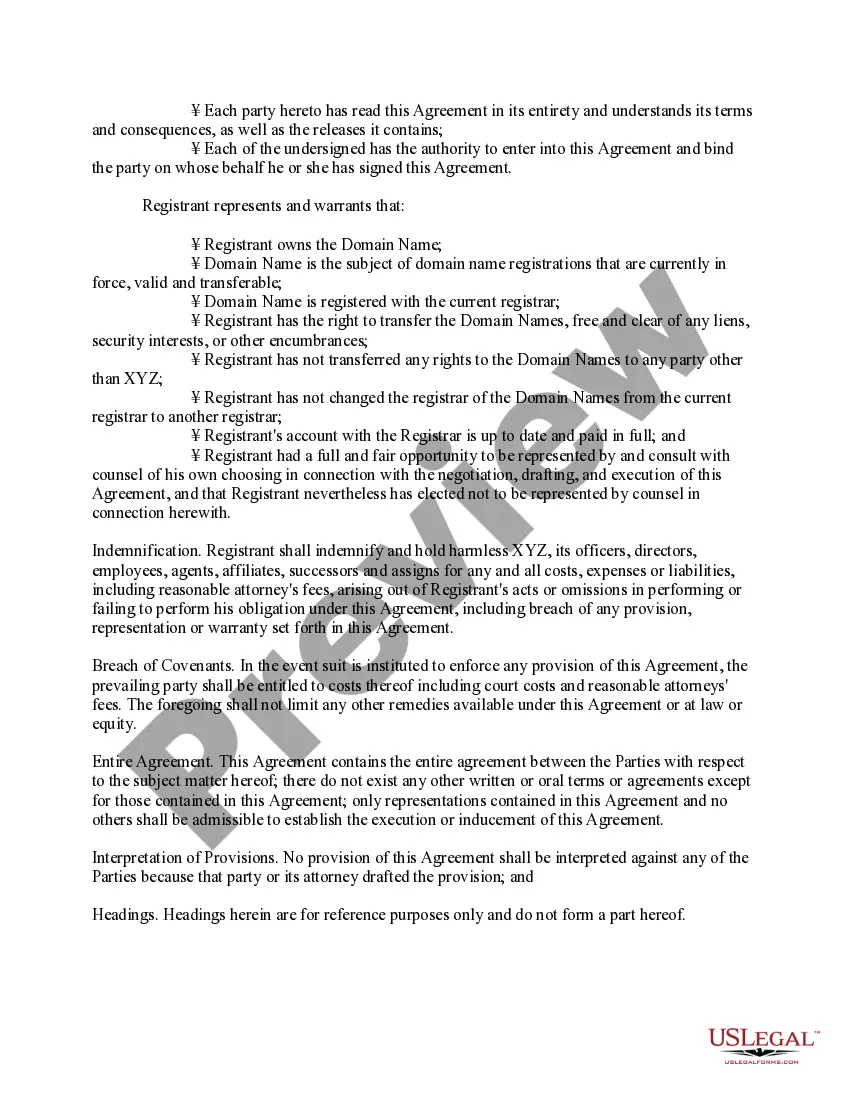
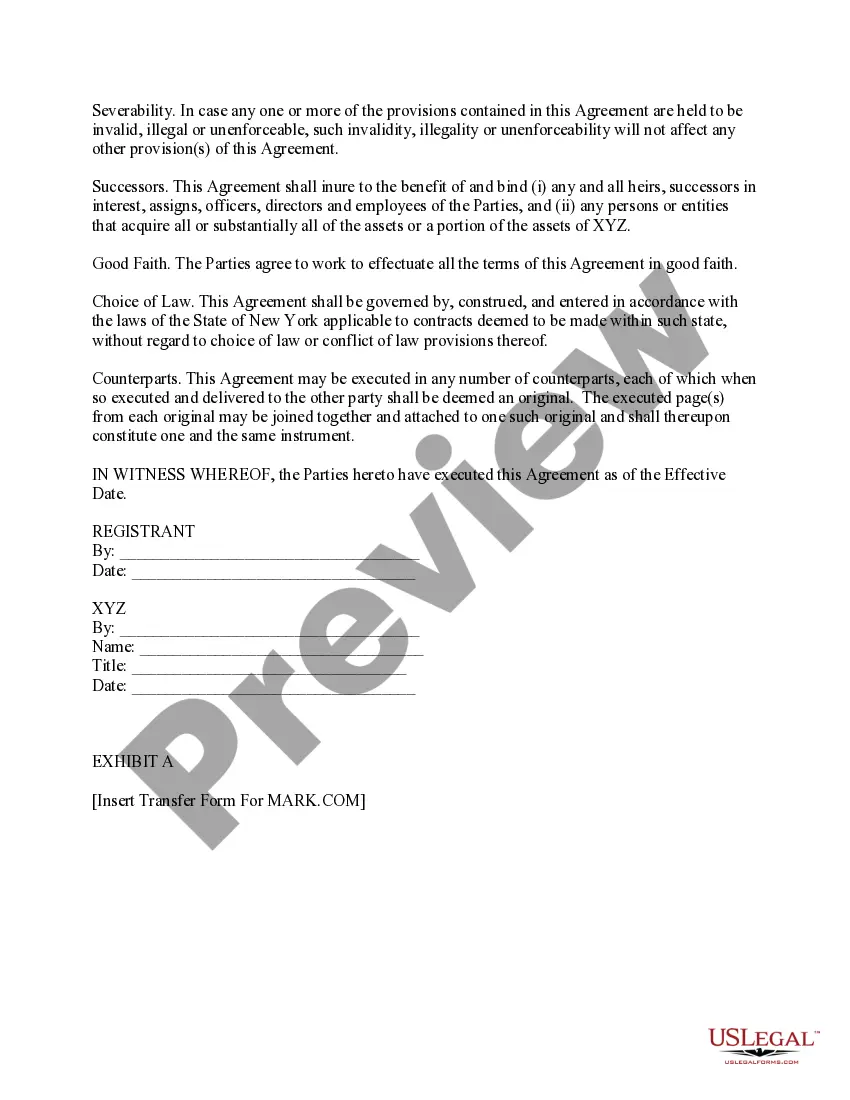
- Transfer of Domain Name: Clauses outlining the irrevocable transfer of ownership from the registrant to the other party.
- Payment Details: Terms regarding any compensation to be paid for the transfer of the domain name.
- Confidentiality Provisions: Stipulations to keep the agreement and its terms confidential.
- Indemnification Clause: Provisions detailing the liabilities of the registrant and the responsibilities in case of breaches.
Situations where this form applies
This form is applicable in situations where a domain name owned by one party is alleged to infringe upon the trademark rights of another party. It is particularly useful in cases of cybersquatting or trademark disputes, allowing the parties to resolve their differences amicably without resorting to litigation. Using this agreement ensures that the transfer of the domain name is legally binding and protects the interests of both parties involved.
Who should use this form
- Trademark owners who wish to reclaim a domain name that infringes on their trademark rights.
- Domain name registrants facing claims of trademark infringement and seeking to settle the matter without litigation.
- Businesses engaged in the internet or software industries where trademark and domain name disputes may arise.
Instructions for completing this form
- Identify the parties involved, ensuring accurate names and addresses are included.
- Specify the effective date of the agreement.
- Detail the domain name being transferred and any relevant trademark information.
- Include terms of payment for the transfer, if applicable.
- Sign the agreement in the presence of a notary public, if required.
- Ensure all parties retain a copy of the signed agreement for their records.
Notarization requirements for this form
This document requires notarization to meet legal standards. US Legal Forms provides secure online notarization powered by Notarize, allowing you to complete the process through a verified video call, available 24/7.
Get your form ready online
Our built-in tools help you complete, sign, share, and store your documents in one place.
Make edits, fill in missing information, and update formatting in US Legal Forms—just like you would in MS Word.
Download a copy, print it, send it by email, or mail it via USPS—whatever works best for your next step.
Sign and collect signatures with our SignNow integration. Send to multiple recipients, set reminders, and more. Go Premium to unlock E-Sign.
If this form requires notarization, complete it online through a secure video call—no need to meet a notary in person or wait for an appointment.
We protect your documents and personal data by following strict security and privacy standards.

Make edits, fill in missing information, and update formatting in US Legal Forms—just like you would in MS Word.

Download a copy, print it, send it by email, or mail it via USPS—whatever works best for your next step.

Sign and collect signatures with our SignNow integration. Send to multiple recipients, set reminders, and more. Go Premium to unlock E-Sign.

If this form requires notarization, complete it online through a secure video call—no need to meet a notary in person or wait for an appointment.

We protect your documents and personal data by following strict security and privacy standards.
Common mistakes to avoid
- Failing to include complete and accurate information about the parties.
- Not specifying the domain name clearly, leading to disputes later.
- Neglecting to have the agreement notarized, when required by law.
- Overlooking payment details and deadlines for transaction completion.
Why complete this form online
- Convenience of downloading the form anytime, eliminating delays.
- Editability allows users to customize the agreement according to specific situations.
- Access to legal standards ensures the form is up-to-date and reliable.
Looking for another form?
Form popularity
FAQ
1An offer. This is what one party proposes to do, pay, etc.2Acceptance.3Valid consideration.4Mutual assent.5A legal purpose.6A settlement agreement must also not be "unconscionable." This means that it cannot be illegal, fraudulent, or criminal.
Most cases settle out of court before proceeding to trial. Some say that the measure of a good settlement is when both parties walk away from the settlement unhappy.This means that the defendant paid more than he wanted to pay, and the plaintiff accepted less than he wanted to accept.
Research the law in order to determine how much your settlement agreement is reasonably worth. Use any personal connections that you have with management to negotiate your deal. Think about instructing specialist employment solicitors to advise you.
Unless you have already have another job to go to, it is not easy to ascertain how long you will be out of work, but as a general rule of thumb, a payment equivalent to six month's salary is considered to be a good settlement.
The agreement should list the rights, claims, obligations, or interests that will be released in the settlement as well as any claims or obligations that are not part of the settlement.
1#1. Start with the Basics.2#2. Include the Details.3#3. Confirm Your Agreement.4#4. Identify and Divide Assets and Debts.5#5. Create a Parenting Plan for Custody and Visitation.6#6. Agree on Child Support and Spousal Support (Alimony)7#7. Polishing Your Agreement.8Conclusion.
#1. Start with the Basics. #2. Include the Details. #3. Confirm Your Agreement. #4. Identify and Divide Assets and Debts. #5. Create a Parenting Plan for Custody and Visitation. #6. Agree on Child Support and Spousal Support (Alimony) #7. Polishing Your Agreement. Conclusion.
Some people wonder if they can save even more by money by writing their own settlement agreement and not seeking the help of a divorce attorney at all. While there is no legal requirement that you have a lawyer draft your settlement agreement, it is certainly a good idea to do so.
Original creditor and collection agent's company name. Date the letter was written. Your name. Your account number. Outstanding balance owed on the account (optional) Amount agreed to as settlement.