Assignment of Domain Names
About this form
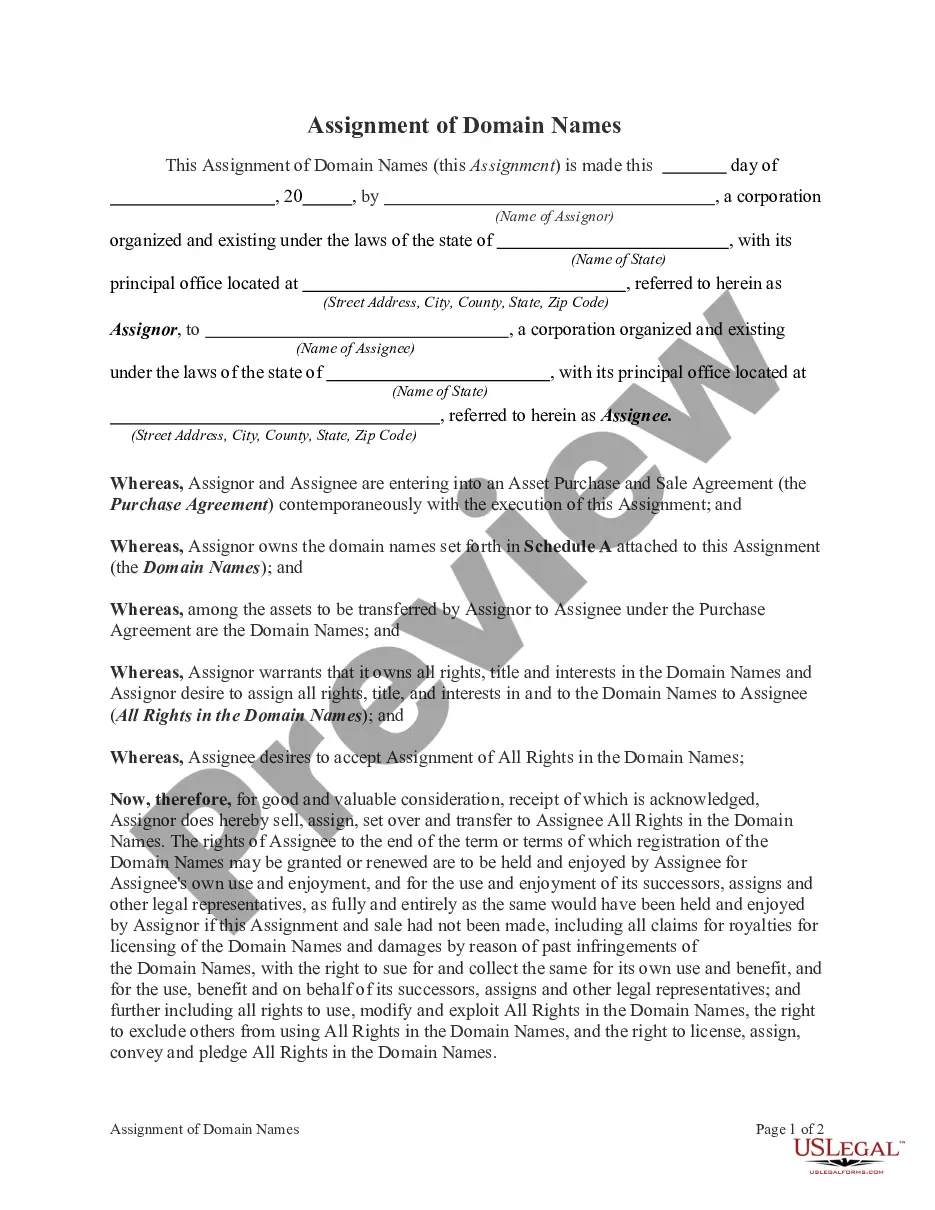
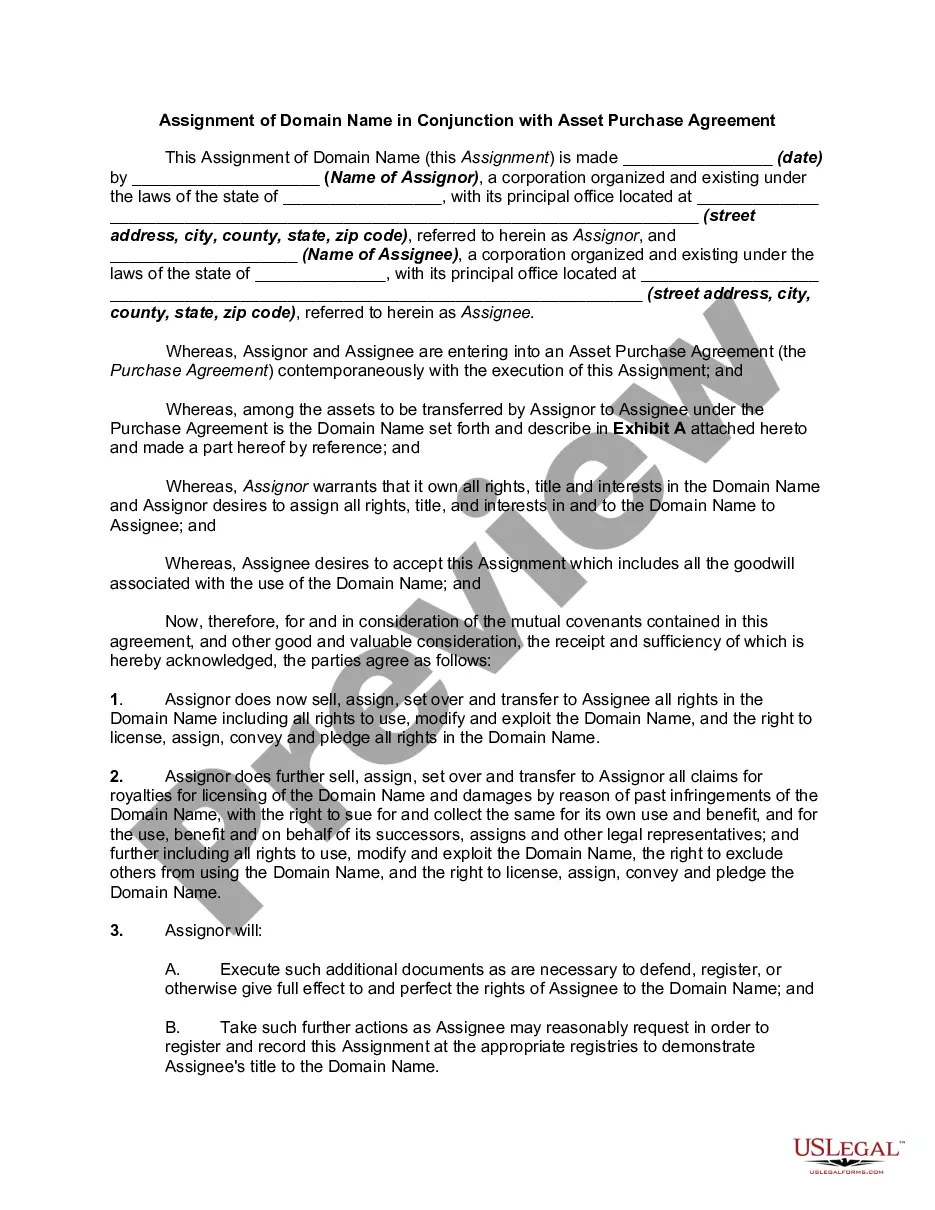
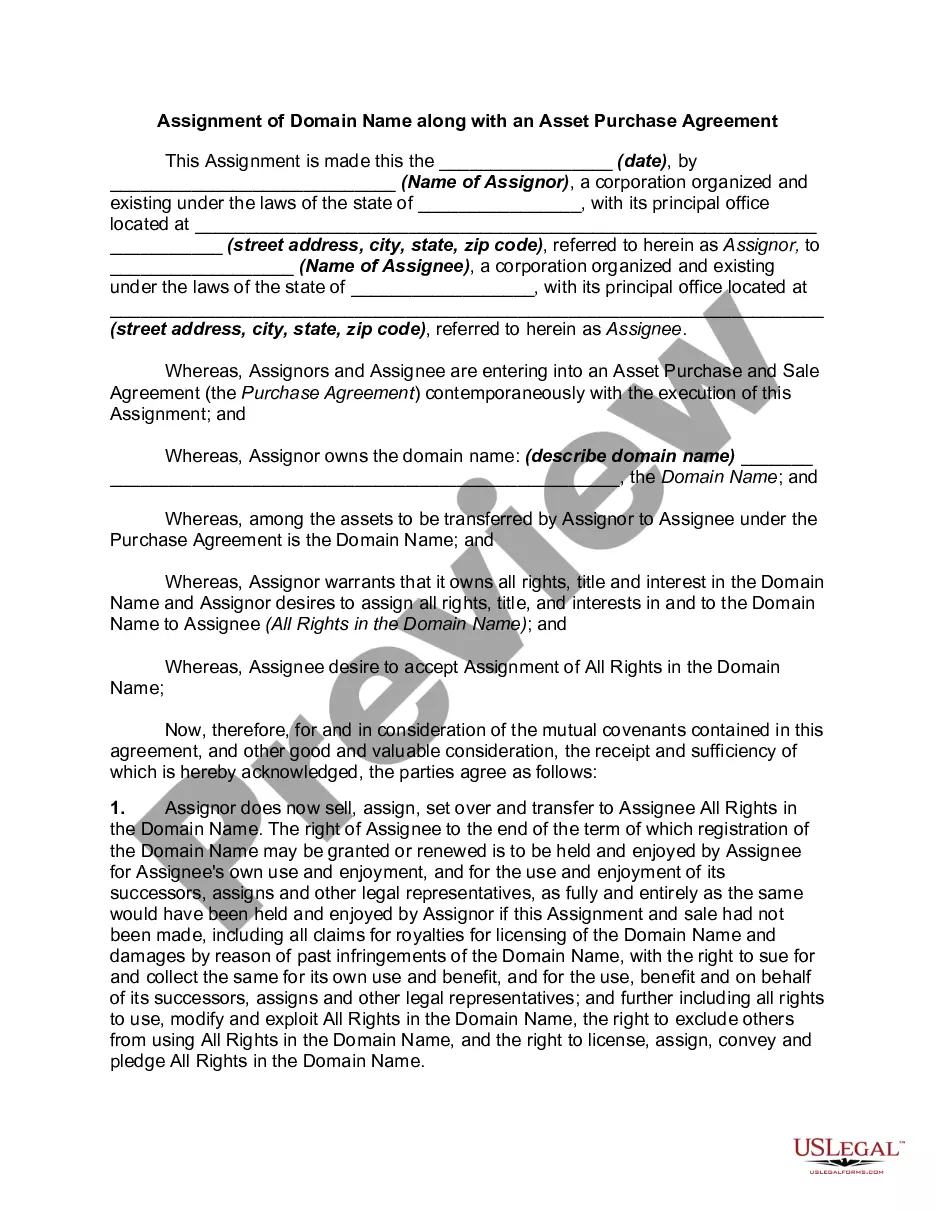
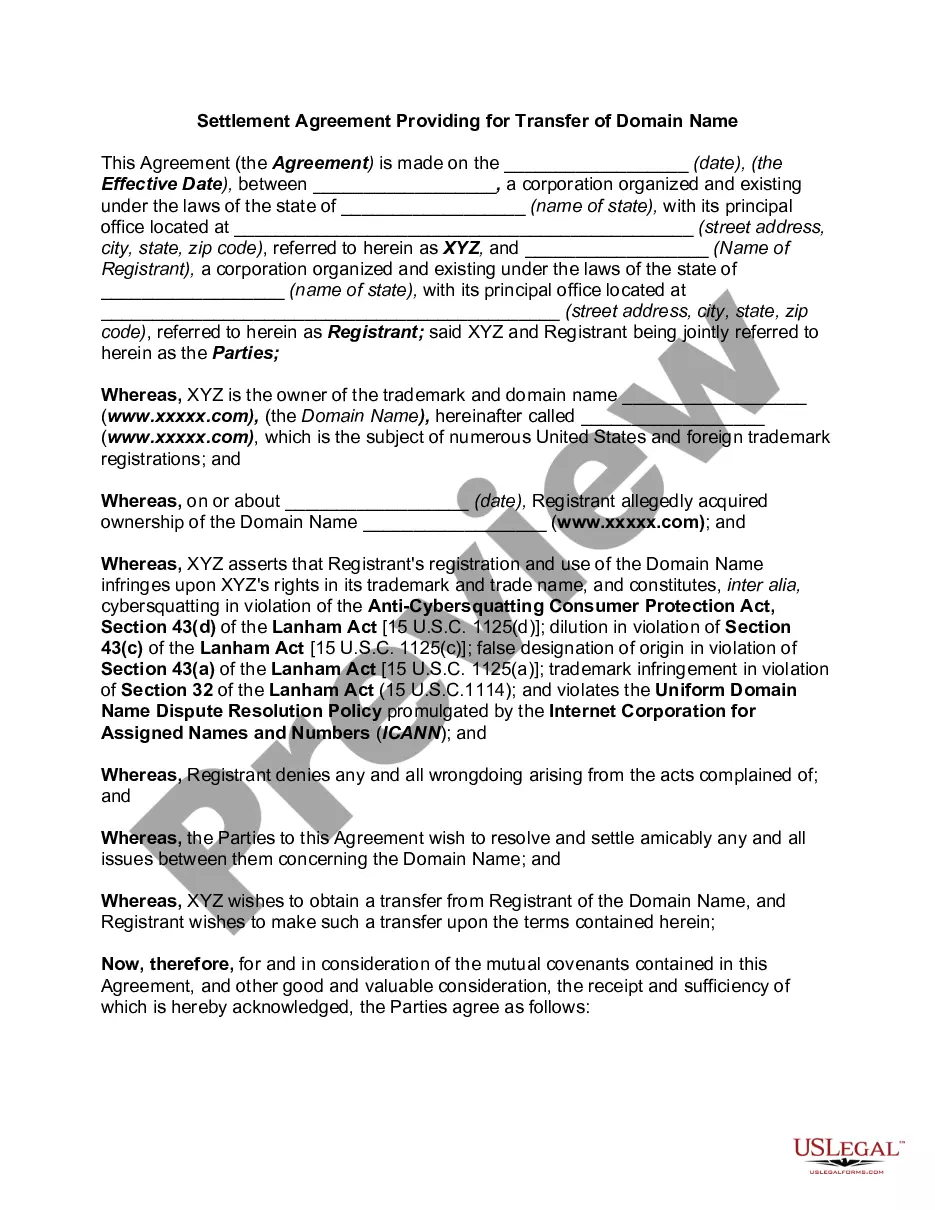
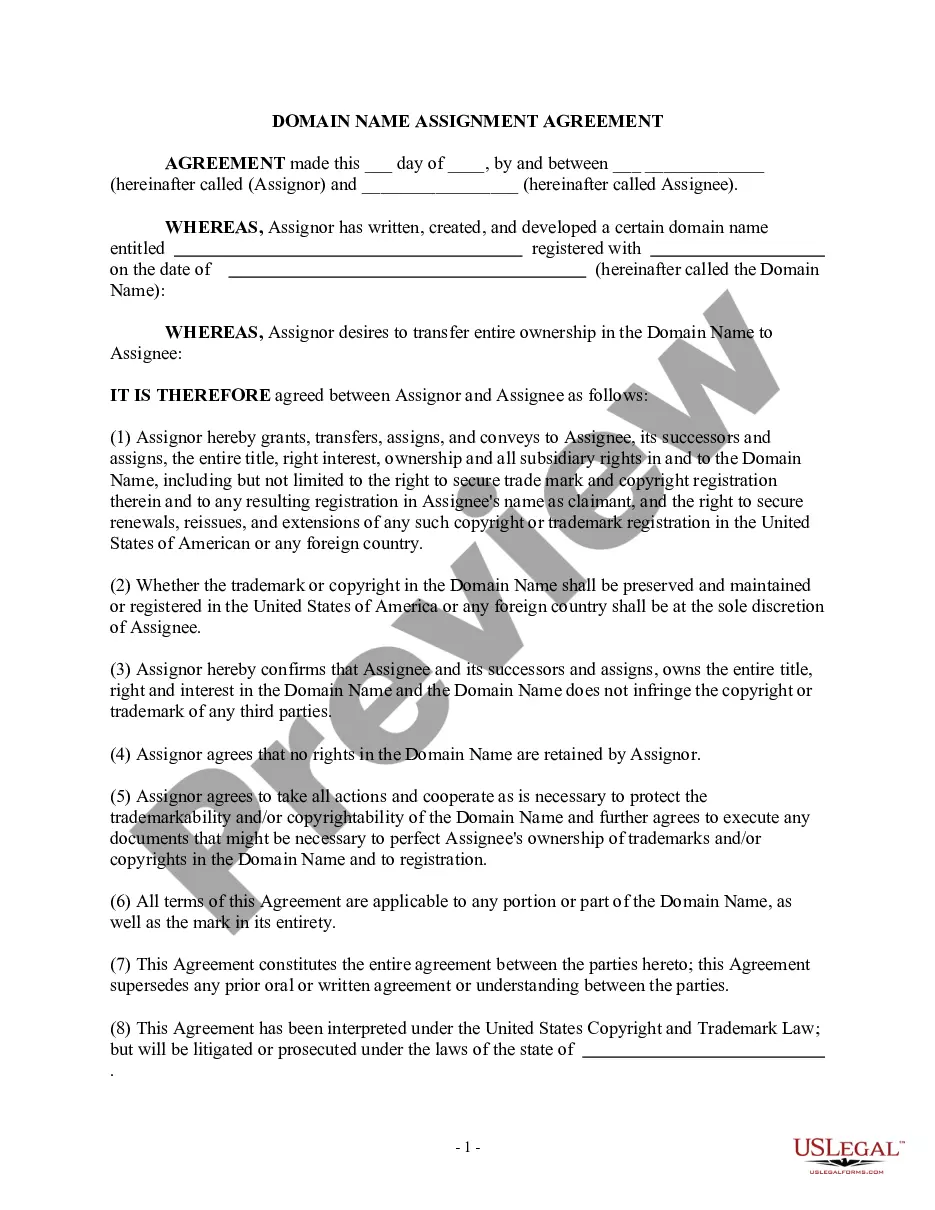
The Assignment of Domain Names is a legal document used to transfer ownership rights of one or more domain names from one party (the Assignor) to another (the Assignee). This form is essential for individuals or businesses involved in the buying or selling of domain names, ensuring that the transfer of rights is legally documented and recognized. Unlike other forms that may only outline general agreements, this assignment specifically addresses the ownership and rights associated with domain names.
Form components explained
- Identifies the parties involved: Assignor and Assignee.
- Details the assets being transferred: domain names listed in Schedule A.
- Outlines the rights included in the transfer, such as the ability to use and license the domain names.
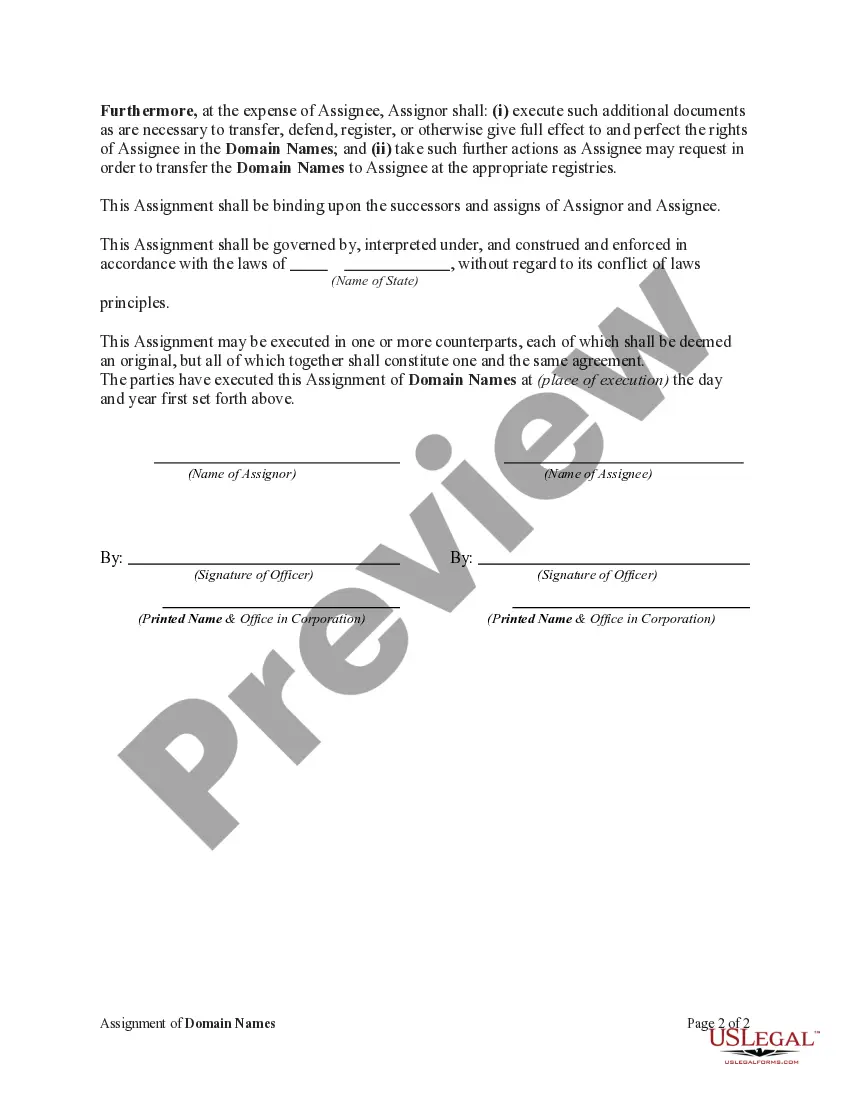
- Specifies the obligations of the Assignor regarding the transfer.
- Includes clauses related to the binding nature of the agreement on successors and assigns.

Situations where this form applies
This form should be used when a domain name owner wishes to sell or transfer their rights to another individual or entity. It is particularly useful in scenarios involving online businesses, personal branding, or when transferring digital assets as part of a larger asset sale agreement. Whether you are an entrepreneur purchasing a domain or an established brand reallocating digital assets, this document ensures the rights are adequately transferred and protected.
Who should use this form
This form is suitable for:
- Domain name owners looking to sell their domains.
- Buyers wanting to acquire domain names legally.
- Businesses involved in an asset sale that includes domain names.
- Legal representatives facilitating the transfer of digital assets.
Completing this form step by step
- Identify the parties: Enter the names and addresses of the Assignor and Assignee.
- List the domain names: Specify the domain names being transferred as per Schedule A.
- Detail rights being assigned: Clearly state the rights transferred to the Assignee.
- Include signatures: Ensure both parties sign and date the document.
- Consult additional legal advice if necessary to ensure compliance with local laws.
Notarization guidance
In most cases, this form does not require notarization. However, some jurisdictions or signing circumstances might. US Legal Forms offers online notarization powered by Notarize, accessible 24/7 for a quick, remote process.
Get your form ready online
Our built-in tools help you complete, sign, share, and store your documents in one place.
Make edits, fill in missing information, and update formatting in US Legal Forms—just like you would in MS Word.
Download a copy, print it, send it by email, or mail it via USPS—whatever works best for your next step.
Sign and collect signatures with our SignNow integration. Send to multiple recipients, set reminders, and more. Go Premium to unlock E-Sign.
If this form requires notarization, complete it online through a secure video call—no need to meet a notary in person or wait for an appointment.
We protect your documents and personal data by following strict security and privacy standards.

Make edits, fill in missing information, and update formatting in US Legal Forms—just like you would in MS Word.

Download a copy, print it, send it by email, or mail it via USPS—whatever works best for your next step.

Sign and collect signatures with our SignNow integration. Send to multiple recipients, set reminders, and more. Go Premium to unlock E-Sign.

If this form requires notarization, complete it online through a secure video call—no need to meet a notary in person or wait for an appointment.

We protect your documents and personal data by following strict security and privacy standards.
Common mistakes
- Failing to list all domain names accurately in Schedule A.
- Not obtaining signatures from both parties.
- Forgetting to specify any conditions of the sale or transfer.
- Ignoring state-specific requirements that may apply to digital asset transfers.
Why complete this form online
- Convenience: Easily download and complete the form from anywhere.
- Editability: Tailor the form to meet specific transaction needs before finalizing.
- Reliability: Forms are drafted by licensed attorneys, ensuring legal soundness.
Legal use & context
- The form legally transfers rights associated with the specified domain names from Assignor to Assignee.
- Enforceability depends on proper execution, including signatures from both parties.
- Ensure that all local laws regarding digital asset transfers are followed to maintain enforceability.
What to keep in mind
- The Assignment of Domain Names is crucial for legally transferring domain ownership.
- Accurate completion of the form is necessary to avoid legal complications.
- This form can be adapted for various jurisdictions, but check local laws before use.
Looking for another form?
Form popularity
FAQ
To make domain names widely available, ICANN allows companies to apply for accreditation and become a domain registrar. These companies then compete with each other to sell domain name licenses which allows you to get better service and tools when you purchase your domain name.
Work out an agreement with the current registrant. Wait and see if the current registrant lets the domain name expire. File a lawsuit in the appropriate court against the current registrant if you believe the domain name was obtained unlawfully.
A domain name assignment is the transfer of an owner's property rights in a given domain name or names. Such transfers may occur on their own or as parts of larger asset sales or purchases. Domain name assignments both provide records of ownership and transfer and protect the rights of all parties.
No one owns domain names; they merely pay for the use of them for a while. The public deals with domain name registrars, which often take the form of web hosting providers or other entities that provide online services. Users pay registries to register their domain names, but who do they register them with?
(B) Domain names and IP addresses are assigned randomly.
A domain transfer refers to the process of changing the designated registrar of a domain name.Domain names may be transferred only if they have been registered with the previous registrar for 60 days or more .
The right to use a domain name is delegated by domain name registrars, which are accredited by the Internet Corporation for Assigned Names and Numbers (ICANN), the organization charged with overseeing the name and number systems of the Internet.
If you use a third party to host your website and email, they should not be affected by the domain name transfer.If you host your website and email with your registrar, they may be affected. Some registrars will only host your website or email if you register a domain with them.
When you transfer a domain name, you're telling ICANN the Internet Corporation for Assigned Names and Numbers, that you want an alternative registrar to manage your domain. You may or may not decide to change your hosting provider at the same time.