Milker Services Contract - Self-Employed
What is this form?
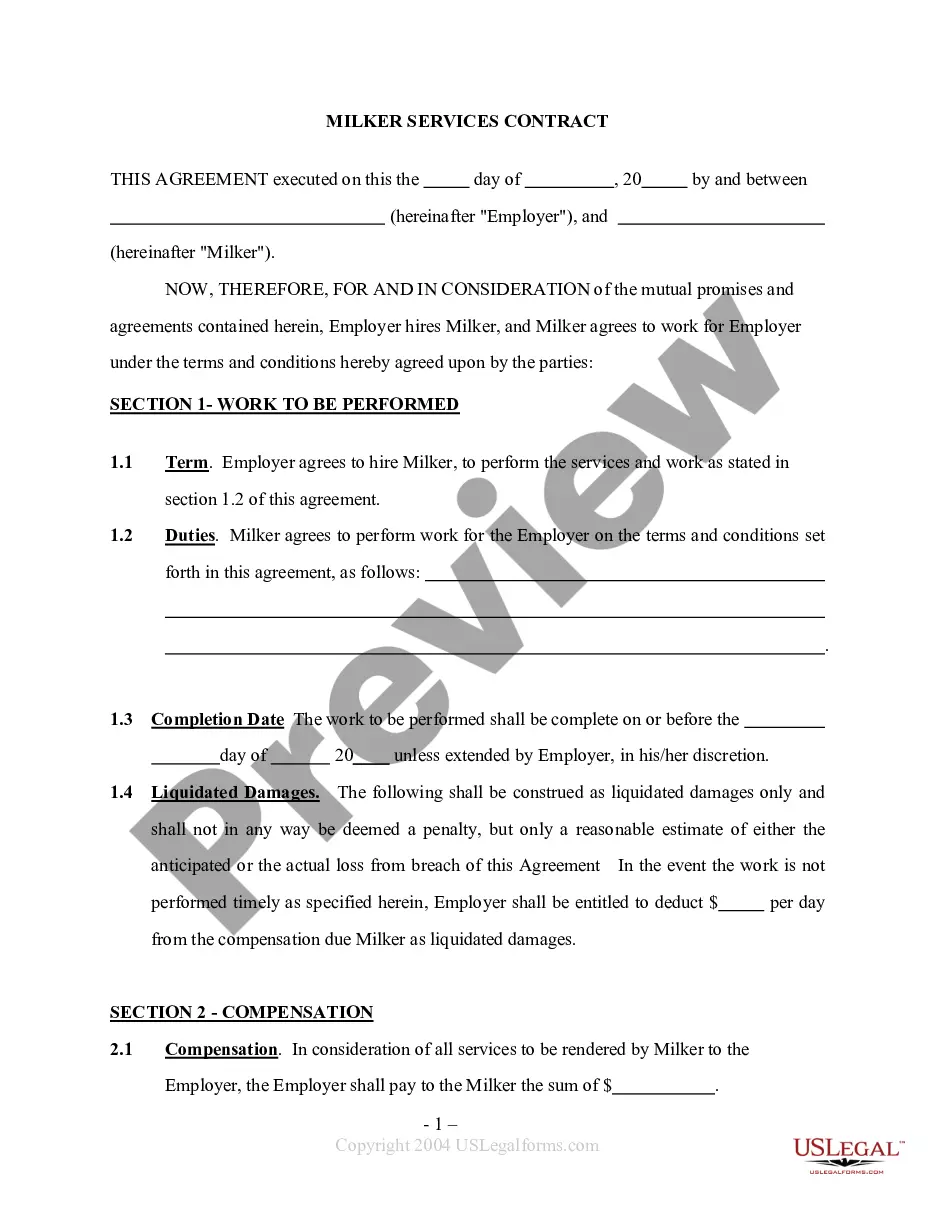
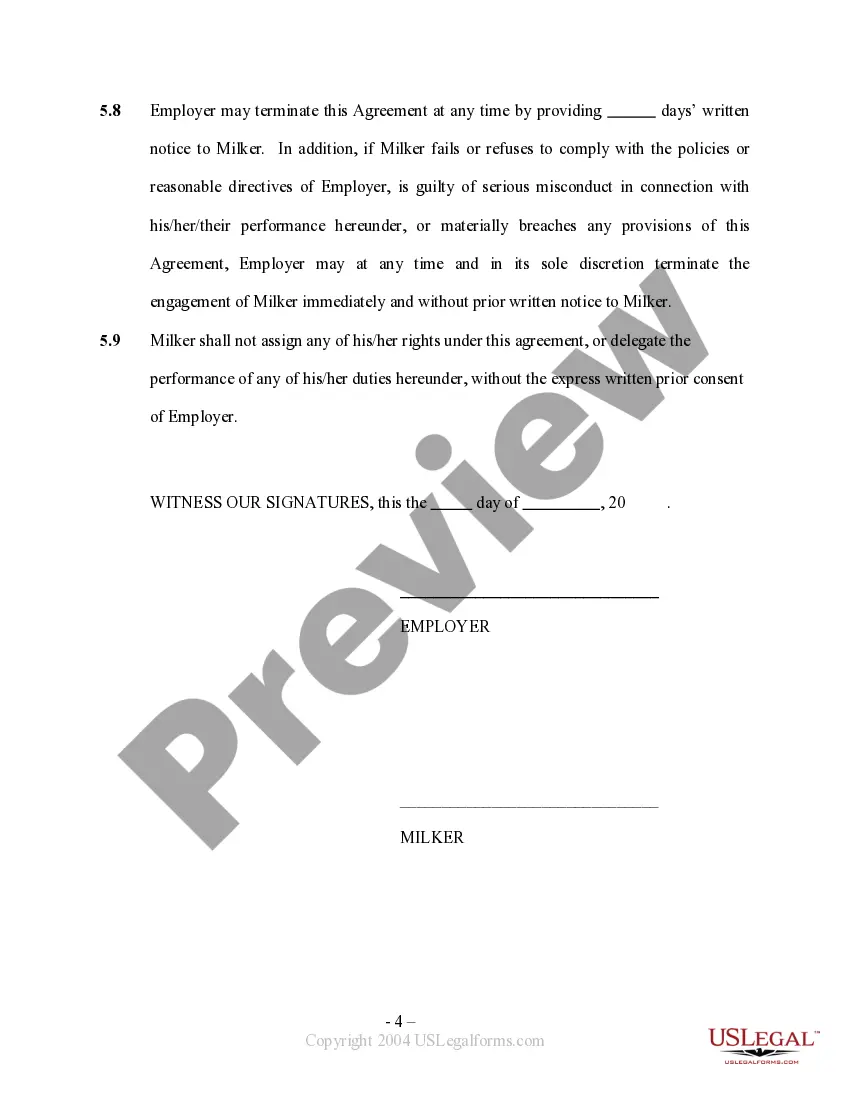
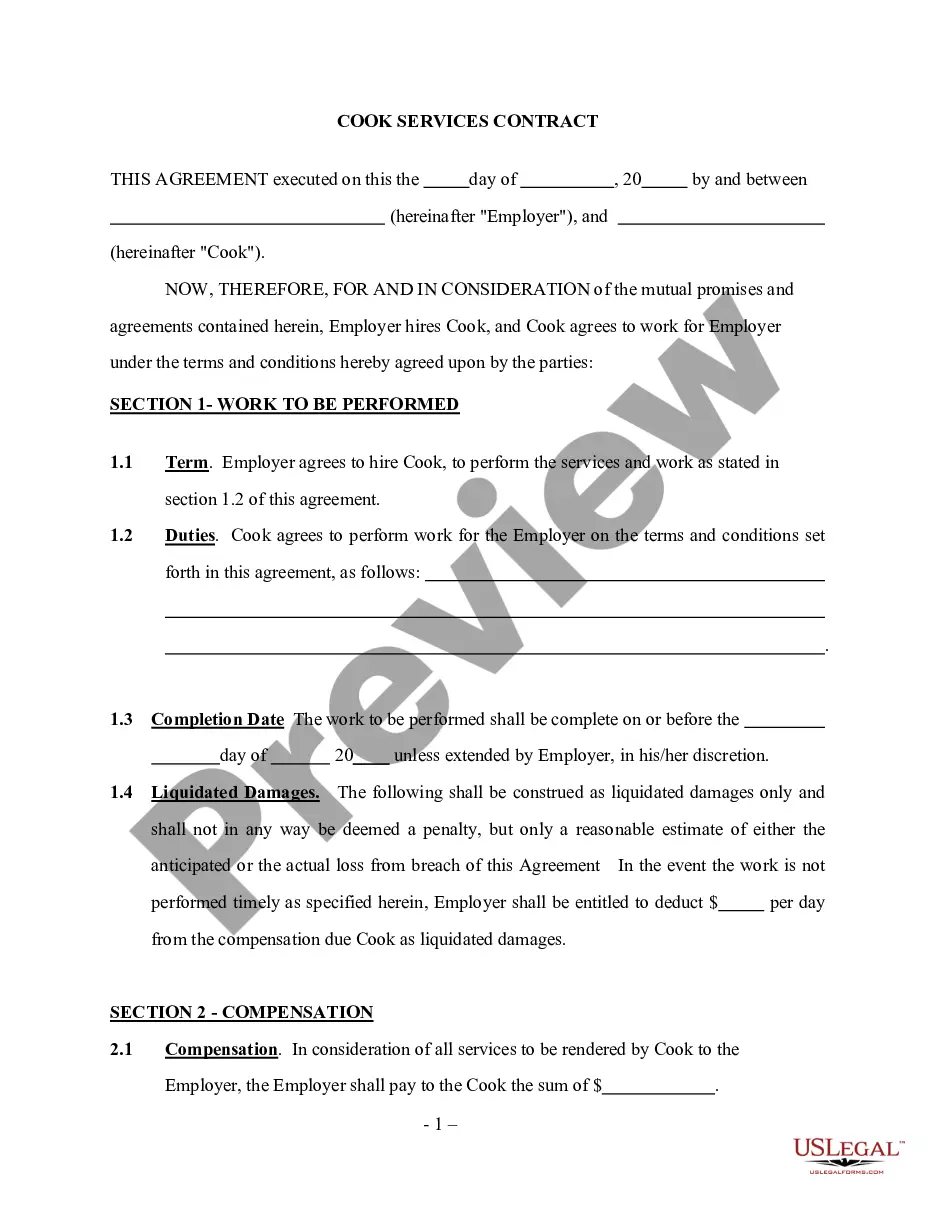
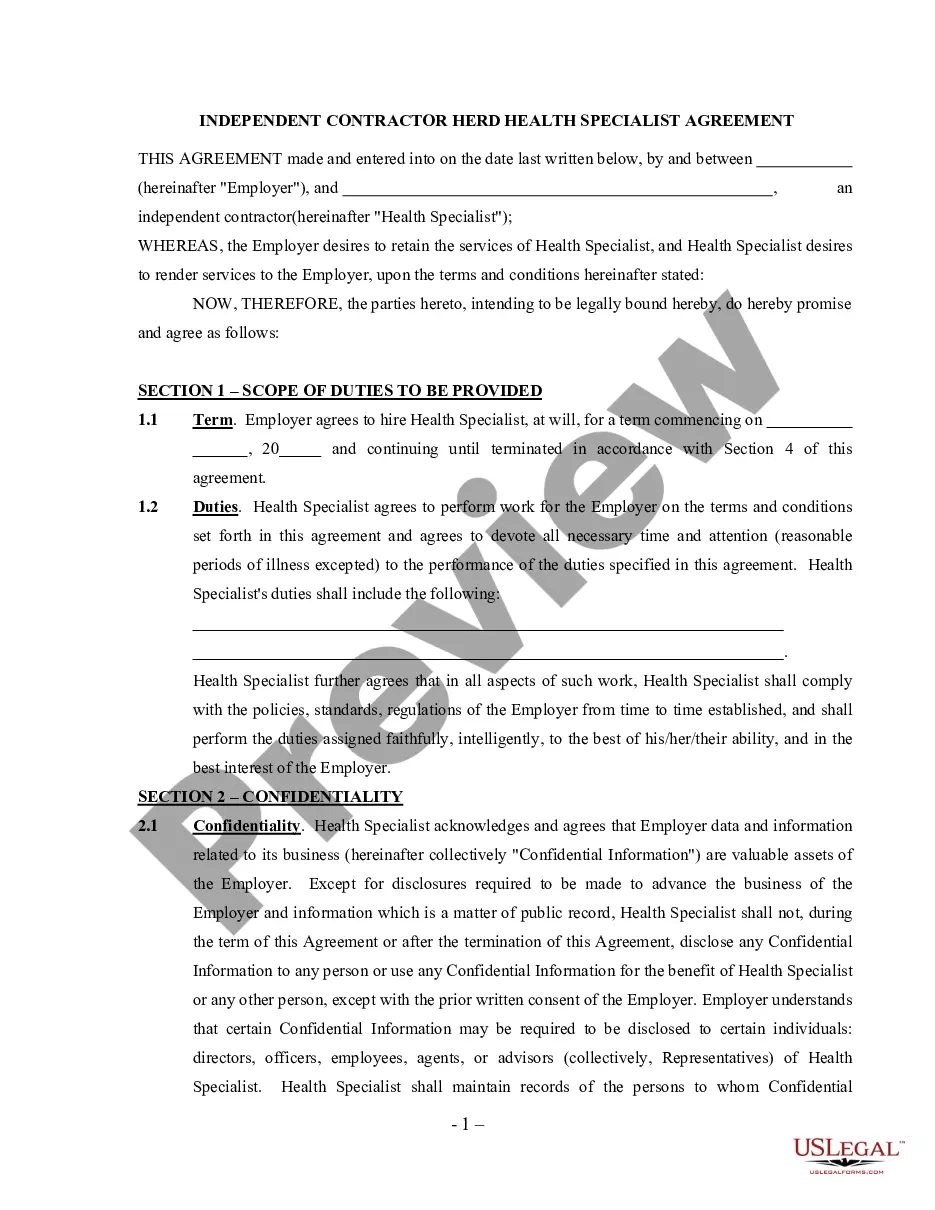
The Milker Services Contract - Self-Employed is a legal agreement that enables an employer to hire a milker as an independent contractor. This form outlines the specific services to be performed in relation to milking livestock. It differentiates itself from other contracts by focusing specifically on the relationship and obligations of independent contractors within the agricultural context.
Form components explained
- Work to be Performed: Describes the specific services the milker will provide to the employer.
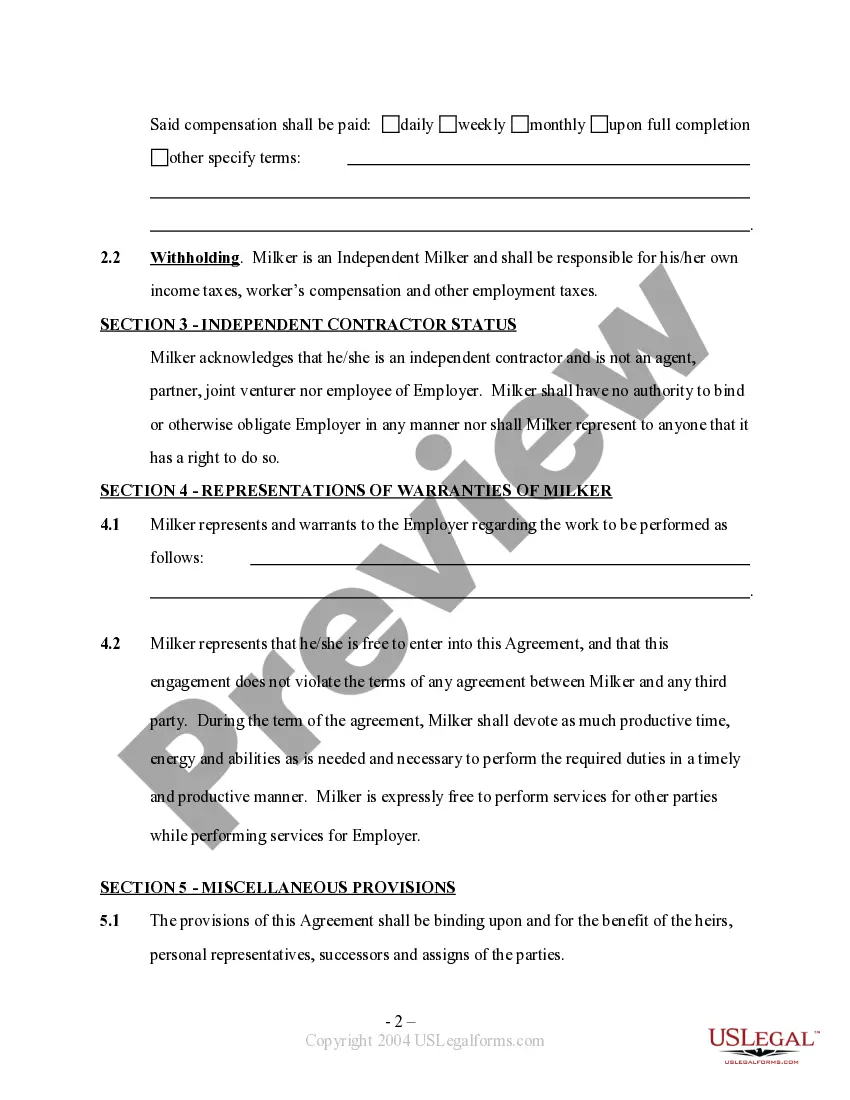
- Independent Contractor Status: Clarifies that the milker operates as an independent entity and not as an employee.
- Representations and Warranties: Outlines the obligations and assurances made by the milker.
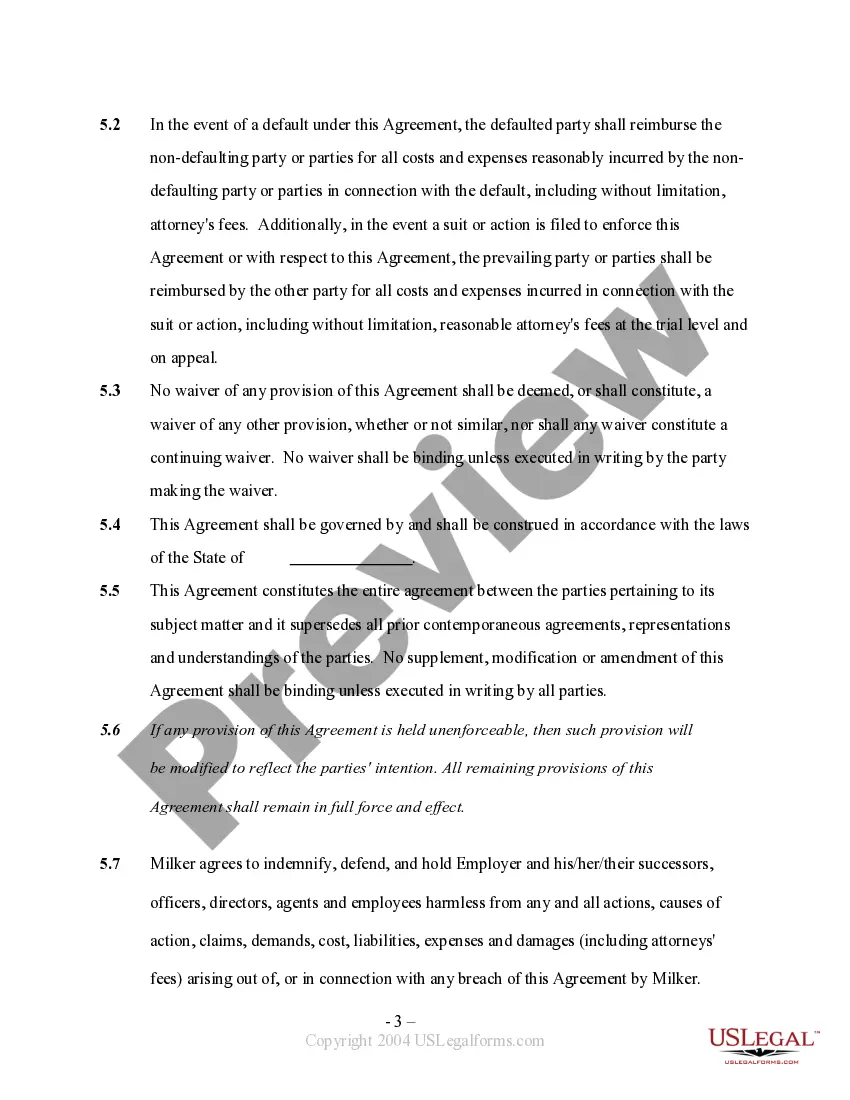
- Miscellaneous Provisions: Covers various legal details such as default consequences and the validity of the agreement.
When to use this form
This form is essential when an employer needs to hire a milker on a contractual basis rather than as a traditional employee. It is appropriate in scenarios such as seasonal dairy farming, hiring personnel for milking in small businesses, or engaging independent contractors for specific livestock milking tasks.
Who should use this form
- Farmers or livestock owners looking to hire milking services.
- Self-employed milkers seeking formal agreements with employers.
- Individuals or businesses that need to establish clear contract terms with independent contractors in the agricultural sector.
How to complete this form
- Identify the parties involved by entering the names of the employer and the milker.
- Specify the term of the contract, including start and end dates for the milking services.
- Clearly describe the work to be performed, detailing the expected milking duties.
- Review the independent contractor status section to confirm understanding of non-employment terms.
- Include signatures of both parties to validate the contract.
Is notarization required?
This form usually doesn’t need to be notarized. However, local laws or specific transactions may require it. Our online notarization service, powered by Notarize, lets you complete it remotely through a secure video session, available 24/7.
Get your form ready online
Our built-in tools help you complete, sign, share, and store your documents in one place.
Make edits, fill in missing information, and update formatting in US Legal Forms—just like you would in MS Word.
Download a copy, print it, send it by email, or mail it via USPS—whatever works best for your next step.
Sign and collect signatures with our SignNow integration. Send to multiple recipients, set reminders, and more. Go Premium to unlock E-Sign.
If this form requires notarization, complete it online through a secure video call—no need to meet a notary in person or wait for an appointment.
We protect your documents and personal data by following strict security and privacy standards.

Make edits, fill in missing information, and update formatting in US Legal Forms—just like you would in MS Word.

Download a copy, print it, send it by email, or mail it via USPS—whatever works best for your next step.

Sign and collect signatures with our SignNow integration. Send to multiple recipients, set reminders, and more. Go Premium to unlock E-Sign.

If this form requires notarization, complete it online through a secure video call—no need to meet a notary in person or wait for an appointment.

We protect your documents and personal data by following strict security and privacy standards.
Common mistakes
- Not specifying the term of the agreement, which can lead to misunderstandings about the duration of services.
- Failing to clearly define the scope of work, which may result in disputes over responsibilities.
- Ignoring to include both parties' signatures, leading to an unenforceable agreement.
Why complete this form online
- Immediate access to a professionally drafted contract tailored for independent milker service arrangements.
- Easy to edit and customize according to specific needs and local requirements.
- Convenience of downloading and printing the form at any time, enhancing flexibility in contract management.
Looking for another form?




Form popularity
FAQ
The IRS requires contractors to fill out a Form W-9, request for Taxpayer Identification Number and Certification, which you should keep on file for at least four years after the hiring. This form is used to request the correct name and Taxpayer Identification Number, or TIN, of the worker or their entity.
Name of contractor and contact information. Name of homeowner and contact information. Describe property in legal terms. List attachments to the contract. The cost. Failure of homeowner to obtain financing. Description of the work and the completion date. Right to stop the project.
For most types of projects you hire an independent contractor (IC) to do, the law does not require you to put anything in writing. You can meet with the IC, agree on the terms of your arrangement, and have an oral contract or agreement that is legally binding. Just because you can doesn't mean you should, however.
Step 1: Find line 31 on your 2019 IRS Form 1040 Schedule C (If you haven't filed yet for 2019, go ahead and fill it out). Step 2: Divide the amount from Step 1 by 12. Step 3: Multiply the amount from Step 2 by 2.5.
Get it in writing. Keep it simple. Deal with the right person. Identify each party correctly. Spell out all of the details. Specify payment obligations. Agree on circumstances that terminate the contract. Agree on a way to resolve disputes.
The earnings of a person who is working as an independent contractor are subject to Self-Employment Tax. If you are an independent contractor, you are self-employed.You are not an independent contractor if you perform services that can be controlled by an employer (what will be done and how it will be done).
Terms. This is the first section of any agreement or contract and states the names and locations of the parties involved. Responsibilities & Deliverables. Payment-Related Details. Confidentiality Clause. Contract Termination. Choice of Law.