New Hampshire Lead Based Paint Disclosure for Sales Transaction
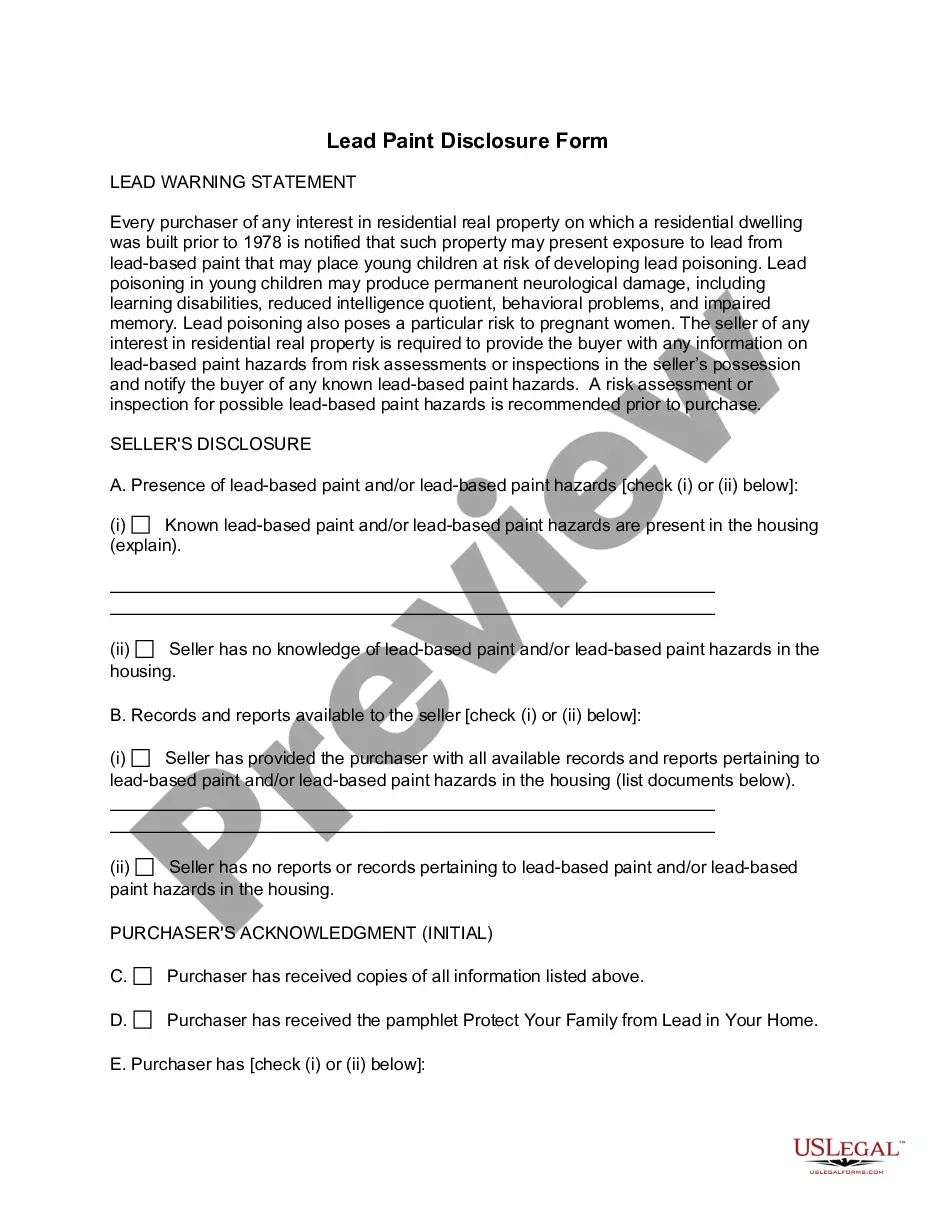
About this form
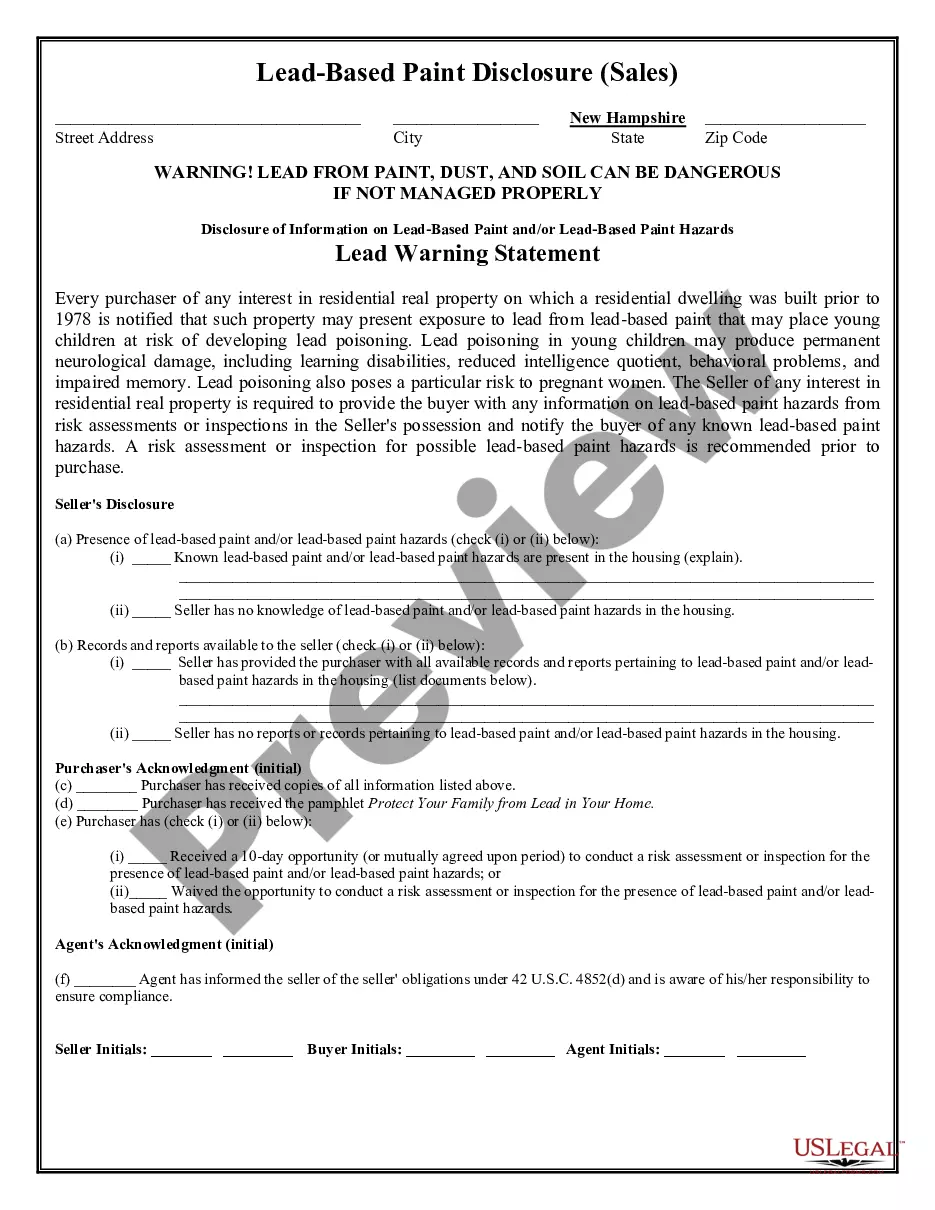
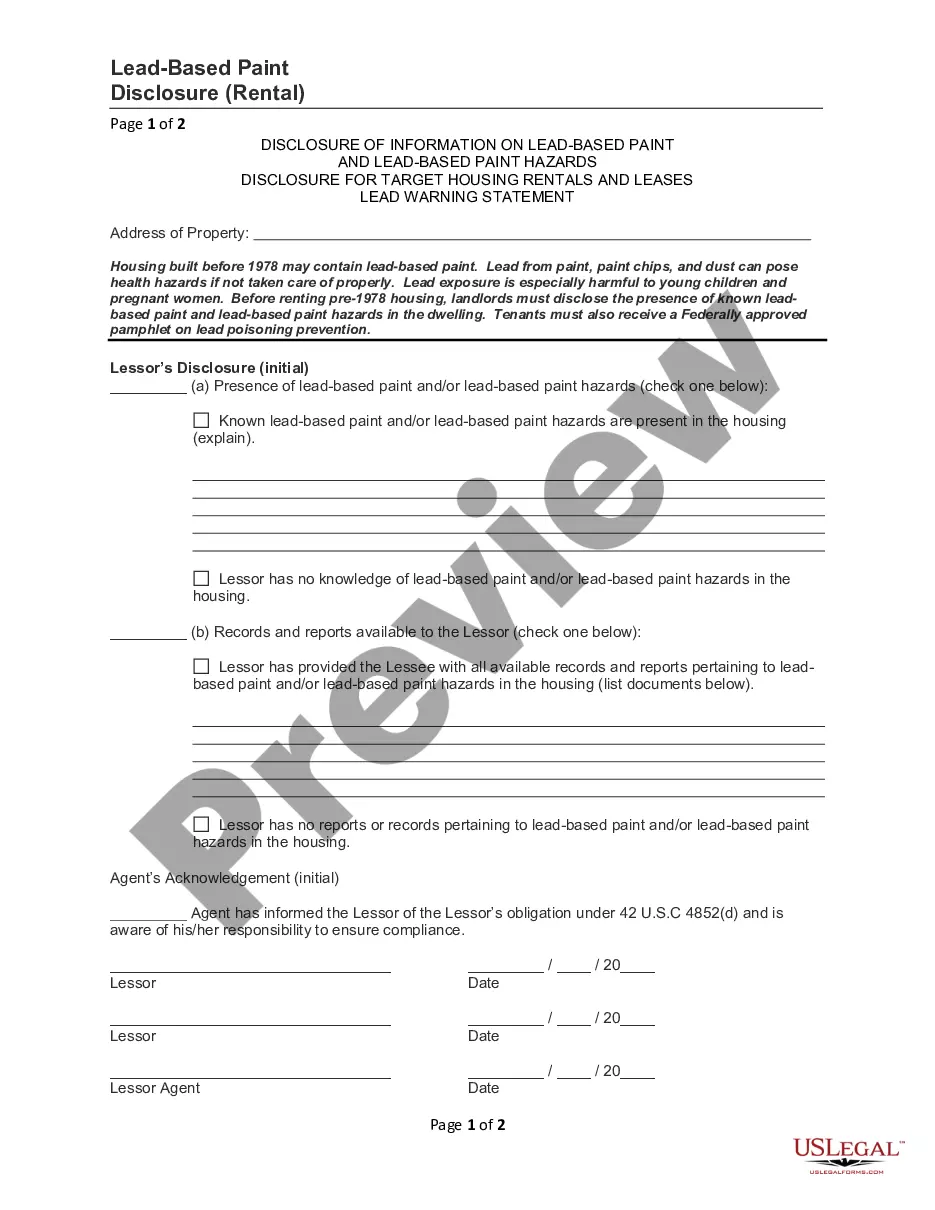
The Lead Based Paint Disclosure for Sales Transaction is a legal document required by federal law when selling residential properties built before 1978. This form serves to inform buyers about the potential presence of lead-based paint and associated hazards in older homes. It differs from other real estate forms by specifically addressing lead exposure risks that can pose serious health threats, particularly to young children and pregnant women.
Key components of this form
- Property Information: Includes basic details like address and type of dwelling.
- Lead Warning Statement: Advises buyers about the risks associated with lead exposure from paint, dust, and soil.
- Sellers Disclosure: Requires sellers to disclose known lead-based paint hazards or state they have no knowledge of such hazards.
- Buyers Acknowledgment: Confirms that buyers received necessary information and pamphlets about lead hazards.
- Agents Acknowledgment: Ensures real estate agents are aware of seller obligations regarding lead disclosures.
Situations where this form applies
This form should be used whenever a property built before 1978 is being sold. It is crucial for protecting the health of potential buyers by ensuring they are informed about any lead-based paint risks associated with the home. Use this form when presenting the property for sale, during negotiations, and before signing the purchase agreement to maintain compliance with federal regulations.
Who should use this form
- Home sellers of residential properties constructed before 1978.
- Real estate agents representing sellers of older homes.
- Potential buyers interested in purchasing homes built prior to 1978.
- Legal professionals assisting sellers or buyers with real estate transactions involving older properties.
How to complete this form
- Identify the property by entering the complete address and details at the top of the form.
- Read and acknowledge the lead warning statement provided in the document. Ensure you understand the risks of lead exposure.
- Complete the sellers disclosure section by indicating the presence or absence of lead-based paint and any known hazards.
- Ensure the buyer acknowledges receipt of all required information, including relevant pamphlets.
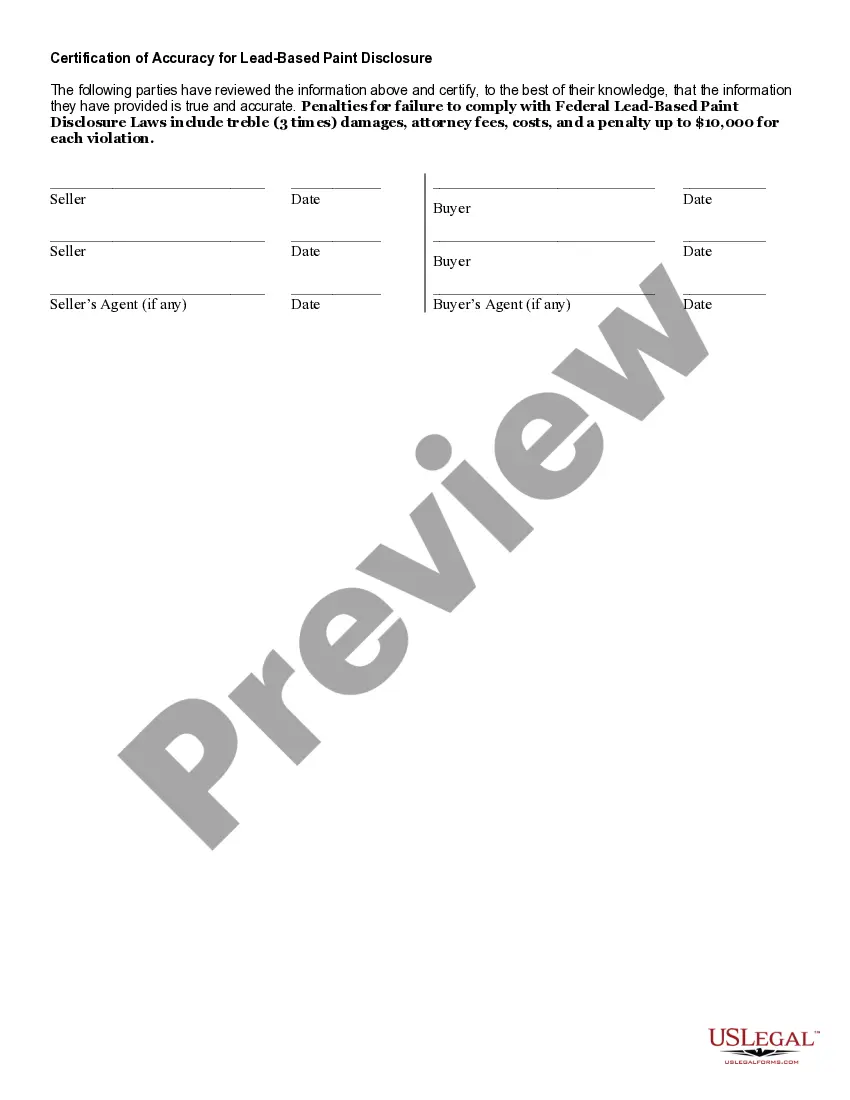
- Have all parties sign and date the form to certify the accuracy of the information provided.
Does this form need to be notarized?
This form usually doesn’t need to be notarized. However, local laws or specific transactions may require it. Our online notarization service, powered by Notarize, lets you complete it remotely through a secure video session, available 24/7.
Get your form ready online
Our built-in tools help you complete, sign, share, and store your documents in one place.
Make edits, fill in missing information, and update formatting in US Legal Forms—just like you would in MS Word.
Download a copy, print it, send it by email, or mail it via USPS—whatever works best for your next step.
Sign and collect signatures with our SignNow integration. Send to multiple recipients, set reminders, and more. Go Premium to unlock E-Sign.
If this form requires notarization, complete it online through a secure video call—no need to meet a notary in person or wait for an appointment.
We protect your documents and personal data by following strict security and privacy standards.

Make edits, fill in missing information, and update formatting in US Legal Forms—just like you would in MS Word.

Download a copy, print it, send it by email, or mail it via USPS—whatever works best for your next step.

Sign and collect signatures with our SignNow integration. Send to multiple recipients, set reminders, and more. Go Premium to unlock E-Sign.

If this form requires notarization, complete it online through a secure video call—no need to meet a notary in person or wait for an appointment.

We protect your documents and personal data by following strict security and privacy standards.
Avoid these common issues
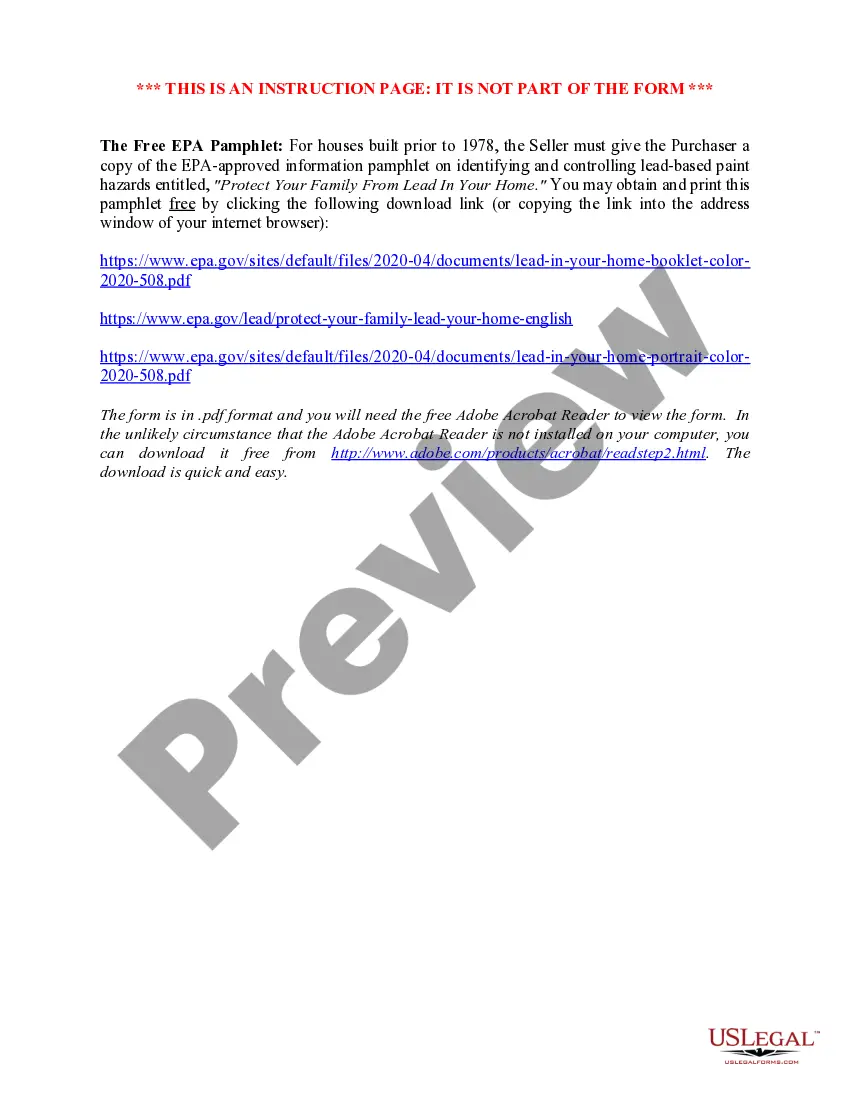
- Failing to provide the lead hazard pamphlet to the buyer.
- Not disclosing known lead paint hazards fully, which can lead to legal penalties.
- Allowing the form to go unsigned by all parties involved.
- Incorrectly checking the boxes regarding the knowledge of lead-based paint and its hazards.
Why use this form online
- Quick and easy access to a legally compliant and attorney-drafted form.
- Editable templates that allow you to customize details relevant to your transaction.
- Immediate download options, so you can complete the process without delay.
- Simple instructions lead to a clearer understanding of legal obligations.
Legal use & context
- The form complies with federal law that mandates disclosures about lead-based paint hazards.
- Failure to comply can result in significant penalties, including fines and liability for damages.
- Buyers should seek further inspections to assess lead hazards if necessary, before finalizing the property purchase.
Main things to remember
- The Lead Based Paint Disclosure is essential for homes built before 1978.
- Sellers must disclose known lead hazards and provide specific documentation to buyers.
- Buyers should carefully read this form to understand their rights and protections regarding lead exposure.
Looking for another form?
Form popularity
FAQ
Federal law requires you to provide certain important information about lead-based paint and/or lead-based paint hazards before a prospective buyer is obligated under a contract to purchase your home.Inform the seller of his or her obligations under the Real Estate Notification and Disclosure Rule.
In New Hampshire, law does not consider any death in the home to be "material fact"; therefore it is not required to be disclosed. If a buyer asks, and the seller knows, then they should answer truthfully, but no legal action shall be brought against the seller and agent for failing to disclose.
In the simplest terms, a Seller's Disclosure is a document a potential buyer receives in order to know what condition the property is in. It contains about 100 questions and it will take you 20-30 minutes at most to complete.You're not required to have this document ready until your home is under contract.
California's Especially Stringent Disclosure Requirements Sellers must fill out and give the buyers a disclosure form listing a broad range of defects, such as a leaky roof, deaths that occurred within three years on the property, neighborhood nuisances such as a dog that barks every night, and more.
Search online or stop into your local city planning department to ask. You can also ask a real estate agent or an attorney for a copy of the disclosure law. Your state's Department of Real Estate might also have information about what disclosures are required in your state.
California, like many states, requires its residential property sellers to disclose, in writing, details about the property they have on the market.(See, California Civil Code § 1102.)
The seller is not providing a seller disclosure form and is selling the property as is, although he is allowing a home inspection.For example, if the seller's home is part of an estate or a foreclosure sale by a sheriff or court, a seller disclosure form may not be required. The rules are governed on a state level.
Issue #1: Seller Lied on Disclosure Statement Now, if you believe that the seller lied about problems with the home and want to take it to court, then you have to prove it. You have to bring evidence that the seller knew or should have known about the issues, and they purposely covered it up.
When is a seller exempt from providing a seller's disclosure?Another seller hadn't even lived in the property they were selling; it was an investment property and they didn't have enough first-hand knowledge of the property's history to provide a disclosure.