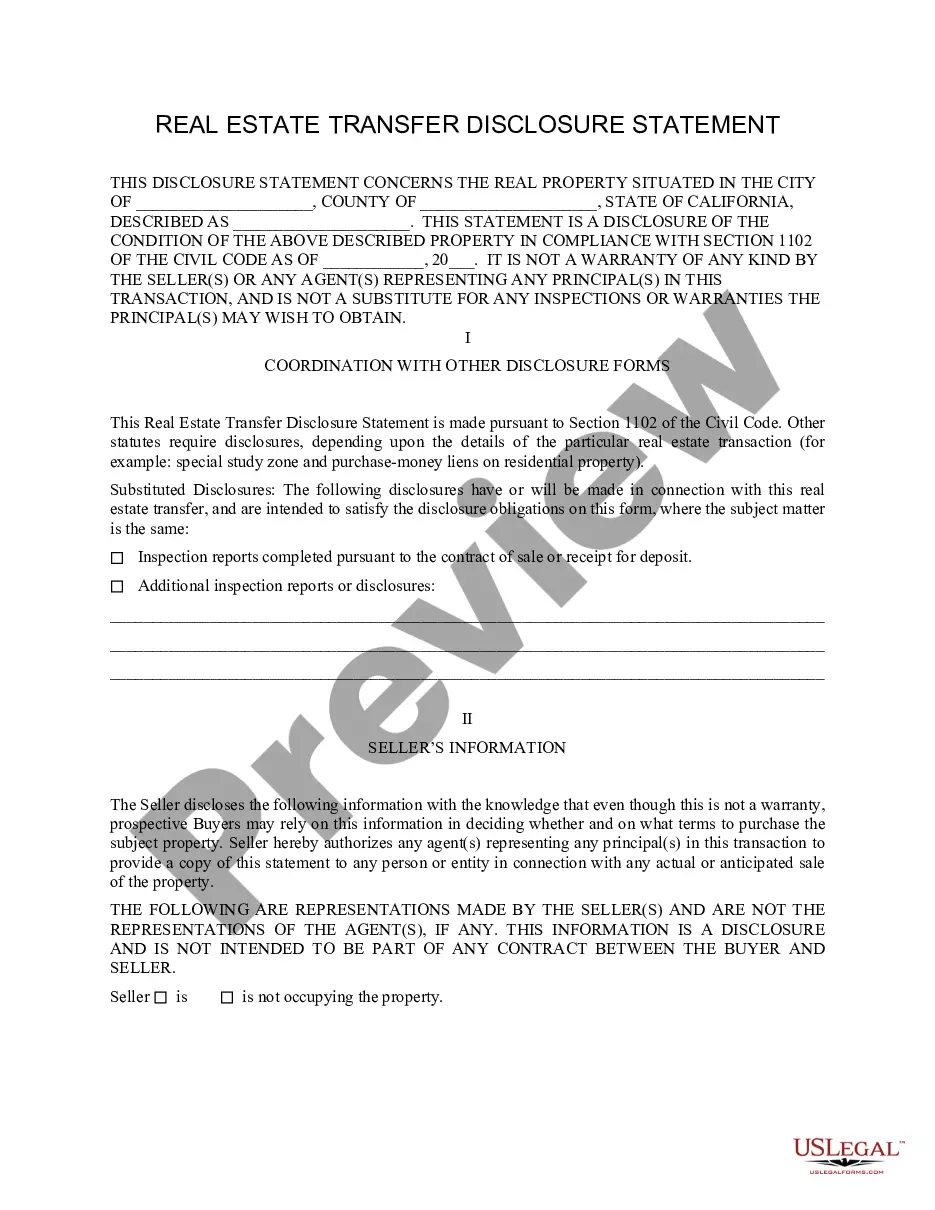
Real Estate Transfer Disclosure Statement
Overview of this form
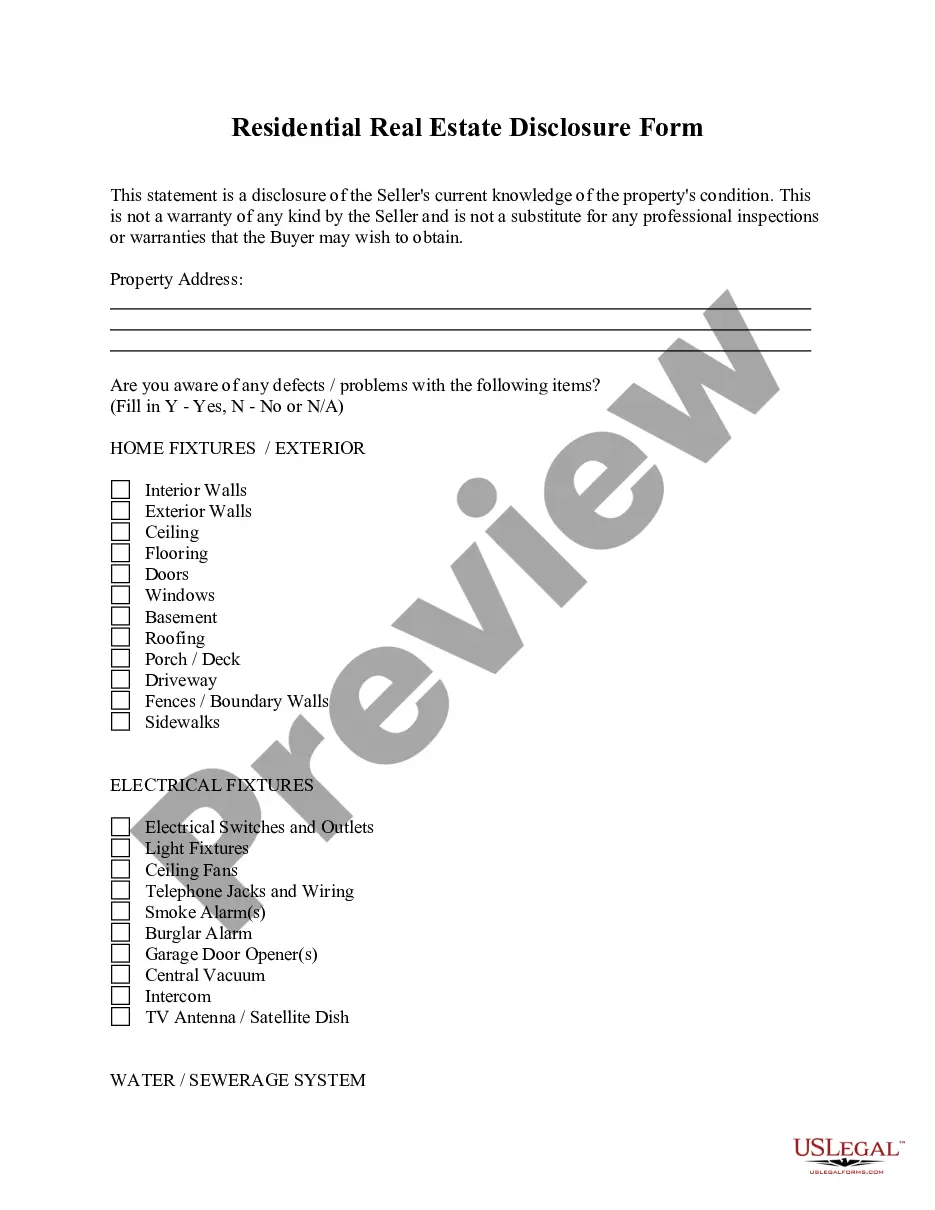
The Real Estate Transfer Disclosure Statement (TDS) is a legal document that outlines the condition of a property being sold. This form must be provided to prospective buyers as soon as practicable, ensuring transparency in real estate transactions. Unlike other real estate forms, the TDS specifically focuses on the disclosures made by the seller regarding the property's condition, addressing potential issues that could affect the buyer's decision.
What’s included in this form
- Sender information: Details about the seller and the seller's occupancy status.
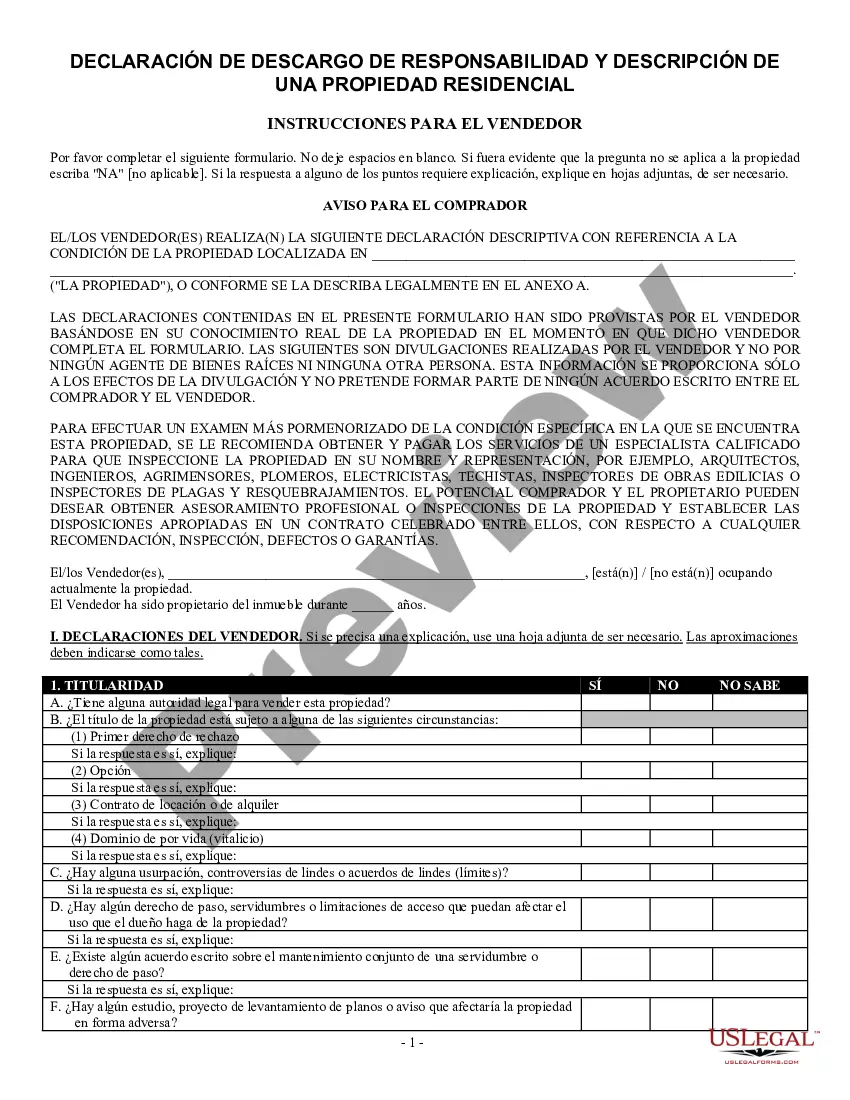
- Property description: Specific information regarding the property being transferred, including its location and unique characteristics.
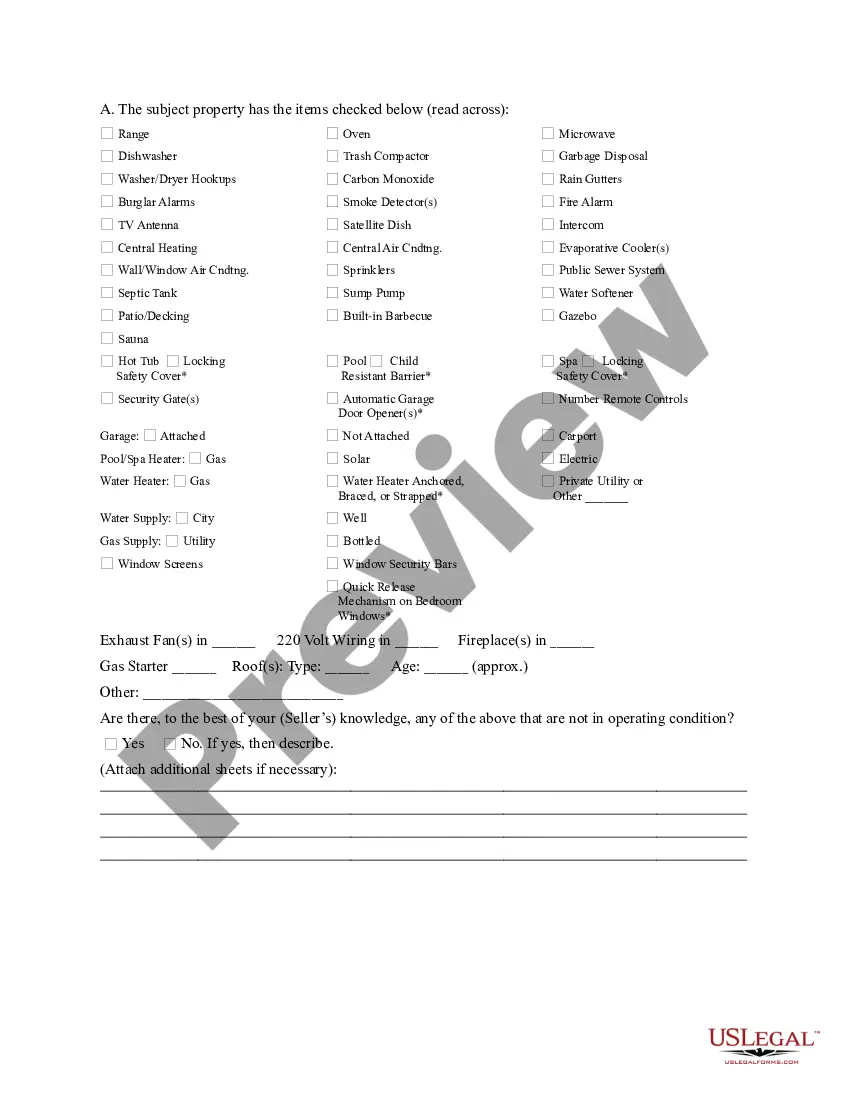
- Disclosure of property condition: A thorough list of items, systems, and components of the property, indicating their operational status.
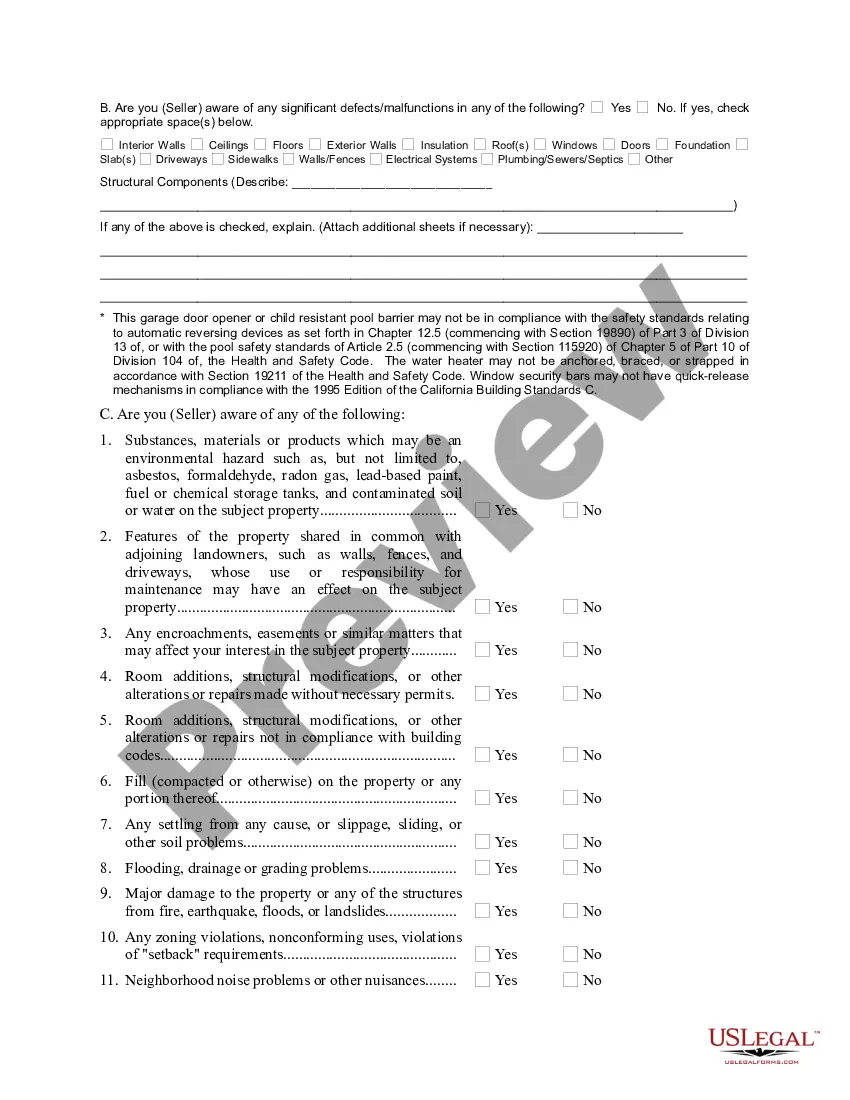
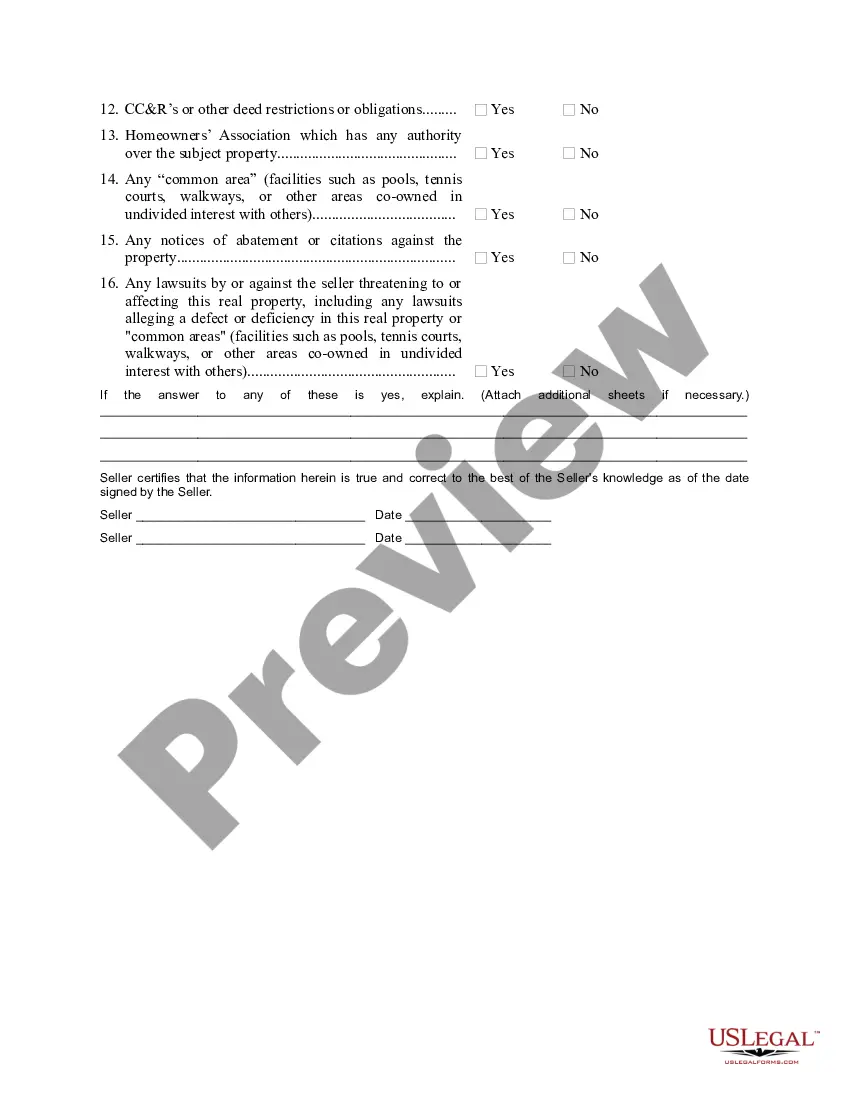
- Disclosure of known defects: Questions and prompts for sellers to disclose any significant defects or malfunctions present in the property.
- Environmental hazards: Queries regarding the presence of substances that may be environmental risks.
- Seller certification: A declaration by the seller affirming the accuracy of the provided information.

When to use this document
This form is needed during the sale of residential real estate, specifically in California. If you are a seller preparing for a property transfer, the TDS must be completed and provided to prospective buyers, ensuring they are informed of the property's condition before making a purchase decision.
Who this form is for
- Home sellers looking to sell residential property in California.
- Real estate agents involved in residential property transactions.
- Buyers who want to understand the property's condition prior to purchase.
How to complete this form
- Identify the parties: Enter the names and contact information of the seller(s).
- Specify the property: Fill in the propertyâs address and legal description.
- Complete the disclosure: Answer all questions regarding the condition and status of the property and its components.
- Address environmental hazards: Indicate if there are any known environmental issues present on the property.
- Certify the information: The seller(s) must sign and date the disclosure, affirming that the information is correct to the best of their knowledge.
Is notarization required?
This form does not typically require notarization unless specified by local law. However, it is advisable to check local regulations to ensure compliance.
Get your form ready online
Our built-in tools help you complete, sign, share, and store your documents in one place.
Make edits, fill in missing information, and update formatting in US Legal Forms—just like you would in MS Word.
Download a copy, print it, send it by email, or mail it via USPS—whatever works best for your next step.
Sign and collect signatures with our SignNow integration. Send to multiple recipients, set reminders, and more. Go Premium to unlock E-Sign.
If this form requires notarization, complete it online through a secure video call—no need to meet a notary in person or wait for an appointment.
We protect your documents and personal data by following strict security and privacy standards.

Make edits, fill in missing information, and update formatting in US Legal Forms—just like you would in MS Word.

Download a copy, print it, send it by email, or mail it via USPS—whatever works best for your next step.

Sign and collect signatures with our SignNow integration. Send to multiple recipients, set reminders, and more. Go Premium to unlock E-Sign.

If this form requires notarization, complete it online through a secure video call—no need to meet a notary in person or wait for an appointment.

We protect your documents and personal data by following strict security and privacy standards.
Common mistakes to avoid
- Failing to disclose known defects, which can lead to legal issues after the sale.
- Incomplete forms, missing signatures, or blank fields that can invalidate the document.
- Not providing the TDS to potential buyers at the required time.
Benefits of completing this form online
- Immediate access to the standardized TDS template drafted by licensed attorneys.
- Convenience of downloading and filling out the form at your own pace.
- Ensured compliance with legal requirements specific to California real estate transactions.
Summary of main points
- The TDS is crucial for transparency between sellers and buyers in real estate transactions.
- Accuracy and completeness in the form help protect sellers from future liability.
- This form is specific to California and must be used following state requirements.
Looking for another form?



Form popularity
FAQ
A seller is required to provide the TDS even when selling property without an agent, such as in a ?for sale by owner? transaction. The TDS also must be provided for sales of a new residential property that is not part of a subdivision, such as a new home or a new four-unit building being built on a lot.
The (TDS) describes the condition of a property and, in the case of a sale, must be given to a prospective buyer as soon as practicable and before transfer of title.
As explained by the State of California Department of Real Estate, a TDS is a form that lets buyers know about any significant defects to the property. Sellers have a duty to disclose comprehensive information about the property.
A transfer disclosure statement (TDS) is required by California law in Section 1102 of the California Civil Code. This document is one of the seller disclosures that buyers receive during their contract contingency period. Its purpose is to let a buyer know of major defects in a property as required by California law.
Other exemptions from of the TDS include transfers from one co-owner to another, transfers made to a spouse or child, grandchild, parent, grandparent or other direct ancestor or descendent; transfers between spouses in connection with dissolution of marriage, and various transfers to the state for failure to pay
First, this form must be completed in the seller's handwriting. An agent may not complete this form for a seller under any circumstances. If you are unable to fill it out, ask a close relative to do it for you, but do not ask your agent.
A seller is required to provide the TDS even when selling property without an agent, such as in a ?for sale by owner? transaction. The TDS also must be provided for sales of a new residential property that is not part of a subdivision, such as a new home or a new four-unit building being built on a lot.
The seller is required to complete a Transfer Disclosure Statement (TDS).