Surrogate Parenting Agreement
What this document covers
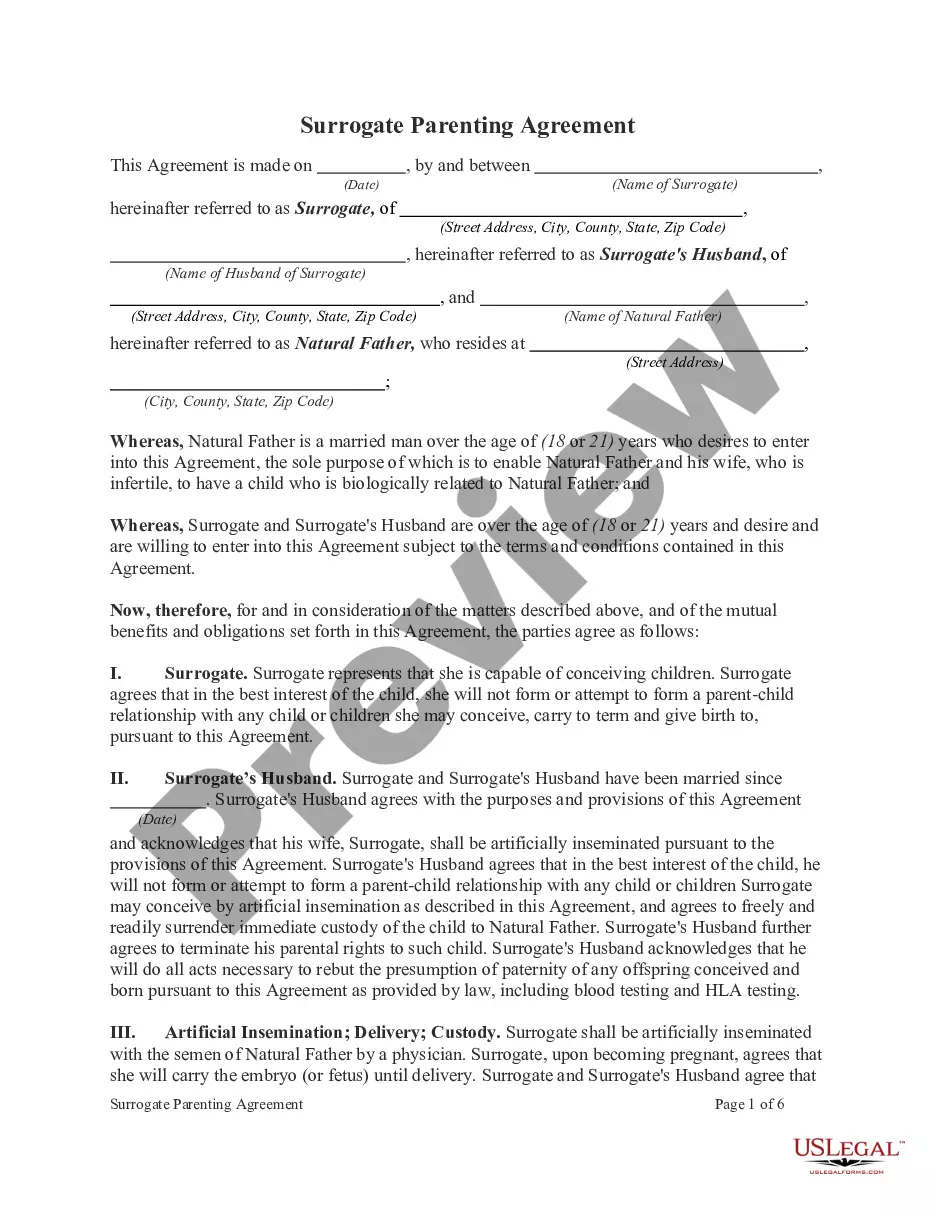
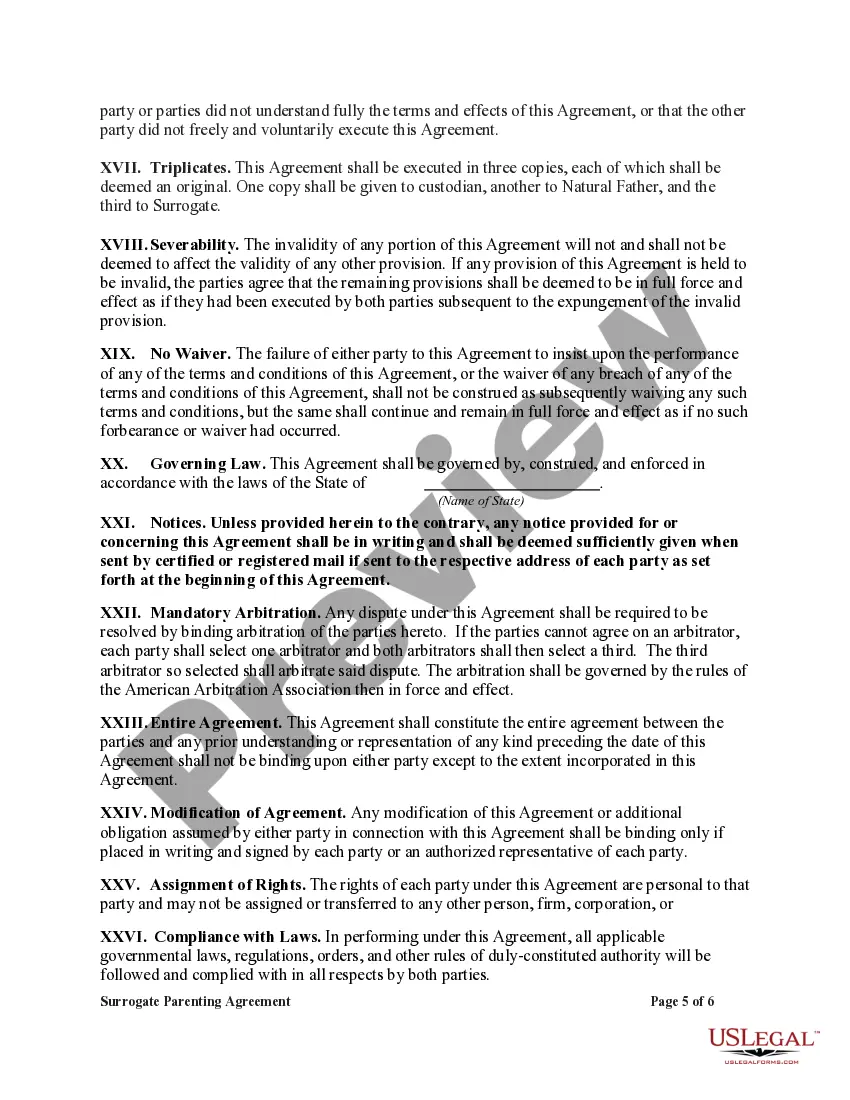
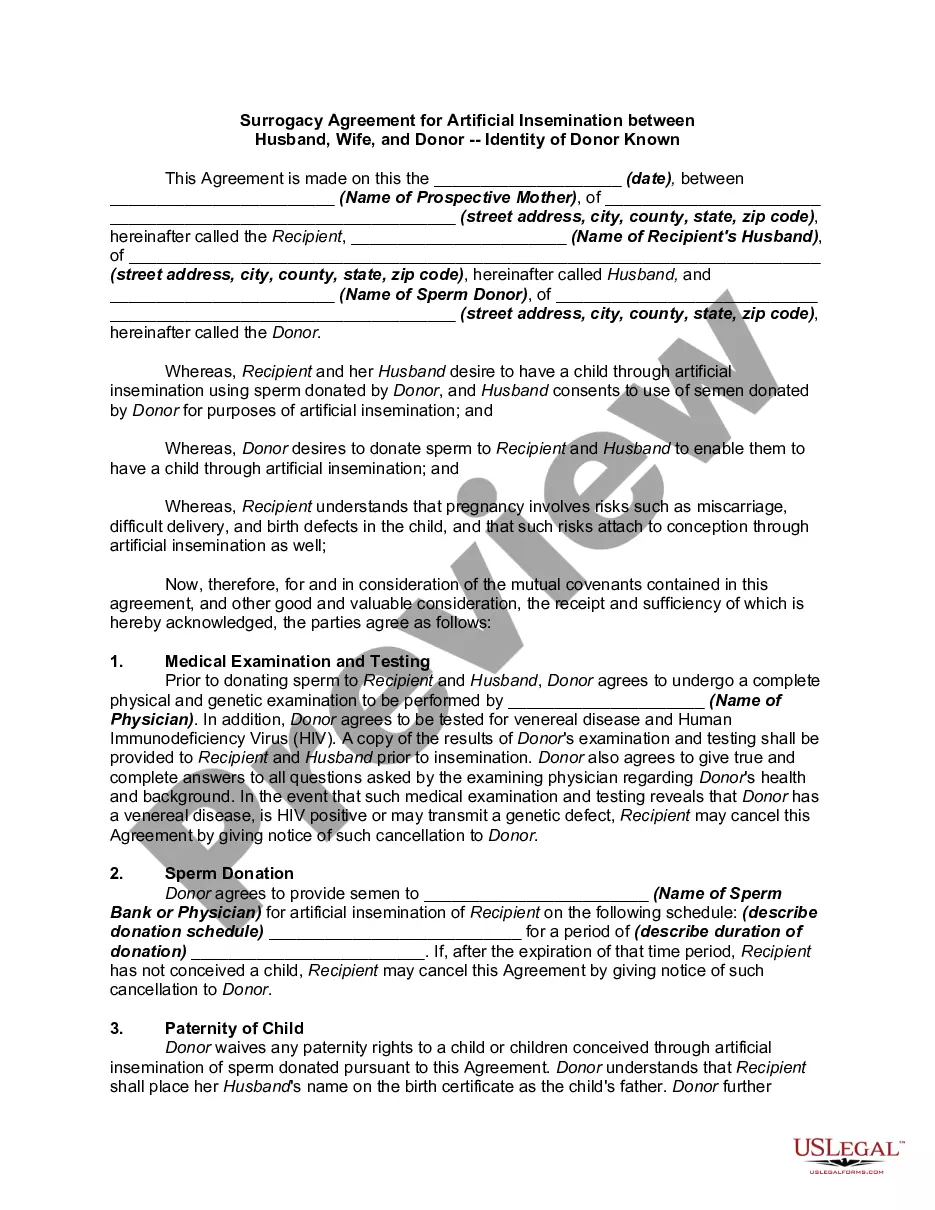
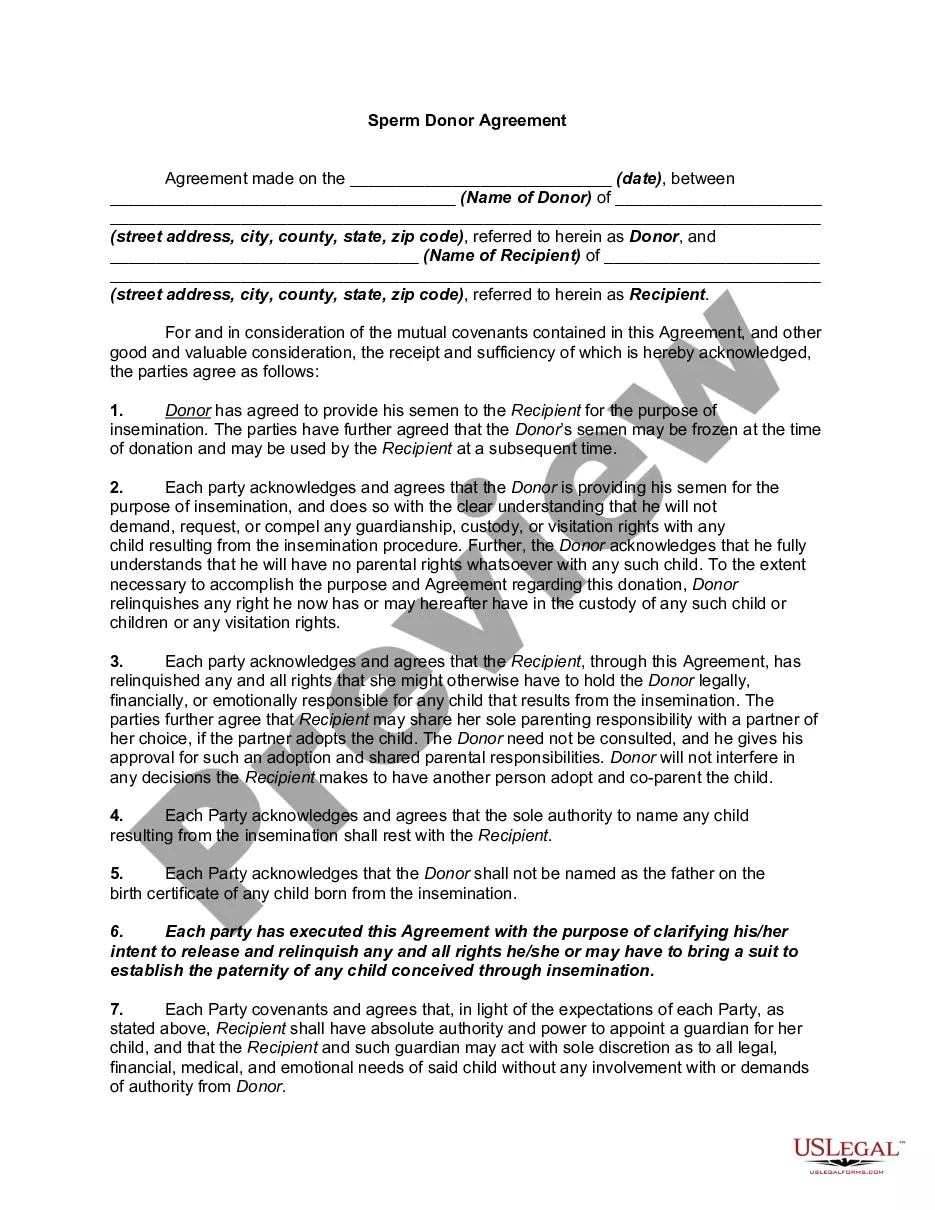
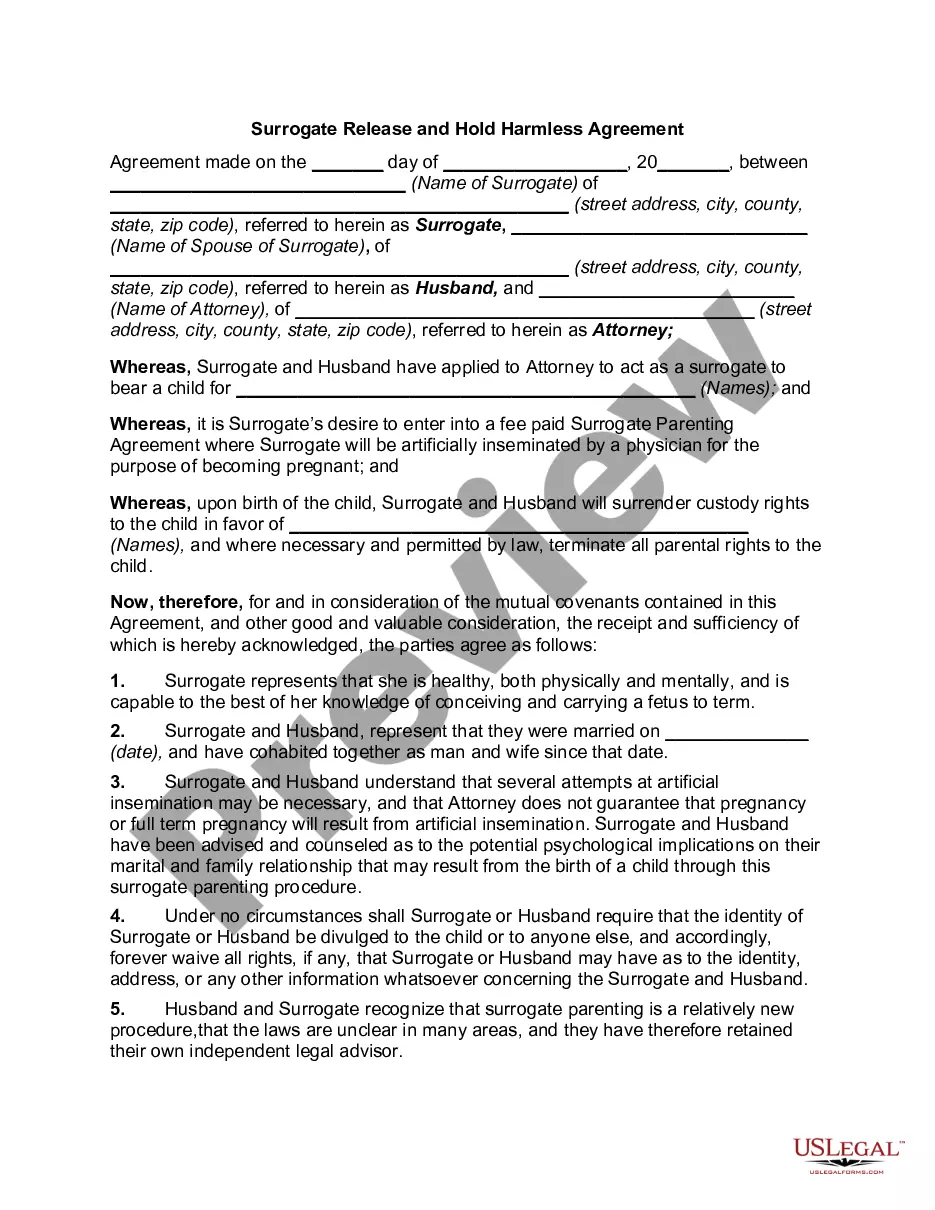
The Surrogate Parenting Agreement is a legal document that outlines the rights and responsibilities of a surrogate mother, her husband, and the intended parents (natural father). This agreement is crucial for establishing clear terms of the arrangement, including the process of artificial insemination and custody of the child after birth. Unlike general contracts, this document specifically addresses the unique aspects of surrogacy, ensuring that all parties understand their obligations and rights throughout the process.
Key parts of this document
- Parties involved: Identifies the surrogate mother, her husband, and the intended parent(s).
- Surrogate's responsibilities: Outlines the surrogate's commitment to carry the child and not form a parent-child relationship.
- Custody arrangements: Specifies that the surrogate and her husband will relinquish all rights to the child after birth.
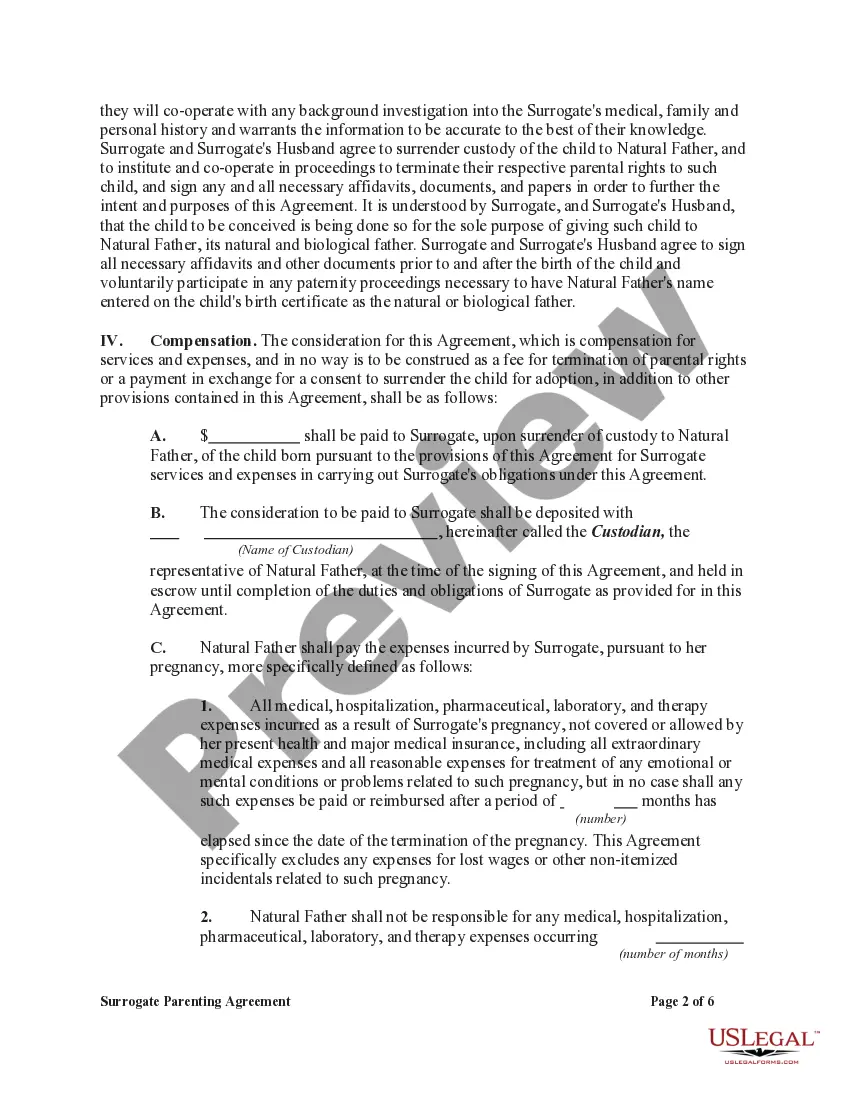
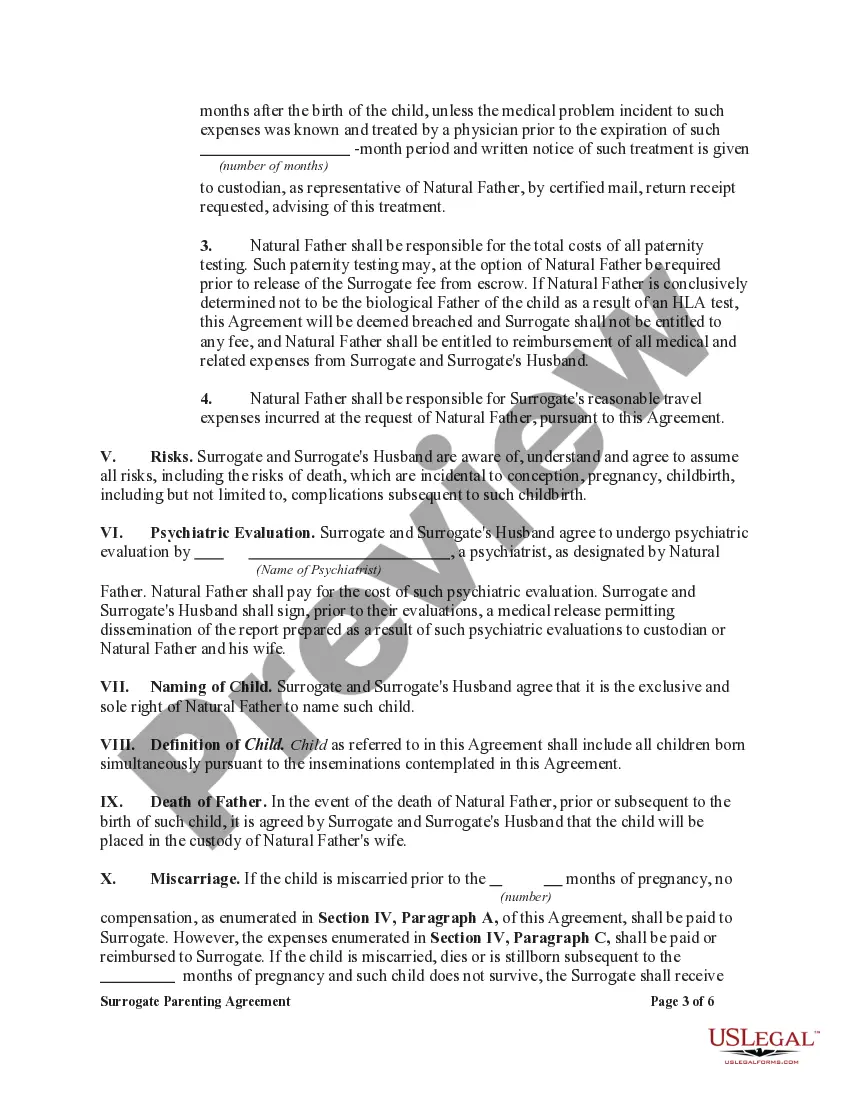
- Compensation and expenses: Details the financial agreement regarding payment to the surrogate and coverage of medical expenses.
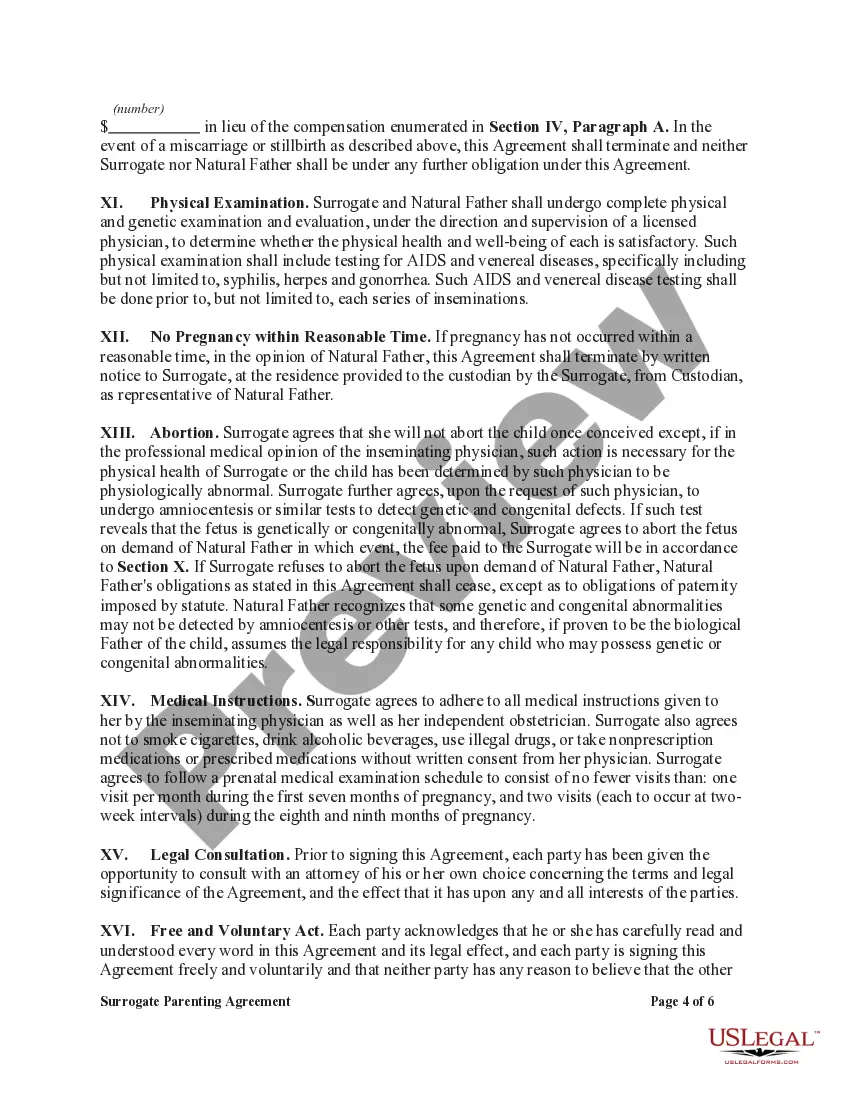
- Health requirements: Includes clauses for medical examinations and health obligations for both the surrogate and the intended father.
- Legal consultation: Confirms that all parties have had the opportunity to seek independent legal advice before signing the agreement.
Situations where this form applies
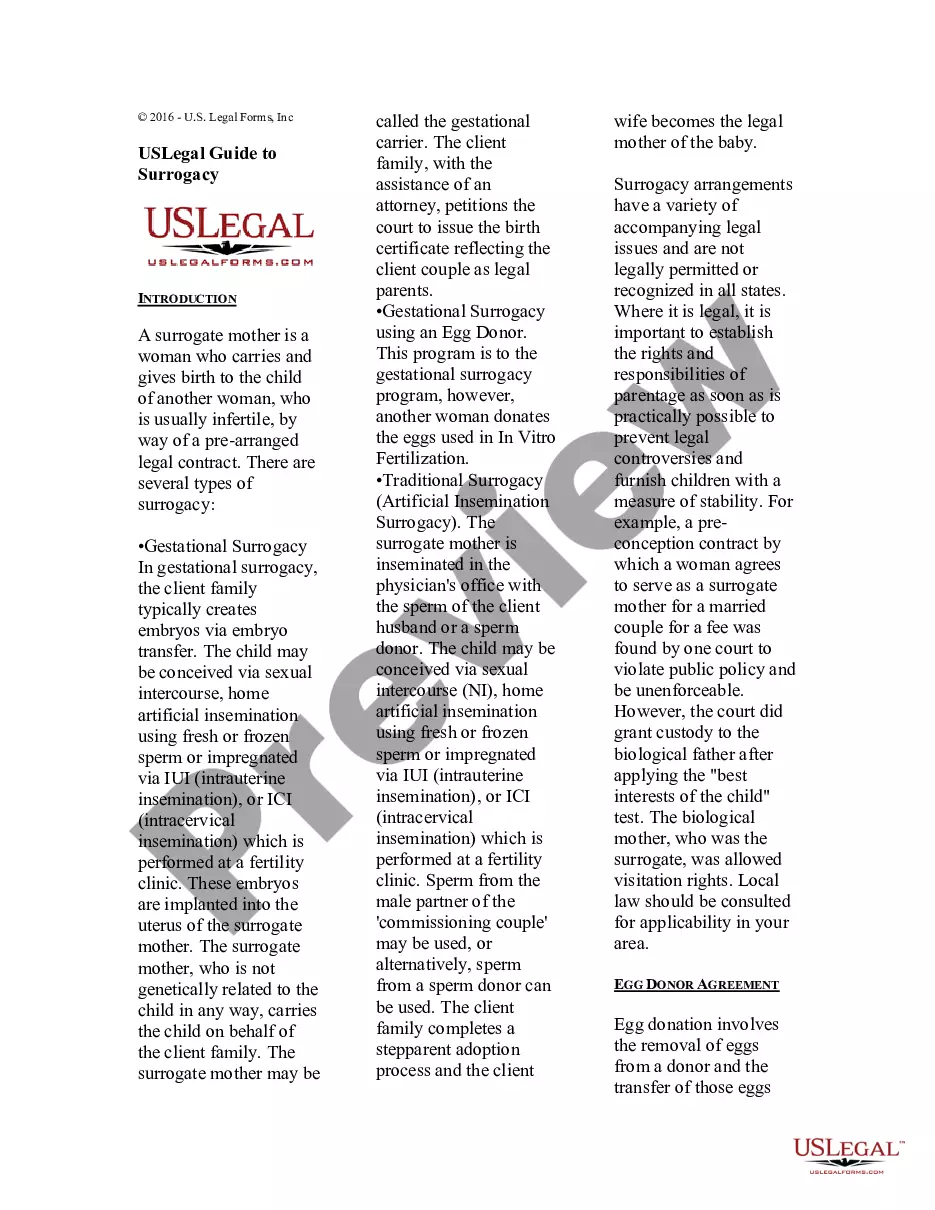
This form is typically used in situations where a couple, unable to conceive naturally or carry a pregnancy, chooses to engage a surrogate mother to bear their child. It is essential when the surrogate agrees to become pregnant through artificial insemination and the intended parents require a structured legal framework for the surrogacy arrangement. Using this form helps clarify the roles of all parties and ensures legal protection throughout the process.
Who this form is for
- Couples seeking to have a child through surrogacy.
- Surrogate mothers interested in formalizing their agreement with intended parents.
- Married couples where one partner cannot carry a child due to medical reasons.
- Individuals and couples who want to establish clear legal protections regarding the child's custody and parental rights.
How to prepare this document
- Identify the parties involved by entering the names of the surrogate mother, her husband, and the intended father.
- Specify the terms of the artificial insemination process and confirm the surrogate's willingness to carry the child.
- Detail the compensation structure, including the amount to be paid and who will cover medical expenses.
- Include provisions for medical examinations to ensure the health of both the surrogate and the intended father.
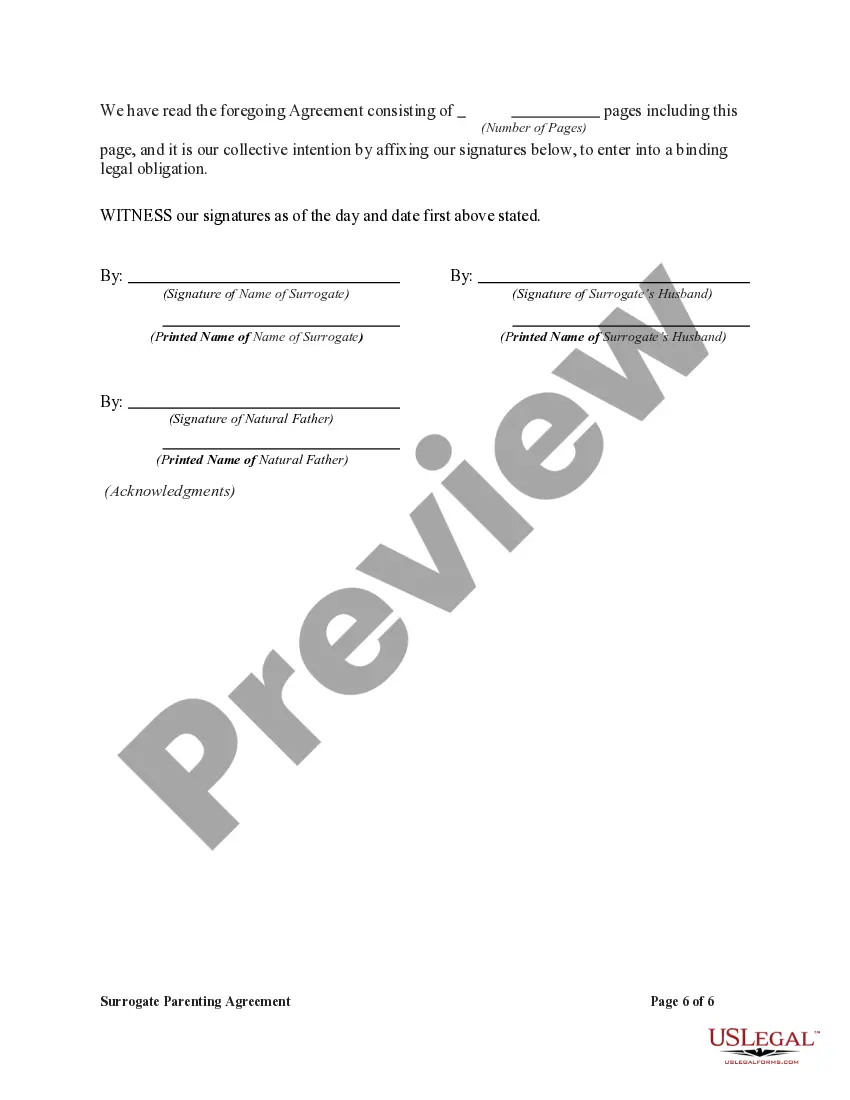
- Have each party sign and date the agreement, confirming that they have read and understood the document.
Does this document require notarization?
This form usually doesn’t need to be notarized. However, local laws or specific transactions may require it. Our online notarization service, powered by Notarize, lets you complete it remotely through a secure video session, available 24/7.
Get your form ready online
Our built-in tools help you complete, sign, share, and store your documents in one place.
Make edits, fill in missing information, and update formatting in US Legal Forms—just like you would in MS Word.
Download a copy, print it, send it by email, or mail it via USPS—whatever works best for your next step.
Sign and collect signatures with our SignNow integration. Send to multiple recipients, set reminders, and more. Go Premium to unlock E-Sign.
If this form requires notarization, complete it online through a secure video call—no need to meet a notary in person or wait for an appointment.
We protect your documents and personal data by following strict security and privacy standards.

Make edits, fill in missing information, and update formatting in US Legal Forms—just like you would in MS Word.

Download a copy, print it, send it by email, or mail it via USPS—whatever works best for your next step.

Sign and collect signatures with our SignNow integration. Send to multiple recipients, set reminders, and more. Go Premium to unlock E-Sign.

If this form requires notarization, complete it online through a secure video call—no need to meet a notary in person or wait for an appointment.

We protect your documents and personal data by following strict security and privacy standards.
Typical mistakes to avoid
- Failing to consult an attorney before signing, leading to misunderstandings about the legal implications.
- Not disclosing important medical history that could affect the pregnancy.
- Neglecting to agree on compensation and expense coverage, resulting in disputes later.
- Omitting specific clauses related to custody and parental rights.
Benefits of using this form online
- Quick access: Download the form immediately after purchase without waiting for delivery.
- Editability: Customize the agreement to fit the specific needs of your surrogacy arrangement.
- Reliability: The form is drafted by licensed attorneys to ensure compliance with legal standards.
Legal use & context
- The Surrogate Parenting Agreement establishes clear legal rights and responsibilities for all parties involved.
- Ensures that the intended parents have legal custody of the child once born.
- Helps in preventing disputes regarding parental rights and obligations throughout the surrogacy process.
Summary of main points
- A Surrogate Parenting Agreement is essential for establishing legal clarity in surrogacy arrangements.
- Both parties should understand their rights, responsibilities, and compensation terms before signing.
- Consulting with legal counsel can provide additional protection and clarity for all parties involved.
Looking for another form?



Form popularity
FAQ
Can a surrogate mother decide to keep the baby? No.Once legal parenthood is established, the surrogate has no legal rights to the child and she cannot claim to be the legal mother. In the same vein, the contract protects the surrogate from any kind of legal or medical responsibility for the child.
Typically, a surrogate's base compensation is between $30,000 and $40,000 and can vary based on a number of factors, including her location, experience with surrogacy, and more. This surrogacy cost will be determined prior to the embryo transfer and will be included in your surrogacy contract.
The commissioning parents must be unable to give birth to a child and the condition must be permanent and irreversible, and the surrogates must have had at least one healthy (still living) child prior to the surrogacy agreement being concluded.
The increase in price is due to the application of an IVF, in addition to legal preparations and agency requirements. According to West Coast Surrogacy, intended parents can expect to pay anywhere from $90,000 to $130,000 for their gestational surrogacy.
California has held that surrogate mother contracts are specifically enforceable, at least where both the egg and sperm are donated by individuals other than the surrogate who bears the child.
Any required surrogate mother income tax would have to be identified by a local tax lawyer. If there is a situation in which a professional or intended parents issue a 1099-MISC to their surrogate, she must claim her compensation as income.
Technically, none! There are no ACA medical plans that are specifically designed to cover a woman for surrogacy. She will need to have a medical insurance plan that does not have an exclusion for her using the maternity benefit of the policy while acting as a surrogate.
Traditional surrogacy is banned in many states. A traditional surrogate is the biological mother of her child, meaning she has parental rights and the power to change her mind and keep the baby.
Generally, the intended parents will work with their attorney to draft the initial contract, which will then be sent to the surrogate and her attorney for review.The contracts can then be signed, and the intended parents and surrogate will move forward with medical procedures.