Product Plans
What is this form?
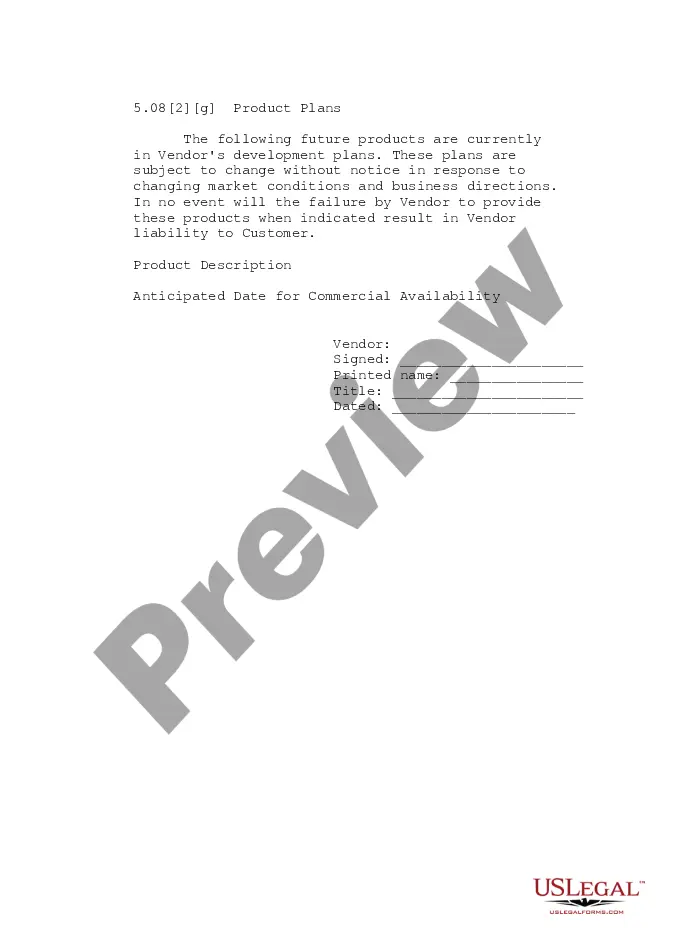
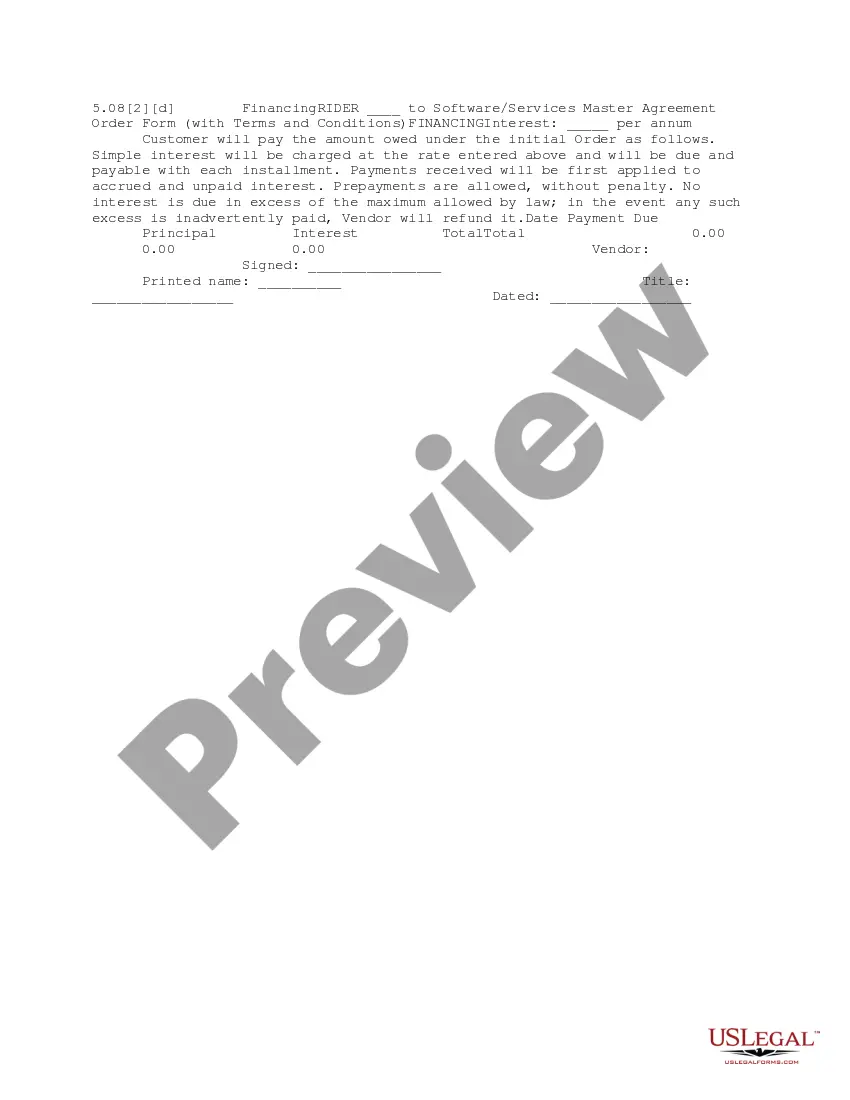
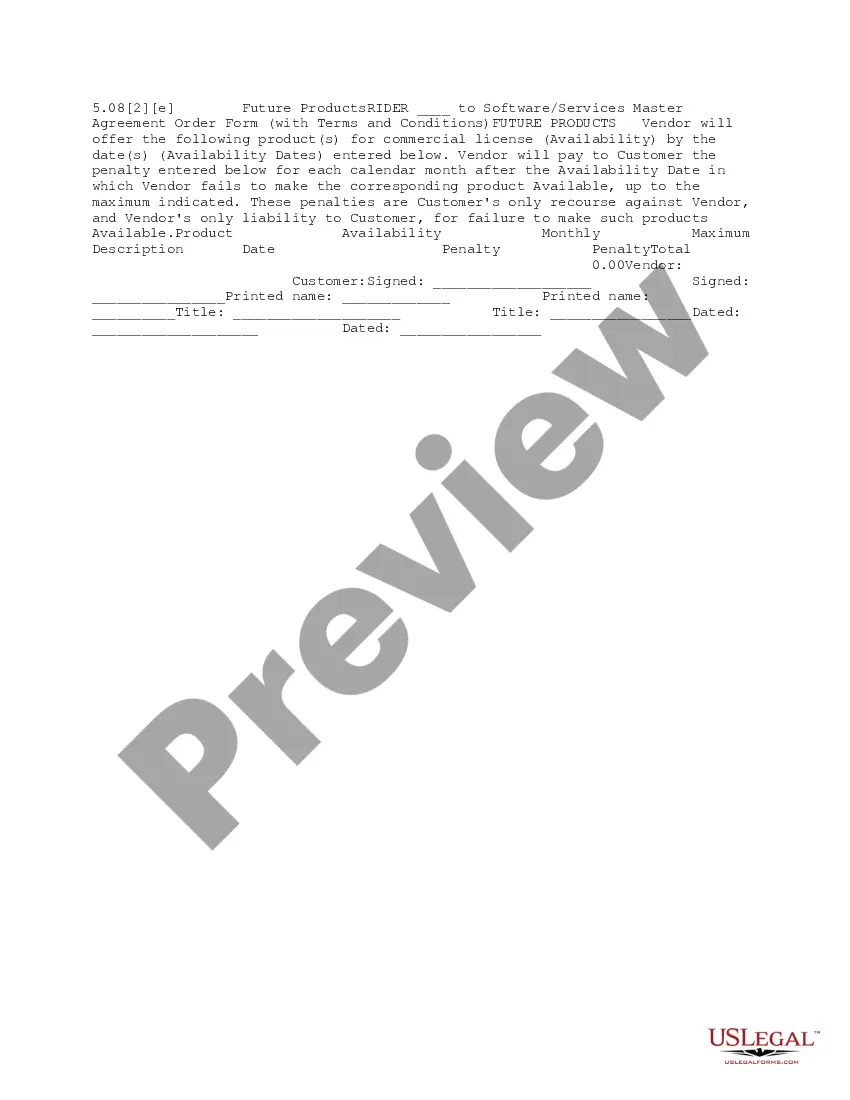
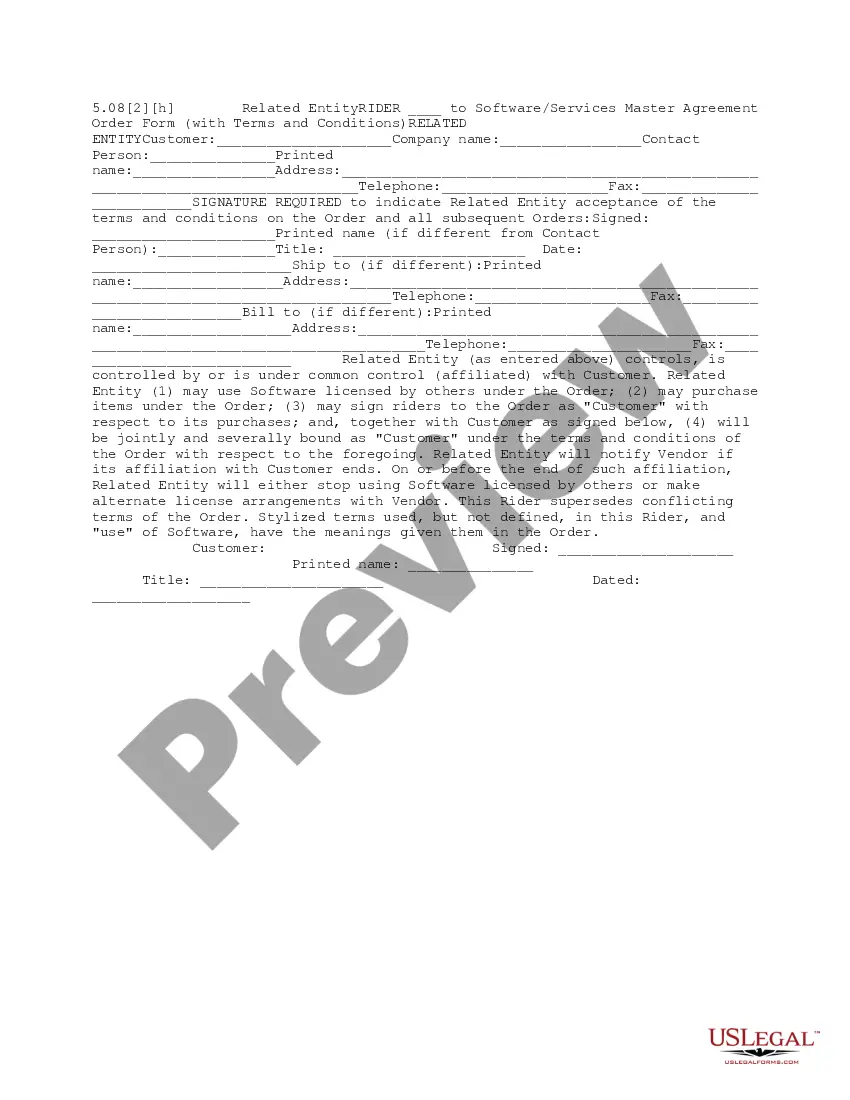
The Product Plans form outlines the vendor's upcoming products that are in the development phase. It serves as a reference for customers to understand what products may be available in the future while emphasizing that the vendor is not liable for any delays in product availability. This form is distinct from contracts or agreements that involve binding commitments from the vendor to deliver specific products.
Main sections of this form
- List of products in development: A brief description of each anticipated product.
- Anticipated date for commercial availability: Estimated timeline for when each product may be offered.
- Vendor information: Name and contact details of the vendor responsible for the products.
- Signature section: Space for the vendor's authorized representative to sign, including printed name and title.
- Date of signing: A field to document the date on which the form is signed.
When to use this form
This form is used when a vendor wishes to inform customers about products they are planning to release in the future. It is ideal for businesses that are in the early stages of product development and want to keep customers updated on potential offerings. Additionally, it ensures that customers acknowledge that product availability may change based on market conditions.
Who can use this document
- Vendors developing new products: To formalize communication regarding upcoming products with customers.
- Businesses in technology or product development sectors: To set customer expectations accurately.
- Legal professionals advising vendors: To ensure clarity in agreements related to product offerings and potential liabilities.
- Stakeholders interested in product launches: To stay informed about future products and their timelines.
Steps to complete this form
- Identify the products: Clearly list the names and descriptions of each product in development.
- Estimate availability dates: Provide anticipated launch dates for each product.
- Fill in vendor information: Clearly include the vendor's name and relevant contact details.
- Sign and date: Have an authorized representative sign the form and print their name and title.
- Keep a copy: Retain a signed version for your records and to provide to customers as needed.
Notarization requirements for this form
This form does not typically require notarization unless specified by local law. However, it is always best to verify if additional steps are necessary based on your location to ensure the formâs validity.
Get your form ready online
Our built-in tools help you complete, sign, share, and store your documents in one place.
Make edits, fill in missing information, and update formatting in US Legal Forms—just like you would in MS Word.
Download a copy, print it, send it by email, or mail it via USPS—whatever works best for your next step.
Sign and collect signatures with our SignNow integration. Send to multiple recipients, set reminders, and more. Go Premium to unlock E-Sign.
If this form requires notarization, complete it online through a secure video call—no need to meet a notary in person or wait for an appointment.
We protect your documents and personal data by following strict security and privacy standards.

Make edits, fill in missing information, and update formatting in US Legal Forms—just like you would in MS Word.

Download a copy, print it, send it by email, or mail it via USPS—whatever works best for your next step.

Sign and collect signatures with our SignNow integration. Send to multiple recipients, set reminders, and more. Go Premium to unlock E-Sign.

If this form requires notarization, complete it online through a secure video call—no need to meet a notary in person or wait for an appointment.

We protect your documents and personal data by following strict security and privacy standards.
Typical mistakes to avoid
- Failing to update product information: Ensure that any changes in product status or availability are promptly reflected in the form.
- Omitting signatures: Ensure that the form is signed by an authorized representative for authenticity.
- Not specifying products clearly: Provide clear descriptions to avoid customer confusion about the anticipated products.
- Incorrect dates: Carefully estimate availability dates to prevent misleading customers.
Why use this form online
- Convenience: Easily fill out and download the form at any time from the comfort of your home or office.
- Editability: Modify the contents as needed to reflect the latest product development plans.
- Reliability: Ensure accuracy with templates drafted by licensed attorneys, minimizing legal risks.
- Immediate access: Obtain your product plan form instantly without needing to wait for physical copies.
Legal use & context
- This form is primarily used to set expectations around product availability.
- It does not create binding responsibilities for the vendor to deliver products by a certain date.
Key takeaways
- The Product Plans form outlines vendor development timelines for expected products.
- It is important for setting clear expectations between vendors and customers.
- Understanding this form can help in making informed decisions about purchasing from vendors.
Looking for another form?
Form popularity
FAQ
From Wikipedia, the free encyclopedia. Product Planning is the ongoing process of identifying and articulating market requirements that define a product's feature set. It serves as the basis for decision-making about price, distribution and promotion.
Define the Why. Understanding the what and why of the product is the first step to designing a plan. Specify What You Need. Step 3: Assign Responsibilities. Step 4: Add Any Limitations. Assign a Timeframe. Share Your Product Plan.
List down the needs of your audiences. Identify your target market. Collect feedback. Define your USP. Build your email list. Create content to reach niche audiences. Plan the content of your live events and webinars. Collaborate with influencers and journalists.
Product planning must also include managing the product through various stages of its product life cycle. These stages include the introduction, growth, maturity and decline stages. Sales are usually strong during the growth phase, while competition is low.
A product plan, also known as a product roadmap, is a broad overview of the upcoming product, its timelines, budget, resources, tasks, and much more. The product plan describes what the product team is set out to build, the reason for building the product, and by when the product is ready for launch.
New product development is the process of bringing an original product idea to market. Although it differs by industry, it can essentially be broken down into six stages: ideation, research, planning, prototyping, sourcing, and costing.
Product Planning is the ongoing process of identifying and articulating market requirements that define a product's feature set. It serves as the basis for decision-making about price, distribution and promotion.
Define a High-Level Product Vision. The product planning process begins with an idea. Execute a Customer Needs Assessment. Do Market Research. Create a Minimum Viable Product (MVP) Gather User Testing and Feedback. Create and Maintain a Product Roadmap.
Development - at this point your product or service is only an idea. Introduction - you launch your product or service. Growth - your product or service is establishing itself. Maturity - sales growth is slowing or has even stopped.