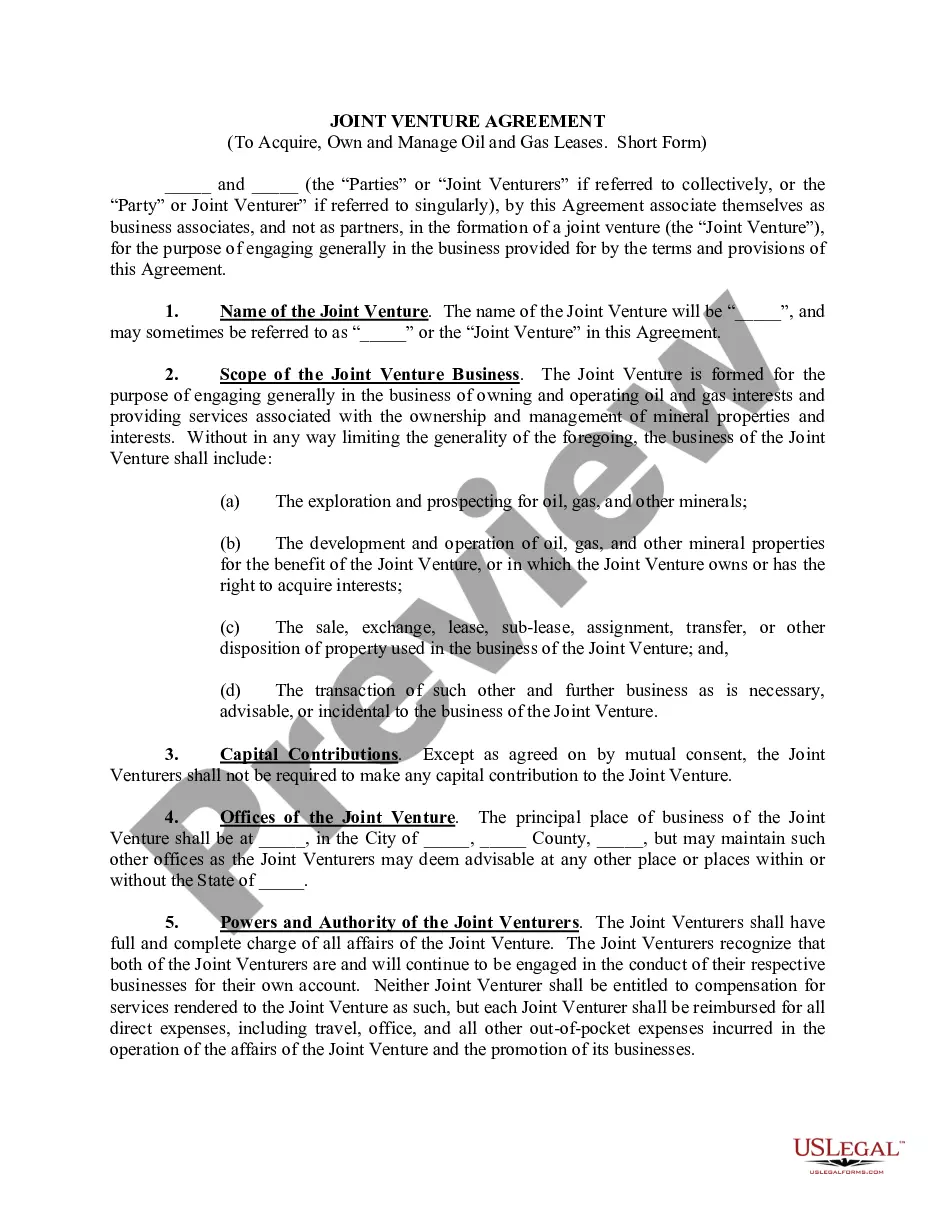
Assignment of Money Due
What this document covers
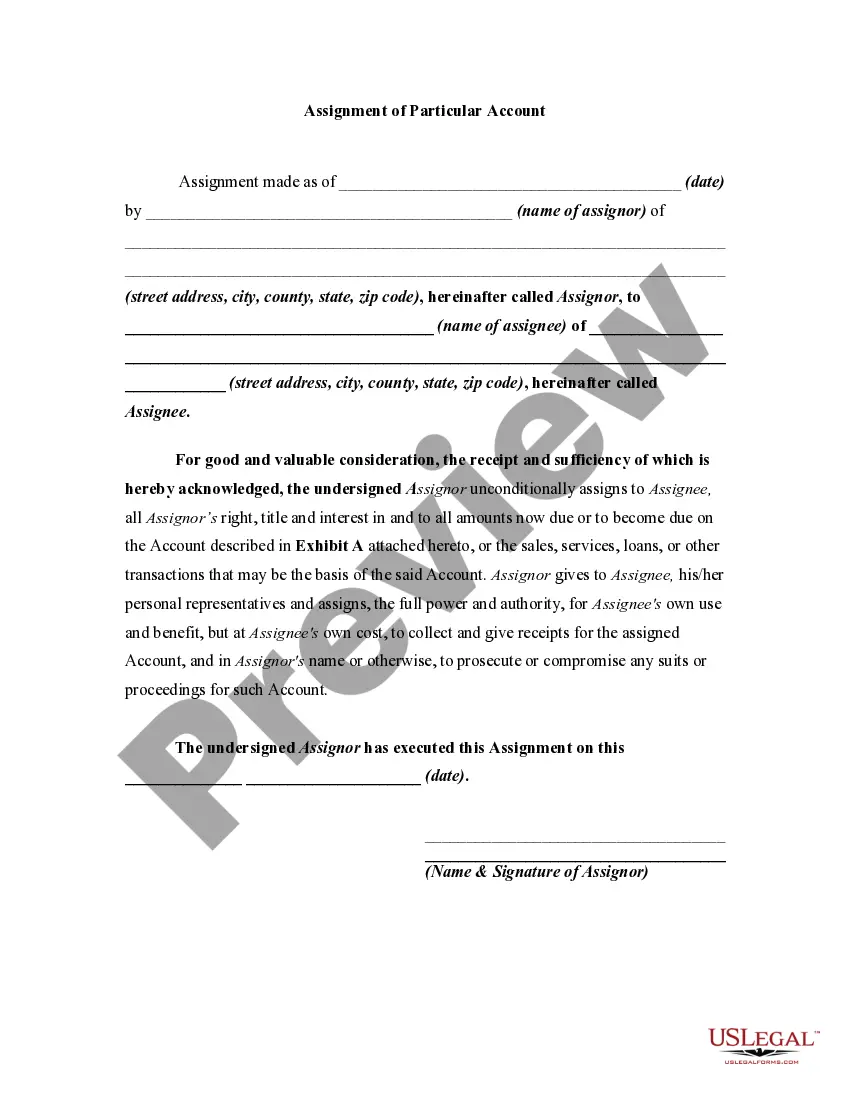
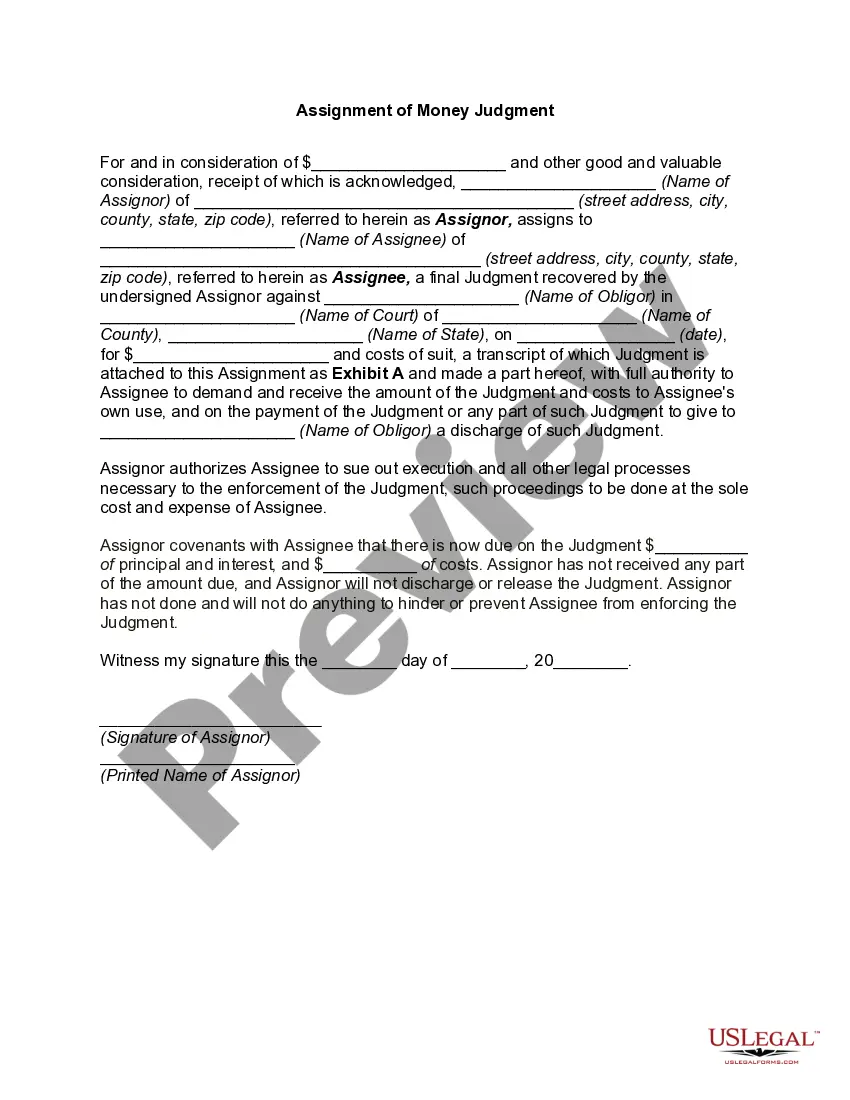
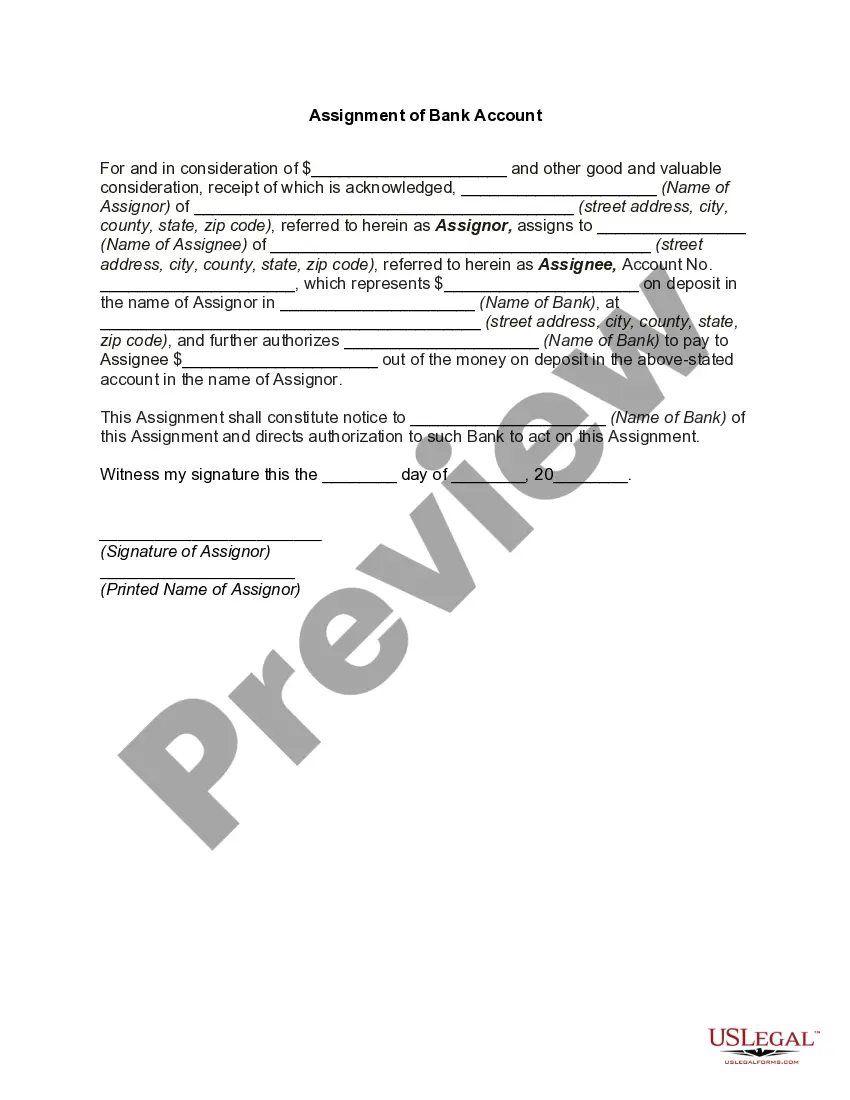
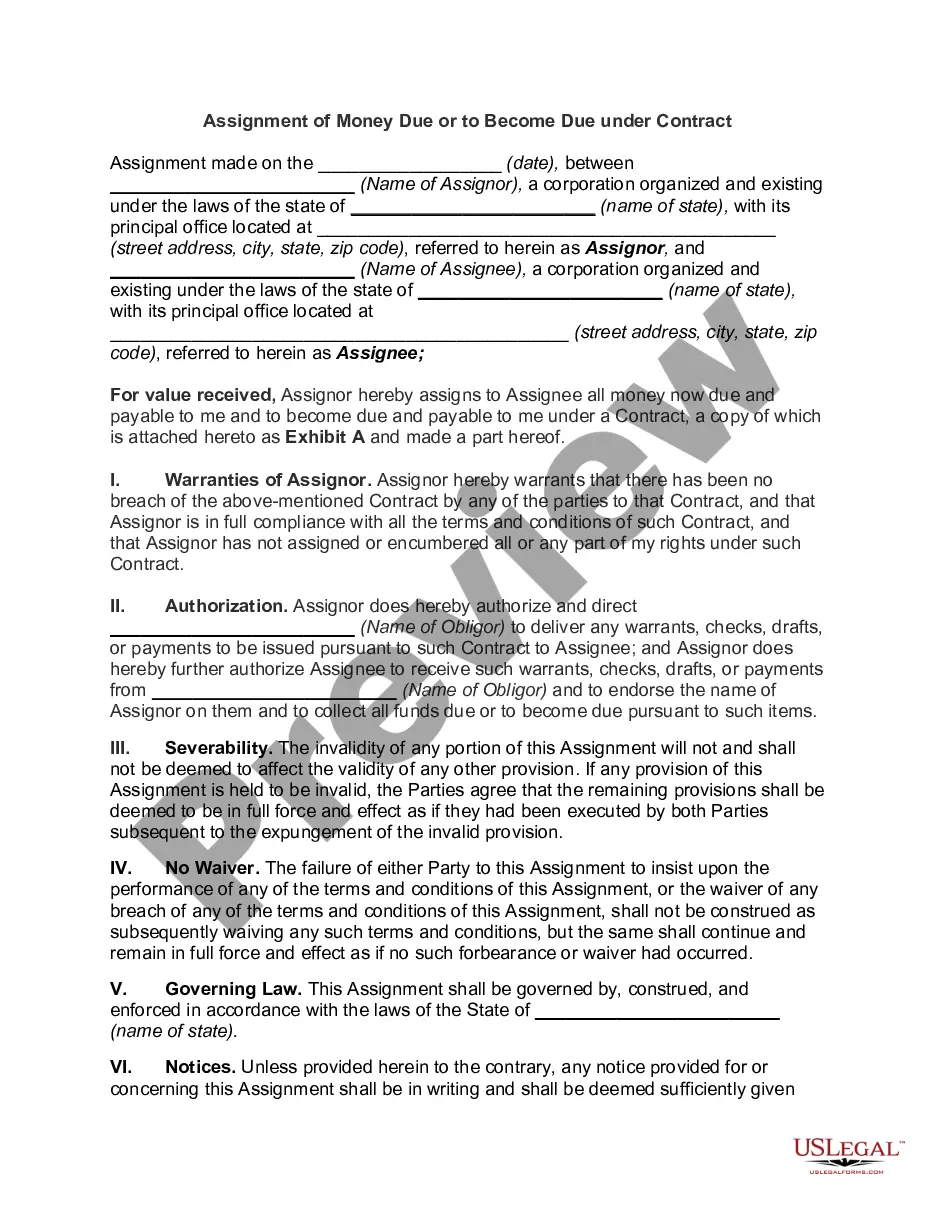
The Assignment of Money Due is a legal document through which an assignor transfers their rights, title, and interest in a specific debt or money owed to an assignee. This form is crucial for formalizing the rights to collect a debt and differs from general contracts by specifically focusing on the assignment of monies owed rather than the creation of new obligations.
Key parts of this document
- Identification of the assignor and assignee.
- Description of the debt being assigned, including details such as amount and due date.
- Statement indicating this is a non-recourse assignment, meaning the assignee cannot hold the assignor responsible in case of non-payment.
- Warranties made by the assignor regarding the validity of the debt.
- Signatures of both parties to validate the assignment.
Situations where this form applies
This form is useful when an individual or business (the assignor) wishes to transfer their right to receive payment from a debtor to another party (the assignee). It is commonly employed in financial transactions, business sales, or when collecting debts becomes challenging for the original creditor.
Intended users of this form
- Individuals or businesses seeking to assign a debt to a third party.
- Creditors who want to transfer their rights of collection to another entity.
- Legal professionals advising clients on debt assignments.
- Anyone involved in financial transactions related to the buying and selling of debts.
Completing this form step by step
- Identify and fill in the name and address of the assignor and the assignee.
- Clearly describe the debt being assigned, including relevant details such as the amount and due date.
- Include a specific reference to any attached documents that support the assignment of the debt.
- Affirm that this assignment is a non-recourse agreement by including the appropriate statement.
- Both parties should sign and date the document to finalize the assignment.
Does this form need to be notarized?
Notarization is generally not required for this form. However, certain states or situations might demand it. You can complete notarization online through US Legal Forms, powered by Notarize, using a verified video call available anytime.
Get your form ready online
Our built-in tools help you complete, sign, share, and store your documents in one place.
Make edits, fill in missing information, and update formatting in US Legal Forms—just like you would in MS Word.
Download a copy, print it, send it by email, or mail it via USPS—whatever works best for your next step.
Sign and collect signatures with our SignNow integration. Send to multiple recipients, set reminders, and more. Go Premium to unlock E-Sign.
If this form requires notarization, complete it online through a secure video call—no need to meet a notary in person or wait for an appointment.
We protect your documents and personal data by following strict security and privacy standards.

Make edits, fill in missing information, and update formatting in US Legal Forms—just like you would in MS Word.

Download a copy, print it, send it by email, or mail it via USPS—whatever works best for your next step.

Sign and collect signatures with our SignNow integration. Send to multiple recipients, set reminders, and more. Go Premium to unlock E-Sign.

If this form requires notarization, complete it online through a secure video call—no need to meet a notary in person or wait for an appointment.

We protect your documents and personal data by following strict security and privacy standards.
Avoid these common issues
- Failing to provide a detailed description of the debt can lead to confusion or disputes.
- Not obtaining all necessary signatures, which can invalidate the assignment.
- Ignoring local laws that may impose additional requirements for validity.
- Assuming a non-recourse status without explicit language indicating this in the document.
Benefits of completing this form online
- Convenience of accessing and downloading forms at any time.
- Editability allows for tailoring the document to specific needs without starting from scratch.
- Ensures access to forms that comply with legal standards prepared by licensed attorneys.
- Time-efficient elimination of lengthy legal consultations for standard assignments.
Looking for another form?


Form popularity
FAQ
When an assignor hands over their contracts rights to an assignee, they are signing away their obligation to perform and putting that obligation on a new party. The other party involved in the contract should see no difference in how the agreement plays out.
The assignee won't be required to go through the assignor when asserting legal rights under the contract. This means that the assignee can generally sue the other party to the contract if that party doesn't fulfill the contract.
Under an assignment, one party (the assignor) keeps performing their obligations under the contract, but transfers some or all rights to a third party (the assignee).The main point to remember is that you cannot assign obligations under a contract to another party you can only assign your benefits or rights.
An incidental beneficiary may not sue to enforce the contract.They cannot sue for damages if the contract with the government is broken by the employer. An assignment is a transfer of rights that a party has under a contract to another person, called an assignee. The assigning party is called the assignor.
Assignment is a legal term whereby an individual, the assignor, transfers rights, property, or other benefits to another known as the assignee. This concept is used in both contract and property law. The term can refer to either the act of transfer or the rights/property/benefits being transferred.
In other words, an assignment is the act of one party transferring, vesting, or causing to vest their interest in a property to another party. A valid legal assignment only occurs when all underlying elements of a lawfully binding contract are included in it, including intent.
Assignment is valid even though there is an anti-assignment provision, unless it substantially changes the obligor's duty or risk or prohibited by law. what makes the assignment ineffective? if the clause provides that any attempt to assign will be VOID.
The assignor normally remains liable unless there is an agreement to the contrary by the other party to the contract.No specific language is required to create an assignment so long as the assignor makes clear his/her intent to assign identified contractual rights to the assignee.
An assignment of payment is a legal agreement through which a practitioner designates that MSP payments for his or her services are to be made to another practitioner or to a group such as a clinic or hospital. MSP refuses claims submitted before the assignment processing has been completed.